Search results
Search for "self assembly" in Full Text gives 337 result(s) in Beilstein Journal of Nanotechnology. Showing first 200.
Mechanical and thermodynamic properties of Aβ42, Aβ40, and α-synuclein fibrils: a coarse-grained method to complement experimental studies
Beilstein J. Nanotechnol. 2019, 10, 500–513, doi:10.3762/bjnano.10.51
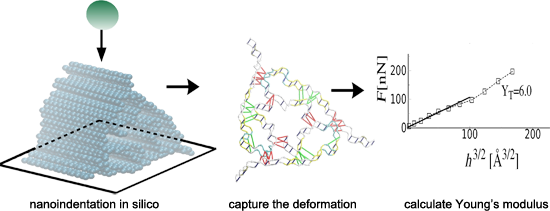
- is very close to the minimum free energy state (native). Here, the number of hydrogen bonds that participate in the deformation as a whole is larger as reported by all-atom simulations [4][5]. In contrast, during in vitro self-assembly of neurodegenerative fibrils the fibrilization process is
- aggregation rate depends on the mechanical stability of the fibrils [27] our study could provide also hints for the self-assembly of β-amyloid and α-synuclein chains. Our results also indicate an elastic anisotropy namely, YT > YL, for all systems. In the case of α-syn fibrils this difference between YT and


Polymorphic self-assembly of pyrazine-based tectons at the solution–solid interface
Beilstein J. Nanotechnol. 2019, 10, 494–499, doi:10.3762/bjnano.10.50
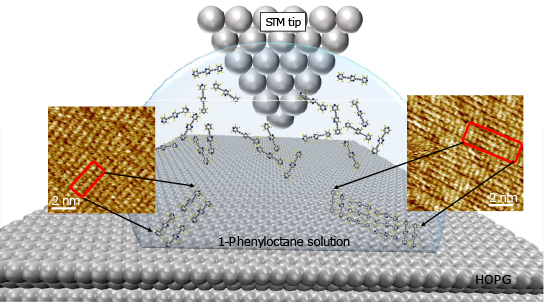
- Achintya Jana Puneet Mishra Neeladri Das Indian Institute of Technology Patna, Bihta, Patna-801106, India Central University of South Bihar, Gaya-824236, India 10.3762/bjnano.10.50 Abstract Exploring the surface self-assembly of small molecules that act as building blocks (tectons) for complex
- supramolecular structures is crucial for realizing surface-supported functional molecular devices. Here, we report on the synthesis and surface self-assembly of a new pyrazine-derived molecule with pyridine pendants. Ambient scanning tunneling microscopy investigation at the solution–solid interface reveals
- polymorphic self-assembly of these molecules on a HOPG substrate. Two different molecular packing structures with equal distribution are observed. Detailed analysis of the STM images emphasizes the crucial role of weak intermolecular hydrogen bonding, and molecule–substrate interactions in the formation of


Site-specific growth of oriented ZnO nanocrystal arrays
Beilstein J. Nanotechnol. 2019, 10, 274–280, doi:10.3762/bjnano.10.26
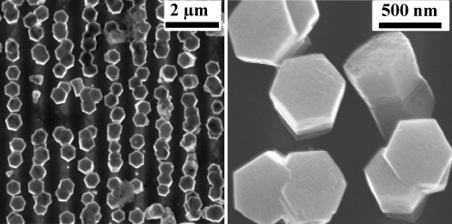
- to their versatile applications [14]. Self-assembled NC arrays collectively can possibly demonstrate new properties, unlike the fixed properties of single NCs, forming new nanostructures with useful functionalities. Semiconductor NC self-assembly depends on the shape and size of the NCs, a broad


Electrostatic force microscopy for the accurate characterization of interphases in nanocomposites
Beilstein J. Nanotechnol. 2018, 9, 2999–3012, doi:10.3762/bjnano.9.279
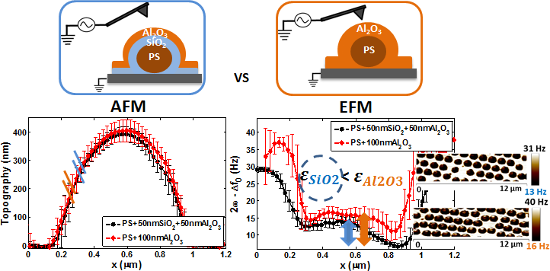
- dielectric constituents that represent a simplified configuration of the particle–interphase–matrix assembly found in nanodielectrics. Specifically, polystyrene (PS) nanoparticles of 380 nm diameter were prepared by self-assembly on metallized substrates. Then, two shells of variable thicknesses (50 and 100
- ) using the self-assembly property of PS spheres [49][50][51]. In this work, a more precise experimental protocol than the one used in our previous work [28] was chosen to deposit the particles by spin coating [52][53]. The initial PS sphere solution was mixed with ethanol (1:1 ratio) and kept in an




Colloidal chemistry with patchy silica nanoparticles
Beilstein J. Nanotechnol. 2018, 9, 2989–2998, doi:10.3762/bjnano.9.278
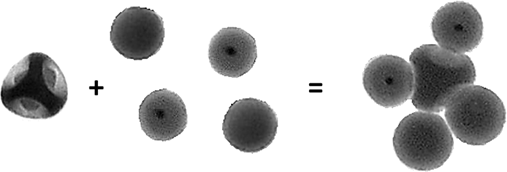
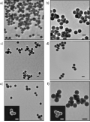
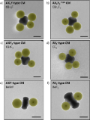
- chloride) [15]. Another way to get valence-endowed particles relies on shape recognition. Shape can indeed direct colloidal assembly as it was shown that linear supracolloidal polymers are obtained by self-assembly of cone-shaped particles in the presence of a depletant [16]. Similarly, microparticles with
- -like nanoparticle could lead to multifunctional chiral nanostructures, which may form novel two- or three-dimensional materials with unprecedented properties by self-assembly. Experimental Materials We used styrene (Sigma-Aldrich, 99%), methacryloxymethyltriethoxysilane (MMS, ABCR, 98


Ternary nanocomposites of reduced graphene oxide, polyaniline and hexaniobate: hierarchical architecture and high polaron formation
Beilstein J. Nanotechnol. 2018, 9, 2936–2946, doi:10.3762/bjnano.9.272
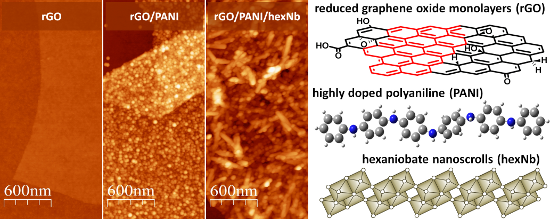
- spectroscopic and cyclic voltammetry/spectroelectrochemical techniques [6]. The inorganic phase induces a secondary doping of the conductor polymer. In another work [7], Raman and EPR spectra also revealed that a PANI/hexNb nanocomposite prepared by the self-assembly approach exhibits a higher conversion of


In situ characterization of nanoscale contaminations adsorbed in air using atomic force microscopy
Beilstein J. Nanotechnol. 2018, 9, 2925–2935, doi:10.3762/bjnano.9.271
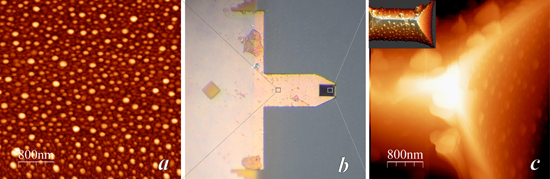
- contamination; tip cleaning; tip–sample interaction; van der Waals interaction; Introduction Surface science is fundamental to understand many processes in industrial applications, environmental science, biology, medicine and phenomena such as self-assembly [1], friction [2][3] and wetting [4]. In any study


Site-controlled formation of single Si nanocrystals in a buried SiO2 matrix using ion beam mixing
Beilstein J. Nanotechnol. 2018, 9, 2883–2892, doi:10.3762/bjnano.9.267
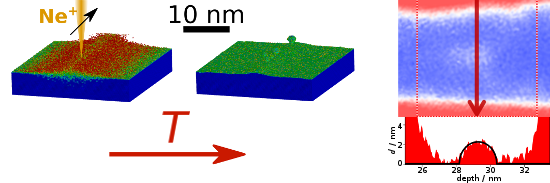
- -filtered transmission electron microscopy is performed to obtain quantitative values on the Si NC size and distribution in dependence of the layer stack geometry, ion fluence and thermal budget. Employing a focused Ne+ beam from a helium ion microscope, we demonstrate site-controlled self-assembly of
- temperature, the diameter of an individual Si NC, 2rNC, has to be smaller than 5.7 nm. The other factors are the unit charge e and ε0 and εr = 3.9 are the vacuum permittivity and the relative permittivity of silicon dioxide, respectively. Recently, advanced lithographic methods [21] and directed self-assembly
- comparable density and NC size, the fluence in the simulation needs to be significantly lower for all investigated cases. This systematic deviation and the underlying physics is subject of an ongoing investigation. In order to optimize the self-assembly of vertically self-aligned Si NCs with a narrow size


Charged particle single nanometre manufacturing
Beilstein J. Nanotechnol. 2018, 9, 2855–2882, doi:10.3762/bjnano.9.266
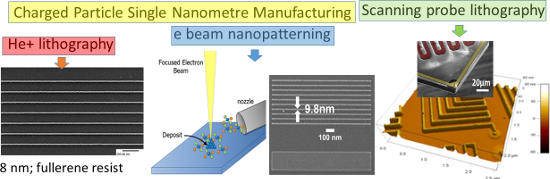
- structuring techniques are required. Among several candidates, molecular self-assembly and self-organization of structures represent the so-called bottom-up approach. Nanoindentation, thermal scanning probe lithography, local oxidation lithography, dip-pen lithography, extreme UV lithography or X-ray


Enhanced antineoplastic/therapeutic efficacy using 5-fluorouracil-loaded calcium phosphate nanoparticles
Beilstein J. Nanotechnol. 2018, 9, 2499–2515, doi:10.3762/bjnano.9.233
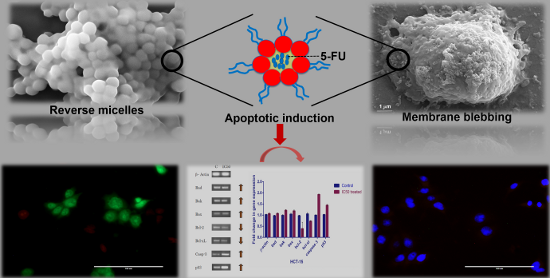
- loading of 5-FU inside the aqueous core, as depicted in Figure 1A. During self-assembly, the aqueous soluble drug (5-FU) along with the CaP precursors formed spheroidal aggregates known as a reverse micellar assembly [22]. The size of the particles can be effectively controlled by altering the water


High-throughput micro-nanostructuring by microdroplet inkjet printing
Beilstein J. Nanotechnol. 2018, 9, 2372–2380, doi:10.3762/bjnano.9.222
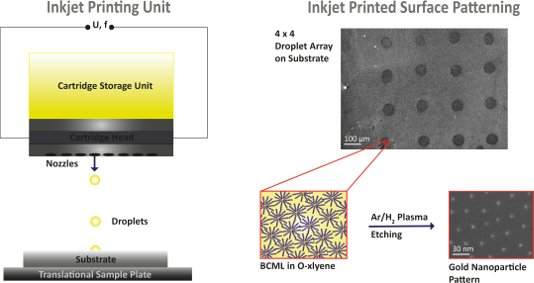
- densities is highly important in many fields, ranging from nano-optics to biosensor technologies and biomaterials. A well-established method to fabricate quasi-hexagonal patterns of metal nanoparticles is block copolymer micelle nanolithography, which relies on the self-assembly of metal-loaded micelles on
- spacing between a few tens to several hundreds of nanometers is block copolymer micelle nanolithography (BCML) [8]. This technique is based on the self-assembly of metal-containing micelles on surfaces during dip-coating or spin-coating. BCML is very efficient in coating large areas with nanoparticles in
- assembly of the micelles gives rise to hexagonal micelle patterns. As the self-assembly does not lead to a perfect hexagonal ordering of the micelles, the patterns generated with BCML are often referred to as “quasi-hexagonal” patterns [9]. In our experiments, quasi-hexagonal patterns of gold nanoparticles


Block copolymers for designing nanostructured porous coatings
Beilstein J. Nanotechnol. 2018, 9, 2332–2344, doi:10.3762/bjnano.9.218
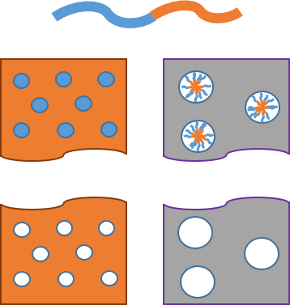
- thin coatings, one simple route involves the use of self-assembled amphiphilic block copolymers either as the porogen (acting as sacrificial templating agents for the production of inorganic architectures) or as a source of the porogen (by self-assembly for the production of polymeric substrates
- using different synthetic routes to facilitate the incorporation of multiple chemical functionalities into the porous framework or at the pore surface [33]. The self-assembly of block copolymers is an exceptional strategy for inducing well-ordered and regular porosity in polymers [6][32]. Block
- copolymers (BCs) are macromolecules consisting of two (or more) immiscible homopolymer chains covalently linked together. Mesoscale nanostructures can be obtained due to the thermodynamic incompatibility of the blocks, which induce microphase separation via self-assembly, in order to minimize the contact


Lead-free hybrid perovskites for photovoltaics
Beilstein J. Nanotechnol. 2018, 9, 2209–2235, doi:10.3762/bjnano.9.207
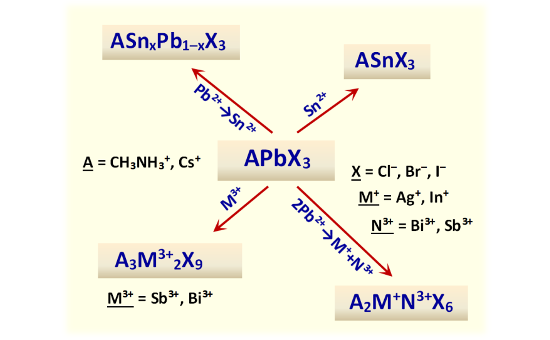
- CsSnX3 nanorods applied as light harvesters with TiO2/SpiroMeOTAD ETL/HTL combination revealed relatively high PCEs increasing from 9.66% for X = Cl to 10.46% for X = Br to 12.96% for X = I (Table 1), all three devices demonstrating a high Voc of 0.85–0.87 V [72]. A controlled self-assembly phenomenon


Dumbbell gold nanoparticle dimer antennas with advanced optical properties
Beilstein J. Nanotechnol. 2018, 9, 2188–2197, doi:10.3762/bjnano.9.205
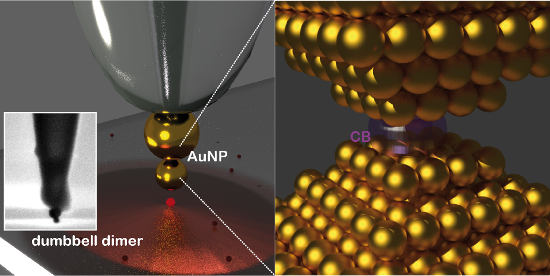
- , to be well-suited as SERS substrates [54][55]. The high reactivity of CB[n]s with Au surfaces may lead to the uncontrolled formation nanoparticle aggregates in solution, and often prevents a controlled self-assembly into dimers or small oligomer structures. However, using guided assembly by taking




Electrospun one-dimensional nanostructures: a new horizon for gas sensing materials
Beilstein J. Nanotechnol. 2018, 9, 2128–2170, doi:10.3762/bjnano.9.202
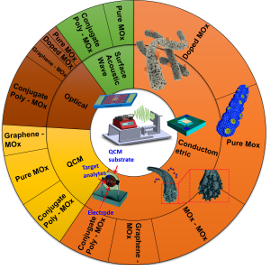
- applications. This approach shows good potential for applications involving the self-assembly of anisotropic NPs to generate new functional devices [63]. There are two major methods for producing electrospun NP fibers [40]: (i) “indirect synthesis”, that requires some post-processing methods after
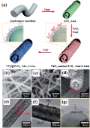
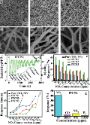
- NTs are synthesized using layer-by-layer (LBL) self-assembly of tungsten as well as catalyst precursor on PMMA electrospun nanofibers. Pristine WO3 NTs exhibit a high response (Rgas/Rair) of 63.59 to 5 ppm NO at 350 °C. On the other hand, a high response of 2.24 for the Pt-WO3 NTs and 2.35 for the Pd






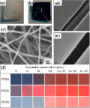
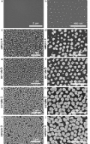
Self-assembled quasi-hexagonal arrays of gold nanoparticles with small gaps for surface-enhanced Raman spectroscopy
Beilstein J. Nanotechnol. 2018, 9, 1977–1985, doi:10.3762/bjnano.9.188
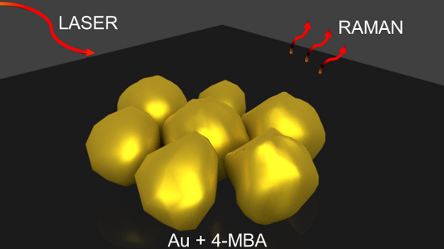
- lithography; optical antenna; self-assembly; SERS; Introduction Over the last decades self-assembled layers of gold nanoparticles have taken an important role in emerging nanotechnologies. Noble metal nanoparticles show localized surface plasmon polariton resonances (LSPRs) in the visible and infrared
- enhanced Raman spectroscopy (SERS) [10]. Ordered arrays of such particles can be fabricated by different methods. Electron-beam lithography for example is a top-down method which provides good control, but is time consuming and costly. In contrast, the self-assembly of block-copolymers is a bottom-up



Preparation of micro/nanopatterned gelatins crosslinked with genipin for biocompatible dental implants
Beilstein J. Nanotechnol. 2018, 9, 1735–1754, doi:10.3762/bjnano.9.165
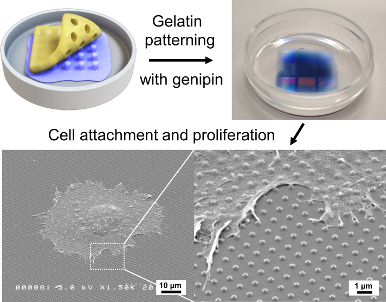
- ) [30], coating on patterned substrates [31][32][33], self-assembly of collagen fibers [34], and crosslinking, using glutaraldehyde [35], formaldehyde [36], carbodiimide [37], genipin [38][39], riboflavin [40], transglutaminase [41], silane coupling agents [42], as well as thermal dehydration [43][44








Closed polymer containers based on phenylboronic esters of resorcinarenes
Beilstein J. Nanotechnol. 2018, 9, 1594–1601, doi:10.3762/bjnano.9.151
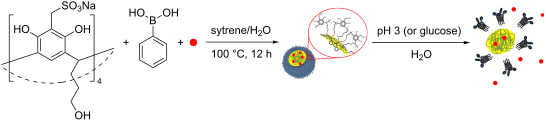
- materials. The method is based on the self-assembly of resorcinarenes, macrocyclic compounds obtained by the condensation of resorcinol with aldehydes [32]. Resorcinarenes offer the advantages of low toxicity and simple synthesis with the use of available reagents. One of their important features is the


Interaction-tailored organization of large-area colloidal assemblies
Beilstein J. Nanotechnol. 2018, 9, 1582–1593, doi:10.3762/bjnano.9.150
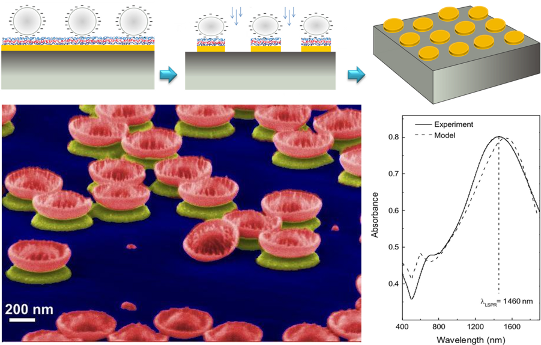
- chopper frequency. The angle between the incident and reflected light beams was set at 30°. Results and Discussion The effect of particle–substrate interactions on colloidal self-assembly was the first aspect that was investigated. For this purpose, the charged polystyrene spheres of smaller diameter were
- . (a) Schematic drawing of the basic steps for the realization of a mask derived from spherical, nanoscale materials by electrostatic self-assembly of nanospheres for the fabrication of (b) nanoholes (c) and nanodisks. SEM plane-view of nanosphere masks obtained by solutions with different salt


Nanoporous silicon nitride-based membranes of controlled pore size, shape and areal density: Fabrication as well as electrophoretic and molecular filtering characterization
Beilstein J. Nanotechnol. 2018, 9, 1390–1398, doi:10.3762/bjnano.9.131
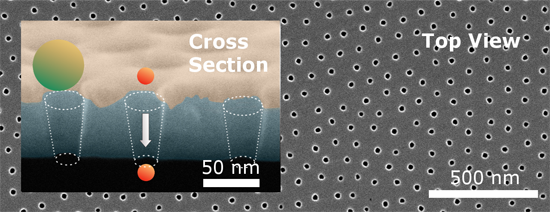
- defined nanopores restricts them to small numbers of pores or specific arrangements, hindering high throughput [21][22]. With this aspect in mind, parallel fabrication techniques, based on self-assembly of polymeric components, become essential in combination with appropriate etching procedures. For this


Atomic-level characterization and cilostazol affinity of poly(lactic acid) nanoparticles conjugated with differentially charged hydrophilic molecules
Beilstein J. Nanotechnol. 2018, 9, 1328–1338, doi:10.3762/bjnano.9.126
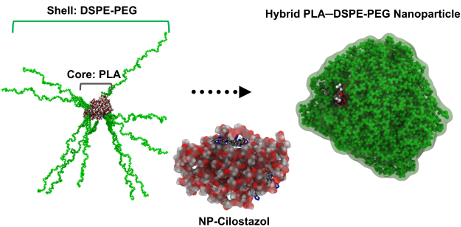
- reactive force field (ReaxFF) to prove that the self-assembly process of PLA–PEG NPs is consistent with the experimental method of synthesis [34], investigate the flexibility of polymer chains, and characterize the ability to protect a potential cargo. Docking calculations were employed in order to


Surface characterization of nanoparticles using near-field light scattering
Beilstein J. Nanotechnol. 2018, 9, 1228–1238, doi:10.3762/bjnano.9.114
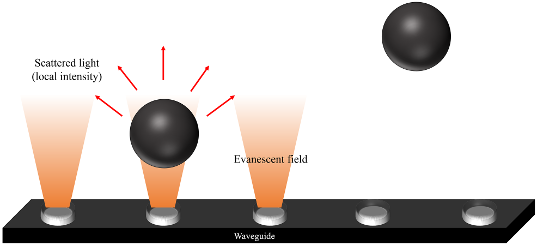
- the particle surface in varied solvents [7][17][18]. In this work, we present one potential application of near-field light scattering-based nanophotonic force microscopy used to evaluate changes in particle surface and size by examining the self-assembly of interpolymer complexed superparamagnetic




Heterostuctures of 4-(chloromethyl)phenyltrichlorosilane and 5,10,15,20-tetra(4-pyridyl)-21H,23H-porphine prepared on Si(111) using particle lithography: Nanoscale characterization of the main steps of nanopatterning
Beilstein J. Nanotechnol. 2018, 9, 1211–1219, doi:10.3762/bjnano.9.112
- with a surface orientation defined by the substituents [20]. The self-assembly of manganese meso-tetra(4-pyridyl)porphyrin on Cu(111) was studied using low temperature scanning tunneling microscopy (STM) and atomic force microscopy (AFM) to resolve molecular structures by Chen et al. [21]. A
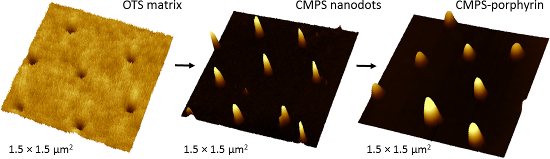
- ], nanoparticles [32][33][34][35] and inorganic materials [36]. Experimental parameters such as the environmental conditions and solvent choice affect the density of organosilane thin films [37][38]. A model was proposed for the self-assembly of CMPS nanostructures formed within areas of nanoholes which
- profile for the line in (b). Model for the self-assembly of CMPS-porphyrin heterostructures within an OTS matrix layer. Supporting Information A histogram of the height measurements for the nanostructures for Figure 4 is provided in the Supporting Information. Supporting Information File 128: Size


Review on nanoparticles and nanostructured materials: history, sources, toxicity and regulations
Beilstein J. Nanotechnol. 2018, 9, 1050–1074, doi:10.3762/bjnano.9.98

- silicon and ceramics. (iii) Organic-based nanomaterials: These include NMs made mostly from organic matter, excluding carbon-based or inorganic-based NMs. The utilization of noncovalent (weak) interactions for the self-assembly and design of molecules helps to transform the organic NMs into desired
- . Nanosize, monodispersity, distinct shapes, selective permeability to smaller molecules, composition controllability by genome manipulation, self-assembly and polyvalence, rapid growth, and stability towards pH and temperature [125][126], are properties that make viruses a unique category among NMs [127


Electro-optical interfacial effects on a graphene/π-conjugated organic semiconductor hybrid system
Beilstein J. Nanotechnol. 2018, 9, 963–974, doi:10.3762/bjnano.9.90
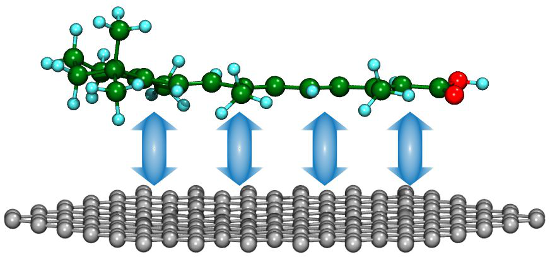
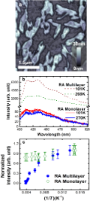
- microscopy; self-assembly; Introduction Organic semiconductors offer a wide range of possible applications, from thin-film transistors to sensors and solar cells [1][2][3][4][5][6]. Their optical and electronic properties are strongly linked to intermolecular interaction parameters associated with molecular