Search results
Search for "sensitivity" in Full Text gives 756 result(s) in Beilstein Journal of Nanotechnology. Showing first 200.
Properties of tin oxide films grown by atomic layer deposition from tin tetraiodide and ozone
Beilstein J. Nanotechnol. 2023, 14, 1085–1092, doi:10.3762/bjnano.14.89
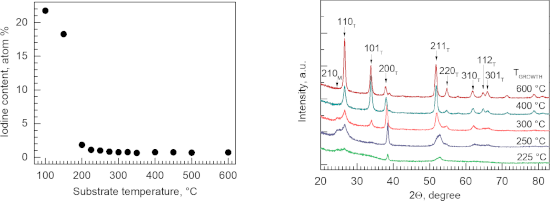
- distances average to less sharp XAS peaks. Because of the somewhat less shallow probe depth of XAS recorded in TEY mode (ca. 10 nm) compared to the high surface sensitivity of the recorded photoemission spectra (a few atomic layers) [41] we suggest that less completely oxidised species appear below the


Dual-heterodyne Kelvin probe force microscopy
Beilstein J. Nanotechnol. 2023, 14, 1068–1084, doi:10.3762/bjnano.14.88
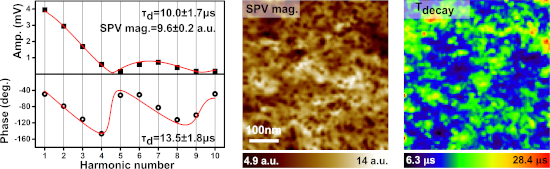
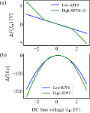
- reference signals. Dual-heterodyne KPFM (DHe-KPFM) dramatically enhances the sensitivity to “weak” (i.e., a few mV) surface photovoltage signals, thanks to the amplification by the second resonance mode. Time-resolved measurements can be performed in data-cube mode, by recording spectra of the SPV Fourier
- (in terms of lateral resolution and sensitivity, respectively). This mode takes advantage of heterodyning effects (frequency mixing) between the electrical bias modulation and the cantilever mechanical oscillation (usually performed at the first eigenmode, angular frequency ω0). These effects result
- approach to check the nature of the SPV dynamics. Compared to previous “modulated” SPV imaging techniques, dual-heterodyne KPFM provides an enhanced sensitivity (as demonstrated in the following), thanks to the amplification of the intermodulation products by the second resonance eigenmode. In addition




A visible-light photodetector based on heterojunctions between CuO nanoparticles and ZnO nanorods
Beilstein J. Nanotechnol. 2023, 14, 1018–1027, doi:10.3762/bjnano.14.84
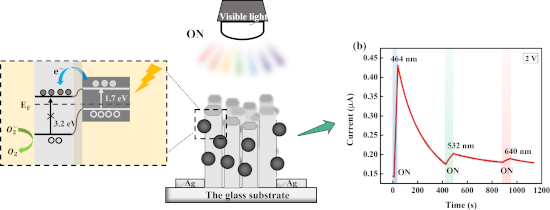
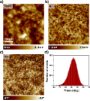
- responsivity, photoconductive gain, detectivity, and sensitivity with maximum values of 1.38 A·W−1, 4.33, 2.58 × 10¹¹ Jones, and 1934.5% at a bias of 2 V, respectively. The sensing mechanism of the p–n heterojunction of CuO/ZnO is also explored. Overall, this study indicates that the heterostructure of CuO
- photodetector based on CuO nanoparticles (CuO NPs) and ZnO nanorods (ZnO NRs). CuO NPs were loaded onto ZnO NRs by a cost-effective, simple hydrothermal method at low synthesis temperature [38]. The CuO/ZnO photodetector was characterized, and its sensitivity was evaluated regarding visible-light wavelengths
- sensitivity to other wavelengths including 464 nm (blue), 532 nm (green), and 640 nm (red). Figure 5a shows the room temperature I–V characteristics of the CuO NPs/ZnO NRs photodetector under different wavelengths. The photoresponse to wavelengths longer than 395 nm is in accordance with the UV–vis absorbance


Exploring internal structures and properties of terpolymer fibers via real-space characterizations
Beilstein J. Nanotechnol. 2023, 14, 1004–1017, doi:10.3762/bjnano.14.83
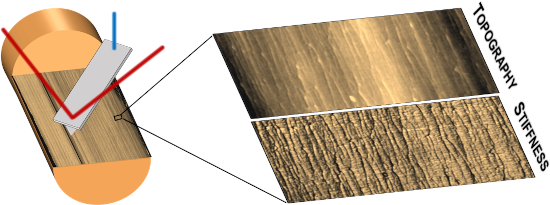
- magnitude more resistant to chemical attacks than Kevlar® K29 [1]. A small but important subset of ambient “chemical” attacks includes moisture sensitivity. Ozawa observed substantially larger tenacity reductions in Kevlar® than in Technora® as a function of ambient moisture [1]. Minoshima et al. also found






Nanoarchitectonics of photothermal materials to enhance the sensitivity of lateral flow assays
Beilstein J. Nanotechnol. 2023, 14, 988–1003, doi:10.3762/bjnano.14.82
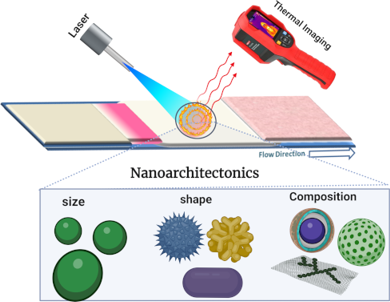
- . However, this conventional LFA technique based on colorimetric analysis is neither useful to determine critical analytes with desired sensitivity, nor can it quantify the analytes. Various signal amplification strategies have been proposed to improve the sensitivity and the quantitative determination of
- the detection limit of LFAs is only between millimolar and micromolar concentrations [10]. To overcome this, various modifications of LFAs have been explored [11][12]. For example, Petrakova et al. used different architectures of gold nanoparticles in LFAs to improve the sensitivity of the assays [11
- spectroscopy (SERS), fluorescence, ultrasound, and photothermal methods, have been tried in LFAs [4][13][14]. For example, fluorescence-based LFAs exhibited a 100- to 1000-fold higher sensitivity than conventional LFAs [15]. However, working with fluorescence-based LFAs is complex because of photoinstability


Fragmentation of metal(II) bis(acetylacetonate) complexes induced by slow electrons
Beilstein J. Nanotechnol. 2023, 14, 980–987, doi:10.3762/bjnano.14.81
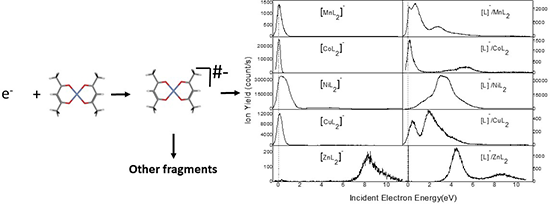
- nanocrystals [13][14]. The popularity of these compounds is related to their volatile nature, ease of preparation, and often lower air sensitivity and toxicity in comparison to organometallic compounds containing carbon–metal bonds (e.g., metallocenes). In the context of a potential use of these organometallic


Antibody-conjugated nanoparticles for target-specific drug delivery of chemotherapeutics
Beilstein J. Nanotechnol. 2023, 14, 912–926, doi:10.3762/bjnano.14.75
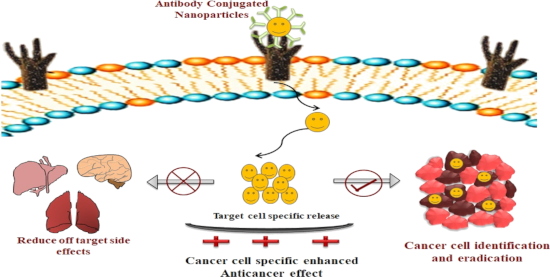
- effect makes the NPs very selective and provides a high sensitivity for binding on the target surface. Multicomponent effect of protein corona on antibody-conjugated NPs The small hydrodynamic diameter and unique structure of NPs offer increased adsorption and catalytic efficiency. The NP surface



A wearable nanoscale heart sound sensor based on P(VDF-TrFE)/ZnO/GR and its application in cardiac disease detection
Beilstein J. Nanotechnol. 2023, 14, 819–833, doi:10.3762/bjnano.14.67
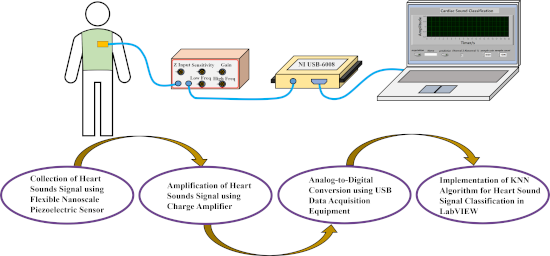
- , respectively, 2.4 times and 1.6 times greater than those of pure P(VDF-TrFE) nanogenerators [14]. Subash et al. added ZnO nanoparticles and exfoliated graphene oxide to P(VDF-TrFE) to prepare a composite nanofilm with excellent touch sensitivity and high output energy. They also used the piezoelectric film for
- feature that mimics the sensitivity of sound signals of different frequencies in the human ear, based on the hearing mechanism. Extracting MFCC features is useful for modeling heart sound signals. The wavelet feature extraction method uses “db6 wavelet decomposition” to generate seven feature vectors. The


Silver-based SERS substrates fabricated using a 3D printed microfluidic device
Beilstein J. Nanotechnol. 2023, 14, 793–803, doi:10.3762/bjnano.14.65
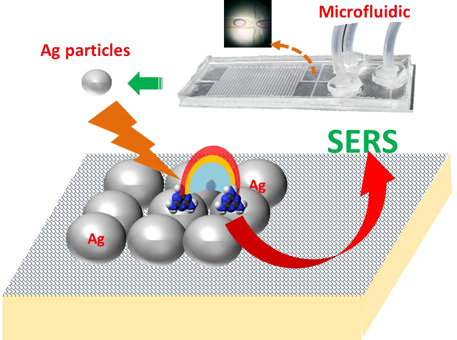
- detection of harmful chemicals in the environment and for food safety is a crucial requirement. While traditional techniques such as GC–MS and HPLC provide high sensitivity, they are expensive, time-consuming, and require skilled labor. Surface-enhanced Raman spectroscopy (SERS) is a powerful analytical
- technique in various biochemical applications because of its exceptional sensitivity and the capabilities of real-time analysis and label-free detection [1][2]. SERS has been used to identify targets for single molecules in chemical and biological systems [3][4] since its discovery by Martin Fleischmann in



Cross-sectional Kelvin probe force microscopy on III–V epitaxial multilayer stacks: challenges and perspectives
Beilstein J. Nanotechnol. 2023, 14, 725–737, doi:10.3762/bjnano.14.59
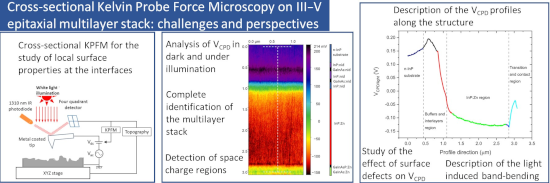
- enhancing device efficiency [10][11]. Consequently, the experimental demonstration of the sensitivity of KPFM to the narrower layers can be crucial for the investigation and comprehension of local surface properties and charge transport mechanisms at interfaces [12]. Within this context, this work presents
- qualitative analysis. KPFM successfully detects the n-InP substrate (from 0 to 0.46 μm), the InP:nid/GaInAs:nid region (from 0.46 to 1.12 μm), the InP:Zn region (from 1.12 to 2.87 μm), and the GaInAsP:Zn/GaInAs:Zn region (from 2.87 to 3.09 μm). KPFM demonstrated a strong sensitivity on the local doping
- . The verified sensitivity of our KPFM setup to the narrower layers will be crucial for the study of the cross sections of operating solar device in future works. The analysis of the surface potential profile identified the presence of space charge regions and, thus, the formation of several junctions


A graphene quantum dots–glassy carbon electrode-based electrochemical sensor for monitoring malathion
Beilstein J. Nanotechnol. 2023, 14, 701–710, doi:10.3762/bjnano.14.56
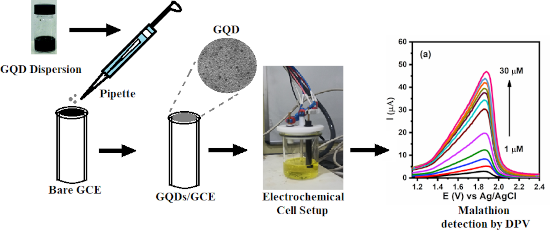
- working electrode has an increased surface area to volume ratio due to the small size of GQDs. In addition, the different functional groups present on the GQDs surfaces provide additional active sites, which increase sensitivity and lower the limit of detection. Interference study The selectivity of the


Metal-organic framework-based nanomaterials as opto-electrochemical sensors for the detection of antibiotics and hormones: A review
Beilstein J. Nanotechnol. 2023, 14, 631–673, doi:10.3762/bjnano.14.52
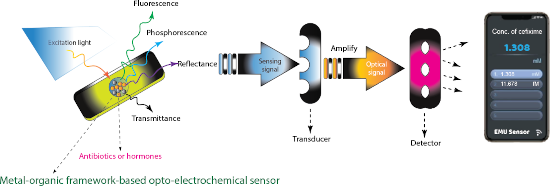
- antibiotics and hormones in the environment and food samples are concerning and pose a threat. Opto-electrochemical sensors have received attention due to their low cost, portability, sensitivity, analytical performance, and ease of deployment in the field as compared to conventional expensive technologies
- detection (LOD), and are selective in many cases. However, they have a number of shortcomings. For example, in order to increase the sensitivity of the established immunoassays, Mitchell and Lowe [20] and Wu et al. [21] used the ELISA technique for the analysis of testosterone and progesterone, respectively
- . Even though this sensitive ELISA approach provided the necessary sensitivity for hormone detection in biological samples, it had a number of drawbacks, including limited specificity, high cost, cross-reactivity, and significant kit variability. The conventional ELISA method necessitates a laborious


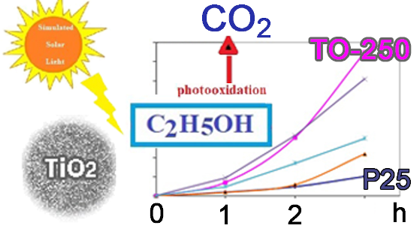
Titania nanoparticles for photocatalytic degradation of ethanol under simulated solar light
Beilstein J. Nanotechnol. 2023, 14, 616–630, doi:10.3762/bjnano.14.51
- exclude the possibility that these defects are located on the TiO2 surface and that the concentration of defects is below the detection limit of XPS [52][53]. Another explanation would be this: The surface depth sensitivity of XPS is known to be 5–10 nm compared to 1 μm in PL. Hence, this technique




Observation of multiple bulk bound states in the continuum modes in a photonic crystal cavity
Beilstein J. Nanotechnol. 2023, 14, 544–551, doi:10.3762/bjnano.14.45
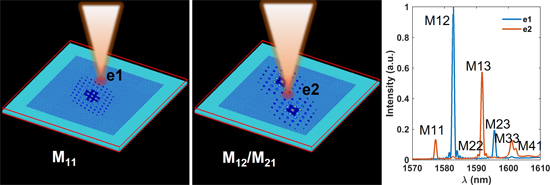
- be obtained. A 20× objective was used in the measurement. Limited by the excitation efficiencies of one specific position for all modes and the sensitivity of the spectrometer, the weak scattering signal from the resonances is inundated by noise. To identify the resonance wavelength of the cavity, a
- high-order modes were also qualitatively analyzed. It is noteworthy that theoretically all modes can be excited if the overlap of the mode profile and the illumination spot is not zero. In our measurement, limited by the sensitivity of the setup, only the resonance with the highest excitation


Carbon nanotube-cellulose ink for rapid solvent identification
Beilstein J. Nanotechnol. 2023, 14, 535–543, doi:10.3762/bjnano.14.44
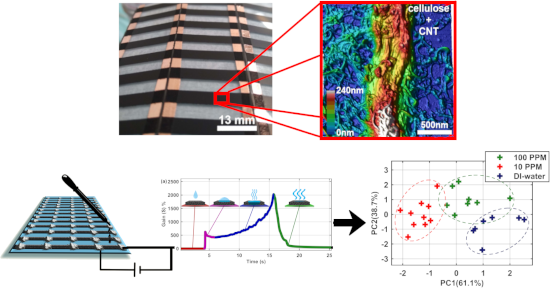
- , while the current was monitored until complete evaporation of the liquid. The device temperature was kept just below the boiling point of the liquid under evaluation. Afterward, the current was used to calculate the resistance, R0 (see Figure 1c), and the sensitivity gain (S), defined as S = ((R – R0
- individual sensor. The parameters analyzed by PCA were “max”, “t_max”, “slope”, and “ratio_maxmin” (defined in Supporting Information File 1 as the input features). Figure 2a and Figure 2b depict, respectively, the sensitivity gain S (for pure water, and 10 and 100 ppm of glycerin in water) and the PCA
- reproducible. The glycerin/water experiment shows sensitivity to detect oil compounds down to the parts-per-million range. Also, we demonstrate the important role of dielectric constant and vapor pressure in the transduction mechanism of the MFC/MWCNTs composite. We believe that our sensor can overcome the


On the use of Raman spectroscopy to characterize mass-produced graphene nanoplatelets
Beilstein J. Nanotechnol. 2023, 14, 509–521, doi:10.3762/bjnano.14.42
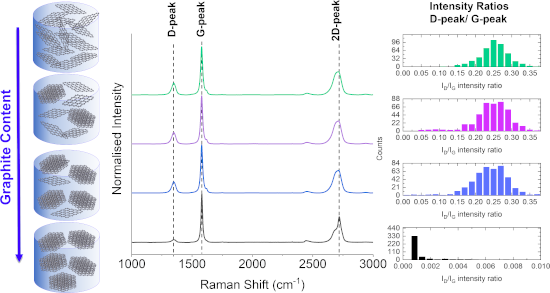
- , it is not clear if Raman spectroscopy has the sensitivity to detect the presence of this material in the final product. In this paper, we examine the effect that increasing amounts of unexfoliated graphitic material in a well-defined sample of GNPs have on the measured Raman spectra. First, a sample
- measuring bulk, reaggregated flakes, the 2D peak retains a symmetric shape, even to values of mean thickness where a single flake of equivalent thickness would yield a clear shoulder in the Raman spectrum [13]. It is clear from these measurements that this method also does not have the sensitivity to


A mid-infrared focusing grating coupler with a single circular arc element based on germanium on silicon
Beilstein J. Nanotechnol. 2023, 14, 478–484, doi:10.3762/bjnano.14.38
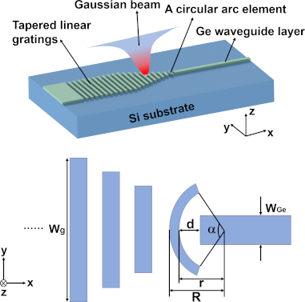
- knowledge, it is the highest coupling efficiency in a full-etch grating coupler based on Ge-on-Si. Moreover, the proposed grating coupler can be used for refractive index (RI) sensing, and the maximum sensitivity is 980.7 nm/RIU when the RI changes from 1 to 1.04. By comparing with traditional grating
- geometry of the CAE. To the best of our knowledge, it is the highest coupling efficiency in full-etch grating couplers based on Ge-on-Si. Moreover, the proposed MIR FGC can also be used for sensing, and the maximum refractive index (RI) sensitivity is 980.7 nm/RIU. Compared with the suspended membrane Ge
- 6877.8 nm to 6917.1 nm. The RI sensitivity is 980.7 nm/RIU obtained from a linear fit of the peak wavelength and RI, as shown in Figure 6b. The sensitivity is twice as large as that in [20]. Furthermore, the proposed sensor is a full-etch structure based on Ge-on-Si, which can be achieved by a single


Quercetin- and caffeic acid-functionalized chitosan-capped colloidal silver nanoparticles: one-pot synthesis, characterization, and anticancer and antibacterial activities
Beilstein J. Nanotechnol. 2023, 14, 362–376, doi:10.3762/bjnano.14.31
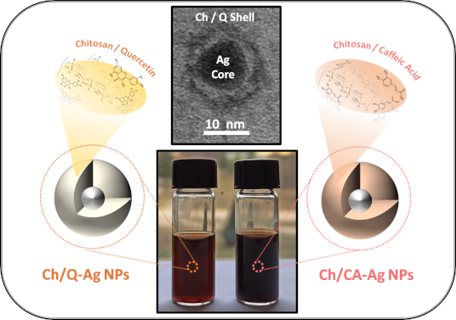
- and their viability, as it greatly simplifies the procedure for measuring proliferation over MTT, reduces assay time, and increases the sensitivity of the assay [73]. In this study, the dose-dependent cell viabilities of human brain glioblastoma (U-118 MG) and human retinal pigment epithelium (ARPE-19


Recent progress in cancer cell membrane-based nanoparticles for biomedical applications
Beilstein J. Nanotechnol. 2023, 14, 262–279, doi:10.3762/bjnano.14.24

- nanoparticles exhibit various effects (e.g., homotypic targeting, prolonging drug circulation, regulating the immune system, and penetrating biological barriers) after encapsulation by cancer cell membranes. The sensitivity and specificity of diagnostic methods will also be improved by utilizing the properties
- insufficient sensitivity of tumor tissue and serious side effects [91]. Thus, exploring more efficient radiosensitizers is a feasible way to improve the efficacy of radiotherapy. By improving the biocompatibility and tumor targeting ability of radiosensitizers, the concentration of radiosensitizers can be
- anticancer effects [76]. After QT was delivered to tumor tissue by the active targeting ability of the membrane, the sensitivity to radiotherapy was effectively improved, and a strong anticancer effect was exerted under X-ray irradiation [76]. Gong et al. designed a pH-responsive multifunctional biomimetic


Nanotechnology – a robust tool for fighting the challenges of drug resistance in non-small cell lung cancer
Beilstein J. Nanotechnol. 2023, 14, 240–261, doi:10.3762/bjnano.14.23
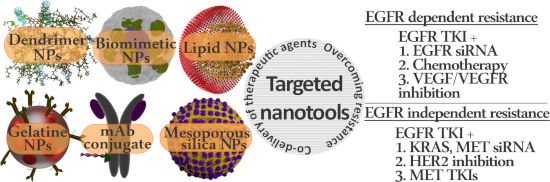
- effect of gefitinib and siRNA may be regarded as proof of restored sensitivity of EGFR-positive NSCLC to gefitinib as a result of silencing the expression of resistance-related genes [71]. Therapy consisting of EGFR siRNA combined with EGFR TKIs and anti-EGFR monoclonal antibodies can additively enhance


High–low Kelvin probe force spectroscopy for measuring the interface state density
Beilstein J. Nanotechnol. 2023, 14, 175–189, doi:10.3762/bjnano.14.18
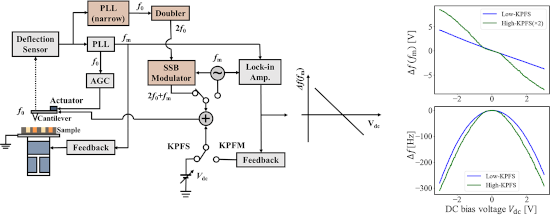
- advantages, namely high sensitivity to the electrostatic force gradient, high detection sensitivity using a cantilever with a weak spring constant at the first resonance, ease of implementation in adding FM-AFM, and no need to enhance the bandwidth of the cantilever deflection sensor. FM-KPFM is used to



Intermodal coupling spectroscopy of mechanical modes in microcantilevers
Beilstein J. Nanotechnol. 2023, 14, 123–132, doi:10.3762/bjnano.14.13
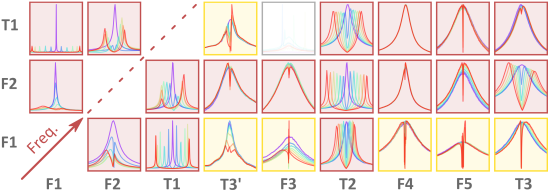
- of nanotechnology. Fundamental research in atomic interactions, molecular reactions, and biological cell behaviour are key focal points, demanding a continuous increase in resolution and sensitivity. While renowned fields such as optomechanics have marched towards outstanding signal-to-noise ratios
- the topographical features [1][2][3][4][5][6]. There is, however, room for improvement in cutting-edge AFM experiments, as the standard quantum limit in sensitivity, represented by a minimum between detection noise and backaction noise, has not been reached [7][8]. Beyond this limit, techniques exist
- coherent bimodal drive to amplify the signal of the fundamental mode. Both increase the signal-to-noise ratio of the measurement, creating opportunity for either improved sensitivity or increased speed. Furthermore, sideband cooling has a secondary use in ultrahigh-vacuum AFM as a tool for controlling the


Characterisation of a micrometer-scale active plasmonic element by means of complementary computational and experimental methods
Beilstein J. Nanotechnol. 2023, 14, 110–122, doi:10.3762/bjnano.14.12
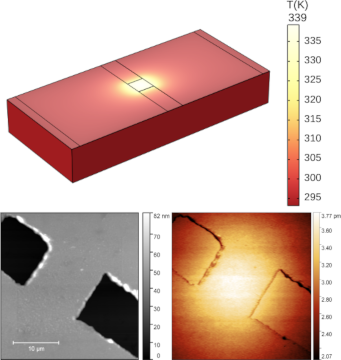
- . Because of this extreme sensitivity, small changes in the local temperature, and hence in optical constants, will result in subtle but appreciable changes of reflectivity in the SPR curve. Homodyne detection, with the modulated electric currents as reference, enables a detailed examination of the
- moved to remove the silver. The investigations carried out consist of two experimental correlative methods. The first method is the above discussed enhanced SPR experiment, based on an ATR setup whose sensitivity is enhanced through the addition of a lock-in amplifier. The second method probes the
- . The reference phase of the LIA was chosen to maximise X. The LIA was set to a time constant of τ = 300 ms, with second-order low-pass filtering and a sensitivity of 30 mV to avoid spurious input overloads. Once this set was recorded, the stage was moved 1 × 10⁻² degrees to the next angular position in




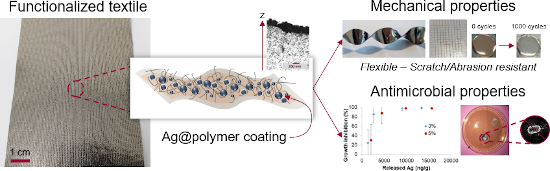
Antimicrobial and mechanical properties of functionalized textile by nanoarchitectured photoinduced Ag@polymer coating
Beilstein J. Nanotechnol. 2023, 14, 95–109, doi:10.3762/bjnano.14.11
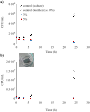
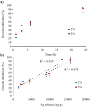
- lower than the maximum effective dose is not linear, unlike that of E. coli bacteria, confirming a higher sensitivity to silver, even in the presence of low amounts of released silver (90% inhibition rate for approximately 2.5 µg/g released silver). This effect, more pronounced for C. albicans than E
- . coli has also been observed by Akinsiku et al. [56], who determined that the sensitivity to silver varies by a factor of 5 between clinical isolates of E. coli and C. albicans. The mechanisms leading to this difference do not seem to have been elucidated so far. However, some hypotheses can be put
- process of the cell [59]. Moreover, C. albicans has been reported as particularly sensitive to ROS, which may be one of the reasons for its higher sensitivity to silver than other microorganisms [60]. The culture medium could also impact microorganism susceptibility to silver ions. For comparison purposes



Structural studies and selected physical investigations of LiCoO2 obtained by combustion synthesis
Beilstein J. Nanotechnol. 2022, 13, 1473–1482, doi:10.3762/bjnano.13.121
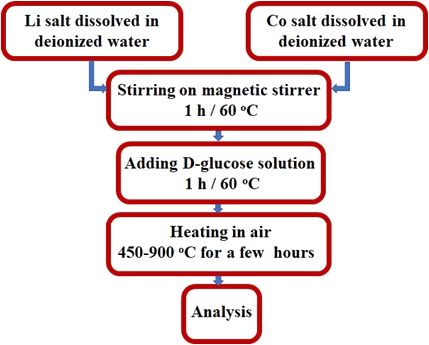
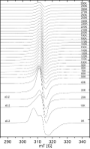
- resonance (EPR) experiments were performed using an X-band ELEXSYS E500 (Bruker, Germany) spectrometer. The samples were placed in a Super High Sensitivity Probehead (Bruker, Germany) cavity and in a cryostat where the temperature was determined and stabilized using an Oxford temperature controller ITC503S