Search results
Search for "van der Waals" in Full Text gives 369 result(s) in Beilstein Journal of Nanotechnology. Showing first 200.
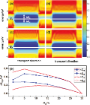
Implementation of data-cube pump–probe KPFM on organic solar cells
Beilstein J. Nanotechnol. 2020, 11, 323–337, doi:10.3762/bjnano.11.24
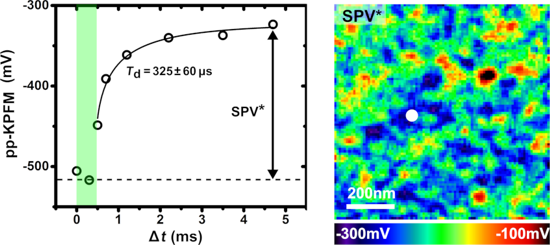
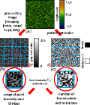
- -based devices, hybrid perovskite thin films and single crystals as well as type-II van der Waals heterojunctions based on transition metal dichalcogenides. Experimental Nc-AFM and pp-KPFM Noncontact-AFM (nc-AFM) experiments were performed with a ScientaOmicron VT-AFM setup in UHV at room temperature (RT




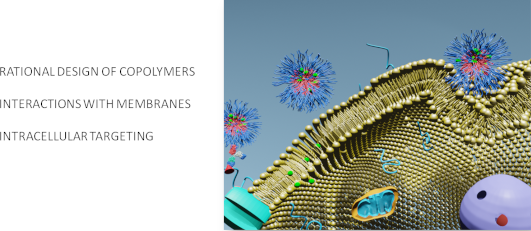
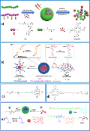
Rational design of block copolymer self-assemblies in photodynamic therapy
Beilstein J. Nanotechnol. 2020, 11, 180–212, doi:10.3762/bjnano.11.15






Size effects of graphene nanoplatelets on the properties of high-density polyethylene nanocomposites: morphological, thermal, electrical, and mechanical characterization
Beilstein J. Nanotechnol. 2020, 11, 167–179, doi:10.3762/bjnano.11.14
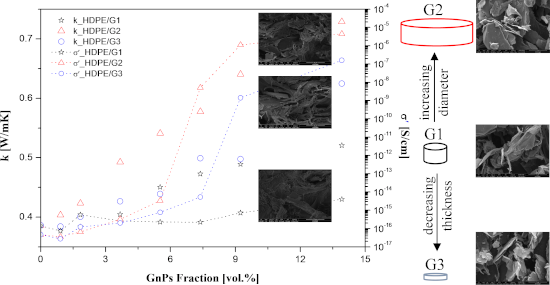
- using available production technologies [8]. GnPs, formed by several graphene layers bonded together by van der Waals forces, are a potential alternative to graphene since they exhibit interesting properties and their fabrication cost is lower [8][9]. Numerous studies performed on nanocomposites with
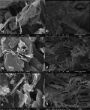


Recent progress in perovskite solar cells: the perovskite layer
Beilstein J. Nanotechnol. 2020, 11, 51–60, doi:10.3762/bjnano.11.5
- organic cation, M2+ is a divalent metal, and X− is a halide anion [57]. The overall 2D structure is stabilized via van der Waals interactions. Importantly, the 2D perovskite structure can also be considered as a multiple-quantum-well structure, which obviously suppresses the ion migration that is evident
- counterpart. Here, the van der Waals gap between the organic layer and the inorganic slab is removed. The organic layers are connected with perovskite layers by strong hydrogen bonds in the 2D Dion–Jacobson (2DDJ) perovskite, which has a reasonably enhanced stability compared to the 2DRP perovskite. Guo et al


Mobility of charge carriers in self-assembled monolayers
Beilstein J. Nanotechnol. 2019, 10, 2449–2458, doi:10.3762/bjnano.10.235
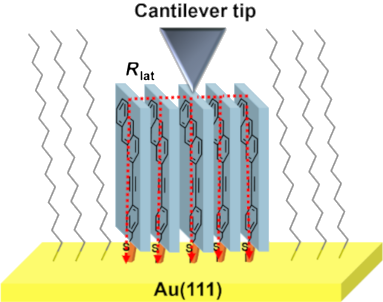
- length of the two SAM-forming molecules (1.68 nm for PAT, according to van der Waals structures [39] and 2.3 nm for the HDT [40]). The electrical conductivity as determined from the I–V-curves measured with the conductive probe AFM increases with the calculated diameter of the PAT islands (Figure 2d


The importance of design in nanoarchitectonics: multifractality in MACE silicon nanowires
Beilstein J. Nanotechnol. 2019, 10, 2094–2102, doi:10.3762/bjnano.10.204
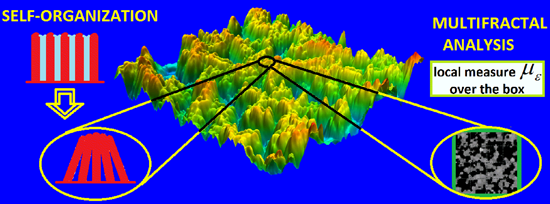
- nanoarchitectonics consists in the approach of building up large structures from nanoscaled units by self-assembly. This self-building is driven by the reciprocal interactions among the units, where these interactions are such as van der Waals, electrostatic, magnetic, molecular, and entropic forces [3]. The




Improvement of the thermoelectric properties of a MoO3 monolayer through oxygen vacancies
Beilstein J. Nanotechnol. 2019, 10, 2031–2038, doi:10.3762/bjnano.10.199
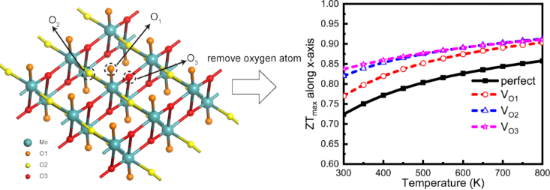
- structures finally lead to only two stable structures after relaxation which is attributed to the absence of interlayer van der Waals forces. It is difficult to calculate the thermal conductivity of the lattice and electrical relaxation time of a 71 atom primitive cell employing Boltzmann transport theory


First principles modeling of pure black phosphorus devices under pressure
Beilstein J. Nanotechnol. 2019, 10, 1943–1951, doi:10.3762/bjnano.10.190
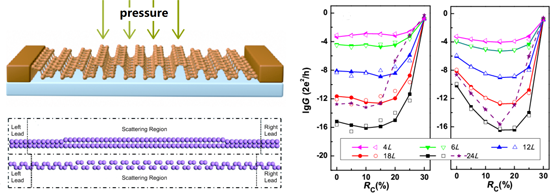
- electronic properties through van der Waals interactions [29]. Although the pressure response of BP has been extensively studied, the dependence of strain-related quantum transport on the conformation in pure BP devices was rarely explored. This is the purpose of this manuscript. Moreover, in addition to




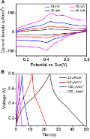
High-tolerance crystalline hydrogels formed from self-assembling cyclic dipeptide
Beilstein J. Nanotechnol. 2019, 10, 1894–1901, doi:10.3762/bjnano.10.184
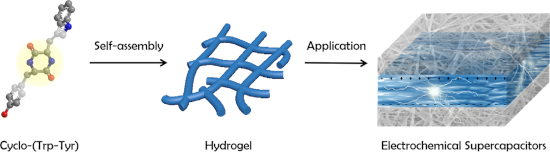
- , which provide a substantial tendency for self-assembly and the formation of gels. In addition, other weak forces, such as π–π stacking, hydrophobic effect, electrostatic interactions, and van der Waals forces, are also serviceable in driving molecular self-assembly of CDPs toward the formation of gels


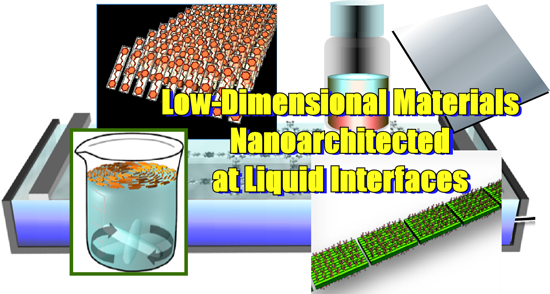
Materials nanoarchitectonics at two-dimensional liquid interfaces
Beilstein J. Nanotechnol. 2019, 10, 1559–1587, doi:10.3762/bjnano.10.153
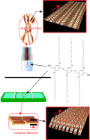
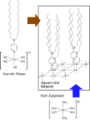
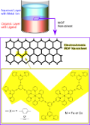
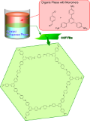
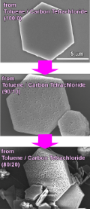
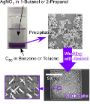
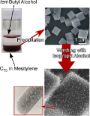
- compared to similar cells prepared with pristine C60 molecules. C60 molecules in a one-dimensional van der Waals solid preserve the electronic structure of C60, but they crystallise in a hexagonal close-packed structure that is different from the cubic crystal structure of pristine C60 molecular crystals













Flexible freestanding MoS2-based composite paper for energy conversion and storage
Beilstein J. Nanotechnol. 2019, 10, 1488–1496, doi:10.3762/bjnano.10.147
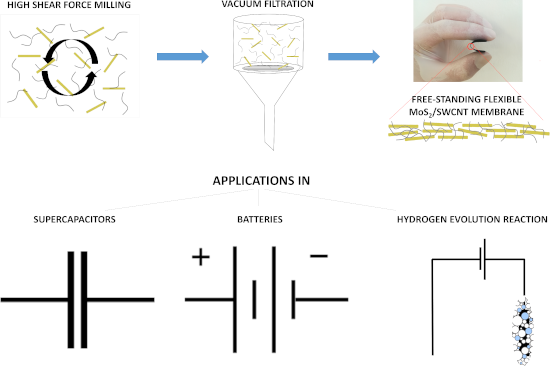
- der Waals spaces between the MoS2 layers forming LixMoS2 accompanied by a phase transformation from trigonal prismatic (2H) to octahedral (1T) (see the following Equation 2) [8][20][21]. The peak at ≈0.3 V corresponds to the conversion of the previously formed LixMoS2 into metallic Mo and LiS2 (see
- composite paper. The measurements were performed at a scan rate of 0.1 mV·s−1 in the voltage range of 0.01–3.0 V vs Li/Li+. In the initial cathodic scan, two dominant reduction peaks at around 1.0 and 0.3 V are detectable (Figure 5a). The first is associated with the insertion of lithium ions into the van


Imaging the surface potential at the steps on the rutile TiO2(110) surface by Kelvin probe force microscopy
Beilstein J. Nanotechnol. 2019, 10, 1228–1236, doi:10.3762/bjnano.10.122
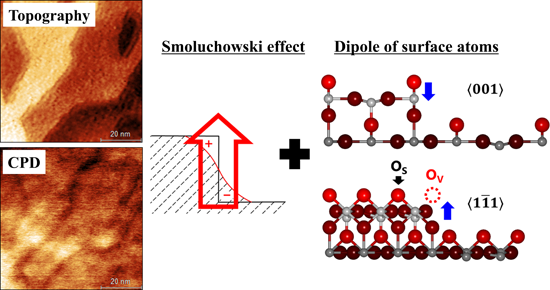
- distance. The long-range contribution (ΔfLR), van der Waals or electrostatic forces, to the Δf curve was fitted to the inverse power law z−n [52]. By subtracting the ΔfLR curve from the Δf curve, we obtained the short-range contribution (ΔfSR). Finally, the ΔfSR curve was converted to the short-range force
- profile perpendicular to the direction (black line in Figure 2a), the height of the step was about 200 pm. The measured step height of 200 pm was smaller than real step height of 325 pm [32], which can be explained by the large tip–sample distance. Actually, at the large tip–sample distances, the van der
- Waals force is dominant and the contribution of the force from the tip apex becomes weak and the force from the rest of the cantilever becomes significant. Therefore, the observed height of step was smaller than that of the real one. Before the experiments, we verified that the distance calibration of
![[Graphic 16]](/bjnano/content/inline/2190-4286-10-122-i16.svg?max-width=637&scale=1.18182) and
and ![[Graphic 17]](/bjnano/content/inline/2190-4286-10-122-i17.svg?max-width=637&scale=1.18182) .
.
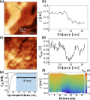

![[Graphic 38]](/bjnano/content/inline/2190-4286-10-122-i38.svg?max-width=637&scale=1.18182) and
and ![[Graphic 39]](/bjnano/content/inline/2190-4286-10-122-i39.svg?max-width=637&scale=1.18182) steps. (a) Topographic image...
steps. (a) Topographic image...


![[Graphic 72]](/bjnano/content/inline/2190-4286-10-122-i72.svg?max-width=637&scale=1.18182) , b)
, b) ![[Graphic 73]](/bjnano/content/inline/2190-4286-10-122-i73.svg?max-width=637&scale=1.18182) , c) reduced
, c) reduced ![[Graphic 74]](/bjnano/content/inline/2190-4286-10-122-i74.svg?max-width=637&scale=1.18182) , and d)
, and d) ![[Graphic 75]](/bjnano/content/inline/2190-4286-10-122-i75.svg?max-width=637&scale=1.18182) steps. B...
steps. B...
Pure and mixed ordered monolayers of tetracyano-2,6-naphthoquinodimethane and hexathiapentacene on the Ag(100) surface
Beilstein J. Nanotechnol. 2019, 10, 1188–1199, doi:10.3762/bjnano.10.118
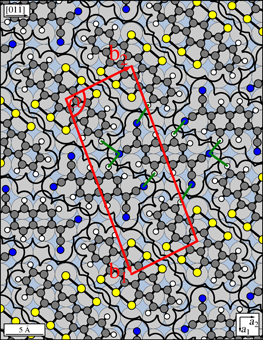
- 150.2 Å2 and is large enough for containing one flat-lying HTPEN molecule, as illustrated in Figure 2b. The molecular geometry used for the hard-sphere model of HTPEN (Figure 2b) is based on the crystal structure data of HTPEN [19] and the van der Waals radii taken from [32]. Table 1 shows all geometric
- distances from [35], and van der Waals radii from [32]. The structure is composed of parallel rows of molecules aligned along their long axes. The major intermolecular interactions are given by hydrogen bonds between the four cyano groups at the corners and hydrogen atoms on the long sides of the molecule
- model of the unit cell (Figure 5b) is based on the assumption of flat-lying molecules. It indicates a ca. 0.5 Å overlap of the van der Waals radii of the peripheral atoms. We consider this as meaningful, although there is some uncertainty about the exact size of the footprint of the molecule on the Ag


Tailoring the magnetic properties of cobalt ferrite nanoparticles using the polyol process
Beilstein J. Nanotechnol. 2019, 10, 1166–1176, doi:10.3762/bjnano.10.116
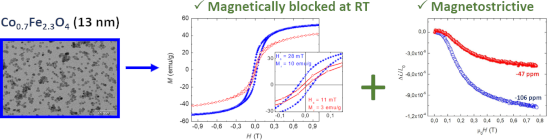
- after 15 h of reaction are clearly more aggregated than those obtained after 6 h, most likely due to stronger van der Waals and/or magnetostatic interactions between bigger nanoparticles (promoted by the drying of the NPs during the sample preparation for TEM) resulting in the clustering of particles


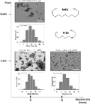


Synthesis and characterization of quaternary La(Sr)S–TaS2 misfit-layered nanotubes
Beilstein J. Nanotechnol. 2019, 10, 1112–1124, doi:10.3762/bjnano.10.111
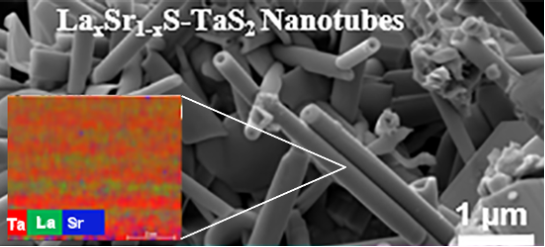
- van der Waals forces. Frequently, the difference in the work function between the MX and TX2 slabs leads to a partial charge transfer from the MX slab to that of TX2. This charge transfer induces polar interactions between the layers juxtaposing on the van der Waals forces [29]. As the constituting
- many years later [33][34]. Importantly also, the hexagonal CrS2 (VS2) is not a stable polymorph unless it is intercalated in the galleries of the van der Waals gap by an electron donor (Lewis base). Incidentally, in [32] the authors mention that: “Another type of crystals with a "hollow-rod" shape


Structural and optical properties of penicillamine-protected gold nanocluster fractions separated by sequential size-selective fractionation
Beilstein J. Nanotechnol. 2019, 10, 955–966, doi:10.3762/bjnano.10.96
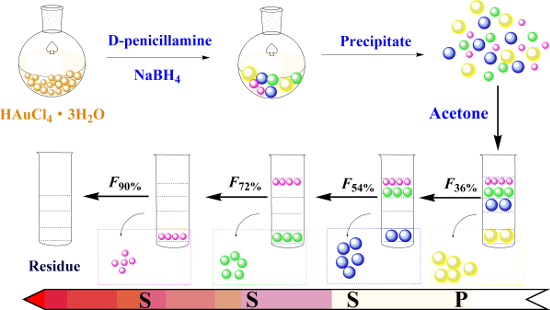
- precipitation technique can reduce the ability of a solvent to disperse clusters by adding a miscible non-solvent to the cluster agglomeration point. The larger clusters are first aggregated due to the greater van der Waals attraction between the clusters, and the clusters aggregated can be precipitated by



Capillary force-induced superlattice variation atop a nanometer-wide graphene flake and its moiré origin studied by STM
Beilstein J. Nanotechnol. 2019, 10, 804–810, doi:10.3762/bjnano.10.80
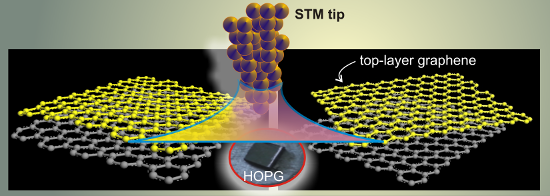
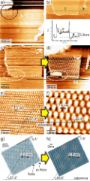
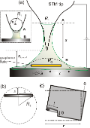
- direction (numbered (1)) and folding axis (numbered (2)) along two arm-chair crystallographic directions that differ by 120°, in agreement with previous studies [5][9][21][34]. Theory There are three significant forces existing at a solid–liquid interface [17]: (a) van der Waals; (b) electrostatic
- force is known to be many orders of magnitude higher than electrostatic or van der Waals interactions [17]. The graphene flake of area 160 × 182 nm2 has undergone three processes as shown in Figure 3c, i.e., a rotation, a tearing along the arm-chair direction for an extent b = 15 nm, and a partial
- arm-chair direction can be found, which amounts to 172 eV. The interlayer binding energy in graphite is 44 meV/atom which is the van der Waals barrier that needs to be overcome for rotation to happen [45]. Theoretical studies showed that the energy barrier for rotation of graphene flakes on graphite


Trapping polysulfide on two-dimensional molybdenum disulfide for Li–S batteries through phase selection with optimized binding
Beilstein J. Nanotechnol. 2019, 10, 774–780, doi:10.3762/bjnano.10.77
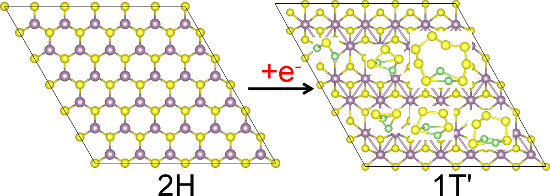
- 3.99 and 3.67 Å, respectively. The large distance and the small binding strength of S8 on 2H-MoS2 and 1T'-MoS2 monolayers indicate that the interaction mainly originates from van der Waals interactions. To understand the binding between LPSs and the 2HMoS2- and 1T'-MoS2 monolayers, the charge-density


Features and advantages of flexible silicon nanowires for SERS applications
Beilstein J. Nanotechnol. 2019, 10, 725–734, doi:10.3762/bjnano.10.72
- S16). As reported in [42] we assume that capillary forces dominate over van der Waals forces by several orders of magnitude. During drying, the adhesion between liquid and SiNW surface pulls and bends the SiNWs, changing the substrate morphology and consequently increasing the SERS intensity. Water


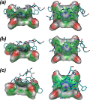
The effect of translation on the binding energy for transition-metal porphyrines adsorbed on Ag(111) surface
Beilstein J. Nanotechnol. 2019, 10, 706–717, doi:10.3762/bjnano.10.70
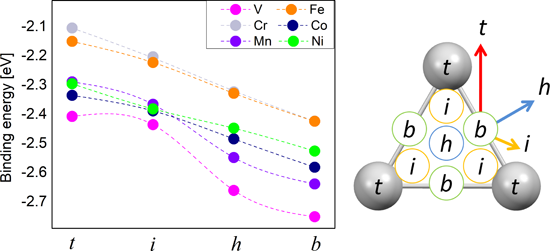
- are detailed here as resulted from DFT calculations. Van der Waals interactions as well as the strong correlation in 3d orbitals of transition metals were taken into account in all calculations, including the structural relaxation. For each system we investigate four relative positions of the metallic
- molecule–surface charge transfer, analyzed for different geometric configurations allows us to propose qualitative models, relevant for the understanding of the self-assembly processes and related phenomena. Keywords: Ag(111) surface; DFT+U; metal porphyrine; van der Waals; Introduction Metalloporphyrins
- . Such modifications of the electronic structure are of great interest for all potential applications. Theoretical assessment of the adsorption mechanism of TMPP on silver in the framework of DFT ask for an accurate estimation of the van der Waals dispersive interactions, which are expected to be


![[Graphic 1]](/bjnano/content/inline/2190-4286-10-70-i1.svg?max-width=637&scale=1.18182) , for all systems and relative molecule–surface positions. Right: symm...
, for all systems and relative molecule–surface positions. Right: symm...


![[Graphic 7]](/bjnano/content/inline/2190-4286-10-70-i7.svg?max-width=637&scale=1.18182) for selected TMPP systems (M = V, Mn, Co; red: positive values, blue: negative value...
for selected TMPP systems (M = V, Mn, Co; red: positive values, blue: negative value...
Self-assembly and wetting properties of gold nanorod–CTAB molecules on HOPG
Beilstein J. Nanotechnol. 2019, 10, 696–705, doi:10.3762/bjnano.10.69
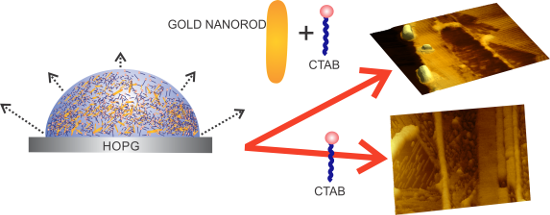
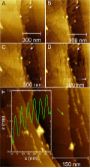
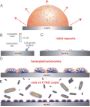
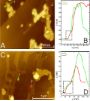
- extended along the substrate plane. Such a configuration of CTAB molecules oriented parallel to the HOPG surface has been observed experimentally [53], where van der Waals interactions are dominant between molecules and the substrate. The main focus of the present work is to investigate CTAB


Topochemical engineering of composite hybrid fibers using layered double hydroxides and abietic acid
Beilstein J. Nanotechnol. 2019, 10, 589–605, doi:10.3762/bjnano.10.60
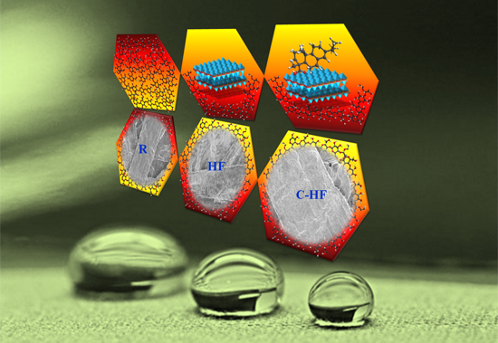
- LDH-hybridized fibers (HF). The results revealed a variety of correlations between materials and their properties due to characteristic surface morphology, functional groups, hydrogen bonding and natural co-materials such as lignin and hemicelluloses. Attractive and repulsive van der Waals forces
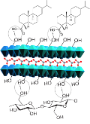
- . The present work focuses on stacking abietic acid and cellulose on each side of LDHs via van der Waals forces of hydrogen bonding. Thus, LDH works as an assembling agent. The raw materials used in this study were bleached pine kraft pulp and unbleached spruce kraft pulp. Bleaching is a process in




Direct observation of the CVD growth of monolayer MoS2 using in situ optical spectroscopy
Beilstein J. Nanotechnol. 2019, 10, 557–564, doi:10.3762/bjnano.10.57
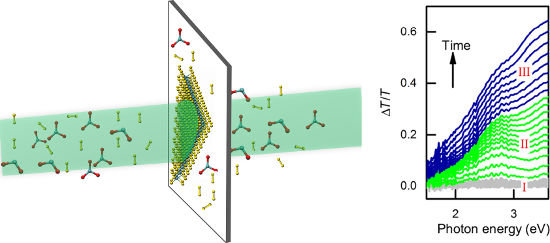
- is negligible, for the van der Waals epitaxy of MoS2 on the transparent sapphire substrate, the DT spectrum can thus be generally associated with the absorption of the adlayer. Consequently, the growth can be monitored in situ and in real time, and the detailed information associated with the


Mo-doped boron nitride monolayer as a promising single-atom electrocatalyst for CO2 conversion
Beilstein J. Nanotechnol. 2019, 10, 540–548, doi:10.3762/bjnano.10.55
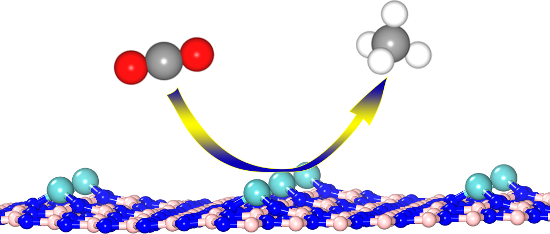
- Ernzerhof (PBE) [56] functional within the generalized gradient approximation (GGA) [57]. The van der Waals (vdW) interactions were described using the empirical correction in Grimme’s scheme [58]. The calculational method has been successfully used for the investigation of selective adsorption and reaction


Mechanical and thermodynamic properties of Aβ42, Aβ40, and α-synuclein fibrils: a coarse-grained method to complement experimental studies
Beilstein J. Nanotechnol. 2019, 10, 500–513, doi:10.3762/bjnano.10.51
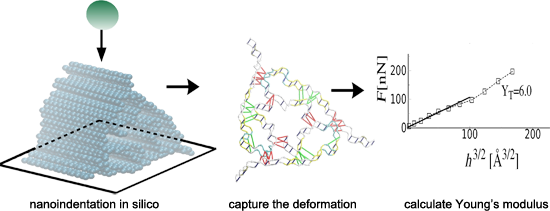
- to a van der Waals radius, as proposed by Tsai and co-workers [49]. A sphere with the radius enlarged by a factor of 1.24 is built around the atom. If two amino acids have heavy atoms with overlapping spheres, then we consider a native contact between those two Cα atoms. In Figure 2, we show the CG