


Search results
Search for "vibration" in Full Text gives 337 result(s) in Beilstein Journal of Nanotechnology. Showing first 200.
Polyvinylpyrrolidone as additive for perovskite solar cells with water and isopropanol as solvents
Beilstein J. Nanotechnol. 2019, 10, 2374–2382, doi:10.3762/bjnano.10.228
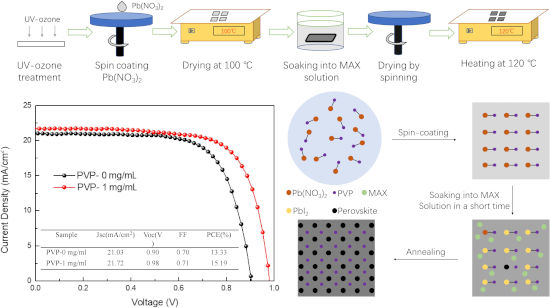
- . The position of the C=O stretching vibration in pure PVP is 1662 cm−1, in line with the results obtained by Bo Li and co-workers [36]. The IR spectra of the perovskite films with three different amounts of PVP additive are given in Figure 6b. After the addition of small amounts of PVP, the C=O
- stretching vibration is insignificant. Figure 6c shows an enlargement of the position of the C=O stretch of Figure 6b (dashed box). The C=O stretching vibration of the perovskite films appears at lower wavenumbers than that of pure PVP, because the formation of the adduct causes the strength of the carbon




Multiwalled carbon nanotube based aromatic volatile organic compound sensor: sensitivity enhancement through 1-hexadecanethiol functionalisation
Beilstein J. Nanotechnol. 2019, 10, 2364–2373, doi:10.3762/bjnano.10.227
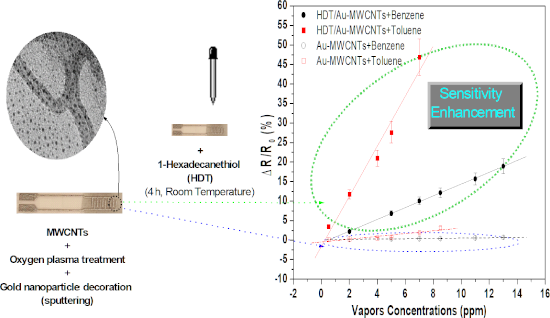
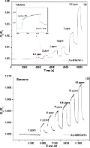
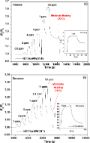
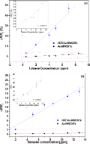
- corresponding bands are found at 2960, 1730, 1470, 1290 and 1076 cm−1, which can be assigned to C–H stretching, C=O stretching, C–H bending, C–O stretching and C–H anti-stretching vibration mode, respectively. The existence of the associated Au–S bond weak intensity peak positioned at 669 cm−1 proves the
- attachment of 1-hexadecanethiol on the Au-MWCNT sensor layer. The corresponding S–H stretch vibration mode band is found at 2360 cm−1 [27][28][29][30]. Moreover, other techniques were used for thiol monolayer characterisation. In previous work [31][32], different thiol chains were characterized by Raman




The role of Ag+, Ca2+, Pb2+ and Al3+ adions in the SERS turn-on effect of anionic analytes
Beilstein J. Nanotechnol. 2019, 10, 2338–2345, doi:10.3762/bjnano.10.224
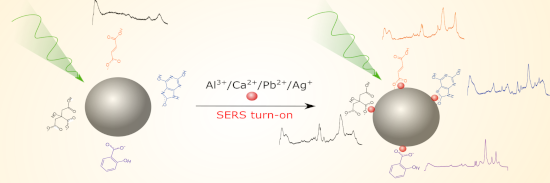
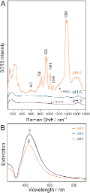
- vibration observed at 1587 cm−1 in the Raman spectrum shifts to 1582 cm−1 in the SERS spectrum. The SERS spectrum of salicylic acid at a concentration of 0.1 mM was reported previously by Alvarez-Puebla and co-workers [23]. The SERS spectrum could be obtained only at acidic pH values of the colloidal cit
- interaction with the silver surface induces even more pronounced spectral shifts. The C=C stretching vibration observed at 1653 cm−1 in the Raman spectrum of the 0.1 M solution shifts to 1642 cm−1 in the SERS spectrum (Supporting Information File 1, Figure S3C). In the SERS spectra of salicylic acid and
- vibration, which appears usually as a strong band in the 1360–1450 cm−1 range of the Raman spectra of carboxylic acids [33][34]. It can be observed that for uric acid the highest Raman enhancement is obtained when the chemisorption is mediated by Pb2+ adions, while for salicylic and fumaric acid Al3+ leads


Targeted therapeutic effect against the breast cancer cell line MCF-7 with a CuFe2O4/silica/cisplatin nanocomposite formulation
Beilstein J. Nanotechnol. 2019, 10, 2217–2228, doi:10.3762/bjnano.10.214
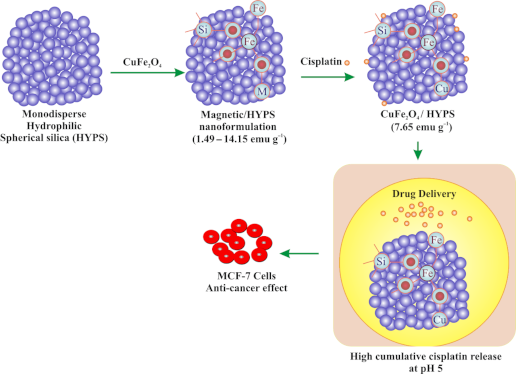
- nanoparticles at the pores of HYPS. The FTIR technique was used to confirm the bonding and vibrational modes of copper ferrite with silica (Figure 3). The FTIR spectra of HYPS showed several peaks corresponding to Si–O–Si stretching and vibration, hydroxyl and Si–O bonding around 432 cm−1, 800 cm−1 and between


Improved adsorption and degradation performance by S-doping of (001)-TiO2
Beilstein J. Nanotechnol. 2019, 10, 2116–2127, doi:10.3762/bjnano.10.206
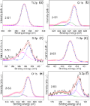
- samples, the S-doped samples exhibit the Ti–S vibration mode with the corresponding absorption peak located at 1060 cm−1. Compared to the spectrum of the S-doped samples synthesized at 180 °C (Figure 3a), the spectrum of the S-doped samples produced at 250 °C (Figure 3b) exhibits the following differences
- : (1) the Ti–S vibration is stronger, (2) a new vibrational mode appears, i.e., the Ti–O–S vibration at 1160 cm−1 [21] caused by S6+ replacing Ti4+ (this was also confirmed by the XPS results given below), (3) the S=O vibration in the range of 1380–1400 cm−1 results from a sulfate complex formed by
- surface-adsorbed SO42− and TiO2 [30][31], (4) the vibrational modes at 1800 and 2515 cm−1 can be attributed to the –COOH group [32][33]; while those at 2850 and 2920 cm−1 can be attributed to the C–H group [34]; the C–OH vibration mode is located at 880 cm−1 [35][36], (5) the vibrational mode at 2138 cm−1




Processing nanoporous organic polymers in liquid amines
Beilstein J. Nanotechnol. 2019, 10, 1844–1850, doi:10.3762/bjnano.10.179
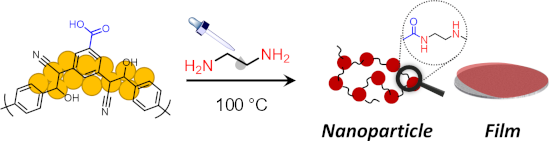
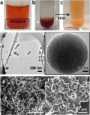
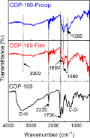
- =O, and C–N–H stretching vibrations, respectively [26]. The strong peak at 1365 cm−1 in both COP-100-Film and COP-100-Precip. spectra were attributed to the ethylene C–H stretching vibration of EDA. The direct formation of the amide functionality could be possibly due to the easy condensation with



Tuning the performance of vanadium redox flow batteries by modifying the structural defects of the carbon felt electrode
Beilstein J. Nanotechnol. 2019, 10, 1698–1706, doi:10.3762/bjnano.10.165
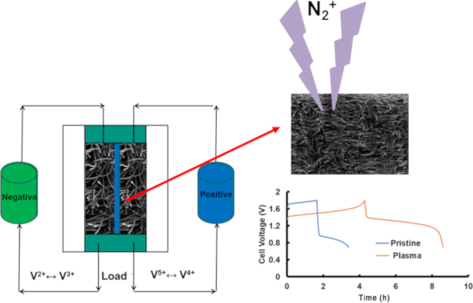
- cm−1 and 1356 cm−1 are compared. The G-band in graphitic material arises from the in-plane vibration of sp2 carbon atoms. Whereas the D-band arises from out-of-plane vibrations from carbon associated with defects. Therefore, the ratio of the intensity of the D- and G-bands (ID/IG) gives direct


Layered double hydroxide/sepiolite hybrid nanoarchitectures for the controlled release of herbicides
Beilstein J. Nanotechnol. 2019, 10, 1679–1690, doi:10.3762/bjnano.10.163
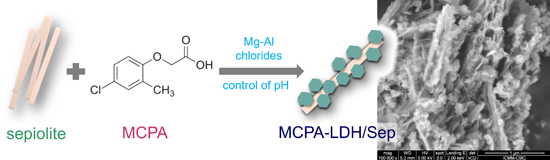
- specially to the very intense bands at 1748 and 1707 cm−1 assigned to the νC=O vibration modes of the carboxylic group of MCPA, which are not observed in the spectra of both the MCPAie-LDH and the MCPAie-LDH/Sep1:1_150C hybrids (Figure 2B). They are shifted towards lower wavenumbers expected at around 1610
- cm−1 (symmetric and asymmetric stretching vibration of ionized COO− groups) [39] as the carboxylic group should be present as carboxylate. In fact, the spectra show a large band in the range of 1630–1600 cm−1 due to the overlap of such bands with the one ascribed to δHOH vibration modes of water
- ) and d(113) are observed in all the nanoarchitectures formed, confirming the formation of the LDH structure for all the studied LDH/sepiolite ratios. The formation of true hybrid nanoarchitectures was confirmed by infrared and NMR spectroscopy. For this purpose, the spectral region of the OH vibration


Subsurface imaging of flexible circuits via contact resonance atomic force microscopy
Beilstein J. Nanotechnol. 2019, 10, 1636–1647, doi:10.3762/bjnano.10.159
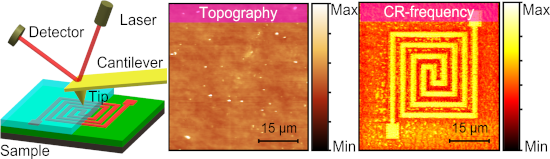
- microscopy where the sample is ultrasonically excited at a specified frequency and the amplitude and phase of the cantilever are recorded [13][14]. After that, the theoretical analysis of the cantilever vibration with the tip contacting the sample surface was intensively investigated, including the influence
- . The influence of some key imaging factors was investigated including the applied normal force, cantilever stiffness, vibration eigenmode, and the elastic properties and thickness of each layer. The experimental results were then interpreted with theoretical analysis considering the dynamic model of
- (PC) and polyimide (PI) for the bottom and top layers, and Au, Cu, Ti, Ag and Mg for the middle layer. The mechanical parameters of these materials are listed in Table 2. The Young’s modulus and Poisson’s ratio of the silicon substrate are 160 GPa and 0.278, respectively. Cantilever vibration model



Chiral nanostructures self-assembled from nitrocinnamic amide amphiphiles: substituent and solvent effects
Beilstein J. Nanotechnol. 2019, 10, 1608–1617, doi:10.3762/bjnano.10.156
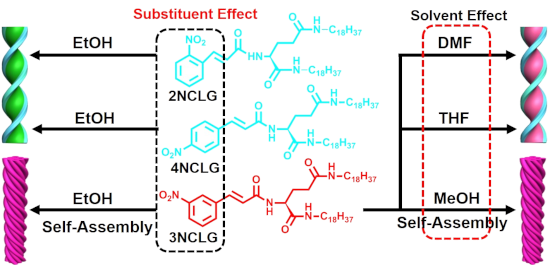
- self-assembled molecules, FTIR spectroscopy was employed to evaluate the formation mechanism of self-assembly. As shown in Figure 5, for the 2NCLG and 4NCLG assemblies, two absorption bands at ≈3330 cm−1 and ≈3284 cm−1 were observed, which can be ascribed to the N–H stretching vibration. While for
- 3NCLG, the shoulder absorption band showed a red shift to ≈3328 cm−1 and the main absorption band displayed a blue shift to ≈3302 cm−1, which illustrated the weaker hydrogen bonding between 3NCLG molecules than that of 2NCLG and 4NCLG. The CH3 and CH2 stretching vibration bands of alkyl chains at ≈2955
- , 2920 and 2849 cm−1 showed no obvious change. The band at ≈1650 cm−1 was almost the same for all the three assemblies, which was assigned to the C=O stretching vibration of the amide I. However, the amide II band of the C–N–H bending vibration of the 2NCLG and 4NCLG assemblies was at ≈1560 cm−1, while




Development of a new hybrid approach combining AFM and SEM for the nanoparticle dimensional metrology
Beilstein J. Nanotechnol. 2019, 10, 1523–1536, doi:10.3762/bjnano.10.150
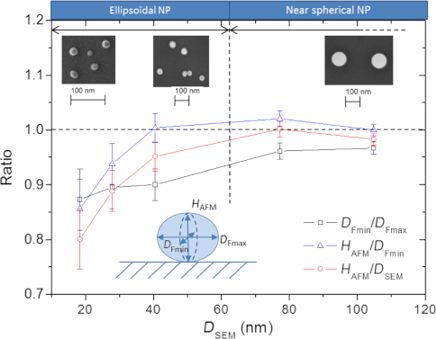
- too strong interactions with the sample and subsequent NP displacements. For vibration considerations, each instrument sits on a massive concrete block decoupled from the building. Furthermore, the AFM instrument is placed in an enclosure to protect it against acoustic noise and installed on an anti
- -vibration table. The pixel size was set to 5.0 nm for all AFM measurements. Moreover, the scanning parameters are fixed regardless of the NP population under study. The scan speed is equal to 4 µm/s with constant PID parameters set at 0.8 for integral gain and 10 for the proportional one. Laboratory




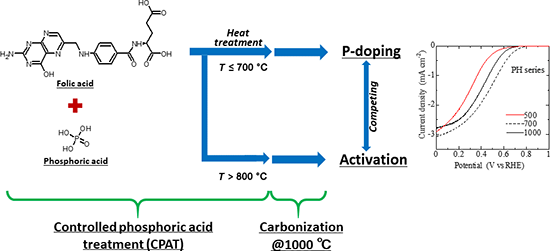
Synthesis of P- and N-doped carbon catalysts for the oxygen reduction reaction via controlled phosphoric acid treatment of folic acid
Beilstein J. Nanotechnol. 2019, 10, 1497–1510, doi:10.3762/bjnano.10.148
- such as changes in the chemical states of N and the amount of P were retained. The work function of PH-series carbon materials was determined by the vibration capacitance (Kelvin) method and fluctuated in the range of 5.4–5.6 eV (Figure 6a), decreasing with increasing CPAT temperature in the range of
- 451.4 eV. Work functions were measured under N2 by a vibration capacity electrometer (DCU series10, KP Technology). TEM images of the carbon materials. (a) H-1000, (b) P-1000, (c) HH-700, (d) PH700. Correlations between P/C atomic ratio and N/C atomic ratio of P-series precursors (open circles) and HP





The effect of magneto-crystalline anisotropy on the properties of hard and soft magnetic ferrite nanoparticles
Beilstein J. Nanotechnol. 2019, 10, 1348–1359, doi:10.3762/bjnano.10.133
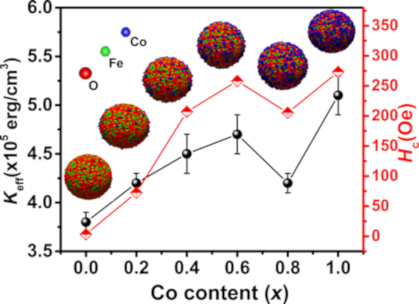
- measured at 300 K in the wave number range of 400–4000 cm−1. Figure 5 shows the FTIR spectra of the samples. The absorption band observed at around 3385 cm−1 is attributed to the vibration mode of the O–H groups in the H2O molecules. The peak observed at around 1556 cm−1 is ascribed to amide II (NH2
- deformation, N–H bending) [26] and the absorption peak at around 1330 cm−1 is related to the stretching vibration bands of the carboxylate group (C=O) [27]. The latter two peaks (1556 and 1330 cm−1) are observed in all samples and can be ascribed to the presence of some impurity in the KBr pellets, which is
- used for FTIR analysis. Two main absorption bands are observed at frequencies below 1000 cm−1. The band around 569 cm−1 and the band around 444 cm−1 are related to the vibration of metal–oxygen (Me–O) bonds at tetrahedral and octahedral sites, respectively [28][29]. The presence of these two bands


Janus-micromotor-based on–off luminescence sensor for active TNT detection
Beilstein J. Nanotechnol. 2019, 10, 1324–1331, doi:10.3762/bjnano.10.131
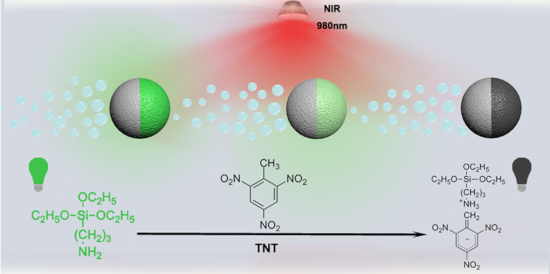
- stretching vibration, can be seen in the FTIR spectra of APTES-UCNPs. These results indicate that the UCNPs were successfully modified with APTES. It has been demonstrated that the amine group is important to allow UCNPs to detect TNT. To verify the functionalization of the APTES-UCNPs with amine groups, the


A silver-nanoparticle/cellulose-nanofiber composite as a highly effective substrate for surface-enhanced Raman spectroscopy
Beilstein J. Nanotechnol. 2019, 10, 1270–1279, doi:10.3762/bjnano.10.126
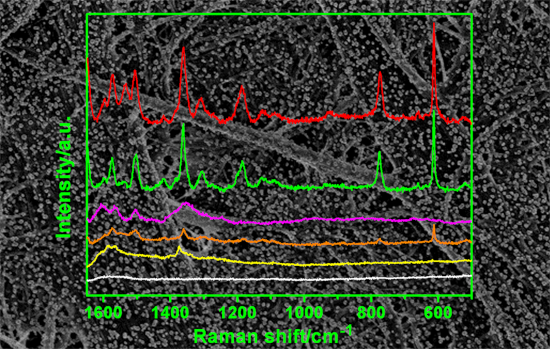
- of adenosine and thymidine (Supporting Information File 1, Figure S7), different spectral features were observed. For adenosine (Figure 6, black curve), the strong scattering band located at 731 cm−1 is attributed to the ring breathing vibration of the adenine moiety, and the band at 1326 cm−1 is
- assigned to the stretching vibration of C–N and the bending vibration of C–H [67]. For thymidine (Figure 6, red curve), the weak bands at 799 and 1194 cm−1 are due to the ring breathing vibration and C–CH3 stretching vibration of the thymine moiety, respectively [68]. It was noticed that the signal


Molecular attachment to a microscope tip: inelastic tunneling, Kondo screening, and thermopower
Beilstein J. Nanotechnol. 2019, 10, 1243–1250, doi:10.3762/bjnano.10.124
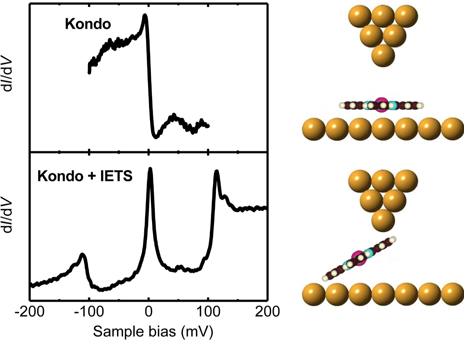
- reversible molecule transfer process between the tip and the surface indicates that the MnPc molecule is attached to the STM tip apex and not to any other site on the tip. Vibration-mediated electron transport in a molecular junction In the following, the electron transport through a MnPc molecule suspended
- typical signature for an inelastic electron tunneling process involving the excitation of molecular vibration modes [5][22]. The IETS features are asymmetric in intensity with respect to the Fermi energy and will be discussed shortly at the end of this section. There are significant changes in the dI/dV
- to the vibration-assisted Kondo resonance for which the excess energy of the electrons due to a finite voltage is compensated by activating a vibration mode [12][25][26][27]. In addition, based on the comparison with the previously reported STM-IETS of FePc/Ag(111) [28] and theoretically calculated


Synthesis and characterization of quaternary La(Sr)S–TaS2 misfit-layered nanotubes
Beilstein J. Nanotechnol. 2019, 10, 1112–1124, doi:10.3762/bjnano.10.111
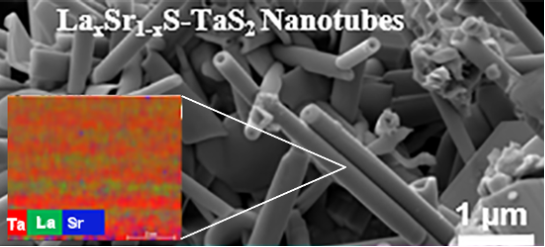
- cm−1 was assigned to the two-phonon bands of the TaS2 slab. The 125 cm−1 peak was assigned to the out-of-phase vibration of the LaS lattice. On the other hand, the 150 cm−1 peak was assigned to the in-phase phonon of LaS. The E2g mode of the TaS2 in the MLC lattice is found in the energy range of
- assigned to the A1g vibration of the 2H-TaS2. Obviously, the diameter, number of layers and chirality varies from one nanotube to the next, and from one batch to the next. This polydispersity leads to the broadening of the peaks and minor shifts in their positions. Increasing the Sr content in the lattice


Scavenging of reactive oxygen species by phenolic compound-modified maghemite nanoparticles
Beilstein J. Nanotechnol. 2019, 10, 1073–1088, doi:10.3762/bjnano.10.108
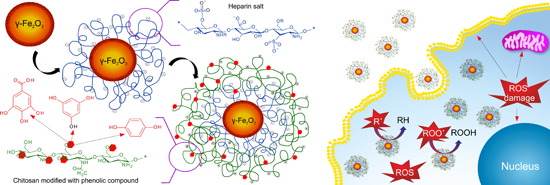
- oxidation under mildly acidic conditions. This high ζ-potential value is considered to be more than sufficient to ensure good colloidal stability of the particles in water. ATR-FTIR spectra were measured in the range of 800–4000 cm−1. The majority of the absorption peaks associated with the vibration of γ
- -FeO were located below this range, and only one weak peak at ca. 896 cm−1 was ascribed to pure γ-Fe2O3 [25]. The absorption peak above 3000 cm−1 corresponds to the O–H stretching vibration (Figure 3a). According to the TGA results, the γ-Fe2O3 weight loss occurred in two temperature ranges (Figure 3b





Fe3O4 nanoparticles as a saturable absorber for giant chirped pulse generation
Beilstein J. Nanotechnol. 2019, 10, 1065–1072, doi:10.3762/bjnano.10.107
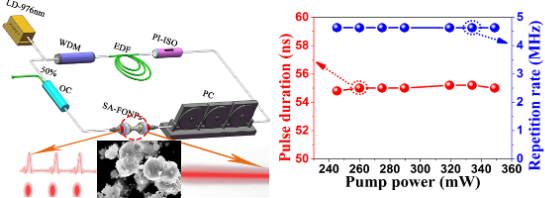
- . Conclusion In summary, FONPs prepared via a sol–hydrothermal method were successfully used as a SA to construct a high-performance fiber laser. The surface properties, molecular vibration, structure and composition of the FONPs were systemically studied using SEM, TEM, HR-TEM, EDS, Raman spectra, XRD and UV


Synthesis of novel C-doped g-C3N4 nanosheets coupled with CdIn2S4 for enhanced photocatalytic hydrogen evolution
Beilstein J. Nanotechnol. 2019, 10, 912–921, doi:10.3762/bjnano.10.92
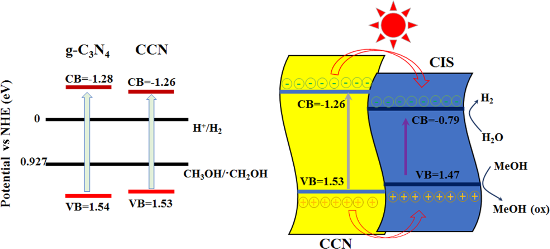
- between 1700 cm−1 and 1200 cm−1 are related to the typical stretching vibration of C–N and C=N in the CN heterocycles [38]. The characteristic peak of 812 cm−1 is due to the particular breathing mode for s-triazine (C3N3) units of g-C3N4 [7]. The FTIR absorption band at the region of >3200 cm−1 is


Rapid, ultraviolet-induced, reversibly switchable wettability of superhydrophobic/superhydrophilic surfaces
Beilstein J. Nanotechnol. 2019, 10, 866–873, doi:10.3762/bjnano.10.87
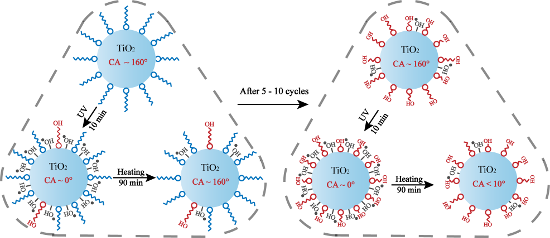
- nanoparticles were subjected to chemical bonding as Si–O–Ti with hydrolysing PFOS. The chemical bonding is verified by the Fourier transfer infrared (FTIR) spectra of TiO2 and TiO2–PFOS coated glass surfaces, as shown in Figure 2. The asymmetric stretching vibration of the Si–O–Ti species was displayed at the
- absorption peak of 1065 cm−1 which further confirmed the dehydration reaction occurred between the hydrolytic PFOS and TiO2. Additionally, there were another three peaks at 1157, 1207, 1243 cm−1, which correspond to the stretching vibration of –CF2− and –CF3 groups [24][30]. Similarly, the absorption peak of
- (assigned to the bending vibration and stretching vibration of –OH groups, respectively) increased, while both peaks reduced after the heating treatment. At the same time, four peaks at 1207 cm−1, 1243 cm−1, 2850 cm−1 and 2919 cm−1 (attributed to the bending vibration and stretching vibration of –CF2- and



Tungsten disulfide-based nanocomposites for photothermal therapy
Beilstein J. Nanotechnol. 2019, 10, 811–822, doi:10.3762/bjnano.10.81
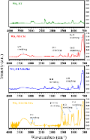
- cm−1 is characteristic of iron oxides, and represents the stretching vibration of Fe–O bond [53][54]. The peaks at 1640 cm−1 and 3400 cm−1 originate from interlayer water: the former is assigned H–O–H bending vibrations, and the latter to O–H stretching vibrations [53][54]. The peak at around 820 cm






Outstanding chain-extension effect and high UV resistance of polybutylene succinate containing amino-acid-modified layered double hydroxides
Beilstein J. Nanotechnol. 2019, 10, 684–695, doi:10.3762/bjnano.10.68
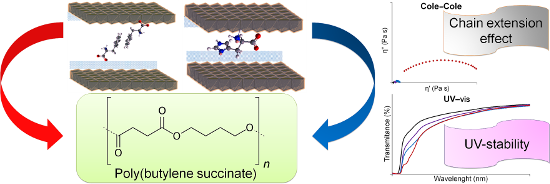
- , C–N) overlap in the range of 1700–1480 cm−1 and the lattice vibration of M–O in the platelet structure can be depicted at a low wavenumber (800–650 cm−1). The experimental chemical composition of all synthesized LDHs has been estimated based on TGA analysis and collected in Table 1. All the


Topochemical engineering of composite hybrid fibers using layered double hydroxides and abietic acid
Beilstein J. Nanotechnol. 2019, 10, 589–605, doi:10.3762/bjnano.10.60
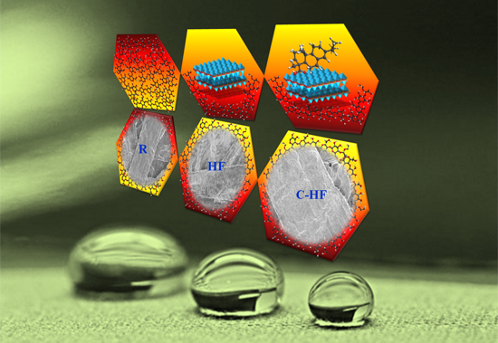
- -glycosidic bonds, C–C stretching and the C–O–C glycosidic ether band of cellulose, respectively. The cyan portion in Figure 3 denotes the cellulose fingerprint region. HF and C-HF show a new vibration frequency at 1362 cm−1 that corresponds to asymmetric stretching of carbonate anions in LDH interlayer
- galleries. The frequencies at 617 cm−1, 656 cm−1 and 783 cm−1 were attributed to M–O–M, M–OH, and O–M–O bond vibrations of LDH. The characteristic peaks of AA in C-HF are those at 2936 cm−1, 2650 cm−1, 1695 cm−1, 1670 cm−1 and 1277 cm−1. The vibration at 2936 cm−1 corresponds to C–H stretching absorption




Hydrophilicity and carbon chain length effects on the gas sensing properties of chemoresistive, self-assembled monolayer carbon nanotube sensors
Beilstein J. Nanotechnol. 2019, 10, 565–577, doi:10.3762/bjnano.10.58
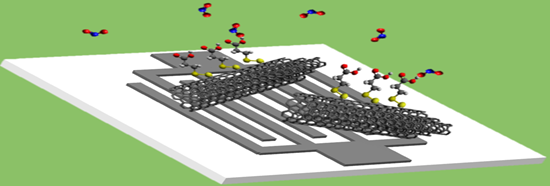
- volatility, even at room temperature. The Raman analysis of the thiols shows the presence of characteristic peaks in all samples related to the mode of vibration of aliphatic carbon chains at wavenumbers between 250–400 cm−1 and 630–790 cm−1. Other important bands can be found at the following wavenumbers





