


Search results
Search for "visible light" in Full Text gives 240 result(s) in Beilstein Journal of Nanotechnology. Showing first 200.
Cr(VI) remediation from aqueous environment through modified-TiO2-mediated photocatalytic reduction
Beilstein J. Nanotechnol. 2018, 9, 1448–1470, doi:10.3762/bjnano.9.137
- environmental issues such as global warming and climate changes. The technologies used to reduce the CO2 concentration are energy consuming and expensive [36][37]. In recent years, semiconductor-based visible-light-induced photocatalytic reduction of CO2 has emerged as an attractive and viable approach for not
- visible-light irradiation. The authors have also reported that •CO2− radicals (produced by the reaction of hVB+ with HCO2NH4) and eCB− are responsible for the reduction of 4-nitroaniline to p-phenylenediamine over CdS/TiO2 photocatalysts [56]. Photodegradation of pollutants The principle of photocatalysis
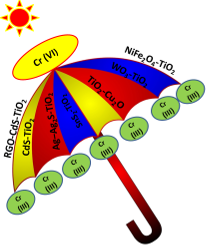
- with visible light, in the second step. Third step involves either release of Cr(III) species into the solution due to their electrostatic repulsion from the protonated surfaces of TiO2–RGO or their adsorption by deprotonated surfaces. Li et al. fabricated a composite of TiO2 and reduced graphene oxide


Ag2WO4 nanorods decorated with AgI nanoparticles: Novel and efficient visible-light-driven photocatalysts for the degradation of water pollutants
Beilstein J. Nanotechnol. 2018, 9, 1308–1316, doi:10.3762/bjnano.9.123
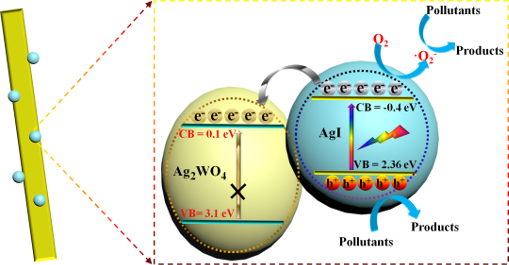
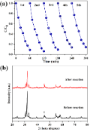
- Abstract To develop efficient and stable visible-light-driven (VLD) photocatalysts for pollutant degradation, we synthesized novel heterojunction photocatalysts comprised of AgI nanoparticle-decorated Ag2WO4 nanorods via a facile method. Various characterization techniques, including XRD, SEM, TEM, EDX
- (MO) and para-chlorophenol (4-CP). The high performance is attributed to the enhanced visible-light absorption properties and the promoted separation efficiency of charge carriers through the formation of the heterojunction between AgI and Ag2WO4. Additionally, AgI/Ag2WO4 exhibits durable stability
- photocatalytic performance. Keywords: AgI/Ag2WO4; nanocomposites; photocatalysis; visible light; Introduction The development of high-performance novel photocatalysts for the degradation of pollutants has received great interest due to the worsening of environmental pollution [1][2][3][4][5][6][7][8][9][10][11




Computational exploration of two-dimensional silicon diarsenide and germanium arsenide for photovoltaic applications
Beilstein J. Nanotechnol. 2018, 9, 1247–1253, doi:10.3762/bjnano.9.116
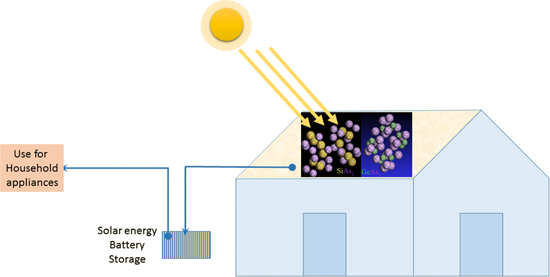
- suitable for photovoltaic applications, such as excellent visible light absorption, favorable exciton formation, and charge separation are equally essential for two-dimensional (2D) materials. Here, we systematically study 2D group IV–V compounds such as SiAs2 and GeAs2 with regard to their structural
- light absorption spectrum calculated from HSE functional in the visible light region (approx. 350–800 nm) compared with the AM1.5G solar spectrum. However, both materials exhibit an almost equal absorption in the wavelength region of 350–600 nm. Above this, GeAs2 still has good absorption up to around


Review on nanoparticles and nanostructured materials: history, sources, toxicity and regulations
Beilstein J. Nanotechnol. 2018, 9, 1050–1074, doi:10.3762/bjnano.9.98

- network (nanofibers) [188]. Plant surfaces, especially leaves, contain nanostructures that are used for numerous purposes such as insects sliding [189], mechanical stability [190], increased visible light and harmful UV reflection and radiation absorption respectively [191][192] as shown in Figure 6. The


Noble metal-modified titania with visible-light activity for the decomposition of microorganisms
Beilstein J. Nanotechnol. 2018, 9, 829–841, doi:10.3762/bjnano.9.77
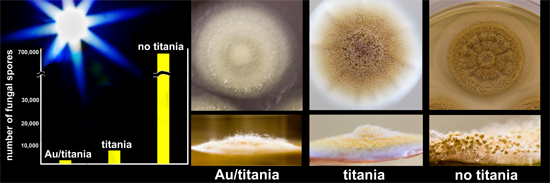
- albicans (C. albicans)) activity under visible-light irradiation and in the dark using disk diffusion, suspension, colony growth (“poisoned food”) and sporulation methods. It was found that silver-modified titania, besides remarkably high antibacterial activity (inhibition of bacterial proliferation
- ), could also decompose bacterial cells under visible-light irradiation, possibly due to an enhanced generation of reactive oxygen species and the intrinsic properties of silver. Gold-modified samples were almost inactive against bacteria in the dark, whereas significant bactericidal effect under visible
- wide band gap of titania of 3.0–3.2 eV and the recombination of charge carriers). There are various ways to improve photocatalytic performance of titania photocatalysts: (1) to inhibit the recombination of charge carriers, and (2) to extend its working abilities to the visible-light region, for example


Facile synthesis of a ZnO–BiOI p–n nano-heterojunction with excellent visible-light photocatalytic activity
Beilstein J. Nanotechnol. 2018, 9, 789–800, doi:10.3762/bjnano.9.72
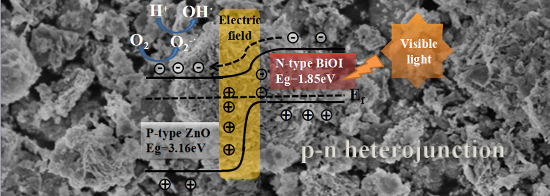
- exhibit a significant improvement in the photodegradation of rhodamine B under visible light (λ ≥ 420 nm) irradiation as compared to single-phase ZnO and BiOI. A sample with a Zn/Bi ratio of 3:1 showed the highest photocatalytic activity (≈99.3% after 100 min irradiation). The photodegradation tests
- poor utilization of visible light, which accounts for 45% of the solar radiation spectrum, because of their wide band gap. Some effort must be paid to extend their working spectrum efficiently. As is known to all, it is metal orbitals which contribute to the conduction band (CB) of the metal-containing
- response to visible light. Though widely investigated, BiOI suffers from its high recombination rate of photoinduced electron–holes and low charge transfer ability. Therefore, the strategies to improve the efficiency of this kind of semiconductor photocatalyst are in need. Heterogeneous processes are


Surface-plasmon-enhanced ultraviolet emission of Au-decorated ZnO structures for gas sensing and photocatalytic devices
Beilstein J. Nanotechnol. 2018, 9, 771–779, doi:10.3762/bjnano.9.70
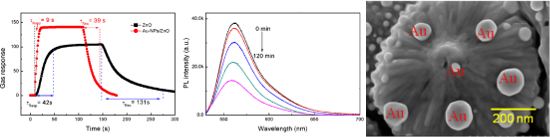
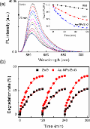
- solution in the presence of these photocatalysts under visible-light irradiation were investigated. The results are shown in Figure 5a and Figures S2 and S3 (Supporting Information File 1). The changes in the PL spectra during photodegradation indicated that the PL peak position of RhB (561.5 nm) decreases
- with increasing irradiation time. According to the percentage of the PL quenching plotted in the inset of Figure 5a, the degradation efficiency of Au-decorated ZnO is calculated to be 64%, which is higher than ZnO sub-micrometer spheres (42%) after irradiation by visible light for 2 h. Even after three
- ) Response–recovery characteristics and (d) the responses of all sensors for different target gases. (a) Photoluminescence (PL) spectra of aqueous RhB solution in the presence of as-deposited ZnO and Au NP/ZnO structures under visible-light irradiation. The inset shows the percentage of the PL quenching. (b




Perovskite-structured CaTiO3 coupled with g-C3N4 as a heterojunction photocatalyst for organic pollutant degradation
Beilstein J. Nanotechnol. 2018, 9, 671–685, doi:10.3762/bjnano.9.62
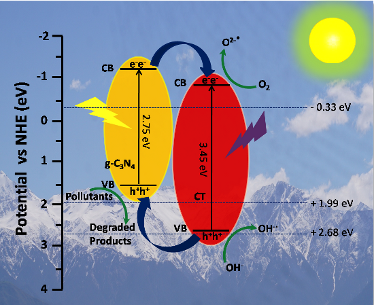
- organic semiconductor with tri-s-triazine units, has drawn huge attention from researchers due to its excellent photocatalytic performance and unique properties such as appropriate band structure, visible light absorption and high chemical and thermal stability [2][4]. In addition, g-C3N4 consists of
- gap of g-C3N4 lies between 2.4–2.8 eV and therefore it has the capability to absorb visible light irradiation [23]. However, the photocatalytic efficiency of bare g-C3N4 is truncated by the high recombination rate of photogenerated charges (electrons and holes), insufficient light absorption and low
- methylene blue (MB) and thiabendazole (TBZ) under visible light irradiation. Another attractive strategy for enhancement of photocatalytic performance is the coupling of a wide band gap material with a low band gap material, which allows the charge transfer via suitably arranged band edge positions in both


Mechanistic insights into plasmonic photocatalysts in utilizing visible light
Beilstein J. Nanotechnol. 2018, 9, 628–648, doi:10.3762/bjnano.9.59
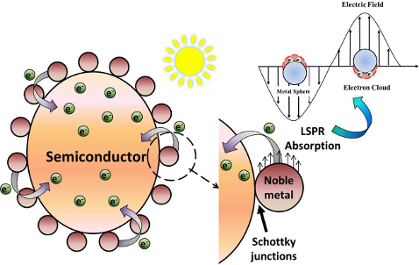
- sustainable photocatalysts that can collectively harvest visible light. However, the bottleneck in utilising the low energy photons has led to the discovery of plasmonic photocatalysts. The presence of noble metal on the plasmonic photocatalyst enables the harvesting of visible light through the unique
- : localized surface plasmon resonance (LSPR); noble metal; plasmonic photocatalyst; reactive radicals; Schottky junctions; visible light; Review Introduction Photocatalysts have played and will continue to play a pivotal role in environmental and energy applications in order to fulfil the needs of the
- will lead to a pathway for better utilization of the solar spectrum. The invention and progression of plasmonic photocatalysts laid a foundation for the successful utilisation of longer wavelengths, known as “visible light photocatalysis”. The localised surface plasmon resonance (LSPR) is a unique





Facile phase transfer of gold nanorods and nanospheres stabilized with block copolymers
Beilstein J. Nanotechnol. 2018, 9, 616–627, doi:10.3762/bjnano.9.58
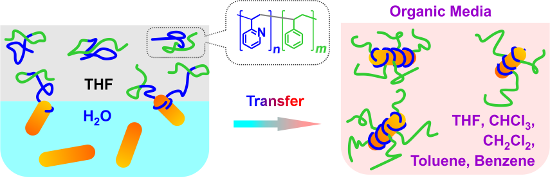
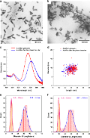
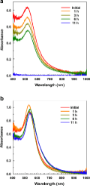
- (JEOL, Japan). Optical analysis Absorption spectra of nanoparticle sols in the visible light range were recorded on an optical absorbance USB 2000 spectrometer (Ocean Optics, USA) equipped with a LS-1 halogen light source and a cuvette holder. The spectral data were processed using a SpectraSuite


Fabrication and photoactivity of ionic liquid–TiO2 structures for efficient visible-light-induced photocatalytic decomposition of organic pollutants in aqueous phase
Beilstein J. Nanotechnol. 2018, 9, 580–590, doi:10.3762/bjnano.9.54
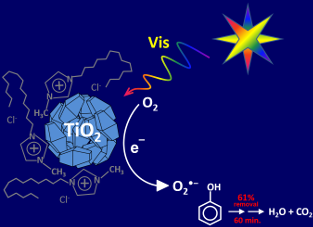
- photoelectron spectroscopy (XPS), diffuse reflectance spectroscopy (DRS), scanning transmission microscopy (STEM) and the Brunauer–Emmett–Teller (BET) surface area method, whereas the photocatalytic activity was evaluated by the degradation of phenol in aqueous solution under visible light irradiation (λ > 420
- at the surface of the IL–TiO2 material under visible-light illumination, and is responsible for the effective phenol degradation. Keywords: heterogeneous photocatalysis; ionic liquids; TiO2; visible light catalysis; Introduction The development of heterogeneous photocatalysis to degrade organic
- pollutants in aqueous and gas phases requires visible-light responsive, stable materials and a basic understanding of these materials [1][2][3][4]. Although various semiconductors are considered for environmental pollution abatement, titanium dioxide (TiO2) is still the most promising due to its stability




Influence of the preparation method on the photocatalytic activity of Nd-modified TiO2
Beilstein J. Nanotechnol. 2018, 9, 447–459, doi:10.3762/bjnano.9.43
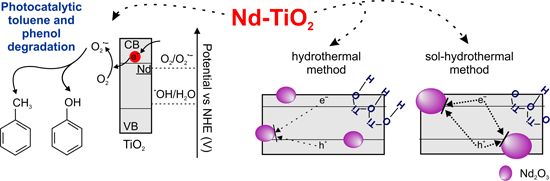
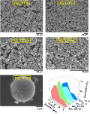
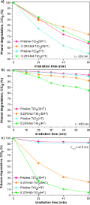
- photocatalyst for the degradation of phenol and toluene under visible light. XPS analysis revealed that the photocatalyst prepared via HT method contains a three-times higher amount of hydroxy groups at the surface layer and a two-times higher amount of surface defects than that obtained by the SHT method. The
- visible light irradiation [8][9][10]. In recent years, the modification with rare earth (RE) metals has proven to be an efficient method to improve the photocatalytic properties of TiO2 and to broaden its absorption to the solar spectrum [8][11][12]. Various Lewis bases can form complexes with RE-modified
- -infrared and visible spectral ranges into ultraviolet wavelengths can be responsible for the photocatalytic activity of RE-modified TiO2 [21][22]. In our previous paper, based on action spectra analysis we revealed that Nd-modified TiO2 could be excited under visible light in the range of 400 to 480 nm




Facile synthesis of ZnFe2O4 photocatalysts for decolourization of organic dyes under solar irradiation
Beilstein J. Nanotechnol. 2018, 9, 436–446, doi:10.3762/bjnano.9.42
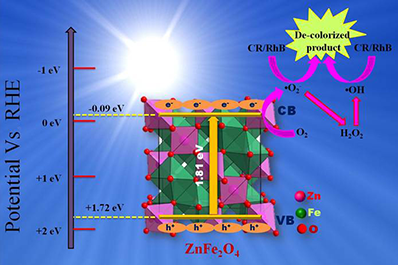
- photocatalyst in a 100 mL conical flask kept under dark conditions for 30 min to ensure adsorption–desorption equilibrium. Then the photo degradation reaction was carried out for 1 h under 250 W visible light and stirring for 60 min. Then the catalyst was removed and the residual phenol was analysed with JASCO
- -500. Photoluminescence spectra of ZFO samples excited at 330 nm. FTIR spectra of ZFO samples. Linear-sweep voltammograms of ZFO-400 to ZFO-700 (a) under dark conditions, (b) under visible-light illumination. Mott–Schottky plot yielding the flat-band potential of ZFO-500. Nyquist plot of ZFO-400 to ZFO


Engineering of oriented carbon nanotubes in composite materials
Beilstein J. Nanotechnol. 2018, 9, 415–435, doi:10.3762/bjnano.9.41
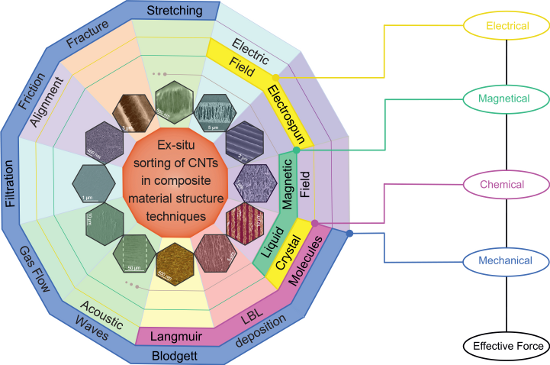
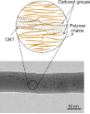
- electron microscopes are used in analyzing the alignment and arrangement of CNTs. The first type is a scanning electron microscope (SEM), in which electrons are emitted and reflected from the surface of the sample, then they are collected by the detectors and converted to photons of visible light to create
- analyzing samples that are not transparent to visible light. SAXS can identify particles or holes between 1 to 100 nm. Accurate determination occurs for a particle size of 1 to 10 nm size; however, it can also be used for particles with sizes outside of this range. The average size of the particles or holes








Sugarcane juice derived carbon dot–graphitic carbon nitride composites for bisphenol A degradation under sunlight irradiation
Beilstein J. Nanotechnol. 2018, 9, 353–363, doi:10.3762/bjnano.9.35
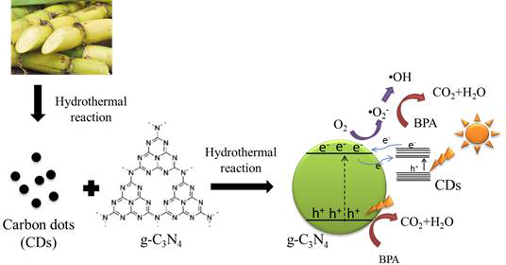
- semiconductor g-C3N4 possesses visible light harvesting properties due to its narrow band gap energy (≈2.7 eV) [15]. Thus g-C3N4 has emerged as a promising polymeric semiconductor for photocatalytic reduction of carbon dioxide (CO2) [16][17][18][19][20], hydrogen evolution [21][22][23][24][25], oxidation of NO
- superior photocatalytic activity was demonstrated [8]. Guo and co-workers used the electrochemical method to produce CDs from graphite rods. The deposition of CDs onto g-C3N4/ZnO heterojunctions enhanced the degradation of tetracycline by absorbing a wider spectrum of visible light and suppressing the
- acid [37] and rapeseed flower bee pollen [38] as precursors to produce CDs for the photocatalytic generation of H2 under visible light irradiation. In addition, Wang and co-workers used citric acid and urea as precursors to prepare N-doped CDs (NCDs). The NCD/g-C3N4 composite exhibited better


Bombyx mori silk/titania/gold hybrid materials for photocatalytic water splitting: combining renewable raw materials with clean fuels
Beilstein J. Nanotechnol. 2018, 9, 187–204, doi:10.3762/bjnano.9.21
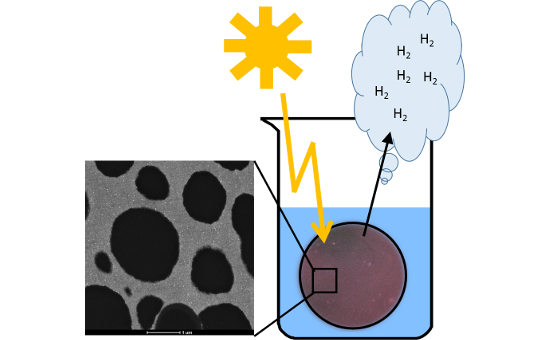
- ][15]) TiO2-based water splitting catalysts are among the most popular materials for visible light water splitting [16][17][18][19][20]. Among these, TiO2/Au nanocomposites have attracted special interest because of their synergistic mode of action between the Au nanoparticle (AuNP) plasmons and the
- calcined P25 TiO2 NPs (TNPs) loaded with 3 wt % of Au for photocatalytic water splitting. Irradiation with UV and visible light combined yielded a higher H2 and oxygen production after 7 h than with UV or visible light alone [23]. In a more analytical study, Silva et al. [24] investigated the influence of




Review on optofluidic microreactors for artificial photosynthesis
Beilstein J. Nanotechnol. 2018, 9, 30–41, doi:10.3762/bjnano.9.5
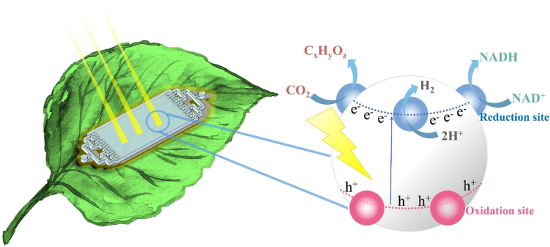
- nano-system in which water and CO2 were catalyzed to form H2 and CO in this integrated system [66]. Jiang et al. showed a thylakoid-inspired multishell g-C3N4 nanocapsule with orderly stacked nanostructures, which exhibited enhanced visible-light harvesting and electron-transfer properties for high
- photocatalytic efficiency [90][91][92][93][94]. Besides, biomimetic or bioinspired strategies for the synthesis of semiconductor materials represents a significant advancement in the development of high-efficiency and cost-effective visible-light photocatalysts for solar energy conversion [65][66][67]. Given the


Facile synthesis of silver/silver thiocyanate (Ag@AgSCN) plasmonic nanostructures with enhanced photocatalytic performance
Beilstein J. Nanotechnol. 2017, 8, 2781–2789, doi:10.3762/bjnano.8.277
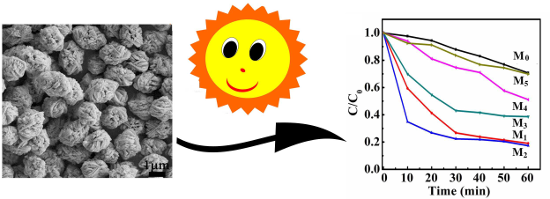
- visible-light irradiation. In addition to the microstructure and high specific surface area, the enhanced photocatalytic activity was mainly caused by the surface plasmon resonance of Ag nanoparticles, and the high stability of AgSCN resulted in the long-term stability of the photocatalyst product
- and environmental friendlessness. For example, as a typical semiconductor, TiO2 exhibits high photocatalytic degradation performance against a large number of organic pollutants [5][6][7]. However, it is difficult to obtain a high photocatalytic activity under visible-light irradiation with TiO2 as a
- catalyst due to its wide bandgap of 3.2 eV, which limits its practical application. Therefore, the development of new photocatalysts with visible-light catalytic performance, high surface active sites and long life of separated electron and hole pairs, has become a hot research topic in recent years. Ag


CdSe nanorod/TiO2 nanoparticle heterojunctions with enhanced solar- and visible-light photocatalytic activity
Beilstein J. Nanotechnol. 2017, 8, 2741–2752, doi:10.3762/bjnano.8.273
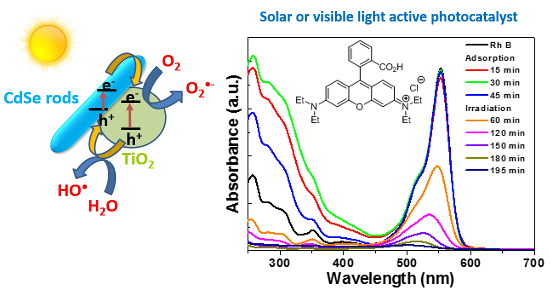
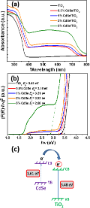
- the narrow bandgap of CdSe NRs serves to increase the photoresponse of CdSe/TiO2 composites until ≈725 nm. The CdSe (2 wt %)/TiO2 composite exhibits the highest photocatalytic activity for the degradation of rhodamine B in aqueous solution under simulated sunlight or visible light irradiation. The
- the visible light range and increases the photoconversion efficiency by improving the charge transfer [9][10][11][12][13][14][15][16][17][18][19][20][21][22][23][24][25][26][27][28][29][30][31][32][33][34][35][36][37]. CdSe is one of the most commonly used semiconductors due to its narrow bandgap (1.7
- of rhodamine B (RhB) in aqueous solution. Our results demonstrate that the composite containing 2 wt % CdSe NRs exhibits the optimal photocatalytic activity under solar or visible light irradiation. Moreover, the photocatalytic response was maintained after ten cycles in simulated sunlight. A






Inelastic electron tunneling spectroscopy of difurylethene-based photochromic single-molecule junctions
Beilstein J. Nanotechnol. 2017, 8, 2606–2614, doi:10.3762/bjnano.8.261
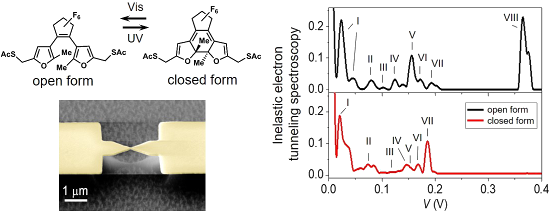
- between the open and closed forms of the diarylethene core, when exposed to ultraviolet (UV) or visible light. This transformation results in a significant variation of electrical conductance and vibrational properties of corresponding molecular junctions. We report here a combined experimental and
- illustrated in Figure 1a with its reaction schematics, when exposed to ultraviolet or visible light. The synthesis method was presented previously [22]. Upon illumination with light of suitable wavelength, the central carbon–carbon bond of the difurylethene switching core is either formed or broken, resulting
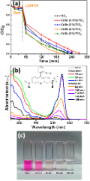
- switch states under the illumination with UV and visible light. Shown at the bottom is a scanning electron microscopy image of a MCBJ device. (b) Variation of UV–visible absorption spectra under UV light irradiation (wavelength of 313 nm with an intensity of ca. 0.15 mW/cm−2) as a function of


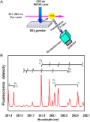
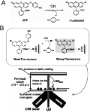
Photobleaching of YOYO-1 in super-resolution single DNA fluorescence imaging
Beilstein J. Nanotechnol. 2017, 8, 2296–2306, doi:10.3762/bjnano.8.229
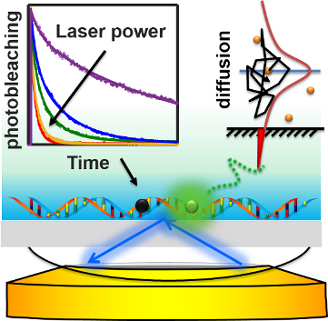
- imaging [17][18][19][20]. A recent trend in fluorescent imaging is the use of super-resolution imaging to resolve fine structures below the typical diffraction limit of visible light microscopy at ≈250 nm [21]. This is important in visualizing the conformation of DNA molecules, such as DNA looping by




Hydrothermal synthesis of ZnO quantum dot/KNb3O8 nanosheet photocatalysts for reducing carbon dioxide to methanol
Beilstein J. Nanotechnol. 2017, 8, 2264–2270, doi:10.3762/bjnano.8.226
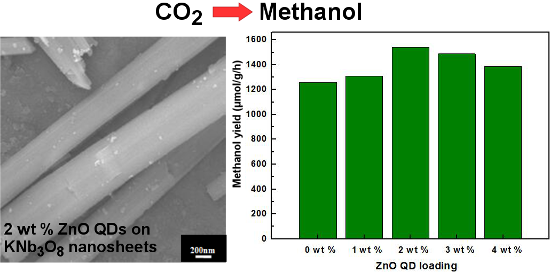
- displayed an absorption threshold at 376 nm. Compared with the pure KNb3O8 nanosheets, we found a significant red-shift of the absorption edge, which could attribute to the enhancement observed by the ZnO quantum dots upon visible-light absorption. The optical band gap (Eg) of semiconductors could be




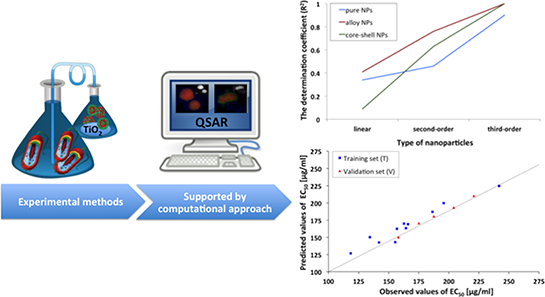
Evaluating the toxicity of TiO2-based nanoparticles to Chinese hamster ovary cells and Escherichia coli: a complementary experimental and computational approach
Beilstein J. Nanotechnol. 2017, 8, 2171–2180, doi:10.3762/bjnano.8.216
- inhibiting activity [5][6]. Reactivity of TiO2 under visible light (λ > 400 nm) can be achieved in several ways [7], including: (a) metal doping [8], (b) non-metal doping [9][10], (c) self-doping (reductive treatments) [11][12], (d) surface modification by noble-metal nanoparticles of silver (Ag), gold (Au
- increasing concentration of Bi2WO6 [23]. In another contribution, the photo-oxidation capability of iron-doped TiO2 NPs increased during exposure to near-visible light. Fe-doped TiO2 NPs inhibited the macrophage RAW 264.7 [24]. Hence the same unique properties of surface-modified TiO2-based nanomaterials


Ta2N3 nanocrystals grown in Al2O3 thin layers
Beilstein J. Nanotechnol. 2017, 8, 2162–2170, doi:10.3762/bjnano.8.215
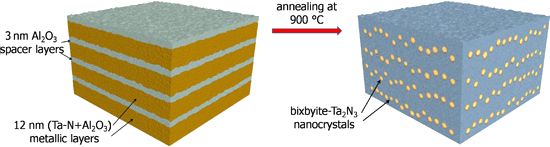
- generic procedure to realize highly tunable and designable optical properties of thin films containing transition-metal nitride nanocrystals. Keywords: nanocomposites; multilayers; refractory plasmonics; self-assembly; Ta2N3 nanoparticles; Introduction Metallic nanoparticles (NPs) can confine visible
- light to nano-scale structures via local surface plasmon resonance (LSPR) [1]. LSPR produces a strong near-field enhancement and a local heating [2][3], which are considered to be promising in several applications ranging from surface-enhanced Raman scattering [4], to catalysis [5] and heat-assisted



Synthesis and characterization of noble metal–titania core–shell nanostructures with tunable shell thickness
Beilstein J. Nanotechnol. 2017, 8, 2083–2093, doi:10.3762/bjnano.8.208
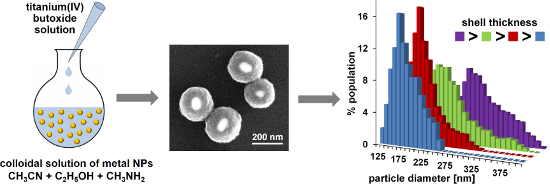
- great potential for use in these applications [18][19]. Surface plasmon resonance properties of gold and silver NPs can increase the optical absorption of titania and extend its absorption band to the visible light region. Such CSNs could allow one of the most important limitations in broader use of





