Search results
Search for "zinc" in Full Text gives 265 result(s) in Beilstein Journal of Nanotechnology. Showing first 200.
Removal of toxic heavy metals from river water samples using a porous silica surface modified with a new β-ketoenolic host
Beilstein J. Nanotechnol. 2019, 10, 262–273, doi:10.3762/bjnano.10.25
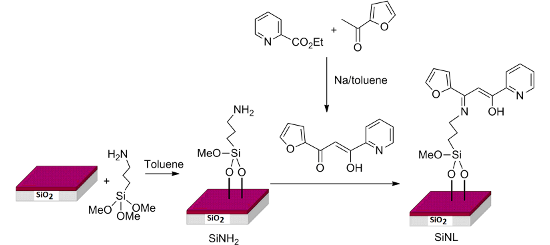
- known to cause health problems even at low concentrations in living systems [3][4][5]. Among these toxic metals included on the US Environmental Protection Agency's (EPA’s) list of priority pollutants, zinc, lead, cadmium and copper are considered as the most hazardous. Solutions to remove heavy metals
- , zinc and copper metal ions from aqueous solutions as well as in natural water samples. Experimental Synthesis Solvents and chemicals, used without further purification, were of analytical grade (Aldrich, 99.5% purity). Silica gel (particle size of 70–230 mesh, median pore diameter of 60 Å) (E. Merck
- metal ions studied is in the order Zn(II) > Pb(II) > Cd(II) > Cu(II). This result is interesting because of the negative influence of zinc on rivers. For example, in Norway, zinc has been found in salmon [68] at concentrations that can kill fish and alter their physiology [69]. Since salmon is a common


Raman study of flash-lamp annealed aqueous Cu2ZnSnS4 nanocrystals
Beilstein J. Nanotechnol. 2019, 10, 222–227, doi:10.3762/bjnano.10.20
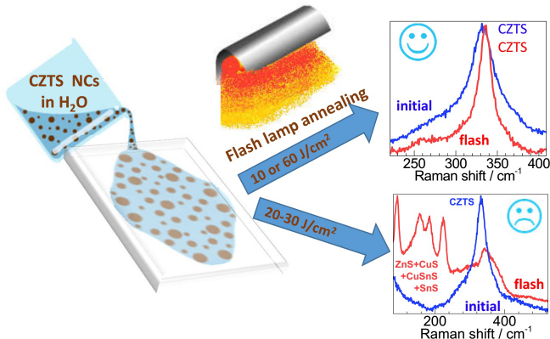
- dependence of the formation on the film thickness are also investigated. Importantly, no inert atmosphere for the FLA treatment of the NCs is required, which makes this technology even more suitable for mass production, in particular for printed thin films on flexible substrates. Keywords: copper zinc tin


New micro/mesoporous nanocomposite material from low-cost sources for the efficient removal of aromatic and pathogenic pollutants from water
Beilstein J. Nanotechnol. 2019, 10, 119–131, doi:10.3762/bjnano.10.11
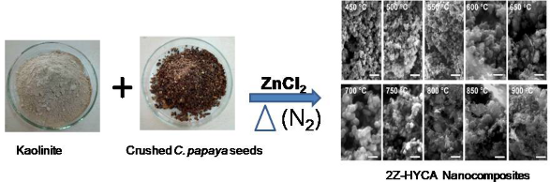
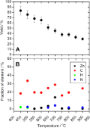
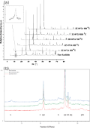
- from an amorphous or less crystalline (impurity) phase [41]. Overall the XRD and solid-state NMR data support the FTIR spectroscopy spectra in that all methods detect some chemical changes in the zinc-based HYCA materials compared to the starting materials, thus confirming the formation of a real
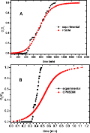
- with a much lower efficiency. This finding suggests that the presence of Zn2+ in the composite material directly affects E. coli removal from solution, likely because zinc has antibacterial properties. Although the precise functional mechanism is unknown, it has been suggested that Zn-doped materials
- . The preparation is simple, and the resulting nanocomposite material is micro/mesoporous, unlike the initial hybrid clay material prepared in our previous study [1]. The new micro/mesoporous material is efficient for the removal of 4-nitrophenol and E. coli from drinking water. Zinc may not be




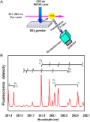
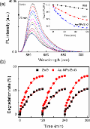
Surface plasmon resonance enhancement of photoluminescence intensity and bioimaging application of gold nanorod@CdSe/ZnS quantum dots
Beilstein J. Nanotechnol. 2019, 10, 22–31, doi:10.3762/bjnano.10.3
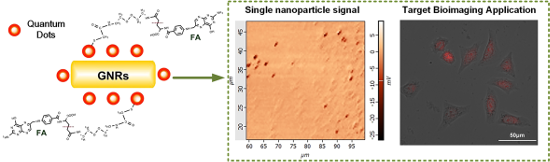
- -dimethylaminopropyl)carbodiimide (EDC, 99%), and N-hydroxysuccinimide (NHs, 99%), cadmium chlorideanhydrous (CdCl2, 99.999%), selenium powder (Se, 99.8%), sodium borohydride (NaBH4, 99.99%), and zinc chloride anhydrous were purchased from Sigma-Aldrich. Sodium sulphide (Na2S, 60–63%) was purchased from Acros Organics


Zn/F-doped tin oxide nanoparticles synthesized by laser pyrolysis: structural and optical properties
Beilstein J. Nanotechnol. 2019, 10, 9–21, doi:10.3762/bjnano.10.2
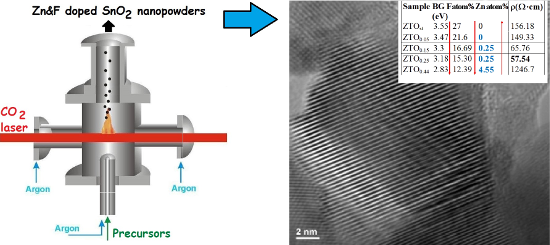
- [17]. Highly conductive films based on amorphous Co-doped SnO2 were also synthesized using a pulsed spray evaporation chemical vapor deposition (CVD) technique [18]. One of the most reported cationic dopants for tin oxide is Zn2+, where the obtained zinc-doped tin oxide (ZTO) films show lower bandgap
- radii (0.74 Å for Zn2+ and 0.71 Å for Sn4+ [21]) and thus each zinc ion replaces a tin ion accompanied by the appearance of an oxygen vacancy (equivalent with two holes) to maintain the crystal electrical neutrality. Moreover, it was hypothesized that part of the zinc ions can also occupy the
- interstitial sites in the SnO2 lattice, as reported for the Zn-doped SnO2 nanoparticles obtained by the microwave solvothermal process, where a highly nonlinear relation was found between the zinc atomic doping percent and bandgap values [21]. Another strategy for improving the properties of tin oxide consists



Electrolyte tuning in dye-sensitized solar cells with N-heterocyclic carbene (NHC) iron(II) sensitizers
Beilstein J. Nanotechnol. 2018, 9, 3069–3078, doi:10.3762/bjnano.9.285
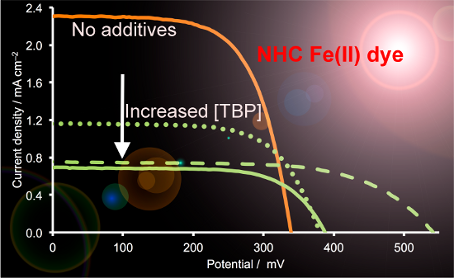
- realized with ruthenium-based [2], zinc(II) porphyrin-based [5][6][7][8][9] or metal-free organic dyes [10][11][12]. In a recent review [2], Nazeeruddin points to the fact that only incremental enhancements of the photoconversion efficiencies of ruthenium dyes have occurred during the last two decades
- the first row d-block metals, iron, cobalt, nickel, copper and zinc have Earth-crustal abundances of ≈41,000, 20, 80, 50 and 75 ppm, respectively. We and others [16][17][18][19] have realized the potential of DSCs sensitized by bis(diimine)copper(I) complexes, and both we [20] and Dragonetti et al



Graphene-enhanced metal oxide gas sensors at room temperature: a review
Beilstein J. Nanotechnol. 2018, 9, 2832–2844, doi:10.3762/bjnano.9.264
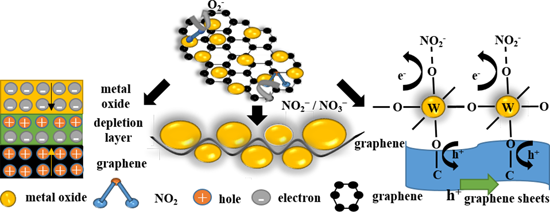
- achieved at all [19][20]. Metal-oxide semiconductors (MOS), including tin oxide (SnO2), titanium dioxide (TiO2), zinc oxide (ZnO), copper oxide (CuO), tungsten oxide (WO3), indium oxide (In2O3), ferric oxide (Fe2O3) and cobalt oxide (Co3O4) are important materials for gas sensors [21][22][23][24][25][26



Variation of the photoluminescence spectrum of InAs/GaAs heterostructures grown by ion-beam deposition
Beilstein J. Nanotechnol. 2018, 9, 2794–2801, doi:10.3762/bjnano.9.261
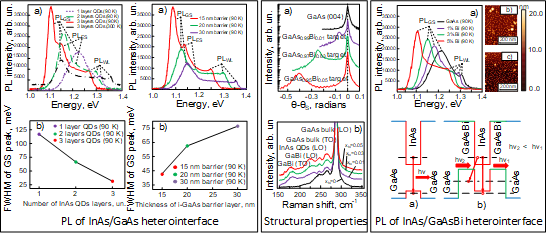
- crystal lattice should be a zinc blende lattice. Therefore, a diffraction maximum corresponding to the GaAs(004) lattice planes was measured. This is due to its high structure factor, which governs the maximum diffraction intensity. In Figure 3a, two main peaks are identified: a sharp peak of high


Near-infrared light harvesting of upconverting NaYF4:Yb3+/Er3+-based amorphous silicon solar cells investigated by an optical filter
Beilstein J. Nanotechnol. 2018, 9, 2788–2793, doi:10.3762/bjnano.9.260
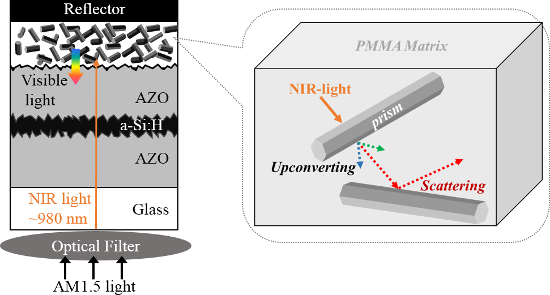
- prepared (Figure 3a). One a-Si:H layer of ca. 350 nm is sandwiched between two aluminum-doped zinc oxide (AZO) contacts. The thickness of the AZO contacts is approximately 1.5 μm. From Figure 3b, the photoelectric conversion efficiency of the a-Si:H solar cell is calculated to be 6.68% at the maximum power


Oriented zinc oxide nanorods: A novel saturable absorber for lasers in the near-infrared
Beilstein J. Nanotechnol. 2018, 9, 2730–2740, doi:10.3762/bjnano.9.255
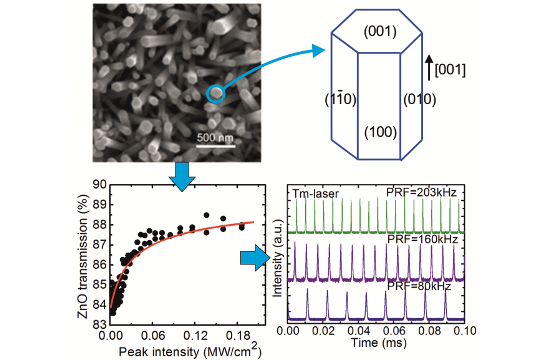
- , Applied Physics Department, School of Engineering Sciences, KTH Royal Institute of Technology, Isafjordsgatan 22, SE-164 40 Kista Stockholm, Sweden 10.3762/bjnano.9.255 Abstract Zinc oxide (ZnO) nanorods (NRs) oriented along the crystallographic [001] axis are grown by the hydrothermal method on glass
- substrates. The ZnO NRs exhibit a broadband (1–2 µm) near-IR absorption ascribed to the singly charged zinc vacancy VZn−1. The saturable absorption of the ZnO NRs is studied at ≈1 µm under picosecond excitation, revealing a low saturation intensity, ≈10 kW/cm2, and high fraction of the saturable losses. The
- nanorods; Q-switching; saturable absorption; solid-state lasers; zinc oxide; Introduction Zinc oxide (ZnO) is a well-known II–IV group wide-bandgap semiconductor (Eg = 3.37 eV), possessing a hexagonal wurtzite-type (sp. gr. P63mc) structure with unit cell parameters a = 3.25 Å, c = 5.20 Å. In recent years




Optimization of Mo/Cr bilayer back contacts for thin-film solar cells
Beilstein J. Nanotechnol. 2018, 9, 2700–2707, doi:10.3762/bjnano.9.252
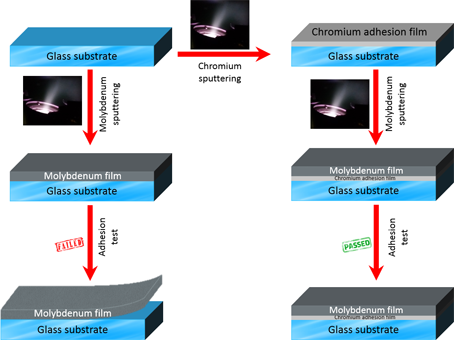
- chromium (Cr) adhesion layer is used as the back contact for a copper zinc tin sulfide (CZTS) thin-film solar cell on a SLG substrate. DC magnetron sputtering is used for deposition of Mo and Cr films. The conductivity of Mo/Cr bilayer films, their microstructure and surface morphology are studied at


Exploring the photoleakage current and photoinduced negative bias instability in amorphous InGaZnO thin-film transistors with various active layer thicknesses
Beilstein J. Nanotechnol. 2018, 9, 2573–2580, doi:10.3762/bjnano.9.239
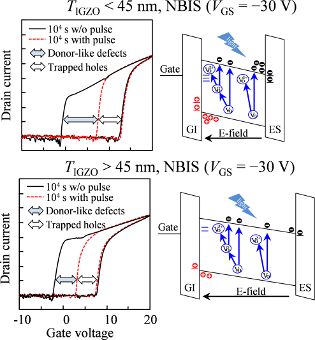
- to their outstanding properties such as high electron mobility, good transparency to visible light, and low process temperature with good uniformity [1][2][3][4]. Among the numerous AOS materials, indium gallium zinc oxide (IGZO) is one of the most promising candidates used as the active layer


High-temperature magnetism and microstructure of a semiconducting ferromagnetic (GaSb)1−x(MnSb)x alloy
Beilstein J. Nanotechnol. 2018, 9, 2457–2465, doi:10.3762/bjnano.9.230
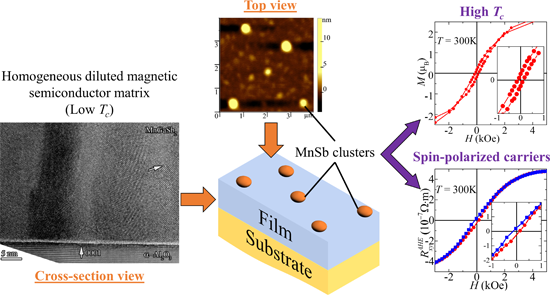
- that inclusions can emerge with two types of crystal structure. The magnetic properties of MnAs inclusions with zinc blende type and hexagonal lattices are substantially different. The actual application of GaAs:MnAs materials is restricted by this fact. A second recently studied nanocomposite system



ZnO-nanostructure-based electrochemical sensor: Effect of nanostructure morphology on the sensing of heavy metal ions
Beilstein J. Nanotechnol. 2018, 9, 2421–2431, doi:10.3762/bjnano.9.227
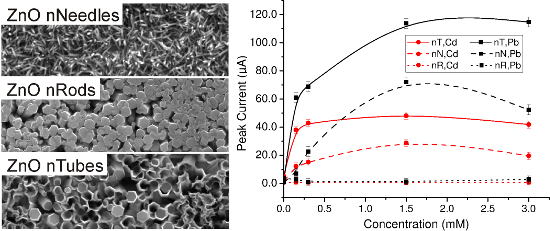
- with a ZnO seed layer in order to provide adhesion of the nanostructured ZnO film to the glass surface, as well as epitaxial growth and the vertical alignment of nanostructures. It was prepared by dip coating using 5 mM zinc acetate (Zn(O2CCH3)2) solution in ethanol. The seed layer film was dried in a
- stream of dry nitrogen and thermally treated at 350 °C for 30 min in air, such that zinc acetate was completely converted into zinc oxide. Subsequently, the samples were slowly cooled to room temperature. The nanostructured layer of the electrode was obtained by the hydrothermal synthesis method using an
- aqueous solution of zinc nitrate hexahydrate (Zn(NO3)2·6H2O; 99% purity) and hexamethylenetetramine (HMTA; C6H12N4; 99% purity), where zinc nitrate is used as a source of Zn+ ions; however, HMTA acts as a pH buffer by slowly releasing OH− ions. The decomposition rate of HMTA increases with the temperature


Electrospun one-dimensional nanostructures: a new horizon for gas sensing materials
Beilstein J. Nanotechnol. 2018, 9, 2128–2170, doi:10.3762/bjnano.9.202

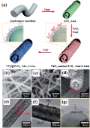
- ], Co3O4 [113][114], iron oxide (Fe2O3) [115][116], tin dioxide (SnO2) [76][117][118][119][120][121][122][123], zinc oxide (ZnO) [124][125][126][127][128][129][130], and indium oxide (In2O3) [78][80][131][132][133][134][135][136][137][138]. Table S2 in Supporting Information File 1 summarizes the sensing






Fabrication of photothermally active poly(vinyl alcohol) films with gold nanostars for antibacterial applications
Beilstein J. Nanotechnol. 2018, 9, 2040–2048, doi:10.3762/bjnano.9.193
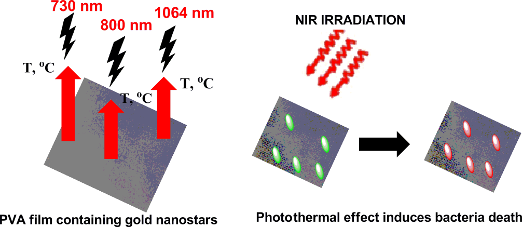
- studies have reported the preparation and the antibacterial efficacy of PVA films containing plant extracts, silver nanoparticles or zinc oxide nanoparticles [17][18][19][20][21][22]. However, when bacteria start to form biofilms they become resistant and conventional antibiotics do not eradicate biofilms


Metal-free catalysis based on nitrogen-doped carbon nanomaterials: a photoelectron spectroscopy point of view
Beilstein J. Nanotechnol. 2018, 9, 2015–2031, doi:10.3762/bjnano.9.191
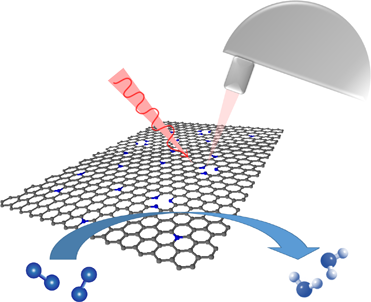
- ]. In 2015, Zhang and co-workers synthesized a carbon foam co-doped with nitrogen and phosphorous, which was the first bifunctional electrocatalyst for both ORR and OER [49] for high-performance rechargeable zinc-air batteries. The same material was used by Xue et al. as a counter electrode in dye




Nonlinear effect of carrier drift on the performance of an n-type ZnO nanowire nanogenerator by coupling piezoelectric effect and semiconduction
Beilstein J. Nanotechnol. 2018, 9, 1917–1925, doi:10.3762/bjnano.9.183
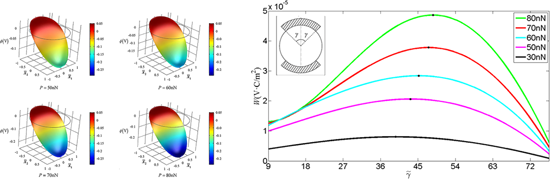
- -axis; piezoelectric potential; semiconductor; zinc oxide (ZnO); Introduction An acoustic wave propagating in piezoelectric semiconductors usually stimulates electric fields that bring charge carriers into motion, and conversely, the carrier motion will produce an opposite effect on the electric fields


![[Graphic 46]](/bjnano/content/inline/2190-4286-9-183-i59.svg?max-width=637&scale=1.18182) and (b) boundary electric displacement Dr at Ω for different end f...
and (b) boundary electric displacement Dr at Ω for different end f...


Nitrogen-doped carbon nanotubes coated with zinc oxide nanoparticles as sulfur encapsulator for high-performance lithium/sulfur batteries
Beilstein J. Nanotechnol. 2018, 9, 1677–1685, doi:10.3762/bjnano.9.159
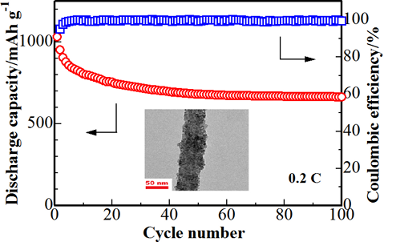
- carbon nanotubes coated with zinc oxide nanoparticles (ZnO@NCNT) were prepared via a sol–gel route as sulfur encapsulator for lithium/sulfur (Li/S) batteries. The electrochemical properties of the S/ZnO@NCNT composite cathode were evaluated in Li/S batteries. It delivered an initial capacity of 1032
- providing pathways for ion and electron transport. The as-prepared S/ZnO@NCNT composite is a promising cathode material for Li/S batteries. Keywords: batteries; nanocomposites; sol–gel processes; sulfur; zinc oxide (ZnO); Introduction Due to its high theoretical specific capacity of 1672 mAh·g−1 and
- this work, we synthesized nanocomposites of zinc oxide-coated nitrogen-doped carbon nanotubes with sulfur (S/ZnO@NCNT). ZnO was chosen because it is cheap, non-toxic and stable [14][15]. More importantly, ZnO demonstrates a strong affinity to polysulfides. In addition, NCNT was used due to its good


Light extraction efficiency enhancement of flip-chip blue light-emitting diodes by anodic aluminum oxide
Beilstein J. Nanotechnol. 2018, 9, 1602–1612, doi:10.3762/bjnano.9.152
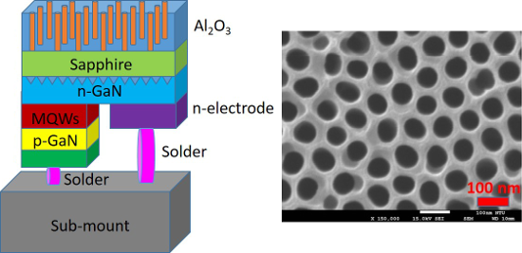
- with Ga-doped zinc oxide (GZO)/GaN as the base layer and then reducing the total reflectivity by changing the shape, thickness, and density of the microstructure through dry etching [12]. Li et al. increased the LEE of an InGaN-monolayer quantum-well LED by 1.8–1.9 times relative to that of a


Room-temperature single-photon emitters in titanium dioxide optical defects
Beilstein J. Nanotechnol. 2018, 9, 1085–1094, doi:10.3762/bjnano.9.100
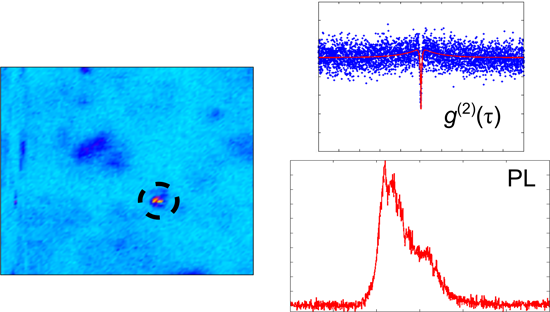
- types of single-photon emitters that include molecules [3], trapped atoms [4], quantum dots [5] and defects in diamond [6]. More recently point defects of wide-bandgap semiconductors, such as zinc oxide (ZnO) [7][8][9] and silicon carbide [10], were shown to exhibit room-temperature single-photon


Cyclodextrin inhibits zinc corrosion by destabilizing point defect formation in the oxide layer
Beilstein J. Nanotechnol. 2018, 9, 936–944, doi:10.3762/bjnano.9.86
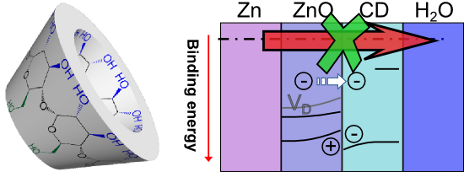
- . This work uses electrochemical impedance spectroscopy to show the cyclic oligosaccharide β-cyclodextrin (β-CD) to inhibit corrosion of zinc in 0.1M chloride with an inhibition efficiency of up to 85%. Only a monomolecular adsorption layer of β-CD is present on the surface of the oxide covered metal
- that affecting the defect chemistry of passivating films by molecular inhibitors maybe a viable strategy to control corrosion of metals. Keywords: band diagram; defect chemistry; organic corrosion inhibitors; X-ray photoelectron spectroscopy; zinc corrosion; Introduction Organic corrosion inhibitors
- ) compounds, and environmentally friendly alternatives are needed [2][7]. Control experiments in a recent work on encapsulating poorly water soluble organic corrosion inhibitors in the cyclic oligosaccharide β-cyclodextrin (β-CD) for incorporation into model polymer coatings on zinc led to the surprising


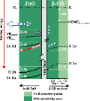
Facile synthesis of a ZnO–BiOI p–n nano-heterojunction with excellent visible-light photocatalytic activity
Beilstein J. Nanotechnol. 2018, 9, 789–800, doi:10.3762/bjnano.9.72
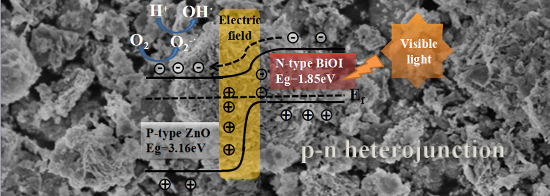
- degradation [3][4][5][6], nitrogen fixation [7][8], to solar fuel production [9]. The metal oxides, such as CdO [10], Al2O3 [11], and CuO [12][13], has attracted a lot of interest in photocatalytic applications. And among all of these metal oxides, it is titanium dioxide and zinc oxide (TiO2 and ZnO) that are
- ability as compared to pure BiOI and ZnO, which could be attributed to the synergistic effects of higher specific area and the enhanced separation efficiency of photoinduced electron–hole pairs. Experimental Chemicals Zinc acetate (Zn(CH3COO)2·2H2O), bismuth nitrate (Bi(NO3)3·5H2O), potassium iodine (KI


Surface-plasmon-enhanced ultraviolet emission of Au-decorated ZnO structures for gas sensing and photocatalytic devices
Beilstein J. Nanotechnol. 2018, 9, 771–779, doi:10.3762/bjnano.9.70
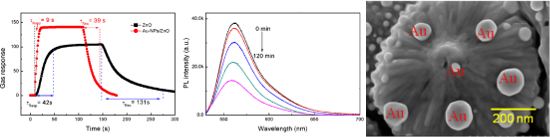
- spheres Glass microscope slides were cleaned in ethanol and deionized water in an ultrasonic bath for 3 min, and then dried at 80 °C. In order to obtain the ZnO films, typically, a portion of 10 mL of a 0.1 M aqueous solution of zinc acetate dihydrate [Zn(CH3COO)2·2H2O], and 20 mL of mono-ethanolamine




Mechanistic insights into plasmonic photocatalysts in utilizing visible light
Beilstein J. Nanotechnol. 2018, 9, 628–648, doi:10.3762/bjnano.9.59
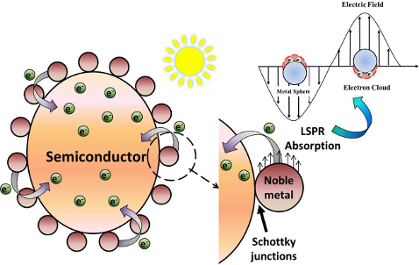
- , the carrier concentration of aluminium-doped zinc oxide (AZO) can be shifted from 0.5 to 10 × 1020 cm–3 by varying the concentration of Al, thus contributing to the wide-range SPR (2200–880 nm) [144]. Despite the tunable plasmonic features of semiconductors, some plasmonic semiconductors are