Search results
Search for "EDX" in Full Text gives 291 result(s) in Beilstein Journal of Nanotechnology. Showing first 200.
Cyclodextrin-assisted synthesis of tailored mesoporous silica nanoparticles
Beilstein J. Nanotechnol. 2018, 9, 693–703, doi:10.3762/bjnano.9.64
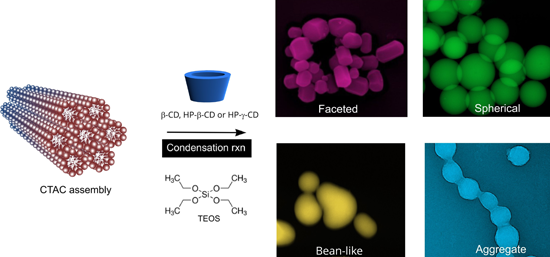
- HP groups. These molecules do not aggregate like β-CD, which might affect the particle formation, and eventually lead to the particles in different shapes and pore structures. For detailed analysis of the faceted particles, TEM, STEM and EDX analyses were performed. Figure 3f shows the TEM images of
- shape. EDX analysis of particles demonstrated the presence of carbon in addition to oxygen and silicone, suggesting physical attachment of CDs. FTIR was used to confirm adsorbed CDs on silica particles (Figure S1b, Supporting Information File 1). The peaks at 2860 and 2930 cm−1 are associated with the C
- . 100 particles from SEM images using ImageJ software (NIH, Bethesda, MD, USA). Energy-dispersive X-ray spectroscopy (EDX) was used to determine the elemental composition of the MSN samples at 30 kV and 4.5 mA. Transmission electron microscopy (TEM, FEI Tecnai G2F30) analysis was performed on the


Optimisation of purification techniques for the preparation of large-volume aqueous solar nanoparticle inks for organic photovoltaics
Beilstein J. Nanotechnol. 2018, 9, 649–659, doi:10.3762/bjnano.9.60
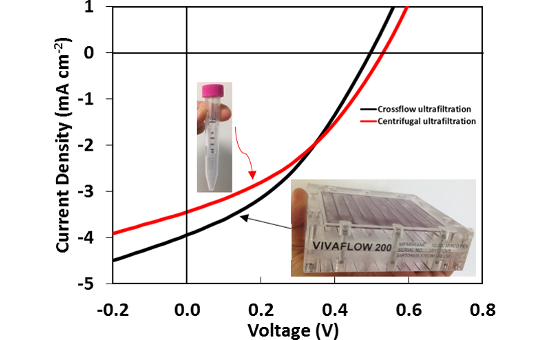
- ultrafiltration, the ASNP films with dilution factors of 1.6 × 10⁴, 9.8 × 10⁶ and 6.1 × 10⁹ all show aggregates on their surfaces (Figure 4A–C). These aggregates were analysed by energy dispersion X-ray spectroscopy (EDX, Supporting Information File 1, Figure S4). It is evident that the aggregates on the surfaces
- accelerating voltage of 2 kV and magnification ranges of 10,000–100,000×), with concurrent energy dispersive X-ray spectroscopy (EDX) measurements. For SEM, NP films were coated on conductive silicon substrates by spin coating, where 2.5 µL of NP ink was diluted in 12.5 µL of water and spun at 3000 rpm speed


Sensing behavior of flower-shaped MoS2 nanoflakes: case study with methanol and xylene
Beilstein J. Nanotechnol. 2018, 9, 608–615, doi:10.3762/bjnano.9.57

- for several times and then dried under vacuum at 45 °C overnight. Characterization X-ray diffraction (XRD) patterns were obtained with an X-ray diffractometer (Shimadzu XRD-6000, Cu Kα radiation) and energy dispersive X-ray (EDX) spectra and sample morphology were characterized by field-emission
- higher magnification in Figure 2b. As shown in the micrographs, flower-like particles are grown from few stacking nanoflakes with almost 20 nm thickness. To further investigate the quality of these growth structures, EDX data were obtained. Figure 3 shows an S to Mo atomic ratio of about 1.87, indicating
- coincides well with the experimental results of this study. The X-ray diffraction pattern of flower-shaped MoS2 nanoflakes synthesized by the hydrothermal method. FE-SEM micrographs of flower-shaped MoS2 nanoflakes synthesized via the hydrothermal method. EDX analysis of MoS2 nanoflake powder as prepared by


Electron interactions with the heteronuclear carbonyl precursor H2FeRu3(CO)13 and comparison with HFeCo3(CO)12: from fundamental gas phase and surface science studies to focused electron beam induced deposition
Beilstein J. Nanotechnol. 2018, 9, 555–579, doi:10.3762/bjnano.9.53


Synthesis and characterization of electrospun molybdenum dioxide–carbon nanofibers as sulfur matrix additives for rechargeable lithium–sulfur battery applications
Beilstein J. Nanotechnol. 2018, 9, 262–270, doi:10.3762/bjnano.9.28
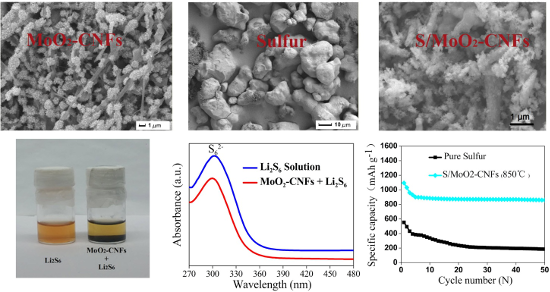
- –CNFs was performed by TEM. Figure 3g shows a typical TEM photograph of the nanostructures, displaying MoO2 nanoparticles decorated with carbon nanofibers. The elemental EDX of MoO2–CNFs depicted in Figure 3h indicates the presence of elemental Mo, O, C and Cu. The Cu signal comes from the Cu grid. The
- examined with energy dispersive X-ray (EDX) spectroscopy and elemental mapping attached to the HRTEM operating at 200 kV. The adsorption ability was determined by preparing a Li2S6 solution through the addition of Li2S to sulfur at the molar ratio of 1:5 in tetrahydrofuran (THF) under stirring. The
- PAN/PMA fabric. SEM images of (b) as-prepared PAN/PMA composite fibers, (c-–f) fibers calcined at 550 °C, 650 °C, 750 °C and 850 °C. (g) TEM image of MoO2–CNF calcined at 850 °C. (h) EDX elemental line analysis and (i) HRTEM image of MoO2–CNFs. SEM image of (a) pure sulfur, (b) MoO2–CNF/sulfur


BN/Ag hybrid nanomaterials with petal-like surfaces as catalysts and antibacterial agents
Beilstein J. Nanotechnol. 2018, 9, 250–261, doi:10.3762/bjnano.9.27
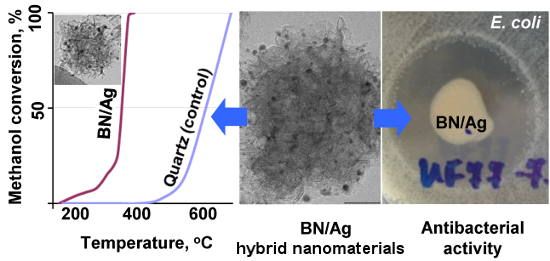
- vapours, and (ii) ultraviolet (UV) decomposition of AgNO3 in a suspension of BN NPs. The hybrid microstructures were studied by high-resolution transmission electron microscopy (HRTEM), high-angular dark field scanning TEM imaging paired with energy dispersion X-ray (EDX) mapping, X-ray photoelectron
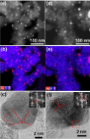
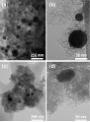
- . HADF-STEM and spatially-resolved EDX mapping (Figure 2) demonstrate that the surface of BN NPs is densely populated with Ag NPs. Thorough structural characterization of individual Ag NPs revealed their fine structure. The HRTEM images of individual Ag NPs are depicted in Figure 2c and 2f. The particles
- NH surfaces can be simply estimated from TEM images using a secant method. Our estimates show that the surface area for Ag NPs per g of silver increases from 2.7 × 105 cm2/g for UV BN/Ag HNMs to 4.3 × 105 cm2/g for CVD BN/Ag HNMs. Elemental composition of BN/Ag HNMs was determined by EDX analysis and





Gas-assisted silver deposition with a focused electron beam
Beilstein J. Nanotechnol. 2018, 9, 224–232, doi:10.3762/bjnano.9.24
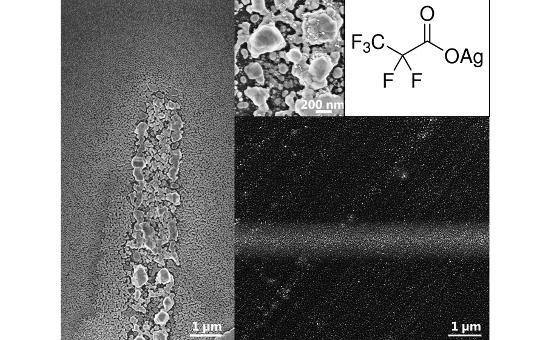
- diameter was chosen. For precise positioning, the GIS was fixed inside the chamber on a three-axis stage. The GIS was positioned at 200 µm lateral distance to the deposit and approximately 2 mm above the substrate. High resolution scanning electron microscopy and energy-dispersive X-ray spectroscopy (EDX
- the k-ratios of each element were determined. The atomic composition of the deposit was calculated with the SAMx STRATAGem thin-film analysis software. Although this software corrects the EDX for the thin film geometry it does not take into account the porosity (open granularity) of the film. However
- performed with the CASINO v3.3 software. All graphical data was further processed with Origin® 2015. A JEOL JEM2200fs with a JEOL EX-24065JGT EDX detector was used for transmission electron microscopy (TEM). Selected area electron diffraction (SAED) pattern indexing was performed using the CSpot software


Bombyx mori silk/titania/gold hybrid materials for photocatalytic water splitting: combining renewable raw materials with clean fuels
Beilstein J. Nanotechnol. 2018, 9, 187–204, doi:10.3762/bjnano.9.21
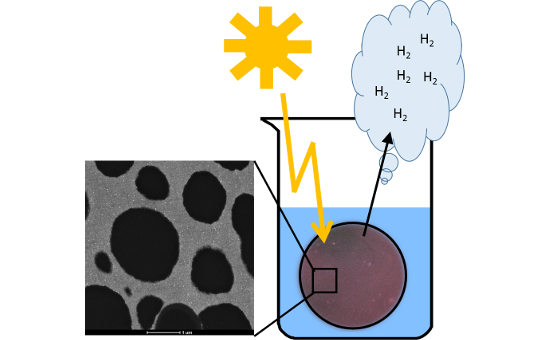
- were done on a Tecnai F20 ST (FEI, Eindhoven, The Netherlands) field emission TEM equipped with an Orius SC600 CCD-camera and a S-UTW EDX detector (EDAX, Mahwah, NJ, USA) operated at 200 kV. For EDXS the instrument was in scanning transmission mode and the α-tilt of the samples was set to 20°. Scanning
- observed in the HRTEM images (white circles). FFT analysis of the HRTEM image shows a series of reflections that can be assigned to Au and different TiO2 modifications (brookite and anatase), which are also identified by XRD (Table S2, Supporting Information File 1). Rutile cannot be detected. The EDX
- brookite are present in the sample. The corresponding EDX spectra prove the presence of Au and Ti. Figure 4 shows representative XRD patterns of the hybrid materials. All patterns are essentially identical and exhibit a series of broad reflections that can be assigned to anatase (ICDD 98-015-4602). Only




Comparative study of post-growth annealing of Cu(hfac)2, Co2(CO)8 and Me2Au(acac) metal precursors deposited by FEBID
Beilstein J. Nanotechnol. 2018, 9, 91–101, doi:10.3762/bjnano.9.11
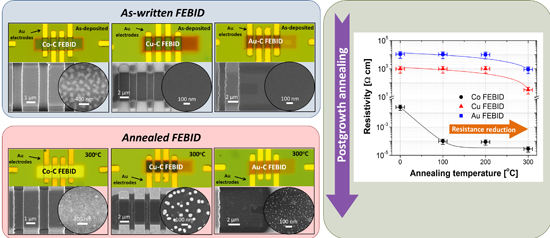
- pure Au agglomerates inside and on top of the carbonaceous matrix. Chemical characterisation EDX analysis The atomic percentages of the constituent elements of the Co–C–O, Cu–C–F–O and Au–C–O FEBID materials were determined using energy-dispersive X-ray spectroscopy (EDX), performed using a Hitachi S
- . Thus, the K-values of each atom were extracted from both the FEBID deposit and the substrate. The background signal from the detector, as well as the residual carbon signal arising from contamination deposition occurring during the EDX scan, were subtracted from the EDX spectra using a reference
- spectrum extracted far from the deposition area (see Supporting Information File 1). Finally, the SAMx STRATAGem software for thin film analysis was used to calculate the atomic composition of the FEBID deposits. In this way the EDX signal contribution from both the Si substrate and the 200 nm thick SiO2


The rational design of a Au(I) precursor for focused electron beam induced deposition
Beilstein J. Nanotechnol. 2017, 8, 2753–2765, doi:10.3762/bjnano.8.274
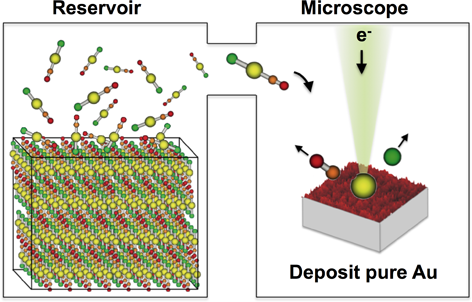
- EDAX detector for energy-dispersive X-ray spectroscopy (EDX). The samples were inserted free of oxygen and water. The composition and morphology were characterized directly after inserting, and after 12 h in high vacuum. X-ray diffraction High-quality single crystals of MeAuPMe3 were grown by


CdSe nanorod/TiO2 nanoparticle heterojunctions with enhanced solar- and visible-light photocatalytic activity
Beilstein J. Nanotechnol. 2017, 8, 2741–2752, doi:10.3762/bjnano.8.273
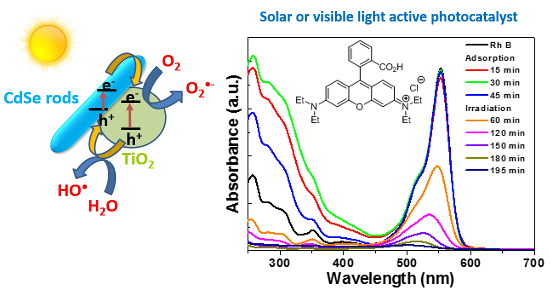
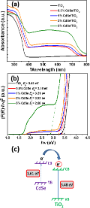
- energy dispersive X-ray (EDX) spectrum demonstrates that Cd and Se were the only elements detected in CdSe NRs. Due to the low content of CdSe NRs in CdSe/TiO2 composites, CdSe NRs could only hardly be observed by SEM. Ti, O, Cd and Se elements were detected for all composites, which indicates the






Enhanced photoelectrochemical water splitting performance using morphology-controlled BiVO4 with W doping
Beilstein J. Nanotechnol. 2017, 8, 2640–2647, doi:10.3762/bjnano.8.264
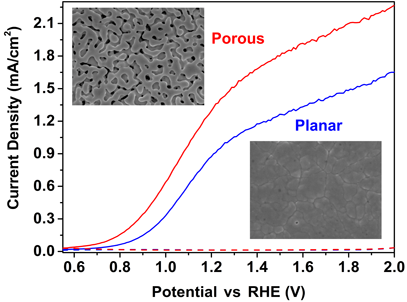
- films can be successfully synthesized by the sol–gel method. Elemental analysis was also performed to confirm the composition. To simplify the test, two typical samples, 0-water and 1-EG, were selected for the EDX analysis. The results were shown in Table S1 and Table S2 of Supporting Information File 1
- °. Elemental analysis was conducted by energy-dispersive X-ray spectroscopy (EDX) equipped on a field-emission scanning electron microscopy (FESEM, JEOL JSM-7600F). Light absorption was measured using a UV–visible spectrophotometer by measuring the reflectance and transmittance with an integrating sphere
- voltammograms of porous and planar films, and elemental analyses of the samples 0-water and 1-EG by EDX. Supporting Information File 200: Additional experimental data. Acknowledgements Financial support from Ministry of Education (grant RG15/16), Nanyang Technological University (SUG), and Singapore National


Localized growth of carbon nanotubes via lithographic fabrication of metallic deposits
Beilstein J. Nanotechnol. 2017, 8, 2592–2605, doi:10.3762/bjnano.8.260
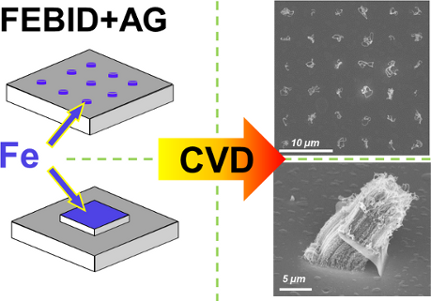
- , hindering the coalescence of Fe nanoparticles, resulting in more active sites for CNT nucleation [28][29][30]. A peculiar lift-up of the CNT nanostructure was also observed for the first time. Based on energy dispersive X-ray (EDX) spectroscopy and SEM data, the corresponding mechanism is also discussed
- . Further investigations are necessary by TEM or Raman measurements. Further characterization was performed with local EDX (see Supporting Information File 1, Figure S1) at the positions indicated in Figure 7b. At positions 1 and 2, a large carbon signal was detected, which is in line with the growth of
- origin of the aluminum signal is certainly the Al2O3 layer. In addition, we were not able to detect the Fe signal at this point. This is especially remarkable at position 2 in Figure 7b, however, this can be explained considering that EDX is not a surface sensitive method. Therefore the composition of

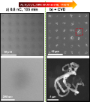


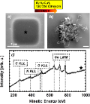

Direct writing of gold nanostructures with an electron beam: On the way to pure nanostructures by combining optimized deposition with oxygen-plasma treatment
Beilstein J. Nanotechnol. 2017, 8, 2530–2543, doi:10.3762/bjnano.8.253
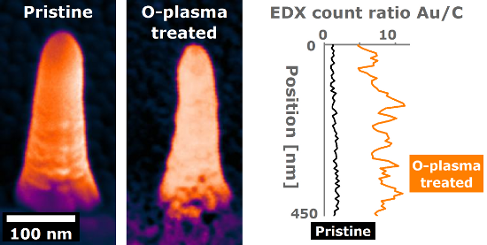
- varied by using the 30 μm, 60 μm, and 120 μm condenser apertures. For every HT and current, we set the deposition time to 20 s, 40 s, and 60 s and produced at least 6 NPs using identical experimental conditions. In total we deposited over 120 samples and conducted a broad SEM and EDX study to elucidate
- picture of the behaviour generally observed across all Au NP samples. All NPs fabricated under the same experimental conditions appeared indistinguishable in terms of both the morphology (as evidenced by SEM imaging) and chemical composition (as evidenced by SEM EDX linescans); see Figure S1, Supporting
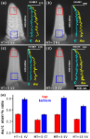
- 1 kV, to smoother and thinner, deposited at higher HT values (Figure 2), in line with previous observations for W [72]. SEM EDX studies showed that the NPs are in reality mostly made up of C, having a smaller fraction of Au present in the deposits (see Figure S2, Supporting Information File 1). A

Synthesis of metal-fluoride nanoparticles supported on thermally reduced graphite oxide
Beilstein J. Nanotechnol. 2017, 8, 2474–2483, doi:10.3762/bjnano.8.247
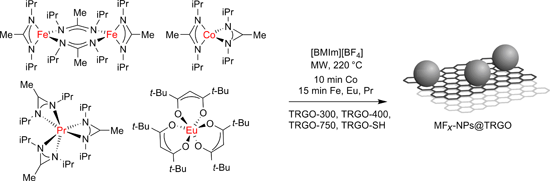
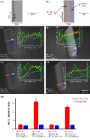
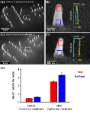
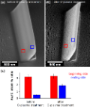
- identified by powder X-ray diffraction (PXRD) to be MF2 for M = Fe, Co and MF3 for M = Eu, Pr. The diameters and size distributions of MFx@TRGO were from (6 ± 2) to (102 ± 41) nm. Energy-dispersive X-ray spectroscopy (EDX) and X-ray photoelectron spectroscopy (XPS) were used for further characterization of
- using 200 μm carbon-coated copper grids or gold grids. The size distribution was determined manually or with the aid of the Gatan DigitalMicrograph software from at least 50 individual particles. HR-TEM EDX spectroscopy was also performed on a FEI Tecnai G2 F20 with a high-angle energy-dispersive X-ray
- detector providing a resolution of 136 eV or better for Mn Kα radiation. The exposure time of individual EDX spectra was 3 min. Metal-fluoride nanoparticles were prepared in a nitrogen atmosphere. 10 mg of the TRGO and the weighted amount of metal-amidinate powder or [Eu(dpm)3] were suspended at room


Fabrication of CeO2–MOx (M = Cu, Co, Ni) composite yolk–shell nanospheres with enhanced catalytic properties for CO oxidation
Beilstein J. Nanotechnol. 2017, 8, 2425–2437, doi:10.3762/bjnano.8.241
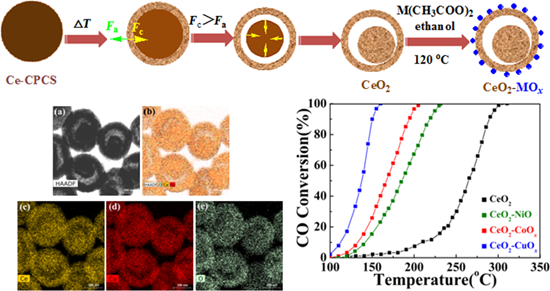
- (EDX) analysis was employed to further investigate the elemental distribution of Ce and Cu species in the yolk–shell nanospheres. In Figure 4, the elements Ce, Cu, and O are represented by yellow, red, and green colors, respectively. A uniform distribution of Ce, Cu, and O in each yolk–shell sphere
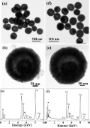
- yolk–shell structures in the range of 400–500 nm are clearly observed in the TEM images (Figure 5a,b,d,e). The coexistence of Ce and Co or Ni is further confirmed by the EDX spectra (Figure 5c,f). These results indicate the versatility of this synthesis approach in the preparation of CeO2-based
- scanning electron microscopy (SEM) using a FEI QuantaTM 250 and transmission electron microscopy (TEM) using a FEI Tecnai G2 F20, equipped with an energy dispersive X-ray spectrometer (EDX) for elemental mapping. Raman spectra were carried out using a Bruker Senterra Raman spectrometer with an excitation





Electron beam induced deposition of silacyclohexane and dichlorosilacyclohexane: the role of dissociative ionization and dissociative electron attachment in the deposition process
Beilstein J. Nanotechnol. 2017, 8, 2376–2388, doi:10.3762/bjnano.8.237
- exposure times. The composition of the deposits was determined using energy-dispersive X-ray analysis (EDX) on large and thick deposits. The deposits were grown on a gold sample to be able to distinguish the elements in the deposit from the substrate material. For the precursor molecule DCSCH, respectively
- primary electron beam in FEBID. Composition analyses of the deposits by means of EDX reveal a close to stoichiometric Si/C ratio for both compounds and only a marginal amount of chlorine remains in the deposits formed with DCSCH. However, the Si/O ratio of the DCSCH deposits (2.4) is twice that observed
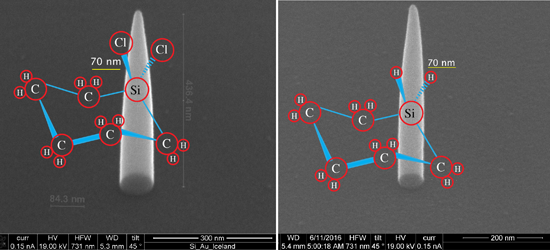
- deposits on gold substrates, using an Oxford Instruments 80 mm2 detector. EDX was performed at two different incident energies of 5 keV and 20 keV, at beam currents of 1.6 nA and 240 pA, respectively. Molecular structure of (a) 1,1-dichloro-1-silacyclohexane (cyclo-C5H10SiCl2) and (b) silacyclohexane





In situ controlled rapid growth of novel high activity TiB2/(TiB2–TiN) hierarchical/heterostructured nanocomposites
Beilstein J. Nanotechnol. 2017, 8, 2116–2125, doi:10.3762/bjnano.8.211
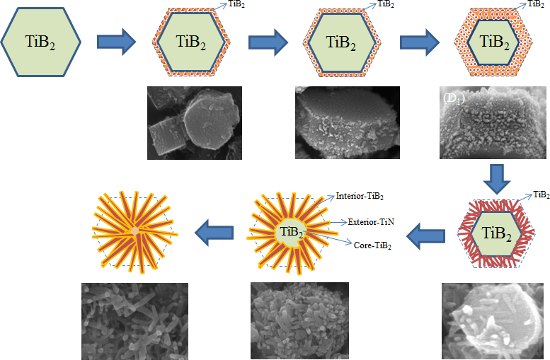
- ), scanning electron microscope (SEM), X-ray energy dispersive spectroscopy (EDX), transition electron microscopy (TEM), high-resolution TEM (HRTEM) and selected-area electron diffraction (SAED). The obtained TiB2/TiN hierarchical/heterostructured nanocomposites demonstrated an average particle size of 100
- into a scattering multibranched structure (marked with frame). Moreover, hierarchical structures were well-distributed without agglomeration. The corresponding X-ray energy dispersive spectroscopy (EDX) spectrum (Figure 1c) reveals significant elemental B, Ti, N and O. The existence of O could be
- corresponding SAED pattern (Figure 2g) indicated that the sample was a TiB2 single crystal with high crystallinity. In general, the HRTEM and SAED analysis results of the hierarchical/heterostructured nanocomposites corresponded with those of the above-mentioned XRD, EDX and FSEM characterizations. Effects of


Magnetic properties of optimized cobalt nanospheres grown by focused electron beam induced deposition (FEBID) on cantilever tips
Beilstein J. Nanotechnol. 2017, 8, 2106–2115, doi:10.3762/bjnano.8.210
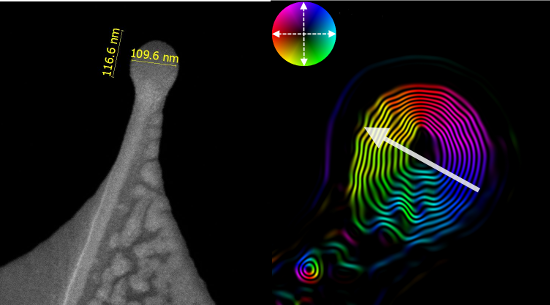
- ,b), 215 nm (c,d) and 135 nm (e,f) in diameter. Composition of the cobalt nanospheres, as measured by EDX, as a function of diameter. SEM micrographs of the cobalt nanospheres grown on cantilever tips for STEM-EELS and electron holography experiments. (a) Cantilever pyramid tip welded to a TEM grid


A systematic study of the controlled generation of crystalline iron oxide nanoparticles on graphene using a chemical etching process
Beilstein J. Nanotechnol. 2017, 8, 2017–2025, doi:10.3762/bjnano.8.202
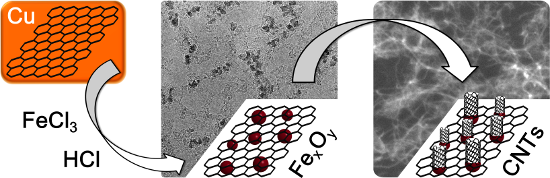
- iron oxide of composition Fe0.942O (Figure 2e) which was further proven by energy-dispersive X-ray (EDX) spectroscopy (Figure S3, Supporting Information File 1). The formed iron oxide nanoparticles with an average diameter of 3 ± 1 nm are highly crystalline and randomly distributed on the graphene
- process by adhesive tape. The TEM was operated at an acceleration voltage of 200 keV (FEI, Tecnai G2F20@200keV, equipped with EDAX EDX detector). EDX and SAED spectra of the iron oxide nanoparticles were aquired simultaneously in the TEM. For high-resolution images, the TEM (FEI, Titan3 80-300 microscope


Bi-layer sandwich film for antibacterial catheters
Beilstein J. Nanotechnol. 2017, 8, 1982–2001, doi:10.3762/bjnano.8.199
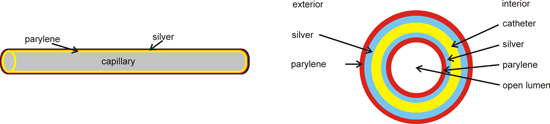
- , capillaries made of polysilicone were treated by Tollens’ reagens, and these thick layers have been subjected to SEM and EDX analysis (Figure 14). In Figure 14a, a cross section of an urethral catheter is displayed. Figure 14b shows the silver layer (d ≈ 4 μm) on the interior wall, and in Figure 14c, an EDX


Methionine-mediated synthesis of magnetic nanoparticles and functionalization with gold quantum dots for theranostic applications
Beilstein J. Nanotechnol. 2017, 8, 1734–1741, doi:10.3762/bjnano.8.174
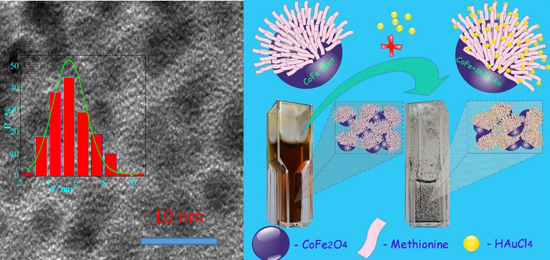
- superparamagnetic. The high-resolution TEM image of the CoFe2O4@Met NPs after gold deposition with methionine and the EDX spectrum of these NPs are shown in Figure 2. The HRTEM image shows the formation of numerous gold species at the surface of methionine-stabilized CoFe2O4@Met NPs. In accordance with HRTEM image
- and EDX spectrum, the ICP-MS analysis of the gold plating solution performed before and after 30 min of sonication of the NPs indicated the reduction of ca. 99.3% of gold ions. From the HRTEM inspection, however, it was difficult to determine the size distribution of the attached gold species
- responses of as-formed (1) and sonicated NPs in a 10 mmol·L−1 HAuCl4 solution, kept at a pH 12.2, at 37 °C for 4 h (2) are presented. HRTEM image of CoFe2O4@Met NPs after sonication in 15 mmol·L−1 HAuCl4 solution at 37 °C for 4 h (a) and their EDX spectrum (b). Absorption spectra of methionine (1


Near-infrared-responsive, superparamagnetic Au@Co nanochains
Beilstein J. Nanotechnol. 2017, 8, 1680–1687, doi:10.3762/bjnano.8.168
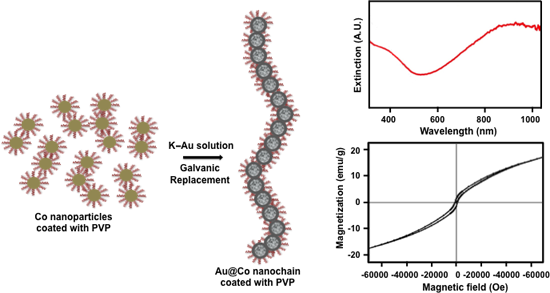
- electron diffraction (SAED) shown in the inset is also consistent with a single-phase fcc structure [36]. The chemical composition of the bimetallic nanochains was evaluated by energy dispersive X-ray spectroscopy (EDX) and X-ray photoelectron spectroscopy (XPS). Figure 4 shows the EDX spectrum with peaks
- abundance of each element, and the EDX data averaged over multiple runs confirm that the approximate stoichiometry of the nanochains is Co27Au72. We also used XPS to analyze the chemical composition of the nanochains (Figure 5). The XPS spectrum shows two peaks at 84.0 and 87.7 eV, which can be attributed
- small drops of solution containing the dispersed nanochains on a silicon wafer (for FE-SEM) or on 300-mesh holey carbon-coated copper grids (for TEM) and allowing the solvent to evaporate. Analysis by XRD was performed using a Siemens D-5000 with monochromatic Cu Kα radiation (λ = 1.540562 Å), and EDX


Group-13 and group-15 doping of germanane
Beilstein J. Nanotechnol. 2017, 8, 1642–1648, doi:10.3762/bjnano.8.164
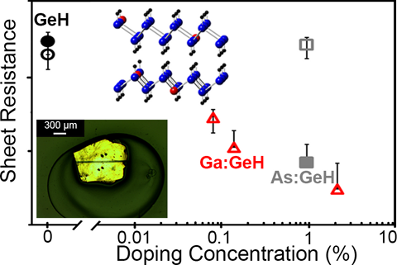
- % in GeH indicating that this is the maximum amount of As that can be substituted in CaGe2. The lack of any other distinguishing phase in the XRD suggests that Ga and As are part of the germanane lattice. Scanning electron microscopy (SEM) with energy-dispersive X-ray spectroscopy (EDX) provided
- further verification of the incorporation of dopant atoms into GeH. As a representative example, the EDX spectrum of a single 2.3% Ga:GeH platelet shows the presence of both Ge K and Ga K peaks (Figure 3a). Figure 3b–d shows an SEM image, and the maps of Ga Kα signal and Ge Kα signal, of a corner of a
- Ga:GeH platelet. These EDX maps show that there is a uniform distribution of gallium and germanium throughout the germanane crystal. This confirms the retention of the Ga dopant into the germanane lattice. X-ray photoelecton spectroscopy (XPS) measurements confirmed dopant retention in the lattice and



Characterization of ferrite nanoparticles for preparation of biocomposites
Beilstein J. Nanotechnol. 2017, 8, 1257–1265, doi:10.3762/bjnano.8.127
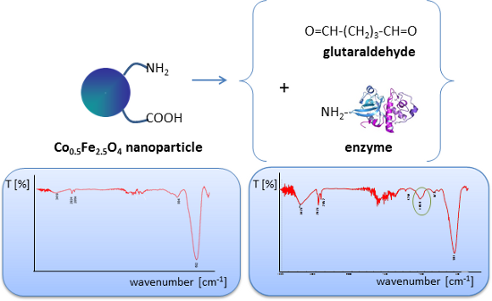
- dispersive X-ray and Mössbauer spectroscopy. The effect of the obtained biocomposites was monitored by Fourier transform infrared spectroscopy. The obtained results show that in some cases the use of glutaraldehyde was crucial (albumin). Keywords: albumin; EDX; glucose oxidase; IR spectroscopy; lipase
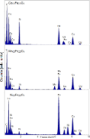
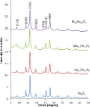
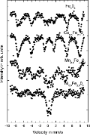
- Ni ions influence the crystallization process (which turned out to be slower in comparison to Fe). This observation explains the observed differences in the Mössbauer spectra from those presented in previous studies [17]. Energy dispersive X-ray analysis (EDX) To confirm the substitution of Fe by
- other 3d elements, EDX analysis was performed. For this purpose, the particles analyzed previously with TEM were used. The assumed molar ratio of Fe/Me was confirmed to be 2.5:0.5. Element specific line scans of ferrite nanoparticles show the presence of all substituted metals in the studied particles