Search results
Search for "Fe" in Full Text gives 491 result(s) in Beilstein Journal of Nanotechnology. Showing first 200.
Observation of unexpected uniaxial magnetic anisotropy in La2/3Sr1/3MnO3 films by a BaTiO3 overlayer in an artificial multiferroic bilayer
Beilstein J. Nanotechnol. 2020, 11, 651–661, doi:10.3762/bjnano.11.51
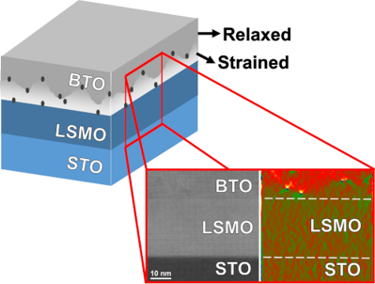
- ., ferromagnetic (FM) for LSMO and ferroelectric (FE) for BTO, and BTO/LSMO heterostructures have exhibited magnetoelectric coupling (MEC) [6][7][8]. They constitute a type of artificial hybrid multiferroic material that can be employed to build the next-generation sensors, multiple-state memory elements, magnetic
- magnetic anisotropy is artificially induced in LSMO films grown on ferroelectric BiFeO3 substrate when the polarization of the FE domains is switched to highly aligned stripe domains, inducing a magnetic easy axis in the FM layer parallel to the polarization direction [32][33]. In all aforementioned cases
- , the magnetic anisotropy of LSMO is also affected either by a non-FE or FE substrate on which it is deposited. However, an open question remains about how the presence of a FE-BTO layer grown on top of an FM-LSMO film can alter its magnetic properties. This is a key point that needs to be evaluated to



Comparison of fresh and aged lithium iron phosphate cathodes using a tailored electrochemical strain microscopy technique
Beilstein J. Nanotechnol. 2020, 11, 583–596, doi:10.3762/bjnano.11.46
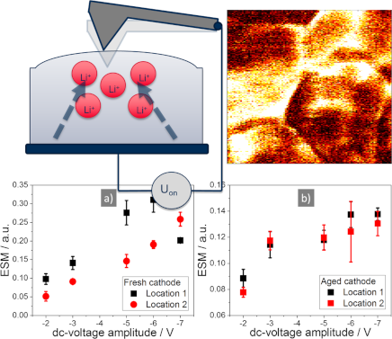
- the assumed decrease of the electrochemical activity, suggested by the reduction of the ESM signal intensity. In former studies of LFP degradation, the main effect observed was iron dissolution and Fe2+ migration to the anode and redeposition. Fe particles on the anode play a decisive role in
- accelerated SEI formation [9][69][70]. Iron dissolution from LFP has been found to increase with water content of the electrolyte and phase impurities in the cathode. The dissolution of iron leads to Fe-deficient inactive phases. The aged cathode showed a higher Fe content on the cathode surface and lower Fe
- content in the cross-section (Fe mass content fresh: 32.1 ± 0.3% and aged: 27.8 ± 0.8%), indicating iron dissolution from the bulk material [71]. Another factor influencing the ESM signal is the structure of the material. Chen et al. observed a dependency of the crystallinity of LFP on the ESM signal and



Luminescent gold nanoclusters for bioimaging applications
Beilstein J. Nanotechnol. 2020, 11, 533–546, doi:10.3762/bjnano.11.42
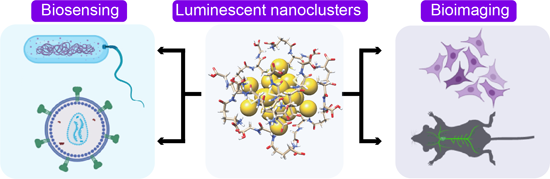
- ], copyright 2010 The Royal Society of Chemistry. Figure panels 7D and 7F–H are reused, and panel 7E is adapted with permission from [99], copyright 2018 The Royal Society of Chemistry. A) Principle of Aβ/copper and ascorbate- or Fe(II)-catalyzed formation of AuNCs. B) Illustration of fluorescence biomarking


Synthesis and enhanced photocatalytic performance of 0D/2D CuO/tourmaline composite photocatalysts
Beilstein J. Nanotechnol. 2020, 11, 407–416, doi:10.3762/bjnano.11.31
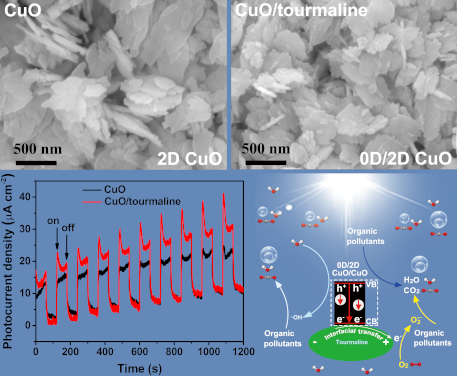
- spectroscopy. As shown in Figure 2, three bands appeared at 3487 cm−1, 3554 cm−1, and 3635 cm−1 resulting from the vibration of the three OH groups in tourmaline [2]. The bending vibration of the Si–O group was detected at 488 cm−1 [27]. The band at 649 cm−1 was due to the RIV–O (R = Al, Fe, Mg, Mn) stretching


Understanding nanoparticle flow with a new in vitro experimental and computational approach using hydrogel channels
Beilstein J. Nanotechnol. 2020, 11, 296–309, doi:10.3762/bjnano.11.22
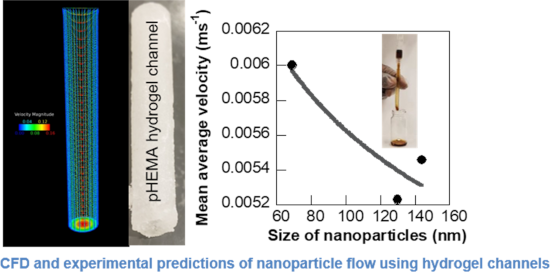
- mechanisms dominating the NP flow. The mass loss percentage and hence the binding of the NPs increased with NP size following a reliable linear correlation (R = 0.98) for the lowest inlet mass concentration of the NPs (2.008 g Fe). This implied that the smaller NPs, despite having a higher relative surface
- NPs had more time for interaction and binding to the walls of the channel as they moved with a slower velocity through the hydrogel flow path. An increase in mass loss with size of NPs was also observed for a higher NP concentration of 4.12 g·mL−1 Fe, but the variation was more gradual. This
- phenomenon suggested a slightly lower influence of the surrounding fluid and Brownian motion on the NP flow in this concentration range. However, the quantity of NPs lost due to binding or deposition showed a decreasing quadratic correlation with NP size at the highest inlet mass concentration (5.24 g Fe


Synthesis of amorphous and graphitized porous nitrogen-doped carbon spheres as oxygen reduction reaction catalysts
Beilstein J. Nanotechnol. 2020, 11, 1–15, doi:10.3762/bjnano.11.1
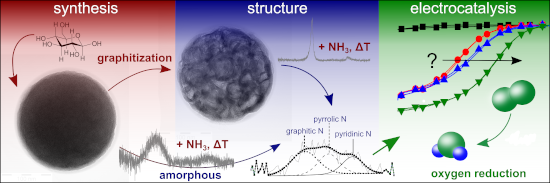
- (HRTEM) images of the resulting particles showed that the graphite layers are arranged along the longitudinal axis of the fibers [37]. After the acidic washing process, neither XPS nor EDX showed, for g-NCS-850 and g-NCS-1000, Fe or Fe3C particles within the spheres, which are commonly found for the Fe
- g-NCSs, determined by CHN analyses (supported by EDX measurements, e.g., absence of Fe), as well as the elemental surface composition and N bonding configurations, determined by XPS measurements, are given in Table 1 and Table 2. As expected the samples are made up of a carbon matrix including O
- - and H-based functional groups [39]. Subsequent N-doping of the carbon lattice results in multiple nitrogen bonding configurations (Table 2). Possible Fe contaminations of the g-NCS samples originating from the Fe2O3 graphitization catalyst are below the detection limit of the EDX and XPS measurements




Synthesis and acetone sensing properties of ZnFe2O4/rGO gas sensors
Beilstein J. Nanotechnol. 2019, 10, 2516–2526, doi:10.3762/bjnano.10.242
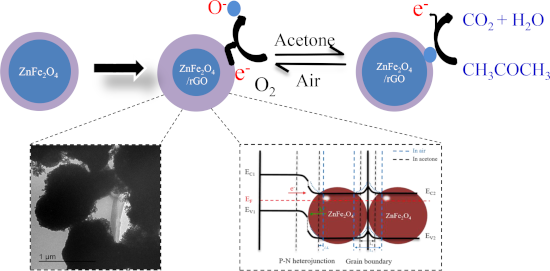
- glycerol (8 mL) under slow stirring. Secondly, 0.1098 g Zn(CH3COO)2·2H2O and 0.4042 g Fe(NO3)3·9H2O were dissolved in the obtained homogeneous solution under magnetic stirring for 1 h. Subsequently, the mixed solutions were transferred into a Teflon-lined stainless-steel autoclave (50 mL), and then
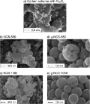
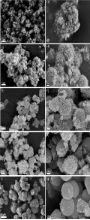
- the 0.5 wt % ZnFe2O4/rGO composite. Furthermore, the composition of the sample was analyzed by high-angle annular dark-field imaging scanning transmission electron microscopy (HAADF-STEM) and EDS. The element mappings in Figure 6e reveal the existence of C, Zn, Fe and O in the 0.5 wt % ZnFe2O4/rGO
- % ZnFe2O4/rGO spheres and e) EDX elemental mapping images of C (red), Zn (blue), Fe (yellow) and O (orange). Response of the hollow spheres made of pure ZnFe2O4 and the four different ZnFe2O4/rGO composites used as gas sensors to 10 ppm acetone vapor at 150–225 °C. Dynamic response/recovery curves of the




Deterministic placement of ultra-bright near-infrared color centers in arrays of silicon carbide micropillars
Beilstein J. Nanotechnol. 2019, 10, 2383–2395, doi:10.3762/bjnano.10.229
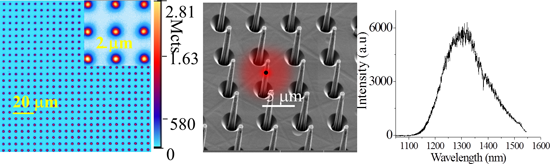
- nanopillar with optical pump saturation occurring at 3.5 mW has been shown previously [48]. This corresponds to a fluorescence enhancement (FE) by a factor of two to three compared to single emitters in non-fabricated samples. Thus, for sample 1 we estimate in the gap about ca. 41 emitters, assuming a count
- surface and the radiated power collected on the same surface for dipole emission in bulk SiC. To have a comparison with the experimentally measured PL enhancement, the calculated FE is defined by the equation [60]: where the color center bulk quantum efficiency, QEbulk, and the SiC pillar quantum
- %. In the FE calculations, we saw successive periodic peaks in the FE enhancement factor along the length of the pillar, with a spacing between the peaks of 400–450 nm, which is about half of the dipole emission wavelength (Figure 8b, circles). The first peak appears at ca. 400 nm from the top surface


Design and facile synthesis of defect-rich C-MoS2/rGO nanosheets for enhanced lithium–sulfur battery performance
Beilstein J. Nanotechnol. 2019, 10, 2251–2260, doi:10.3762/bjnano.10.217
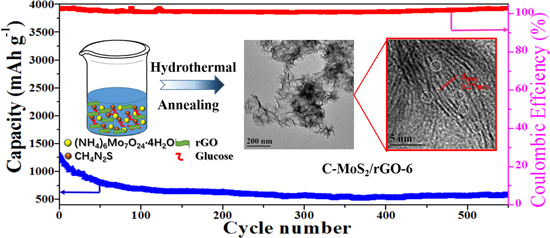
- -4, C-MoS2/rGO-6, C-MoS2/rGO-8) with a 3:1 mass ratio was calcined at 155 °C for 12 h in a sealed vessel. Materials characterization The structure and morphology were investigated by field-emission scanning electron microscopy (FE-SEM, INSPECT F50) and transmission electron microscopy (TEM, ZEISS


Nontoxic pyrite iron sulfide nanocrystals as second electron acceptor in PTB7:PC71BM-based organic photovoltaic cells
Beilstein J. Nanotechnol. 2019, 10, 2238–2250, doi:10.3762/bjnano.10.216
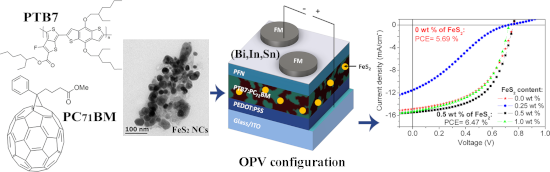
- . This band intensity increase could suggest some intermolecular interaction between the O atom of the carbonyl groups of PTB7 and PC71BM with the Fe atoms of the FeS2 NCs. In addition, upon the incorporation of FeS2 into the PTB7:PC71BM mixture, the 1603 cm−1 band was observed to shift red by ≈4 cm−1 to


A novel all-fiber-based LiFePO4/Li4Ti5O12 battery with self-standing nanofiber membrane electrodes
Beilstein J. Nanotechnol. 2019, 10, 2229–2237, doi:10.3762/bjnano.10.215
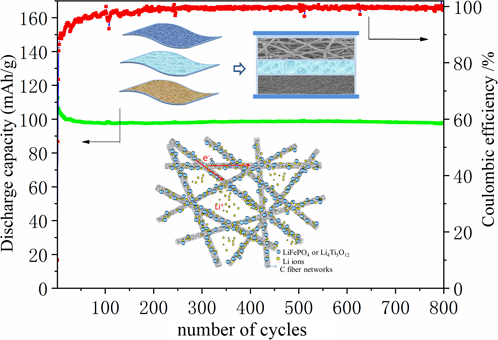
- and Li5Ti4O12 fibers in Figure 4 reveals that the active particles are uniformly distributed on the surface of the fibers, in agreement with the SEM images. EDS analysis shows either Fe, C, P, and O or Ti, C, and O on the fibers. The fibers were further examined using XRD and Raman spectroscopy. The
- : 0.007 mol of Fe(NO3)3·9H2O and C2H3O2Li·2H2O, H3PO4 were dissolved in 29 g of N,N-dimethylformamide (DMF) to obtain solution A; 4 g of polyacrylonitrile (PAN) and 2 g of polyvinylpyrrolidone (PVP) were dissolved in 29 g of DMF to obtain solution B. A precursor spinning solution for the LiFePO4 nanofiber


Targeted therapeutic effect against the breast cancer cell line MCF-7 with a CuFe2O4/silica/cisplatin nanocomposite formulation
Beilstein J. Nanotechnol. 2019, 10, 2217–2228, doi:10.3762/bjnano.10.214
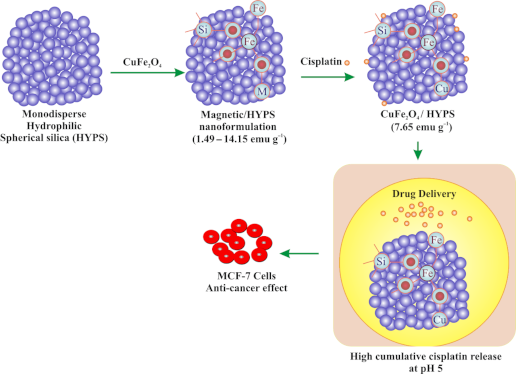
- form aggregates, exert variable oxidation states and result in dose-dependent toxicity. Several supports, including silica and carbon, were used to reduce such aggregation. Notably, different types of nanocomposites were reported based on Co, Ni, Mn and Fe over mesoporous carbon capsules [8]. A carbon
- and Methods HYPS was purchased from Superior Silica, USA. Cu(NO3)2·3H2O, Fe(NO3)3·9H2O, cisplatin and aluminium mesocellular foam with a high surface area of 539 m2/g and large aperture pore size of 14.7 nm was obtained from Sigma-Aldrich. Silicalite with a surface area of 313 m2/g was prepared in
- -house using tetraethyl orthosilicalite and tetrapropylammonium hydroxide as the silica source and template. All chemicals were used as-receied without any further modification or purification. Preparation of 30 wt % CuFe2O4/HYPS The sample was prepared by mixing 0.65 g of Cu(NO3)2·3H2O and 1.01 g of Fe


Use of data processing for rapid detection of the prostate-specific antigen biomarker using immunomagnetic sandwich-type sensors
Beilstein J. Nanotechnol. 2019, 10, 2171–2181, doi:10.3762/bjnano.10.210

- using constant-potential amperometry at a working electrode potential of −200 mV vs pseudo-reference Ag/AgCl. The mixed solution containing H2O2 (1 µmol·L−1) and hydroquinone (HQ, 10 µmol·L−1) was injected into the electrochemical cell, and the signal was monitored. The HRP-Fe(III) immobilized on the
- spectroscopy (FTIR), field-emission scanning electron microscopy (FE-SEM), energy-dispersive X-ray spectroscopy (EDX), and polarization-modulated infrared reflection absorption spectroscopy (PM-IRRAS, Figure S1) is described. The Silhouette coefficients calculated for IDMAP, Sammon’s mapping (SM), principal


Microbubbles decorated with dendronized magnetic nanoparticles for biomedical imaging: effective stabilization via fluorous interactions
Beilstein J. Nanotechnol. 2019, 10, 2103–2115, doi:10.3762/bjnano.10.205
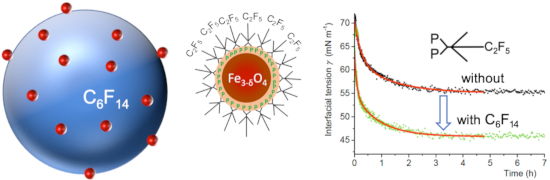
- +1OEG8Den (DPPC/Fe molar ratio 28:1) were prepared and subsequently characterized using both optical microscopy and an acoustical method of size determination. The dendrons fitted with fluorinated end groups lead to smaller and more stable MBs than those fitted with hydrogenated groups. The most effective
- rapidly onto the interface, as indicated by the instant reduction of the interfacial tension σ by ≈4 mN m−1 (from 72 to 68 ± 0.5 mN m−1, Supporting Information File 1, Figure S3). The concentration of Fe in the IONP dispersions was varied from 10−4 to 10−1 mol L−1. The variations of the interfacial
- tension σ over time are collected in Figure 3 and Table 1. The results show that, not surprisingly, σ decreases with increasing Fe concentration in all cases. The lowest σ values were obtained for the IONPs grafted with the fluorinated dendrons, reflecting their higher hydrophobicity. We also observed


Synthesis of highly active ETS-10-based titanosilicate for heterogeneously catalyzed transesterification of triglycerides
Beilstein J. Nanotechnol. 2019, 10, 2039–2061, doi:10.3762/bjnano.10.200
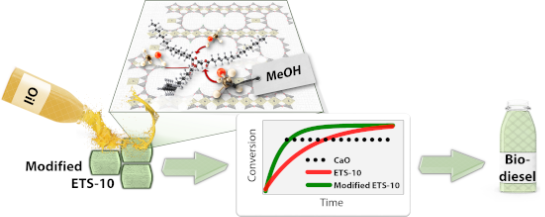
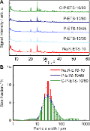
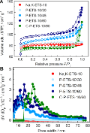
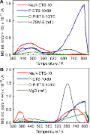
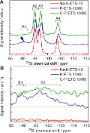
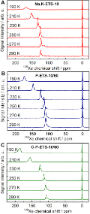
- expectedly showed no signals of Ti(III) around 3500 G due to its oxidation state Ti(IV), which is diamagnetic and thus EPR-silent. Both samples, C-P-ETS-10/60 and P-ETS-10/60, display a typical signal of high spin Fe(III) of dispersed paramagnetic centers. Their g-value of 4.3 is indicative of a large axial
- zero-field splitting (ZFS) parameter (D >> 10 GHz) and a ratio between rhombic and axial ZFS of 1/3. Such Fe(III) centers have been commonly observed in zeolite and silica materials and were assigned to iron sites with a distorted tetrahedral coordination geometry [56][57]. In addition, P-ETS-10/60








Magnetic properties of biofunctionalized iron oxide nanoparticles as magnetic resonance imaging contrast agents
Beilstein J. Nanotechnol. 2019, 10, 1964–1972, doi:10.3762/bjnano.10.193
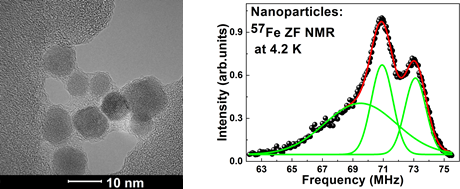
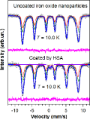
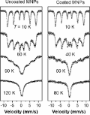
- specific size distribution of nanoparticles. On the other hand, this part of spectrum could originate from Fe nuclei situated on the surface of the nanoparticles. In the latter case, it is not difficult to explain the absence of a low-frequency shoulder in the 57Fe ZF-NMR spectrum of maghemite particles
- , as reported in [27][28]. Indeed, the diameter of our nanoparticles is about 5–8 nm, which is almost two times less than that of the nanoparticles studied in [27][28], and hence, the partial amount of the surface Fe atoms Nsurface/Nvolume ~ d2/d3 ~ 1/d is also two times higher. Moreover, in [12], the
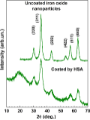
- temperature range of 10–300 K with a standard MS-1104Em spectrometer operated in the constant acceleration regime [30][31]. The gamma ray source 57Co(Rh) was maintained at room temperature. The calibration was performed with a metal α-Fe standard absorber. The XRD patterns were collected using the Rigaku




Facile synthesis of carbon nanotube-supported NiO//Fe2O3 for all-solid-state supercapacitors
Beilstein J. Nanotechnol. 2019, 10, 1923–1932, doi:10.3762/bjnano.10.188
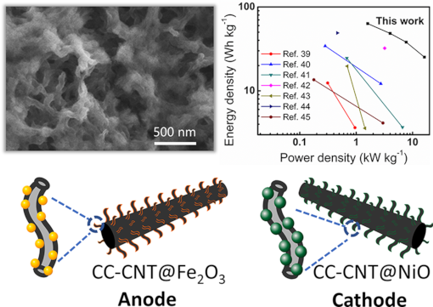
- existence of C, O, and Fe elements (Figure 2f, Cu signal is due to the copper grid). The crystallographic structures of the samples are shown in Figure 3a. Excluding the peaks of CC-CNT, all other diffraction peaks can be assigned to Fe2O3 (JCPDS Card No. 25-1402). The samples show the same XRD features at
- both XRD pattern and Raman spectra indicate that Fe2O3 is not well crystallized since it was formed at 70 °C in the drying oven without further annealing. The XPS spectrum in Figure S5a (Supporting Information File 1) shows the existence of Fe, O, and C elements in CC-CNT@Fe2O3. The Fe 2p spectrum
- 530.13 eV, corresponding to C–O, Fe–O–C, and Fe–O, respectively [30]. The XPS results strongly support the XRD and Raman results and confirm Fe2O3 on the CC-CNT. A three-electrode system was used to examine the electrochemical characteristics of the CC-CNT@Fe2O3 with Pt foil as a counter electrode, SCE


Oblique angle deposition of nickel thin films by high-power impulse magnetron sputtering
Beilstein J. Nanotechnol. 2019, 10, 1914–1921, doi:10.3762/bjnano.10.186
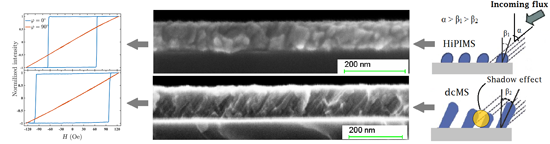
- incidence on the structural and magnetic properties of Ni thin films deposited using dcMS and HiPIMS. We chose to work with pure Ni rather than NiFe alloys because it rejects many proposed explanations for uniaxial anisotropy based on alloying, i.e., directional ordering of Fe/Ni atom pairs [46], shape


Charge-transfer interactions between fullerenes and a mesoporous tetrathiafulvalene-based metal–organic framework
Beilstein J. Nanotechnol. 2019, 10, 1883–1893, doi:10.3762/bjnano.10.183
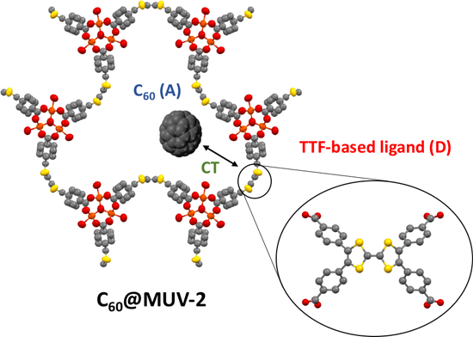
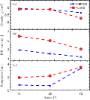
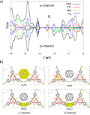
- , respectively). Theoretical calculations In order to get further insight into the donor–acceptor interactions between C60 and the TTF-based MOF, theoretical calculations were performed under the density functional theory (DFT). The MUV-2 framework was modelled as previously described [53], with a high-spin Fe
- the lowest unoccupied crystal orbital (LUCO) completely localized on the C60 ball. Otherwise, the CBM in the β-channel is best described by the unoccupied Fe d-orbitals of the inorganic cluster of the MOF, the eigenstates corresponding to the fullerene being only 0.2 eV above in energy (Figure 6). Due
- calculations were performed under the density functional theory framework. Periodic boundary conditions (PBC) calculations were carried out with the FHI-AIMS (Version 171221) software [57]. MUV-2 was modelled as previously described, with Fe(III) ions in a high-spin d5-configuration. The guest C60 molecule was




Engineered superparamagnetic iron oxide nanoparticles (SPIONs) for dual-modality imaging of intracranial glioblastoma via EGFRvIII targeting
Beilstein J. Nanotechnol. 2019, 10, 1860–1872, doi:10.3762/bjnano.10.181
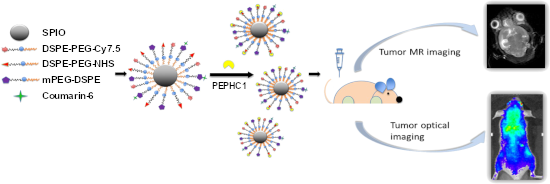
- . For the preparation of PEPHC1-decorated PEG-SPIONs (labeled as PNPs in this work), PEPHC1 (50 µL, 20 mg/mL) was added to the NP suspension (4 mL, 0.25 mg of Fe /mL) to react for 2 h at room temperature and filtered as described above. Finally, the purified PNP nanoprobes were stored at 4 °C until use
- ), followed by negative staining with 2% phosphotungstic acid. The mean hydrodynamic diameter and zeta potential of the nanoprobes were measured with a Malvern Zetasizer Nano ZS (Malvern, UK) instrument. The quantitative measurement of the Fe content in PNPs was conducted by inductively coupled plasma
- spectrometry (ICP-MS, Thermo Scientific iCAP 7400 series) [39]. T2-weighted MR imaging of the PNPs with various Fe concentrations was performed under a 3.0T clinical MRI scanner (DiscoveryMR750, GE Medical System, LLC, USA) at room temperature [27]. Fluorescent images of the PNPs with various Fe concentrations




Tuning the performance of vanadium redox flow batteries by modifying the structural defects of the carbon felt electrode
Beilstein J. Nanotechnol. 2019, 10, 1698–1706, doi:10.3762/bjnano.10.165
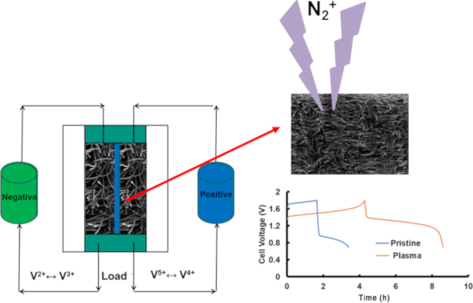
- single redox species, element cross-contamination issues, which are common in other redox flow batteries such as Cr/Fe, are obviously nonexistent [1]. Nevertheless, the system suffers from irreversible capacity fade due to parasitic reactions such as air oxidation of V2+ species and hydrogen evolution


Layered double hydroxide/sepiolite hybrid nanoarchitectures for the controlled release of herbicides
Beilstein J. Nanotechnol. 2019, 10, 1679–1690, doi:10.3762/bjnano.10.163
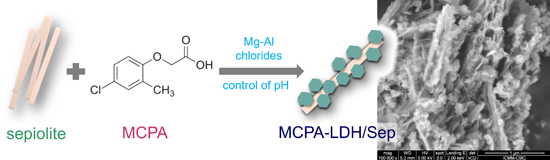
- up to approx. 100 mg of MCPA per gram of sepiolite (see Figure S1, Supporting Information File 1). Figure 3 shows images obtained by FE-SEM and TEM from the neat sepiolite and from the hybrid nanoarchitectures. The FE-SEM images show that the sepiolite fibers appear covered and compacted after the
- materials. In addition, FE-SEM and TEM images (Figure S2, Supporting Information File 1) show that the starting LDH and the MCPAie-LDH material exhibit small and uniform particles around 100 nm in diameter. MCPA-LDH/sepiolite hybrid nanoarchitectures prepared via coprecipitation MCPA-LDH intercalation
- at mild temperatures below 150 °C. FTIR spectroscopy also confirms the incorporation of MCPA through interaction with the LDH (Figure S3, Supporting Information File 1), as discussed for the hybrid nanoarchitectures prepared by ion exchange. The FE-SEM images of the MCPA-LDH/Sep hybrid


Chiral nanostructures self-assembled from nitrocinnamic amide amphiphiles: substituent and solvent effects
Beilstein J. Nanotechnol. 2019, 10, 1608–1617, doi:10.3762/bjnano.10.156
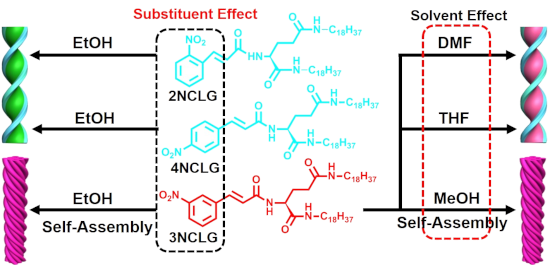
- characterized on a Bruker AVANCE III HD 500 machine. The gel and precipitate were cast onto single-crystal silica plates and then coated with a thin layer of Pt after drying to increase the contrast. After that, the morphology was observed with a Hitachi S-4800 FE-SEM operating at an accelerating voltage of 10




Development of a new hybrid approach combining AFM and SEM for the nanoparticle dimensional metrology
Beilstein J. Nanotechnol. 2019, 10, 1523–1536, doi:10.3762/bjnano.10.150
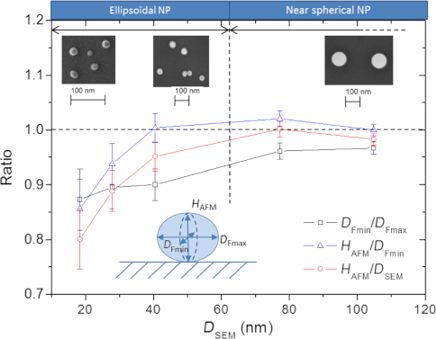
- silicon substrates through the spin-coating method detailed in [11]. This method yields well-dispersed nanoparticles on the substrate while maximizing the number of isolated NPs preventing agglomeration of the NPs. NP SEM images have been recorded using a Zeiss ULTRA-Plus field-emission (FE) microscope
- distance (WD), defined as being the distance between the sample and the bottom of the SEM column, corresponding also to the focal distance of the beam, is kept constant at 3 mm. According to the manufacturer specifications, the FE-SEM resolution is roughly 1.7 nm for EHT = 1 kV and 1.0 nm at 15 kV (for a




Synthesis of P- and N-doped carbon catalysts for the oxygen reduction reaction via controlled phosphoric acid treatment of folic acid
Beilstein J. Nanotechnol. 2019, 10, 1497–1510, doi:10.3762/bjnano.10.148
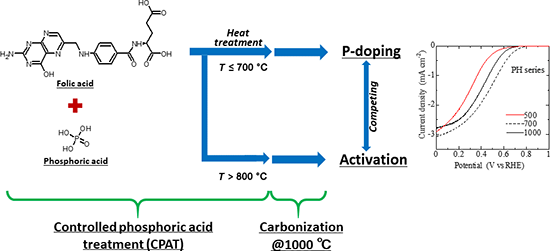
- , Fe) moieties on the surface of the carbon supports [6][7]. Our research group has identified and characterized different types of non-Pt ORR catalysts, the so-called carbon alloy catalysts (CACs) [8]. We prepared two types of CACs (nanoshell-containing carbon materials [9][10] and BN-doped carbon