


Search results
Search for "Fourier transform" in Full Text gives 365 result(s) in Beilstein Journal of Nanotechnology. Showing first 200.
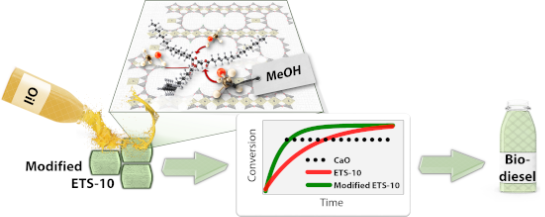
Synthesis of highly active ETS-10-based titanosilicate for heterogeneously catalyzed transesterification of triglycerides
Beilstein J. Nanotechnol. 2019, 10, 2039–2061, doi:10.3762/bjnano.10.200
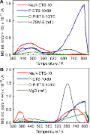
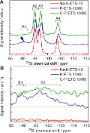
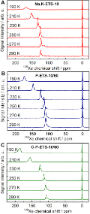
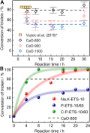
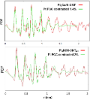
- this temperature range for P-ETS-10/60 might be due to the partial removal of the cations (decrease of the Na wt % from 9 to 7 after treatment with H2O2, see Table 2 (last column)) and of the H-bridged surface hydroxyl groups, as is also evident from the diffuse reflectance infrared Fourier transform








Optimization and performance of nitrogen-doped carbon dots as a color conversion layer for white-LED applications
Beilstein J. Nanotechnol. 2019, 10, 2004–2013, doi:10.3762/bjnano.10.197
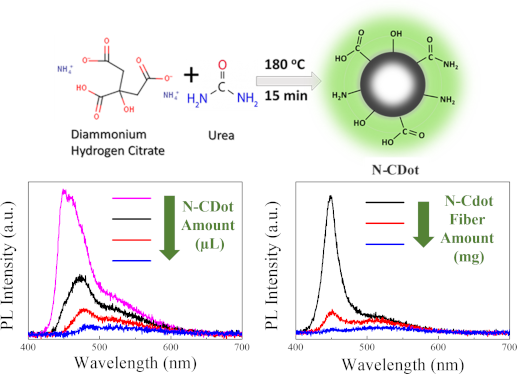
- -Alpha XPS spectrometer. Fourier-transform infrared spectroscopy (FTIR; Spectrum 100, PerkinElmer, Shelton, CT, USA) was used to characterize the kinetic behavior of the chemical bonds. Photoluminescence (PL) and absorbance were measured using an integrating sphere (ISP-50-80-R, Ocean Optics Inc


Porous silver-coated pNIPAM-co-AAc hydrogel nanocapsules
Beilstein J. Nanotechnol. 2019, 10, 1973–1982, doi:10.3762/bjnano.10.194
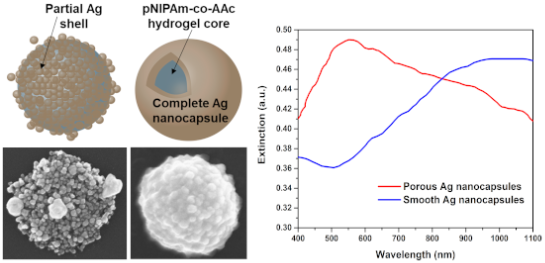
- of pDADMAC on the hydrogel particle surface, we analyzed the particles with Fourier transform infrared (FTIR) spectroscopy. Figure 1f shows the absorption spectra of pure pDADMAC and the modified hydrogel particles. The existence of stretching associated with the CH3 components at ≈1465 cm−1 and
- hydrogel particles (low magnification), (d) THPC gold seeds on hydrogel particles (high magnification, ≈850 nm in diameter), (e) close packing of THPC gold-seeded hydrogel particles; and (f) Fourier transform infrared (FTIR) spectra of pure pDADMAC and pDADMAC-modified p(NIPAm-co-AAc) hydrogel particles


Magnetic properties of biofunctionalized iron oxide nanoparticles as magnetic resonance imaging contrast agents
Beilstein J. Nanotechnol. 2019, 10, 1964–1972, doi:10.3762/bjnano.10.193
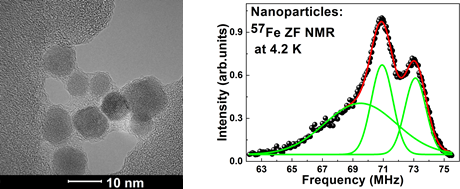
- shown in Figure 3. Roughly 70% of the particles are of 5–8 nm in diameter (half maximum of the size distribution) and all of them exhibit an equiaxed morphology. The analysis of the electron diffraction pattern along with the fast Fourier transform (FFT) patterns (see insets in Figure 2a and Figure 2b



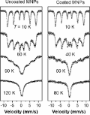

The influence of porosity on nanoparticle formation in hierarchical aluminophosphates
Beilstein J. Nanotechnol. 2019, 10, 1952–1957, doi:10.3762/bjnano.10.191
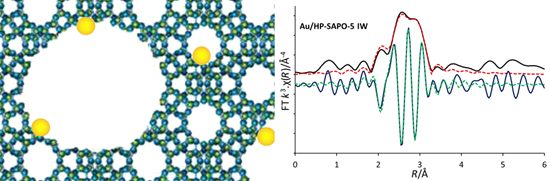
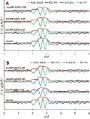
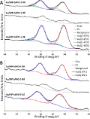
- the k3-weighted Fourier transform for the XAS data of the Au-deposited microporous MP-SAPO-5 (A) and hierarchical HP-SAPO-5 (B) compared to the Au foil. Associated scattering paths, with a single Au–Au feature are included. Stacked XPS data for Au-doped microporous MP-SAPO-5 (A) and hierarchical HP
High-tolerance crystalline hydrogels formed from self-assembling cyclic dipeptide
Beilstein J. Nanotechnol. 2019, 10, 1894–1901, doi:10.3762/bjnano.10.184
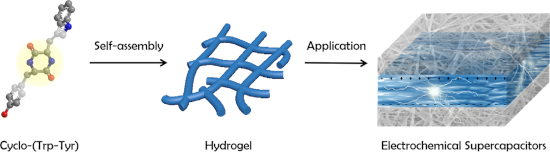
- ) (Figure 1A). The hydrogen bonding interactions between the C-WY molecules were investigated by Fourier-transform infrared spectroscopy (FTIR). Compared with the peak of amide N–H stretching located at 3344 cm−1 of the unimolecular C-WY, the hydrogel has a red-shifted amide N–H stretching band located at


Long-term entrapment and temperature-controlled-release of SF6 gas in metal–organic frameworks (MOFs)
Beilstein J. Nanotechnol. 2019, 10, 1851–1859, doi:10.3762/bjnano.10.180
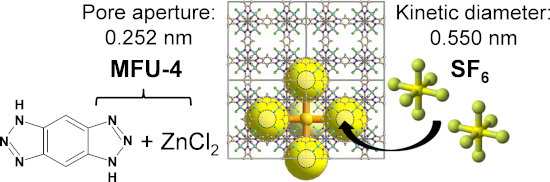
- included powder X-ray diffraction measurements, thermogravimetric analysis, Fourier-transform infrared spectroscopy, scanning electron microscopy, 19F nuclear magnetic resonance spectroscopy and computational simulations. In addition, the possibility to release the gas guest by applying elevated
- this work we selected sulfur hexafluoride (kinetic diameter: 5.50 Å) [14] as a guest, which has a much larger kinetic diameter than the previously reported entrapment of xenon gas (kinetic diameter: 3.96 Å) [14]. Additionally, its presence inside the pores can be easily followed by Fourier-transform


Biocatalytic oligomerization-induced self-assembly of crystalline cellulose oligomers into nanoribbon networks assisted by organic solvents
Beilstein J. Nanotechnol. 2019, 10, 1778–1788, doi:10.3762/bjnano.10.173
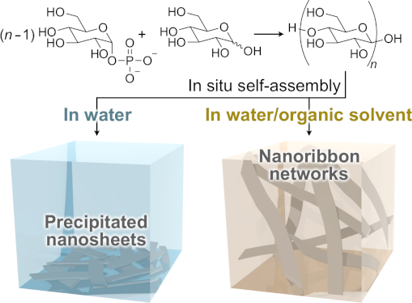
- discussed further below. The crystal structure of the representative products was analyzed by X-ray diffraction (XRD) measurements and attenuated total reflection Fourier-transform infrared (ATR-FTIR) absorption spectroscopy. The XRD profiles showed three peaks at 2θ (θ is the Bragg angle) of 12.2, 19.9





The impact of crystal size and temperature on the adsorption-induced flexibility of the Zr-based metal–organic framework DUT-98
Beilstein J. Nanotechnol. 2019, 10, 1737–1744, doi:10.3762/bjnano.10.169
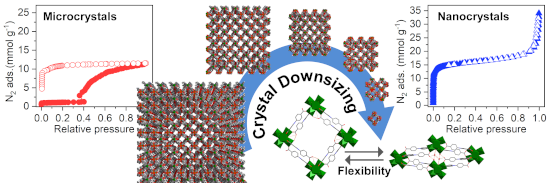
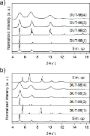
- ]. The diffuse reflectance Fourier transform (DRIFT) spectroscopy results show typical vibrations corresponding to the linker and OH groups of the MOFs in all materials (Supporting Information File 1, Figure S12). To analyze whether adsorption of water can promote contraction in small crystals of DUT



TiO2/GO-coated functional separator to suppress polysulfide migration in lithium–sulfur batteries
Beilstein J. Nanotechnol. 2019, 10, 1726–1736, doi:10.3762/bjnano.10.168
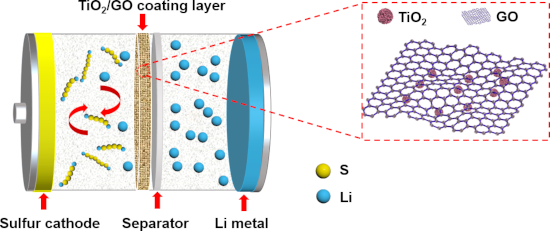
- after 12 hours. Hence, the TiO2/GO-coated separator effectively adsorbed and blocked the transportation of Li2S6. Raman and Fourier-transform infrared spectroscopy (FTIR) analysis was carried out to understand the interaction between TiO2/GO and polysulfides (Figure 10). The TiO2/GO composite was


Novel hollow titanium dioxide nanospheres with antimicrobial activity against resistant bacteria
Beilstein J. Nanotechnol. 2019, 10, 1716–1725, doi:10.3762/bjnano.10.167
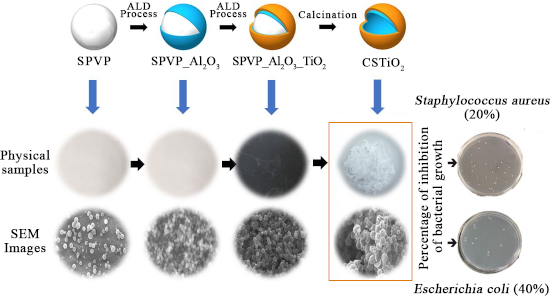
- anatase titanium dioxide crystalline structure. Thermogravimetric analysis and Fourier-transform infrared spectroscopy studies demonstrated the absence of polymer residue after the calcination process. The antimicrobial properties of the developed CSTiO2 hollow nanospheres were evaluated against different
- chemical composition was also performed by Fourier-transform infrared spectroscopy (FTIR) in order to study the main functional groups of the sample (data found in Supporting Information File 1). Thermogravimetric analysis (TGA) curves representing the mass loss with respect to temperature of SPVP, coated
- /mL of CSTiO2 and TiO2 NPs as a function of irradiation time is given. Supporting Information Supporting Information File 202: The study of structures through Fourier-transform infrared spectroscopy is described. Acknowledgements The authors acknowledge the financial support of CONICYT through the


Layered double hydroxide/sepiolite hybrid nanoarchitectures for the controlled release of herbicides
Beilstein J. Nanotechnol. 2019, 10, 1679–1690, doi:10.3762/bjnano.10.163
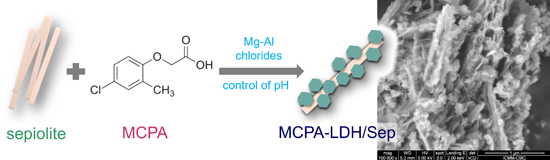
- using a Cu Kα source, with a 2θ scan step of 2°·min−1 between 2 and 70°. The amount of the MCPA herbicide incorporated into the MCPA-LDH intercalation compounds and the MCPA-LDH/Sep hybrid nanoarchitectures was determined by CHN elemental chemical analysis using a LECO-CHNS-932 analyzer. Fourier
- transform infrared spectra (FTIR) were recorded from 4000 to 400 cm−1 with 2 cm−1 resolution in a Bruker IFS 66V-S spectrometer. Samples were prepared as pellets diluted in KBr or as pure samples pressed to form a tablet. 29Si solid-state MAS spectroscopy at 79.49 MHz was carried out on a BRUKER AV-400-W


Chiral nanostructures self-assembled from nitrocinnamic amide amphiphiles: substituent and solvent effects
Beilstein J. Nanotechnol. 2019, 10, 1608–1617, doi:10.3762/bjnano.10.156
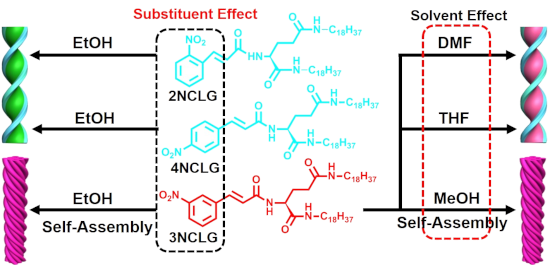
- result indicates that the NCLG assemblies might form a bilayer structure with high interdigitation of the alkyl chains, where the bilayer structure experiences a large tilt. Fourier-transform infrared (FTIR) spectra In order to elucidate the formation mechanism of the helicity and nanostructures of the
- /Max-2500 X-ray diffractometer (Japan) with Cu Kα radiation (λ =1.5406 Å). The operating voltage was 40 kV and a current of 200 mA was used. The samples were cast on silicon substrates and dried in air for XRD measurements. Fourier-transform infrared (FTIR) spectroscopy was recorded with a Bruker




High-temperature resistive gas sensors based on ZnO/SiC nanocomposites
Beilstein J. Nanotechnol. 2019, 10, 1537–1547, doi:10.3762/bjnano.10.151
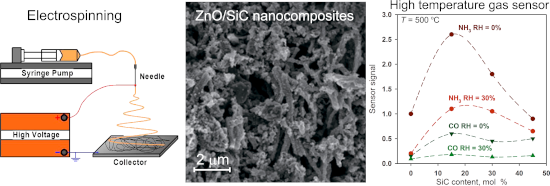
- the components in a single homogeneous paste with subsequent thermal annealing. The composition and microstructure of the materials were characterized by X-ray diffraction (XRD), scanning electron microscopy (SEM), Fourier-transform infrared spectroscopy (FTIR) and X-ray photoelectron spectroscopy



Development of a new hybrid approach combining AFM and SEM for the nanoparticle dimensional metrology
Beilstein J. Nanotechnol. 2019, 10, 1523–1536, doi:10.3762/bjnano.10.150
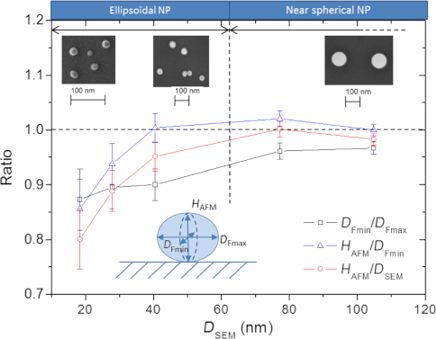
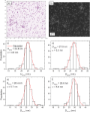
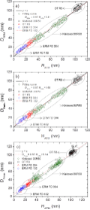
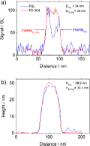
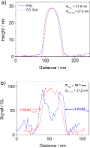
- area of 250 µm, it is difficult to measure exactly at the same place with both instruments. Consequently, five images were acquired by each instrument on different areas of the grating. The mean pitch was evaluated by fast Fourier transform of the image and the obtained results are reported in Table 1




Highly ordered mesoporous silica film nanocomposites containing gold nanoparticles for the catalytic reduction of 4-nitrophenol
Beilstein J. Nanotechnol. 2019, 10, 1368–1379, doi:10.3762/bjnano.10.135
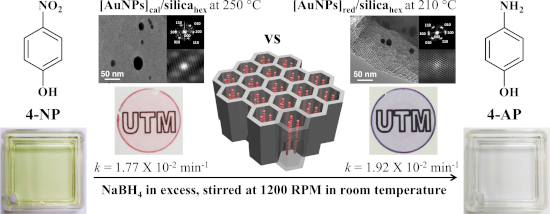
- with the XRD data. The fast Fourier transform (FFT) and auto-correlation images are shown as inset figures (top and bottom, respectively) in Figure 3b. These reveal the corresponding planes of mesostructured silica with a hexagonal structure [39]. Hence, the structural analysis from XRD and TEM


The effect of magneto-crystalline anisotropy on the properties of hard and soft magnetic ferrite nanoparticles
Beilstein J. Nanotechnol. 2019, 10, 1348–1359, doi:10.3762/bjnano.10.133
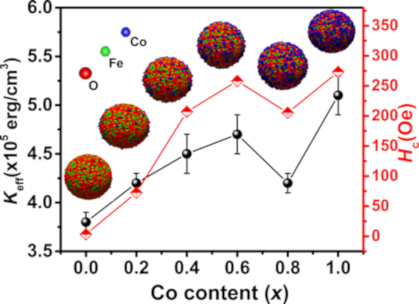
- presence of Fe, Co and O in the samples. The atomic ratio Co/Fe obtained from EDX is in a good agreement with the theoretical stoichiometry for all samples (Figure 4d). Infrared spectra The formation of the spinel phase and its crystal structure were verified by Fourier-transform infrared (FTIR) spectra
- . The diffraction patterns were analyzed using the FullProf-Suite (Version 6.0) software. Thermogravimetric analysis (TGA) was carried out in the temperature range from 30 to 650 °C with a heating rate of 10 °C/min under N2 flow using a TGA/SDTA 851 Mettler Toledo thermogravimetric analyzer. Fourier
- transform infrared (FTIR) spectra of the samples were obtained in the range of 400–4000 cm−1 by pressing the powders in KBr pellets. The morphology and elemental chemical composition of the samples were investigated using a Tescan Mira 3 field-emission scanning electron microscope (FE-SEM) equipped with an


Janus-micromotor-based on–off luminescence sensor for active TNT detection
Beilstein J. Nanotechnol. 2019, 10, 1324–1331, doi:10.3762/bjnano.10.131
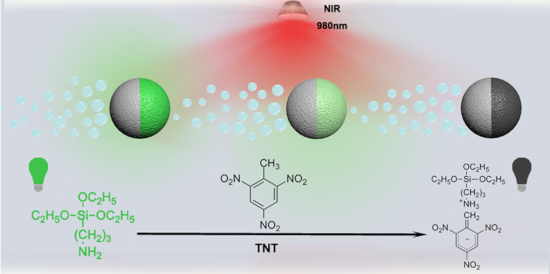
- groups on the surface of the UCNPs were illustrated by Fourier-transform infrared (FTIR) spectroscopy. Figure 1c shows the FTIR spectra of the UCNPs and APTES-UCNPs. Compared with the FTIR spectrum of unmodified UCNPs, a notable transmission band peak at 1128 cm−1 (blue circle), attributable to the Si–O
- observed using a Hitachi H-7650 microscope. UV−vis absorption spectra were recorded using a Hitachi U-4100 spectrophotometer. FTIR spectra were collected in the wavelength range from 4000 to 500 cm−1 by a Thermo Fisher 4700 Fourier transform infrared spectrophotometer with the KBr method. Upconversion


A biomimetic nanofluidic diode based on surface-modified polymeric carbon nitride nanotubes
Beilstein J. Nanotechnol. 2019, 10, 1316–1323, doi:10.3762/bjnano.10.130
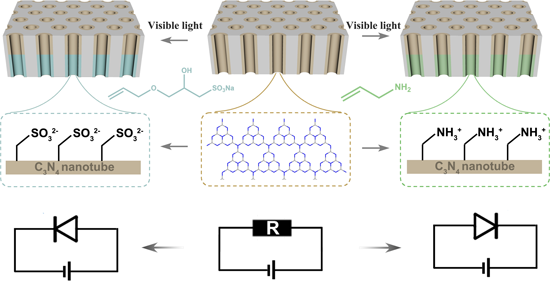
- Advance instrument with Cu Kα radiation. Fourier transform infrared (FTIR) spectra were recorded with a Thermo Scientific Nicolet iS5 FTIR spectrometer. Fabrication of CNNM: The carbon nitride nanotube membrane was fabricated by a VDP method described before [16]. Firstly, the commercial AAO membrane


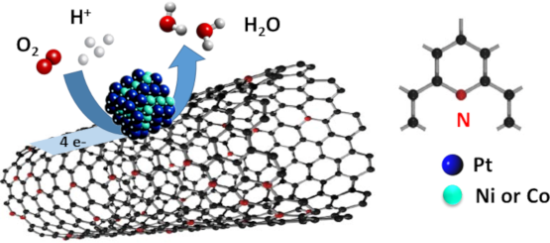
Alloyed Pt3M (M = Co, Ni) nanoparticles supported on S- and N-doped carbon nanotubes for the oxygen reduction reaction
Beilstein J. Nanotechnol. 2019, 10, 1251–1269, doi:10.3762/bjnano.10.125
- discarded. Wide angle X-ray scattering (WAXS) analysis was performed on Pt3Co/N-CNT and Pt3Ni/N-CNTHT (Figure 8). After corrections and taking a Fourier transform of the scattering data, the related pair distribution function (PDF) is well defined, with a low structural disorder. For Pt3Co/N-CNT, the







CuInSe2 quantum dots grown by molecular beam epitaxy on amorphous SiO2 surfaces
Beilstein J. Nanotechnol. 2019, 10, 1103–1111, doi:10.3762/bjnano.10.110
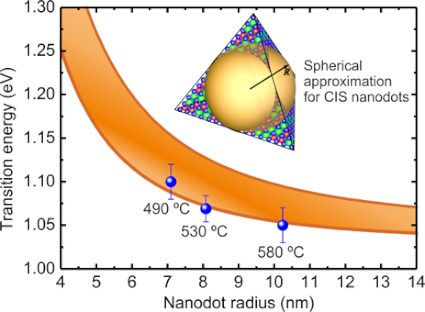
- ]/[In] ratio of the samples, and to validate the oxidized nature of the substrate surface. Photoluminescence (PL) experiments were carried out with Bruker IFS 66v Fourier-transform infrared (FTIR) spectrometer, equipped with a liquid nitrogen cooled Ge diode detector for which the spectral range of


Scavenging of reactive oxygen species by phenolic compound-modified maghemite nanoparticles
Beilstein J. Nanotechnol. 2019, 10, 1073–1088, doi:10.3762/bjnano.10.108
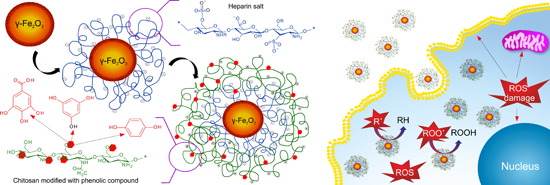
- ), to yield γ-Fe2O3@Hep-CS-G, γ-Fe2O3@Hep-CS-H, and γ-Fe2O3@Hep-CS-P particles, respectively. Surface modification of the particles was analyzed by transmission electron microscopy, dynamic light scattering, attenuated total reflection Fourier transform infrared spectroscopy, and thermogravimetric
- modification, the nanoparticles were denoted as γ-Fe2O3@Hep-CS-G, γ-Fe2O3@Hep-CS-H, and γ-Fe2O3@Hep-CS-P, respectively. The typical particle concentration was 4.4 mg/mL. Characterization methods Attenuated total reflection Fourier transform infrared spectroscopy (ATR-FTIR) and proton nuclear magnetic resonance





Tailoring the stability/aggregation of one-dimensional TiO2(B)/titanate nanowires using surfactants
Beilstein J. Nanotechnol. 2019, 10, 1024–1037, doi:10.3762/bjnano.10.103
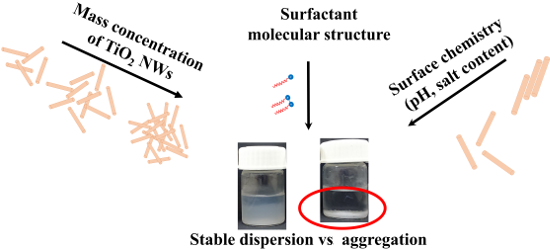
- mixed phase, TiO2(B) and trititanate layered TNW structure was confirmed by powder X-ray diffraction (PXRD) as well as Fourier-transform infrared spectroscopy (FTIR) and Raman spectroscopy. The details can be found in Supporting Information File 1. High-resolution scanning electron microscopy (HR-SEM


Nanoscale optical and structural characterisation of silk
Beilstein J. Nanotechnol. 2019, 10, 922–929, doi:10.3762/bjnano.10.93
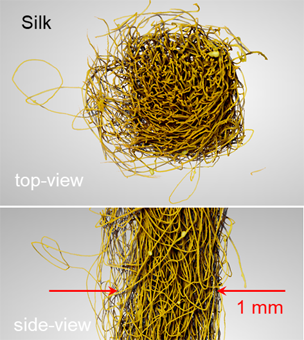
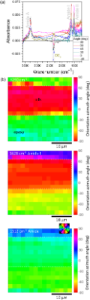
- different methods, i.e., (i) a table-top Fourier-transform infrared (FTIR) transmission spectrometer, (ii) a synchrotron-based attenuated total reflection (ATR) FTIR spectrometer, and (iii) an atomic force microscopy (AFM) tip responding to the absorbed IR light (nano-IR [9]), produced comparable spectral


The systemic effect of PEG-nGO-induced oxidative stress in vivo in a rodent model
Beilstein J. Nanotechnol. 2019, 10, 901–911, doi:10.3762/bjnano.10.91
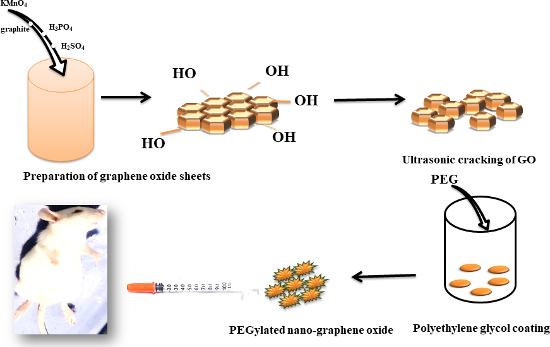
- polyethylene glycol (PEG). PEGylation of nGO was confirmed by Fourier-transform infrared spectroscopy (FTIR), UV spectroscopy and TEM. The average size distribution of nGO and PEG-nGO was determined by using dynamic light scattering (DLS). Subsequently, an in vivo study measuring a marker for oxidative stress
- ° according to a d-spacing of 2.13 Å, confirming the successful GO synthesis [42]. Fourier-transform infrared spectroscopy The surface functional groups of nGO and PEG-nGO were investigated by Fourier-transform infrared spectroscopy (FTIR). The infrared spectra of nGO and PEG-nGO were processed using Origin
- synthesis from graphite powder. The presence of functional groups was analysed by using Fourier-transform infrared spectrometry (PerkinElmer Inc. Spectrum BX). Ultraviolet–visible absorption spectroscopy (Biochrom Libra S60PC) was used to identify the PEGylation of nGO. Transmission electron microscopy





