


Search results
Search for "barrier" in Full Text gives 559 result(s) in Beilstein Journal of Nanotechnology. Showing first 200.
Uniform arrays of gold nanoelectrodes with tuneable recess depth
Beilstein J. Nanotechnol. 2021, 12, 957–964, doi:10.3762/bjnano.12.72
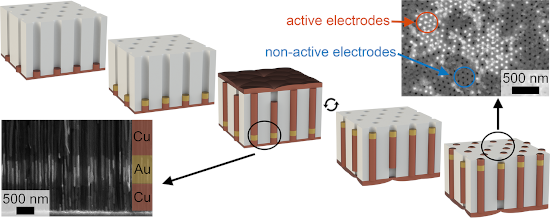
- anodizing stage, the remaining Al was selectively dissolved in 10 vol % Br2 solution in CH3OH. Then, the barrier layer of the AAO template was removed by chemical etching in 3.5 M H3PO4 with electrochemical detection of the pore opening moment as described elsewhere [40]. The prepared AAO templates were


Molecular assemblies on surfaces: towards physical and electronic decoupling of organic molecules
Beilstein J. Nanotechnol. 2021, 12, 950–956, doi:10.3762/bjnano.12.71

- . Due to lowered diffusion barrier and adsorption energy, the two-dimensional molecular layers can be affected by dewetting and may change into three-dimensional clusters [47]. In return, the reduced molecule–surface interaction on insulating films or bulk insulators can stabilize highly reactive
- , or metals [83]. Rothe et al. [84] demonstrated that semimetallic graphene is an appropriate buffer layer for the physical and chemical decoupling of rubrene from Pt(111). The strong molecule–surface interaction on Pt(111) is expressed by hit-and-stick adsorption due to a substantial diffusion barrier
Effects of temperature and repeat layer spacing on mechanical properties of graphene/polycrystalline copper nanolaminated composites under shear loading
Beilstein J. Nanotechnol. 2021, 12, 863–877, doi:10.3762/bjnano.12.65
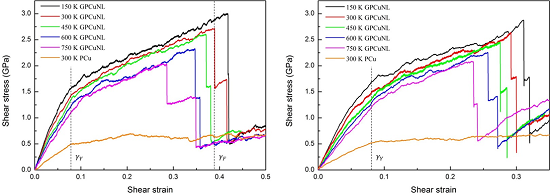
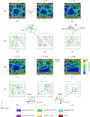
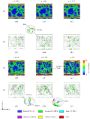
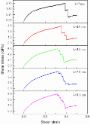
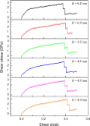
- series of studies on three-dimensional nanolaminated graphene–metal composites have been carried out. Several studies revealed that the graphene interface provides a barrier to impede the propagation of dislocations, and simultaneously enhances the mechanical properties of the composites [22][23][24][25











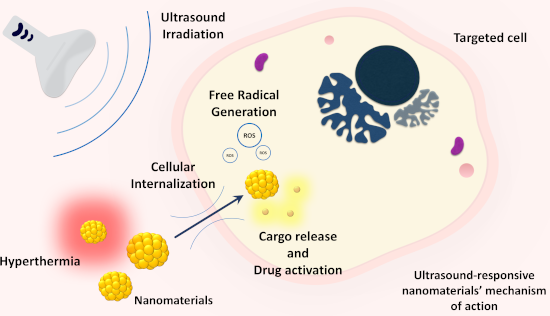
Comprehensive review on ultrasound-responsive theranostic nanomaterials: mechanisms, structures and medical applications
Beilstein J. Nanotechnol. 2021, 12, 808–862, doi:10.3762/bjnano.12.64


Prediction of Co and Ru nanocluster morphology on 2D MoS2 from interaction energies
Beilstein J. Nanotechnol. 2021, 12, 704–724, doi:10.3762/bjnano.12.56
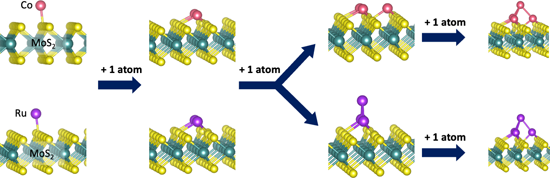
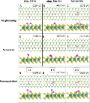
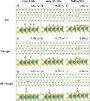
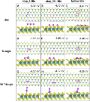
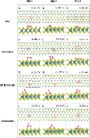
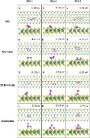
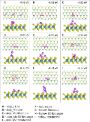
- activation energies for 2D or 3D clusters will give a more detailed insight into the processes that control aggregation on the surface. However, this is out of the scope of the current study. Based on our findings MoS2 would be most suitable as a barrier+liner for a Co interconnect, although based on our
- n = 1–4, at a perfect and a defective MoS2 monolayer. We have also compared these metals to Cun from our earlier work. MoS2 is of great interest for the barrier layer in semiconductor devices and as a support in catalysis, while Ru and Co are potential replacements for Cu as the interconnect metal



Fate and transformation of silver nanoparticles in different biological conditions
Beilstein J. Nanotechnol. 2021, 12, 665–679, doi:10.3762/bjnano.12.53
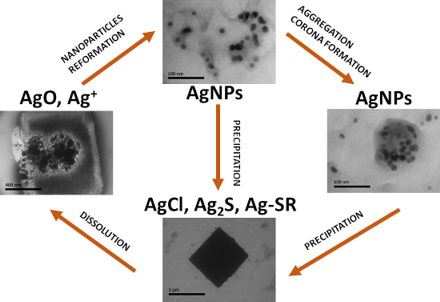
- the majority of Ag will be cleared from the body through faeces [35], released Ag+ and its soluble complexes will be absorbed through passive or active transport [26]. It was also proposed that the AgNPs pass through the intestinal barrier [36][37]. Absorbed Ag will then interact with tissues and





A review of defect engineering, ion implantation, and nanofabrication using the helium ion microscope
Beilstein J. Nanotechnol. 2021, 12, 633–664, doi:10.3762/bjnano.12.52
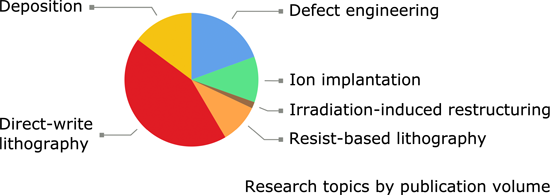
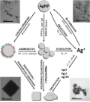
- of the HIM, junction barriers of width 1–2 nm were created, that is, narrow enough for the tunneling current to propagate. An overview of the sample and a schematic outlining the irradiation approach are shown in Figure 2d. The electronic properties of the junction barrier can be continuously tuned
- resolution capability of the helium ion beam enabling the creation of a sharper energy barrier at the domain wall. Later work in this area employed similar helium ion doses (1–4 × 10¹⁵ ions/cm2) to locally reduce the perpendicular magnetic anisotropy in a Co/Pt multilayered thin film [50]. Here, patterns


Nanoporous and nonporous conjugated donor–acceptor polymer semiconductors for photocatalytic hydrogen production
Beilstein J. Nanotechnol. 2021, 12, 607–623, doi:10.3762/bjnano.12.50
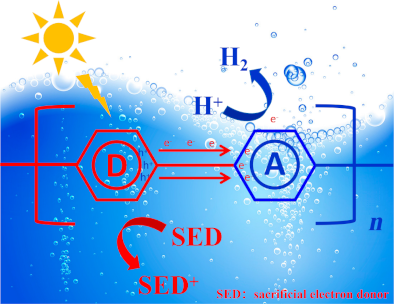
- with pyrene and BT exhibited the best HER (177.50 μmol·h−1, 20 mg) due to low charge recombination and strong photoinduced charge transfer. Furthermore, DFT calculations (Figure 7) indicated that incorporating halogen atoms in both P43 and P44 (Figure 5) reduces the energy barrier for forming H




Impact of GaAs(100) surface preparation on EQE of AZO/Al2O3/p-GaAs photovoltaic structures
Beilstein J. Nanotechnol. 2021, 12, 578–592, doi:10.3762/bjnano.12.48
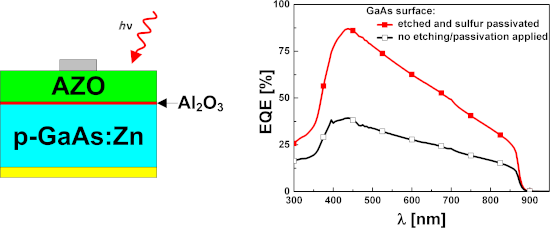
- results from the existence of a barrier for the photocurrent, which is effective for a high current density when the sample is illuminated by the solar spectrum. However, a small current density of the quantum efficiency measurement is able to pass the barrier [56]. Another possible reason for the above




Surface-enhanced Raman scattering of water in aqueous dispersions of silver nanoparticles
Beilstein J. Nanotechnol. 2021, 12, 497–506, doi:10.3762/bjnano.12.40
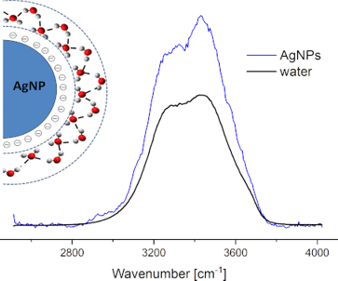
- excluded volume interaction). They were characterized by two types of interaction energy: between water and water (εww), and between Ag and water (εaw). It means that the total ε being a potential energy barrier for the movement of a given element is defined by the surroundings of this element [52]. The


The impact of molecular tumor profiling on the design strategies for targeting myeloid leukemia and EGFR/CD44-positive solid tumors
Beilstein J. Nanotechnol. 2021, 12, 375–401, doi:10.3762/bjnano.12.31
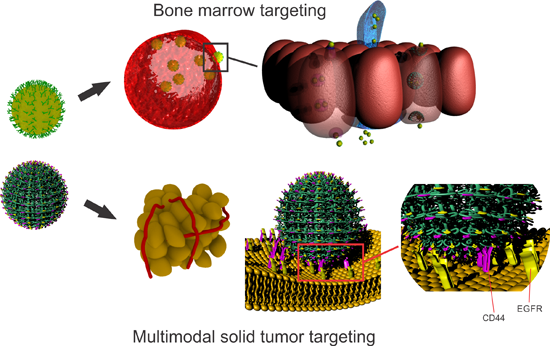
- hematopoiesis. The blood flow is supported by the nutrient arteries, which supply the marrow with nutrients, the periosteal artery, arterioles, and the capillary circulation, which forms a sinusoidal network of vessels comprising a single endothelial cell layer lacking supporting cells. The barrier between the
- hematopoietic compartment and the blood circulation is commonly referred to as the marrow–blood barrier (MBB). The MBB is 2–3 µm thick. It is composed of the continuous vascular endothelium and the discontinuous adventitial reticular cell layer. Hence, it is relatively highly permeable to a wide variety of
- circulation half-life of polystyrene colloidal particles [21][22]. In their experiments, besides the groundbreaking work on the steric barrier and the so-called “stealth” effect of the poloxamer, they have further noticed that the adsorbed poloxamer 338 and 407 shells directed the polystyrene beads to the


Spontaneous shape transition of MnxGe1−x islands to long nanowires
Beilstein J. Nanotechnol. 2021, 12, 366–374, doi:10.3762/bjnano.12.30
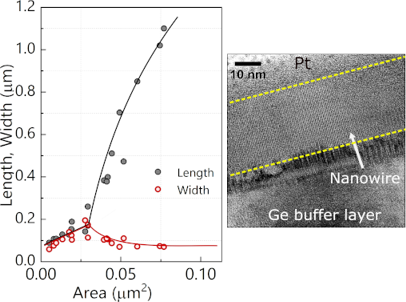
- high Curie temperature is necessary. Mn–Ge alloys epitaxially grown on Ge substrates have been shown to be promising candidates for such spintronic systems [11][12][13]. Transition metal germanides that have sharp interfaces and a tunable Schottky barrier, in particular, can advantageously replace


Nickel nanoparticle-decorated reduced graphene oxide/WO3 nanocomposite – a promising candidate for gas sensing
Beilstein J. Nanotechnol. 2021, 12, 343–353, doi:10.3762/bjnano.12.28
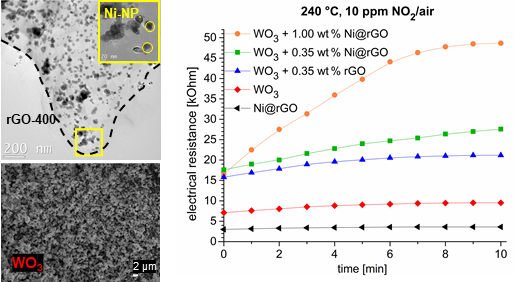
- particles with a semiconductor. In accordance with the literature data, the role of nickel in increasing the sensory sensitivity is most likely associated with the spillover effect [60][61]. When interacting with a gas atom, the barrier height at the Ni/rGO interface decreases due to this effect (the


Differences in surface chemistry of iron oxide nanoparticles result in different routes of internalization
Beilstein J. Nanotechnol. 2021, 12, 270–281, doi:10.3762/bjnano.12.22
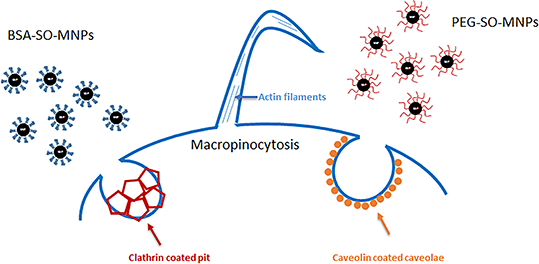
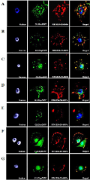
- of a pulmonary disease, where the airway–mucus barrier is difficult to penetrate, nanoparticles in the size range of 200 nm are more effective in mucus penetration [20][37]. The effect of surface chemistry on the mechanism of NPs uptake is, however, not sufficiently understood yet. Understanding the



Extended iron phthalocyanine islands self-assembled on a Ge(001):H surface
Beilstein J. Nanotechnol. 2021, 12, 232–241, doi:10.3762/bjnano.12.19
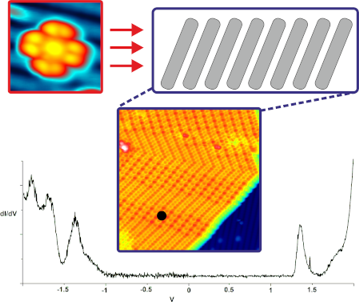
- holds also for layered materials. Single-molecule prototypes or molecular nanostructures are often prepared on metals, which usually provide a sufficiently low diffusion barrier for efficient self-assembly and simultaneously allow for in-depth analysis through atomically precise tools from the family of
- between the island and the surface and also a low barrier for island displacement. Further, from the analysis of the apparent height of the molecular island, an upright orientation of the molecules can be inferred. Such a behavior has been frequently reported for substrates on which the interaction
Paper-based triboelectric nanogenerators and their applications: a review
Beilstein J. Nanotechnol. 2021, 12, 151–171, doi:10.3762/bjnano.12.12
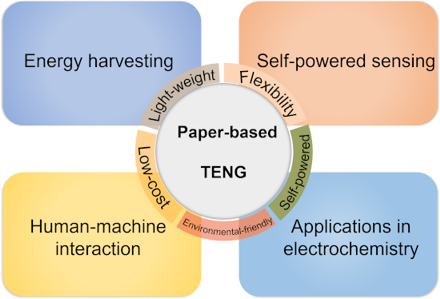
- transferred charges and the corresponding CE mechanism in TENGs. The results shown in [90] suggest that the electron transfer dominates the CE process. The charge retention ability is attributed to the intrinsic potential barrier heights of the different materials, which can prevent the charge dissipation. As
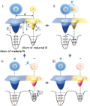
- material B by an enlarged energy barrier. This leads to A and B being positively and negatively charged, respectively (Figure 3-iii). As the temperature rises, the transferred electrons in B tend to more easily escape from the potential well and to be thermionically emitted into the air, leading to a
- decreases in a low RH condition. As the RH increases, the hydroxy groups of the first physisorbed layer bond to water molecules, through hydrogen bonding, which also permeate into the interlayers of GO. The gradually absorbed water layer creates a uniform barrier layer for the induction of positive charges






A review on the green and sustainable synthesis of silver nanoparticles and one-dimensional silver nanostructures
Beilstein J. Nanotechnol. 2021, 12, 102–136, doi:10.3762/bjnano.12.9
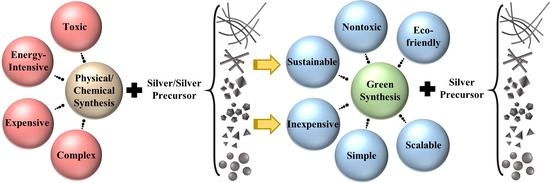
- biosynthesis occurs outside of cells due to the presence of biomolecules [191], which depends on the type of cell culture used. For instance, cell-wall deficient cells are typically more inclined towards intracellular biosynthesis as the cell-wall is known to act as a barrier for the diffusion of metal cations


Atomic layer deposited films of Al2O3 on fluorine-doped tin oxide electrodes: stability and barrier properties
Beilstein J. Nanotechnol. 2021, 12, 24–34, doi:10.3762/bjnano.12.2
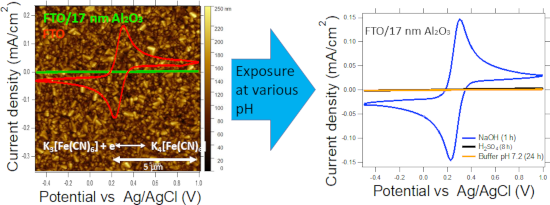
- found up to 24 h and even after 168 h of exposure the changes in the blocking behaviour were still minimal. This behaviour was also observed for protection against direct reduction of FTO. Keywords: Al2O3; atomic layer deposition (ALD); barrier properties; corrosion; electrochemistry; FTO
- semiconducting electrodes, such as ZnO. Aluminium oxide is another promising candidate for this task. It is amphoteric but insoluble in aqueous media at a neutral pH value [8][9]. ALD oxide layers, including Al2O3, were used as barrier coatings on copper to protect against corrosion in 0.1 M NaCl [10]. As
- that of pure FTO is higher than three. This means that there are B-type defects in the barrier film. These defects cause not only the delamination of the Al2O3 film from the FTO substrate, but also a slowdown of the charge-transfer kinetics (accompanied by a strong increase in ΔEpp). The Table 1 shows


Piezotronic effect in AlGaN/AlN/GaN heterojunction nanowires used as a flexible strain sensor
Beilstein J. Nanotechnol. 2020, 11, 1847–1853, doi:10.3762/bjnano.11.166
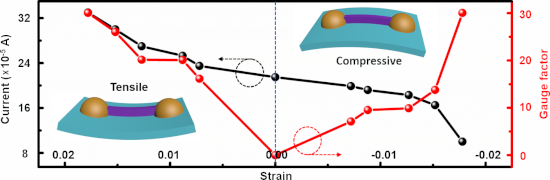
- ITO transparent electrodes were patterned and deposited onto the two ends of the AlGaN/AlN/GaN heterojunction NWs to eliminate the impact of the Schottky barrier. In addition, they fixed the NW to the flexible PET substrate. A schematic of the equipment (electric one-dimensional translation stage) for


Unravelling the interfacial interaction in mesoporous SiO2@nickel phyllosilicate/TiO2 core–shell nanostructures for photocatalytic activity
Beilstein J. Nanotechnol. 2020, 11, 1834–1846, doi:10.3762/bjnano.11.165
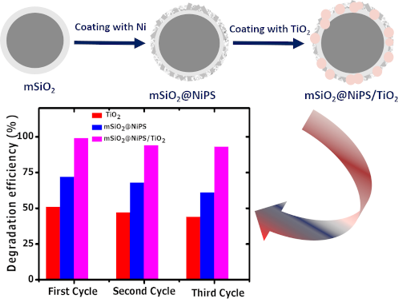
- photocatalysts is rarely reported. Nickel-based nanomaterials are of great interest for photocatalytic activity owing to their low cost, high optical absorption coefficients, and low bandgap energies [29][30][31]. Most importantly, the formation of a Schottky barrier between nickel species and titania can


Absorption and photoconductivity spectra of amorphous multilayer structures
Beilstein J. Nanotechnol. 2020, 11, 1757–1763, doi:10.3762/bjnano.11.158
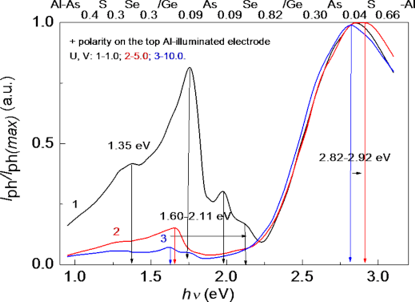
- applied field becomes higher than the internal electrical field. For amorphous semiconductors the barrier height of an Al–semiconductor contact, with a work function of φm = 4.18 eV, is φb = 0.40–0.75 eV [14][17]. This is very important from a practical point of view, because there is the possibility to


PEG/PEI-functionalized single-walled carbon nanotubes as delivery carriers for doxorubicin: synthesis, characterization, and in vitro evaluation
Beilstein J. Nanotechnol. 2020, 11, 1728–1741, doi:10.3762/bjnano.11.155
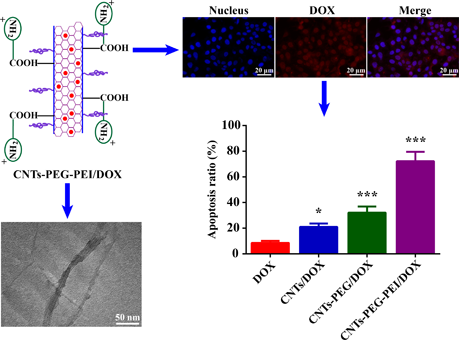
- from PEI make the CNTs much more soluble in aqueous solution and thus improve their biocompatibility [37]. Furthermore, surface modification with PEGylated agents or positively charged groups can protect the nanocarriers by providing a steric barrier from being recognized and captured by the




Seebeck coefficient of silicon nanowire forests doped by thermal diffusion
Beilstein J. Nanotechnol. 2020, 11, 1707–1713, doi:10.3762/bjnano.11.153
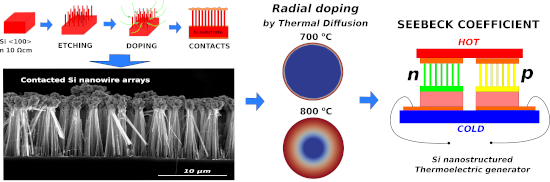
- penetration of the doping species (phosphorous, in our case) into the silicon. It requires an oxidizing environment, at least in a first preliminary phase, to grow a thin SiO2 layer at the surface as a barrier for the doping species, forcing the diffusion into silicon. In the specific case of thermoelectric


Out-of-plane surface patterning by subsurface processing of polymer substrates with focused ion beams
Beilstein J. Nanotechnol. 2020, 11, 1693–1703, doi:10.3762/bjnano.11.151
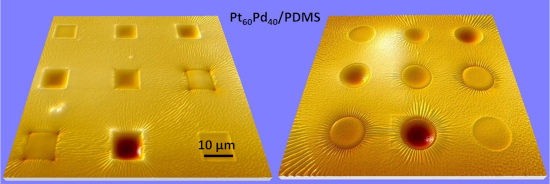
- energy barrier for material expansion and relaxation. This entirely phenomenological model is consistent with the conclusions drawn in a previous study [25], in which swelling was observed in PDMS samples irradiated with a 2 MeV proton beam. In that the case, the irradiated surface was fabricated by


A self-powered, flexible ultra-thin Si/ZnO nanowire photodetector as full-spectrum optical sensor and pyroelectric nanogenerator
Beilstein J. Nanotechnol. 2020, 11, 1623–1630, doi:10.3762/bjnano.11.145
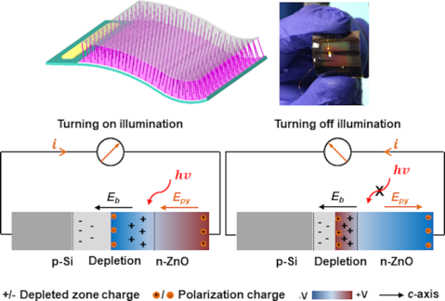
- -axis of the ZnO NWs (Figure 2, middle). Because the direction of the pyroelectric electric field (Epy) is the same as Eb and the barrier height decreases at the heterojunction interface due to the generation of a negative polarization potential, the total electric field in the depletion zone increases





