


Search results
Search for "catalysis" in Full Text gives 326 result(s) in Beilstein Journal of Nanotechnology. Showing first 200.
Improved catalytic combustion of methane using CuO nanobelts with predominantly (001) surfaces
Beilstein J. Nanotechnol. 2018, 9, 2526–2532, doi:10.3762/bjnano.9.235
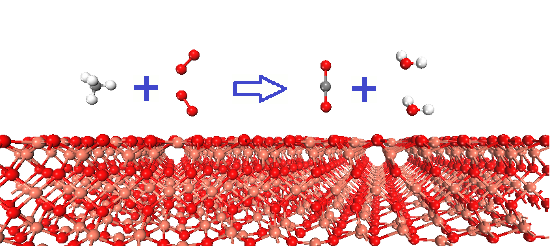
- this strategy, this work explores the catalysis of copper oxide (CuO), a promising catalyst for CH4 oxidation as identified in the literature [8]. Different from these reports, we focus on the performance of the minority surface (001). Results and Discussion Starting with computational calculations
- treatment is employed (650 °C) as shown in Figure 2e. Moreover, the surface layers show higher crystallization after catalysis tests, as shown in Figure 2f, indicating that additional efforts to improve the thermal stability of these nanostructures is needed. Although the calculated AE and DE can provide an
- explanation for the effect of morphology on catalysis performance, we further investigated the mechanism of full CH4 oxidation over CuO(001), which is informative for the further improvement and the design of new catalysts. Generally, Cu does not show strong magnetization in its neutral or fully oxidized


Non-agglomerated silicon–organic nanoparticles and their nanocomplexes with oligonucleotides: synthesis and properties
Beilstein J. Nanotechnol. 2018, 9, 2516–2525, doi:10.3762/bjnano.9.234
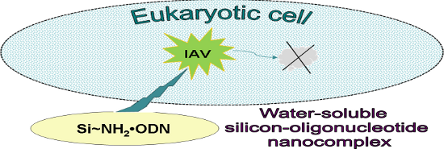
- and Fundamental Medicine, Siberian Branch of Russian Academy of Sciences, pr. Lavrent’eva 8, Novosibirsk, 630090, Russia Institute of Catalysis, Siberian Branch of Russian Academy of Sciences, pr. Lavrent’eva 5, Novosibirsk, 630090, Russia FBRI State Research Center of Virology and Biotechnology


SERS active Ag–SiO2 nanoparticles obtained by laser ablation of silver in colloidal silica
Beilstein J. Nanotechnol. 2018, 9, 2396–2404, doi:10.3762/bjnano.9.224
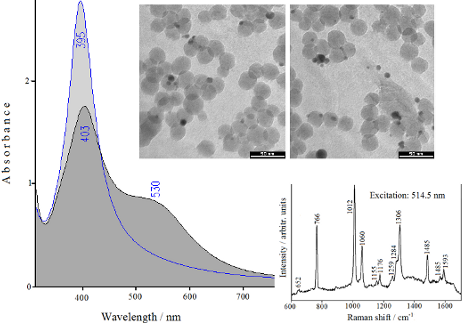
- formed with silica and silver, especially in recent years [1][2][3][4][5][6][7][8][9][10][11][12][13][14], which have found various applications in medicine, catalysis and environmental research. In this regard, it is important to remark that silica is an inert and optically transparent material. The aim


Block copolymers for designing nanostructured porous coatings
Beilstein J. Nanotechnol. 2018, 9, 2332–2344, doi:10.3762/bjnano.9.218
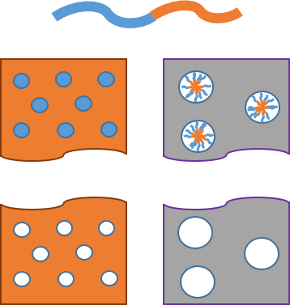
- -assembly; Review Introduction Porous materials have received much attention because they can be successfully applied in many fields, such as nanotechnology, membrane separation, microfluidics and nanofluidics, sensing, catalysis, and biomedicine [1][2][3][4][5]. The manufacture of well-ordered devices at


Metal-free catalysis based on nitrogen-doped carbon nanomaterials: a photoelectron spectroscopy point of view
Beilstein J. Nanotechnol. 2018, 9, 2015–2031, doi:10.3762/bjnano.9.191
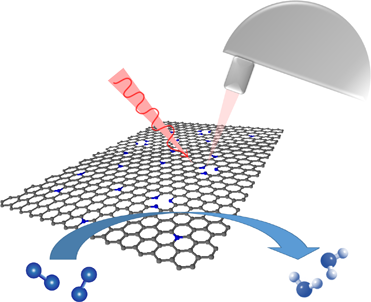
- Mattia Scardamaglia Carla Bittencourt Chemistry of Plasma Surface Interactions (ChIPS), University of Mons, Belgium 10.3762/bjnano.9.191 Abstract In this review, we discuss the use of doped carbon nanomaterials in catalysis, a subject that is currently intensively studied. The availability of
- carbon nanotubes since the 1990’s and of graphene ten years later prompted the development of novel nanotechnologies. We review this topic linking fundamental surface science to the field of catalysis giving a timely picture of the state of the art. The main scientific questions that material scientists
- have addressed in the last decades are described, in particular the enduring debate on the role of the different nitrogen functionalities in the catalytic activity of nitrogen-doped carbon nanotubes and graphene. Keywords: catalysis; carbon nanotubes; graphene; metal-free; nitrogen doping




Synthesis of a MnO2/Fe3O4/diatomite nanocomposite as an efficient heterogeneous Fenton-like catalyst for methylene blue degradation
Beilstein J. Nanotechnol. 2018, 9, 1940–1950, doi:10.3762/bjnano.9.185
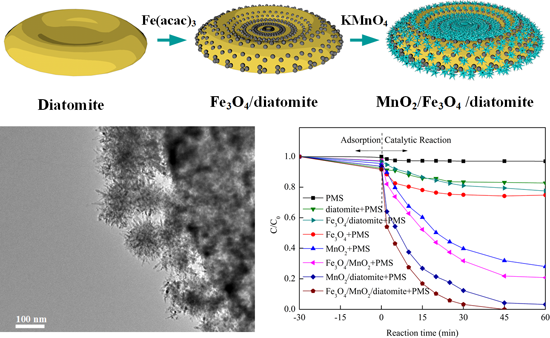
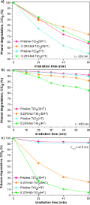
- adsorption efficiency compared to others, which may be ascribed to its higher surface area and pore structure as shown in the BET results. In the following so-called catalysis reaction without PMS, low removal efficiencies are observed in different mono-catalyst systems over the course of 60 min, revealing
- that the MB can not be degraded by these Fenton-like catalysts without the activation of PMS. For systems with Fenton-like catalysts and added PMS (Figure 8b), the MnO2/Fe3O4/diatomite exhibits a superb degradation rate of nearly 100% in 45 min. Compared to other catalysis systems (including Fe3O4–PMS
- /Fe3O4/diatomite–PMS shows a better MB removal performance than MnO2/diatomite–PMS, and the MnO2/Fe3O4–PMS performs better than MnO2–PMS, which shows that the Fe3O4–MnO2 pair is a synergistic catalyst combination for Fenton-like catalysis. The core–shell structure of the MnO2/Fe3O4/diatomite composite


The inhibition effect of water on the purification of natural gas with nanoporous graphene membranes
Beilstein J. Nanotechnol. 2018, 9, 1906–1916, doi:10.3762/bjnano.9.182
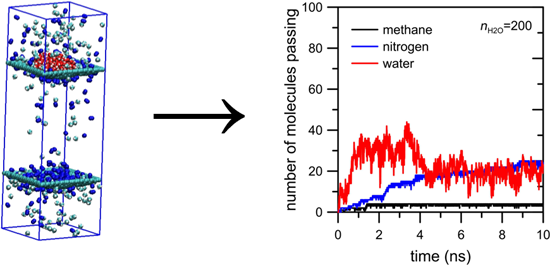
- Krzysztof Nieszporek Tomasz Panczyk Jolanta Nieszporek Department of Theoretical Chemistry, Maria Curie-Sklodowska University, M. C. Sklodowska sq. 3, 20-031 Lublin, Poland Jerzy Haber Institute of Catalysis and Surface Chemistry, Polish Academy of Sciences, Niezapominajek 8, Krakow, Poland

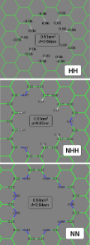


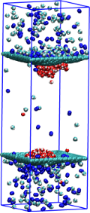
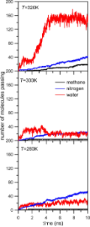

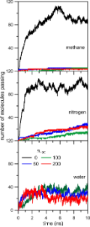


Synthesis of hafnium nanoparticles and hafnium nanoparticle films by gas condensation and energetic deposition
Beilstein J. Nanotechnol. 2018, 9, 1868–1880, doi:10.3762/bjnano.9.179

- many areas of nanoscience. Metal NPs and nanoparticles thin films (NTFs) with optimized morphology and structure have attracted significant interest in numerous research areas including catalysis [1][2], sensing [3][4], optics [5][6], data storage [7][8] and biotechnology [9][10]. In many applications
- catalysis [25] to energy storage [26][27]. While an increasing number of applications of porous NTFs are proposed in the literature, the poor mechanical stability of these systems is a major drawback that prevents their widespread industrial use. The weak adhesive force between the nanoparticles leads to


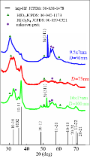


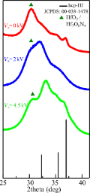
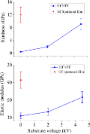
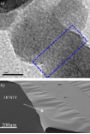


Improving the catalytic activity for hydrogen evolution of monolayered SnSe2(1−x)S2x by mechanical strain
Beilstein J. Nanotechnol. 2018, 9, 1820–1827, doi:10.3762/bjnano.9.173
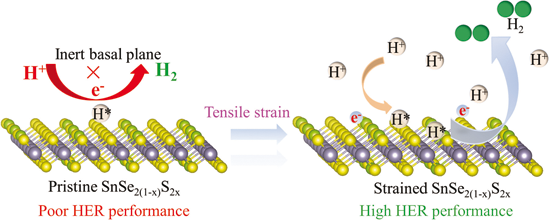
- ], electronics [28], and catalysis [29], as well as in the fabrication of solar cells and film electrodes [30]. A good electro-catalyst for HER should have sufficient active sites for catalysis. Furthermore, because electrons participate in the HER process, an ideal catalyst for HER should have good electronic


Controllable one-pot synthesis of uniform colloidal TiO2 particles in a mixed solvent solution for photocatalysis
Beilstein J. Nanotechnol. 2018, 9, 1715–1727, doi:10.3762/bjnano.9.163
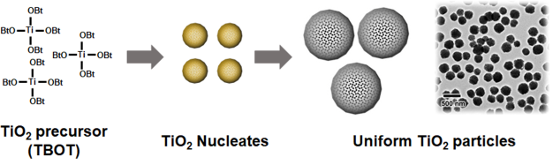
- explored semiconducting material that exists in abundance from natural resources. It has a wide range of applications including bio-separation, sensors, energy storage, catalysis and photocatalysis [1][2][3][4][5][6][7][8][9][10][11]. Due to its wide band gap energy (3.0–3.2 eV) between the conduction and




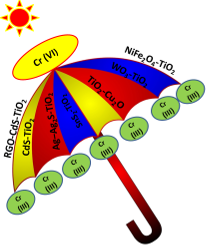
Cr(VI) remediation from aqueous environment through modified-TiO2-mediated photocatalytic reduction
Beilstein J. Nanotechnol. 2018, 9, 1448–1470, doi:10.3762/bjnano.9.137


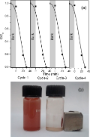
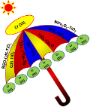
Heterostuctures of 4-(chloromethyl)phenyltrichlorosilane and 5,10,15,20-tetra(4-pyridyl)-21H,23H-porphine prepared on Si(111) using particle lithography: Nanoscale characterization of the main steps of nanopatterning
Beilstein J. Nanotechnol. 2018, 9, 1211–1219, doi:10.3762/bjnano.9.112
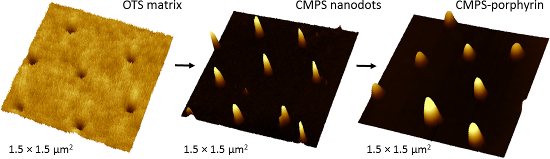
- ], catalysis [10] and electronic measurements [11][12][13]. Investigations of porphyrins at interfaces have focused on elucidation of magnetic, photonic and electronic properties as well as the manner in which the molecules assemble on a surface. The adsorption of free-base tetraphenylporphyrin on Cu(111) was


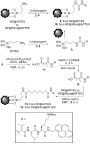
Enzymatically promoted release of organic molecules linked to magnetic nanoparticles
Beilstein J. Nanotechnol. 2018, 9, 986–999, doi:10.3762/bjnano.9.92
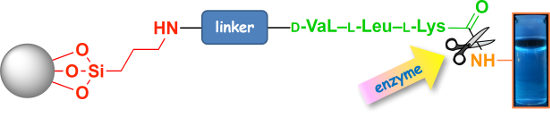
- delivery; enzyme catalysis; magnetic nanoparticles; magnetic properties; peptides; Introduction A major challenge of current cancer therapies is to improve the selectivity of chemotherapeutic agents against tumour cells. This goal may be achieved by exploiting smart drug delivery approaches. Magnetic




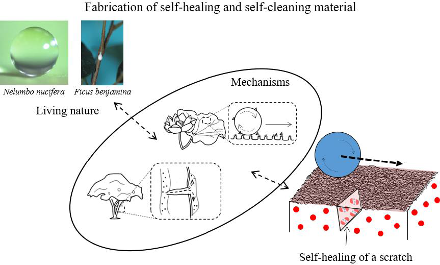
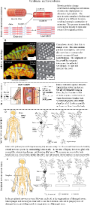
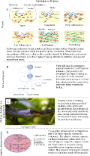
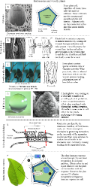
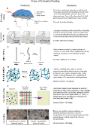
Bioinspired self-healing materials: lessons from nature
Beilstein J. Nanotechnol. 2018, 9, 907–935, doi:10.3762/bjnano.9.85







Noble metal-modified titania with visible-light activity for the decomposition of microorganisms
Beilstein J. Nanotechnol. 2018, 9, 829–841, doi:10.3762/bjnano.9.77
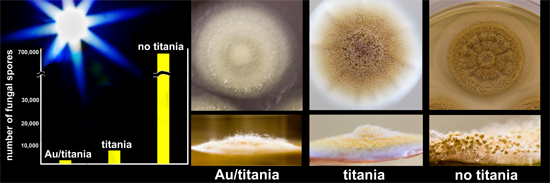
- Maya Endo Zhishun Wei Kunlei Wang Baris Karabiyik Kenta Yoshiiri Paulina Rokicka Bunsho Ohtani Agata Markowska-Szczupak Ewa Kowalska Institute for Catalysis, Hokkaido University, N21 W10, 001-0021 Sapporo, Japan School of Materials and Chemical Engineering, Hubei University of Technology, 430068
- silver- and gold-modified TiO2 2 wt % of silver and gold were deposited on six commercial titania samples: ST01 (Ishihara, ST-01), ST41 (Ishihara, ST-41), TIO12 (TAYCA, JRC-TIO-12), FP6 (Showa Denko Ceramics, FP-6), TIO6 (Catalysis Society of Japan, JRC-TIO-6) and STF10 (Showa Denko Ceramics, ST-F10). In


Cyclodextrin-assisted synthesis of tailored mesoporous silica nanoparticles
Beilstein J. Nanotechnol. 2018, 9, 693–703, doi:10.3762/bjnano.9.64
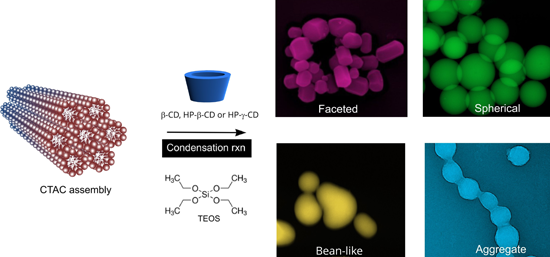
- /bjnano.9.64 Abstract Mesoporous silica nanoparticles (MSNs) have sparked considerable interest in drug/gene delivery, catalysis, adsorption, separation, sensing, antireflection coatings and bioimaging because of their tunable structural properties. The shape, size and pore structure of MSNs are greatly
- mesoporous silica nanoparticles (MSNs) with tunable structural properties have been developed [1][2][3][4][5][6][7][8][9][10][11]. Yet, there is still ongoing interest in the synthesis of tailored MSNs to optimize their performance in applications, such as catalysis, sensing, drug delivery and adsorption. So


Fabrication and photoactivity of ionic liquid–TiO2 structures for efficient visible-light-induced photocatalytic decomposition of organic pollutants in aqueous phase
Beilstein J. Nanotechnol. 2018, 9, 580–590, doi:10.3762/bjnano.9.54
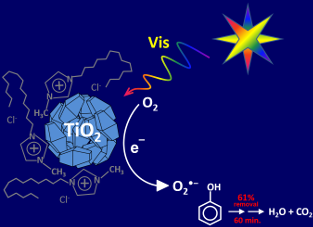
- at the surface of the IL–TiO2 material under visible-light illumination, and is responsible for the effective phenol degradation. Keywords: heterogeneous photocatalysis; ionic liquids; TiO2; visible light catalysis; Introduction The development of heterogeneous photocatalysis to degrade organic




Influence of the preparation method on the photocatalytic activity of Nd-modified TiO2
Beilstein J. Nanotechnol. 2018, 9, 447–459, doi:10.3762/bjnano.9.43
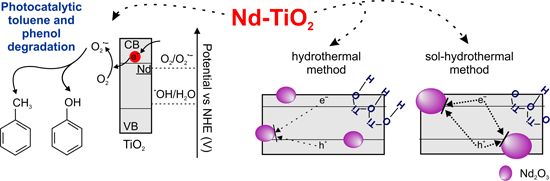
- Poznan, 60-780 Poznan, Poland Institute of Physical Chemistry, Polish Academy of Sciences,01-224 Warsaw, Poland Institute for Catalysis, Hokkaido University, Sapporo 001-0021, Japan 10.3762/bjnano.9.43 Abstract Nd-modified TiO2 photocatalysts have been obtained via hydrothermal (HT) and sol–hydrothermal




Engineering of oriented carbon nanotubes in composite materials
Beilstein J. Nanotechnol. 2018, 9, 415–435, doi:10.3762/bjnano.9.41
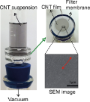
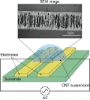
- oxides for metal-free catalysis [15] or in synergy with metal oxides [16][17], especially for sustainable energy applications [18][19]. Because of their electronic properties, CNT composites offer unmatched opportunities for conductive tissue regeneration [20], particularly if alignment, and thus 3D








Electron interaction with copper(II) carboxylate compounds
Beilstein J. Nanotechnol. 2018, 9, 384–398, doi:10.3762/bjnano.9.38
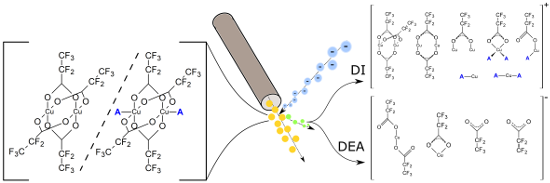
- -induced deformation, and electromigration resistance which is higher than for aluminum [24][25][26][27]. Copper nanostructures, especially nanowires, are applied in opto-electronic devices, solar cells, field-emission displays, catalysis, electronic skins, and sensor devices. Moreover, they can find


Synthesis and characterization of electrospun molybdenum dioxide–carbon nanofibers as sulfur matrix additives for rechargeable lithium–sulfur battery applications
Beilstein J. Nanotechnol. 2018, 9, 262–270, doi:10.3762/bjnano.9.28
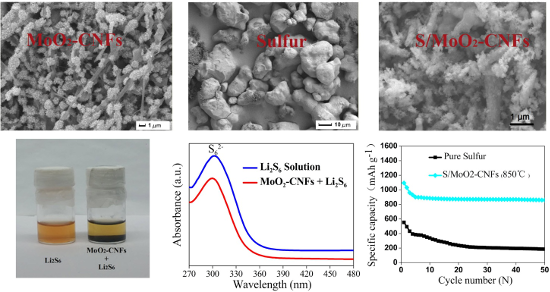
- . Molybdenum dioxide (MoO2) materials are particularly attractive among the transition-metal oxides due to their high melting point, high chemical stability and low electrical resistivity (190 S cm−1). This material has great potential for applications in several fields such as sensing, catalysis


Dielectric properties of a bisimidazolium salt with dodecyl sulfate anion doped with carbon nanotubes
Beilstein J. Nanotechnol. 2018, 9, 164–174, doi:10.3762/bjnano.9.19
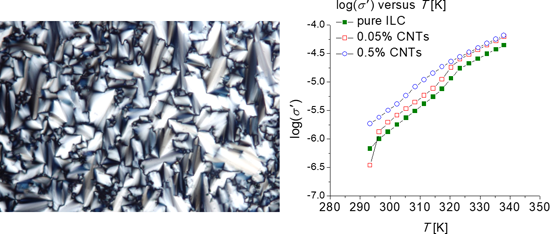
- salts were used in many applications, ranging from catalysis [13] to biological [14][15][16] or biochemical applications [17][18][19]. Recently, we have shown that it is possible to exchange the smaller anions (Br−) with alkyl sulfate ions to yield new ILCs based on bisimidazolium salts with flexible


Co-reductive fabrication of carbon nanodots with high quantum yield for bioimaging of bacteria
Beilstein J. Nanotechnol. 2018, 9, 137–145, doi:10.3762/bjnano.9.16
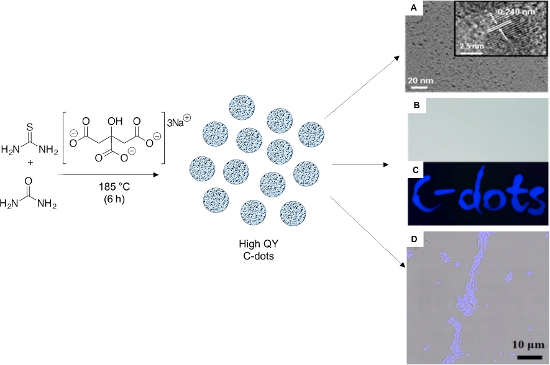
- in bioimaging thanks to their low cytotoxicity. Keywords: bioimaging; carbon nanodots; collaborative reduction; hydrothermal; Introduction Over recent years, carbon nanomaterials have remarkably influenced the growth of a wide range of fields, including electronics, photonics, energy, catalysis and


L-Lysine-grafted graphene oxide as an effective adsorbent for the removal of methylene blue and metal ions
Beilstein J. Nanotechnol. 2017, 8, 2680–2688, doi:10.3762/bjnano.8.268
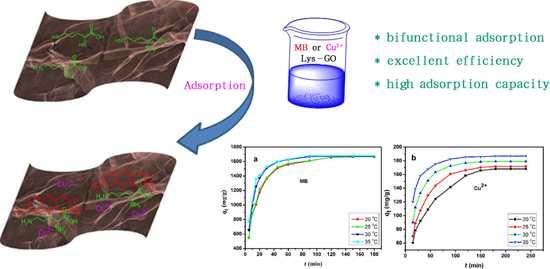
- attention because of their huge specific surface area, extraordinary electronic transport properties and unique adsorption properties [1][2][3]. These materials have important applications in many fields, including physics [4], electrochemistry [5], environmental science [6] and catalysis [7]. For example


One-step chemical vapor deposition synthesis and supercapacitor performance of nitrogen-doped porous carbon–carbon nanotube hybrids
Beilstein J. Nanotechnol. 2017, 8, 2669–2679, doi:10.3762/bjnano.8.267
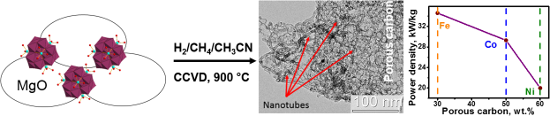
- , 630090 Novosibirsk, Russia CNRS, Institut Carnot Cirimat, F-31062 Toulouse, France St. Petersburg State University, 7-9, Universitetskaya Nab., St. Petersburg 199034, Russia, II Physikalisches Institut, Universität zu Köln, Zülpicher Straße 77, 50937 Köln, Germany Boreskov Institute of Catalysis, SB RAS





