


Search results
Search for "contacts" in Full Text gives 357 result(s) in Beilstein Journal of Nanotechnology. Showing first 200.
Atomistic modeling of tribological properties of Pd and Al nanoparticles on a graphene surface
Beilstein J. Nanotechnol. 2018, 9, 1239–1246, doi:10.3762/bjnano.9.115
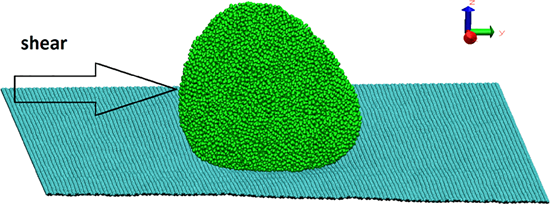
- interface between the slider and the substrate, which usually lead to an increase in friction with time. Modern rate-and-state models for rough contacts predict that aging does not only influence the transition from static contact to sliding, but affects the overall sliding dynamics. The complex nature of


Theoretical study of strain-dependent optical absorption in a doped self-assembled InAs/InGaAs/GaAs/AlGaAs quantum dot
Beilstein J. Nanotechnol. 2018, 9, 1075–1084, doi:10.3762/bjnano.9.99
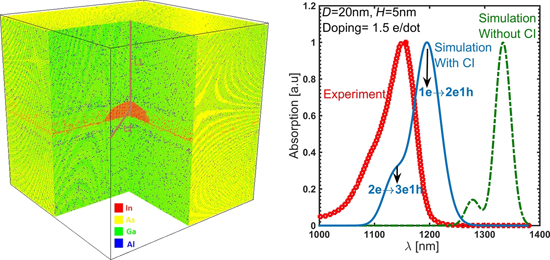
- , it is not appropriate for quantum dots adjacent to heavily doped regions, such as contacts. In addition, to calculate optical transitions of doped quantum dots, the many-particle states of the quantum dot are evaluated using atomistic configuration interaction [35]. The method accurately captures the




Review on nanoparticles and nanostructured materials: history, sources, toxicity and regulations
Beilstein J. Nanotechnol. 2018, 9, 1050–1074, doi:10.3762/bjnano.9.98

- are exposed via an extensive microscopic study. It has been shown that adhesion is ensured by sub-micrometric devices whereas flies and beetles rely on terminal setae that are of micrometer dimensions. The principle of contact mechanics, which shows that the adhesion leads to the splitting of contacts


Effect of microtrichia on the interlocking mechanism in the Asian ladybeetle, Harmonia axyridis (Coleoptera: Coccinellidae)
Beilstein J. Nanotechnol. 2018, 9, 812–823, doi:10.3762/bjnano.9.75
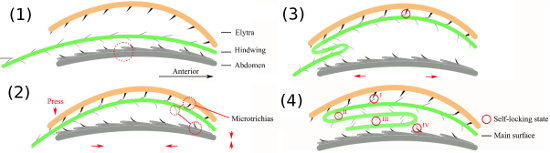
- DS could mesh with abdominal microtrichia [5]. A second function is air deflection in flight. When air flows over the surface of the hindwings, the microtrichia tilt because of the force of the wind, which can increase the time the boundary layer contacts the air, promoting laminar flow and
- against the abdomen, as shown by the red arrows. The VS of the elytra directly contacts the DS of the HW1 section of the hindwing. As shown in Table 2, the directional orientation of microtrichia on the internal face of the elytron is 70.33 ± 0.58° in the horizontal direction; correspondingly, the


Perovskite-structured CaTiO3 coupled with g-C3N4 as a heterojunction photocatalyst for organic pollutant degradation
Beilstein J. Nanotechnol. 2018, 9, 671–685, doi:10.3762/bjnano.9.62
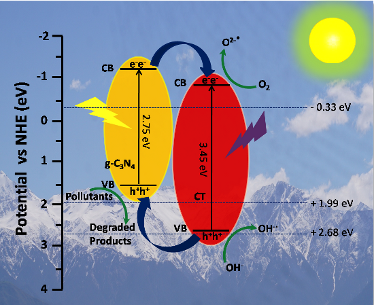
- procedure as performed in the case of RhB dye. Results and Discussion Synthesis and structural studies The heterojunction of g-C3N4 and CaTiO3 in a 1:1 ratio has been prepared by using a facile mixing method with well-defined 2D interfacial contacts. The powder XRD patterns of g-C3N4, CT and CTCN


Tuning adhesion forces between functionalized gold colloidal nanoparticles and silicon AFM tips: role of ligands and capillary forces
Beilstein J. Nanotechnol. 2018, 9, 660–670, doi:10.3762/bjnano.9.61
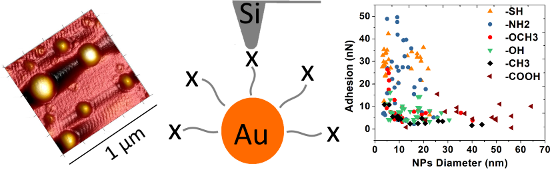
- bare solid, γSL is the interface energy between solid and liquid and γLV is the interface energy between liquid and vapour. This parameter shows the surface energy per unit area between the tip–liquid and substrate–liquid contacts. In the presence of humidity, Fadh is the sum of the direct adhesion Fss


Engineering of oriented carbon nanotubes in composite materials
Beilstein J. Nanotechnol. 2018, 9, 415–435, doi:10.3762/bjnano.9.41
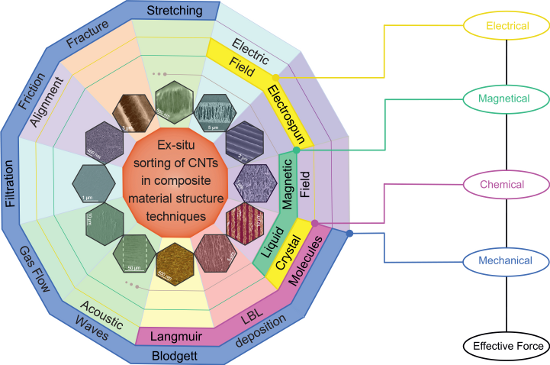
- . This method is also used to produce electrical contacts with individual CNTs [28][106][107]; and recently, the ability of the technique has been investigated to purify metallic SWCNTs from the mixture species [106]. Magnetic field The alignment of CNTs using a magnetic field is a unique technique








Review: Electrostatically actuated nanobeam-based nanoelectromechanical switches – materials solutions and operational conditions
Beilstein J. Nanotechnol. 2018, 9, 271–300, doi:10.3762/bjnano.9.29
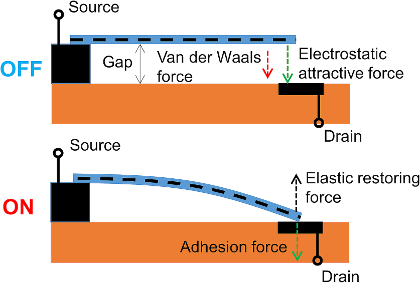
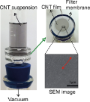
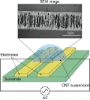
- microscope [8][10][11][12][13][14][15]. In situ studies of the dynamics of force interactions, conductance and adhesion in gold point contacts using combined transmission electron microscopy/scanning tunnelling microscopy (TEM-STM) [51][52] and atomic force microscopy/transmission electron microscopy (AFM
- electrical contact between a switching element and a contact electrode, which is followed by electrical-current-assisted processes in the on state, and a subsequent disengagement of both electrical and mechanical contacts while switching back to the off state. The switching cycle is based on balancing
- switching element from the contact [71] by nearly an order of magnitude. Processes in NEM switch contacts A reliable NEM switch contact is required to maintain stable characteristics over repetitive operation cycles. Assuming the switch is in an optimal operational environment, the contact properties are


Combined scanning probe electronic and thermal characterization of an indium arsenide nanowire
Beilstein J. Nanotechnol. 2018, 9, 129–136, doi:10.3762/bjnano.9.15
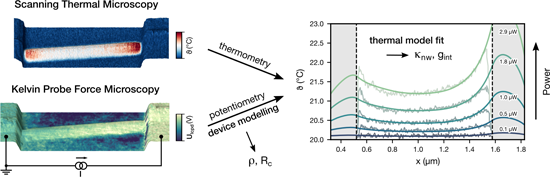
- processes at the interface to electrodes may dominate and limit device performance. A crucial step towards device optimization is being able to separate such contact effects from intrinsic device properties. Likewise, an increased local temperature due to Joule heating at contacts and the formation of hot
- operation. The observed temperature along the wire is substantially elevated near the contacts and deviates from the bell-shaped temperature profile one would expect from homogeneous heating. Voltage profiles acquired by Kelvin probe force microscopy not only allow us to determine the electrical nanowire
- ][25]. As seen in our data, the temperature profiles do not follow this trend, but instead show an inverse parabola with increased temperatures towards the electrical contacts. Similar temperature profiles were observed already in previous measurements of a 120 nm diameter InAs nanowire [12]. This


Comparative study of post-growth annealing of Cu(hfac)2, Co2(CO)8 and Me2Au(acac) metal precursors deposited by FEBID
Beilstein J. Nanotechnol. 2018, 9, 91–101, doi:10.3762/bjnano.9.11
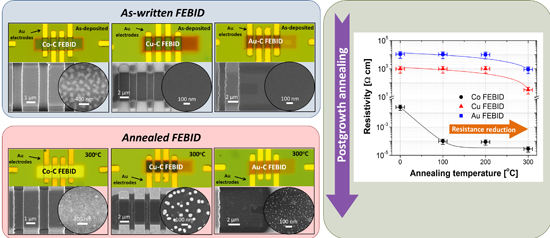
- metals, makes its localised direct-write deposition attractive for applications in high-performance integrated circuits and nanoelectronics [13][27]. Similarly, Au nanostructures are promising materials in nanoplasmonics, biomedical applications, electrochemical sensing, as well as contacts for carbon


The rational design of a Au(I) precursor for focused electron beam induced deposition
Beilstein J. Nanotechnol. 2017, 8, 2753–2765, doi:10.3762/bjnano.8.274
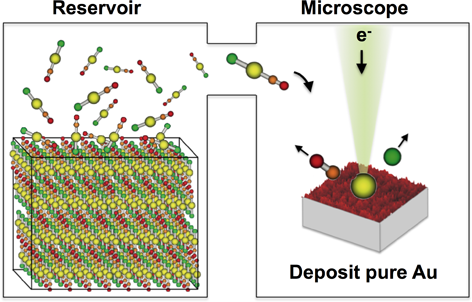
- ). In contrast, two molecules in the unit cell show Au∙∙∙Au contacts > 4.0 Å and should basically be considered monomeric. The clearly less pronounced formation of aurophilic bonds in MeAuPMe3 compared to ClAuPMe3 should likely be explained by a difference in electronic factors instead of sterics: the


Dry adhesives from carbon nanofibers grown in an open ethanol flame
Beilstein J. Nanotechnol. 2017, 8, 2719–2728, doi:10.3762/bjnano.8.271
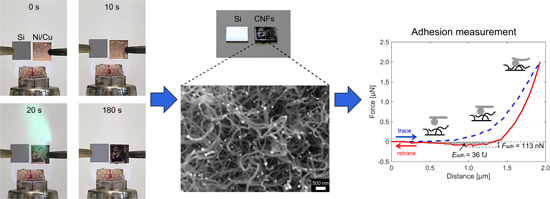
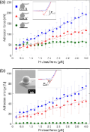
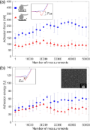
- a maximum adhesion energy of 75 fJ at a preload force of 4 μN. Randomly oriented CNFs show a maximum adhesion energy of 47 fJ at a preload force of 3.4 μN. This can be explained with the contact-splitting theory [31] stating that adhesion rises with the number of contacts per area. From SEM images


Exploring wear at the nanoscale with circular mode atomic force microscopy
Beilstein J. Nanotechnol. 2017, 8, 2662–2668, doi:10.3762/bjnano.8.266
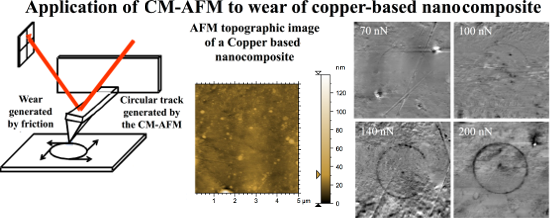
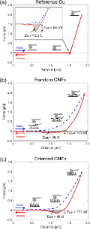
- the Experimental section for details). This material is of industrial relevance as it is widely used in electrical sliding contacts such as those in railway overhead current collection system, lead frames in large-scale integrated circuitd, welding electrodes, transfer switches and electrical contact


Enhanced photoelectrochemical water splitting performance using morphology-controlled BiVO4 with W doping
Beilstein J. Nanotechnol. 2017, 8, 2640–2647, doi:10.3762/bjnano.8.264
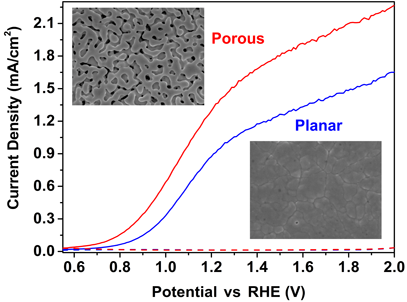
- the surface charge injection (inset in Figure 6b) [25]. In the equivalent circuit, Rs represents the sum of resistance values of the FTO film, the external electrical contacts, and the liquid electrolyte; Rct and Cbulk represent, respectively, the direct charge transfer resistance, and a capacitance


The role of ligands in coinage-metal nanoparticles for electronics
Beilstein J. Nanotechnol. 2017, 8, 2625–2639, doi:10.3762/bjnano.8.263
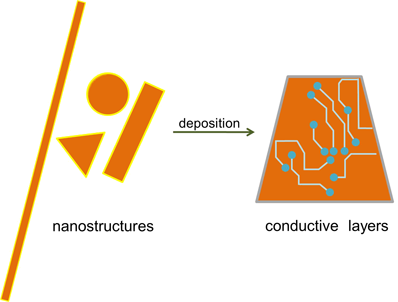
- inks colloidally stable, but they may prevent electrical contacts in deposited films [32]. Charge transport can be improved after deposition by removing the surface-bound ligands [105], by linking nanoparticles chemically [106], or by ligand exchange in order to manipulate spacing in metal nanoparticle


Synthesis of [{AgO2CCH2OMe(PPh3)}n] and theoretical study of its use in focused electron beam induced deposition
Beilstein J. Nanotechnol. 2017, 8, 2615–2624, doi:10.3762/bjnano.8.262
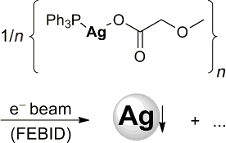
- Ag–Ag contacts between these AgPO2 were observed [15][16]. In case of 2 a related stabilization of the AgPO2 units is not observed, although the formation of an additional dative O–Ag bond is noticed (Figure 1) to give a [3 + 1] coordination setup around the silver(I) ions. This bonding motif is most


Inelastic electron tunneling spectroscopy of difurylethene-based photochromic single-molecule junctions
Beilstein J. Nanotechnol. 2017, 8, 2606–2614, doi:10.3762/bjnano.8.261
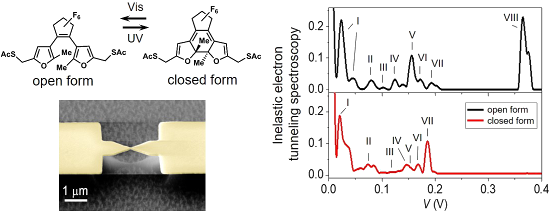
- motor and a differential screw. The low-bias conductance is measured by a sub-femtoamp source-meter (Keithley 6430) operating with an automatic variable gain pre-amplifier, while controlling the nanogap distance and thereby breaking and forming Au–Au contacts. In order to measure IET spectra, a DC bias
- reversed by closing the junction until Au–Au contacts form again. The breaking and forming processes are repeated roughly 1000 times to find the most probable single-molecule conductance. We note that the plateaus are well developed with a rather constant conductance upon stretching in the closed form
- traces shown in Figure 1c it becomes clear that multiple steps occur within the individual opening processes. These multiple steps might originate from multi-molecule contacts as well as from a single-molecule junction that adopts different configurations upon stretching. We assume that the most


Numerical investigation of the tribological performance of micro-dimple textured surfaces under hydrodynamic lubrication
Beilstein J. Nanotechnol. 2017, 8, 2324–2338, doi:10.3762/bjnano.8.232
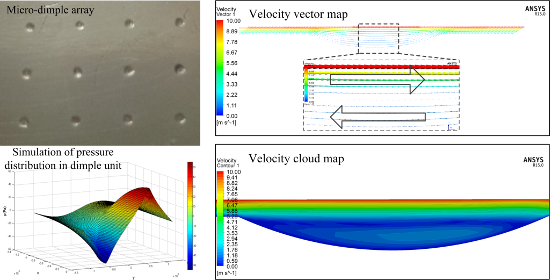
- tribological performance of lubricated contacts [5][6][7][8][9]. In Kligerman and Etsion’s study [5], the pressure distribution in the uniform clearance between the annular surfaces is obtained from a solution of the Reynolds equation for compressible viscous gas in a laminar flow. Wang et al. [6] calculated




Substrate and Mg doping effects in GaAs nanowires
Beilstein J. Nanotechnol. 2017, 8, 2126–2138, doi:10.3762/bjnano.8.212
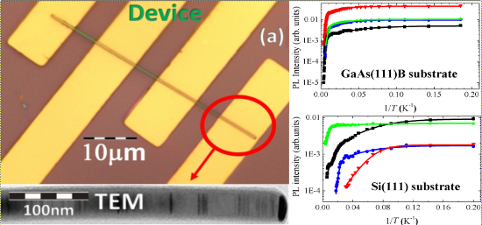
- μm on individual nanowires. Following this procedure, ohmic contacts with acceptable low contact resistance are obtained [19]. Figure 1a presents an optical image of a FET in which the nanowire and electrical contacts are observed. The TEM image at the bottom of Figure 1a shows the typical morphology


Electronic structure, transport, and collective effects in molecular layered systems
Beilstein J. Nanotechnol. 2017, 8, 2094–2105, doi:10.3762/bjnano.8.209
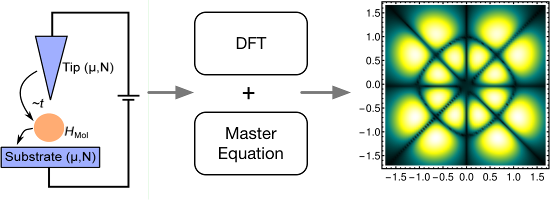
- between the organic molecules and metallic contacts. These interactions may substantially alter the electronic structure of the organic material and needs to be carefully investigated [24]. In the following, we present DFT results for model systems were two phthalocyanine systems are in contact with Au
- assume β-stacking [25]. The selected Au surface is known to form metal–organic contacts with medium interactions [26]. On the other hand, pure Ni surfaces are known to have a very high reactivity that sometimes lead to decomposition of the deposited organic material [27][28]. The reactivity of the Ni
- ferromagnetic Fe thin film exhibits pronounced spin dependence. These investigations suggest the possibility of versatile applications in spintronic devices. The calculations on model systems with gold contacts show that it is possible to obtain spin-polarized currents from both phthalocyanine-based devices


![[Graphic 29]](/bjnano/content/inline/2190-4286-8-209-i41.png?max-width=637&scale=1.18182) between the occupations nA and nB of the two checkerboard sublattices for a) asy...
between the occupations nA and nB of the two checkerboard sublattices for a) asy...

![[Graphic 30]](/bjnano/content/inline/2190-4286-8-209-i42.png?max-width=637&scale=1.18182) per site for a) asymmetric tunneling, Γtop/Γbottom = 0.5, and b) symmetric tunneli...
per site for a) asymmetric tunneling, Γtop/Γbottom = 0.5, and b) symmetric tunneli...
Adsorbate-driven cooling of carbene-based molecular junctions
Beilstein J. Nanotechnol. 2017, 8, 2060–2068, doi:10.3762/bjnano.8.206
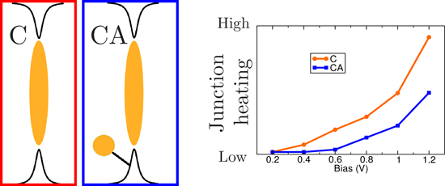
- ) and right (R) contacts and tends to drive the system to the Bose–Einstein (BE) distribution of the bath at a temperature T0 (see below). For Jλ = 0, energy cannot be dissipated into bulk phonons and the junction is in the undamped limit [29]. On the other hand, for large Jλ, coupling to Au phonons is


![[Graphic 14]](/bjnano/content/inline/2190-4286-8-206-i21.png?max-width=637&scale=1.18182) = 176 meV as a function of applied bias for the C and CA junctions, a...
= 176 meV as a function of applied bias for the C and CA junctions, a...

A comparative study of the nanoscale and macroscale tribological attributes of alumina and stainless steel surfaces immersed in aqueous suspensions of positively or negatively charged nanodiamonds
Beilstein J. Nanotechnol. 2017, 8, 2045–2059, doi:10.3762/bjnano.8.205
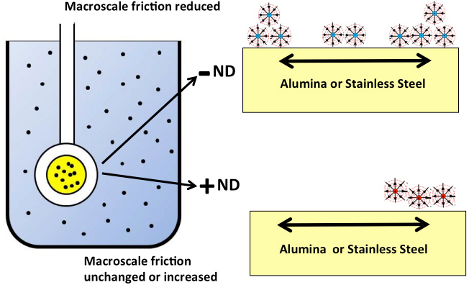
- to values in the range 0.05–0.1 for both stainless steel and alumina, while +ND suspensions yielded an increase in friction for stainless steel contacts but little to no increase for alumina contacts. Quartz crystal microbalance (QCM), atomic force microscopy (AFM) and scanning electron microscopy
- existing protective boundary layers in the case of stainless steel contacts. This study therefore reveals atomic scale details associated with systems that exhibit starkly different macroscale tribological properties, enabling future efforts to predict and design complex lubricant interfaces. Keywords
- penetrating into contacts where they may form boundary films and/or act as rolling or sliding spacers (Figure 1) [6][10][11]. As such, nanoparticles exhibit a great potential for replacement of the centuries-old oil-based lubricating technologies. Tribological studies of water-based nanoparticle suspensions


Imidazolium-based ionic liquids used as additives in the nanolubrication of silicon surfaces
Beilstein J. Nanotechnol. 2017, 8, 1961–1971, doi:10.3762/bjnano.8.197
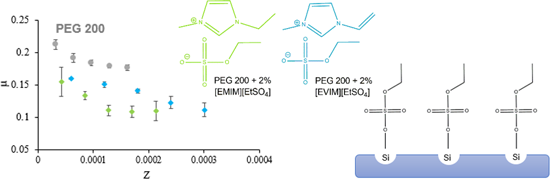
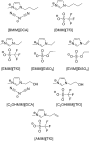
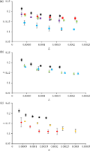
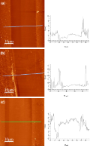
- of ceramics. Other investigators followed this idea and added imidazolium-based ILs to base oils to lubricate steel/aluminum contacts [5][6][7] and steel/steel contacts [8][9][10][11][12][13]. Jiménez and Bermúdez [7] tested two ILs with the short alkyl chain imidazolium cation [EMIM], and the anions



Growth and characterization of textured well-faceted ZnO on planar Si(100), planar Si(111), and textured Si(100) substrates for solar cell applications
Beilstein J. Nanotechnol. 2017, 8, 1939–1945, doi:10.3762/bjnano.8.194
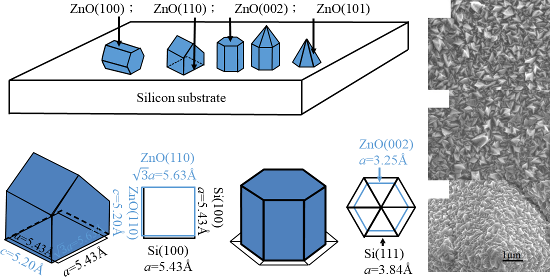
- granular structure [3]. Similarly, ZnO grown on bulk silicon substrates and their application to wafer-based silicon solar cells is an interesting issue and an important subject [3]. In such a case, these materials potentially not only act as metal contacts to eliminate the blocking of the incident
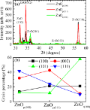

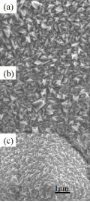


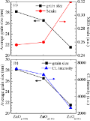
![[Graphic 2]](/bjnano/content/inline/2190-4286-8-194-i4.png?max-width=637&scale=1.18182) × lattice constant a) by 5.20 Å (l...
× lattice constant a) by 5.20 Å (l...


Non-intuitive clustering of 9,10-phenanthrenequinone on Au(111)
Beilstein J. Nanotechnol. 2017, 8, 1801–1807, doi:10.3762/bjnano.8.181
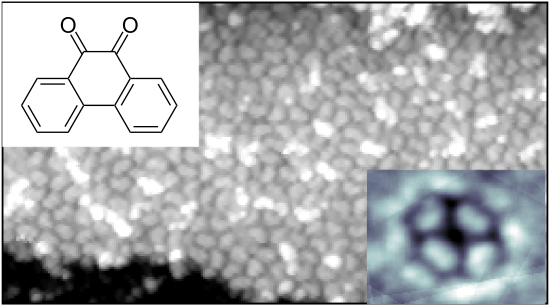
- for the observed 9,10-phenanthrenequinone rows and 9-fluorenone rows, respectively. Figure 6 displays the calculated structure of pairwise interactions in the linear rows for both molecules. It is evident that the 9,10-phenanthrenequinone dimer has more hydrogen-bonding contacts and is, thus, more
- structures (red), and regions of a close-packed domain (blue). The calculated structure of pairwise interactions in linear rows for (a) 9,10-phenanthrenequinone and (b) 9-fluorenone with the C-H···O hydrogen-bond contacts indicated in green. Acknowledgements This research was supported by funding from the





