Search results
Search for "contamination" in Full Text gives 325 result(s) in Beilstein Journal of Nanotechnology. Showing first 200.
Ultraviolet patterns of flowers revealed in polymer replica – caused by surface architecture
Beilstein J. Nanotechnol. 2019, 10, 459–466, doi:10.3762/bjnano.10.45
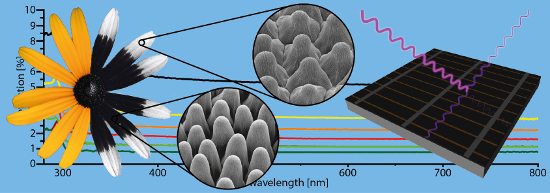
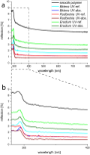
- also be considered that the cuticle will interact with many different environmental influences, for example, wetting, contamination, and electromagnetic radiation [3][4] as well. Ultraviolet (UV) radiation in the wavelength range 280–380 nm is particularly crucial for plants, for example, when


Effects of post-lithography cleaning on the yield and performance of CVD graphene-based devices
Beilstein J. Nanotechnol. 2019, 10, 349–355, doi:10.3762/bjnano.10.34
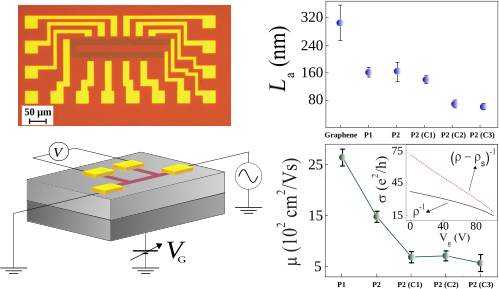
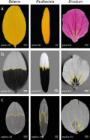
- chemical contamination of graphene in lithography processes [11]. Because of this, in the present work we investigate by Raman spectroscopy and electrical transport measurements the effects of different post-photolithography cleaning methods on the yield and performance of CVD-based graphene devices
- increase of the device production using procedure P2 is accompanied by a significant contamination with PMGI during lift-off. To remove residual PMGI from the graphene devices produced by procedure P2, we attempted three different cleaning methods. The first method (C1) consisted of cleaning the devices in


A Ni(OH)2 nanopetals network for high-performance supercapacitors synthesized by immersing Ni nanofoam in water
Beilstein J. Nanotechnol. 2019, 10, 281–293, doi:10.3762/bjnano.10.27
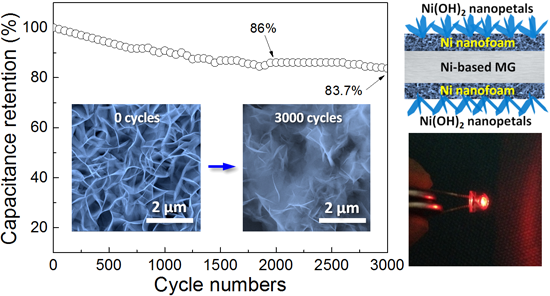
- Nowadays, environmental contamination and energy crisis require new energy storage devices. This leads to a considerable interest in the research of supercapacitors because of their higher power density, longer cycling stability and faster charge/discharge periods compared to batteries [1][2][3][4




Interaction of Te and Se interlayers with Ag or Au nanofilms in sandwich structures
Beilstein J. Nanotechnol. 2019, 10, 238–246, doi:10.3762/bjnano.10.22
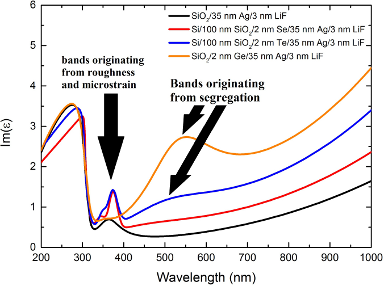
- chamber molecular beam epitaxy (MBE) system delivered by SVT Associates. The substrates were kept at room temperature. The background pressure was below 5 × 10⁻¹⁰ Torr. The purity of sublimated ingots for both Te and Se was 7N. To avoid cross-contamination during the deposition of Te or Se only one


Study of silica-based intrinsically emitting nanoparticles produced by an excimer laser
Beilstein J. Nanotechnol. 2019, 10, 211–221, doi:10.3762/bjnano.10.19
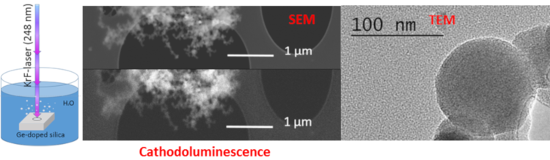
- details of a part (framed in blue in panel a) of such image. Such a detailed image allows us to illustrate the presence of nanoparticles of hundreds of nanometers in diameter and some with a diameter of under 100 nm. The EDX signals of such a sample revealed the presence of iron. This contamination



Wet chemistry route for the decoration of carbon nanotubes with iron oxide nanoparticles for gas sensing
Beilstein J. Nanotechnol. 2019, 10, 105–118, doi:10.3762/bjnano.10.10
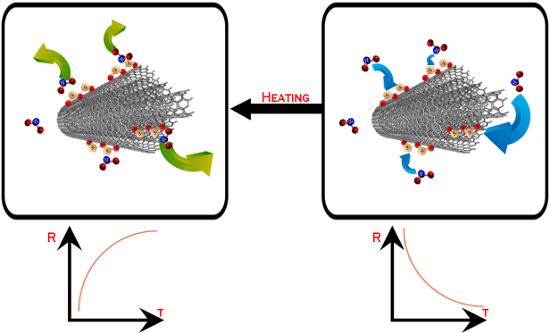
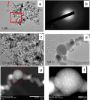
- respectively, which is probably due to some contamination during the fabrication process that we assume will not affect sensor performance. Figure 5a shows the typical Fe 2p XPS spectrum recorded on the studied samples. The spectrum is composed of two main structures centered at 712 and 725 eV corresponding to




Zn/F-doped tin oxide nanoparticles synthesized by laser pyrolysis: structural and optical properties
Beilstein J. Nanotechnol. 2019, 10, 9–21, doi:10.3762/bjnano.10.2
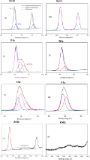
- possible traces of Zn in the only fluorine-doped sample, probably due to powder collector contamination from previous experiments. The F1s spectrum (Figure 2c) consists of three peaks originating from: ZnF2 at 684.1 eV, SnF2 at 684.9 and partially fluorinated carbons (contamination from the interaction of
- the reaction chamber. This technique is mainly employed for its advantages: (a) the well-defined interaction volume where no interactions with the reactor chamber walls occur, and hence, no contamination; (b) the production of very fine particles (usually less than 50 nm); (c) the small distribution



Contact splitting in dry adhesion and friction: reducing the influence of roughness
Beilstein J. Nanotechnol. 2019, 10, 1–8, doi:10.3762/bjnano.10.1
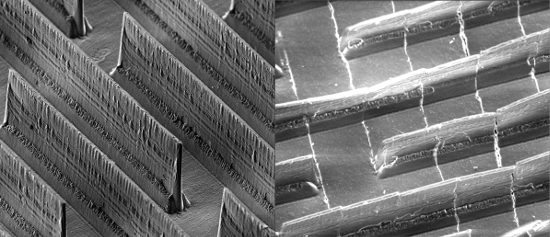
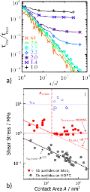
- adhesion; surfaces; tribology; Introduction Biological attachment systems based on thin-film adhesion have drawn significant interest during the last two decades because of their ability to operate on nearly any surface, their efficient control of detachment and their high resistance to contamination [1


In situ characterization of nanoscale contaminations adsorbed in air using atomic force microscopy
Beilstein J. Nanotechnol. 2018, 9, 2925–2935, doi:10.3762/bjnano.9.271
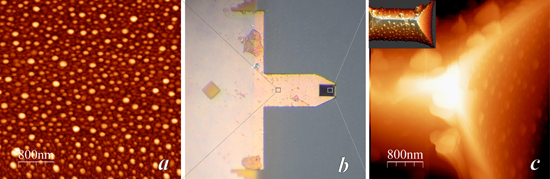
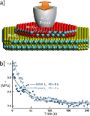
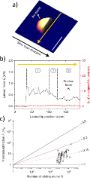
- model system for investigating a variety of nanoscale phenomena. In the present work we use atomic force microscopy to directly image nanoscale contamination on surfaces, and to characterize this contamination by using multidimensional spectroscopy techniques. By acquisition of spectroscopy data as a
- function of tip–sample voltage and tip–sample distance, we are able to determine the contact potential, the Hamaker constant and the effective thickness of the dielectric layer within the tip–sample system. All these properties depend strongly on the contamination within the tip–sample system. We propose
- to access the state of contamination of real surfaces under ambient conditions using advanced atomic force microscopy techniques. Keywords: atomic force microscopy; cantilever; contact potential; electrostatic forces; force spectroscopy; Hamaker constant; Kelvin probe microscopy; surface


Charged particle single nanometre manufacturing
Beilstein J. Nanotechnol. 2018, 9, 2855–2882, doi:10.3762/bjnano.9.266
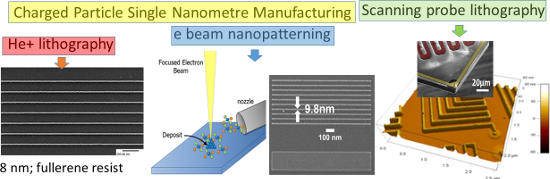
- ] who patterned EBID lines from hydrocarbon contamination in the SEM chamber, using it as a mask to etch 8 nm wide metallic gold palladium lines into a carbon film. Silvis-Cividjian et al. [56] and van Dorp et al. [57] achieved still smaller lines (<5 nm) by EBID on a thin membrane. The development of


Accurate control of the covalent functionalization of single-walled carbon nanotubes for the electro-enzymatically controlled oxidation of biomolecules
Beilstein J. Nanotechnol. 2018, 9, 2750–2762, doi:10.3762/bjnano.9.257
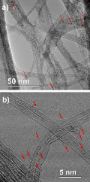
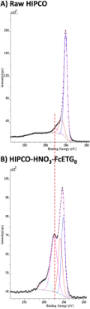
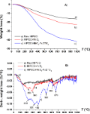
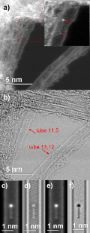
- defects introduced by tuning the irradiation time. A few milligrams of the corresponding oxidized SWCNTs were analyzed in each case before proceeding to step 2. At this stage, the samples were protected under argon gas to avoid any moisture contamination and directly analyzed by HRTEM, XPS and TGA-MS






Disorder in H+-irradiated HOPG: effect of impinging energy and dose on Raman D-band splitting and surface topography
Beilstein J. Nanotechnol. 2018, 9, 2708–2717, doi:10.3762/bjnano.9.253
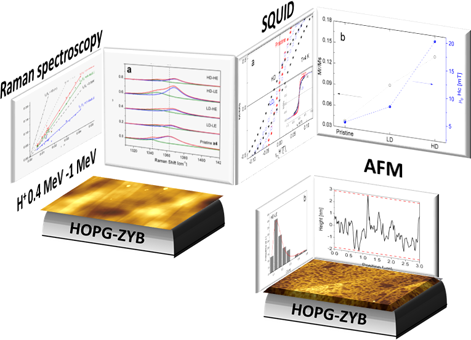
- them as a reference (pristine). Prior to any characterization, these pieces were carefully washed with acetone, to remove any possible contamination introduced during the cutting and handling [24]. According to the manufacturer, SPI-2 is very similar to ZYB. This grade exhibits a mosaic angle as small
- oriented to identify a possibly significant Fe contamination. Instead, we observed the presence of some other contaminants attributed to Al, coming from the collision chamber; Si, probably from the substrate where the HOPG sample was mounted and some traces of Ca, of unknown origin. Irradiation experiments
- from the irradiation chamber to the SQUID holder by using a portable vacuum chamber in order to avoid contamination during manipulation. After Raman and SQUID characterizations, atomic force microscopy (AFM) measurements were performed at room temperature using a Di-Innova Microscope (Bruker, USA) in


Optimization of Mo/Cr bilayer back contacts for thin-film solar cells
Beilstein J. Nanotechnol. 2018, 9, 2700–2707, doi:10.3762/bjnano.9.252
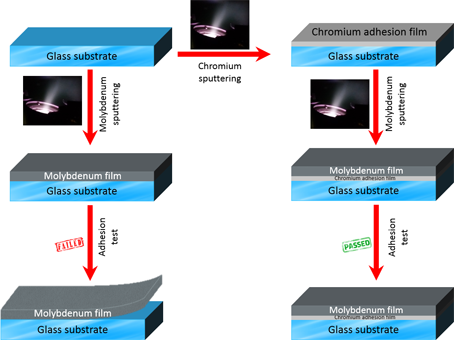
- with Argon in order to remove any oxide layer or contamination. During the deposition, the substrates were continuously rotating with a speed of 20 rpm to ensure a homogeneous coverage all over the substrate surface. The sputtering time was determined from the deposition rate under different working


ZnO-nanostructure-based electrochemical sensor: Effect of nanostructure morphology on the sensing of heavy metal ions
Beilstein J. Nanotechnol. 2018, 9, 2421–2431, doi:10.3762/bjnano.9.227
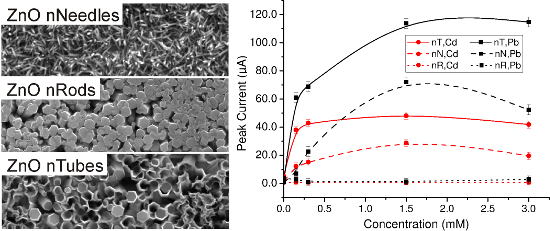
- nanostructures are promising candidates for use in sensors, especially in electrochemical sensors and biosensors, due to their unique physical and chemical properties, as well as sensitivity and selectivity to several types of contamination, including heavy metal ions. In this work, using the hydrothermal method
- lead, mercury, cadmium and cobalt, are becoming more and more topical. Many metals form stable organic compounds that dissolve well in water and result in the migration of heavy metal ions in aquatic and terrestrial systems, thereby resulting in high levels of contamination [1][2]. Lead is one of the
- the presence of lead and other heavy ions, even in small quantities, is an important and topical task. ZnO nanostructures are promising candidates for use in such sensors. They are sensitive to various types of contamination, including almost all heavy metal ions and organic pollutants, and show very


Metal-free catalysis based on nitrogen-doped carbon nanomaterials: a photoelectron spectroscopy point of view
Beilstein J. Nanotechnol. 2018, 9, 2015–2031, doi:10.3762/bjnano.9.191
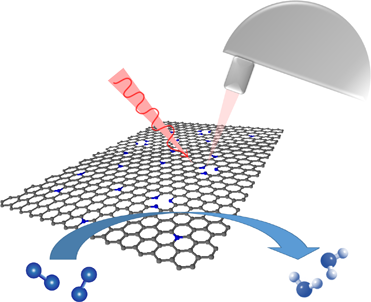
- contamination with undesired elements, these methods require an UHV environment and typical surface preparation techniques should be considered. Controlled doping using plasma results in a change of the electronic properties without affecting the morphology. In particular, in the case of nitrogen doping
- site is not available for O adsorption. This mechanism was recently observed by Scardamaglia et al. with high-resolution synchrotron measurements in a fully in situ experiment [84] in which contamination was avoided. The authors functionalized single-layer graphene grown by CVD on iridium(111) using




Recent highlights in nanoscale and mesoscale friction
Beilstein J. Nanotechnol. 2018, 9, 1995–2014, doi:10.3762/bjnano.9.190
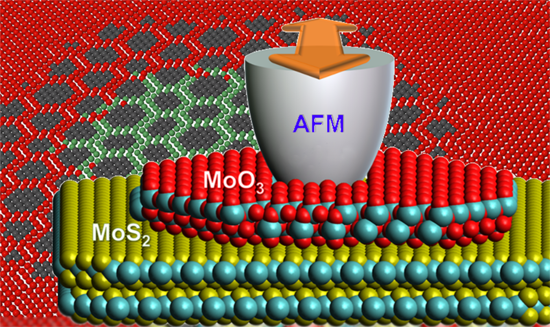
- friction by exploiting structural lubricity is not only interesting from a fundamental scientific point of view, but also holds alluring perspectives for technology [3]. However, for a long time, technical exploitation was considered difficult due to the influence of interface contamination, which can
- ]. Only recently, several systems have been discovered in which structural superlubricity can be observed under ambient conditions. For graphene stacks the self-retracting motion was found to remain a robust feature even under ambient conditions, which indicates that contamination cannot enter the
- initio simulations additionally elucidated how interface contamination is prevented by sufficiently large energy barriers and how absolute friction values are compatible with the atomic interactions upon application of the scaling laws. A recent study has pointed out that mechanical cleaning of


Synthesis of rare-earth metal and rare-earth metal-fluoride nanoparticles in ionic liquids and propylene carbonate
Beilstein J. Nanotechnol. 2018, 9, 1881–1894, doi:10.3762/bjnano.9.180
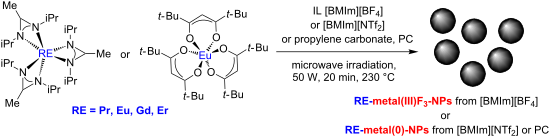
- the polymerization of olefins [15][16] and as precursors in chemical vapor (CVD) processes of rare-earth materials such as oxides and nitrides [17][18][19]. It is especially advantageous that the decomposition products from the amidinate ligand are gaseous so that product contamination is minimized
- rare-earth metal ions (typically below −2.0 V vs NHE) cause much difficulties regarding the chemical reduction of any chosen precursor and the prevention of post-synthesis oxidation or contamination of the RE-NPs. Recently, Alivisatos and co-authors reported on the synthesis of Pt3Y and other so-called
- ) show the expected signals for Eu, Gd or Er and fluoride besides the bands for carbon and copper of the carbon-coated copper grid. The oxygen peak can largely be attributed to air contamination when the sample was introduced into the TEM device. A quantification of fluoride against rare-earth metal was


Know your full potential: Quantitative Kelvin probe force microscopy on nanoscale electrical devices
Beilstein J. Nanotechnol. 2018, 9, 1809–1819, doi:10.3762/bjnano.9.172
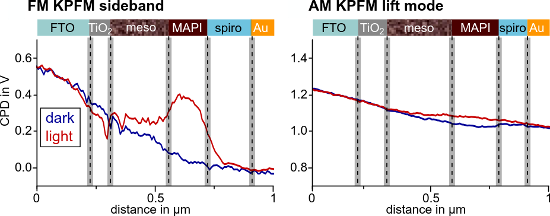
- silicon substrate. Here, we use an array of micron-scale interdigitated electrodes on glas with a defined potential difference applied between neighboring electrodes. By investigating the pre-defined potential difference between the electrodes, a possible influence of tip- or sample contamination can be
- difference between neighboring electrodes. Thus, the measured potential difference is not influenced by contamination of the surface, the tip or local changes in the materials. To minimize the influence of potential variations along the electrodes we furthermore disabled the slow scan axis during the
- extreme cases: in the center of the structure and on the outer most electrodes. In the center of the structure and in the absence of a stray field, the CPD varied from −220 mV to −148 mV (Figure 7 (left)). Such variations can be due to local changes in the CPD caused by contamination of the tip or


A visible-light-controlled platform for prolonged drug release based on Ag-doped TiO2 nanotubes with a hydrophobic layer
Beilstein J. Nanotechnol. 2018, 9, 1793–1801, doi:10.3762/bjnano.9.170
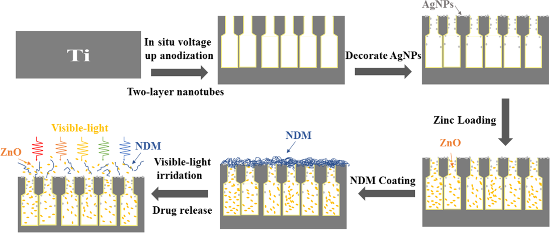
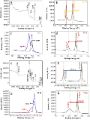
- full XPS spectrum of Zn-Ag-TNTs, in which Zn, Ti, Ag and O elements are detected. These spectra suggest the successful decoration of Ag as well as loading of Zn. The presence of C may be attributed to the incorporation from the electrolyte and the organic contamination adsorbed from environment. Figure





Preparation of micro/nanopatterned gelatins crosslinked with genipin for biocompatible dental implants
Beilstein J. Nanotechnol. 2018, 9, 1735–1754, doi:10.3762/bjnano.9.165
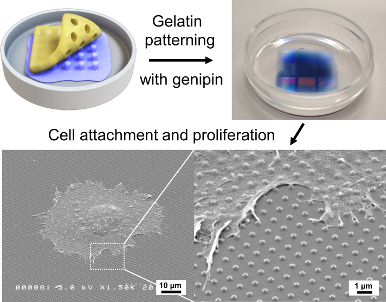
- adopted to evaluate the initial attachment ability; this is because faster cell attachment to the surface of dental implants, considered as one of the applications of gelatin patterns, is important to avoid bacterial contamination from the oral cavity. As shown in Figure 7, the number of attached cells on








Multimodal noncontact atomic force microscopy and Kelvin probe force microscopy investigations of organolead tribromide perovskite single crystals
Beilstein J. Nanotechnol. 2018, 9, 1695–1704, doi:10.3762/bjnano.9.161
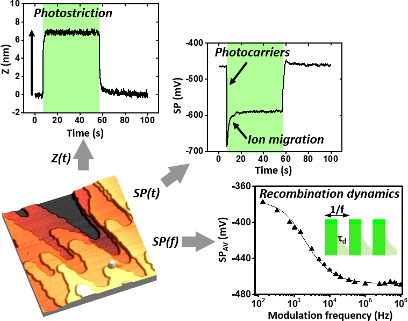
- for MAPbBr3 [1][21]). This confirms that the surface investigated corresponds to the (100) plane of the MAPbBr3 crystal. Several features appearing as white spots in the topographic images indicate moreover the likelihood of defects, which could be attributed to surface contamination upon exposure to
- (enabling discrimination between extrinsic surface contamination and intrinsic defect formation). Here, our primary goal is to check if the surface photovoltage and crystal photostriction can be simultaneously and reliably probed by nc-AFM/KPFM. The discussion will be thus focused on the analysis of the


Friction force microscopy of tribochemistry and interfacial ageing for the SiOx/Si/Au system
Beilstein J. Nanotechnol. 2018, 9, 1647–1658, doi:10.3762/bjnano.9.157
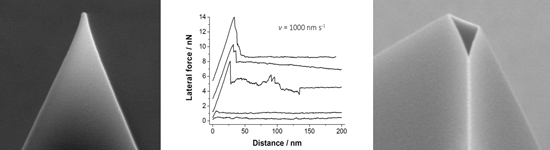
- sequence was performed first with tips with intact passivating layer and then repeated with activated tips. Electron microscopy (SEM, TEM) Contamination and modification of the AFM tips were examined by scanning electron microscopy (10 kV acceleration voltage) using secondary-electron and backscattered




Sulfur-, nitrogen- and platinum-doped titania thin films with high catalytic efficiency under visible-light illumination
Beilstein J. Nanotechnol. 2018, 9, 1629–1640, doi:10.3762/bjnano.9.155
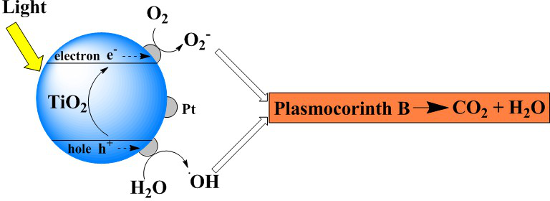
- survey spectra of the specimen (not reported) indicate the presence of carbon, oxygen and nitrogen in all the analyzed samples. Irrespective of the synthesis conditions, the C 1s peak (not reported) is located at 284.8 eV, which can be attributed to adventitious surface contamination due to air exposure


Optical near-field mapping of plasmonic nanostructures prepared by nanosphere lithography
Beilstein J. Nanotechnol. 2018, 9, 1536–1543, doi:10.3762/bjnano.9.144
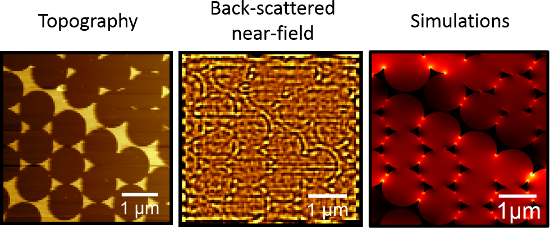
- techniques lead to sample contamination due to the use of a molecular marker. Other techniques based on electron–sample interactions can be utilized to non-destructively map the distribution of the localized plasmon modes. In photoemission electron microscopy (PEEM), the sample is irradiated with a
- require complex experimental devices, it provides fast measurements with high resolution, and can be applied to virtually any kind of sample. No additional treatment is required, and no chemical solution is employed, avoiding sample contamination. Conclusion In summary, we measured the optical near-field




Cr(VI) remediation from aqueous environment through modified-TiO2-mediated photocatalytic reduction
Beilstein J. Nanotechnol. 2018, 9, 1448–1470, doi:10.3762/bjnano.9.137
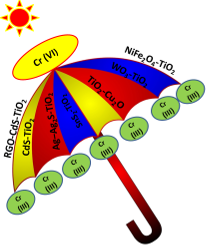
- areas [10]. Moreover, accidental leakage and improper disposal at mining sites are also sources of Cr(VI) contamination in natural water ecosystems [11][12]. Being a strong oxidizing agent with cytotoxic, mutagenic and carcinogenic properties, Cr(VI) causes a wide range of clinical/health hazards like