


Search results
Search for "cross section" in Full Text gives 525 result(s) in Beilstein Journal of Nanotechnology. Showing first 200.
Nanosecond resistive switching in Ag/AgI/PtIr nanojunctions
Beilstein J. Nanotechnol. 2020, 11, 92–100, doi:10.3762/bjnano.11.9
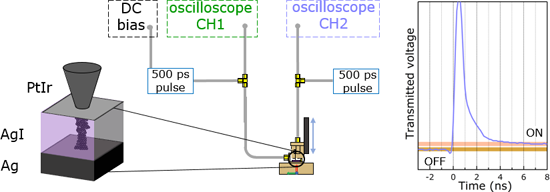
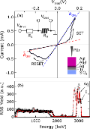
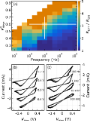
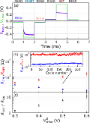
- distances granting metallic conductance also in this ultimate scaling limit. (iii) The device conductance is largely determined by the rearrangement of only a few atoms in this narrowest cross section, which can take place at a very large bandwidth and unprecedentedly low energy cost [5][6][7][8][9


Antimony deposition onto Au(111) and insertion of Mg
Beilstein J. Nanotechnol. 2019, 10, 2541–2552, doi:10.3762/bjnano.10.245
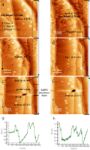
- with the holding the potential at −0.88 V is shown in Figure 7d. The horizontal cross section on Figure 7b is shown in Figure 7e. It shows that the ≈1 nm height of the Sb deposits was formed at that time. At the bottom of Figure 7b, the height of the Sb deposits reaches to ≈6 nm, which is around 30
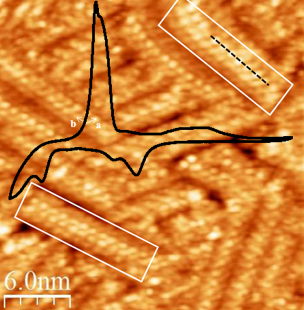
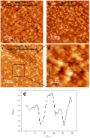
- adlayer is shown with cross section in the image g. (c, d) The electrode potential was held at −0.74 V, followed by formation of a complete monolayer. (e) The electrode potential was scanned back from −0.74 to −0.31 V and then stopped at −0.31 V, followed by dissolution of the monolayer. (f) The electrode
- direction. STM images of the Sb adlayer structure on Au(111) in 0.25 mM Sb2O3/0.5 M H2SO4 electrolyte at −0.74 V. (a) 50 × 50 nm; (b) 30 × 30 nm; (c) the cross section of image a; (d) the cross section of image b. Sample bias of 50 mV, set point = 0.5 nA and scan rate of 12 ln/s. Integral gain: 2 and





Formation of metal/semiconductor Cu–Si composite nanostructures
Beilstein J. Nanotechnol. 2019, 10, 2497–2504, doi:10.3762/bjnano.10.240
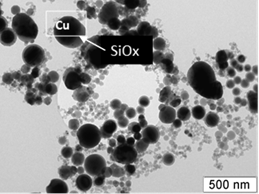
- comparison of EDX analysis of experimental and model nanoparticles obtained from the liquid phase for a cooling rate of 1 and 1.5 K/ps with a silicon concentration of 10 or 50 atom %. The values are obtained by summing the number of atoms in the cross section perpendicular to the axis of the nanoparticle and
- structure. The structure of a Cu–Si nanocluster with a silicon content of 50 atom % at different times at a cooling rate of 0.002 K/ps after a) 0.75 ns, b) 7.5 ns, c) 75 ns, and d) 750 ns; top row: cross section, bottom row: outside view. Transmission electron microscopy of the Cu–SiOx Janus-like, Cu@SiOx


Abrupt elastic-to-plastic transition in pentagonal nanowires under bending
Beilstein J. Nanotechnol. 2019, 10, 2468–2476, doi:10.3762/bjnano.10.237
- soft chemical colloidal techniques often demonstrate a morphology with axes of five-fold (pentagonal) symmetry [1]. Depending on the synthesis conditions such structures can be synthesized in the form of 0D nanoparticles or high-aspect ratio 1D nanowires (NWs) with pentagonal cross-section [2][3]. The
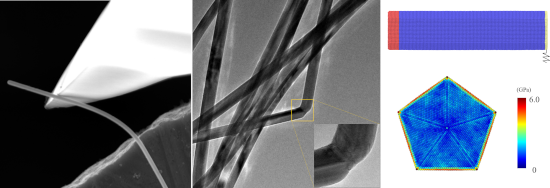
- pentagonal NWs can be considered as 1D materials consisting of five prismatic monocrystalline domains with a triangular cross-section rotated relative to each other by approximately 72°, as shown schematically in Figure 1. The crystalline domains are divided by twin boundaries [4][5]. Due to the fact that
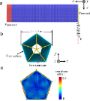
- conjugated gradient method in order to make the configuration reach a local stable state. The NW is further equilibrated at 300 K for about 40 ps to relax the internal stress. Figure 1c shows the distribution of von Mises stress on the cross-section after this equilibration. To apply a bending load to the NW



Mobility of charge carriers in self-assembled monolayers
Beilstein J. Nanotechnol. 2019, 10, 2449–2458, doi:10.3762/bjnano.10.235
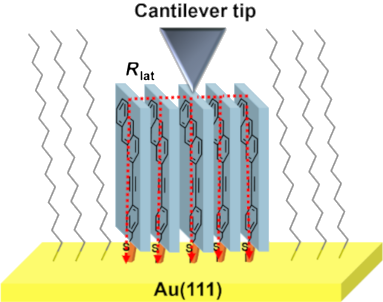
- resistance, Rlat to the charge carrier mobility of anthracene and the charge carrier density N using the relation Here, l denotes the length of the current path, and A the cross-section. Using an average e-mobility in anthracene single crystals of 1 cm2/V s at 300 K [42], and a value of l/A of 1 nm−1, we


Coating of upconversion nanoparticles with silica nanoshells of 5–250 nm thickness
Beilstein J. Nanotechnol. 2019, 10, 2410–2421, doi:10.3762/bjnano.10.231
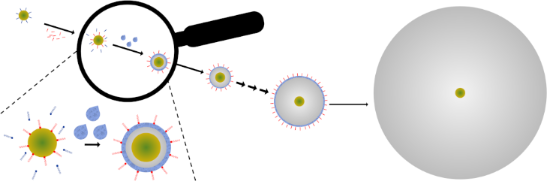
- excitation power density, this can influence both the UCL intensity and the UCL spectral distribution. In general, the coating with a thick silica shell is not expected to strongly affect the brightness of the UCNPs as long as the two properties absorption cross section and fluorescence quantum yield, which


Semitransparent Sb2S3 thin film solar cells by ultrasonic spray pyrolysis for use in solar windows
Beilstein J. Nanotechnol. 2019, 10, 2396–2409, doi:10.3762/bjnano.10.230
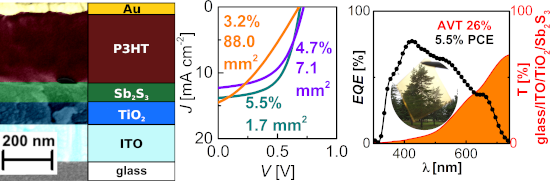
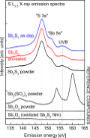
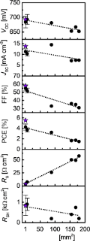
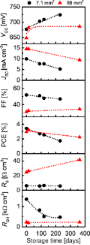
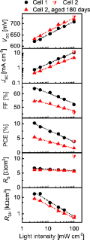
- /TiO2/Sb2S3 stack. (c) EQE of the best-performing solar cell (100 nm Sb2S3) and absorption coefficients (α) of Sb2S3 and P3HT. (d) J–V curves at AM1.5G of 100 nm Sb2S3 solar cells of different size. SEM cross-section of the best-performing 5.5% PCE solar cell (100 nm Sb2S3) and the corresponding device
- Laboratory of Optoelectronic Materials Physics at Tallinn University of Technology (TUT) for recording the cross-section SEM image of the solar cell and for EDX measurements, and Eng. Jekaterina Kozlova from the Institute of Physics at Tartu University for recording surface SEM images of glass/ITO/TiO2/Sb2S3



Nontoxic pyrite iron sulfide nanocrystals as second electron acceptor in PTB7:PC71BM-based organic photovoltaic cells
Beilstein J. Nanotechnol. 2019, 10, 2238–2250, doi:10.3762/bjnano.10.216
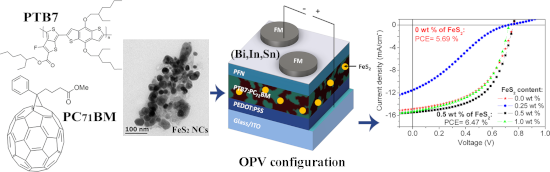
- OPV layers cross-section. We observe thicknesses of each layer that acceptably correlate with the sheet thicknesses determined by the AFM measurement in contact mode, namely ITO ≈197 nm, PEDOT:PSS ≈40 nm and PTB7:PC71BM active layer ≈113 nm. Figure S3(a–d) in Supporting Information File 1 shows the


Nonlinear absorption and scattering of a single plasmonic nanostructure characterized by x-scan technique
Beilstein J. Nanotechnol. 2019, 10, 2182–2191, doi:10.3762/bjnano.10.211
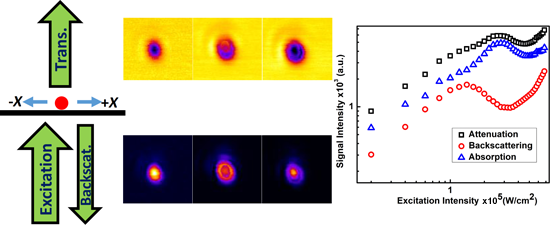
- nonlinearity of a single nanostructure, but also reports surprisingly large plasmonic nonlinearities. Keywords: absorption cross section; laser scanning microscopy; nanoplasmonics; nonlinear absorption; nonlinear scattering; single gold nanostructures; Introduction It is well known that the optical
- with high-intensity laser light, the photothermal effect induces a change of the particle permittivity leading to the nonlinearity. However, this equation only explains a square-order difference between scattering and absorption. The above equation considers the total scattering cross section


Liquid crystal tunable claddings for polymer integrated optical waveguides
Beilstein J. Nanotechnol. 2019, 10, 2163–2170, doi:10.3762/bjnano.10.209
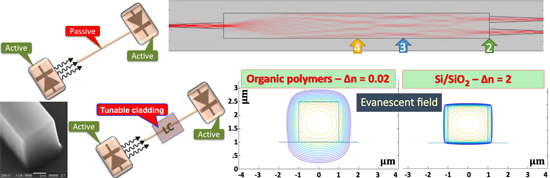
- of LC-cladding MMIs The pattern seen in Figure 4 repeats itself giving a number of specific effective device lengths for which a cross section would lead to several well-defined output channels at different distances LN. A graph of the characteristic lengths for four different output configurations


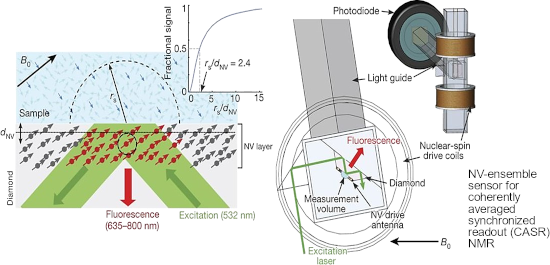
Nitrogen-vacancy centers in diamond for nanoscale magnetic resonance imaging applications
Beilstein J. Nanotechnol. 2019, 10, 2128–2151, doi:10.3762/bjnano.10.207


The importance of design in nanoarchitectonics: multifractality in MACE silicon nanowires
Beilstein J. Nanotechnol. 2019, 10, 2094–2102, doi:10.3762/bjnano.10.204
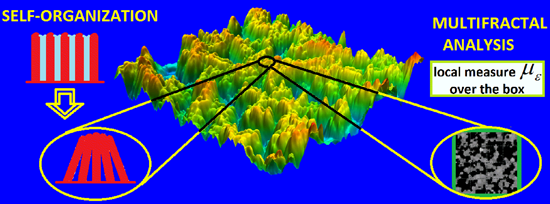
- could induce a self-assembly [16][17] (see Figure 1). The process of the assembly of NWs induced by elastocapillary forces is complex. There are many factors that influence the assembly such as periodicity, height, cross section, and tensile strength of the NWs as well as evaporation rate and the




Nanostructured and oriented metal–organic framework films enabling extreme surface wetting properties
Beilstein J. Nanotechnol. 2019, 10, 1994–2003, doi:10.3762/bjnano.10.196
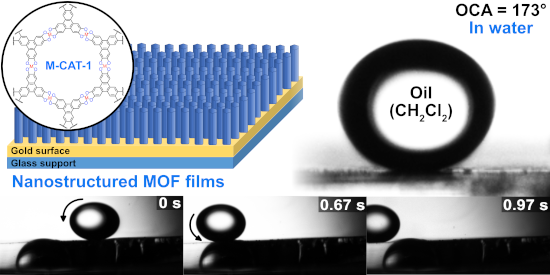
- array of pillar-like structures with a cross-section of 20–30 nm and evident gaps between the pillars of about 150 nm for both samples (see Figure 2B,C). Cross-section SEM micrographs clearly visualize an array of vertically aligned MOF needles on the surface plane. In addition, a uniform film thickness
- of about 800 nm is observed throughout the cross-section of both Ni- and Co-CAT-1 samples, indicating a self-terminating growth under the employed conditions (Figure 3B and Figure S5.4, Supporting Information File 1). To confirm that the defined nanostructured film is indeed crystalline and the
- the solid/water interface on the identical pelletized sample. A) A scheme of the vapor-assisted conversion (VAC) set up and the resulting nanostructured films. B) SEM top view, 30° tilted cross-section and the related GIWAXS pattern of the Co-CAT-1 film. C) SEM top view, 30° tilted cross-section


Subsurface imaging of flexible circuits via contact resonance atomic force microscopy
Beilstein J. Nanotechnol. 2019, 10, 1636–1647, doi:10.3762/bjnano.10.159
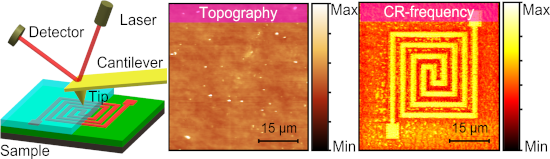
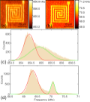
- layer thicknesses. Cross-section profiles of Figure 7a at a middle layer thickness of 300 nm and a bottom layer thickness of 3500 nm are presented in Figure 7b and Figure 7c, respectively. It is obvious that a thicker bottom layer induces a better imaging contrast and the contrast plateaus at a higher
- different middle layer and bottom layer thicknesses. The theoretical calculations were made on the PMMA–Au–PMMA structures with a top layer thickness of 50 nm under a normal force of 100 nN. (b,c) Cross-section profiles at the middle layer thickness of 300 nm and the bottom layer thickness of 3500 nm



Effects of surface charge and boundary slip on time-periodic pressure-driven flow and electrokinetic energy conversion in a nanotube
Beilstein J. Nanotechnol. 2019, 10, 1628–1635, doi:10.3762/bjnano.10.158
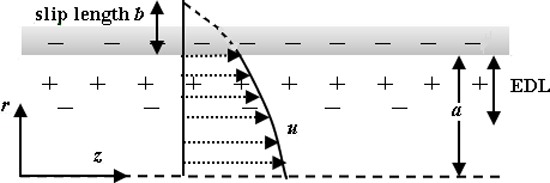
- nanotube, the net electric current over the cross section of the nanotube is zero, i.e., where σ = 2z2e2Dn0/(kBT) is the electric conductivity and D is the diffusivity of ions in the electrolyte. From the equation Is + Ic=0, the streaming electric field Es can be obtained in the form: Dimensionless


Flexible freestanding MoS2-based composite paper for energy conversion and storage
Beilstein J. Nanotechnol. 2019, 10, 1488–1496, doi:10.3762/bjnano.10.147
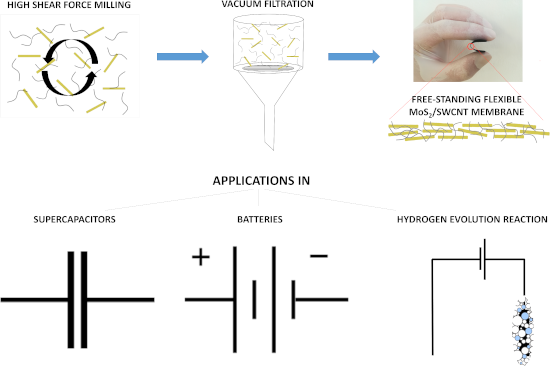
- in Figure 2. The morphology images of the top side of the composite paper (Figure 2a and 2b) show a homogeneous distribution of SWCNTs among the MoS2 sheets. SEM micrographs of the cross-section (Figure 2c and 2d) also illustrate that the SWCNTs significantly contribute to the flexibility and
- MoS2-based composite paper showing its size and flexibility. SEM micrographs of (a,b) plane and (c,d) cross-section images of the composite paper at different magnifications. Core-level X-ray photoelectron spectra of a) Mo 3d region, b) S 2p region, and c) C 1s region. Charging–discharging curves of


Growth of lithium hydride thin films from solutions: Towards solution atomic layer deposition of lithiated films
Beilstein J. Nanotechnol. 2019, 10, 1443–1451, doi:10.3762/bjnano.10.142
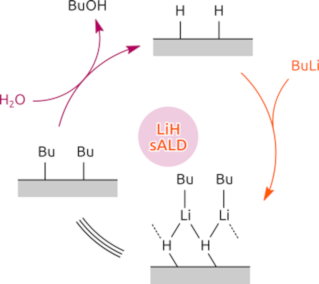
- cross-section sample. The differences in thickness are correct. Chemical composition of the sample surface as determined by XPS. Acknowledgements The author I.K. wishes to acknowledge the great help from, and the good spirit of the Bachmann group at FAU Erlangen. Also, we wish to acknowledge the


Multicomponent bionanocomposites based on clay nanoarchitectures for electrochemical devices
Beilstein J. Nanotechnol. 2019, 10, 1303–1315, doi:10.3762/bjnano.10.129
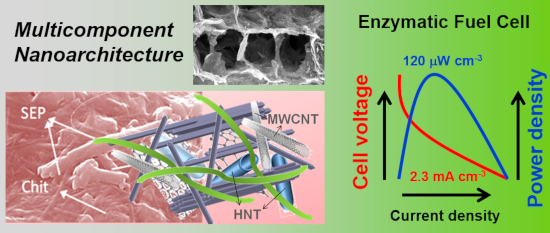
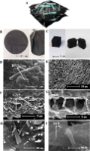
- Figure 3A, while SEM images (Figure 3D,F) reveal that the components are uniformly distributed throughout the film and are organized as a compact particle assembly within the chitosan matrix. Furthermore, the film cross section (Figure 3F) displays the typical layered structure of films solvent-cast from
- bionanocomposites: A) cross section of processed materials: HNTs and SEP are represented as tubes and fibres, while chitosan, GNPs and MWCNTs are depicted in the black matrix. Photographs of B) Film-1 and C) Foam-1. SEM micrographs of the film: D) upper surface, F) and H) cross section; SEM micrographs of the foam



Fabrication of phase masks from amorphous carbon thin films for electron-beam shaping
Beilstein J. Nanotechnol. 2019, 10, 1290–1302, doi:10.3762/bjnano.10.128
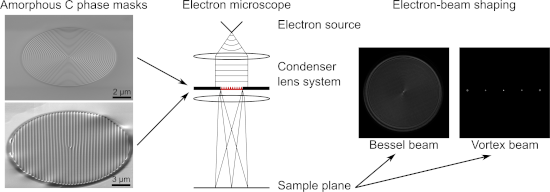
- were generally smoother compared to the FIB-prepared thin films, higher quality PM gratings could be fabricated. For the highest spatial frequency of kρ = 10 µm−1 only the floated aC thin films showed good results (cf. Figure 4a,b). To study the depth profile of the PMs, cross-section TEM lamellas were
- is visible as a dark ring around the patterned structure in Figure 5a,b. Slight bulging of the aC film is also visible at the aperture edges. Cross-section samples were again prepared by FIB milling and investigated by bright-field TEM (Figure 5c,d). This time, the PMs were embedded between two
- ) floated aC thin films reveal a smoother surface for the latter. (c) The cross-section SEM image at the aperture edges reveals sagging of a floated thin film (10 nm) after additional deposition of 70 nm aC. (d) Floating of a comparably thick 80 nm aC film results in more stability at the aperture edge. (e



CuInSe2 quantum dots grown by molecular beam epitaxy on amorphous SiO2 surfaces
Beilstein J. Nanotechnol. 2019, 10, 1103–1111, doi:10.3762/bjnano.10.110
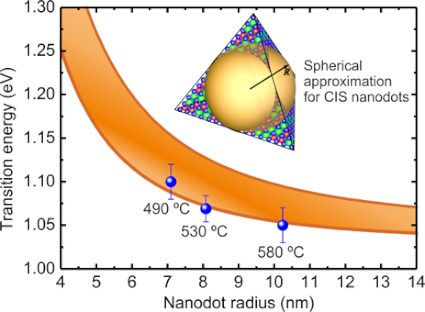
- the 530 °C sample. Figure 2a shows a high-resolution cross-section high-angle annular dark-field (HAADF) image of a nanodot. Due to the large density of nanodots in the sample, a superposition of two other nanodots can be observed on the back (left and right sides of the image) of the nanodot under
- amorphous layer as evidenced by the STEM analysis. Energy-dispersive X-ray spectroscopy (EDS) mapping was carried out in the 530 °C sample in order to determine the chemical composition of the nanodots. Figure 3a–f, shows a low-resolution cross-section HAADF image of the sample, as well as the EDS chemical
- ) and Si substrate (red). Chemical analysis of the sample grown at 530 °C. (a) Low-resolution cross-section STEM HAADF image of a region of the 530 °C sample studied by EDS. (b–f) EDS mapping of Se, Cu, In, Si, and O. (g) EDS line profile across a nanodot (blue rectangle in (a)). (h) EDS line profile


Influence of dielectric layer thickness and roughness on topographic effects in magnetic force microscopy
Beilstein J. Nanotechnol. 2019, 10, 1056–1064, doi:10.3762/bjnano.10.106
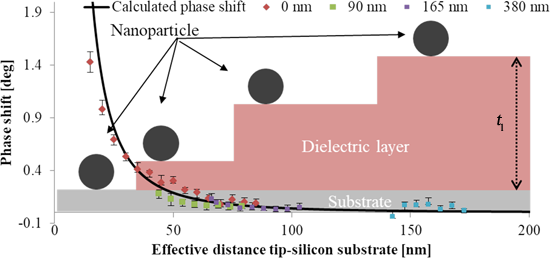
- . The position of the tip dipole is assumed to be at the half radius of the tip [17]. Cross section simulation of MFM phase The first scan of MFM measurements provides a topographic image displaying a convolution of the tip and the nanoparticle [24]. The topographic cross section is simulated by using a
- be calculated as a function of the horizontal position of the tip corresponding to a cross section of the MFM image. The vertical distance changes in the second scan (interleave scan with a certain lift height following the topography of the first scan) lead to a positive phase shift due to
- observed directly above the nanoparticles indicating a remaining weak capacitive coupling. Figure 10 shows a cross section of the topography image as well as of the phase image for a single SPION on a silicon substrate. For the single SPION lying directly on the silicon surface a strong repulsion indicated




![[Graphic 2]](/bjnano/content/inline/2190-4286-10-106-i7.svg?max-width=637&scale=1.18182) ; black line) and measured phase shift for single nanoparticles with 10 ± 2 nm diameter...
; black line) and measured phase shift for single nanoparticles with 10 ± 2 nm diameter...


Correlation of surface-enhanced Raman scattering (SERS) with the surface density of gold nanoparticles: evaluation of the critical number of SERS tags for a detectable signal
Beilstein J. Nanotechnol. 2019, 10, 1016–1023, doi:10.3762/bjnano.10.102
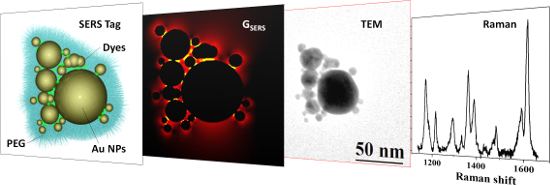
- scattering (SERS), the Raman scattering cross-section of molecules adsorbed on the surface of plasmonic nanostructures is enormously increased compared to the same isolated molecules [1][2][3][4][5]. In particular, the SERS enhancement factor can reach values as high as 1012, which can be attributed to two
- deviation of the counts per second from a single AuNT in the experimental conditions used (reported in Figure 3B), which is indicative of the average Raman scattering cross-section for a single label. The signal from all of the three label types exceeds the noise level for 1 s of acquisition, meaning that
- phenomena, the local electric field enhancement due to the surface plasmon resonance of the metal nanostructure (electromagnetic enhancement) and the charge transfer between the molecule and the metal substrate (chemical enhancement) [6][7][8]. In addition, given the generally low Raman scattering cross


Direct growth of few-layer graphene on AlN-based resonators for high-sensitivity gravimetric biosensors
Beilstein J. Nanotechnol. 2019, 10, 975–984, doi:10.3762/bjnano.10.98
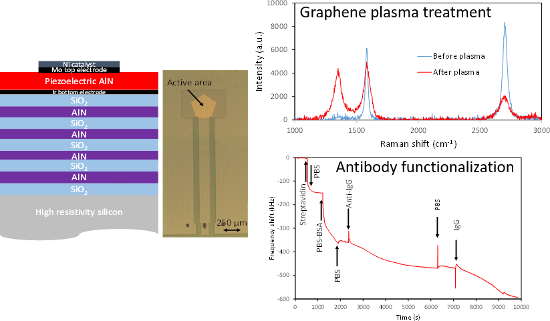
- antibody detection process. The arrows indicate the moments at what the liquids are changed. Resonant frequency evolution of a resonator during the non-covalent functionalization with anti-IgG antibody. The arrows indicate the moments at what the liquids are changed. a) Schematic cross section of a typical



Nanoscale optical and structural characterisation of silk
Beilstein J. Nanotechnol. 2019, 10, 922–929, doi:10.3762/bjnano.10.93
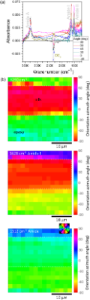
- features [10]. Whilst the first two modalities probe micrometer-sized volumes of silk, the AFM-based nano-IR technique acquires structural information at the nanoscale (i.e., the area under the AFM tip from a volume with a lateral cross section of ca. 20 nm). Differences in absorbance and spectral line
- ]. The most pronounced peak corresponds to the separation between the equatorial (200) planes d(200) = 4.69 nm and crystal cross section of L ≈ 2.15 nm, while for the meridional (002) planes d(002) = 3.46 nm and crystal size of L ≈ 10.76 nm [18]. These are the dimensions of the β-sheets, which are


Renewable energy conversion using nano- and microstructured materials
Beilstein J. Nanotechnol. 2019, 10, 771–773, doi:10.3762/bjnano.10.76

- together with the related scientific discussions. In this sense, the present thematic issue provides a platform for a contemporary cross-section of topics in this broad field of research. The Beilstein Journal of Nanotechnology is a unique medium for scientific exchange across the traditional disciplines



