


Search results
Search for "crystal structure" in Full Text gives 341 result(s) in Beilstein Journal of Nanotechnology. Showing first 200.
Charge-transfer interactions between fullerenes and a mesoporous tetrathiafulvalene-based metal–organic framework
Beilstein J. Nanotechnol. 2019, 10, 1883–1893, doi:10.3762/bjnano.10.183
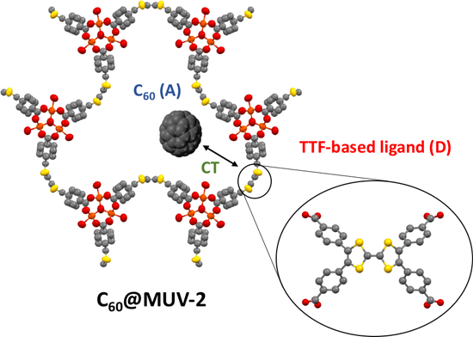
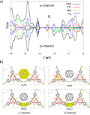
- the samples in KBr pellets. a) Nitrogen adsorption isotherms at 77 K and b) high-pressure CO2 adsorption isotherms at 298 K, on MUV-2 (black) and C60@MUV-2 (red). a) Minimum-energy crystal structure calculated for conformations A and B of host–guest C60@MUV-2 at the PBEsol level under periodic




Biocatalytic oligomerization-induced self-assembly of crystalline cellulose oligomers into nanoribbon networks assisted by organic solvents
Beilstein J. Nanotechnol. 2019, 10, 1778–1788, doi:10.3762/bjnano.10.173
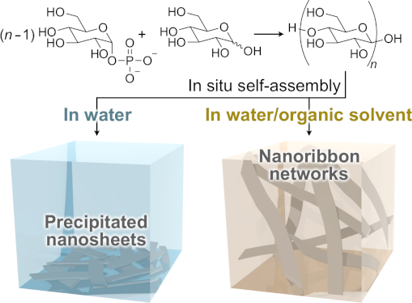
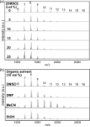
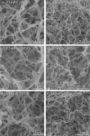
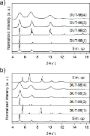
- discussed further below. The crystal structure of the representative products was analyzed by X-ray diffraction (XRD) measurements and attenuated total reflection Fourier-transform infrared (ATR-FTIR) absorption spectroscopy. The XRD profiles showed three peaks at 2θ (θ is the Bragg angle) of 12.2, 19.9





Remarkable electronic and optical anisotropy of layered 1T’-WTe2 2D materials
Beilstein J. Nanotechnol. 2019, 10, 1745–1753, doi:10.3762/bjnano.10.170
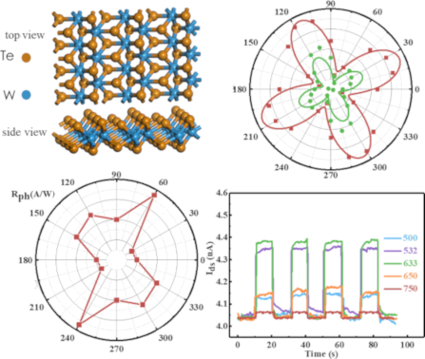
- -response is ascribed to the unique anisotropic in-plane crystal structure, consistent with the optical absorption anisotropy results. In general, 1T’-WTe2, with its highly anisotropic electrical and photoresponsivity reported here, demonstrates a route to exploit the intrinsic anisotropy of 2D materials
- monolayer 1T’-WTe2 has a highly in-plane anisotropic crystal structure, in addition to anisotropic electrical, thermal and optical properties [23][24][25][26]. However, most of the results are based on theoretical demonstrations of the anisotropic phenomenon, rather than further quantitative data for the
- and azimuth-dependent reflectance difference microscopy (ADRDM), we firstly identified the 1T’-phase WTe2 to have an optical anisotropic crystal structure. Secondly, a 12-electrode-structure was designed for the evaluation the electrical anisotropy of 1T’-WTe2, and the results demonstrated up to 103


The impact of crystal size and temperature on the adsorption-induced flexibility of the Zr-based metal–organic framework DUT-98
Beilstein J. Nanotechnol. 2019, 10, 1737–1744, doi:10.3762/bjnano.10.169
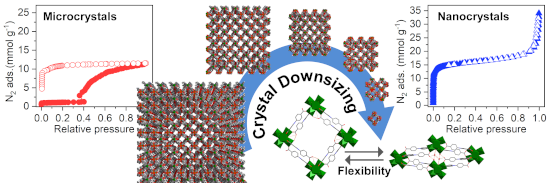
- cluster of 1.5 nm, which is in good agreement with the lattice parameter and the inter-cluster distance of the DUT-98op crystal structure (Supporting Information File 1, Figure S8). The regular arrangement of the clusters indicates a high symmetry that matches the tetragonal symmetry in DUT-98op. In
- reach the pore volume value calculated theoretically from the crystal structure of DUT-98op, indicating that the cp fraction observed in the PXRD pattern does not reopen upon adsorption of nitrogen at 77 K. In this regard, DUT-98(Hf) is found to exhibit similar adsorption properties (Supporting
- ) and organic ligand CPCDC (9-(4-carboxyphenyl)-9H-carbazole-3,6-dicarboxylate) applied in the construction of DUT-98; b) crystal structure transformation of DUT-98 open pore (op) to closed pore (cp) configuration. Nitrogen adsorption isotherms at 77 K (a,d) and SEM images (scale bars 1 µm) (b,c) of DUT



Novel hollow titanium dioxide nanospheres with antimicrobial activity against resistant bacteria
Beilstein J. Nanotechnol. 2019, 10, 1716–1725, doi:10.3762/bjnano.10.167
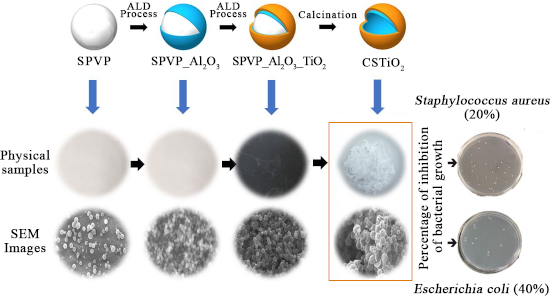
- , structural and thermal properties. In addition, the antimicrobial activity against common and multidrug-resistant bacteria were also studied. Crucial factors, such as the size, surface morphology and crystal structure of the NPs, were found to affect their antibacterial mechanism. Thus, the comparison of the


Materials nanoarchitectonics at two-dimensional liquid interfaces
Beilstein J. Nanotechnol. 2019, 10, 1559–1587, doi:10.3762/bjnano.10.153
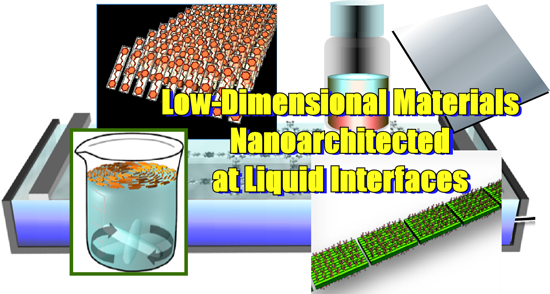
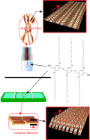
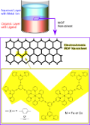
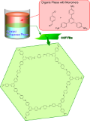
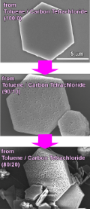
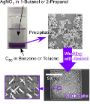
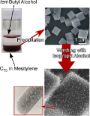
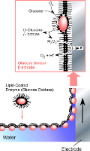
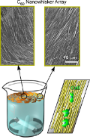
- compared to similar cells prepared with pristine C60 molecules. C60 molecules in a one-dimensional van der Waals solid preserve the electronic structure of C60, but they crystallise in a hexagonal close-packed structure that is different from the cubic crystal structure of pristine C60 molecular crystals













Development of a new hybrid approach combining AFM and SEM for the nanoparticle dimensional metrology
Beilstein J. Nanotechnol. 2019, 10, 1523–1536, doi:10.3762/bjnano.10.150
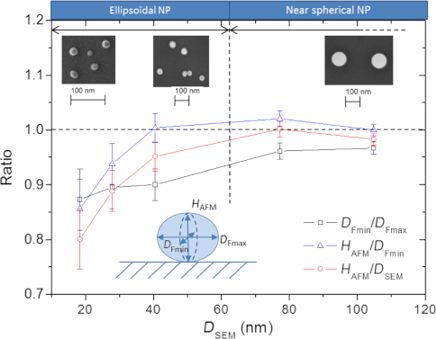
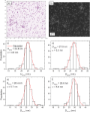
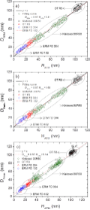
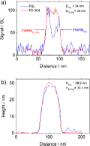
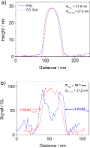
- using several measuring techniques and their associated metrologies to combine their strengths and limit their weaknesses. Combined with statistical tools and input data, such as chemical information and crystal structure, hybrid metrology makes it possible, after data fusion, to obtain more reliable




Direct observation of oxygen-vacancy formation and structural changes in Bi2WO6 nanoflakes induced by electron irradiation
Beilstein J. Nanotechnol. 2019, 10, 1434–1442, doi:10.3762/bjnano.10.141
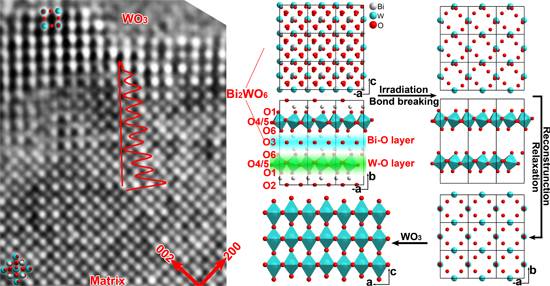
- of the Aurivillius phases, perovskites with the general formula of (Bi2O2)(Am−1BmO3m+1) and a crystal structure of tilted WO6 octahedra layers sandwiched between Bi–O layers. The W–O layers in the Bi2WO6 crystal transfer electrons to the surface of catalysts, and Bi–O layers act as insulating layers
- appeared at 3.02, 4.39, 6.68, 7.61 nm−1, which are in good agreement with the (012), (104), (116) and (214) planes of the hexagonal bismuth phase (PDF#85-1329). Moreover, no reflections that can be associated with the crystal structure of bismuth oxides appear during the whole irradiation process. This


Selective gas detection using Mn3O4/WO3 composites as a sensing layer
Beilstein J. Nanotechnol. 2019, 10, 1423–1433, doi:10.3762/bjnano.10.140
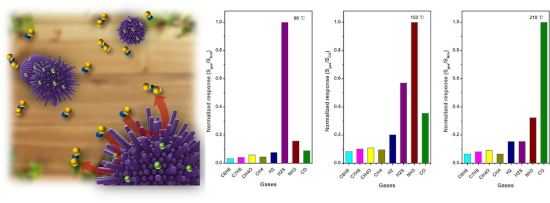
- and morphological characteristics Figure 1a presents the phase purity and crystal structure of pure WO3 and Mn3O4/WO3 investigated by X-ray diffraction (XRD). The main reflection peaks can be well-indexed to monoclinic-type crystalline phase of WO3 with similar values from reported data (space group


BiOCl/TiO2/diatomite composites with enhanced visible-light photocatalytic activity for the degradation of rhodamine B
Beilstein J. Nanotechnol. 2019, 10, 1412–1422, doi:10.3762/bjnano.10.139
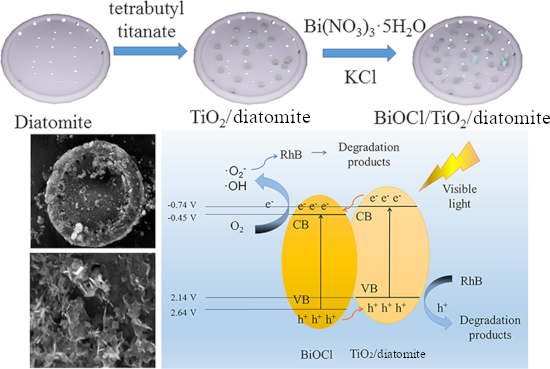
- . After these treatments, the photocatalyst was applied to the degradation of fresh RhB. Results and Discussion Structural analysis XRD was used to analyze the phase structure and crystal structure of the samples. The results are shown in Figure 1a. The diffraction peaks of the prepared BiOCl are in good


The effect of magneto-crystalline anisotropy on the properties of hard and soft magnetic ferrite nanoparticles
Beilstein J. Nanotechnol. 2019, 10, 1348–1359, doi:10.3762/bjnano.10.133
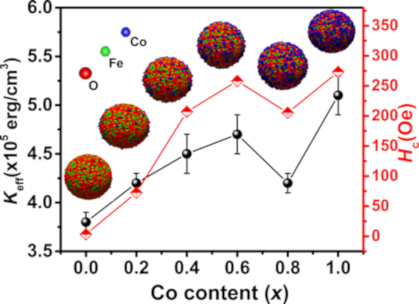
- presence of Fe, Co and O in the samples. The atomic ratio Co/Fe obtained from EDX is in a good agreement with the theoretical stoichiometry for all samples (Figure 4d). Infrared spectra The formation of the spinel phase and its crystal structure were verified by Fourier-transform infrared (FTIR) spectra
- the theoretical stoichiometry of all samples. FTIR spectra of CoxFe3−xO4 nanoparticles with x = 0.0, 0.2, 0.4, 0.6, 0.8 and 1.0. The inset is the part of the spectra at frequencies below 1000 cm−1. Polyhedral model showing the cubic spinel crystal structure of CoFe2O4. Green and blue shaded areas


Green fabrication of lanthanide-doped hydroxide-based phosphors: Y(OH)3:Eu3+ nanoparticles for white light generation
Beilstein J. Nanotechnol. 2019, 10, 1200–1210, doi:10.3762/bjnano.10.119
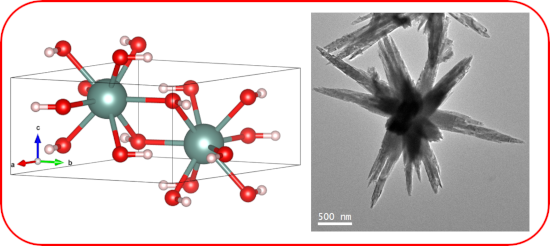
- during the reaction process may distort the crystal structure and lead to an increase in the formation of substitutional defects, which may facilitate the incorporation of dopant ions into the system [36][37][38][39]. As an example, luminescent red Y(OH)3:Eu3+ phosphors were fabricated via employing this
- into the transparent solution, respectively. Selecting LiOH as the ion source is critical here since the other possible ions such as Na+ and K+ are not as reactive as Li+ ions. Such a high reactivity of Li+ ions in the solution is expected to distort the crystal structure relatively more compared to
- electronegativity of Y, H and O are 1.22, 2.20 and 3.44, respectively. Bader charge analysis shows that the Y(OH)3 crystal structure is formed by 0.73 (0.60) e charge transfer from the Y (H) to the O atom. Possible scenarios for Eu doping in a Y(OH)3 crystal is also investigated by state-of-the-art first principles



Pure and mixed ordered monolayers of tetracyano-2,6-naphthoquinodimethane and hexathiapentacene on the Ag(100) surface
Beilstein J. Nanotechnol. 2019, 10, 1188–1199, doi:10.3762/bjnano.10.118
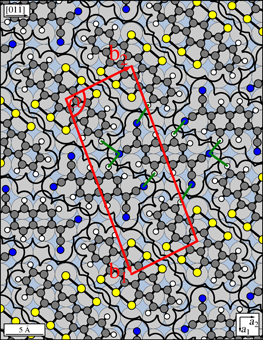
- molecules with electron donor and acceptor properties on the Ag(100) surface. The donor-type molecule was 5,6,7,12,13,14-hexathiapentacene (HTPEN, Figure 1a), which is a planar molecule with D2h symmetry [18]. Its crystal structure and field-effect mobilities were reported by Briseno and co-workers [19
- combination with tetrathiafulvalene (TTF) on Au(111). TNAP is a flat planar molecule (C2h) with the ability to delocalize unpaired electrons in a charge-transfer complex [26]. We note that the crystal structure of TNAP is unknown and, as a consequence, we cannot compare the packing of TNAP on the Ag(100
- 150.2 Å2 and is large enough for containing one flat-lying HTPEN molecule, as illustrated in Figure 2b. The molecular geometry used for the hard-sphere model of HTPEN (Figure 2b) is based on the crystal structure data of HTPEN [19] and the van der Waals radii taken from [32]. Table 1 shows all geometric


A highly efficient porous rod-like Ce-doped ZnO photocatalyst for the degradation of dye contaminants in water
Beilstein J. Nanotechnol. 2019, 10, 1157–1165, doi:10.3762/bjnano.10.115
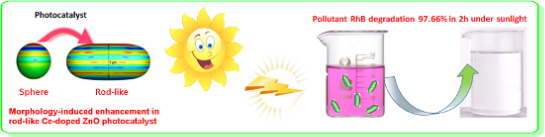
- a sunlight simulator. The results showed that ZnO doped with 3% Ce exhibits the highest RhB degradation rate. To understand the crystal structure, elemental state, surface morphology and chemical composition, the photocatalysts were characterized by X-ray diffraction (XRD), X-ray photoelectron
- , then ZnO and a series of Ce-doped ZnO were synthesized by a one-step pyrolysis method. The photocatalytic activity was evaluated by the degradation rate of RhB using a sunlight stimulator. The changes in crystal structure, Ce element state, morphology and chemical composition were characterized by XRD


CuInSe2 quantum dots grown by molecular beam epitaxy on amorphous SiO2 surfaces
Beilstein J. Nanotechnol. 2019, 10, 1103–1111, doi:10.3762/bjnano.10.110
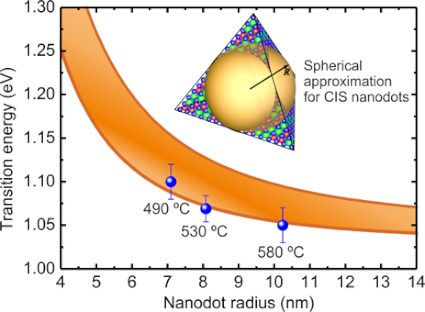
- almost one order of magnitude. It is clear that with increasing growth temperature coarsening and In re-evaporation might play important roles in the nanodots size distribution. The crystal structure of the nanodots was determined by scanning transmission electron microscopy (STEM) analysis performed on
- crystal structure and chemical composition of the dots compatible with the CIS tetragonal structure and stoichiometry. The same analysis also hints to a Cu-poor and Se-rich CIS wetting layer, but the effects, structure, and exact composition of this layer have to be studied in more detailed. PL


Synthesis of novel C-doped g-C3N4 nanosheets coupled with CdIn2S4 for enhanced photocatalytic hydrogen evolution
Beilstein J. Nanotechnol. 2019, 10, 912–921, doi:10.3762/bjnano.10.92
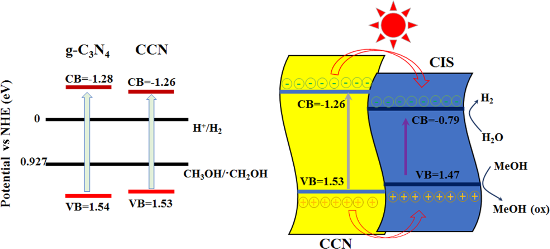
- to analyze the crystal structure, morphology, elementary composition, optical properties and catalytic mechanism. The CdIn2S4/CCN nanocomposites with optimal CdIn2S4 content exhibited a maximum H2 production rate of 2985 μmol h−1 g−1, almost 15 times more than that obtained using pure g-C3N4 (205


The systemic effect of PEG-nGO-induced oxidative stress in vivo in a rodent model
Beilstein J. Nanotechnol. 2019, 10, 901–911, doi:10.3762/bjnano.10.91
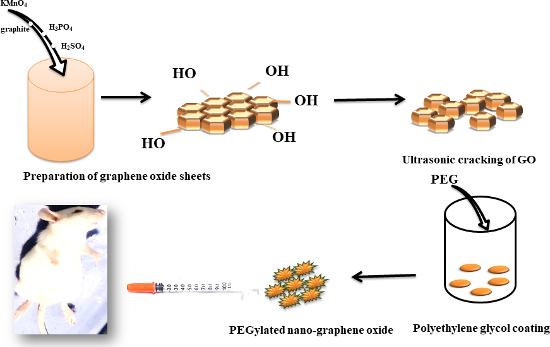
- advanced nanomaterials has led to the development of effective drug delivery systems [1][2]. Graphene, a single layer of carbon atoms with a hexagonal 2-dimensional crystal structure, its use in nanoscience and nanotechnology, is of great interest for scientists. The hydrophobic nature of graphene


Electronic properties of several two dimensional halides from ab initio calculations
Beilstein J. Nanotechnol. 2019, 10, 823–832, doi:10.3762/bjnano.10.82
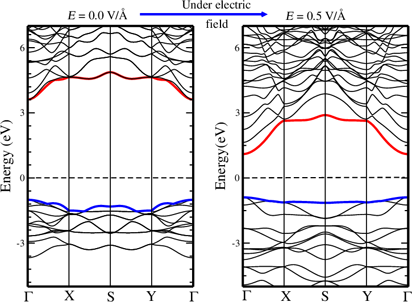
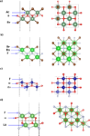
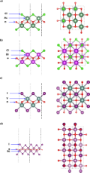
- crystal structure of a monolayer of: (a) AcOCl , (b) BiOCl, (c) YOI and (d) ScOI. Partial and total density of states of monolayers of AcOBr, BaFBr, BiOBr, and CaFBr. The Fermi level is set to 0 eV. Partial and total density of states of monolayers of AcOCl, AlOCl, BaFCl, and BiOCl. The Fermi level is set


An efficient electrode material for high performance solid-state hybrid supercapacitors based on a Cu/CuO/porous carbon nanofiber/TiO2 hybrid composite
Beilstein J. Nanotechnol. 2019, 10, 781–793, doi:10.3762/bjnano.10.78
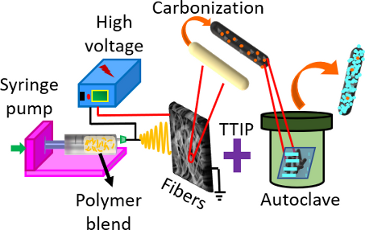
- planes of anatase TiO2 (JCPDS card # 00-001-0562) [25] and the similar crystal structure was observed in the Cu/CuO/PCNF/TiO2 composite material. Additionally, the Cu/CuO/PCNF/TiO2 composite shows (002), (101) planes of the carbon and (002), (111) planes of CuO. These results show that Cu nanoparticles
- to the formation of rutile crystal structure. The composite material shows only 19% weight loss, which implies that the material has high thermal stability due to the uniform growth of the TiO2 nanoparticles on the fiber, providing high stability to the composite material. Electrochemical properties


Ultrasonication-assisted synthesis of CsPbBr3 and Cs4PbBr6 perovskite nanocrystals and their reversible transformation
Beilstein J. Nanotechnol. 2019, 10, 666–676, doi:10.3762/bjnano.10.66
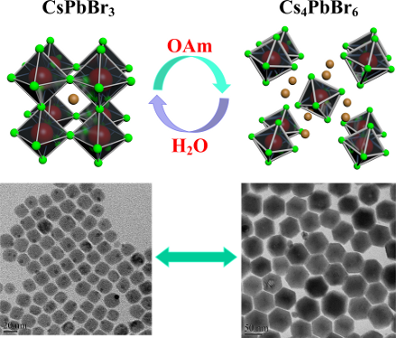
- demonstrate excellent properites, such as tunable photoluminescence (PL) throughout the visible spectrum, super high PL quantum yield (QY), low trap-state density, and narrow emission linewidth [6][7][8]. The crystal structure of CsPbX3 (X = Cl−, Br−, I−) PNCs consists of a 12-fold coordinated network created
- . The reversible transformation between Cs4PbBr6 PNCs and CsPbBr3 PNCs was achieved by changing the amounts of OAm and water. Detailed synthesis conditions are given in the Experimental section. The crystal structure and morphology of the as-prepared samples were determined by XRD and TEM. As shown in
- morphology of as-prepared PNCs. Figure 4b shows the formation of Cs4PbBr6 PNCs with hexagonal crystal structure and confirms the existence of square-shaped CsPbBr3 PNCs. Additionally, Figure 4c shows that the small black spots (green arrows) existing on the surface of the Cs4PbBr6 PNCs are metallic lead



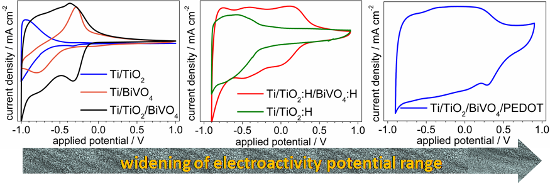
Widening of the electroactivity potential range by composite formation – capacitive properties of TiO2/BiVO4/PEDOT:PSS electrodes in contact with an aqueous electrolyte
Beilstein J. Nanotechnol. 2019, 10, 483–493, doi:10.3762/bjnano.10.49
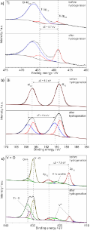
- . The main peak at 529.8 eV can be attributed to oxygen in the BiVO4 crystal structure [55] and the smaller one is observed due to the presence of the surface OH groups [56]. The spectrum of the layer after hydrogenation is characterized by the much higher contribution of OH groups. There is also at
- . Here, we present the formation of a titania nanotube-based composite. The proposed procedure of anodization yields titania (anatase crystal structure) in the form of nanotubes. PLD was used for BiVO4 deposition on TiO2 with preservation of nanotubular morphology. An enhancement of electric-charge




Temperature-dependent Raman spectroscopy and sensor applications of PtSe2 nanosheets synthesized by wet chemistry
Beilstein J. Nanotechnol. 2019, 10, 467–474, doi:10.3762/bjnano.10.46
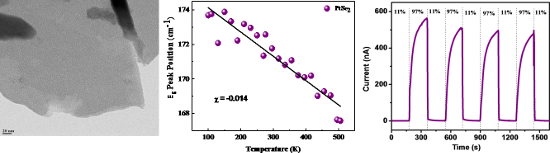
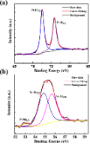
- method used to grow PtSe2 nanosheets followed by thermal annealing. The SEM and TEM analysis confirms the formation of PtSe2 nanosheets. Furthermore, XRD, Raman, XPS and SAED patterns were used to analyze the crystal structure and to confirm the formation of the PtSe2 phase. The temperature-dependent
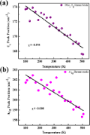
- , the XRD, Raman and SAED pattern results were used to analyze the crystal structure and to confirm the formation of the PtSe2 phase. Temperature-dependent Raman spectroscopy investigations were carried out on PtSe2 nanosheet films grown on Si substrates between 100–506 K. The temperature coefficient



Advanced scanning probe lithography using anatase-to-rutile transition to create localized TiO2 nanorods
Beilstein J. Nanotechnol. 2019, 10, 412–418, doi:10.3762/bjnano.10.40
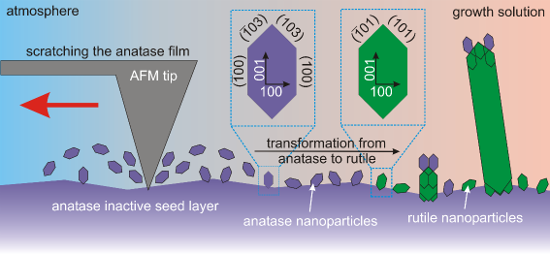
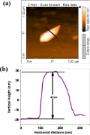
- by the described hydrothermal growth method have a rutile crystal structure [42]. The resulting nanostructures obtained with scanning probe lithography are presented in Figure 2 by SEM. For comparison, the same structures were fabricated with electron-beam lithography to demonstrate that both


Integration of LaMnO3+δ films on platinized silicon substrates for resistive switching applications by PI-MOCVD
Beilstein J. Nanotechnol. 2019, 10, 389–398, doi:10.3762/bjnano.10.38
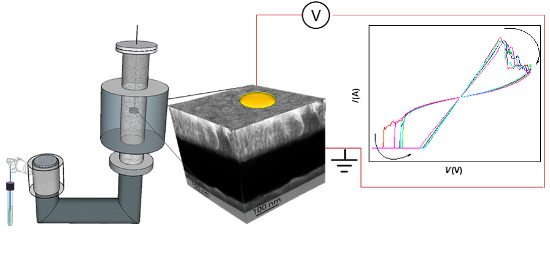
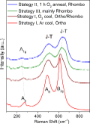
- analyzed by semi-quantitative energy-dispersive X-ray analyses (EDX) using an Oxford Inca Energy detector coupled to the SEM. A combined study in X-ray diffraction (XRD) and Raman spectroscopy was performed to determine the crystal structure of the films and to detect the presence/absence of secondary
- three deposition strategies, despite the narrow temperature and time ranges required to avoid Pt instability, strategy I allows for the growth of LMO thin films up to 80 nm providing a very good control of the crystal structure. On the other hand, when rhombohedral films are suitable for the required




Site-specific growth of oriented ZnO nanocrystal arrays
Beilstein J. Nanotechnol. 2019, 10, 274–280, doi:10.3762/bjnano.10.26
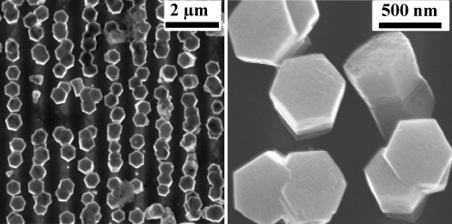
- crystals forming the twin are almost of same dimensions, L and D. The obvious question is what gives rise to twin formation. The twin growth can be understood as follows. ZnO crystal structure consists of hexagonally close packed oxygen and zinc atoms. ZnO crystals consists of a top tetrahedron corner
- FESEM and XRD observations are consistent with each other with respect to the oriented and aligned growth of ZnO NCs or otherwise. To further examine the crystal structure and morphology of the twinned ZnO NCs, TEM measurements were performed and the recorded images for the S600 sample are shown in





