Search results
Search for "defect" in Full Text gives 402 result(s) in Beilstein Journal of Nanotechnology. Showing first 200.
Tuning the performance of vanadium redox flow batteries by modifying the structural defects of the carbon felt electrode
Beilstein J. Nanotechnol. 2019, 10, 1698–1706, doi:10.3762/bjnano.10.165
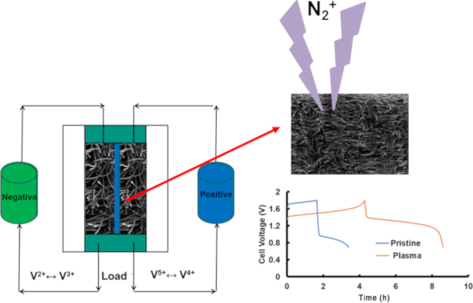
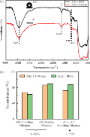
- the carbon felt. Moreover, the D-band of the plasma-treated sample was shifted to a higher frequency, indicating an increase in the defect density. Mostly, this increase in defects can be correlated to heteroatom substitution/doping (N-doping) and the simultaneous creation of new edge sites [17]. At


Subsurface imaging of flexible circuits via contact resonance atomic force microscopy
Beilstein J. Nanotechnol. 2019, 10, 1636–1647, doi:10.3762/bjnano.10.159
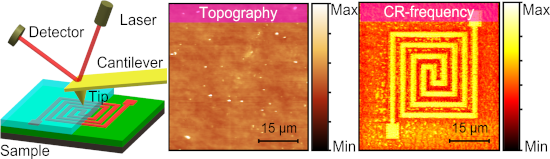
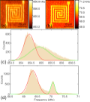
- calculations provide a guide to optimizing parameter settings for the nondestructive diagnosis of flexible circuits. Defect detection of the embedded circuit pattern was also carried out, which indicates the capability of imaging tiny subsurface structures smaller than 100 nm by using CR-AFM. Keywords: atomic
- force microscopy (AFM); contact resonance atomic force microscopy (CR-AFM); contact stiffness; defect detection; flexible circuits; subsurface imaging; Introduction With the rapid shrinkage of microelectronic devices, flexible circuits are intensively used while being functionalized as supercapacitors
- been carried out using CR-AFM for subsurface imaging, its application in defect diagnosis for flexible circuits has seldom been reported. Intuitively, the presence of buried metal circuit patterns in the tip-generated stress field will alter the local indentation modulus. This consequently leads to



Hierarchically structured 3D carbon nanotube electrodes for electrocatalytic applications
Beilstein J. Nanotechnol. 2019, 10, 1475–1487, doi:10.3762/bjnano.10.146
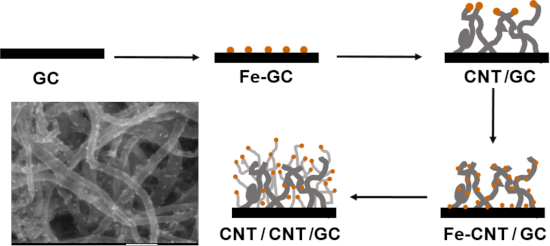
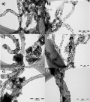
- carbon, respectively [64]. The intensity ratios of these bands (ID/IG) for the CNT/GC und CNT/CNT/GC electrodes are 1.36 und 1.54, respectively. This indicates that the secondary CNTs are less ordered and have a higher defect density than the primary ones. As the last step in electrode preparation, Pt
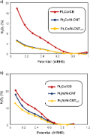
- -oxidation of COad compared to Pt-CNT/GC The reason for this improved poisoning tolerance is not known to us at the moment. However, it is known from literature that methanol as well as CO oxidation are very sensitive to Pt surface structure. It might be that a defect-rich structure of our Pt nanoparticles
- oxygen reduction reaction. Although there are differences in electrode preparation (in the present case, Pt is electrodeposited onto the carbon-based electrodes, probably leading to defect-rich particles (see also below), while in [52], Pt deposition has been deposited by CVD), we think that generally





Direct observation of oxygen-vacancy formation and structural changes in Bi2WO6 nanoflakes induced by electron irradiation
Beilstein J. Nanotechnol. 2019, 10, 1434–1442, doi:10.3762/bjnano.10.141
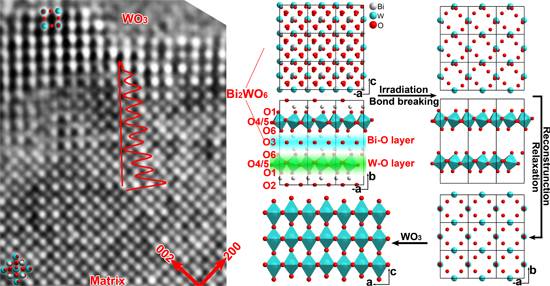
- vacancies can significantly alter the electron structure by creating new defect levels in forbidden bands, and thus boost oxygen evolution [14]. Despite the important role of the oxygen vacancies in Bi2WO6, understanding their formation mechanism remains elusive, in part due to the lack of direct
- irradiation, in this case, is far too low to decompose Bi2WO6 nanoflakes. Besides, loops or defect clusters were not observed during the whole irradiation process suggesting that the knock-off or sputtering effects can be neglected. When a high-energy electron beam passes through the sample, an electric field
- then performed in situ electron irradiation experiments on the as-synthesized Bi2WO6 nanoflakes by using TEM techniques. We observed that 200 keV electrons are an efficient source of irradiation to induce defect states in thin Bi2WO6. Our detailed HRTEM and SAED analyses have revealed that energetic


Kelvin probe force microscopy of the nanoscale electrical surface potential barrier of metal/semiconductor interfaces in ambient atmosphere
Beilstein J. Nanotechnol. 2019, 10, 1401–1411, doi:10.3762/bjnano.10.138
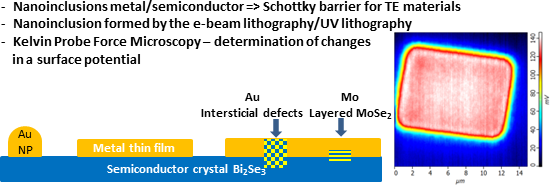
- forming Au/Bi2Se3 alloy and NIs in the shape of a semispherical defect, whereas Mo reacts with the matrix and forms thermodynamically more stable layered MoSe2 in the shape of nanosheets. Experimental Single crystalline Bi2Se3 samples were grown by heating stoichiometric mixtures of the pure elements
- /compound formation. This material displayed lower density (topographical expansion, Figure 5) and the creation of the defect states (tentatively connected to the shoulder of the UPS edge, see Figure 8, black curve near 17 eV as well as a decrease in the surface contact potential of the Au NIs, see Figure 6


Nanoscale spatial mapping of mechanical properties through dynamic atomic force microscopy
Beilstein J. Nanotechnol. 2019, 10, 1332–1347, doi:10.3762/bjnano.10.132
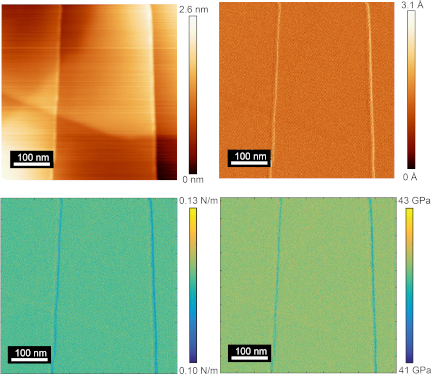
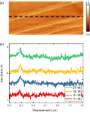
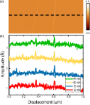
- measurements showed significantly higher variation in the amplitude as the tip traversed over the surface. Despite the higher sensitivity in detecting variations in the surface displacement, the covered step did not appear in any of the on-resonance measurements under the varying normal forces. As this defect




Alloyed Pt3M (M = Co, Ni) nanoparticles supported on S- and N-doped carbon nanotubes for the oxygen reduction reaction
Beilstein J. Nanotechnol. 2019, 10, 1251–1269, doi:10.3762/bjnano.10.125
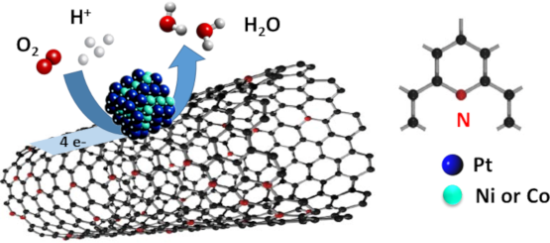
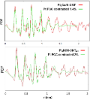
- -range order in a sample. Finally, another parameter, measurable by Raman spectroscopy that is relevant to catalyst preparation, is the LD: LD is a typical inter-defect distance that we have measured as described in [41]. A lower ID/IG (and higher LD) is obtained for the CNT sample and a higher ID/IG







Imaging the surface potential at the steps on the rutile TiO2(110) surface by Kelvin probe force microscopy
Beilstein J. Nanotechnol. 2019, 10, 1228–1236, doi:10.3762/bjnano.10.122
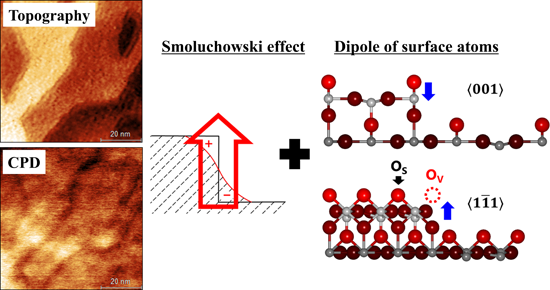
- several factors can be considered: a phantom force derived from the flow of a tunneling current [48][49], the local adsorption of molecules, the localization of defect states [55][56], the induced dipole moment [50], the unintentional change in tip–sample distance [57], the electron redistribution due to
- addition, we also observed a drop in CPD on the surface without O2 exposure, indicating that the drop in CPD is not due to O2 adsorption. Third, we analyze the influence of the local pinning of the Fermi level due to defect states [55][56]. In the case of n-type semiconductors, negatively charged defect
- states derived from donor atoms may localize at the steps and increase the work function due to upward band bending. In contrast, for p-type semiconductors positively charged defect states from acceptor atoms may localize at the steps and decrease the work function due to downward band bending. However
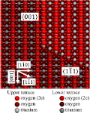
![[Graphic 16]](/bjnano/content/inline/2190-4286-10-122-i16.svg?max-width=637&scale=1.18182) and
and ![[Graphic 17]](/bjnano/content/inline/2190-4286-10-122-i17.svg?max-width=637&scale=1.18182) .
.
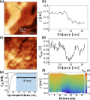

![[Graphic 38]](/bjnano/content/inline/2190-4286-10-122-i38.svg?max-width=637&scale=1.18182) and
and ![[Graphic 39]](/bjnano/content/inline/2190-4286-10-122-i39.svg?max-width=637&scale=1.18182) steps. (a) Topographic image...
steps. (a) Topographic image...


![[Graphic 72]](/bjnano/content/inline/2190-4286-10-122-i72.svg?max-width=637&scale=1.18182) , b)
, b) ![[Graphic 73]](/bjnano/content/inline/2190-4286-10-122-i73.svg?max-width=637&scale=1.18182) , c) reduced
, c) reduced ![[Graphic 74]](/bjnano/content/inline/2190-4286-10-122-i74.svg?max-width=637&scale=1.18182) , and d)
, and d) ![[Graphic 75]](/bjnano/content/inline/2190-4286-10-122-i75.svg?max-width=637&scale=1.18182) steps. B...
steps. B...
Green fabrication of lanthanide-doped hydroxide-based phosphors: Y(OH)3:Eu3+ nanoparticles for white light generation
Beilstein J. Nanotechnol. 2019, 10, 1200–1210, doi:10.3762/bjnano.10.119
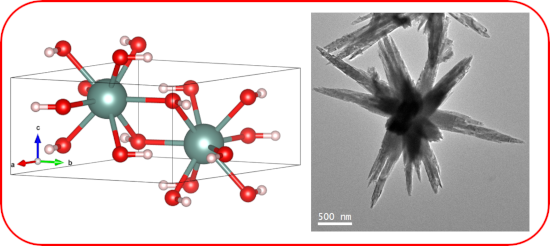
- medium. Since the rate of hydroxide release is a strong parameter to control the size, size distribution and defect content of the resulting crystal, it is expected to obtain a variation for these values in the case of comparing the effect of HMTA and LiOH on the crystal growth. Moreover, such a
- surrounding the O atoms. It appears that the strongly bonded Eu atoms not only lead to deformation in the lattice structure but also to emergence of defect-like states resulting in additional peaks in the PL spectrum. White light generation by integrating red Y(OH)3:Eu3+ phosphors into a YAG-based color



Pure and mixed ordered monolayers of tetracyano-2,6-naphthoquinodimethane and hexathiapentacene on the Ag(100) surface
Beilstein J. Nanotechnol. 2019, 10, 1188–1199, doi:10.3762/bjnano.10.118
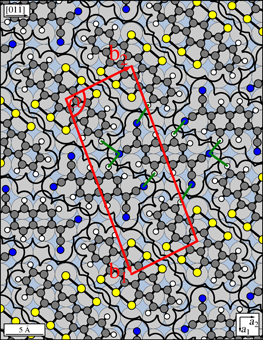
- the formation of well-ordered and defect-free domains, with a structure consistent with the LEED pattern. Domains on flat terraces exhibit a lateral extension of more than 100 nm, but they do not overgrow Ag steps. The molecules appear to lie flat on the surface with a higher apparent height of the


Quantitative analysis of annealing-induced instabilities of photo-leakage current and negative-bias-illumination-stress in a-InGaZnO thin-film transistors
Beilstein J. Nanotechnol. 2019, 10, 1125–1130, doi:10.3762/bjnano.10.112
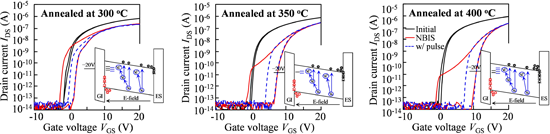
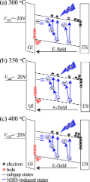
- bulk, whereas high-temperature annealing causes a quality degradation of the adjacent interfaces. Light of short wavelengths below 460 nm induces defect generation in the forward measurement and the leakage current increases in the reverse measurement, especially for the low-temperature-annealed device
- adjacent interfaces. The incident photon energy (>2.7 eV) excites the defect generation and the leakage current increases in the devices regardless of heating temperature. By means of the double-scan mode and a positive gate pulse, the NBIS-caused hysteresis of the TFTs annealed at different temperatures
- 7.67 × 1011 cm−2·eV−1 is obtained for the TFT treated at 300 °C. From the comprehensive analysis of the hysteresis and SS results, we concluded that the low-temperature-annealed TFT exhibits the high density of defects in the IGZO bulk, whereas the high-temperature-treated device has severe defect


CuInSe2 quantum dots grown by molecular beam epitaxy on amorphous SiO2 surfaces
Beilstein J. Nanotechnol. 2019, 10, 1103–1111, doi:10.3762/bjnano.10.110
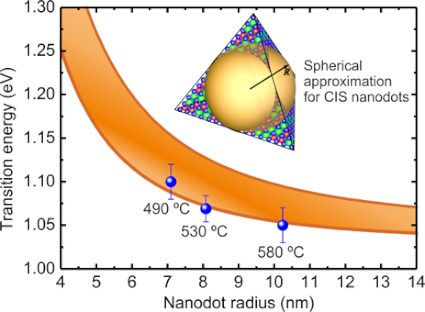
- formation of a Cu–In–Se ordered defect compound, which has been reported to form along the tie-line of the (Cu2Se)x–(In2Se3)1−x pseudo-binary system [38][39], and which has a bandgap energy very close to that of CuInSe2 [40]. In this compositional region, i.e., low amounts of Cu compared with In, the so


Direct growth of few-layer graphene on AlN-based resonators for high-sensitivity gravimetric biosensors
Beilstein J. Nanotechnol. 2019, 10, 975–984, doi:10.3762/bjnano.10.98
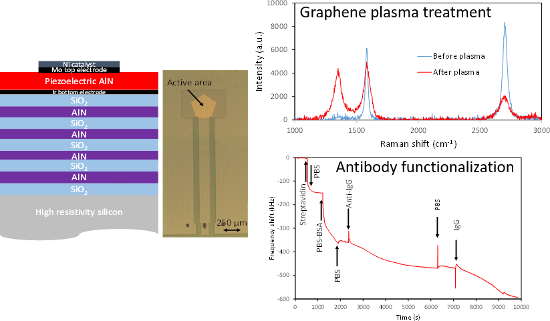
- functionalization platforms. On one hand, graphene containing defects (COOH groups) can be covalently functionalized by using an EDC/NHS zero-cross linker, which allows for the binding of primary amines present in proteins and antibodies [11][12]. On the other hand, defect-free graphene is highly hydrophobic, and
- of their characteristics and then functionalized to manufacture gravimetric biosensors, which eliminates the need to use complex transfer methods. Defect-free few-layer graphene was selectively grown through a low-temperature (650 °C) CVD process on Ni [16] thin-film catalysts previously evaporated
- graphene with better quality. The hydrophobic character of the surface was confirmed by dropping water on it with a pipette, which revealed the lack of liquid adhesion to the surface. We also analysed the influence of the process parameters (pressure, Ar/C2H2 flow ratio and cooling rate) on the defect


Rapid, ultraviolet-induced, reversibly switchable wettability of superhydrophobic/superhydrophilic surfaces
Beilstein J. Nanotechnol. 2019, 10, 866–873, doi:10.3762/bjnano.10.87
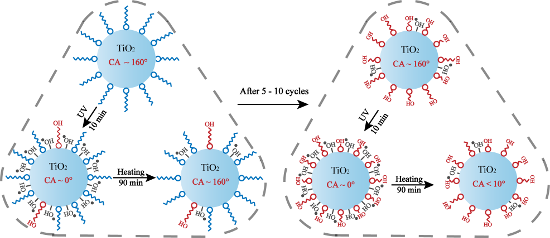
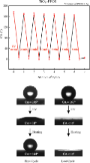
- are generated on the TiO2 surfaces under UV illumination. The holes lead to the production of oxygen vacancies to enhance the adsorption of hydroxy groups, while the hydroxy groups are replaced by oxygen atoms that have a stronger bond on the defect sites during heating process. However, the change in



Renewable energy conversion using nano- and microstructured materials
Beilstein J. Nanotechnol. 2019, 10, 771–773, doi:10.3762/bjnano.10.76

- extent, the difficulties in this endeavour originate from the complexity of interfaces nanostructured in three dimensions [22]. Relating the morphology to results from defect-spectroscopy experiments, theoretical models and device performance could be a valuable approach to comprehensively address such
Self-assembly and wetting properties of gold nanorod–CTAB molecules on HOPG
Beilstein J. Nanotechnol. 2019, 10, 696–705, doi:10.3762/bjnano.10.69
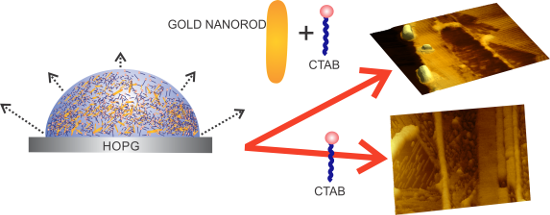
- time, whereas the ones on the right portion begin to disappear. We ascribe this disappearance of the stripes to originate from the dislocation of CTAB molecules, creating point defects. Such defects will make the molecules less tightly bound at the defect site, and hence, support the growth of defects
- typical substrate features on a micrometer length scale. Careful analysis of the stripe dimensions, i.e., width, height and spacing, suggest that the stripes consist of multiple hemi-cylinders separated by a distance corresponding to the length of a single CTAB molecule. With increasing scan time, defect
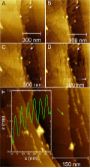
- ) Sequential AFM images depicting the dynamics of self-assembled CTAB stripes on terraces; for reference, a defect which acts as a vacancy nucleation site is indicated by the white arrows. (E) After the large stripes have completely disappeared, a corrugation of the surface is still observed; the inset depicts


Choosing a substrate for the ion irradiation of two-dimensional materials
Beilstein J. Nanotechnol. 2019, 10, 531–539, doi:10.3762/bjnano.10.54
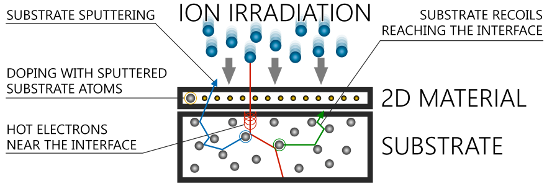
- defect formation mechanisms. The estimations include Monte Carlo simulations for He, Ar, Xe, C, N and Si ions, performed in the incident ion energy range from 100 eV to 250 MeV. Cu, SiO2, SiC and Al2O3 substrates were analyzed. The considered substrate-related defect formation mechanisms are sputtering
- a resultant defect yield [3]; on the other, it can participate in defect formation in the 2D material through energy transfer from sputtered substrate atoms moving through the monolayer [1][4]. When the energy is suitable, these atoms can become embedded into the 2D material crystal lattice, leading
- studies focus more on defect formation energies and probabilities. At the same time, comparing the expected extent of each mechanism can allow not only the exclusion of unwanted effects, but also the use of them for a more controllable engineering of the process, in order to obtain a desired result
Ceria/polymer nanocontainers for high-performance encapsulation of fluorophores
Beilstein J. Nanotechnol. 2019, 10, 522–530, doi:10.3762/bjnano.10.53
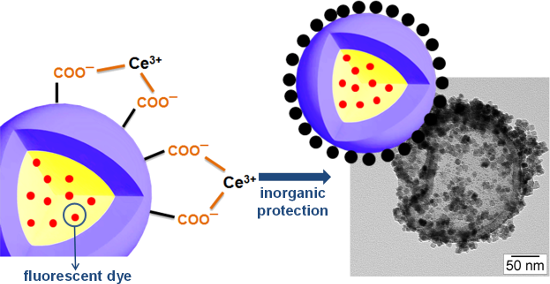
- excellent antioxidant properties, ideal for applications such as water-gas shift catalysis [40], combustion catalysis [41], oxygen ion conductors, and solid-oxide fuel cells [42]. Due to the valence and oxygen defect properties of cerium(IV) oxide, nanoparticles of this material are also used as efficient


Advanced scanning probe lithography using anatase-to-rutile transition to create localized TiO2 nanorods
Beilstein J. Nanotechnol. 2019, 10, 412–418, doi:10.3762/bjnano.10.40
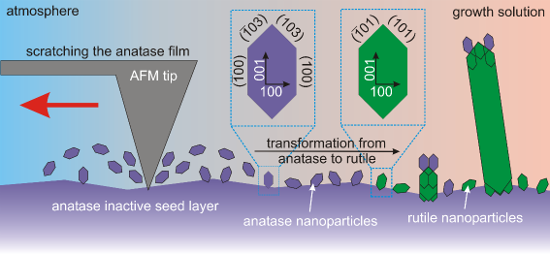
- and might charge the film locally. The charges are likely trapped in defect states generated by the scratching process. Furthermore, the native silicon oxide layer prevents a quick charge transport into the conductive boron-doped silicon substrate. A charged film might attract the precursor more


Sub-wavelength waveguide properties of 1D and surface-functionalized SnO2 nanostructures of various morphologies
Beilstein J. Nanotechnol. 2019, 10, 379–388, doi:10.3762/bjnano.10.37
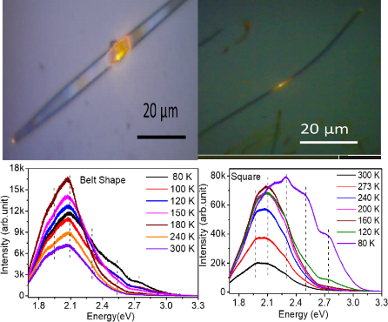
- behavior was also demonstrated in tapered and surface-functionalized SnO2 NWs. While the tapered waveguide can allow for easy focusing of light, the simple surface chemistry offers selective light propagation by tuning the luminescence. Defect-related PL in NWs is studied using temperature-dependent
- -functionalized NBs are also demonstrated. The emission from these NWs, upon excitation with a 325 nm laser, are shown to originate from the defect emission. Temperature-dependent PL studies were carried out to probe the nature of defects in these NWs. A possible band diagram for the SnO2 NWs is proposed
- (n = 2.1) enables photonic confinement in the NW cavities. The observed waveguide nature arises from defect-controlled luminescence in the visible light range of SnO2 and detailed discussion is provided in the photoluminescence study section. For understanding the propagation of luminescence through


Effects of post-lithography cleaning on the yield and performance of CVD graphene-based devices
Beilstein J. Nanotechnol. 2019, 10, 349–355, doi:10.3762/bjnano.10.34
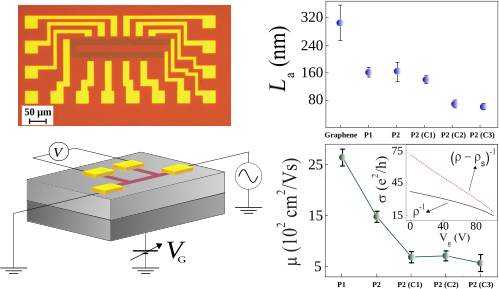
- terms of the mobility μc, associated to charged impurities scattering centers, according to [24][25][26]: The lattice defects can be modeled as a deep potential well of radius R, which gives rise to the mobility μd, as: where nd ~ (2RLa)−1 is the defect density and kF corresponds to the Fermi wave


Geometrical optimisation of core–shell nanowire arrays for enhanced absorption in thin crystalline silicon heterojunction solar cells
Beilstein J. Nanotechnol. 2019, 10, 322–331, doi:10.3762/bjnano.10.31
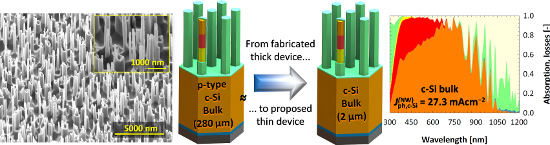
- defect removal etching [53], which would dramatically improve the surface passivation. Geometrical study of nanowire arrays To further understand the interaction of light with nanowires, and how the presence of the NW array affects the absorption in the active silicon layer, optical simulations were used


Site-specific growth of oriented ZnO nanocrystal arrays
Beilstein J. Nanotechnol. 2019, 10, 274–280, doi:10.3762/bjnano.10.26
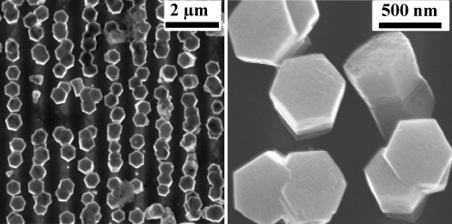
- added in the reaction bath, the incorporation of some exotic metal ions in the ZnO lattice may produce some inadvertent defect levels and charge carrier recombination centers, in turn deteriorating some of the important material properties. Moreover, these reactants are responsible for changing the


Study of silica-based intrinsically emitting nanoparticles produced by an excimer laser
Beilstein J. Nanotechnol. 2019, 10, 211–221, doi:10.3762/bjnano.10.19
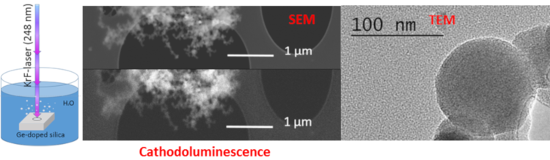
- of the silica by facilitating energy absorption processes such as multiphoton absorption or by introducing absorbing point defects. Defect generation in bulk pure silica before nanoparticle production starts is also suggested by our results. Regarding the Ge-doped samples, scanning electron
- in the glass network and the addition of Ge decreases the silica band gap [18][21][22][23]. The presence of Ge is associated with the appearance of new structures of optically active point defects such as the so-called germanium lone pair center (GLPC) [19][24]. This defect is responsible for an
- detecting the Ge atoms with EDX measurements. The suggestion that the addition of Ge atoms (which results in lowering the band-gap and introducing defect species with an absorption band at 5.1 eV) is able to facilitate the nanoparticle generation is confirmed by the high difference (about one order of



Wet chemistry route for the decoration of carbon nanotubes with iron oxide nanoparticles for gas sensing
Beilstein J. Nanotechnol. 2019, 10, 105–118, doi:10.3762/bjnano.10.10
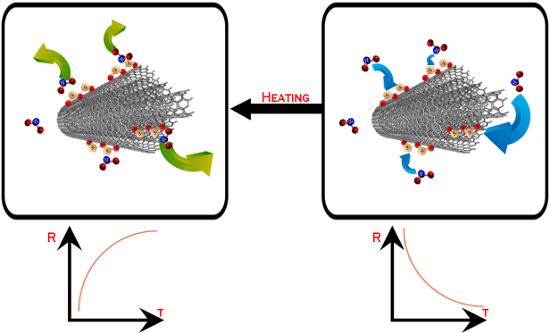
- distribution histograms can be found in Supporting Information File 5, Figure S6). For all the decorated samples we have used the same source of acidic-functionalized MWCNTs. Accordingly, all the MWCNTs used have, more or less, the same defect size and distribution on the side walls. As the amount of iron salt