Search results
Search for "degradation" in Full Text gives 563 result(s) in Beilstein Journal of Nanotechnology. Showing first 200.
Observation of multiple bulk bound states in the continuum modes in a photonic crystal cavity
Beilstein J. Nanotechnol. 2023, 14, 544–551, doi:10.3762/bjnano.14.45
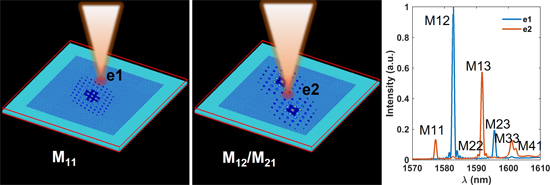
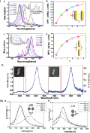
- outgoing boundary. Consequently, BIC modes with infinite Q factor turn into quasi-BICs that are accessible from the radiative continuum [27][28]. In addition to the degradation of the Q factor, the finite-size effect also turns the continuous photonic bands of the infinite device into discrete energy
- Leff larger. Consequently, the M33 mode in the reciprocal space is closer to the Г point than the M14/41 modes. For mode indices larger than M14/41, mode leakage becomes more significant, resulting in Q factor degradation of the corresponding higher-order bulk modes. Sample fabrication and measurement
- fabrication disorders on each mode. The close eigenwavelength values of the resonances in Figure 4c make the Qr degradation difference negligible, but the structural disorders (non-symmetry, tilted angle, and center shift of the structure) have a distinct impact on the different modes. If the structural


Conjugated photothermal materials and structure design for solar steam generation
Beilstein J. Nanotechnol. 2023, 14, 454–466, doi:10.3762/bjnano.14.36
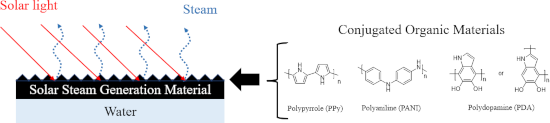
- membranes with hydrophobic photothermal material particles. Over the past years, various types of SSG membranes have been studied [37][39][45][54][56][57]. These SSG membranes can be applied to, for example, seawater desalination and photocatalytic degradation by utilizing the photothermal and separation


Plasmonic nanotechnology for photothermal applications – an evaluation
Beilstein J. Nanotechnol. 2023, 14, 380–419, doi:10.3762/bjnano.14.33




Bismuth-based nanostructured photocatalysts for the remediation of antibiotics and organic dyes
Beilstein J. Nanotechnol. 2023, 14, 291–321, doi:10.3762/bjnano.14.26
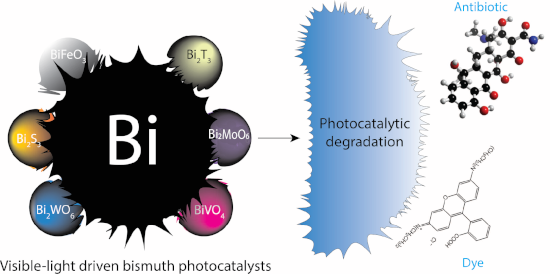
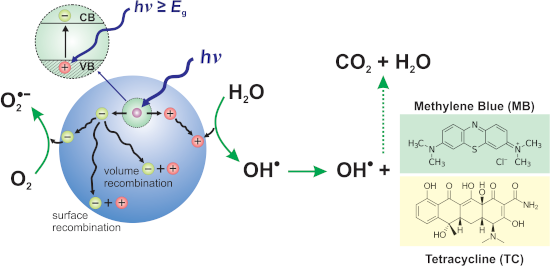
- mechanisms is included, along with potential antibiotic and dye degradation pathways in wastewater. Finally, areas that require additional study and attention regarding the usage of photocatalysts based on bismuth for removing pharmaceuticals and textile dyes from wastewater, particularly for real-world
- . Different materials based on bismuth have been developed and used for a range of environmental remediation applications. For instance, Mu et al. [46] synthesised a Bi2S3/Bi4O7 heterostructure via an in situ sulfidation approach and utilised it for the degradation of rhodamine B dye under visible-light
- photocatalytic degradation of organic dyes and antibiotics in water. The general synthesis of nanometre-sized photocatalytic materials based on bismuth employing energy-efficient techniques is examined. A critical review is also given of ways to improve the photocatalytic activity of the photocatalysts. An


Recent progress in cancer cell membrane-based nanoparticles for biomedical applications
Beilstein J. Nanotechnol. 2023, 14, 262–279, doi:10.3762/bjnano.14.24
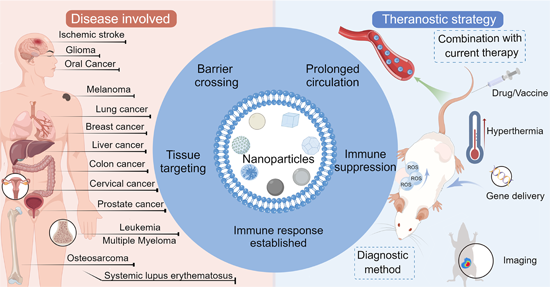
- disciplines, such as nanomaterials science, mechanical engineering, pharmacology, and clinical medicine. Nanoparticle (NP)-based therapeutics are uniquely able to improve drug loading efficiency, control drug release, and protect drug molecules against undesired degradation [1][2]. NPs are widely used in


Nanotechnology – a robust tool for fighting the challenges of drug resistance in non-small cell lung cancer
Beilstein J. Nanotechnol. 2023, 14, 240–261, doi:10.3762/bjnano.14.23
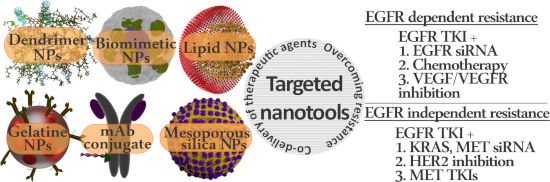
- surface, triggered by protease degradation after tumor homing by the EPR effect [112]. Mesoporous silica vesicles (MSVs; dav = 3 μm) with high affinity to tumor vasculature were also described by Blanco et al. as a platform for the triggered release of various therapeutic nanoscale vectors (liposomes


Cyclodextrins as eminent constituents in nanoarchitectonics for drug delivery systems
Beilstein J. Nanotechnol. 2023, 14, 218–232, doi:10.3762/bjnano.14.21
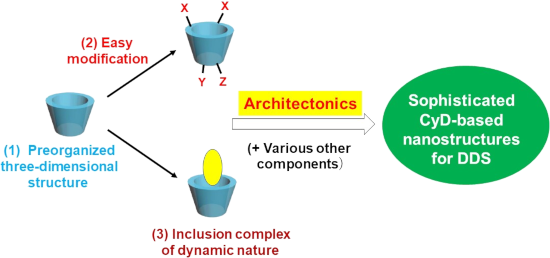
- ) solubilize poorly water-soluble drugs through encapsulation in the cavity. Furthermore, otherwise unstable drugs are protected from degradation for efficient therapeutic functions. Many other roles of CyDs are also evident. Advantageously for DDSs, inclusion complexes of CyDs are reasonably stable to deliver




Characterisation of a micrometer-scale active plasmonic element by means of complementary computational and experimental methods
Beilstein J. Nanotechnol. 2023, 14, 110–122, doi:10.3762/bjnano.14.12
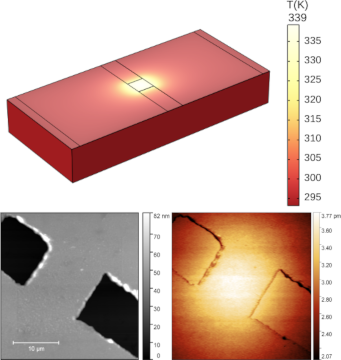
- SPR curve is slightly broader than the simulated one. This is due to experimental broadening (in particular, the divergence of the laser beam), surface roughness, and further temperature-induced degradation effects that are not taken into account in the simplified simulation setup employed. In order




Induced electric conductivity in organic polymers
Beilstein J. Nanotechnol. 2022, 13, 1551–1557, doi:10.3762/bjnano.13.128
- the same sample coincided with an accuracy of several mK. An analysis was made of the degradation of samples over time. The difference between two measurements of the same sample was 3 months, while the shift in the beginning of the phase transition was minimal δТс ≈ 0.01 K. It has been established



Photoelectrochemical water oxidation over TiO2 nanotubes modified with MoS2 and g-C3N4
Beilstein J. Nanotechnol. 2022, 13, 1541–1550, doi:10.3762/bjnano.13.127
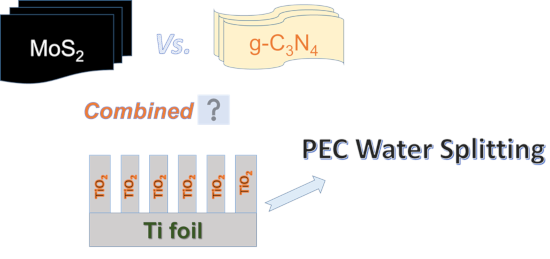
- could replace noble metals are a research interest. Photocatalytic technology uses semiconductors for effective approaches to the degradation of dyes and antibiotics, the removal of pollutant gases, and water splitting to produce hydrogen using solar energy [12][13][14][15][16][17]. Among such


Non-stoichiometric magnetite as catalyst for the photocatalytic degradation of phenol and 2,6-dibromo-4-methylphenol – a new approach in water treatment
Beilstein J. Nanotechnol. 2022, 13, 1531–1540, doi:10.3762/bjnano.13.126
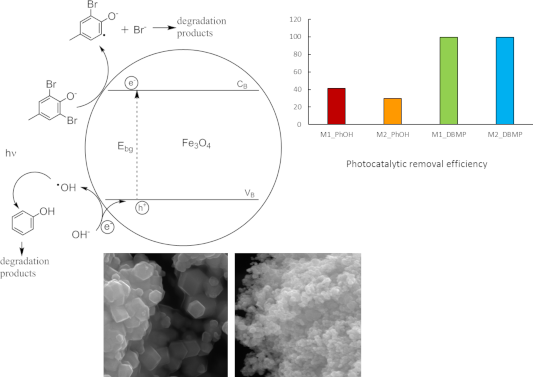
- the organic compounds are discussed, as well as their influence on the degradation reaction rates. The degradation efficiency in photocatalytic processes was higher for DBMP (98%) than for phenol (approximately 50%). This proves the high efficiency of magnetite in the photocatalytic degradation of
- halogenated aromatic pollutants. The particularly high degradation efficiency regarding halogen-containing DBMP molecules and the yield of bromide ions indicate that DBMP degradation follows a mixed reduction–oxidation mechanism. DBMP molecules interact with the magnetite surface, enabling them to react with
- the available electrons, and, as a result, bromide ions can be released. The results confirm that magnetite is an effective photocatalyst in the degradation of halogenated aromatic pollutants. Keywords: magnetite; ozonolysis; persistent organic pollutants; photocatalysis; water treatment


In search of cytotoxic selectivity on cancer cells with biogenically synthesized Ag/AgCl nanoparticles
Beilstein J. Nanotechnol. 2022, 13, 1505–1519, doi:10.3762/bjnano.13.124
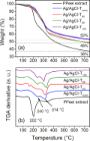
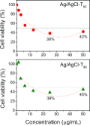
- weight loss curves and derivatives calculated from the thermogravimetric analysis data of the reaction products are shown in Figure 7a and Figure 7b, respectively. In the thermogram of the pineapple peel extract, denoted as PPeel extract, two stages of degradation of the metabolites were observed. The
- first degradation signal is very well defined and occurs at 202 °C, with an approximate mass loss of 35%. The second stage of degradation occurs in a temperature range of 277–395 °C, with an average temperature of 330 °C and an approximate mass loss of 15%. As the temperature increased, the sample
- continued to degrade such that at 750 °C, 36% of char residue remained (Table 2). In the thermograms of the reaction products, two stages of degradation are also shown, except for Ag/AgCl-T60, where a small additional peak appears at 163 °C, possibly from volatile organic molecules. The first degradation in





Orally administered docetaxel-loaded chitosan-decorated cationic PLGA nanoparticles for intestinal tumors: formulation, comprehensive in vitro characterization, and release kinetics
Beilstein J. Nanotechnol. 2022, 13, 1393–1407, doi:10.3762/bjnano.13.115
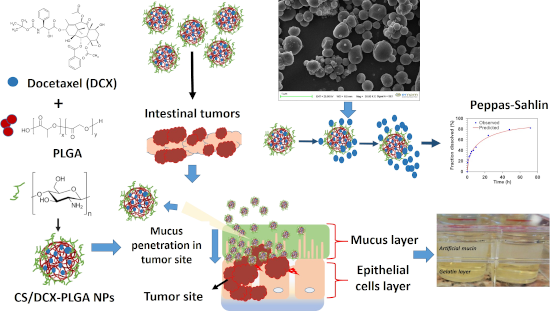
- -/microscale systems [25]. Chitosan is a natural biopolymer that is widely used in oral nanoparticulate formulations to provide increased drug concentration in the colon and to achieve improved therapy for the colon [26][27][28]. The degradation of chitosan occurs through the lysis of glycosidic bonds by the


LED-light-activated photocatalytic performance of metal-free carbon-modified hexagonal boron nitride towards degradation of methylene blue and phenol
Beilstein J. Nanotechnol. 2022, 13, 1380–1392, doi:10.3762/bjnano.13.114
- gas chromatograph coupled with a mass spectrometer (GC–MS, Thermo Fisher Scientific) by taking aliquots at 150 min and 330 min. The photocatalytic degradation and mineralization efficiencies were calculated by utilizing the following equations [19]: where Abs(0) symbolizes the initial absorbance, Abs
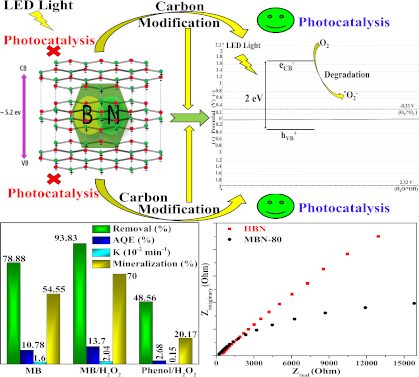
- modified boron nitride Photocatalytic study Figure 7a–g depicts the adsorption and photocatalytic degradation performance of MBN-80 towards MB (20 ppm) and phenol (10 ppm) accomplished through LED irradiation. Specifically, it removed 78.87% of MB (20 ppm solution) which was further enhanced to 93.83% in
- other hand, the photocatalytic degradation of phenol demonstrated a removal rate of 0.0015 min−1 with 48.56% removal and a mineralization efficiency of 20.17%. The AQE for phenol/H2O2 system was found to be at 2.67%. A negligible removal percentage in the order of 4% for MB and 6% for phenol over a



Recent trends in Bi-based nanomaterials: challenges, fabrication, enhancement techniques, and environmental applications
Beilstein J. Nanotechnol. 2022, 13, 1316–1336, doi:10.3762/bjnano.13.109
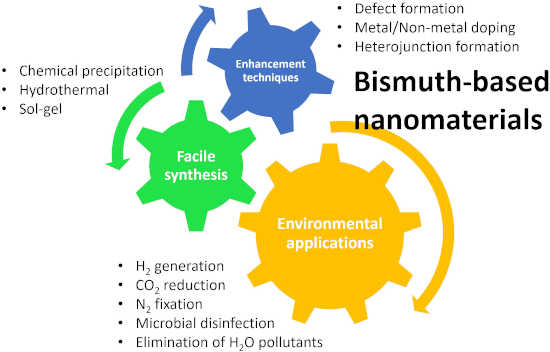
- photocatalysts in eco-friendly applications on a large scale. Bi-based nanomaterials as semiconductor photocatalysts are one of the study’s primary goals, as is the use of Bi-based nanomaterials for wastewater treatment, hydrogen generation, and photocatalytic degradation. Fabrication methods, reliability
- degradation, antibiotic treatment, and sterilization [38]. The term “advanced oxidation processes” has become more common recently. In this process, many oxidizing agents (∙OH) are created. Electron–hole pairs are formed in AOPs when the VB electrons of semiconductor photocatalysts are driven into the
- degradation, the most notable oxidizing species are •OH, photogenerated holes, and •O2−. These species are responsible for the photodegradation of organic and inorganic contaminants in wastewater [40]. To date, it is widely understood that the main limitation of photocatalysts is their low photocatalytic




Studies of probe tip materials by atomic force microscopy: a review
Beilstein J. Nanotechnol. 2022, 13, 1256–1267, doi:10.3762/bjnano.13.104
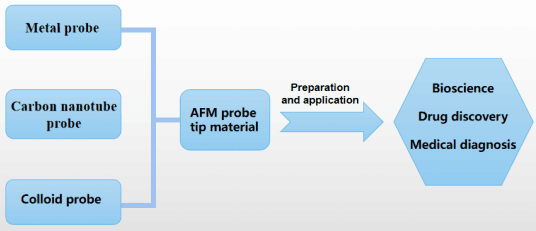
- . AFM probes based on these C–C composites' high aspect ratio tips produced highly high image resolution and good wear resistance, with no degradation of tip or image quality observed after 400 images had been acquired. Compared with the above composite probes, the combination with metal nanowires also
A super-oscillatory step-zoom metalens for visible light
Beilstein J. Nanotechnol. 2022, 13, 1220–1227, doi:10.3762/bjnano.13.101
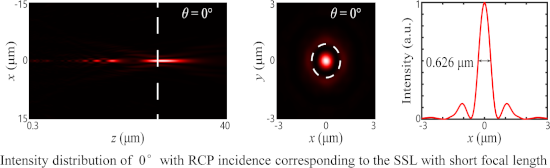
- metasurface, which may lead to the degradation of the sub-diffraction focusing performance. The first is the phase modulation error due to discrete sampling. In the design, it is assumed that the physical size of the unit cell could be infinitely small for the convenience of optimization. In fact, a unit cell
- has a specific size and could only achieve a step-like discrete phase, which, in turn, deviates from the desired phase modulation. Second, the inhomogeneous amplitude modulation also contributes to performance degradation. In our design, it is assumed that only phase modulation with uniform amplitude


Rapid fabrication of MgO@g-C3N4 heterojunctions for photocatalytic nitric oxide removal
Beilstein J. Nanotechnol. 2022, 13, 1141–1154, doi:10.3762/bjnano.13.96
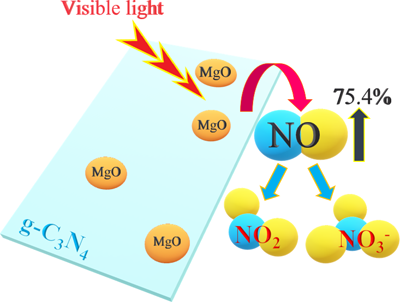
- photocatalytic activity of as-prepared MgO@g-C3N4 was evaluated by monitoring NO degradation. The photocatalytic NO removal experiments were performed using a 4.5 L reaction chamber and a Xenon lamp (300 W) as the visible light source. The initial NO concentration was 500 ppb, the flow rate was 1.5 L·min−1, and
- min. Trapping experiments were performed to evaluate the photocatalytic process mechanism for NO degradation. Three trapping agents were used representing different active species, namely isopropyl alcohol (IPA) for the hydroxyl radical (•OH), potassium dichromate (K2Cr2O7) for electrons (e−), and
- potassium iodide (KI) for holes (h+). The photocatalytic NO degradation experiments were performed under the previously described conditions. The photocatalytic NO degradation efficiency (η), the yield of NO2 conversion (γ), the apparent quantum efficiency (AQE, φ), and the DeNOx index (αDeNOX αDeNOx) were





Green synthesis of zinc oxide nanoparticles toward highly efficient photocatalysis and antibacterial application
Beilstein J. Nanotechnol. 2022, 13, 1108–1119, doi:10.3762/bjnano.13.94
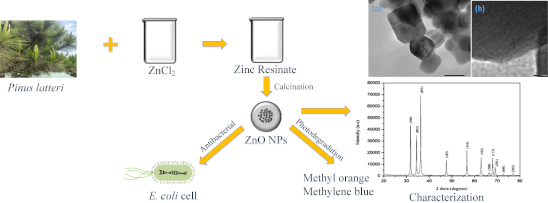
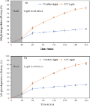
- approach for the complete removal of organic pollutants due to their advantages. Semiconductors can act as catalysts for the complete degradation of organic substances when excited by light with an energy value higher than their bandgap. Among many semiconductors, TiO2 and ZnO are widely used as
- of 10 °C/min. The zeta potential was measured by analyzing 0.1 g of ZnO in 10 mL of water using a Malvern ZetasizerPro. The solid UV–vis DRS was carried out using a JASCO V550 UV–vis spectrometer. Photocatalytic degradation reaction The photocatalytic degradation of a dye solution under visible and
- centrifuged at 6000 rpm to measure the dye concentrations. The dye concentration was analyzed by UV–vis spectroscopy (Hitachi U2900) with maximum adsorption wavelengths of MB and MO of 664 nm and 464 nm, respectively [29][30]. The degradation efficiency was calculated using Equation 3. where c0 is the initial




Recent advances in green carbon dots (2015–2022): synthesis, metal ion sensing, and biological applications
Beilstein J. Nanotechnol. 2022, 13, 1068–1107, doi:10.3762/bjnano.13.93
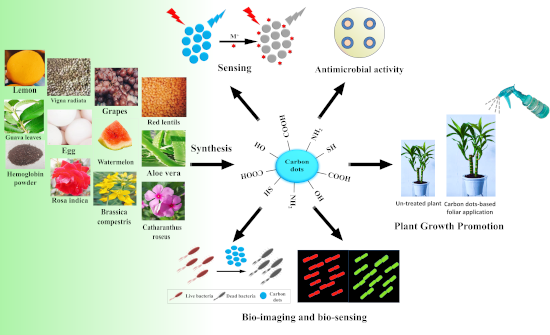
- was 17.2% [29]. Grass was used as a natural source to prepare immensely photoluminescent N-CDs through a hydrothermal method. Six different dyes, that is, acid blue, acid red, eosin Y, eriochrome black T, methyl orange, and methylene blue underwent degradation in the presence of radiation, which




Biomimetic chitosan with biocomposite nanomaterials for bone tissue repair and regeneration
Beilstein J. Nanotechnol. 2022, 13, 1051–1067, doi:10.3762/bjnano.13.92
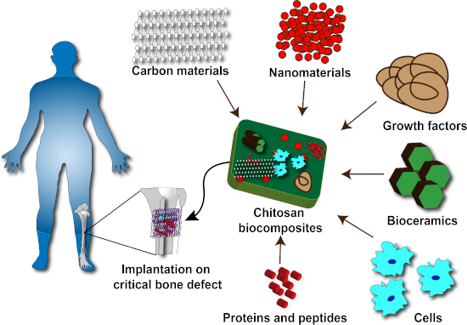
- phosphatase, bone morphogenic protein, runt-related transcription factor-2, bone sialoprotein, and osteocalcin. In vitro and in vivo studies highlight the scientific findings of antibacterial activity, tissue integration, stiffness, mechanical strength, and degradation behaviour of composite materials for
- bioimplants were placed and examined after four weeks of surgery. On the 14th day, histological studies revealed that cells had infiltrated into the holes. Meanwhile, degradation of the scaffold matrix was observed and represented as black spots in Figure 3 [107]. Chitosan with carbon nanomaterials for bone
- show degradation as well as bone mineral formation on the surface. The in vitro biological characteristics were tested using MC3T3-E1 cells, and the findings of adherence tests demonstrate osteoblastic cell adhesion to the coated surface at various time intervals [59] (Figure 5). According to Chen et
Spindle-like MIL101(Fe) decorated with Bi2O3 nanoparticles for enhanced degradation of chlortetracycline under visible-light irradiation
Beilstein J. Nanotechnol. 2022, 13, 1038–1050, doi:10.3762/bjnano.13.91
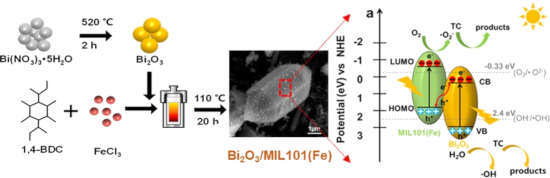
- -light irradiation. The obtained BOM-20 composite (20 wt % Bi2O3/MIL101(Fe)) exhibits the highest photocatalytic activity with CTC degradation efficiency of 88.2% within 120 min. The degradation rate constant of BOM-20 toward CTC is 0.01348 min−1, which is 5.9 and 4.3 times higher than that of pristine
- . The intermediate products were analyzed by liquid chromatography–mass spectrometry (LC–MS), and a possible photocatalytic degradation path of CTC was proposed. This work provides a new perspective for the preparation of efficient MOF-based photocatalysts. Keywords: Bi2O3; chlortetracycline; metal
- traditional measures were difficult to be popularized. Photocatalysis is considered as an alternative and promising strategy for degradation and mineralization of antibiotics due to its low cost, high efficiency, mild reaction condition, and no secondary pollution [9][10][11]. A variety of semiconductors have


Bioselectivity of silk protein-based materials and their bio-inspired applications
Beilstein J. Nanotechnol. 2022, 13, 902–921, doi:10.3762/bjnano.13.81
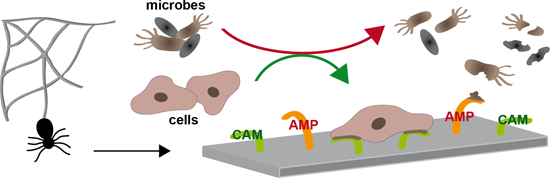
- materials using bioactive and bioadhesive molecules, such as full-length ECM proteins or functional peptide fragments thereof. These ligands interact with cell receptors for guiding cellular responses, such as cell proliferation or specific matrix degradation [31][32][33][34]. Compared to full-length
- biomaterials and medical devices with antifouling and antibacterial properties, but with reduced susceptibility to enzymatic degradation [85]. General advantages of AMPs/HDPs and mimicking polymer systems over antibiotics as a new generation of antimicrobial agents are their functional diversity, broad
- epidermis [126]. Strikingly, silk materials from silkworms and spiders share a set of highly interesting properties, including mechanical and chemical stability, biocompatibility for mammalian cells and tissues, persistence against microbial degradation and, moreover, potential microbe-repellent and


Solar-light-driven LaFexNi1−xO3 perovskite oxides for photocatalytic Fenton-like reaction to degrade organic pollutants
Beilstein J. Nanotechnol. 2022, 13, 882–895, doi:10.3762/bjnano.13.79
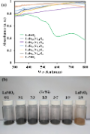
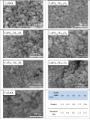
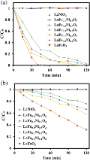
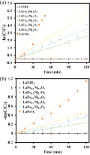
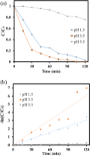
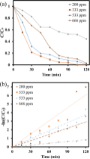
- decompose the methylene blue molecules. Accordingly, the synthesis condition of pH 0, calcination temperature at 700 °C, and Fe/Ni ratio = 7/3 could form LaFe0.7Ni0.3O3 perovskite oxides as highly efficient photocatalysts. Moreover, various conditions during the photocatalytic degradation were verified
- complexes might compete with the hydroxyl radicals, eliciting a degradation of the reaction performance [18]. In recent years, the Fenton method has gradually developed into a new scenario of oxidation method, called photo-Fenton, which is facilitated or driven by the light source. Compared with a typical
- degradation. Though it was proven that Mn-doped LaFeO3 could enhance the activity of heterogeneous photo-Fenton-like reactions, the influence of Mn content on the activity was not significant [30]. Phan et al. verified that Cu-doped LaFeO3 exhibited physicochemical properties to decolorize methlyorgane



Temperature and chemical effects on the interfacial energy between a Ga–In–Sn eutectic liquid alloy and nanoscopic asperities
Beilstein J. Nanotechnol. 2022, 13, 817–827, doi:10.3762/bjnano.13.72
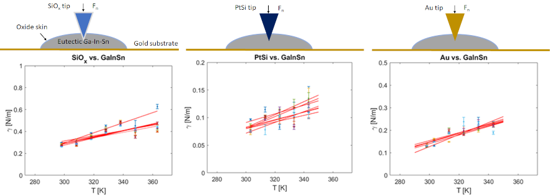
- Au. For this reason, we assume that a small amount of gold dissolved in the metallic melt investigated here. However, the dissolution of Au should be small since it is thermally activated. In the current study, we could not observe any degradation of the Au tip nor measure traces of Au in liquid Ga