


Search results
Search for "dye" in Full Text gives 347 result(s) in Beilstein Journal of Nanotechnology. Showing first 200.
Nanocellulose: Recent advances and its prospects in environmental remediation
Beilstein J. Nanotechnol. 2018, 9, 2479–2498, doi:10.3762/bjnano.9.232
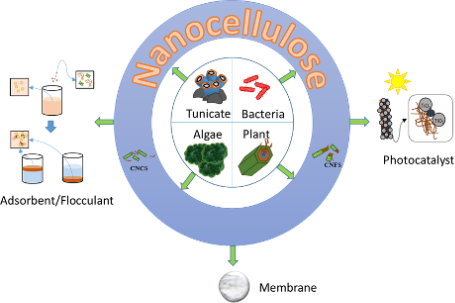
- investigated for their potential as adsorbent, catalyst, and membrane. BC-based adsorbent, catalyst, and aerogel membrane were applied for the removal of copper and lead [47], dye removal [44], and membrane distillation [48]. Ultimately, the current goal in BC production is linked to resolving the challenging
- –OH of CNC. This modified nanocellulose adsorbent was used for the removal of cationic dyes from aqueous solution by forming a bidentate arrangement between the dye and the adsorbent’s carboxy groups. Meanwhile, Anirudhan et al. [92][93] modified a nanocellulose/nanobentonite composite adsorbent with


Block copolymers for designing nanostructured porous coatings
Beilstein J. Nanotechnol. 2018, 9, 2332–2344, doi:10.3762/bjnano.9.218
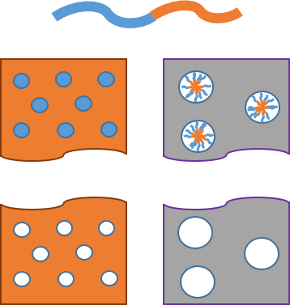
- )molecules were selected as target probes: methylene blue (a dye of 0.5 nm in width) and the protein RNAse (3.8 nm), respectively. The results evidenced that the diffusion of the protein is more restricted as compared to the dye, suggesting a steric selectivity of the depth-filtering system analyzed. In


Nanoscale characterization of the temporary adhesive of the sea urchin Paracentrotus lividus
Beilstein J. Nanotechnol. 2018, 9, 2277–2286, doi:10.3762/bjnano.9.212
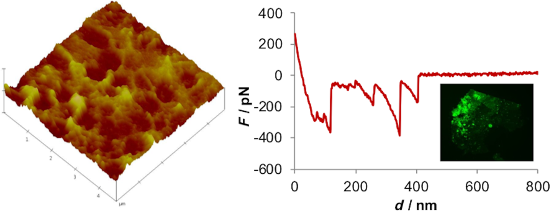
- proteinaceous fibres [12] that have been identified as amyloid fibres using the fluorochrome dye thioflavine-T, in addition to Raman spectroscopy and AFM [1]. AFM revealed a series of sawtooth mechanical responses reflecting the repetitive breaking of sacrificial bonds within an intermolecular β-sheet as
- footprints samples were imaged in each condition and representative data were selected. Histochemical staining Binding of the benzothiazole dye thioflavin-T (Sigma-Aldrich) to amyloid structures was detected by direct staining of the adhesive footprints collected on glass slides. Footprints were incubated
- with 10 μM aqueous thioflavin-T for 5 min, washed with milli-Q water, and observed immediately with an Olympus BX60 fluorescent microscope, equipped with a 10× 0.4 NA lens and a Hamamatsu Orca R2 monochrome camera. The emission characteristics of thioflavin-T dye binding to amyloid was previously


The role of adatoms in chloride-activated colloidal silver nanoparticles for surface-enhanced Raman scattering enhancement
Beilstein J. Nanotechnol. 2018, 9, 2236–2247, doi:10.3762/bjnano.9.208
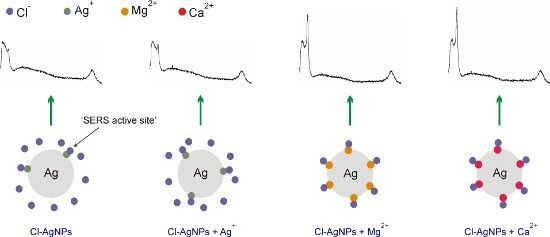
- chemisorbed onto the AgNP surface, thus generating the SERS-active sites. Silver halides are a class of light-sensitive materials that have been extensively used for photographic films. Gao et al. [4] were the first to report SERS spectra acquired from a dye adsorbed onto silver nanoparticles formed at the
- AgNP surface by mediating the chemisorption of Cl− ions. Hence, cationic dye molecules are electronically coupled to the silver surface at these SERS-active sites, leading to high-intensity SERS spectra. The appearance of the SERS effect only after the electronic coupling of the analyte to the Ag
- + cations for the generation of SERS-active sites on the nanoparticle surface [28][29]. When using the cit-AgNPs as a SERS substrate, no SERS spectra of the dye molecules could be obtained since the Lee–Meisel colloid does not contain any chloride ions that could form SERS-active sites. Small amounts of Cl



Lead-free hybrid perovskites for photovoltaics
Beilstein J. Nanotechnol. 2018, 9, 2209–2235, doi:10.3762/bjnano.9.207
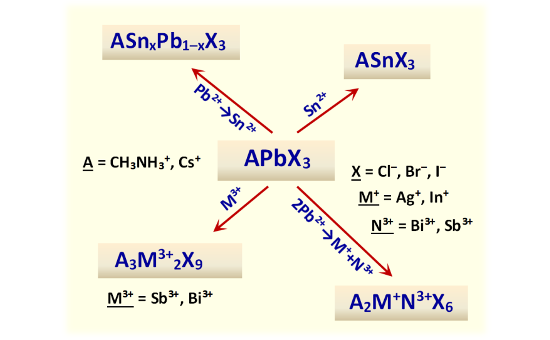
- have been employed as nanometer-thin-film light harvesters, such as Cu(Ga)InS(Se)2 or CdTe, showing a light conversion efficiency of up to 21% [1][2]. Progress in dye-sensitized solar cells (reaching ≈12% efficiency [1][2]) has stimulated attempts in using metal chalcogenide nanocrystals (NCs) as
- distinguish the most promising venues and materials and to suggest outlines of further exploration [28][29][30][42][50][53][54][57][59][60][61][64][65]. Historically, the first HP cell was built basing on a “classic” design of the dye-sensitized solar cells with the HP layer acting as a sensitizer of a
- solar cell displaying PCEs of up to 0.55% [109]. The mixed CsSnI2.95F0.05 was successfully tested as an efficient HTL for dye-sensitized solar cells operating with PCEs of up to ≈10% [138]. Other M2+-based hybrid perovskites Germanium(II) forms a series of perovskites isostructural to MAPI with a


Dumbbell gold nanoparticle dimer antennas with advanced optical properties
Beilstein J. Nanotechnol. 2018, 9, 2188–2197, doi:10.3762/bjnano.9.205
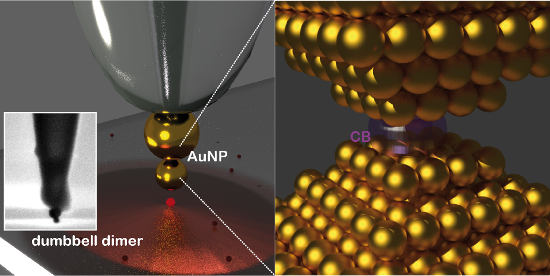
- typical in regard of the obtained signal strength and the noise floor. Clearly, for all measurements individual dye molecules are identified. However, the signal contrast strongly deviates for each measurement. Apparently, the best signal-to-noise level is achieved with the CB[8]-mediated dimer antenna
- fluorescence enhancement factor can be also accomplished by measuring the fluorescence emission of single dye molecule as a function of the antenna–sample separation. The corresponding approach curves account for two mechanisms occurring when the antenna is coupled to the dye molecule: 1.) the absorption
- decreasing distance, the influence of the electromagnetic field enhancement is counterbalanced by non-radiative transitions to electronic states of the metallic interface and sequential dissipation of the excited state energy. Therefore, for small AuNP-dye distances the spontaneous emission starts to decline




Electrospun one-dimensional nanostructures: a new horizon for gas sensing materials
Beilstein J. Nanotechnol. 2018, 9, 2128–2170, doi:10.3762/bjnano.9.202






Spin-coated planar Sb2S3 hybrid solar cells approaching 5% efficiency
Beilstein J. Nanotechnol. 2018, 9, 2114–2124, doi:10.3762/bjnano.9.200
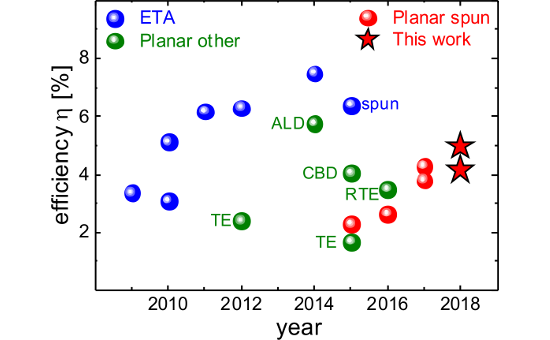
- thin absorber (ETA) architecture, which is similar to that of dye-sensitized solar cells [21]. A thin absorber layer of around 10 nm [22] is deposited on a mesoporous TiO2 scaffold and the pores are subsequently filled with a hole transport material (HTM). Progress in terms of device efficiency can be


A scanning probe microscopy study of nanostructured TiO2/poly(3-hexylthiophene) hybrid heterojunctions for photovoltaic applications
Beilstein J. Nanotechnol. 2018, 9, 2087–2096, doi:10.3762/bjnano.9.197
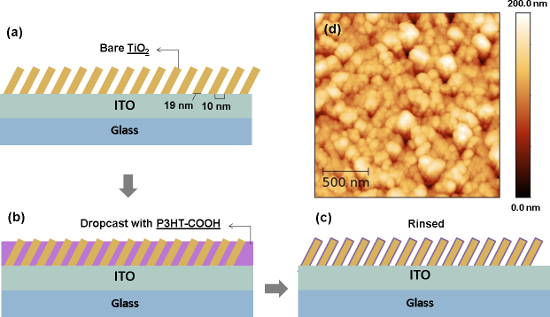
- other hand. Hybrid PV devices include various technologies such as perovskite cells, dye sensitized solar cells (DSSC), with power efficiencies up to 13% [5] and hybrid bulk heterojunctions (HBHJ), which combine an organic matrix and inorganic semiconducting nanostructures such as quantum dots. Among
- can easily form nanostructures, such as nanoporous layers, nanowires or nanocolumns [5][11][12]. Because of its large band gap (3.2 eV [13]), light absorption is carried out by an organic or inorganic dye. The nanostructuration of the acceptor material is crucial for the cell performance [11], as it
- allows increasing the specific surface of the layer to enhance the amount of grafted dye, and thereby, the photon absorption yield. Nanostructuration is also likely to improve the conductivity of TiO2 [14]. Because of the influence of the nanostructuration of TiO2 on the optoelectronic properties of the


Nanoconjugates of a calixresorcinarene derivative with methoxy poly(ethylene glycol) fragments for drug encapsulation
Beilstein J. Nanotechnol. 2018, 9, 2057–2070, doi:10.3762/bjnano.9.195
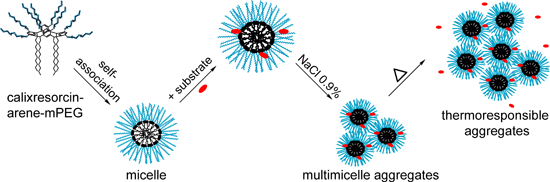
- hydrophobic Orange OT in the presence of 3 as a result of dye encapsulation into the hydrophobic core of macrocyle micelles. In the case of the more hydrophilic QC, a moderate increase of its absorbance in the solution of 3 is observed. But the bathochromic shift of the QC absorption maximum in the solution
- fragments of macrocycle molecules as well as with the aromatic platform of the macrocycle. In vitro release of substrates from micelles of 3 The hydrophilic dye rhodamin B (RhB) was used as an optical probe for the investigation of the release from micelles of 3. The quenching of RhB emission in the
- presence of 3 and the absence of any change in the RhB emission in the presence of mPEG-550 show that a binding of the dye near the aromatic platform of the macrocycle occurred (Figure S13, Supporting Information File 1). The 3 + RhB micelles were prepared by using thin-film hydration; the excess of RhB


Metal-free catalysis based on nitrogen-doped carbon nanomaterials: a photoelectron spectroscopy point of view
Beilstein J. Nanotechnol. 2018, 9, 2015–2031, doi:10.3762/bjnano.9.191
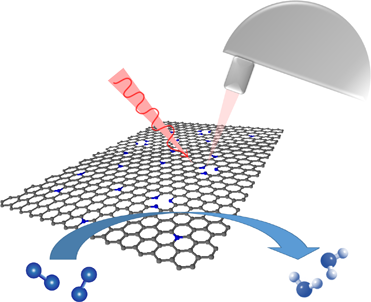
- splitting of water to molecular hydrogen via hydrogen and oxygen evolution reaction (HER and OER, respectively) are fundamental working mechanisms at the cathode of fuel cells, metal–air batteries and dye-sensitized solar cells [2]. However, the current working catalysts are based on expensive metals, such
- ]. In 2015, Zhang and co-workers synthesized a carbon foam co-doped with nitrogen and phosphorous, which was the first bifunctional electrocatalyst for both ORR and OER [49] for high-performance rechargeable zinc-air batteries. The same material was used by Xue et al. as a counter electrode in dye




Synthesis of a MnO2/Fe3O4/diatomite nanocomposite as an efficient heterogeneous Fenton-like catalyst for methylene blue degradation
Beilstein J. Nanotechnol. 2018, 9, 1940–1950, doi:10.3762/bjnano.9.185
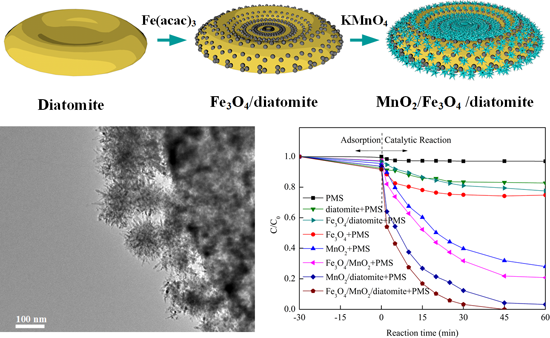
- methylene blue (MB) as the target pollutant, because MB is a typical organic dye with well-known toxicity and a threat to water environments [19]. The structural characterization and recyclability of the nanocomposite are also investigated. To the best of our knowledge, there are no reports about the
- /Fe3O4/diatomite with high surface area and sufficient mesoporous structure will provide adequate active sites in the consecutive adsorption and heterogeneous Fenton-like reaction for dye removal. Catalytic activity To demonstrate the catalytic activity of the as-synthesized catalysts toward PMS


Uniform cobalt nanoparticles embedded in hexagonal mesoporous nanoplates as a magnetically separable, recyclable adsorbent
Beilstein J. Nanotechnol. 2018, 9, 1770–1781, doi:10.3762/bjnano.9.168
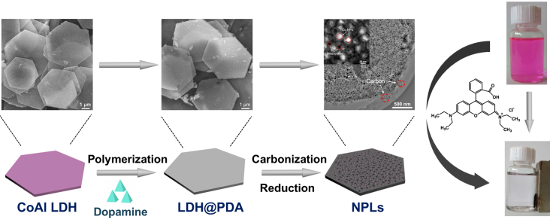
- morphology and specific surface area of the as-prepared NPLs can be tailored by adjusting the initial dopamine concentration and carbonization temperature. The mesoporous NPLs exhibit excellent sorption of rhodamine B (RhB) dye and fast magnetic separation in aqueous solution. Over 95% of RhB can be adsorbed
- ) has proved to be one of the most effective strategies for enhancing their adsorption performance in aqueous solutions [10][11][12]. Torad et al. [13] reported the high adsorption capacity of porous carbon particles with magnetic Co nanoparticles towards methylene blue (MB) dye. They attributed this to
- the formation of stable bi-dentate complexes between the Co particles and MB dye. The Co nanoparticles in the carbon-based nanocomposites not only enhance the adsorption ability, but also help to separate the adsorbent owing to their strong magnetic response. Generally, Co nanoparticles can be


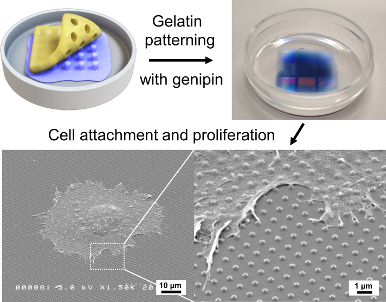
Preparation of micro/nanopatterned gelatins crosslinked with genipin for biocompatible dental implants
Beilstein J. Nanotechnol. 2018, 9, 1735–1754, doi:10.3762/bjnano.9.165








Sulfur-, nitrogen- and platinum-doped titania thin films with high catalytic efficiency under visible-light illumination
Beilstein J. Nanotechnol. 2018, 9, 1629–1640, doi:10.3762/bjnano.9.155
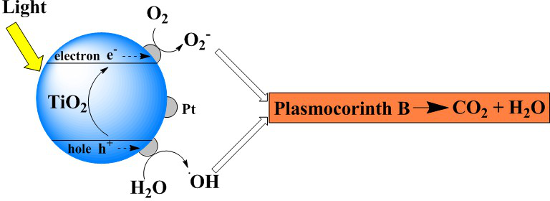
- are stable under normal conditions. They have been shown to damage ecosystems when expelled into water systems, and pose very serious health risks to humans, because they can form aromatic amines, which are potentially carcinogenic substances. Furthermore, when the excess dye is expelled into
- degradation rate of PB, an organic dye. The concentration of PB at different illumination times was determined by measuring its UV–vis absorbance spectra and calculating using the Beer–Lambert law (Equation 2). In this equation, A is the absorbance of the PB solution at 527 nm excitation at different
- nitrate (NH4NO3) from Zorka Šabac; hydroxypropyl cellulose (HPC, Mw = 100.000 g/mol) from Sigma-Aldrich; plasmocorinth B (PB, dye content ≈60%) from Sigma-Aldrich; thiourea (pro analysis) from Kemika and urea (98%) from Acros Organics. Synthesis Titanium dioxide was prepared by a particulate sol–gel


Closed polymer containers based on phenylboronic esters of resorcinarenes
Beilstein J. Nanotechnol. 2018, 9, 1594–1601, doi:10.3762/bjnano.9.151
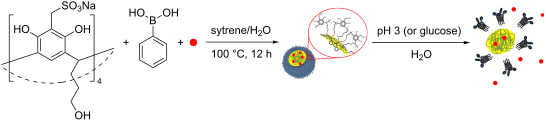
- release of dye is achieved by lowering the pH value to 3 or by adding glucose. Keywords: boronic acid; polymer nanocontainer; resorcinarene; responsive release; Introduction Boronic acids effectively interact with diols [1][2][3][4] that have found application in various fields: in the recognition and
- dyes and does not significantly affect their optical characteristics. As it is evident from Figure S9 (Supporting Information File 1), the dye spectra practically do not change in the presence of 10-fold excess of SRA. D@p(SRA-B) are stable in water and no D was released over a time of more than three
- changed upon acidification. As it is known, Fl is a pH-sensitive fluorescent dye. Its fluorescence decreases during the switch from alkaline to acidic media. The same happens for Fl@p(SRA-B). A decrease of the pH value to 5 results in a decrease in emission intensity of Fl@p(SRA-B) (Figure 3). However, at


Optical near-field mapping of plasmonic nanostructures prepared by nanosphere lithography
Beilstein J. Nanotechnol. 2018, 9, 1536–1543, doi:10.3762/bjnano.9.144
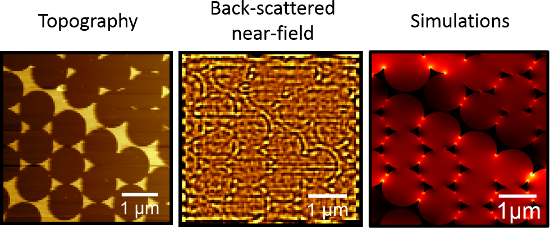
- with a femtosecond laser, thereby inducing polymerization at the hot spots. In another approach, based on confocal fluorescence microscopy, a dye solution is deposited on the samples, and the higher fluorescence magnitude originating from the hot spots is measured [19]. However, these last four




Cr(VI) remediation from aqueous environment through modified-TiO2-mediated photocatalytic reduction
Beilstein J. Nanotechnol. 2018, 9, 1448–1470, doi:10.3762/bjnano.9.137
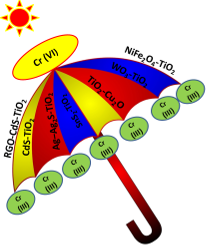
- Cr(VI) was evaluated and compared with that of bare TiO2. The photoactivity of dye-sensitized TiO2 for reduction of Cr(VI) was also discussed. The mechanism for enhanced photocatalytic activity was highlighted and attributed to the resultant properties, namely, effective separation of photoinduced
- with carbon-based advanced materials, noble metals, oxides and sulfides of transition metals for enhanced photocatalytic activity towards degradation of Cr(VI). The photocatalytic reduction of Cr(VI) over dye-sensitized TiO2 is also briefly discussed. The present review article has been divided into
- range of TiO2 by modification with metal sulfides. The enhancement in photocatalytic reduction of Cr(VI) over noble-metal-modified TiO2 is depicted in section five whereas section six includes the use of dye-sensitized TiO2 for photoreduction of Cr(VI). Optical and electrochemical characteristics of


Nanoporous silicon nitride-based membranes of controlled pore size, shape and areal density: Fabrication as well as electrophoretic and molecular filtering characterization
Beilstein J. Nanotechnol. 2018, 9, 1390–1398, doi:10.3762/bjnano.9.131
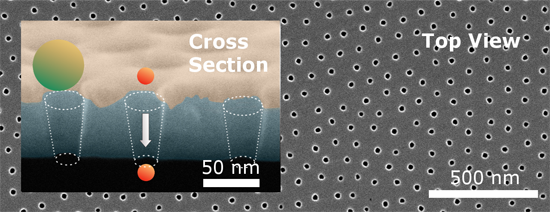
- well as FIB-drilled single pores is carried out. Subsequently, molecular filtering as a direct application of our nanoporous membranes is demonstrated: Successful size-selective separation of dye molecules and labeled proteins is observed by real-time fluorescence microscopy. Results and Discussion
- membrane The larger, ATTO-labeled TG molecules, given by the black data points, are completely blocked; only background signals were detected. After 120 min, a droplet of the red dye ATTO (ATTO 647N, mass 843 Da) was added to exclude a relevant influence of ATTO on the diffusivity of the labeled TG. For
- completely in the supply reservoir. After 120 min, the dye molecule ATTO is added and observed instantly behind the membrane. Pore sizes from top view HRSEM images of the analyzed membranes A, B, and C. Supporting Information Supporting information features: parameters for the fabrication of the membranes


Ag2WO4 nanorods decorated with AgI nanoparticles: Novel and efficient visible-light-driven photocatalysts for the degradation of water pollutants
Beilstein J. Nanotechnol. 2018, 9, 1308–1316, doi:10.3762/bjnano.9.123
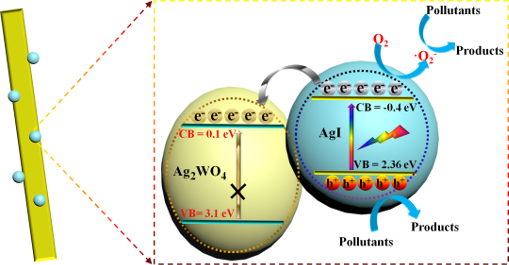
- photocatalytic performance for dye degradation under light irradiation [30][31][36][37]. Unfortunately, due to its wide bandgap of about 3.1 eV, Ag2WO4 has limited photocatalytic activity under sunlight, which severely limits its application and illustrates the urgency for optimization of Ag2WO4 to overcome




Semi-automatic spray pyrolysis deposition of thin, transparent, titania films as blocking layers for dye-sensitized and perovskite solar cells
Beilstein J. Nanotechnol. 2018, 9, 1135–1145, doi:10.3762/bjnano.9.105
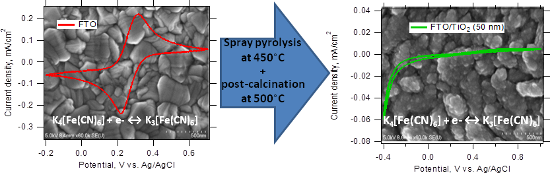
- function of the negative electrode of dye-sensitized and perovskite solar cells, the deposition of a nonporous blocking film is required on the surface of F-doped SnO2 (FTO) glass substrates. Such a blocking film can minimise undesirable parasitic processes, for example, the back reaction of photoinjected
- properties that were not influenced by post-calcination. These results will surely find use in the fabrication of large-scale dye-sensitized and perovskite solar cells. Keywords: blocking films; FTO; solar cells; spray pyrolysis deposition; titanium dioxide; Introduction Dye-sensitized solar cells (DSSCs
- ), solid state dye-sensitized solar cells (SSDSSCs) and perovskite solar cells (PSCs) are attractive alternatives to solid state photovoltaics at competitive cost. The general concept of a DSSC is based on a liquid junction photo-electrochemical cell with a nanocrystalline TiO2 photoanode that is


Review on nanoparticles and nanostructured materials: history, sources, toxicity and regulations
Beilstein J. Nanotechnol. 2018, 9, 1050–1074, doi:10.3762/bjnano.9.98

- process to synthesize ≈5 nm diameter PbS NPs for hair dye [23]. Similarly, “Egyptian blue” was the first synthetic pigment which was prepared and used by Egyptians using a sintered mixture nanometer-sized glass and quartz around 3rd century BC [24]. Egyptian blue represents a multifaceted mixture of
- creating enhanced Earth-based astronomical telescopes with adaptive optics and magnetic mirrors with the shape-shifting capability made up of ferrofluids [38][39]. TiO2 NPs are commercially used in solar cells with dye-sensitization ability [40]. In summer 2012, Logitech brought an external iPad keyboard
- powered by light on the market, representing the first major commercial use of dye-sensitized solar cells. In 2005, Abraxane™, which is a human serum albumin NP material containing paclitaxel, was manufactured, commercialized and released in the pharmaceutical market [41]. In 2014, there were about 1814


Electro-optical interfacial effects on a graphene/π-conjugated organic semiconductor hybrid system
Beilstein J. Nanotechnol. 2018, 9, 963–974, doi:10.3762/bjnano.9.90
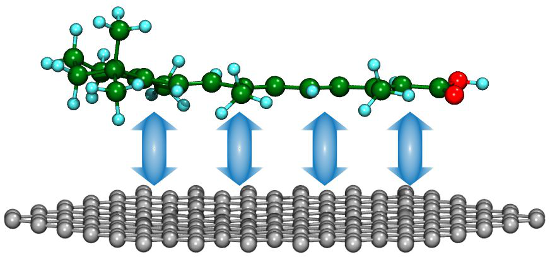
- -doped graphene. The most stable structure α (Figure 2) leads to a charge density of 1.10 × 1013 cm−2 (1.17 × 1013 cm−2) which was estimated via Mulliken population analysis (Hirshfeld method) [19][20][21]. Retinoic acid is a well-known dye molecule with potential applications in solar cells [22][23][24
- systems, where interfacial effects modulate the final properties, creates even further possibilities in the design and operation of innovative devices. The present work paves a few steps forward in this direction. Here, we have demonstrated a novel configuration of the employed dye: a highly ordered self




Facile chemical routes to mesoporous silver substrates for SERS analysis
Beilstein J. Nanotechnol. 2018, 9, 880–889, doi:10.3762/bjnano.9.82
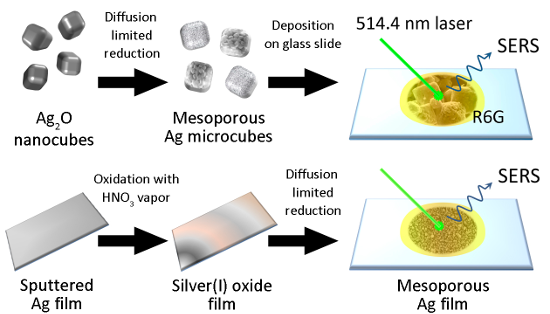
- processes from the dye. It was surprising that the mp-Ag deposited onto a glass slide and the mp-Ag/Ag slides of porous silver demonstrated a detection limit for the model dye of 10−8–10−9 M, which is close to the characteristics for most thick porous substrates [32]. However, the spectra for the 10−9 and
- rather intense signal of the dye already at 10−8 M. The most intense SERS bands in the spectra were related to ν(C–C) stretching vibrations of the aromatic core and, namely, 1362(s), 1508(s), 1540(m), 1573(s), 1602(w), and 1650(s) cm−1 were observed to identify R6G. The bands in the lower Raman shift
- of porous Ag blocks. Probably, the presence of macropores in the porous Ag aggregates leads to better penetration of the dye into the pores, decreasing the effective percentage of the analyte at the surface. The mp-Ag/Ag slides demonstrated worse wettability and better uniformity at the surface


Perfusion double-channel micropipette probes for oxygen flux mapping with single-cell resolution
Beilstein J. Nanotechnol. 2018, 9, 850–860, doi:10.3762/bjnano.9.79
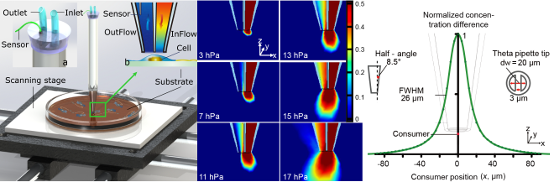
- studied below using a finite element model (FEM) of the double-barrel pipette with perfusion. To validate this model, we first compare hydrodynamic confinement obtained from the model with experiments using a fluorescent dye. Later in the paper, we also show that FEM results agree qualitatively with a
- at a fixed rate of 5 µL/min through one channel, while pressures from 2 to 16 hPa are applied to the injection channel. Experimentally observed diffusion of the fluorescent dye for different injection pressures is shown in Figure 2a. Two qualitative trends can be noted. One is the increasing size of
- ) starts to evolve and tilt more towards the extraction channel. Therefore, the average dye concentration in the extraction channel also increases as the injection pressure is increased. Figure 2b shows the results of the FEM where the pipette diameter at the tip and other geometrical parameters of the





