Search results
Search for "electrode" in Full Text gives 612 result(s) in Beilstein Journal of Nanotechnology. Showing first 200.
Atomic layer deposited films of Al2O3 on fluorine-doped tin oxide electrodes: stability and barrier properties
Beilstein J. Nanotechnol. 2021, 12, 24–34, doi:10.3762/bjnano.12.2
- of electrified interfaces is particularly challenging, because electron or hole transport through the coating must be maintained. Previously, ALD and other coating techniques have been shown to protect a semiconducting hematite electrode against corrosion and photocorrosion by using titanium dioxide
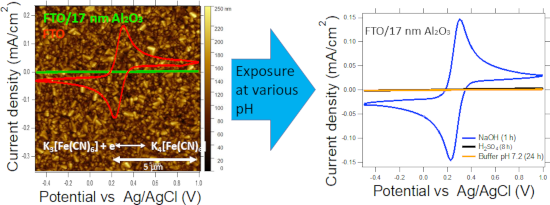
- studies, Al2O3 films on FTO were exposed, at various time intervals and at room temperature, to 1 M NaOH, 1 M H2SO4, and buffered solution (pH 7.2). Electrochemical experiments were carried out in a single-compartment three-electrode cell using a Zahner workstation. The reference electrode was Ag/AgCl (3
- M KCl) and a platinum rod was used as the counter electrode. The blocking properties of the deposited layers were evaluated by cyclic voltammetry (CV) in an aqueous electrolyte composed of 0.5 mM K3[Fe(CN)6] and 0.5 mM K4[Fe(CN)6] in 0.5 M KCl (pH 2.5, adjusted with HCl) or in phosphate buffer (pH


Kondo effects in small-bandgap carbon nanotube quantum dots
Beilstein J. Nanotechnol. 2020, 11, 1873–1890, doi:10.3762/bjnano.11.169
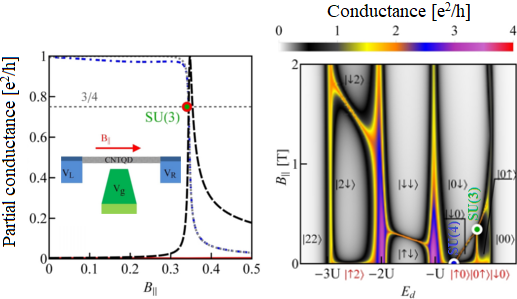
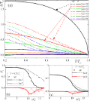
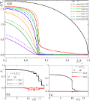
- small-bandgap nanotubes it is parabolic. For wide-bandgap nanotubes, SO splitting can be described by one effective parameter: and describe electrons in the left and in the right electrode, respectively: and the last term in Equation 1 represents tunneling: We parameterize the coupling strength to




![[Graphic 37]](/bjnano/content/inline/2190-4286-11-169-i52.svg?max-width=637&scale=1.18182) as a functio...
as a functio...


Self-standing heterostructured NiCx-NiFe-NC/biochar as a highly efficient cathode for lithium–oxygen batteries
Beilstein J. Nanotechnol. 2020, 11, 1809–1821, doi:10.3762/bjnano.11.163
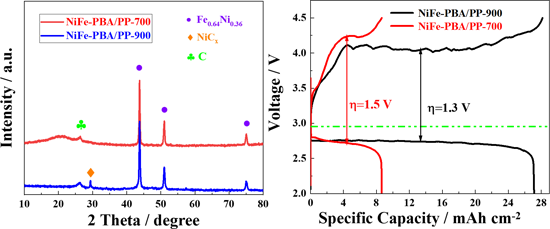
- the previous literatures [40][41][42]. However, a hydrothermal process was introduced here as a new treatment step prior to the precursor calcination in order to modify the properties of the prepared electrode materials. Heterostructured NiCx-NiFe-NC derived from bimetallic Prussian blue supported on
- full charge and discharge cycles at 0.1 mA·cm−2. The specific capacity of NiFe-PBA/PP-700 and NiFe-PBA/PP-900 decreased gradually. However, the overpotential increased with the increase in the number of cycles. This can be attributed to the undecomposed Li2O2 covering the surface of the electrode
- discharge product was Li2O2 (JCPDF 09-0355). It is noteworthy that LiOH was also detected. This can be associated with the reaction between Li2O2 and H2O when the discharged/recharged electrode was exposed to air during XRD testing. After charging to 4.5 V, trace amounts of LiOH were detected, due to the






Absorption and photoconductivity spectra of amorphous multilayer structures
Beilstein J. Nanotechnol. 2020, 11, 1757–1763, doi:10.3762/bjnano.11.158
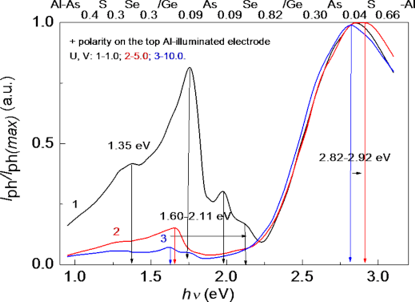
- –Ge0.09As0.09Se0.82–Al, and Al–Ge0.30As0.04S0.66–Al) and of an amorphous heterostructure (Al–As0.40S0.30Se0.30/Ge0.09As0.09Se0.82/Ge0.30As0.04S0.66–Al) at different values of the voltage, with positive or negative polarity, applied to the illuminated top Al electrode are presented and discussed. The complex structure
- of the applied electrical field was as uniformly as possible in each layer. The transparence of the top Al electrode was 60–70%, and the sample area was S = 0.5 cm2. In the same technological cycle, the multilayer heterostructure (HS) Al–As0.40S0.30Se0.30/Ge0.09As0.09Se0.82/Ge0.30As0.04S0.66–Al was
- prepared. The experimental samples had a sandwich configuration with two Al electrodes, of which the top electrode was transparent to the incident light. The dark conductivity σd and the spectral distribution of the stationary photocurrent Iph = f(λ) have been measured under constant-current conditions


The influence of an interfacial hBN layer on the fluorescence of an organic molecule
Beilstein J. Nanotechnol. 2020, 11, 1663–1684, doi:10.3762/bjnano.11.149
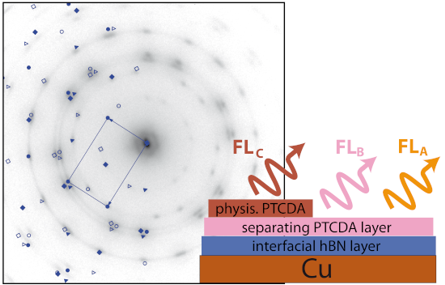
- directly on metal substrates by chemical vapor deposition [2]. This is, for example, exploited when a 2DM interfacial layer is inserted between the metallic electrode and a functional organic layer of an organic electronic device, such as an organic light emitting diode [3]. The purpose of the interfacial
- to which extent decoupling of the organic molecules from a metal electrode is achieved when a 2DM layer in the limit of a single interfacial layer, for example, a monolayer of hexagonal boron nitride (hBN), is used. Such a decoupling is achieved when the wave functions of the metal are spatially






Piezoelectric sensor based on graphene-doped PVDF nanofibers for sign language translation
Beilstein J. Nanotechnol. 2020, 11, 1655–1662, doi:10.3762/bjnano.11.148
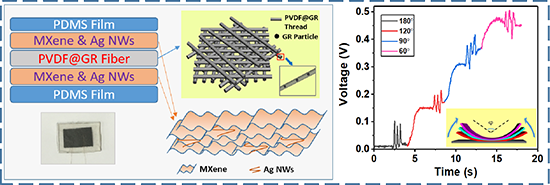
- sensing. Results and Discussion The structural design of the self-powered PES based on GR-doped PVDF nanofibers is shown in Figure 1a. The cross section of the self-powered PES shows three parts, namely the GR-doped PVDF piezoelectric layer in the center, the electrode layer of Ti3C2 MXene and Ag NWs on
- piezoelectric sensor. Ti3C2 MXene and Ag NWs maintain the good conductivity of the electrode and avoid possible short-circuit problems occurring after magnetron sputtering. Also, a stable flexibility of the structure is maintained. GR is added with six different mass fractions, that is, 0, 0.2, 0.4, 0.6, 0.8


Selective detection of complex gas mixtures using point contacts: concept, method and tools
Beilstein J. Nanotechnol. 2020, 11, 1631–1643, doi:10.3762/bjnano.11.146
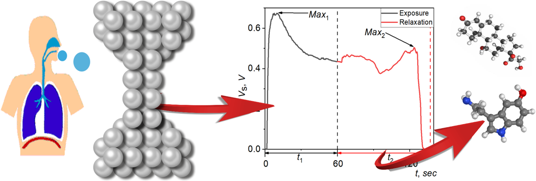
- the electric field of the contact. The electric field is concentrated in the Yanson point contact area due to a specific electric drop in the potential in that area as the current flows through the electrode/point contact/electrode system. Upon crossing the area of the Yanson point contact, electrons
- . These properties are essential for Yanson point-contact spectroscopy [6] and are used to create a new generation of advanced nanosensors [4]. The Yanson point contact itself is the simplest electrophysical structure and it can be represented as an electrode/point contact/electrode system. In the


![[Graphic 4]](/bjnano/content/inline/2190-4286-11-146-i8.svg?max-width=637&scale=1.18182) in th...
in th...

![[Graphic 7]](/bjnano/content/inline/2190-4286-11-146-i11.svg?max-width=637&scale=1.18182) in the...
in the...
Oxidation of Au/Ag films by oxygen plasma: phase separation and generation of nanoporosity
Beilstein J. Nanotechnol. 2020, 11, 1608–1614, doi:10.3762/bjnano.11.143
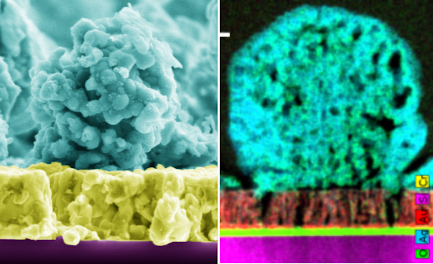
- 12 min and at an electrical power of 100 W. The films were oxidized using radio-frequency oxygen plasma at 100 W and 3 Pa and the samples were placed onto a substrate holder located 10 cm away from the electrode. SEM was performed on an FEI Versa3D instrument (Hillsboro, OR, USA) at an acceleration


Walking energy harvesting and self-powered tracking system based on triboelectric nanogenerators
Beilstein J. Nanotechnol. 2020, 11, 1590–1595, doi:10.3762/bjnano.11.141
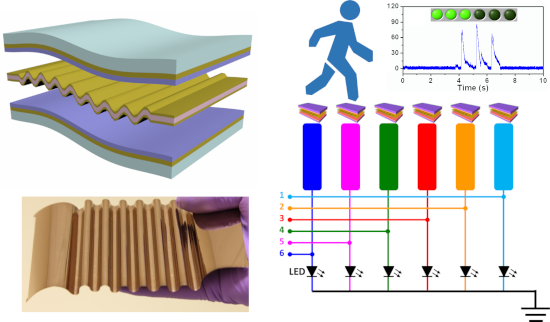
- to the extensive energy consumption and high population density in modern cities, the collection and use of scattered walking energy from the stream of people is crucial for the development of a green ecological city. Herein, a flexible undulated electrode-based triboelectric nanogenerator (u-TENG
- excellent performance, which can be used as motion [35][36][37] and temperature sensors [38][39], UV detectors [40], tactile sensors [41][42][43], sensors for healthcare [44][45][46][47], humidity sensors, and gas sensors [48][49][50][51], for example. In this work, a flexible undulated electrode-based
- triboelectric nanogenerator (u-TENG) was proposed and fabricated to scavenge the walking energy from areas with a high pedestrian flow. The as-prepared u-TENG is composed of two copper-coated nanostructured poly(tetrafluoroethylene) (PTFE) thin films as the back electrodes and an elastic undulated electrode in





Electrokinetic characterization of synthetic protein nanoparticles
Beilstein J. Nanotechnol. 2020, 11, 1556–1567, doi:10.3762/bjnano.11.138
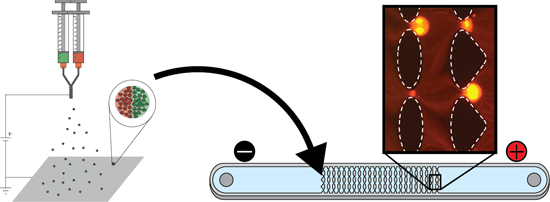
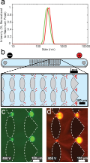
- how particles are trapped within the device (inserts). Trapping of SPNP-BSA-488 (c) and of SPNP-BSA-555 (d). Both types of SPNPs were trapped at an applied voltage of 500 V and exhibited a very similar trapping behavior. The flow direction is from the positive to the negative electrode (right to left



Antimicrobial metal-based nanoparticles: a review on their synthesis, types and antimicrobial action
Beilstein J. Nanotechnol. 2020, 11, 1450–1469, doi:10.3762/bjnano.11.129

- -condensation of the vapors on the cold surface of the vacuum reactor. Sergeev et al. [45] obtained Ag nanoparticles with sizes ranging from 20 to 150 nm using this technique. The electrochemical anodization method is based on the reactions that occur between the electrode and the electrolyte. In this method


One-step synthesis of carbon-supported electrocatalysts
Beilstein J. Nanotechnol. 2020, 11, 1419–1431, doi:10.3762/bjnano.11.126

- group metals) required for electrode materials produced by conventional synthesis approaches is still cost-inefficient for broader commercial application [4][5]. Furthermore, since surfactants (capping agents) are typically applied in the traditional wet chemical synthesis of metal nanoparticles in
- , initial value. Additionally, we have measured ORR mass activities of the Pt/CNW samples relative to those of the commercial catalyst with a rotating disk electrode at 1600 rpm. Initially, after 0 AST cycles, none of the Pt/CNW samples are able to reach the activity of HiSPEC4000 with the best sample (CV2
- three-electrode electrochemical cell (glassy cell: double wall, temperature-controlled at 25 °C) filled with 0.1 M HClO4 electrolyte (AppliChem PanReac, 70%, for analysis, ACS, ISO). The working electrode is a GCE (diameter 4 mm, Catalog No. 013338, ALS Co., Ltd.) coated with the catalyst (by using the




Triboelectric nanogenerator based on Teflon/vitamin B1 powder for self-powered humidity sensing
Beilstein J. Nanotechnol. 2020, 11, 1394–1401, doi:10.3762/bjnano.11.123
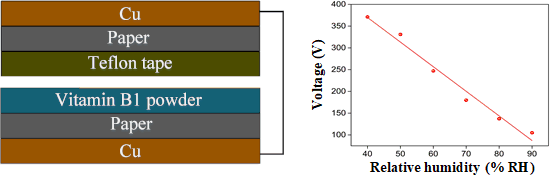
- lubricant to make a friction nanogenerator. Due to its sustainability and flexibility, paper can be used as a substrate and supporting structure. The conductive electrode is made of copper foil, while the triboelectric pair is comprised of Teflon tape and vitamin B1 powder. The approximate values of the
- -emitting diodes (LEDs) are integrated with the humidity sensor and the luminosity is an indicator of the relative humidity (RH) from the surrounding environment. Experimental The conductive copper foil tape is used as the electrode, while the paper (manufacturer: Miao Ben) at the bottom serves as a




Controlling the proximity effect in a Co/Nb multilayer: the properties of electronic transport
Beilstein J. Nanotechnol. 2020, 11, 1336–1345, doi:10.3762/bjnano.11.118
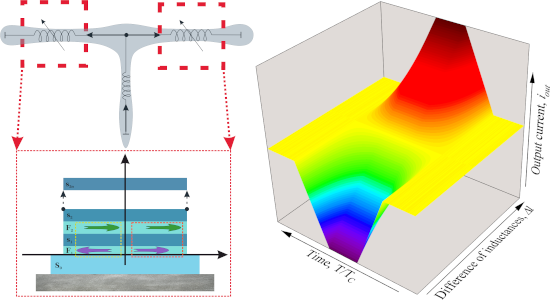
- interface of the bulk semiconductor electrode, with thickness LS = 10ξS. In addition, we considered the proximity effect of an artificial ferromagnetic material (AFM), consisting of alternating thin superconducting (LS = 1ξS) and ferromagnetic layers, with an exchange energy of H = 10TC. In an AFM, every
- ) and AP (dashed) magnetization configurations in F-layers. In the large semiconductor electrode, the temperature dependence of the pair potential coincides with the prediction of the pure Bardeen–Cooper–Schrieffer (BCS) model. At the same time, the pair potential in thin s-layers rapidly increases near
- strongly dependent on the distance from the bulk electrode. At temperature values above TC*, the spatial distribution has a similar shape, although a significant pairing amplitude appears only in the s-layers closest to the bulk semiconductor electrode. An additional possible consequence of such spatial



Effect of localized helium ion irradiation on the performance of synthetic monolayer MoS2 field-effect transistors
Beilstein J. Nanotechnol. 2020, 11, 1329–1335, doi:10.3762/bjnano.11.117
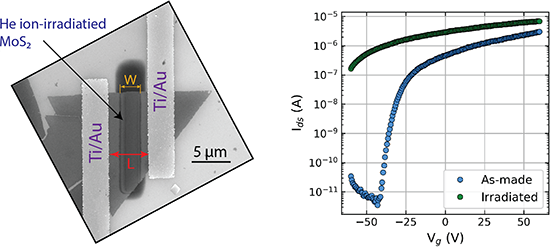
- , we find that irradiating the electrode–channel interface has a deleterious impact on charge transport when contrasted with irradiations confined only to the transistor channel. Keywords: 2D materials; contacts; defect engineering; helium ion microscope; ion beam doping; vacancies; two-dimensional
- the deposited metal–semiconductor contact interface. Recent work has shown that irradiation-induced heating of the electrode area can reverse majority carrier polarity in MoTe2 [31], while pre-treatment with a broad-beam argon ion source can decrease the contact resistance of Ni-MoS2 two-fold [32]. In
- in each pair a single electrode interface was also irradiated. SEM images in Figure 3a show the irradiated channel areas colored in green and the non-irradiated MoS2 channel areas in red, on example devices in the high IR regime. In all three IR regimes, allowing one of the electrode–MoS2 interfaces


Structural and electronic properties of SnO2 doped with non-metal elements
Beilstein J. Nanotechnol. 2020, 11, 1321–1328, doi:10.3762/bjnano.11.116
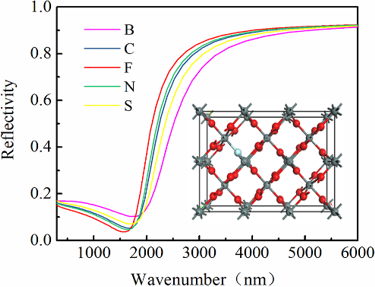
- ) [1][2][3]. TCFs serve as the front electrode of thin film solar cells. Up to now, the solar energy conversion efficiency is about 23.3% [4], and it is important to increase the photovoltaic power generation efficiency, as well as the performance of the front electrode. The intrinsic semiconductor
- SnO2 is not conductive due to the absence of free carriers. However, the bandgap of 3.6 eV of SnO2 makes it a potentially ideal material for transparent electrode films. It had been proved that the doping of heteroatoms to replace Sn or O can lead to more carriers or holes. Therefore, extensive




Structure and electrochemical performance of electrospun-ordered porous carbon/graphene composite nanofibers
Beilstein J. Nanotechnol. 2020, 11, 1280–1290, doi:10.3762/bjnano.11.112
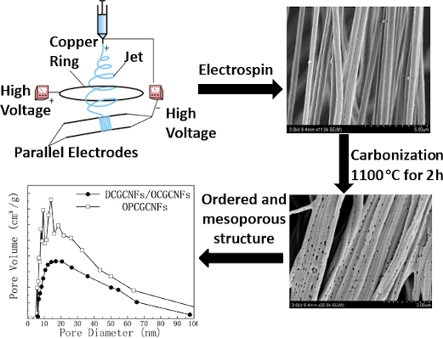
- configurations were used as a material to fabricate supercapacitor electrodes. These nanofibers were synthesized by applying a modified parallel electrode to the electrospinning method (MPEM) in order to generate electrospun polyacrylonitrile (PAN) nanofibers containing graphene. After synthesis, these fibers
- surface area of CGCNFs, thereby significantly increasing their specific capacitance. In addition, the ordering of CGCNFs within the electrode improved the electron transfer efficiency, resulting in a higher specific capacitance. Keywords: carbon/graphene composite nanofibers; carbonization
- ; electrochemistry; electrode material; electrospinning method; ordered and porous nanofibers; supercapacitor; Introduction As the technology sector develops, societal demands for energy storage devices also increases. Supercapacitors, including electric double-layer capacitors (EDLCs) and pseudo-capacitance


Role of redox-active axial ligands of metal porphyrins adsorbed at solid–liquid interfaces in a liquid-STM setup
Beilstein J. Nanotechnol. 2020, 11, 1264–1271, doi:10.3762/bjnano.11.110
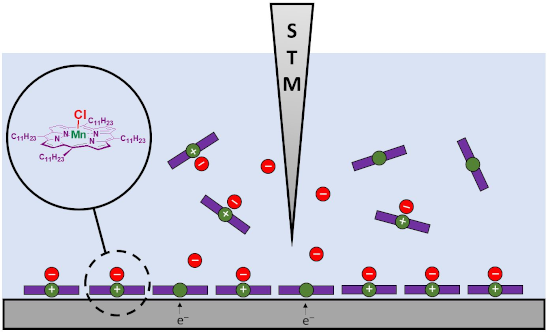
- of MnTUPCl, which is a sufficient amount to sustain the reactions for weeks, at least in principle. However, since we propose that the reduction of the manganese porphyrins takes place when they are adsorbed to the negatively biased electrode, their adsorption–desorption process must be dynamic. Once
- solvated by the 1-phenyloctane solvent and migrate to the other electrode (vide infra). Second, in a counter reaction they are oxidized to chlorine gas. No net current would be observed if one of the two processes would not occur. In order to check the proposed role of the chloride ions, an analogous
- of these complications may be eliminated by adding a third, reference electrode to the setup and by using a conducting electrolyte (so that it turns into a so-called electrochemical (EC) STM [20][21]). At the same time, the absence of an electrolyte, which typically contains a high concentration of


Ultrasensitive detection of cadmium ions using a microcantilever-based piezoresistive sensor for groundwater
Beilstein J. Nanotechnol. 2020, 11, 1242–1253, doi:10.3762/bjnano.11.108
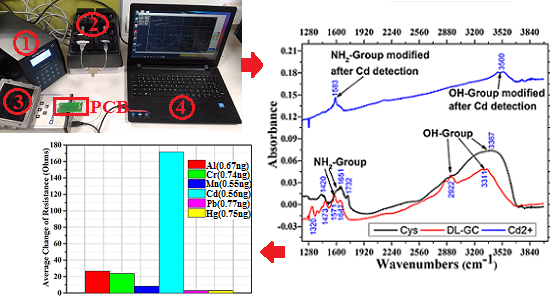
- disadvantages during operation in water when the refractive index of water changes [30][31]. Many authors have proposed electrode-based approaches for the selective sensing of Cd(II) [32], but the limits of detection were always in the micromolar to nanomolar ranges. Some of the authors used fluorescent [5][33






Gas sorption porosimetry for the evaluation of hard carbons as anodes for Li- and Na-ion batteries
Beilstein J. Nanotechnol. 2020, 11, 1217–1229, doi:10.3762/bjnano.11.106
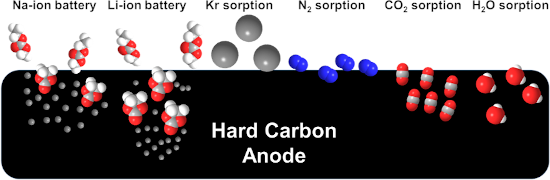
- negative electrode [9]. We herein refer to HCs as strongly disordered carbons (having a high fraction of sp3-hybridized defects or heteroatoms), independent of their graphitizability. After the introduction of the LIB, efforts in research and development on sodium-ion anodes, i.e., lithium-analogue
- market share of HC and graphite was still 52% and 43%, respectively, and today graphite is almost exclusively used as negative electrode material in commercial LIBs [11]. Graphite with an interlayer distance of 0.335 nm cannot be intercalated by sodium without solvent co-intercalation [9][12][13
- decomposition at potentials below the stability window of the electrolyte (for LIBs typically around 0.8 VLi) [21]. Since the dielectric SEI passivates the electrode, an irreversible capacity proportional to the electrochemical active surface area is expected. Accordingly, the reduction of the specific surface


Thermophoretic tweezers for single nanoparticle manipulation
Beilstein J. Nanotechnol. 2020, 11, 1126–1133, doi:10.3762/bjnano.11.97
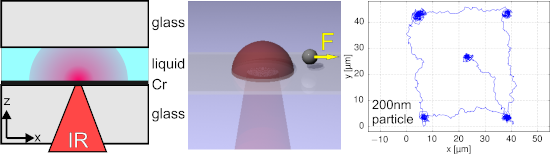
- refraction between the particle and the surrounding solvent is also required. For manipulation of smaller particles and molecules, typically, electrophoretic [4] and electrokinetic [5] forces are used, but they need sophisticated electrode geometries. A combination of optical tweezers and an array of


Monolayers of MoS2 on Ag(111) as decoupling layers for organic molecules: resolution of electronic and vibronic states of TCNQ
Beilstein J. Nanotechnol. 2020, 11, 1062–1071, doi:10.3762/bjnano.11.91
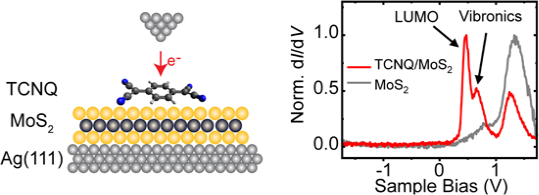
- in a scanning tunneling microscope, requires a metal electrode. To (partially) preserve the molecular properties the molecule–electrode coupling has to be properly designed. An elegant way is to clamp the molecule between electrodes via single-atom bonds at opposing sites of the molecule while the


Excitonic and electronic transitions in Me–Sb2Se3 structures
Beilstein J. Nanotechnol. 2020, 11, 1045–1053, doi:10.3762/bjnano.11.89
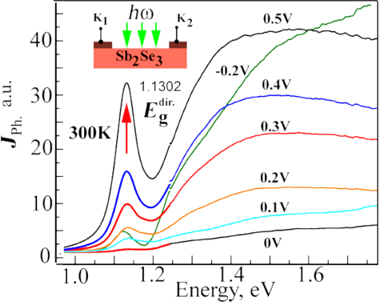
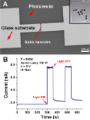
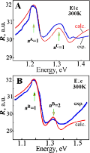
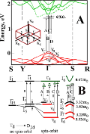
- to the illuminated electrode and it decreases to zero when a negative voltage is applied. The nature of the photoelectric effect cannot be associated with the contact-EMF effect since there is no band bending at the semiconductor surface region. On the other hand, the photo-EMF effect, in this case
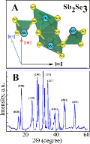
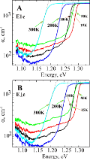
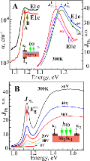

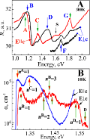

A new photodetector structure based on graphene nanomeshes: an ab initio study
Beilstein J. Nanotechnol. 2020, 11, 1036–1044, doi:10.3762/bjnano.11.88
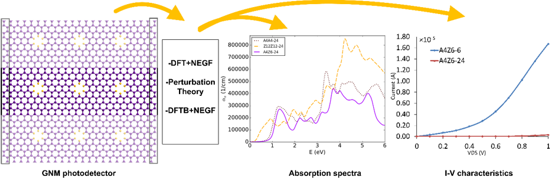
- Green’s functions and α is the lowest and highest self-energies due to coupling to the electrodes. The current at the electrode α (left to right) with spin σ is calculated using [28][29]: The following relation determines the effective crossing coefficients [30]: To investigate and compare photodetectors


Electrochemical nanostructuring of (111) oriented GaAs crystals: from porous structures to nanowires
Beilstein J. Nanotechnol. 2020, 11, 966–975, doi:10.3762/bjnano.11.81
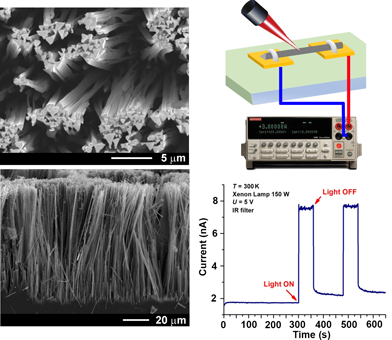
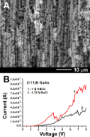
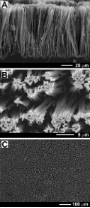
- in a Teflon cell with the 0.2 cm2 area exposed to the electrolyte. The electrolytes used in this study were 1.75 M NaCl and 1 M HNO3. The experiments were performed in a three-electrode configuration, with a Pt mesh with a surface area of 6 cm2 acting as counter electrode, a saturated Ag/AgCl
- reference electrode and the sample as working electrode. The anodization was performed in galvanostatic as well as potentiostatic regimes at room temperature (T = 23 °C). Analysis of morphology and chemical composition of the anodized GaAs crystals was carried out using scanning electron microscopy (Zeiss