


Search results
Search for "gap" in Full Text gives 760 result(s) in Beilstein Journal of Nanotechnology. Showing first 200.
Zinc oxide nanostructures for fluorescence and Raman signal enhancement: a review
Beilstein J. Nanotechnol. 2022, 13, 472–490, doi:10.3762/bjnano.13.40
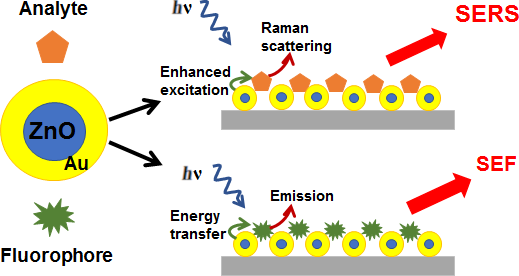
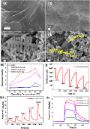
- detection of 1.49 × 10⁻¹³ and 9.99 × 10⁻¹² were reported by Kumar et al. for 4-nitrophenol (4-NP) and R6G, respectively, adsorbed onto a ZnO multipod suspension containing Ag nanospheres [69]. Increasing the sputtering time leads to an increase of the Au NPs size and a decrease of the interparticle gap
- , which is known to enhance the SERS signal. An optimum value for interparticle gap and size of Au NPs is needed to enhance the SERS signal. In [68] and [34], the fabrication of highly ordered flower-like ZnO nanorods decorated with Ag NPs is described. Sub-10 nm nanogaps between adjacent Ag NPs were the
- . Introducing defects reduces the optical gap, which allows for a more effective charge transfer between ZnO–Ag nanowires and the molecules attached. Also, the interstitial oxygen defects change the wettability of ZnO–Ag nanowires, which reduces the spreading of Ag NPs or probe molecules on the surface, which




Electrostatic pull-in application in flexible devices: A review
Beilstein J. Nanotechnol. 2022, 13, 390–403, doi:10.3762/bjnano.13.32
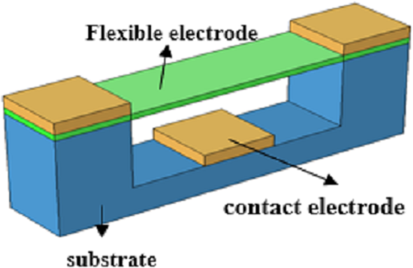
- , Kaul et al. [15][16] prepared a two-terminal SWCNT NEM switch. The response time of the switch is nanoseconds, and the voltage is 3.5–4.5 V. Cha et al. [21] prepared a multiwalled carbon nanotube (MWCNT) NEM switch. The switch length is 800 nm, the diameter is 20–40 nm, the initial gap is 40–60 nm, and
- -terminal cantilever MWCNT NEM switch. The diameter of the CNTs is 50 nm, the length is 2 µm, and the gap is 150 nm. When Vds is 0.5 V, Vgs is in the range of 6–30 V. Loh et al. [24] prepared a cantilever SWCNT and diamond electrode structure with a pull-in voltage of 23.4 V. C–C bonds can greatly improve
- the life cycles of the switch. The MWCNTs prepared by Dujardin et al. [17] had a diameter of 22 nm and a length of 115 nm. The pull-in voltage was reduced to 2.9 V as the gap was only 4 nm. Vertical model: On the basis of the cantilever model, Jang et al. [18][19][20] and Kaul et al. [4] aligned CNTs


Micro- and nanotechnology in biomedical engineering for cartilage tissue regeneration in osteoarthritis
Beilstein J. Nanotechnol. 2022, 13, 363–389, doi:10.3762/bjnano.13.31
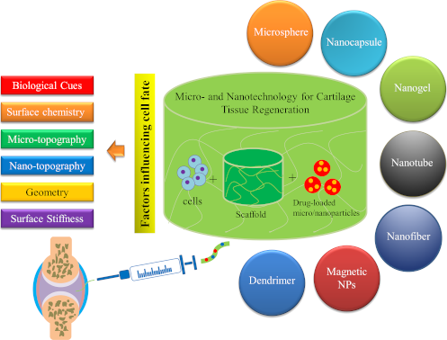
- nanotubes enhanced the biocompatibility and bioactivity of the PCL microspheres and provided an excellent biomaterial for cell differentiation and mineralization. In recent years, numerous efforts have been made to evaluate new candidate biomaterials to bridge the gap between material sciences and


A broadband detector based on series YBCO grain boundary Josephson junctions
Beilstein J. Nanotechnol. 2022, 13, 325–333, doi:10.3762/bjnano.13.27
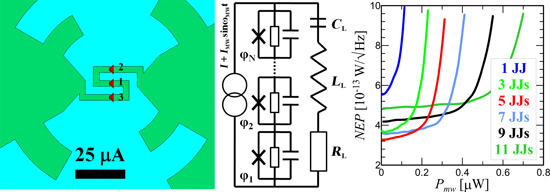
- a wide frequency range from tens of gigahertz to several terahertz [13][14], which exceeds the gap limitation of low-Tc detectors. So, in [12] the spectrum of a quantum cascade laser emission has been recovered by an YBaCuO detector at a central frequency around 2.2 THz. However, for some



The effect of metal surface nanomorphology on the output performance of a TENG
Beilstein J. Nanotechnol. 2022, 13, 298–312, doi:10.3762/bjnano.13.25
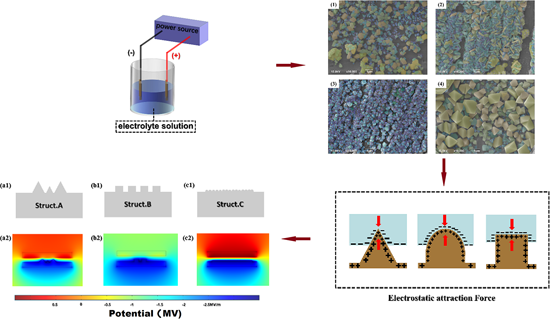
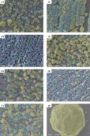
- . There is no potential at this stage, so the transferred charge will accumulate in the gap of metal nanoparticles, and the charge accumulation will have a positive impact on the output performance. However, when the substrate area without nanoparticles is too large, the decrease in the number of metal




Plasma modes in capacitively coupled superconducting nanowires
Beilstein J. Nanotechnol. 2022, 13, 292–297, doi:10.3762/bjnano.13.24
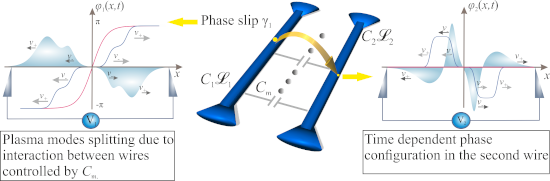
- effects. One of them is the theoretically predicted [13][14] and experimentally observed [15][16] smearing of the square-root singularity in the density of states (DOS) near the superconducting gap accompanied by a non-vanishing tail in DOS at subgap energies. Mooij–Schön plasmons also mediate the


Systematic studies into uniform synthetic protein nanoparticles
Beilstein J. Nanotechnol. 2022, 13, 274–283, doi:10.3762/bjnano.13.22
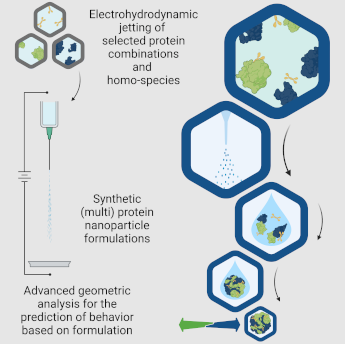
- this knowledge gap by evaluating formulation trends in SPNPs prepared by EHD jetting based on a series of carrier proteins and protein blends (hemoglobin, transferrin, mucin, or insulin). In general, blended SPNPs presented uniform populations with minimum diameters between 43 and 65 nm. Size


Investigation of a memory effect in a Au/(Ti–Cu)Ox-gradient thin film/TiAlV structure
Beilstein J. Nanotechnol. 2022, 13, 265–273, doi:10.3762/bjnano.13.21
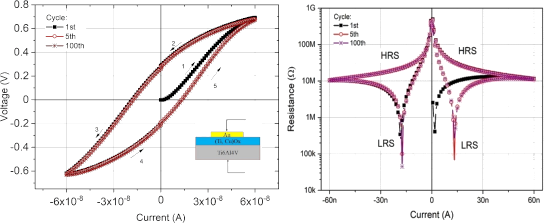
- constructed diagram assumes the presence of an additional wide TiO2 region in the middle of the prepared structure that corresponds to the region of high Ti concentration in the central part of the prepared (Ti–Cu)Ox thin film. The value of the work function (5.4 eV) and the width of the optical energy gap



Impact of device design on the electronic and optoelectronic properties of integrated Ru-terpyridine complexes
Beilstein J. Nanotechnol. 2022, 13, 219–229, doi:10.3762/bjnano.13.16
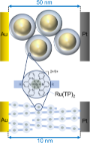
- wires to bridge a nanometer-sized gap between two electrodes becomes accessible. The challenge is to integrate these redox-active Ru(TP)2-complex wires reliably into a device geometry such that the envisaged device properties are established. Here, our approach is to employ nanodevices equipped with
- rinsed three times in either ethanol or chloroform. Nanodevice fabrication The fabrication of nanoelectrode samples, each equipped with twelve nanoelectrode pairs (consisting of an AuPd and a Pt electrode with a nanometer-sized gap in between), was performed according to a recently described process
- using electron beam lithography and lift-off [21]. These nanoelectrode samples with gap sizes of 8 to 20 nm between the electrodes were used in order to fabricate Ru(TP)2-complex wire devices. According to the Ru-complex wire growth procedure described above, the samples were treated first with MPTP


Effect of lubricants on the rotational transmission between solid-state gears
Beilstein J. Nanotechnol. 2022, 13, 54–62, doi:10.3762/bjnano.13.3
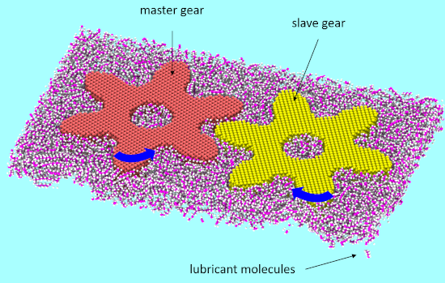
- rotation closer to the case of rigid bodies. The underlying reason for this behavior is the tendency of the lubricant molecules to fill the gap between gears and to provide a medium for angular momentum transfer at all times, which stabilizes the motion of the second gear. However, more energy is needed to
- for a system of two diamond solid-state gears with different lubricants (benzene, hexadecene and phenanthrene). We found that lubricants can be used to synchronize the collective rotations in both gears by filling the gap for better angular momentum transfer and this effect is independent of the type


Design aspects of Bi2Sr2CaCu2O8+δ THz sources: optimization of thermal and radiative properties
Beilstein J. Nanotechnol. 2021, 12, 1392–1403, doi:10.3762/bjnano.12.103
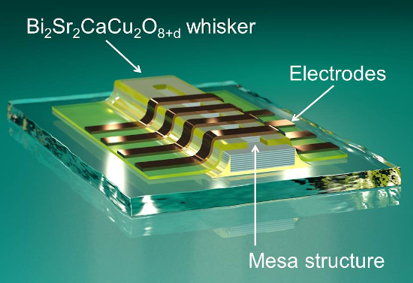
- gap” [1], is caused by a low radiation power efficiency (RPE) of THz sources. Despite a remarkable progress achieved by semiconducting quantum cascade lasers (QCL’s) [2][3], their RPE drops well below the percent level at low THz frequencies [4][5][6]. Furthermore, operation of QCLs is limited by the
- an inherently tunable oscillation frequency, fJ = (2e/h)V, where e is electron charge and V is the bias voltage per junction. The frequency is limited only by the superconducting energy gap, which can be in excess of 30 THz for Bi-2212 [27][28]. A broad range tunability of emission in the whole THz


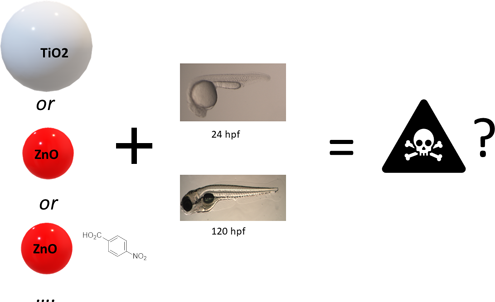
Identifying diverse metal oxide nanomaterials with lethal effects on embryonic zebrafish using machine learning
Beilstein J. Nanotechnol. 2021, 12, 1297–1325, doi:10.3762/bjnano.12.97


Cantilever signature of tip detachment during contact resonance AFM
Beilstein J. Nanotechnol. 2021, 12, 1286–1296, doi:10.3762/bjnano.12.96
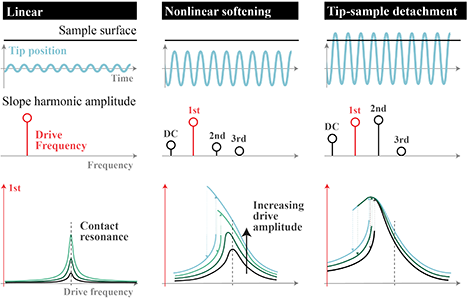
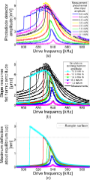
- indentation model of Equation 3 are defined in conjunction with experimental observables. The adhesion force Fadh* and adhesion gap gadh are identified from the retraction force–distance curve taken just before vibration sweeps. While gadh is observed directly, Fadh requires multiplication with kcantilever


Nonmonotonous temperature dependence of Shapiro steps in YBCO grain boundary junctions
Beilstein J. Nanotechnol. 2021, 12, 1279–1285, doi:10.3762/bjnano.12.95
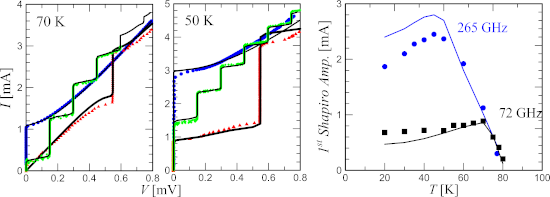
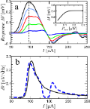
- probe to the gap symmetry of multigap superconductors [22]. The heights of the MW-induced voltage steps have been measured as a function of the MW power for various Josephson weak links fabricated from high-Tc superconductors [16][23][24]. The measured amplitudes are often smaller than those predicted
- step height will increase. This also applies to high frequencies close or greater than the gap. Non-monotonous peculiarities in the response will occur at intermediate frequencies at, in fact, the most interesting range from a practical point of view. The same optima of the response can be achieved in


Impact of electron–phonon coupling on electron transport through T-shaped arrangements of quantum dots in the Kondo regime
Beilstein J. Nanotechnol. 2021, 12, 1209–1225, doi:10.3762/bjnano.12.89
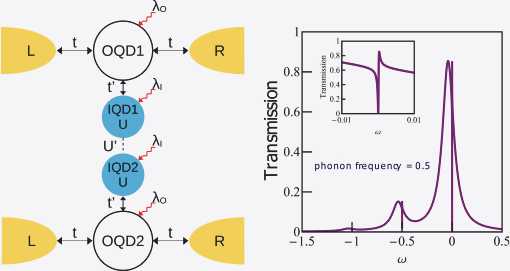
- λI chosen such that empty and double occupied states degenerate. In the charge Kondo state, the low-energy excitations are charge fluctuations and there is a large gap for spin fluctuations. In SB language it means that equal e and d amplitudes are close to the value corresponding to the transport


Morphology-driven gas sensing by fabricated fractals: A review
Beilstein J. Nanotechnol. 2021, 12, 1187–1208, doi:10.3762/bjnano.12.88
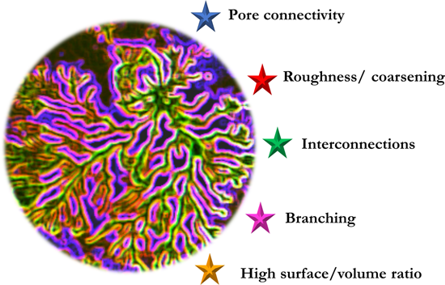
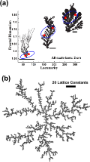
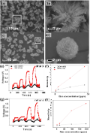
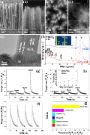
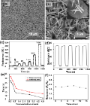
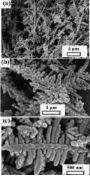
- connectors that structurally bridge the gap between the nano- and the macroscopic worlds and have a hybrid structure of pores and repeating units. This article presents a comprehensive review on inorganic fabricated fractals (fab-fracs) synthesized in labs and employed as gas sensors across materials










First-principles study of the structural, optoelectronic and thermophysical properties of the π-SnSe for thermoelectric applications
Beilstein J. Nanotechnol. 2021, 12, 1101–1114, doi:10.3762/bjnano.12.82
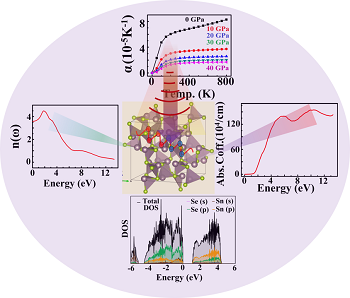
- energy, and then another broader peak is observed at ≈10 eV in which α(ω) reaches its maximum value of 154.23 104/cm. From the literature, we have noted that the α-SnSe has an indirect bandgap of 0.9 eV and a direct gap of 1.3 eV [5][74][75][76]. On the other hand, the optical bandgap value of the 2D
- SnSe is 1.10 eV [77]. In the present study, our DFT computed results for the π-SnSe shows that it has an indirect bandgap of 1.405 eV and a direct gap of 1.439 eV. Therefore, π-SnSe has a considerably larger bandgap of ≈0.5 eV as compared to α-SnSe. It means that α-SnSe is operating in the short-wave


Assessment of the optical and electrical properties of light-emitting diodes containing carbon-based nanostructures and plasmonic nanoparticles: a review
Beilstein J. Nanotechnol. 2021, 12, 1078–1092, doi:10.3762/bjnano.12.80
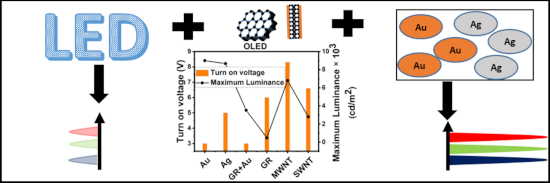
- increase of the maximum current value from 2.3 to 5 mA at 10 V, when graphene is present. Guo et al. also reported an increase of about 40% in the EL intensity under a 5 mA current injection at room temperature in AlGaInP LED, after the deposition of graphene onto the anode or the GaP surface [40]. Roll-to
- as TiO2, ZnO, SnO2 in combination with Ag, Au, and PtNP has shown increment in the luminance and reduction in the operating voltages of the devices. For several decades, inorganic LED based on III–V group semiconductors (i.e., GaAs, GaP, InGaAs, InGaP, GaN, InGaN, and AlGaInP) have been extensively


An overview of microneedle applications, materials, and fabrication methods
Beilstein J. Nanotechnol. 2021, 12, 1034–1046, doi:10.3762/bjnano.12.77
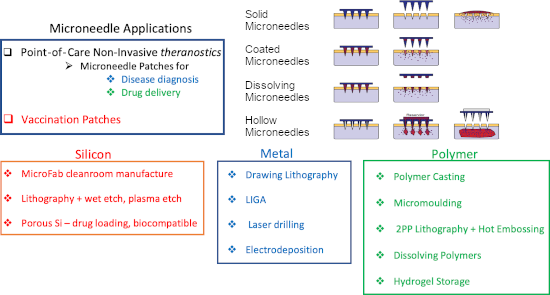
- or injection moulding must address this gap in technology in the near future, along with high-throughput reel-to-reel processes, since the mass production of optimal microneedle patch designs and materials is a critical pathway to important clinical applications such as cheap point-of-care disposable


Revealing the formation mechanism and band gap tuning of Sb2S3 nanoparticles
Beilstein J. Nanotechnol. 2021, 12, 1021–1033, doi:10.3762/bjnano.12.76
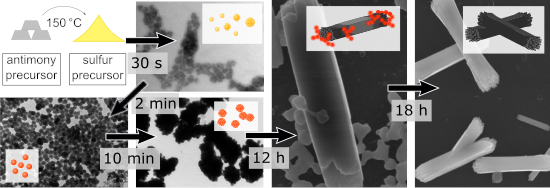
- reaction allowed tuning of the optical band gap of the amorphous nanoparticles in the range of 2.2–2.0 eV. On the contrary, the optical band gap of the crystalline particles decreased to a value of 1.7 eV and remained constant when the reaction progressed. Based on the proposed formation mechanism, future
- syntheses for Sb2S3 particles can be developed, allowing tuning of the particle properties in a broad range. In this way, the selective use of this material in a wide range of applications will become possible. Keywords: band gap; kinetics; nanoparticles; Sb2S3; solar cells; Introduction The search for
- are several requirements for materials to be eligible for application in the field of photovoltaics, such as high absorption performance, nontoxicity, abundance, efficiency, and low cost. As a semiconductor with a low band gap and a high absorption coefficient, antimony(III) sulfide (Sb2S3) has become


Progress and innovation of nanostructured sulfur cathodes and metal-free anodes for room-temperature Na–S batteries
Beilstein J. Nanotechnol. 2021, 12, 995–1020, doi:10.3762/bjnano.12.75
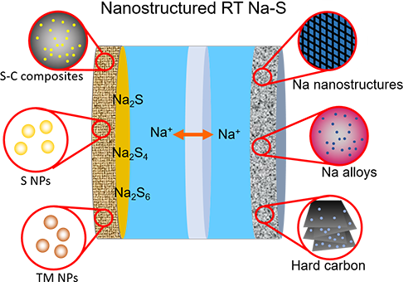
- intercalation in anode materials of SiBs, this knowledge should now be transferred to RT Na–S batteries to increase their safety and applicability. The patent survey also revealed quite clearly the gap that exists between academic and industrial RT Na–S battery research, where the former flourishes with a




In situ transport characterization of magnetic states in Nb/Co superconductor/ferromagnet heterostructures
Beilstein J. Nanotechnol. 2021, 12, 913–923, doi:10.3762/bjnano.12.68
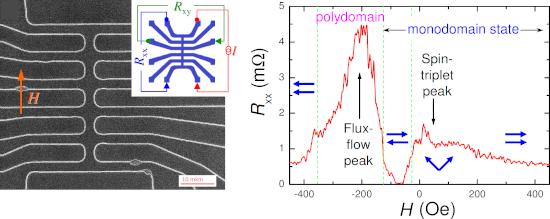
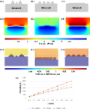
- )[Co(1.5)Nb(8)Co(2.5)Nb(8)]6Co(1.5 nm)Nb(25) ML at T > Tc. The blue/red curves represent up/down field sweeps (data from [43]). (c) Simulated superconducting energy gap, Δ, in the S2 ML for P (red) and AP (blue) states. (d) Longitudinal resistance as a function of the temperature, normalized by Rn (T


Prediction of Co and Ru nanocluster morphology on 2D MoS2 from interaction energies
Beilstein J. Nanotechnol. 2021, 12, 704–724, doi:10.3762/bjnano.12.56
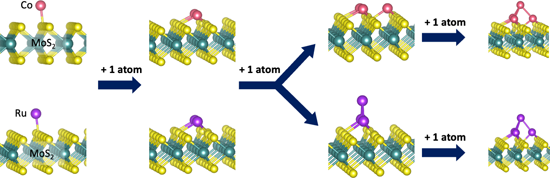
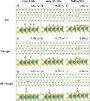
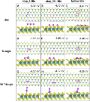
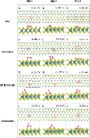
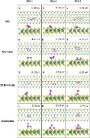
- gap in understanding thin film nucleation on 2D materials. In this paper, we present a density functional theory (DFT) study of the adsorption of small Co and Ru structures, with up to four atoms, on a monolayer of MoS2. We explore how the metal–substrate and metal–metal interactions contribute to the
- insights, there is a knowledge gap in the understanding of metal thin film nucleation on 2D materials [28]. We showed that we can investigate the first stages of thin film nucleation on 2D materials with first principles simulations, using the example of small Cun structures on an MoS2 monolayer (ML). MoS2
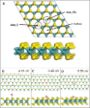
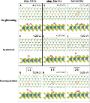
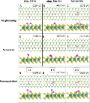
- magnitude as the overall metal contribution increases with added adatoms. Some mid-gap states for Mo d-orbitals and S p-orbitals also begin to appear as more adatoms are added, contributing to the increasingly metallic nature of the system. DOS plots for all configurations are shown in section S3 of



A review of defect engineering, ion implantation, and nanofabrication using the helium ion microscope
Beilstein J. Nanotechnol. 2021, 12, 633–664, doi:10.3762/bjnano.12.52
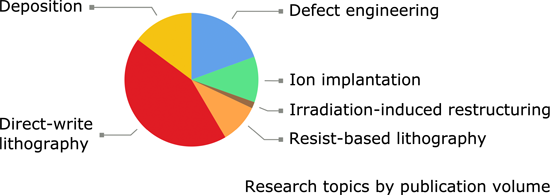
- into the YBCO thin film and thus be used to define precise sample geometries, without material removal. For example, high-dose irradiation over larger areas leaving a narrow gap in between has been used to define YBCO nanowires, which were then line-irradiated at lower dose to form nanowire-based


Local stiffness and work function variations of hexagonal boron nitride on Cu(111)
Beilstein J. Nanotechnol. 2021, 12, 559–565, doi:10.3762/bjnano.12.46
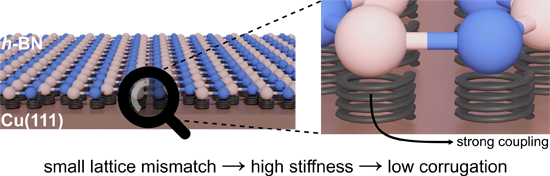
- 6.1 eV [35], which can be modulated by the Moiré pattern [30]. We analyse the substrate using STM topography, dI/dV, and frequency shift, Δf, AFM maps under low (in-gap) and high (conduction band onset) bias conditions (see Figure 2). Due to h-BN being insulating, no spectroscopic contribution is





