Search results
Search for "kinetics" in Full Text gives 454 result(s) in Beilstein Journal of Nanotechnology. Showing first 200.
Stability and activity of platinum nanoparticles in the oxygen electroreduction reaction: is size or uniformity of primary importance?
Beilstein J. Nanotechnol. 2021, 12, 593–606, doi:10.3762/bjnano.12.49
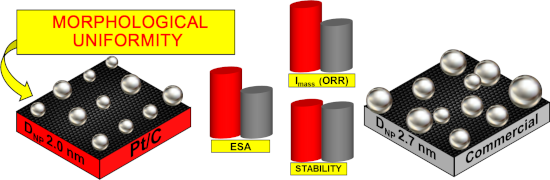
- ), which is due to the difference in their structural characteristics described above (Table 1). The commercial catalyst JM40 has the minimal ESA value (Table 2). The study of the ORR kinetics, carried out by linear voltammetry using RDE (Figure 5), showed that the ORR proceeds according to the four
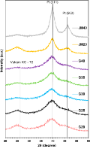


The preparation temperature influences the physicochemical nature and activity of nanoceria
Beilstein J. Nanotechnol. 2021, 12, 525–540, doi:10.3762/bjnano.12.43
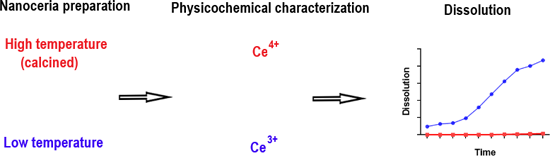
- the solvothermally synthesized nanoceria is less dramatic if the results are expressed as a dissolution rate in which the difference in specific surface area is factored out. Assuming first-order kinetics, as successfully fit to other, more soluble, ENMs [36], the half-lives of the solvothermally




Boosting of photocatalytic hydrogen evolution via chlorine doping of polymeric carbon nitride
Beilstein J. Nanotechnol. 2021, 12, 473–484, doi:10.3762/bjnano.12.38
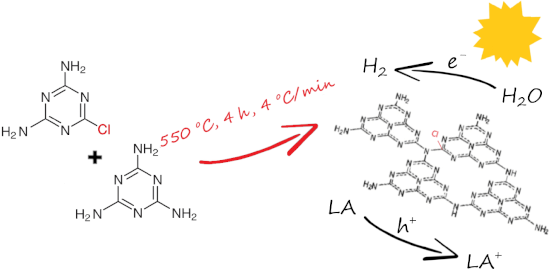
- the long-wavelength region, sluggish kinetics, and high recombination of photoexcited electron–hole pairs [19][20][21]. Tremendous efforts have been made in order to increase the photocatalytic activity of PCN materials by optimizing their nanostructure and improving their chemical surface texture


A review on nanostructured silver as a basic ingredient in medicine: physicochemical parameters and characterization
Beilstein J. Nanotechnol. 2021, 12, 440–461, doi:10.3762/bjnano.12.36
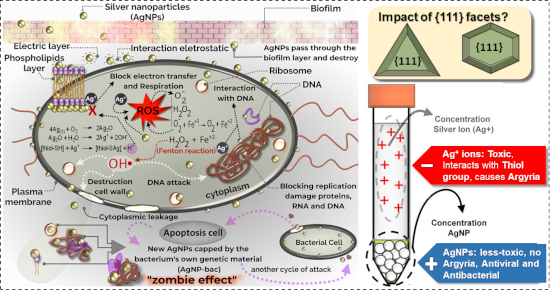
- -shaped AgNPs regarding their antibacterial activity against various Gram-positive and Gram-negative bacteria. Death kinetics confirmed that the mortality rate of Klebsiella pneumoniae was higher when exposed to spherical AgNPs with larger {111} facets in comparison to rod-shaped AgNPs. Therefore, the
- {111} facets were found to be responsible for the antibacterial activity of AgNPs, a fact that was confirmed by a death study whose kinetics were supported by the arrangement of Ag-resistant genes in the genome of the test organism [46]. Conversely, AgNPs with different sizes exhibit different
- be described by a first-order kinetic reaction, according to Equation 1 [56]. Experimental studies have shown that the decrease in pH generally increases the dissolution kinetics [51][55][57]. Liu and Hurt studied the dissolution of AgNPs in buffered solutions (acetate and borate buffer) in a pH


Characterization, bio-uptake and toxicity of polymer-coated silver nanoparticles and their interaction with human peripheral blood mononuclear cells
Beilstein J. Nanotechnol. 2021, 12, 282–294, doi:10.3762/bjnano.12.23
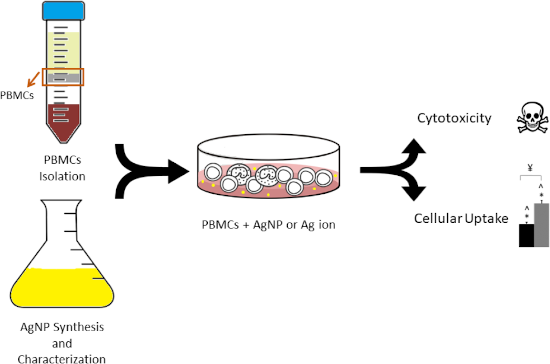
- the effect of cell type and the kinetics of cellular uptake or sorption [40]. Human PBMCs primarily consist of monocytes and lymphocytes (mostly T cells). Monocytes are known for their phagocytic properties and phagocytosis is suggested as one of the possible mechanisms for Ag uptake by cells [7]. As



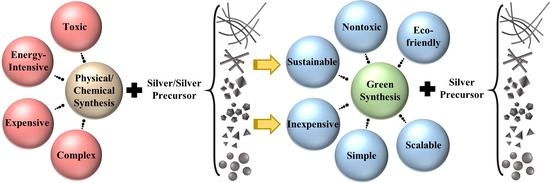
A review on the green and sustainable synthesis of silver nanoparticles and one-dimensional silver nanostructures
Beilstein J. Nanotechnol. 2021, 12, 102–136, doi:10.3762/bjnano.12.9


The role of gold atom concentration in the formation of Cu–Au nanoparticles from the gas phase
Beilstein J. Nanotechnol. 2021, 12, 72–81, doi:10.3762/bjnano.12.6
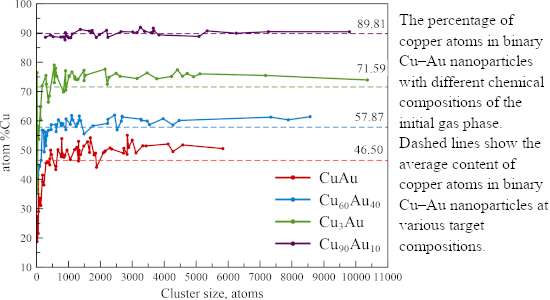
- only based on the kinetics of chemical reactions. Thus, according to the MD simulation results, several important conclusions can be drawn. First, an increase in the percentage of gold atoms in a binary vapor composed of Cu–Au leads to a decrease in the size of the synthesized nanoparticles. Second


ZnO and MXenes as electrode materials for supercapacitor devices
Beilstein J. Nanotechnol. 2021, 12, 49–57, doi:10.3762/bjnano.12.4
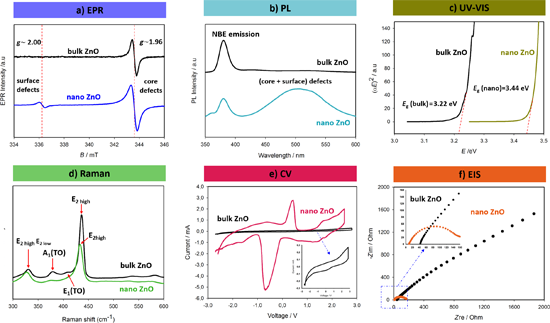
- play a vital role in the creation of the defect centers. Different routes may create different size distributions. The defects may have different thermodynamics and kinetics. Also, secondary phases may occur, and impurities and morphology may change. All these facts affect the creation of defects
Atomic layer deposited films of Al2O3 on fluorine-doped tin oxide electrodes: stability and barrier properties
Beilstein J. Nanotechnol. 2021, 12, 24–34, doi:10.3762/bjnano.12.2
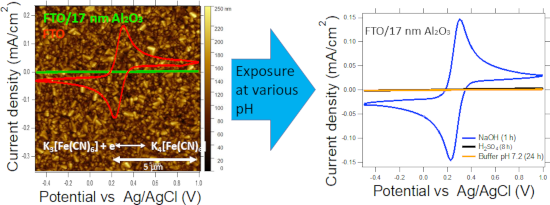
- that of pure FTO is higher than three. This means that there are B-type defects in the barrier film. These defects cause not only the delamination of the Al2O3 film from the FTO substrate, but also a slowdown of the charge-transfer kinetics (accompanied by a strong increase in ΔEpp). The Table 1 shows


Bio-imaging with the helium-ion microscope: A review
Beilstein J. Nanotechnol. 2021, 12, 1–23, doi:10.3762/bjnano.12.1
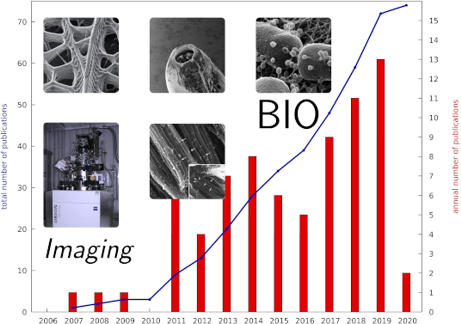
- HIM [32][34][49]. We are not aware of any currently published biological application of RBS in the HIM. However, from scattering kinetics it follows that RBS is most sensitive to heavy elements in a light matrix. For bio-imaging this implies that RBS could be a promising technique to study systems


Nanocasting synthesis of BiFeO3 nanoparticles with enhanced visible-light photocatalytic activity
Beilstein J. Nanotechnol. 2020, 11, 1822–1833, doi:10.3762/bjnano.11.164
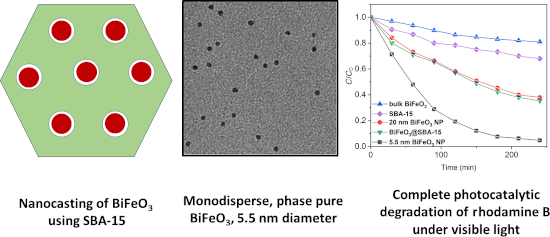
- very narrow particle size distribution. The results also suggest that the nanoparticles are characterized by a low concentration of surface defects and a low level of local strain, which is ideal for surface-based applications such as photocatalysis. This is confirmed by the reaction kinetics of the
- degradation efficiency. Under optimized reaction conditions, the complete degradation of the organic dye molecule could be achieved in less than 50 min. Kinetic studies show that the photodegradation follows first-order kinetics based on the Langmuir–Hinshelwood model. The main active species in the
- light using different catalysts. Kinetics of the photocatalytic degradation of RhB using different catalysts. Effect of catalyst concentration on the degradation of RhB. Evaluation of photocatalytic stability and reusability of 5.5 nm BiFeO3 NP in a total of five cycles. Photocatalytic degradation of




Self-standing heterostructured NiCx-NiFe-NC/biochar as a highly efficient cathode for lithium–oxygen batteries
Beilstein J. Nanotechnol. 2020, 11, 1809–1821, doi:10.3762/bjnano.11.163
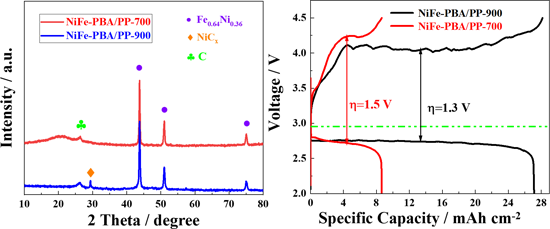
- batteries [7][8][9][10]). In order to meet the requirements for efficient catalysts in practical applications, platinum group metal (PGM)-based catalysts are currently used as principal catalysts to reduce the overpotential of ORR and OER due to their slow kinetics [11][12][13]. The high cost, poor






Absorption and photoconductivity spectra of amorphous multilayer structures
Beilstein J. Nanotechnol. 2020, 11, 1757–1763, doi:10.3762/bjnano.11.158
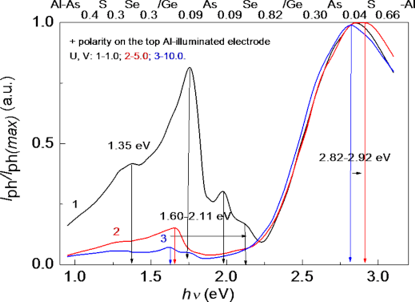
- spectra and the kinetics of the photocurrent can provide information regarding the mechanisms of generation, recombination, and drift processes of non-equilibrium carriers in amorphous materials. Thus, investigations of stationary and transient characteristics of the photoconductivity of ternary amorphous


Out-of-plane surface patterning by subsurface processing of polymer substrates with focused ion beams
Beilstein J. Nanotechnol. 2020, 11, 1693–1703, doi:10.3762/bjnano.11.151
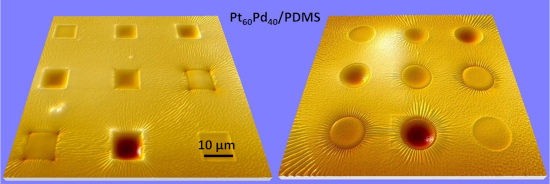
- surface curvature at the microscale while preserving the surface morphology at the nanoscale. An even more remarkable result is the transition from shrinkage to expansion and then from expansion to shrinkage, as a function of the irradiation fluence (Figure 8). To explain this non-trivial surface kinetics


Cu2O nanoparticles for the degradation of methyl parathion
Beilstein J. Nanotechnol. 2020, 11, 1546–1555, doi:10.3762/bjnano.11.137
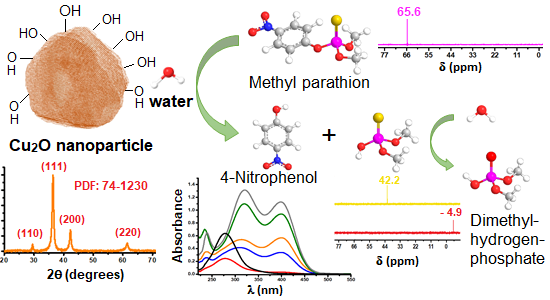
- . Figure 9 shows the degradation of MP at different reaction times for all three nanoparticle sizes. Since water is a reactant as well as the solvent, it is prudent to assume a reaction of pseudo first-order kinetics because water is in excess with respect to MP. The degradation of methyl parathion in


Antimicrobial metal-based nanoparticles: a review on their synthesis, types and antimicrobial action
Beilstein J. Nanotechnol. 2020, 11, 1450–1469, doi:10.3762/bjnano.11.129
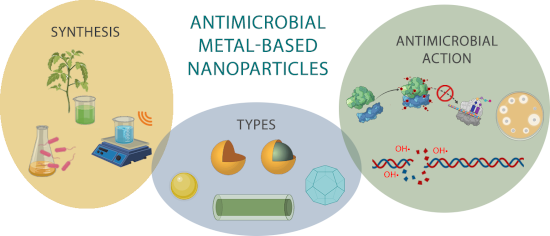
- , 8, 10, 12, and 24 h). The percentage of surviving bacteria, with respect to a control sample without the antimicrobial agent, is determined. A kill curve can be determined with the collected data in order to visualize the kinetics of the antimicrobial agent and to determine if it performs a


Structure and electrochemical performance of electrospun-ordered porous carbon/graphene composite nanofibers
Beilstein J. Nanotechnol. 2020, 11, 1280–1290, doi:10.3762/bjnano.11.112
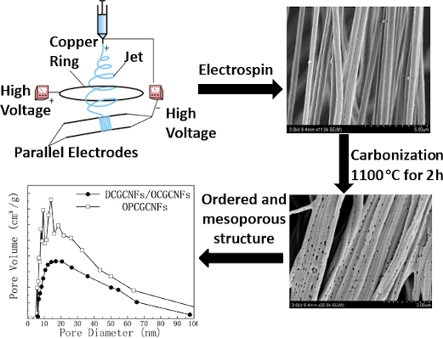
- in improving the capacitive properties of a given electrode. According to the diffusion kinetics of ions in solution, the high specific surface area and high porosity of the electrode material allow for a quick ion adsorption on the electrode surface, thereby improving the migration rate of ions and
- addition, a large number of mesopores in the carbon material potentially improves the diffusion kinetics of ions in both electrolyte and electrodes, enhancing the electrolyte transfer rate to the electrode pores while maintaining high capacitance retention [54]. These two factors explain why decreasing the


Plant growth regulation by seed coating with films of alginate and auxin-intercalated layered double hydroxides
Beilstein J. Nanotechnol. 2020, 11, 1082–1091, doi:10.3762/bjnano.11.93
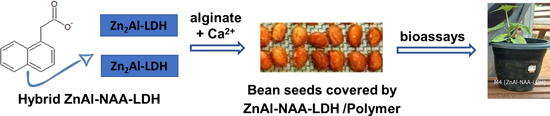
- kinetics was also studied. See Supporting Information File 1 for complete experimental data. Germination rate and germination speed index The seed germination rate results are shown in Figure 5. After the final germination period of 15 days, the control experiment showed the highest percentage of



Microwave-induced electric discharges on metal particles for the synthesis of inorganic nanomaterials under solvent-free conditions
Beilstein J. Nanotechnol. 2020, 11, 1019–1025, doi:10.3762/bjnano.11.86
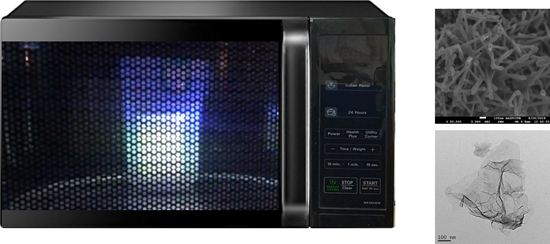
- microwave irradiation both in solution and in the solid state rapidly increases the reaction temperature and helps to improve reaction kinetics significantly. This reduces drastically the reaction time [9][10]. Non-thermal effects may also influence the reaction kinetics, which is still a subject of


Gas-sensing features of nanostructured tellurium thin films
Beilstein J. Nanotechnol. 2020, 11, 1010–1018, doi:10.3762/bjnano.11.85
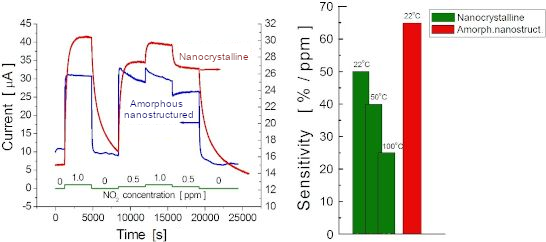
- nanostructured Te films were studied with a special focus on the gas-response kinetics. Results and Discussion Sample preparation, morphology and structure Two methods were used to nanostructure Te-based films: growth of Te nanocrystals on Pyrex glass substrates or deposition of amorphous Te films onto
- mentioned that the XRD pattern of samples grown on Pyrex glass substrates at the same rate of 30 nm/s (data not shown) does not show features of crystalline Te. Gas-sensing characterization, methods and response kinetics For the gas-sensing characterization of fabricated films, NO2 was chosen since it is
- line shows the switching profile. It is seen that the current follows the same pattern but the baseline strongly increases with temperature, as depicted in Table 1. Table 1 also shows the film sensitivity, which is calculated from the response kinetics to 1.0 ppm NO2, as a relative percent increase in


Nickel nanoparticles supported on a covalent triazine framework as electrocatalyst for oxygen evolution reaction and oxygen reduction reactions
Beilstein J. Nanotechnol. 2020, 11, 770–781, doi:10.3762/bjnano.11.62
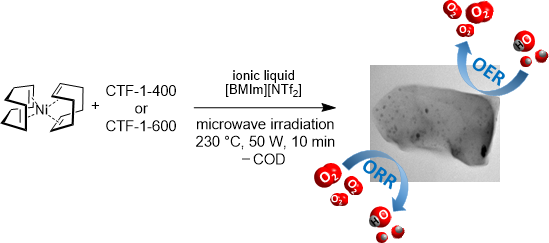
- the oxygen reduction reaction (ORR) are two crucial processes, which require improvements through the design of efficient catalysts. Both OER and ORR suffer from slow kinetics of the four-electron transfer process [2][3]. Thus, highly efficient electrocatalysts with enhanced performance need to be


Effect of Ag loading position on the photocatalytic performance of TiO2 nanocolumn arrays
Beilstein J. Nanotechnol. 2020, 11, 717–728, doi:10.3762/bjnano.11.59
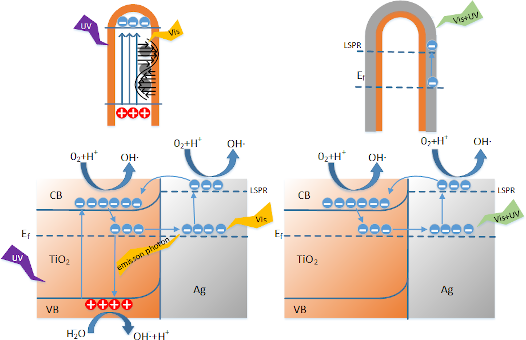
- ) kinetics of different samples, (d) recycling of AFT3 and ACT3. FDTD simulations of the electric field distribution of Ag-loaded TiO2 nanocolumns with different structures. a1) Wavelength 457 nm TNC cross section, a2) wavelength 320 nm TNC cross section, a3) wavelength 457 nm TNC longitudinal section, a4


Luminescent gold nanoclusters for bioimaging applications
Beilstein J. Nanotechnol. 2020, 11, 533–546, doi:10.3762/bjnano.11.42
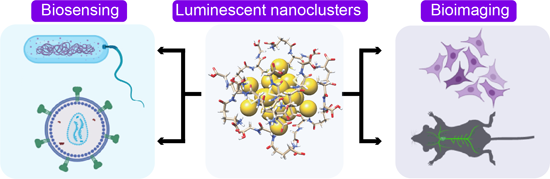
- endocytosis. The superparamagnetic nature of the PML-MF allowed for the magnetic targeting of the nanocarriers. Further, the ability of BSA to encapsulate drug molecules was explored to load doxorubicin (DPML-MF) in the nanocarriers. The release kinetics of doxorubicin studied at pH 7.4 and 4.4 were found to


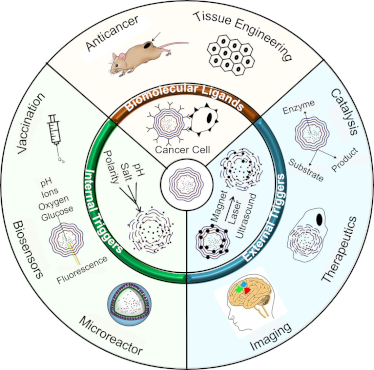
Multilayer capsules made of weak polyelectrolytes: a review on the preparation, functionalization and applications in drug delivery
Beilstein J. Nanotechnol. 2020, 11, 508–532, doi:10.3762/bjnano.11.41



Interfacial charge transfer processes in 2D and 3D semiconducting hybrid perovskites: azobenzene as photoswitchable ligand
Beilstein J. Nanotechnol. 2020, 11, 466–479, doi:10.3762/bjnano.11.38
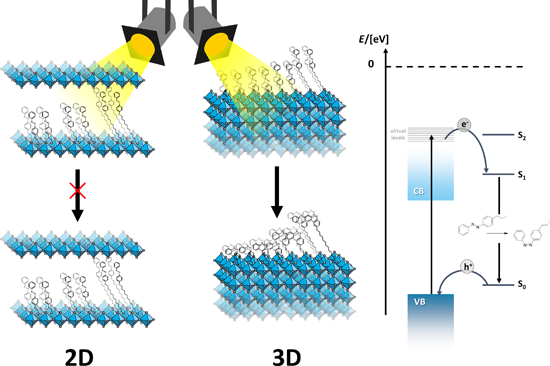
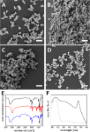
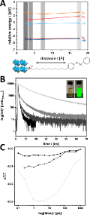
- , 832, 765, 727 and 685 cm−1 are highlighted in grey as significant vibrations of the azobenzene. (F) Normalized UV–vis absorption spectra of 3D-AzoC2 dispersed in toluene (black) and AzoC2 in H2O (grey, dashed). (A) UV–vis absorption kinetics of 3D-AzoC2 in toluene over a time period of 600 s. (B