


Search results
Search for "monolayer" in Full Text gives 503 result(s) in Beilstein Journal of Nanotechnology. Showing first 200.
Review of advanced sensor devices employing nanoarchitectonics concepts
Beilstein J. Nanotechnol. 2019, 10, 2014–2030, doi:10.3762/bjnano.10.198
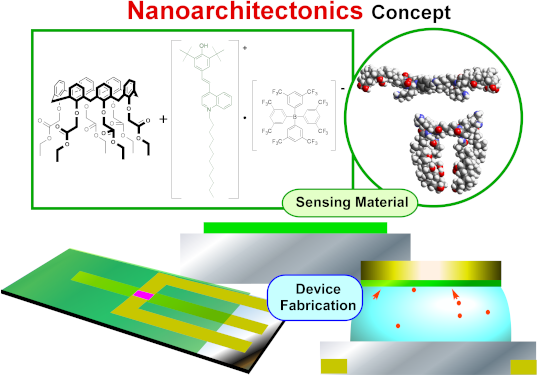
- monolayers [133][134], Langmuir–Blodgett films [135][136][137], and layer-by-layer assembly [138][139][140][141] on sensors and related devices is a key nanoarchitectonics step for sensor fabrication. For example, Furusawa et al. immobilized nickel-nitrilotriacetic acid within a self-assembled monolayer on
- an organic field-effect transistor, which was used for the sensitive detection of small organic acid molecules, such as citric acid [142]. Hattori and co-workers fabricated an ATP/ADP sensitive image sensor by immobilization of apyrase as a self-assembled monolayer on a 128 × 128 pixel array
- structure was integrated into a microfluidic device. The monolayer structure of the semiconductive layer provided better sensor performance with long-term stability and high sensitivity. The minimum detection limit for melamine was approximately 10 ppb. The high performance of nanoarchitectonic





First principles modeling of pure black phosphorus devices under pressure
Beilstein J. Nanotechnol. 2019, 10, 1943–1951, doi:10.3762/bjnano.10.190
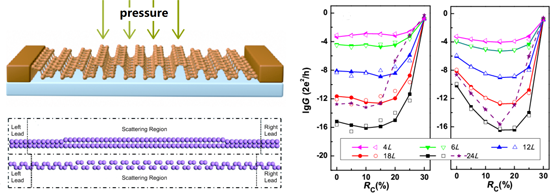
- funnel effect in monolayer BP [13], which describes the possibility of controlling exciton motion by means of inhomogeneous strains. They found that the funnel effect in BP is much stronger than that in MoS2, and more important, shows opposite behavior to that in MoS2. Excitons in BP are mainly
- accumulated isotropically in strain-reduced regions, instead of occurring in the regions with a high tensile strain like in MoS2. Deniz et al. investigated the strain-related optical properties of monolayer BP using first principles calculations [7]. They found that the optical response of BP is sensitive to
- built a set of pure monolayer zigzag and armchair BP nanodevices and investigated their pressure-related electric properties from first principles. Comparing to metal–BP heterojunctions, pure BP devices have advantages including simple structure, easy preparation, smooth continuous interface, and




Remarkable electronic and optical anisotropy of layered 1T’-WTe2 2D materials
Beilstein J. Nanotechnol. 2019, 10, 1745–1753, doi:10.3762/bjnano.10.170
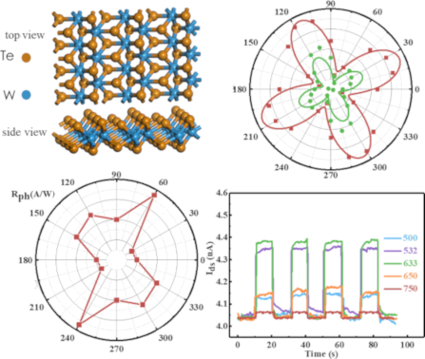
- monolayer 1T’-WTe2 has a highly in-plane anisotropic crystal structure, in addition to anisotropic electrical, thermal and optical properties [23][24][25][26]. However, most of the results are based on theoretical demonstrations of the anisotropic phenomenon, rather than further quantitative data for the


Graphynes: an alternative lightweight solution for shock protection
Beilstein J. Nanotechnol. 2019, 10, 1588–1595, doi:10.3762/bjnano.10.154
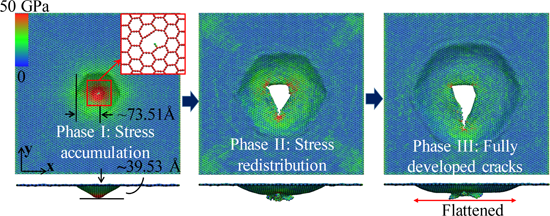
- monolayer GY nanosheets of different morphologies, including α-GY, β-GY, γ-GY and 6612-GY, under supersonic-velocity impacts (from 1 to 6 km/s) based on in silico studies. Generally, cracks initiate at the geometry center and the nanosheet experiences significant out-of-plane deformation before the
- energy dissipation or delocalization is expected during impact. This study provides a fundamental understanding of the deformation and penetration mechanisms of monolayer GY nanosheets under impact, which is crucial in order to facilitate their emerging applications for impact protection. Keywords
- ]. A spherical diamond projectile with a radius of 25 Å was adopted. A square monolayer GY nanosheet was constructed with a size of about 50 × 50 nm2. A high velocity of 20 Å/ps (i.e., 2 km/s) was chosen to initiate the impact test. The boundaries of GY were fixed during impact (Figure 1), and the




Materials nanoarchitectonics at two-dimensional liquid interfaces
Beilstein J. Nanotechnol. 2019, 10, 1559–1587, doi:10.3762/bjnano.10.153
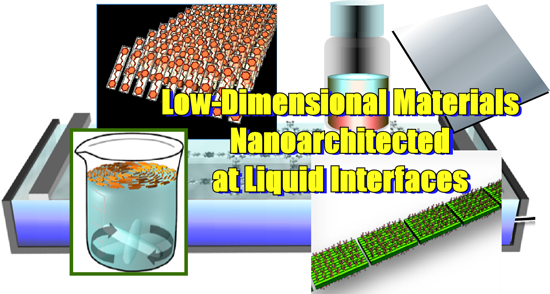
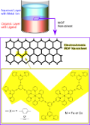
- -exchangers, and indicative dyes were incorporated in an optode system detecting caesium ions in tap water and seawater [80]. Photo-controllable molecular devices were successfully fabricated using two-dimensional self-assembled monolayer technology as recently reviewed by Suda [81]. Hierarchic functional
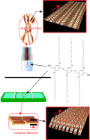
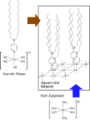
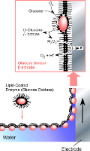
- case exemplified in Figure 5, flavin adenine dinucleotide (FAD) was dissolved in an aqueous subphase [194][195]. FAD can bind specifically to two monolayer components, a guanidinium lipid or an orotate lipid. These molecules bind site-specifically to the phosphate moieties or the adenosine part
- , respectively. Lateral compression of the complexed monolayer finally results in two-dimensional regular molecular patterns. The difference between the molecular lengths of the guanidinium/phosphate and orotate/adenosine pairs yields regular dip patterns with sub-nanometre precision. Similar methodologies, i.e













Janus-micromotor-based on–off luminescence sensor for active TNT detection
Beilstein J. Nanotechnol. 2019, 10, 1324–1331, doi:10.3762/bjnano.10.131
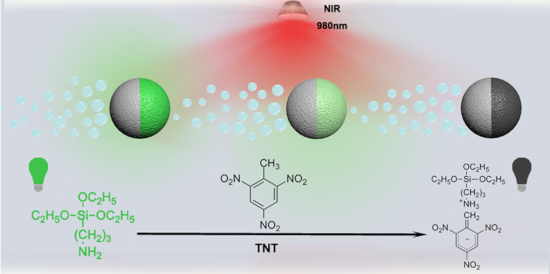
- dispersed on a glass slide to form a monolayer. After sputtering of a 20 nm thin film of Pt, the Janus UCNP-functionalized capsule motors were obtained by removing the silica cores with hydrofluoric acid. To prepare the Janus UCNP capsule motors, NaYF4:Yb3+/Er3+ UCNPs were firstly synthesized following a
- , and excess UCNPs were removed by centrifugation. The Janus structure was prepared by depositing a monolayer of UCNP-coated silica particles on glass substrates and sputtering 20 nm of Pt onto the surface of the UCNP-coated silica particles, followed by peeling off the particles from the substrate. The


Pure and mixed ordered monolayers of tetracyano-2,6-naphthoquinodimethane and hexathiapentacene on the Ag(100) surface
Beilstein J. Nanotechnol. 2019, 10, 1188–1199, doi:10.3762/bjnano.10.118
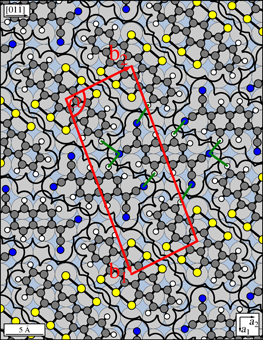
- at RT. For deposition they were sublimed out of custom-built thermal evaporators onto the Ag(100) surface kept at RT. For the deposition of one monolayer (ML) of HTPEN, the respective evaporator was operated at 710 K for 3 min; in case of TNAP, at 450 K for 12 min. These temperatures are, however
- , not well reproducible because of variations in the thermal contact between the thermocouple and the used glass crucibles. As a result, the coverages estimated from deposition times are of limited absolute accuracy. Results HTPEN monolayer HTPN forms two different monolayer structures on the Ag(100
- ) surface. The first structure (termed “relaxed”) was observed as a pure phase for coverages between 0.3 and 0.5 monolayers (ML). We refer to 1 ML as the surface coverage that corresponds to a uniform and complete monolayer of the relaxed structure. However, a complete monolayer of this structure does not


Revisiting semicontinuous silver films as surface-enhanced Raman spectroscopy substrates
Beilstein J. Nanotechnol. 2019, 10, 1048–1055, doi:10.3762/bjnano.10.105
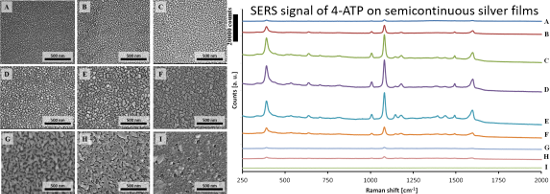
- -structured surfaces made of glass [25][26], GaN [27][28][29], Si [30], TiO2 [31], Al2O3 [32], Ti [33], polymers [34], or planar surfaces coated with nano/microspheres resulting in metal film on nanospheres MFON [35][36], and Au nanocrescents on a monolayer of polystyrene nanospheres [37]. Additionally
- ± 20% and standard tip curvature radius less than 10 nm. The thickness of SSFs was measured on the edge (step) formed through removing of a part of the silver film from the substrate (using a blade). SERS measurements The 4-aminothiophenol was used as a SERS analyte. In order to form a monolayer of 4




Enhanced inhibition of influenza virus infection by peptide–noble-metal nanoparticle conjugates
Beilstein J. Nanotechnol. 2019, 10, 1038–1047, doi:10.3762/bjnano.10.104
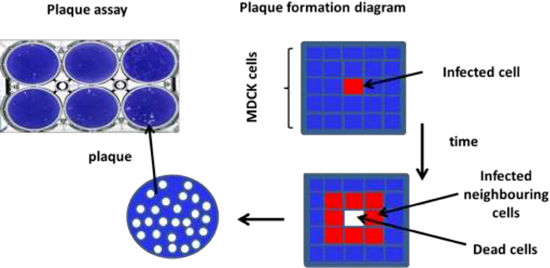
- that does not stain with toluidine blue. In control (no virus) and vehicle (DMSO)-treated cells, the cell monolayer in the well was evenly stained (Supporting Information File 1, Figure S3). In the presence of virus, there were substantial areas where cells had lysed (plaques) and there was no staining
- MDCK cells were grown to 90% confluence in T25 tissue culture flasks (VWR, Lutterworth, Leicestershire, UK), which corresponds to 7 × 10⁶ cells/flask. Then, the cell monolayer was washed with 2 × 5 mL PBS, and virus (A/WSN/33 H1N1 subtype) was added at a multiplicity of infection (MOI) of 0.001 in 2 mL
- DMEM. Cells were incubated with virus for 1 h at 37 °C on a rocking platform. Virus-containing medium was removed and the cell monolayer washed with 2 × 5 mL DMEM, then 5 mL N-acetyl trypsin (Sigma-Aldrich, Merck, UK), 2.5 µg/mL in DMEM, was added and incubated for 24–48 hours at 37 °C until a




Electronic and magnetic properties of doped black phosphorene with concentration dependence
Beilstein J. Nanotechnol. 2019, 10, 993–1001, doi:10.3762/bjnano.10.100
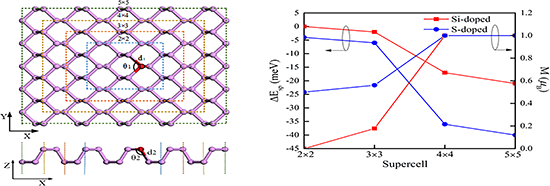
- experimentally demonstrated that substitutional doping of TMDs could be achieved by filling the vacancies observed in CVD-grown monolayer TMDs [18]. Liu et al. [19] prepared epitaxial copper-doped ZnO films and observed that the substitution of Cu for Zn and the presence of strong Cu–Zn–O bonds are necessary for
- the Hellman–Feynman force per atom were minimized to less than 10−6 eV and 0.01 eV/Å, respectively. To choose a proper exchange–correlation functional in the energy calculations, the band structure of monolayer phosphorene was calculated by HSE06 or the generalized gradient approximation (GGA) of the
- isosurfaces are separated by ±0.04 e/Å3. Top view and side view of the physical model of doped monolayer phosphorene. Band alignment of phosphorene calculated by using (a) the GGA of PBEsol and (b) HSE06. The inset shows the path in the Brillouin zone. The Fermi level is shifted to zero. Acknowledgements


Experimental study of an evanescent-field biosensor based on 1D photonic bandgap structures
Beilstein J. Nanotechnol. 2019, 10, 967–974, doi:10.3762/bjnano.10.97
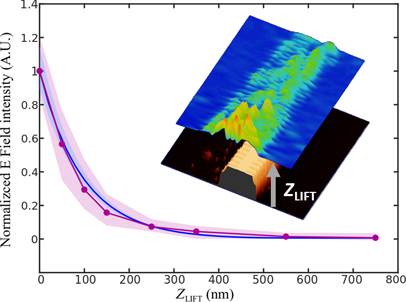
- the immobilization density by fluorescence microarray measurements, densities corresponding to a close-packed monolayer of the half-antibodies were obtained with standard deviation of 8% indicating a good reproducibility of the immobilization method [13]. Biosensing experiment Figure 7 shows the


Structural and optical properties of penicillamine-protected gold nanocluster fractions separated by sequential size-selective fractionation
Beilstein J. Nanotechnol. 2019, 10, 955–966, doi:10.3762/bjnano.10.96
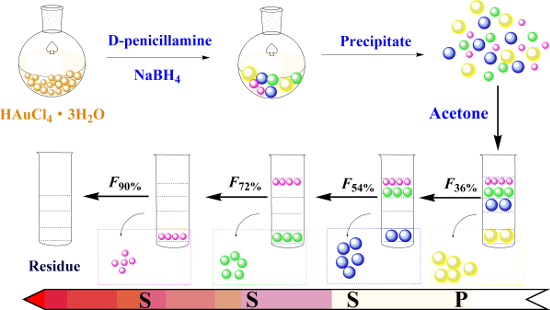
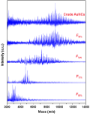
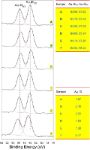
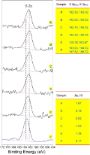
- fractionation and purification of the monolayer-protected AuNCs. Through continuously adding acetone to a crude AuNC aqueous solution and controlling the volume percentage of acetone, we successfully separated the polydisperse AuNCs with diameters ranging from 0.5 to 5.4 nm into four different fractions
- was investigated at room temperature. The results show that the peak emission energy of the size-selected AuNCs undergoes a blue shift when the size is decreased, which can be attributed to the quantum confinement effect. Keywords: gold nanoclusters; monolayer-protected gold nanoclusters; sequential
- size-selective fractionation; Introduction Due to the unique mechanical, chemical, thermal, magnetic and optical properties of nanometer-sized materials, they are often utilized in many fields [1]. Monolayer-protected gold nanoclusters (AuNCs) are nanoparticles of metal atoms stabilized by a



Effects of gold and PCL- or PLLA-coated silica nanoparticles on brain endothelial cells and the blood–brain barrier
Beilstein J. Nanotechnol. 2019, 10, 941–954, doi:10.3762/bjnano.10.95
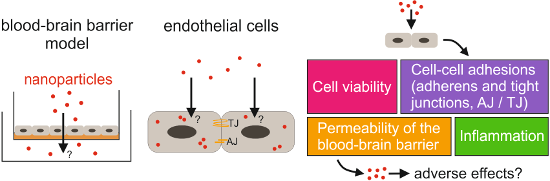
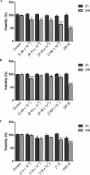
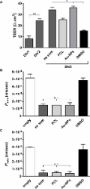
- co-culture with SH-SY5Y cells were not affected by exposure to PEGylated Au-NPs [24]. Similar results were reported by Trickler et al. using Au-NPs in both a rat and a porcine model of the BBB. Smaller Au-NPs, however, increased the BBB-permeability in the rBMEC monolayer but not the pBMEC monolayer
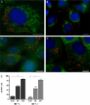
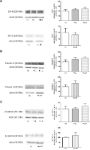
- -characteristics, namely tight junction (TJ) formation, in rBCEC4 cells. Both, the TJ-associated protein zonula occludens-1 (ZO-1) and the TJ protein occludin, resulted in positive staining (Figure 5A,B). TEM pictures corroborated the formation of TJs between single rBCEC4 cells in a cell monolayer (Figure 5C). A
- possible effect of NP exposure on TJ formation and established TJs was investigated using immunofluorescence staining for ZO-1 (Figure 5D–G). rBCEC4 cells were exposed to PLLA-NPs at a concentration of [24.9 µg/mL] at various time points during and after monolayer and barrier formation. No differences in



Fabrication of silver nanoisland films by pulsed laser deposition for surface-enhanced Raman spectroscopy
Beilstein J. Nanotechnol. 2019, 10, 882–893, doi:10.3762/bjnano.10.89
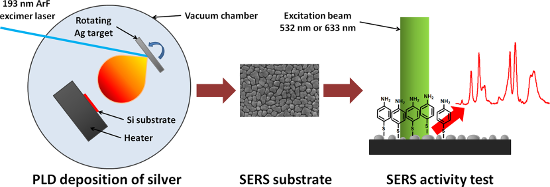
- substrates depends on the enhancement factor achieved for the Raman signal. Several ways to calculate the EF have been reported in the literature [23][28][29]. In the simplest case, the EF is determined as the intensity ratio of the selected peak for the tested compound in the form of a monolayer on the SERS
- substrates and in the bulk form [23]. This method, however, is very inaccurate because of the different number of measured molecules of the tested substance contained in a monolayer and in the volume of the material. To obtain better results, the EF was calculated based on the Raman spectrum registered for a
- pMA monolayer adsorbed on the surface of a platinum foil with 99.998% purity. According to literature reports, a pMA monolayer can be made on the surface of platinum, as well as on the surface of silver and gold, a pMA monolayer can be made [30][31]. EF values were calculated according to the




Electronic properties of several two dimensional halides from ab initio calculations
Beilstein J. Nanotechnol. 2019, 10, 823–832, doi:10.3762/bjnano.10.82
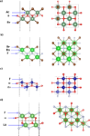
- of AlOCl and BaFCl (not shown) are similar to the geometry of AcOCl. In Figure 2, we present also the structures of the iodide monolayers YOI and ScOI (the structures of BiOI and LaOI are similar to the one of YOI). It can be noticed that each monolayer has a thickness of five atoms with sublayers
- monolayers CrOF, GaOF, InOF and LaOF are shown in Figure 5. From the DOS, it can be seen that the CrOF monolayer has a finite spin polarisation, and its magnetic moments are ordered ferromagnetically. Also, it is seen that the fluorine atoms contribute to the valence bands for all fluorides monolayers, while
- , and 6.9 eV for CaFBr. In contrast to the other bromides, the BiOBr monolayer exhibits an indirect bandgap with the CBM located at the Γ point and the VBM located along the M–Γ line. Using the GGA, the bandgap of BiOBr is found to be 2.68 eV, which is increased to 4.50 eV when the HSE functional is
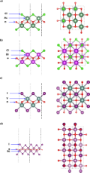


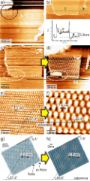
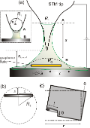
Capillary force-induced superlattice variation atop a nanometer-wide graphene flake and its moiré origin studied by STM
Beilstein J. Nanotechnol. 2019, 10, 804–810, doi:10.3762/bjnano.10.80
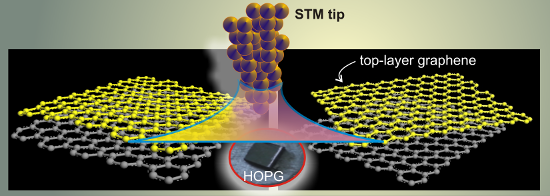
- various defects such as cleavage steps, graphite strands, wrinkles/ridges, fiber-like entities, folded-over flakes, broken graphite pieces and other carbon aggregates [5][6][7][8][9][10]. Graphene, a monolayer of graphite, is the thinnest and strongest material ever known [11][12][13] and holds immense


Trapping polysulfide on two-dimensional molybdenum disulfide for Li–S batteries through phase selection with optimized binding
Beilstein J. Nanotechnol. 2019, 10, 774–780, doi:10.3762/bjnano.10.77
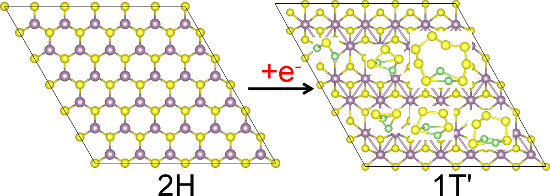
- energies of Li2Sx absorbed on 1T'-MoS2 monolayer are in the range of 0.31–2.94 eV, which is much higher than on the 2H-phase. The 1T'-MoS2 monolayer shows stronger trapping ability for Li2Sx than the 2H-MoS2 monolayer. The 1T'-MoS2 monolayer can be used as effective anchoring material in cathodes for Li–S
- understood. In this study, we systematically investigated the adsorption of LPSs on 2H-MoS2 and 1T'-MoS2 monolayers with DFT calculation. Our results show that the 1T'-MoS2 monolayer interacts strongly with Li2Sx, which will hinder the shuttle effect. Taking into account the better conductivity, 1T'-MoS2
- '-MoS2 monolayers used in the work are shown in Figure 1a and Figure 1b, respectively. The electronic band structures along high-symmetry points are shown in Figure 1c and Figure 1d, respectively. The 2H-MoS2 monolayer is a semiconductor with a direct bandgap of 1.67 eV, both the conduction band minimum


Towards rare-earth-free white light-emitting diode devices based on the combination of dicyanomethylene and pyranine as organic dyes supported on zinc single-layered hydroxide
Beilstein J. Nanotechnol. 2019, 10, 760–770, doi:10.3762/bjnano.10.75
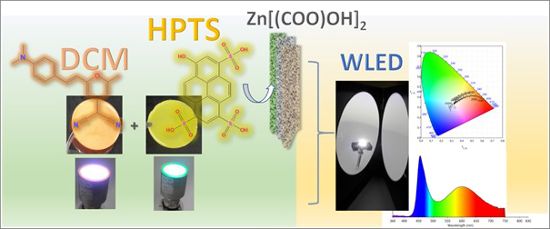
- is to trap the organic molecules by intercalation so as to preserve their optical properties [10][11]. In the solid matrix the molecule dyes are arranged in the interlayer spaces by monolayer particle assembly and a direct anion-exchange procedure in organic media [12]. Depending on the nature of the


Features and advantages of flexible silicon nanowires for SERS applications
Beilstein J. Nanotechnol. 2019, 10, 725–734, doi:10.3762/bjnano.10.72
- as much as it did between 10−6 and 10−5 M. It indicates that there is only a certain number of possible active sites on Ag that can host the analyte molecules. The reorientation of 4-MPBA or a shielding of the first analyte monolayer could also contribute to this effect. At a concentration of 10−6 M


The effect of translation on the binding energy for transition-metal porphyrines adsorbed on Ag(111) surface
Beilstein J. Nanotechnol. 2019, 10, 706–717, doi:10.3762/bjnano.10.70
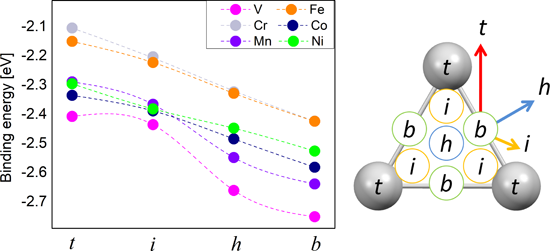
- theoretical [24][25][26] attention. Among the coinage metals typically used for applications, Ag(111) has attracted particular interest [27][28][29]. A complex behavior of the porphyrins on this surface was shown. Parallel orientation with respect to the surface is preferred for sub-monolayer coverage, while
- prefactor in the Boltzmann distribution law, even at a sub-monolayer coverage a large number of molecules are mobile on the surface. Also, following the same argumentation we can say that the direction of migration is not restricted from bridge to hollow positions. While the energy barrier along the bridge


![[Graphic 1]](/bjnano/content/inline/2190-4286-10-70-i1.svg?max-width=637&scale=1.18182) , for all systems and relative molecule–surface positions. Right: symm...
, for all systems and relative molecule–surface positions. Right: symm...


![[Graphic 7]](/bjnano/content/inline/2190-4286-10-70-i7.svg?max-width=637&scale=1.18182) for selected TMPP systems (M = V, Mn, Co; red: positive values, blue: negative value...
for selected TMPP systems (M = V, Mn, Co; red: positive values, blue: negative value...
Self-assembly and wetting properties of gold nanorod–CTAB molecules on HOPG
Beilstein J. Nanotechnol. 2019, 10, 696–705, doi:10.3762/bjnano.10.69
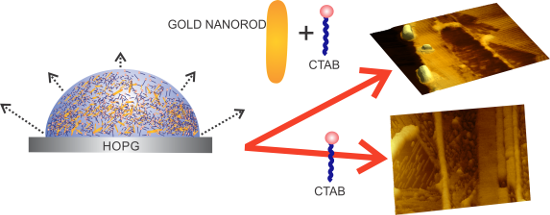
- . However, Figure 1A–C displays a montage of SEM images that shows monolayer nanorod deposits on the HOPG terraces, analogous to the results reported previously [51]. Since this work was more focused on the deposition and alignment of the nanorods near the step edges (comparable to the observation
- evaporated leaving behind bright regions of deposits on the surface. SEM images of evaporation-induced deposits at various locations on the HOPG surface: (A) dense deposits of gold nanorods after the first pinning of the contact line; (B) monolayer close-packed arrays on terraces; and (C, D) nanorods


Outstanding chain-extension effect and high UV resistance of polybutylene succinate containing amino-acid-modified layered double hydroxides
Beilstein J. Nanotechnol. 2019, 10, 684–695, doi:10.3762/bjnano.10.68
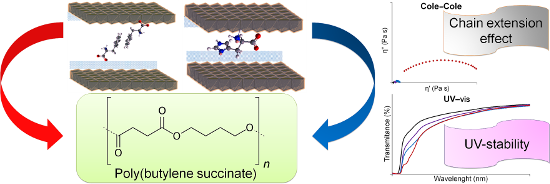
- the organic anions (determined using ChemBio 3D ultra 13.0 suite software) leads us to propose a monolayer arrangement for LDH/HIS where the main plane of the molecule is oriented nearly parallel to the hydroxide layer (Figure 2). From the point of charge density, Mg2Al hydroxide layers display an


Commercial polycarbonate track-etched membranes as substrates for low-cost optical sensors
Beilstein J. Nanotechnol. 2019, 10, 677–683, doi:10.3762/bjnano.10.67
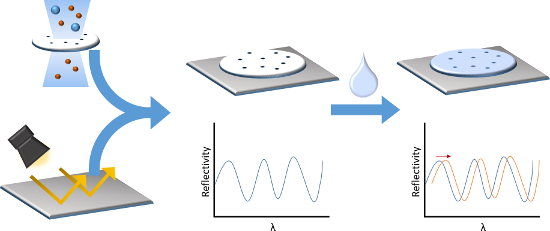
- the development of optical sensors: polycarbonate track-etched (PCTE) membranes. PCTE membranes, which are typically used for size-based filtration [9][10], are reminiscent of the porous structure of a monolayer of porous silicon, a material that has an optical response of a Fabry–Pérot (FP


Ultrathin hydrophobic films based on the metal organic framework UiO-66-COOH(Zr)
Beilstein J. Nanotechnol. 2019, 10, 654–665, doi:10.3762/bjnano.10.65
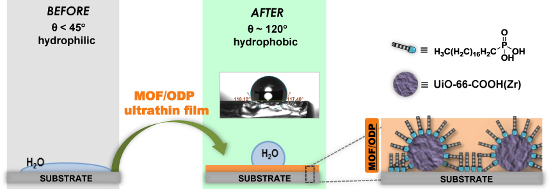
- /surfactant films containing 10 wt % octadecylphoshonic acid (ODP) have been deposited on substrates of different nature by Langmuir–Blodgett (LB) and Langmuir–Schaefer (LS) methods, showing that the presence of even only one MOF/ODP monolayer can increase the water contact angle of highly hydrophilic
- [24] and spray methods [25]. Compared to other methodologies that allow the deposition of MOF thin films, the Langmuir–Blodgett (LB) technique presents some advantages. Previous functionalization of the surface is not necessary and the film obtained can be as thin as one monolayer of MOF particles
- ODP amount contained on the monolayer MOF/ODP film. In addition, a broad feature at 5.7° is present in the MOF/ODP drop-cast sample that corresponds to pure ODP (Supporting Information File 1, Figure S7). Therefore, the crystalline structure of the MOF is preserved upon incorporation of the ODP and


Biomimetic synthesis of Ag-coated glasswing butterfly arrays as ultra-sensitive SERS substrates for efficient trace detection of pesticides
Beilstein J. Nanotechnol. 2019, 10, 578–588, doi:10.3762/bjnano.10.59
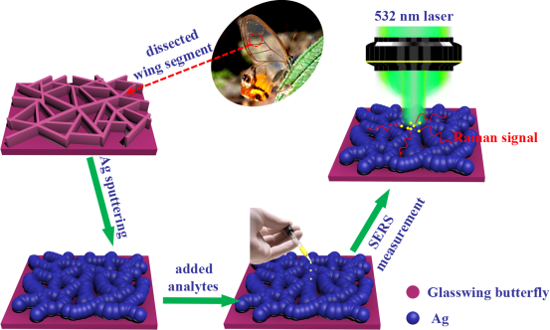
- layer of molecules (submonolayer to monolayer thickness) is adsorbed on the surface of the Ag-G.b.-20 substrate [33]. In the range of relatively low concentration, because all the probe molecules of CV are directly (or closely) adsorbed on the Ag-G.b.-20 substrate surface and SERS exhibits a proximity
- diameter of the illumination spot was ca. 1 µm and the penetration depth was ca. 3 mm. Hence, the value of Nbulk was ca. 1.42 × 10¹⁰. According to the above analysis, when the concentration of the CV was 10−6 M, the CV molecules were absorbed as a monolayer on the surface of the Ag-G.b.-20 substrate. The
- points. As plotted in Figure S2b, the RSD values for 915, 1172 and 1532 cm−1 were estimated to be 10.78%, 8.91% and 9.25%. Based on above results, both substrate-by-substrate and point-by-point reproducibility can be achieved with Ag-G.b.-20 substrates, which is likely connected to the monolayer





