


Search results
Search for "nanostructures" in Full Text gives 852 result(s) in Beilstein Journal of Nanotechnology. Showing first 200.
Combining physical vapor deposition structuration with dealloying for the creation of a highly efficient SERS platform
Beilstein J. Nanotechnol. 2023, 14, 83–94, doi:10.3762/bjnano.14.10
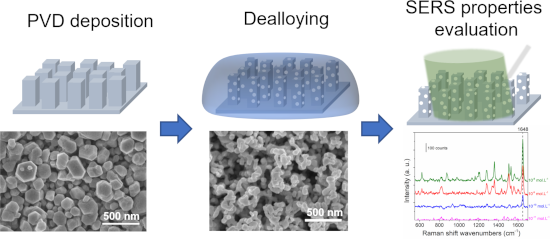
- due to their interconnected nanostructures and large surface areas [17][18][19]. A myriad of techniques is available for the synthesis of porous nanostructures [20][21]. Among them, dealloying has received particular attention due to its simple methodology [17][22]. This method involves the leaching
- effect is highly dependent on the distance between nanostructures [10]. In fact, the electromagnetic enhancement observed between two close NPs or in metallic nanotips exponentially decays when the distance to the metal surface increases [10]. In other words, only analytes that are very close (i.e., less
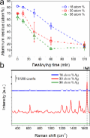
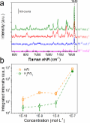
- lower than the maximum allowable residue limit for RhB in food fixed by the European Union standard (1.09 × 10⁻⁹ mol·L−1) [52]. Besides a lower LoD for RhB reported for complex nanostructures with grafted molecules (10−12 mol·L−1) [53], or prepared from colloidal solutions (10−13 mol·L−1) [8][54], the




Frontiers of nanoelectronics: intrinsic Josephson effect and prospects of superconducting spintronics
Beilstein J. Nanotechnol. 2023, 14, 79–82, doi:10.3762/bjnano.14.9

- : artificial neural networks; functional nanostructures; intrinsic Josephson effect; nanoelectronics; spintronics; The twenty-first century is marked by an explosive growth in the flow of information, which is necessary to process, archive, and transmit data through communication systems. For that purpose
- energy for cryogenic cooling of superconducting circuits is considered [9][10][11][12]. Important and promising applications of the Josephson effect are its implementation in superconducting high-frequency electronics, spintronics, and nanostructures for supercomputers. In the last decade, a very rapid
- development in superconducting spintronics, based on functional nanostructures and Josephson junctions, has taken place [13][14]. The implementation of such devices in building blocks for quantum computers and for novel computers using non-von Neumann architecture with brain-like artificial neural networks
Cooper pair splitting controlled by a temperature gradient
Beilstein J. Nanotechnol. 2023, 14, 61–67, doi:10.3762/bjnano.14.7
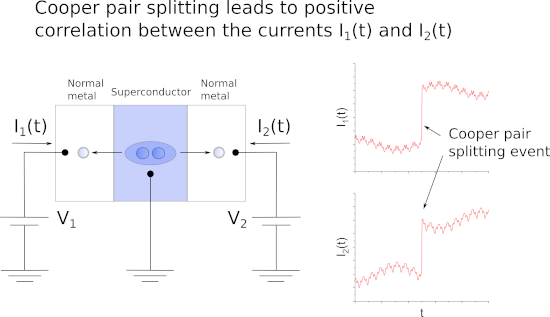
- for developing quantum communication technologies. One way to identify Cooper pair splitting is to analyze long-range cross correlations of fluctuating currents in three-terminal hybrid normal–superconducting–normal nanostructures. Here, we theoretically investigate non-trivial behavior of cross
- -correlated non-local shot noise in the presence of a temperature gradient. We suggest that applying a temperature gradient may serve as an extra tool to control the phenomenon of Cooper pair splitting. Keywords: Cooper pair splitting; entanglement; quantum shot noise; superconducting hybrid nanostructures


Gap-directed chemical lift-off lithographic nanoarchitectonics for arbitrary sub-micrometer patterning
Beilstein J. Nanotechnol. 2023, 14, 34–44, doi:10.3762/bjnano.14.4
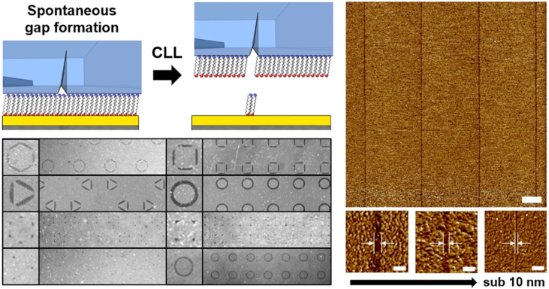
- with sharp edges originating from mathematical geometry designs, the results of this study are expected to have deep implications in the facile fabrication of plasmonic structures, waveguides, and diverse nanostructures. Experimental Materials and chemicals 11-Mercaptoundecanol (MCU), triethylene


Atmospheric water harvesting using functionalized carbon nanocones
Beilstein J. Nanotechnol. 2023, 14, 1–10, doi:10.3762/bjnano.14.1
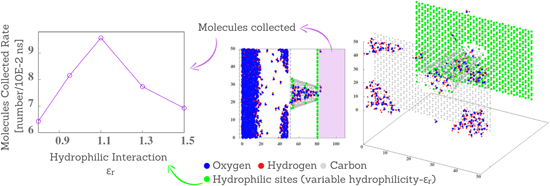
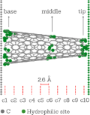
- occurs due to the presence of hydrophilic sites at the nanocone entrance. The functionalization, together with the high mobility of water inside nanostructures, leads to a fast water flow through the nanostructure. We show using molecular dynamics simulations that this device is able to collect water if
- super flow in nanostructures has been explored in processes of separating water from salt or from other contaminants. This high mobility of water under nanoconfinement requires huge pressure and, consequently, a lot of energy [27][28]. In order to help water entrance and decrease the amount of required
- pressure, nanotubes have been functionalized with hydrophilic groups [29][30]. The addition of hydrophilic regions in small diameter environments, however, decreases the velocity of water molecules [31]. The high flow of water in nanostructures is also useful for capturing water from the atmosphere




Density of states in the presence of spin-dependent scattering in SF bilayers: a numerical and analytical approach
Beilstein J. Nanotechnol. 2022, 13, 1418–1431, doi:10.3762/bjnano.13.117
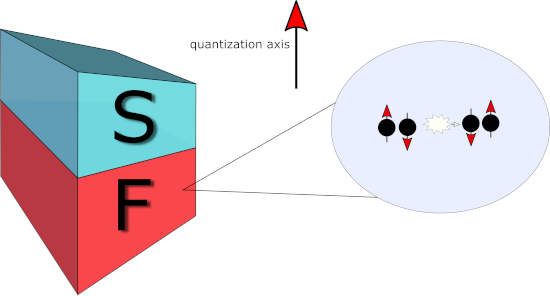
- behavior of DOS dependencies on magnetic and spin–orbit scattering times is discussed. Keywords: density of states; Josephson junctions; proximity effect; superconductivity; superconductor/ferromagnet hybrid nanostructures; Introduction It is well-known that superconductivity can be induced in a non


LED-light-activated photocatalytic performance of metal-free carbon-modified hexagonal boron nitride towards degradation of methylene blue and phenol
Beilstein J. Nanotechnol. 2022, 13, 1380–1392, doi:10.3762/bjnano.13.114
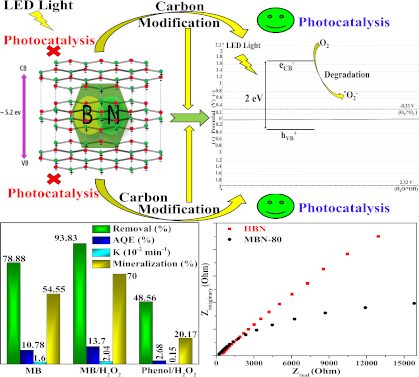
- crystallographic characterization. The morphology of the obtained nanostructures was captured by high-resolution transmission electron microscopy (HRTEM, Talos F200X G2, Thermo Scientific). The optical properties were characterized with a Shimadzu UV 2600 UV–vis spectrophotometer with an integrating sphere



Supramolecular assembly of pentamidine and polymeric cyclodextrin bimetallic core–shell nanoarchitectures
Beilstein J. Nanotechnol. 2022, 13, 1361–1369, doi:10.3762/bjnano.13.112
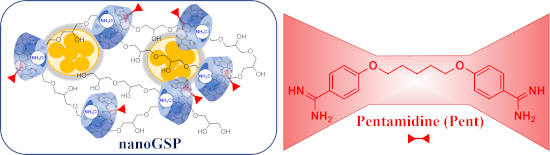
- nanostructures endowed with unique physicochemical properties. Recently, we have proposed a straightforward synthetic strategy that exploits the properties of polymeric β-cyclodextrin (PolyCD) to act as both the reducing and stabilizing agent to produce monodispersed and stable gold-based NPs either as


Recent trends in Bi-based nanomaterials: challenges, fabrication, enhancement techniques, and environmental applications
Beilstein J. Nanotechnol. 2022, 13, 1316–1336, doi:10.3762/bjnano.13.109
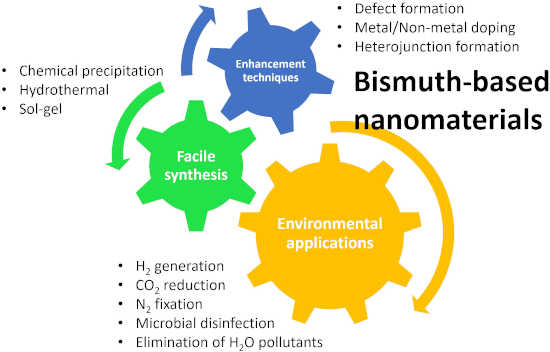
- making nanostructures of functional materials. However, templates were chosen rather based on utility than on cost. The self-template technology does not require additional templates, which leads to less expensive production and increased efficiency. This makes the approach more realistic for practical
- regular structures. The aqueous NH3 solution provided OH− ions for the successful exchange of I−, and the result was the synthesis of Bi7O9I3. The Bi7O9I3/NTC has evenly distributed Bi7O9I3 nanostructures in the shape of lanterns formed of extremely thin nanosheets with a thickness of less than 10 nm on
- plasmonic photocatalyst. Nanospheres, nanorods, and nanosheets can be synthesized using various techniques. Hydrothermal calcination, template synthesis, precipitation, reverse micro-emulsion, sonochemical procedures, and microwave methods are typical techniques for fabricating Bi-based nanostructures [77




Bending and punching characteristics of aluminum sheets using the quasi-continuum method
Beilstein J. Nanotechnol. 2022, 13, 1303–1315, doi:10.3762/bjnano.13.108
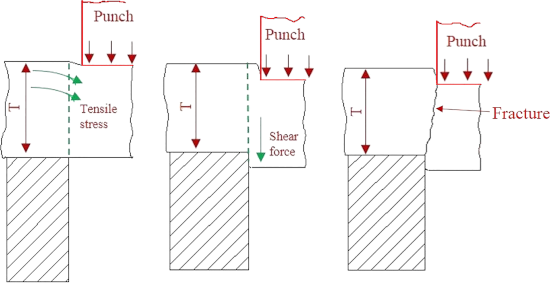
- , nanoelectromechanical systems (NEMS), environmental science, and semiconductors [1][2][3][4][5][6][7][8][9][10]. The increased requirements for advanced nanostructures simultaneously give rise to extensive researches in precision machining techniques, including nanoimprinting lithography (NIL) [11][12], mechanical nano





Enhanced electronic transport properties of Te roll-like nanostructures
Beilstein J. Nanotechnol. 2022, 13, 1284–1291, doi:10.3762/bjnano.13.106
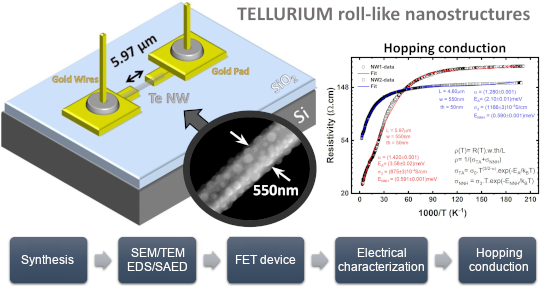
- work, the electronic transport properties of Te roll-like nanostructures were investigated in a broad temperature range by fabricating single-nanostructure back-gated field-effect-transistors via photolithography. These one-dimensional nanostructures, with a unique roll-like morphology, were produced
- by a facile synthesis and extensively studied by scanning and transmission electron microscopy. The nanostructures are made of pure and crystalline Tellurium with trigonal structure (t-Te), and exhibit p-type conductivity with enhanced field-effect hole mobility between 273 cm2/Vs at 320 K and 881
- electrical properties of these nanostructures, with a small disorder, and superior quality for nanodevice applications. Keywords: electrical characterization; field-effect transistors; hopping conduction; nanobelts; tellurium; Introduction The chalcogen tellurium (Te) is a rare element (0.002 ppm) in the




Laser-processed antiadhesive bionic combs for handling nanofibers inspired by nanostructures on the legs of cribellate spiders
Beilstein J. Nanotechnol. 2022, 13, 1268–1283, doi:10.3762/bjnano.13.105
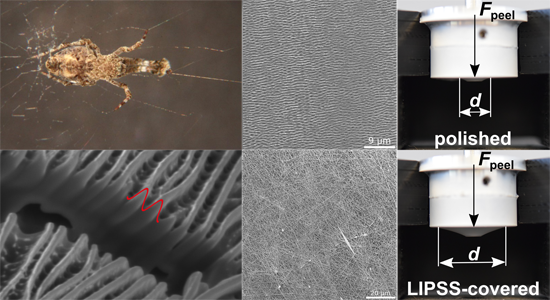
- ; nanostructures; Introduction Nanofibers have a diameter of approximately 10 to 800 nm, whereas their length is much greater than their diameter, which is why the term fiber or thread is used. These fibers are constantly drawing the attention of engineers because their surface-to-volume ratio is favorable for
- titanium alloy samples in Figure 9. Thus, the force measured for peel-off from the polished surface is not the force needed to detach the fibers from the surface, but to tear a superficial fiber layer from the rest of the nonwoven. Conclusion Mimicking the principle of nanostructures on the calamistrum of







Studies of probe tip materials by atomic force microscopy: a review
Beilstein J. Nanotechnol. 2022, 13, 1256–1267, doi:10.3762/bjnano.13.104
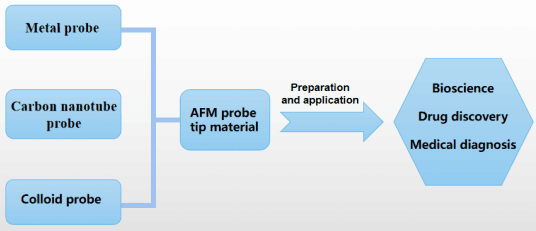
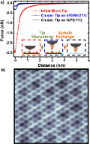
- cutting process. Complex nanostructures with high spreading chord ratios can be scanned using carbon nanotube probes, thus solving the long-standing problem of mapping complex nanostructures. A colloidal probe [12][13] consists of colloidal particles attached to an AFM cantilever to measure the
- aspect ratios. The imaging results showed higher spatial resolution and prominent tips with CNTs with aspect ratios greater than 10 compared to standard AFM probes. Using such CNT probes for scanning complex nanostructures could solve the long-standing problem of mapping complex nanostructures. Composite
- future, such probes will enable previously unexplored conductivity measurements, such as measurements of semiconductor nanostructures or electrical conductivity on insulating substrates. Conductive atomic force microscopy (C-AFM) can be used to characterize the electrical properties of semi-conductive
Roll-to-roll fabrication of superhydrophobic pads covered with nanofur for the efficient clean-up of oil spills
Beilstein J. Nanotechnol. 2022, 13, 1228–1239, doi:10.3762/bjnano.13.102
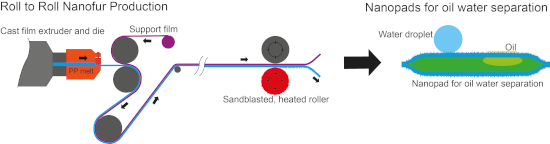
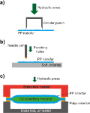
- sandblasted steel-plates as mold inserts. It is an interesting feature of this procedure that a surface with nanostructures is realized without elaborate and costly lithography. Nanofur can be hot-pulled from several types of polymers [16]. Nonetheless, the surface area per process step is limited to some




Design of surface nanostructures for chirality sensing based on quartz crystal microbalance
Beilstein J. Nanotechnol. 2022, 13, 1201–1219, doi:10.3762/bjnano.13.100
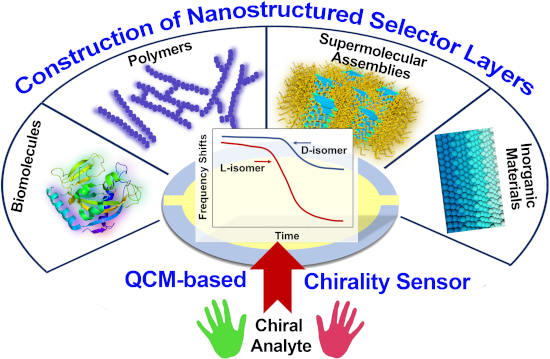
- design of the recognition layers. Various strategies have been employed for studying the relationship between the structural features and the specific detection of chiral isomers. This review provides an overview of the construction of chiral sensing layers by various nanostructures and materials in the
- QCM system, which include organic molecules, supermolecular assemblies, inorganic nanostructures, and metal surfaces. The sensing mechanisms based on these surface nanostructures and the related potentials for chiral detection by the QCM system are also summarized. Keywords: assembled nanostructure
- sensors is always based on aspects of effective chiral host molecules, proper chiral surface functions, and suitable host nanostructures. To achieve high chiral selectivity and sensitivity, it is also essential to understand the basis of the interactions for the formation of transient diastereomeric


Application of nanoarchitectonics in moist-electric generation
Beilstein J. Nanotechnol. 2022, 13, 1185–1200, doi:10.3762/bjnano.13.99
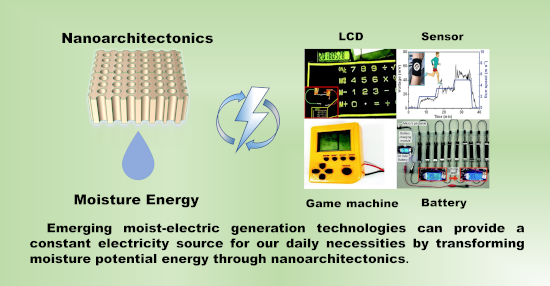
- area between the nanomaterial and the moisture larger and greatly improves the carrier yield. Therefore, in the abovementioned charge transfer mechanism, nanostructures theoretically yield better performance [18][19][20]. More researchers have also noticed that nanoarchitectonics can significantly
- . Different nanostructures also have an influence on the performance of MEGs, which is worth further investigation. Metal compound nanomaterials have been successfully used in many fields, such as optoelectronic, thermoelectric, and piezoelectric devices [56][57][58][59][60]. With the knowledge about
- parameters such as humidity, airflow rate, airflow direction, and number of oxygen-containing groups on the output power of nanostructures [80]. Figure 7c shows that the higher the humidity, the greater the output voltage. When the relative humidity of the device increases, the interaction area between the


Rapid fabrication of MgO@g-C3N4 heterojunctions for photocatalytic nitric oxide removal
Beilstein J. Nanotechnol. 2022, 13, 1141–1154, doi:10.3762/bjnano.13.96
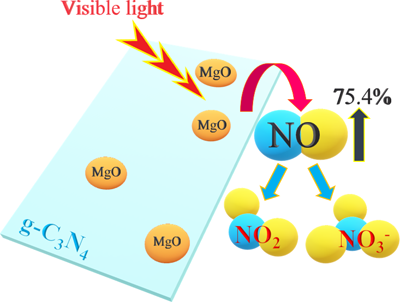
- with a lower bandgap is an efficient process for improving the photocatalytic performance. Li and co-workers reported an improvement in the photocatalytic efficiency of MgO@g-C3N4 for the photoreduction of CO2 under visible light [33]. Similarly, MgO-modified g-C3N4 nanostructures enhanced the removal





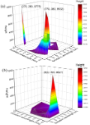

Biomimetic chitosan with biocomposite nanomaterials for bone tissue repair and regeneration
Beilstein J. Nanotechnol. 2022, 13, 1051–1067, doi:10.3762/bjnano.13.92
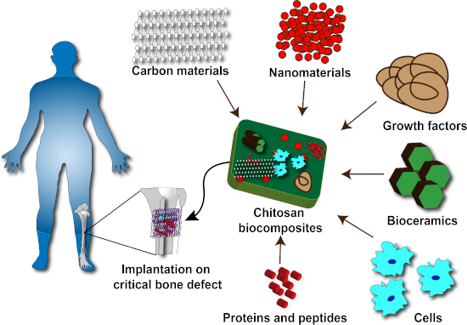
- nanosized hydroxyapatite crystals with connective collagen fibrils [27]. The bone possesses a unique combination of strength and stiffness, and it has excellent compressive strength and tensile strength due to the attribution of deep nanostructures of inorganic and organic components. Human bones are
Electrocatalytic oxygen reduction activity of AgCoCu oxides on reduced graphene oxide in alkaline media
Beilstein J. Nanotechnol. 2022, 13, 1020–1029, doi:10.3762/bjnano.13.89
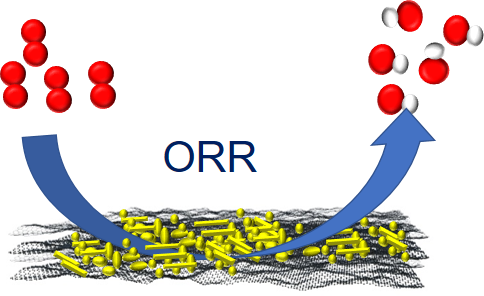
- nanostructures. Also, upon increasing the Ag fraction in the sample, the dispersion of the trimetallic assembly considerably increases, which is clearly reflected in Figure S3c–e, Supporting Information File 1. The importance of the rGO support is further evident from the imaging of supportless the ACC-2* sample


Numerical study on all-optical modulation characteristics of quantum cascade lasers
Beilstein J. Nanotechnol. 2022, 13, 1011–1019, doi:10.3762/bjnano.13.88
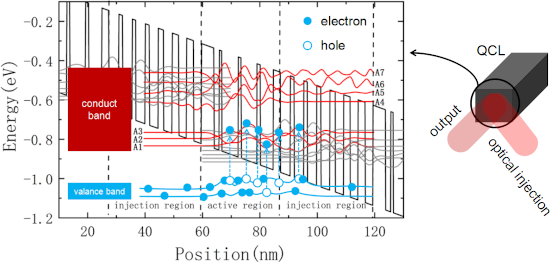
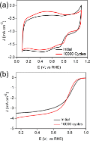
- physics in QCL’s gain medium which consists of multiple of dielectric nanostructures with high refractive index under light injection, we modified the 1½-period model to calculate values of electron population and lifetime in each subband which is separated by the nanostructures, optical gain, current and
- optimizing its use and dielectric nanostructure design. Keywords: all-optical modulation; dielectric nanostructures; high refractive index materials; numerical study; quantum cascade lasers; Introduction The quantum cascade laser (QCL) was invented nearly 30 years ago [1], and its cavity consists of
- multiple nanostructures, which are grown by molecular beam epitaxy (MBE) [1]. It has been widely used in the fields of free space optical communication [2][3], gas detection [4][5], and biological research [6][7]. Because the QCL is a narrow linewidth and high-power laser working in the mid-infrared to


Effects of focused electron beam irradiation parameters on direct nanostructure formation on Ag surfaces
Beilstein J. Nanotechnol. 2022, 13, 1004–1010, doi:10.3762/bjnano.13.87
- Janis Snikeris Vjaceslavs Gerbreders Andrejs Bulanovs Eriks Sledevskis Daugavpils University, Institute of Life Sciences and Technologies, Parādes Str. 1, Daugavpils, LV-5401, Latvia 10.3762/bjnano.13.87 Abstract Metallic nanostructures are applied in many fields, including photonics and
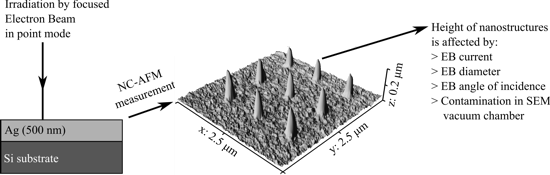
- plasmonics, due to their ability to absorb or emit light at frequencies which depend on their size and shape. It was recently shown that irradiation by a focused electron beam can promote the growth of nanostructures on metal surfaces and the height of these structures depends on the duration of the
- angle of incidence the growth rate decreased; however, by raising the beam focus up to 5–6 μm above the surface the growth rate increased. Vacuum chamber cleaning reduced structure growth rate for a few hours. These findings can help to better control and optimise the growth of nanostructures on metal




Design of a biomimetic, small-scale artificial leaf surface for the study of environmental interactions
Beilstein J. Nanotechnol. 2022, 13, 944–957, doi:10.3762/bjnano.13.83
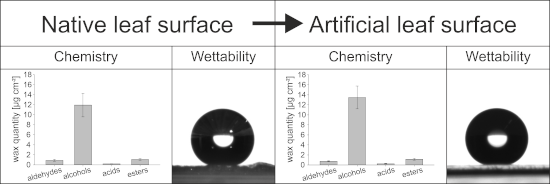
- nanostructures) [27]. Due to this structural diversity and different chemical modifications, plant surfaces can have different wetting properties, ranging from superhydrophobic to superhydrophilic [28]. An overview of the diverse microstructures and their influence on the wettability of plant surfaces is given
Ultrafast signatures of magnetic inhomogeneity in Pd1−xFex (x ≤ 0.08) epitaxial thin films
Beilstein J. Nanotechnol. 2022, 13, 836–844, doi:10.3762/bjnano.13.74
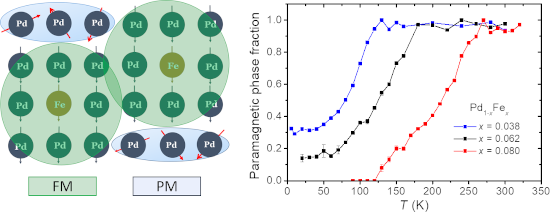
- ferromagnetic metals was a subject of interest in magnetic nanostructures [50][51][52] and had a value of about 3 × 10⁵ m/s. Being stronger localized in the narrower 4d bands [44], the itinerant 4d electrons must have a lower velocity, say 105 m/s. Then, with the transport time τ ≈ 10−14 s and the electron-spin


Approaching microwave photon sensitivity with Al Josephson junctions
Beilstein J. Nanotechnol. 2022, 13, 582–589, doi:10.3762/bjnano.13.50
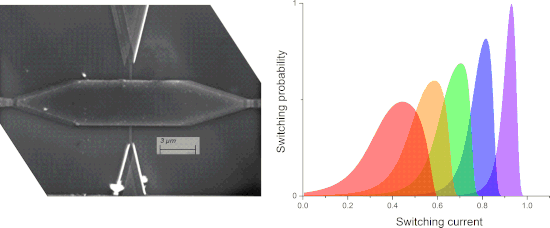
- Common Research Center “Physics and technology of micro- and nanostructures” of IPM RAS. Funding The work is supported by the Russian Science Foundation (Project No. 19-79-10170).


Detection and imaging of Hg(II) in vivo using glutathione-functionalized gold nanoparticles
Beilstein J. Nanotechnol. 2022, 13, 549–559, doi:10.3762/bjnano.13.46
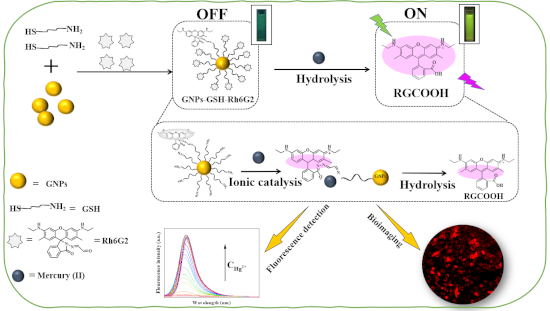
- may be due to the introduction of gold nanostructures. Previous studies showed that GNPs-GSH-Rh6G2 permeate well into cells [48][57][58]. Cytotoxicity studies of nanomaterials are important to determine the effects of different components of the nanostructure [59][60]. The cytotoxicity of GSH-Rh6G2





