Search results
Search for "penetration" in Full Text gives 375 result(s) in Beilstein Journal of Nanotechnology. Showing first 200.
Seebeck coefficient of silicon nanowire forests doped by thermal diffusion
Beilstein J. Nanotechnol. 2020, 11, 1707–1713, doi:10.3762/bjnano.11.153
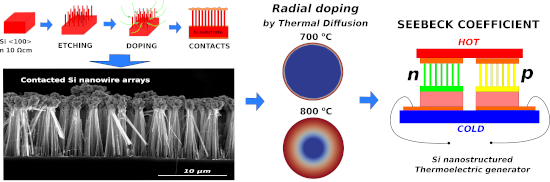
- penetration of the doping species (phosphorous, in our case) into the silicon. It requires an oxidizing environment, at least in a first preliminary phase, to grow a thin SiO2 layer at the surface as a barrier for the doping species, forcing the diffusion into silicon. In the specific case of thermoelectric


Out-of-plane surface patterning by subsurface processing of polymer substrates with focused ion beams
Beilstein J. Nanotechnol. 2020, 11, 1693–1703, doi:10.3762/bjnano.11.151
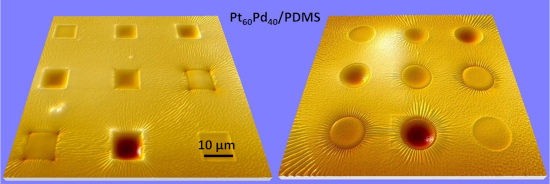
- materials over the entire depth of their penetration path in a target. In our recent work [4], we demonstrated that, in addition to the direct surface patterning by the abovementioned techniques, the radiation damage generated by He+ FIB in the bulk of poly(methyl methacrylate) (PMMA) substrates can be used


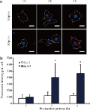
Cardiomyocyte uptake mechanism of a hydroxyapatite nanoparticle mediated gene delivery system
Beilstein J. Nanotechnol. 2020, 11, 1685–1692, doi:10.3762/bjnano.11.150
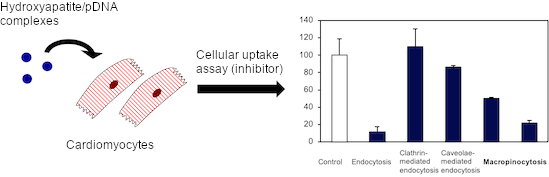
- can be taken up by cells via passive transport or active transport. Most nanoparticles are taken up by endocytosis (i.e., active transport) and rarely by direct penetration through the plasma membrane (i.e., passive transport). The endocytic pathway is an energy-dependent process; therefore, it can be


Antimicrobial metal-based nanoparticles: a review on their synthesis, types and antimicrobial action
Beilstein J. Nanotechnol. 2020, 11, 1450–1469, doi:10.3762/bjnano.11.129
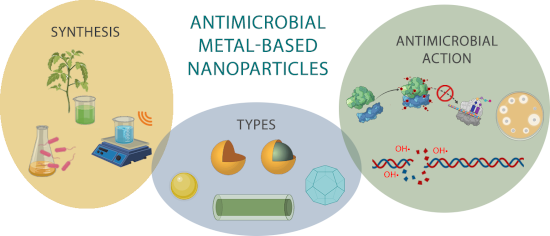
- , morphology, and size. This antimicrobial activity can be used in numerous sectors, such as textile, animal, or antimicrobial packaging industries. In the latter, NPs are used to inhibit and control microbial growth, resist against the penetration of liquids or gases, retain moisture, and maintain packaged


Effect of localized helium ion irradiation on the performance of synthetic monolayer MoS2 field-effect transistors
Beilstein J. Nanotechnol. 2020, 11, 1329–1335, doi:10.3762/bjnano.11.117
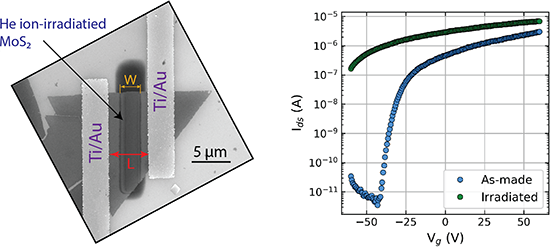
- atomic vacancy yield per each delivered ion as a function of target penetration depth on the 35 nm-Au/5 nm-Ti/0.7 nm-MoS2/285 nm-SiO2 stack [41]. As evident from Figure 3d, the sulfur sputtering yield at the Ti–MoS2 interface is very close to that of unencapsulated MoS2 [15], indicating notable damage to


Gas sorption porosimetry for the evaluation of hard carbons as anodes for Li- and Na-ion batteries
Beilstein J. Nanotechnol. 2020, 11, 1217–1229, doi:10.3762/bjnano.11.106
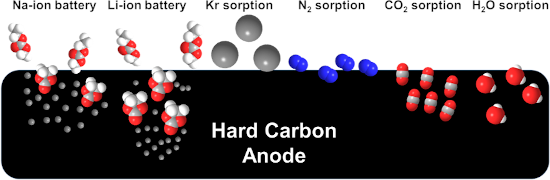
- penetration of both H2O and CO2 into the pore system is similar and therefore can be used to mimic the penetration of electrolyte molecules. Furthermore, an obvious difference between LIB and SIB tests is observed for the HT samples. While linear trends are obtained for LIB tests, the SIB tests seem to have
- adsorbed according to Yang et al. [25], since we can fairly well quantify porosities between 0.3 and 0.5 nm. Are these pores not contributing or is it possible that different penetration depths of solvent molecules and, hence, SEI deposits smear out the relation of pore volume to reversible capacity? A
- complicated reality of HC anodes in SIBs as well as in LIBs. To improve the understanding of the porosity accessible by GSP techniques more sophisticated techniques are necessary. Especially the connectivity of pores affecting the penetration depth and electrode utilization will play a crucial role in


3D superconducting hollow nanowires with tailored diameters grown by focused He+ beam direct writing
Beilstein J. Nanotechnol. 2020, 11, 1198–1206, doi:10.3762/bjnano.11.104
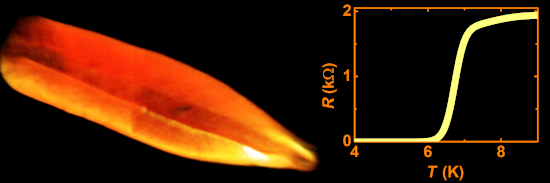
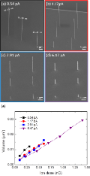
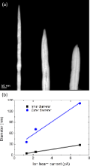
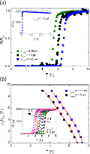
- penetration depth, λ, [38][39] ranges from 720 to 874 nm. Additionally, Jc (0.6 K, 0 T) is approx. 0.15 MA/cm2. Summarizing, the estimated superconducting parameters (Tc, µ0Hc2, Jc, ξ, λ) for these NWs (Table 2) are mostly compatible with those reported for He+ FIBID out-of-plane WC nanotubes [17



Revealing the local crystallinity of single silicon core–shell nanowires using tip-enhanced Raman spectroscopy
Beilstein J. Nanotechnol. 2020, 11, 1147–1156, doi:10.3762/bjnano.11.99
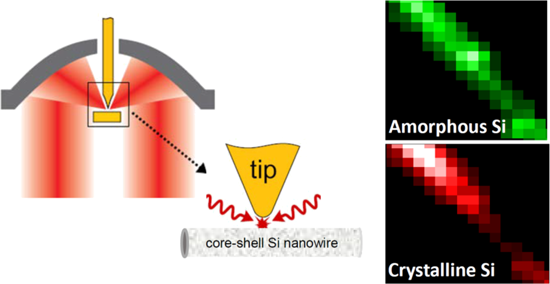
- confocal spectra, respectively. The slightly higher value of ΔΘ determined with TERS could be due to the nanometer-sized penetration depth of the near field excited at the tip apex, in contrast to the far-field laser focus. Since the SiNWs contain a c-Si core and an a-Si shell (Figure 1), the shell can be


Photothermally active nanoparticles as a promising tool for eliminating bacteria and biofilms
Beilstein J. Nanotechnol. 2020, 11, 1134–1146, doi:10.3762/bjnano.11.98
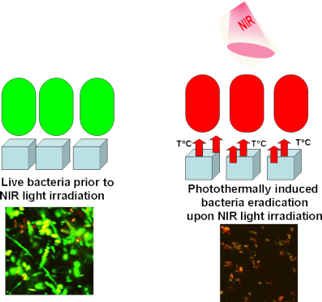
- conventional sterilization procedures that are usually time consuming and require higher temperatures. In addition, the NIR light in the so-called “bio-transparent window” (750–900 nm) is considered safe for direct in vivo application as it has a large penetration depth and does not damage normal tissue (at
- demonstrated that the photothermally induced local heat, triggered by the irradiation at 808 nm and 1.2 W/cm2, accelerates the release and penetration of ions into bacteria, resulting in an alteration of the intracellular metabolic pathways and causing bacterial death without a systemic toxicity. In the latest


A few-layer graphene/chlorin e6 hybrid nanomaterial and its application in photodynamic therapy against Candida albicans
Beilstein J. Nanotechnol. 2020, 11, 1054–1061, doi:10.3762/bjnano.11.90
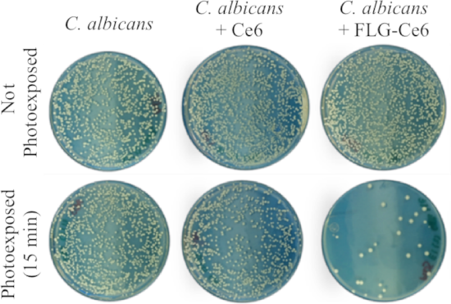
- visible light, and also should have a high absorption coefficient at a wavelength that penetrates cellular tissue [4]. In the visible electromagnetic spectrum, red light has the largest depth penetration into biological tissue [6][7]. Among different photosensitizers, porphyrins are heterocyclic molecules
- morphology observations. The wider absorption peak in the FLG-Ce6 hybrid nanomaterial spectrum at 640 nm corresponds to the greater probability of absorbing a photon deeper into the tissue, since the penetration depth of electromagnetic radiation increases as the wavelength increases, reaching depths up to


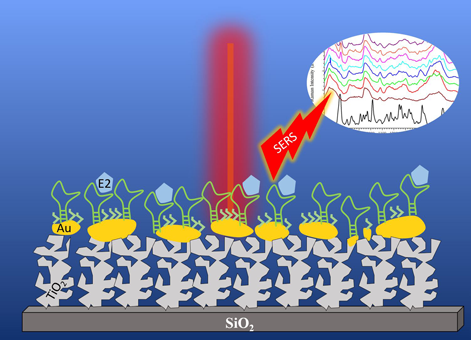
Highly sensitive detection of estradiol by a SERS sensor based on TiO2 covered with gold nanoparticles
Beilstein J. Nanotechnol. 2020, 11, 1026–1035, doi:10.3762/bjnano.11.87
- mass of MBA (ρMBA = 1.5 g·cm−3, MMBA = 154.19 g·mol−1), the laser spot area (Aspot), and the penetration depth of the focused laser beam (which was assumed to be h =12 μm), as: where NA is the Avogadro constant. NSERS corresponds to the number of molecules adsorbed on the AuNP surface within the laser



Microwave-induced electric discharges on metal particles for the synthesis of inorganic nanomaterials under solvent-free conditions
Beilstein J. Nanotechnol. 2020, 11, 1019–1025, doi:10.3762/bjnano.11.86
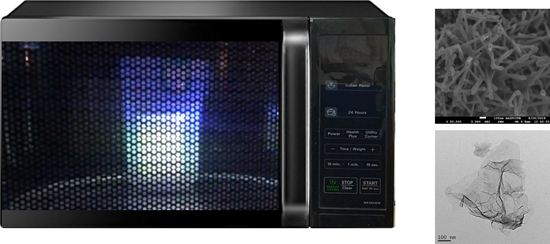
- discussion [9][11]. Bulk metals generally reflect microwaves, whereas fine metal powders or thin films can couple with microwaves (the penetration depth of microwaves in metals is 1–2 µm). This will quickly increase the temperature through conduction mechanisms, which enables the sintering of metals by using


Extracting viscoelastic material parameters using an atomic force microscope and static force spectroscopy
Beilstein J. Nanotechnol. 2020, 11, 922–937, doi:10.3762/bjnano.11.77
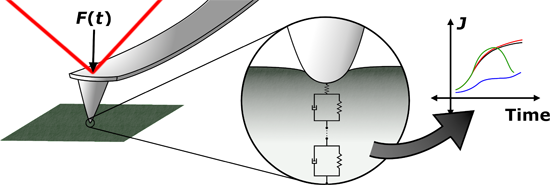
- extracting parameters for n characteristic terms without any assumptions about the load history, provided the penetration grows monotonically, the indentation is not “sufficiently large”, and the correspondence principle applies. It represents the objective fit function described by Lopez et al. [17] and


Key for crossing the BBB with nanoparticles: the rational design
Beilstein J. Nanotechnol. 2020, 11, 866–883, doi:10.3762/bjnano.11.72
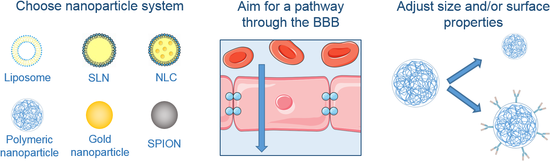
- , resulting in an overall net positive charge [108][126]. CPPs are able to enhance membrane penetration and cell internalization of their conjugated cargo in a large variety of cells, through pathways not always well known [126][127]. In the case of BBB crossing, their positive charge might induce their
- specific ligands have been proven to be successful strategies to enhance the BBB crossing through RMT or AMT. Size and charge of the nanoparticles are also aspects that can influence their penetration into the brain. Smaller nanoparticles are able to cross the BBB more easily and to diffuse better through


A Josephson junction based on a highly disordered superconductor/low-resistivity normal metal bilayer
Beilstein J. Nanotechnol. 2020, 11, 858–865, doi:10.3762/bjnano.11.71
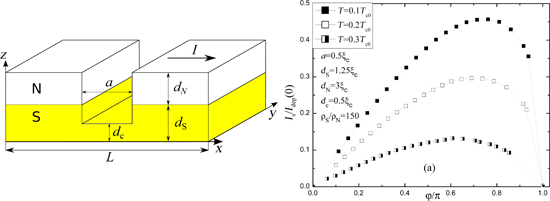
- NbN/Al, NbN/Ag and MoN/Ag bilayers. Namely, the suppression of the critical temperature of the SN bilayer is smaller while the change in magnetic field penetration depth of the SN bilayer is larger than the Usadel model predicts. Therefore, the present results should be considered only as a route for


Silver-decorated gel-shell nanobeads: physicochemical characterization and evaluation of antibacterial properties
Beilstein J. Nanotechnol. 2020, 11, 620–630, doi:10.3762/bjnano.11.49
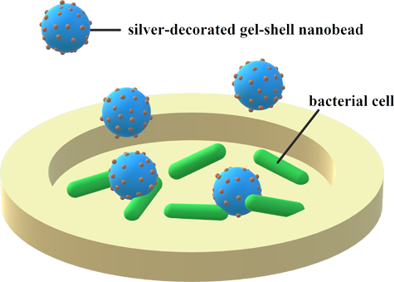
- non-incorporated silver nanoparticles, which exhibit pronounced antibacterial activity towards gram-negative species. It has been suggested that the gram-negative species may be more susceptible to Ag penetration, as silver nanoparticles are able to more effectively interact with the cell components


Adsorptive removal of bulky dye molecules from water with mesoporous polyaniline-derived carbon
Beilstein J. Nanotechnol. 2020, 11, 597–605, doi:10.3762/bjnano.11.47
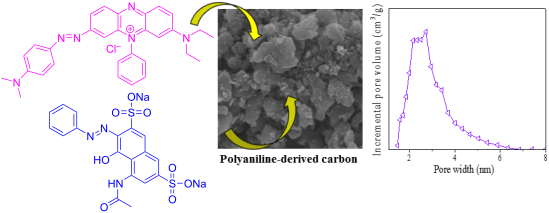
- demand (COD) levels. Additionally, dyes decrease sunlight penetration through water, decreasing the natural restoration activity of rivers. Moreover, dyes in waste water are also considered problematic in the aesthetic sense, since the absorbance of dyes is usually very high (therefore, even small


Comparison of fresh and aged lithium iron phosphate cathodes using a tailored electrochemical strain microscopy technique
Beilstein J. Nanotechnol. 2020, 11, 583–596, doi:10.3762/bjnano.11.46
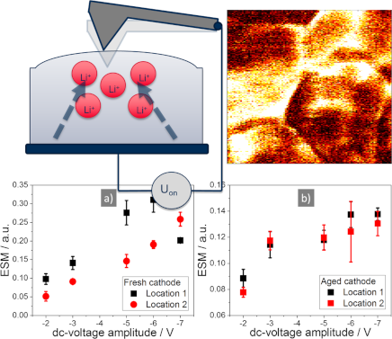
- conducted with PeakForce QNM measurements for which the deformation (penetration depth of the tip) of the measurements was evaluated (Supporting Information File 1, Figure S6). The results indicate a constant deformation for the fresh sample, while the aged cathode shows some areas with a higher deformation

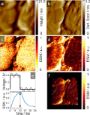


Multilayer capsules made of weak polyelectrolytes: a review on the preparation, functionalization and applications in drug delivery
Beilstein J. Nanotechnol. 2020, 11, 508–532, doi:10.3762/bjnano.11.41
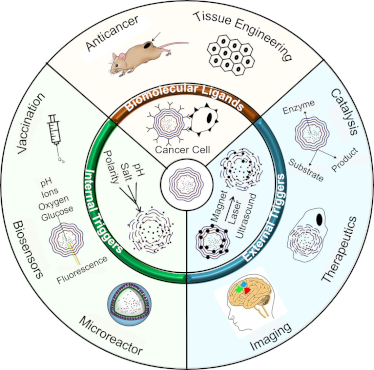


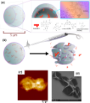

Preparation and in vivo evaluation of glyco-gold nanoparticles carrying synthetic mycobacterial hexaarabinofuranoside
Beilstein J. Nanotechnol. 2020, 11, 480–493, doi:10.3762/bjnano.11.39
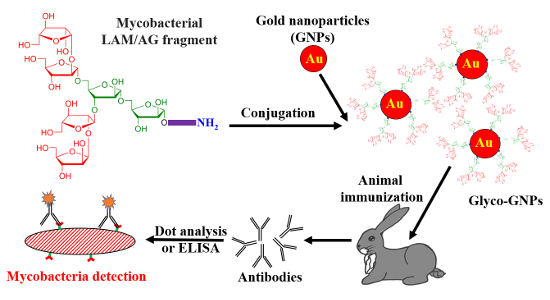
- subsequent presentation of the epitopes on the surface of macrophages are important events in this positive regulation. According to the literature data, GNPs contribute to the penetration of antigens into phagocytic cells [56]. GNPs, in addition to their adjuvant properties, could lead to a more active


An advanced structural characterization of templated meso-macroporous carbon monoliths by small- and wide-angle scattering techniques
Beilstein J. Nanotechnol. 2020, 11, 310–322, doi:10.3762/bjnano.11.23
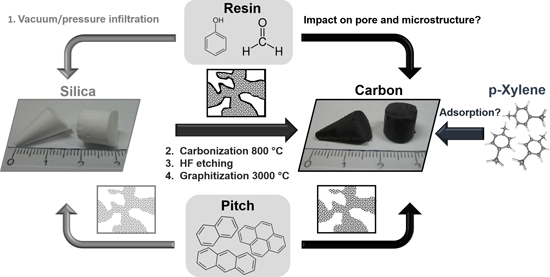
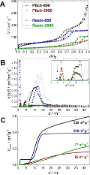
- inaccessible voids and sealed porosity hinders the penetration of the pore network, and the adsorption of DPX on the external surface leads to a larger scattering contrast, which in turn increases the overall intensity. The chord-length distributions g(r) (Figure 4B) were obtained by fitting the SANS data with
- closed porosity, inaccessible voids and small micropores hinder the penetration of the pore network by DPX. The porosity of the sample Pitch-800 is higher than that of the other samples, which is in good agreement with the physisorption results. The pore size distribution determined by physisorption




Facile biogenic fabrication of hydroxyapatite nanorods using cuttlefish bone and their bactericidal and biocompatibility study
Beilstein J. Nanotechnol. 2020, 11, 285–295, doi:10.3762/bjnano.11.21
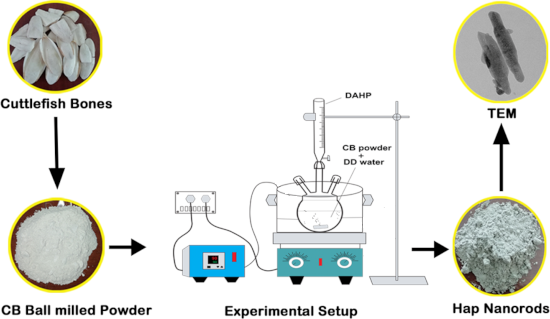
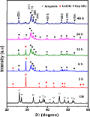
- approach is highly safe to use for biological applications. This is important to emphasize as chemical synthesized nanoparticles may lead to toxic or side effects due to the existence of toxic chemicals [60]. The antibacterial mechanism of CB-Hap NRs may involve (i) the size-mediated penetration of


Rational design of block copolymer self-assemblies in photodynamic therapy
Beilstein J. Nanotechnol. 2020, 11, 180–212, doi:10.3762/bjnano.11.15
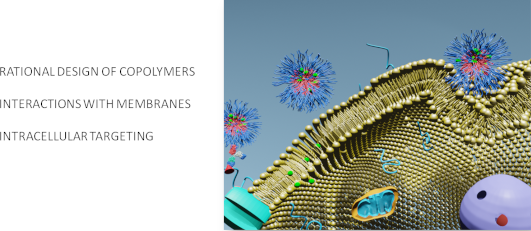
- with parallel alignment to the membrane surface (Figure 8). Recent reviews have shown the importance of controlling the shape of the vectors, both for cell penetration but also for the behavior in the blood stream [142]. Regarding PDT more specifically, Till et al. examined the PDT efficiency of
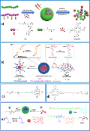
- group was shown to be cleaved by azoreductase under hypoxic conditions [149], the observed stronger cellular penetration [75] was explained by a de-PEGylation of the vector upon contact with the hypoxic tissues. PS positioning Since PDT relies on the local production of ROS to kill the diseased cells






Internalization mechanisms of cell-penetrating peptides
Beilstein J. Nanotechnol. 2020, 11, 101–123, doi:10.3762/bjnano.11.10
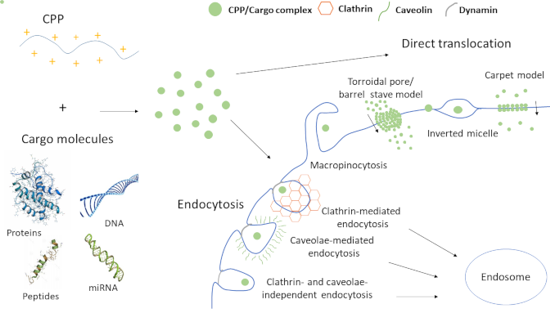
- the cell interior. Nevertheless, the mechanism they use to enter cells still remains an unsolved piece of the puzzle. Endocytosis and direct penetration have been suggested as the two major mechanisms used for internalization, however, it is not all black and white in the nanoworld. Studies have shown
- fluidity and permeability [32]. Carpet model The ‘carpet’ model describing the direct penetration of some peptides was proposed in 1992 by Pouny and co-workers [34]. According to this model, the positively charged segments of the peptide lie parallel to the membrane surface and are bound to the acidic
- , amphipathic peptide. Electrostatic interaction is essential for the binding between the CPP and the membrane. Achieving a high local concentration at the membrane’s surface is also a key factor for inducing membrane penetration by this model [35]. An alternative to the ‘carpet’ model is the ‘membrane-thinning


Influence of the epitaxial composition on N-face GaN KOH etch kinetics determined by ICP-OES
Beilstein J. Nanotechnol. 2020, 11, 41–50, doi:10.3762/bjnano.11.4
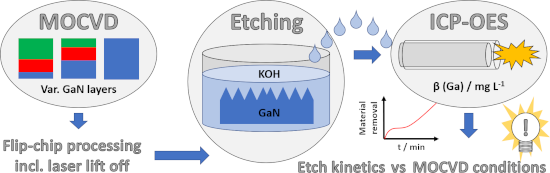
- dislocation density was reduced to 1.3 × 108 cm−2. Penetration was highly dependent on solution temperature. At RT, no crossing was observed, while at 70 °C and 80 °C it took 2.0 min and 1.5 min, respectively. The subsequent 3D GaN showed a constant etch rate. When the thickness of 2D-1 was increased to 1000
- and crystal facets was reached. Applying temperature dependent crossing of 2D–3D transitions, the second 2D–3D transition of E became selectively exposed by first etching in 30 wt % KOH at 70 °C for 3 min. This led to penetration of the first 2D–3D interface. Subsequently, etching at RT for 5 h