


Search results
Search for "selectivity" in Full Text gives 318 result(s) in Beilstein Journal of Nanotechnology. Showing first 200.
Correlation of surface-enhanced Raman scattering (SERS) with the surface density of gold nanoparticles: evaluation of the critical number of SERS tags for a detectable signal
Beilstein J. Nanotechnol. 2019, 10, 1016–1023, doi:10.3762/bjnano.10.102
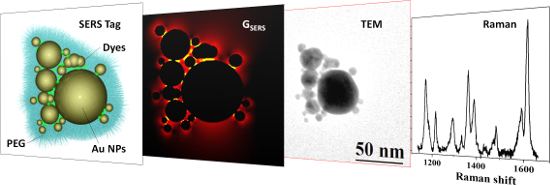
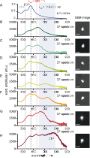
- molecules (Raman reporters) resonant at the probe wavelength, where the entire structure is embedded in a stabilizing matrix [13][16][17][18][19]. When selectivity is required, the surface of the Raman tag should expose a targeting function for binding the analyte [13][16][17]. When the analytes can be


Direct growth of few-layer graphene on AlN-based resonators for high-sensitivity gravimetric biosensors
Beilstein J. Nanotechnol. 2019, 10, 975–984, doi:10.3762/bjnano.10.98
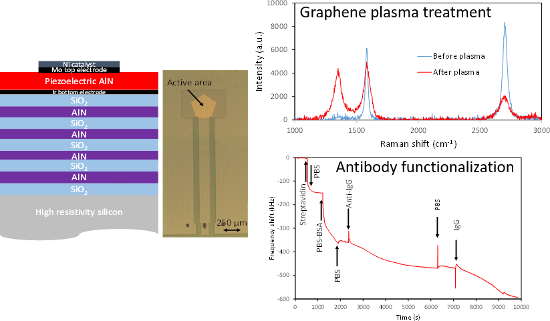
- detection; graphene integration; gravimetric biosensor; surface functionalization; Introduction Gravimetric biosensors based on microscale mechanical or electromechanical resonators have attracted significant interest in recent years mainly due to the high sensitivity and selectivity they can attain if
- sensor with the desired selectivity and sensitivity to the targeted species. Selectivity mainly depends on the specificity of the receptor (e.g., for proteins, aptamers or antibodies) to the targeted species and the non-specific binding degree of other species that can be achieved; effective



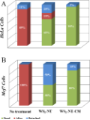
Tungsten disulfide-based nanocomposites for photothermal therapy
Beilstein J. Nanotechnol. 2019, 10, 811–822, doi:10.3762/bjnano.10.81
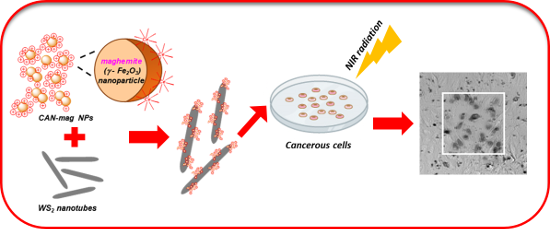
- mediated by nanomaterials is less invasive than laser irradiation alone, requires lower radiation intensity, and its selectivity towards the tumor can be adjusted by carefully engineering the light-responsive nanostructure. In general, nanomaterials in the size range of 100–200 nm should give the maximum






Hydrophilicity and carbon chain length effects on the gas sensing properties of chemoresistive, self-assembled monolayer carbon nanotube sensors
Beilstein J. Nanotechnol. 2019, 10, 565–577, doi:10.3762/bjnano.10.58
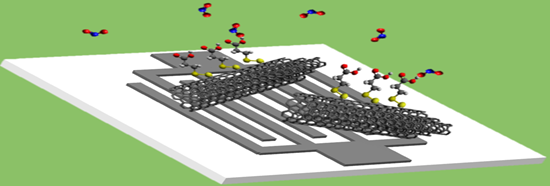
- response and selectivity. This would make the detection of polar and nonpolar gas species employing low-power gas sensors easier, even under fluctuating ambient moisture conditions. Keywords: carbon length chain; gas sensing mechanism; hydrophilicity; hydrophobicity; multiwall carbon nanotubes (MWCNTs
- such as lack of selectivity, environmental variations (e.g., changes in humidity level) affecting sensor response, or the difficulty to detect gases characterized by low adsorption energies are often encountered [11]. In order to enhance their selectivity and/or their sensitivity, CNTs have been
- , different carbon nanotube sensors have been reported for detecting toxic pollutants emitted from vehicle exhaust [22][23], hazardous volatile organic compounds (VOCs) [24] or chemical warfare agents (CWAs) [25][26]. Usually, these modified carbon nanotubes improve the selectivity, because the chemical


Mo-doped boron nitride monolayer as a promising single-atom electrocatalyst for CO2 conversion
Beilstein J. Nanotechnol. 2019, 10, 540–548, doi:10.3762/bjnano.10.55
- ][15][16][17]. Over the past few decades, researchers have focused on decreasing the size of metal nanoparticles in order to improve the surface area/volume ratio of low-coordinated metal atoms in order to enhance the selectivity toward specific species and to improve the electrocatalytic performance
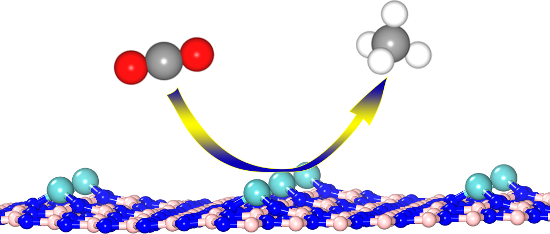
- catalyst for further investigation of CO2 conversion due to its high selectivity and activation for CO2. The study shows that Mo-doped BN monolayers can be used as a promising catalyst for CO2 reduction to CH4 with a low limiting potential of −0.45 V. More importantly, Mo is an abundant element in the
- , we can explicitly determine that the Mo-doped BN monolayer exhibits high activation and selectivity as an electrocatalyst for CO2 reduction to CH4 along the whole reaction pathway. Moreover, the value of the energy input is also noteworthy. To sum up, the rate-determining step of CRR is the last


Removal of toxic heavy metals from river water samples using a porous silica surface modified with a new β-ketoenolic host
Beilstein J. Nanotechnol. 2019, 10, 262–273, doi:10.3762/bjnano.10.25
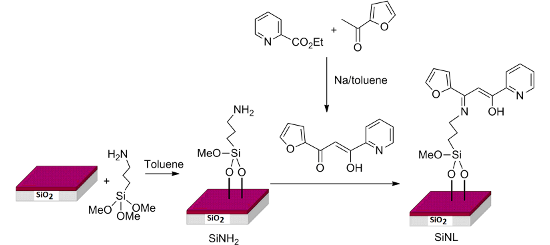
- thermodynamical properties including pH, adsorption isotherms, competitive adsorption, selectivity and regeneration were studied to investigate the effect of ketoenol–pyridine–furan–silica (SiNL) on the removal of Zn(II), Pb(II), Cd(II) and Cu(II) from aqueous solutions. An increase in adsorption as a function of
- fast uranyl species sensors with high selectivity and sensitivity [43]. Our group has also recently prepared several β-ketoenols derivatives incorporated at the surface silica as effective and stable adsorbents for selective removal of toxic metals from water [44][45][46][47][48]. In the present work
- and NaOH solution. Selectivity. The selectivity sorption of Zn(II) ion was studied using solution containing: Zn(II), Pb(II), Cd(II) and Cu(II) ions (100 mg·L−1 of each, pH 6). Then, 10 mg of SiNL was added into 10 mL of the metal solution at room temperature for 60 min. The atomic adsorption


Thermal control of the defunctionalization of supported Au25(glutathione)18 catalysts for benzyl alcohol oxidation
Beilstein J. Nanotechnol. 2019, 10, 228–237, doi:10.3762/bjnano.10.21
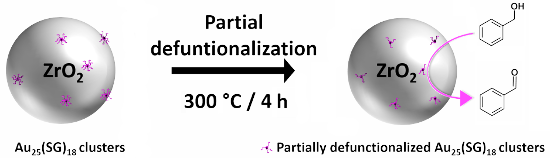
- under atmospheric pressure with 94% selectivity towards benzaldehyde. Keywords: benzyl alcohol oxidation; glutathione; gold nanoclusters; partial defunctionalization; supported catalyst; zirconium oxide nanoparticles; Introduction Since Haruta’s discovery of the catalytic activity of gold
- has been shown that the presence or absence of the thiolate ligand affects the catalytic activity and selectivity of gold thiolate clusters [17][18]. For example, high activity in the aerobic epoxidation of trans-stilbene was observed using non-calcined Au25(SPhNH2)17@SBA-15, whereas upon calcination
- activity and selectivity of the heterogeneously catalyzed benzyl alcohol oxidation. Results and Discussion Catalyst characterization A Au25(SG)18@ZrO2 composite material (A), with a theoretical gold loading of 1 wt % Au, was prepared by depositing Au25(SG)18 gold clusters on ZrO2 nanoparticles. Zirconium




Targeting strategies for improving the efficacy of nanomedicine in oncology
Beilstein J. Nanotechnol. 2019, 10, 168–181, doi:10.3762/bjnano.10.16
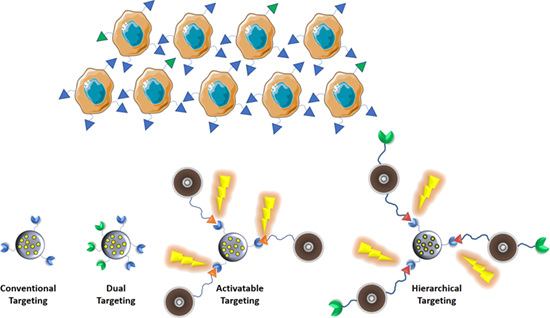
- their action specifically to the malignant cells. The selectivity improvement yielded by these nanocarriers provided a significative enhancement in the efficacy of the transported drug, while the apparition of side effects in the host was reduced. Additionally, it is possible to incorporate targeting
- selectivity affecting also the surrounding healthy tissues, in the case of surgery and radiotherapy, and/or to the whole organism, in the case of chemotherapy. This last strategy could be visualized as carpet bombing with the aim of destroying an enemy army that is hidden in a populated city. In many cases
- strategy is the so-called “cellular or secondary targeting”, because it is generally based on a ligand–receptor-mediated endocytosis, triggered by the strong interaction of the targeting group with the membrane receptor of the tumoral cell. It improves the selectivity of the treatment achieving a drastic


Wet chemistry route for the decoration of carbon nanotubes with iron oxide nanoparticles for gas sensing
Beilstein J. Nanotechnol. 2019, 10, 105–118, doi:10.3762/bjnano.10.10
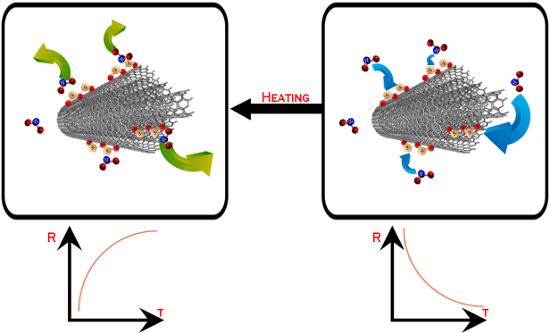
- properties [2][3]. In particular, they have been extensively researched in gas sensing applications because of their high thermal and chemical stability, high adsorption capacity and suitability for being functionalized, which enables tailoring (to some extent) their sensitivity and selectivity to the
- tailoring the selectivity of CNTs towards target gases, one of the simplest consists of decorating the outer wall of CNTs with metal or metal oxide nanoparticles [6][7][8][9]. In some cases, metal or metal oxide nanoparticles show interesting catalytic properties for the decomposition of target molecules
- improving their interaction with gas molecules. Sensitivity and selectivity can be tailored by selecting the type of metal oxide employed, the size of nanoparticles and the decoration density or loading [6][10][11]. Metal oxides have been extensively investigated for sensing a wide range of gases [12][13




Charged particle single nanometre manufacturing
Beilstein J. Nanotechnol. 2018, 9, 2855–2882, doi:10.3762/bjnano.9.266
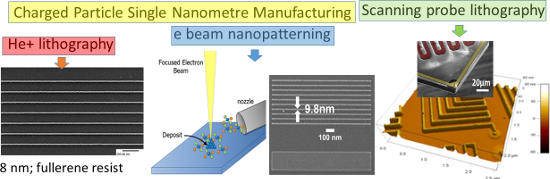
- curing process in order to render it compatible with fluorine etch and other plasma chemistries [33]. These new resists include novel fullerene formulations from Irresistible Materials Ltd (IM) and Birmingham University, UK, which have demonstrated etch selectivity with respect to Si of 9:1 in fluorine
- rates of the substrate materials to be made and hence the selectivity. A set of EBID masks with structures between 8 and 20 nm were fabricated using the platinum precursor MeCpPtMe3 on a silicon substrate with a 20 kV, 40 pA beam providing a dose of 4000 C·m−2 in ultrahigh-resolution (UHR) mode. The


Graphene-enhanced metal oxide gas sensors at room temperature: a review
Beilstein J. Nanotechnol. 2018, 9, 2832–2844, doi:10.3762/bjnano.9.264
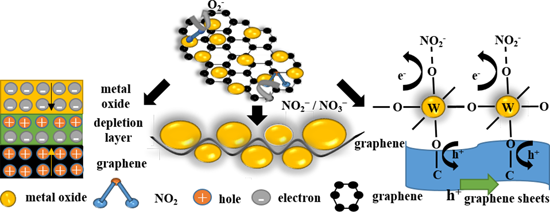
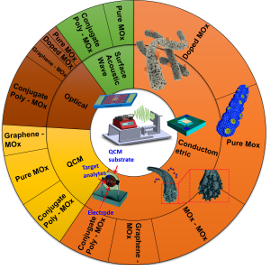
- semiconductors (MOS) are widely used as materials for gas sensing. Usually, MOS gas sensors have some common shortages, such as relatively poor selectivity and high operating temperature. Graphene has drawn much attention as a gas sensing material in recent years because it can even work at room temperature
- , which reduces power consumption. However, the low sensitivity and long recovery time of the graphene-based sensors limit its further development. The combination of metal-oxide semiconductors and graphene may significantly improve the sensing performance, especially the selectivity and response/recovery
- more than 30 min according to World Health Organization [44]. Therefore, there is an urgent need for gas sensors with low cost, outstanding selectivity and sensitivity for detecting these toxic gases [6]. Compared with MOS sensors, graphene/metal-oxide sensors enhance the gas-sensing performance in



Enhancement of X-ray emission from nanocolloidal gold suspensions under double-pulse excitation
Beilstein J. Nanotechnol. 2018, 9, 2609–2617, doi:10.3762/bjnano.9.242
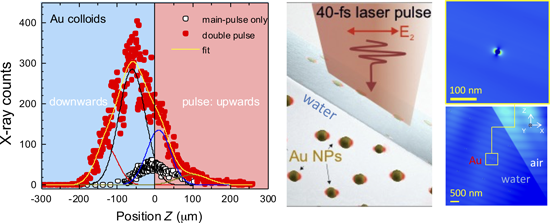
- selectivity based on surface plasmon resonance [15]. An increase of the laser-absorption efficiency can be expected in plasmonic nanoparticles, which results in the efficient generation of highly ionized charge states [13][14]. It is expected that this characteristic interaction between intense femtosecond


Nanocellulose: Recent advances and its prospects in environmental remediation
Beilstein J. Nanotechnol. 2018, 9, 2479–2498, doi:10.3762/bjnano.9.232
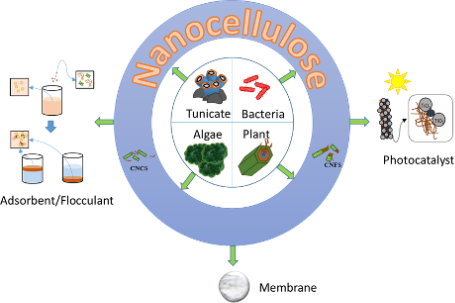
- −), phosphate (PO43−), fluoride (F−), and sulphate (SO42−). Cationic CNFs exhibited higher selectivity towards multivalent ions (PO43− and SO42−) than monovalent ions (F− and NO3−). On the other hand, the development of nanocellulose composites as adsorbents with numerous supportive properties, magnetic


Thickness-dependent photoelectrochemical properties of a semitransparent Co3O4 photocathode
Beilstein J. Nanotechnol. 2018, 9, 2432–2442, doi:10.3762/bjnano.9.228
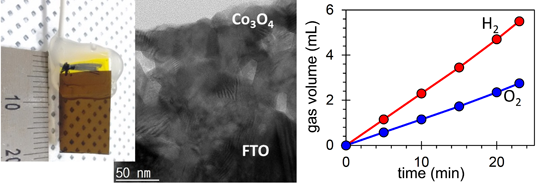
- , which are prominent in the 440–350 nm region. This feature is useful for a porous Co3O4 material as a semitransparent electrode in water-splitting PEC cells. Moreover, two distinct transitions (positive slope) around 1.5 and 2.4 eV in Figure 2b have different α values, providing optical selectivity that



ZnO-nanostructure-based electrochemical sensor: Effect of nanostructure morphology on the sensing of heavy metal ions
Beilstein J. Nanotechnol. 2018, 9, 2421–2431, doi:10.3762/bjnano.9.227
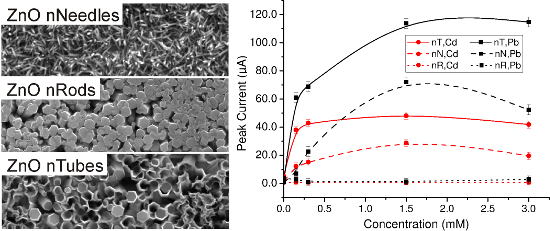
- nanostructures are promising candidates for use in sensors, especially in electrochemical sensors and biosensors, due to their unique physical and chemical properties, as well as sensitivity and selectivity to several types of contamination, including heavy metal ions. In this work, using the hydrothermal method
- , which limits the flow of liquid around the sample and reduces the probability of grown particles to enter covered areas, providing the necessary selectivity of nanostructure growth only on the electrodes. In the second step a temporary extra rubber sealing mask was applied and Cr electrodes were coated


Block copolymers for designing nanostructured porous coatings
Beilstein J. Nanotechnol. 2018, 9, 2332–2344, doi:10.3762/bjnano.9.218
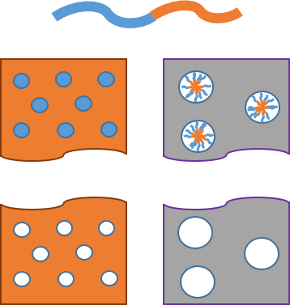
- an immensely attractive (and multidisciplinary) field of research [13][14][15][16][17][18][19][20]. In particular, nanoscopic-ordered porous architectures in the form of thin films have received great attention in the field of membrane science and micro/nanofluidics, due to the high selectivity
- nanoparticles (produced by using PS-b-PEO block copolymers as templates) are deposited via spin-coating onto a macroporous silicon-based substrate, forming a depth-filtering system (i.e., interparticle voids of 15–200 nm). In order to evaluate the selectivity of this porous membrane, two cationic (macro
- )molecules were selected as target probes: methylene blue (a dye of 0.5 nm in width) and the protein RNAse (3.8 nm), respectively. The results evidenced that the diffusion of the protein is more restricted as compared to the dye, suggesting a steric selectivity of the depth-filtering system analyzed. In


Dumbbell gold nanoparticle dimer antennas with advanced optical properties
Beilstein J. Nanotechnol. 2018, 9, 2188–2197, doi:10.3762/bjnano.9.205
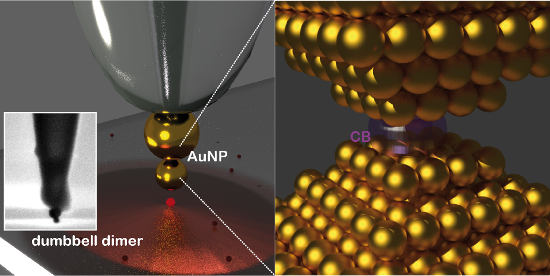
- particular mastering the formation of sub-nanometer gap sizes requires short, rigid molecules with high chemical selectivity. In addition, these linker molecules should not affect the optical response of the formed antenna. Although sub-nanometer gap dimers can be also formed artificially by the placement of




Electrospun one-dimensional nanostructures: a new horizon for gas sensing materials
Beilstein J. Nanotechnol. 2018, 9, 2128–2170, doi:10.3762/bjnano.9.202
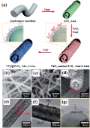
- followed by death. Gas sensors are the primary devices used for the detection and monitoring of these pollutants. Employing nanotechnology in sensor applications has significantly improved the performance of such devices, providing enhanced sensitivity, selectivity, low power consumption and high
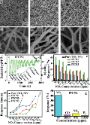
- discriminate between many different gases in the presence of other gases within low concentration ranges between a few parts per million (ppm) to parts per billion (ppb). The performance parameters of these gas sensors, including sensitivity, selectivity, response and recovery time, stability, reproducibility
- of pure MOx NFs [86]. SnO2 is a widely-used metal oxide material for gas sensing applications because of its low cost and high chemical stability. However, wide application of SnO2-based gas sensors is limited by low sensitivity, slow response, lack of selectivity and the effects of aging. SnO2 NFs






Metal-free catalysis based on nitrogen-doped carbon nanomaterials: a photoelectron spectroscopy point of view
Beilstein J. Nanotechnol. 2018, 9, 2015–2031, doi:10.3762/bjnano.9.191
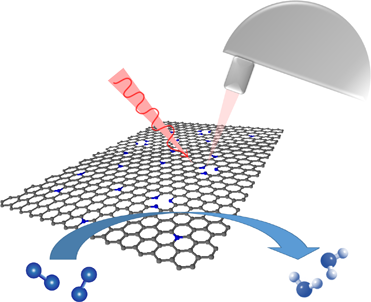
- temperatures up to 950 °C the amount of pure substitutional nitrogen (graphitic) and the DOS increase (Figure 3). As mentioned, the low-energy electronic excitation and the selectivity for oxygen dissociation strongly depend on the type of nitrogen dopant present in the sample, as we will discuss in the next
- influenced by the substrate that supports the graphene sample. Both the morphology (moiré pattern) and the electronic interaction play a role in the selectivity of preferential N sites [92][99]. The amount of nitrogen is also an important parameter to preserve the stability and the electronic properties of




Synthesis of a MnO2/Fe3O4/diatomite nanocomposite as an efficient heterogeneous Fenton-like catalyst for methylene blue degradation
Beilstein J. Nanotechnol. 2018, 9, 1940–1950, doi:10.3762/bjnano.9.185
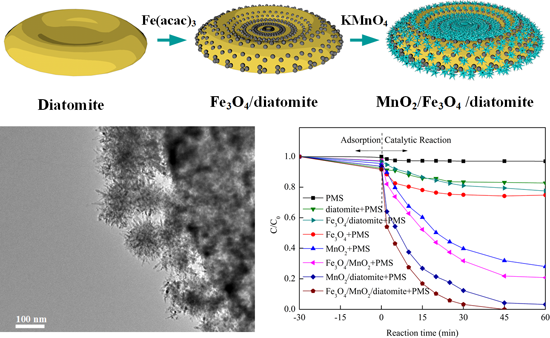
- heterogeneous Fenton-like system of MnO2-peroxymonosulfate (MnO2-PMS) is proposed. As alternatives to H2O2 and hydroxyl radicals (•OH), peroxymonosulfate (PMS) and the sulfate radical (•SO4−) exhibit a wider functional pH range, convenience in storage and higher oxidation selectivity. Also, compared to iron


The inhibition effect of water on the purification of natural gas with nanoporous graphene membranes
Beilstein J. Nanotechnol. 2018, 9, 1906–1916, doi:10.3762/bjnano.9.182
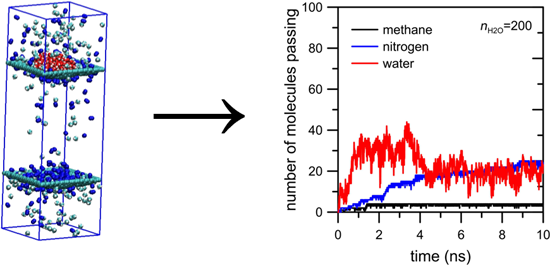
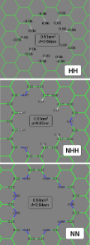
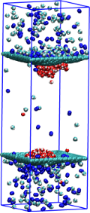
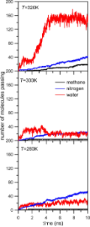
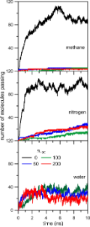
- graphene. The membrane separation process involves CH4 + N2 mixtures with and without the addition of water. The results show that water is able to form hydrogen bonds with nitrogen atoms located in a nanopore rim. This effect causes a decrease of separation selectivity as well as a reduction of gas
- functionalized graphene membranes can be very sensitive to the presence of water. The increase of the number of highly electronegative atoms such as nitrogen in the nanopore rim creates the opportunity to form hydrogen bridges with mixture components and then influences their selectivity of separation. Moreover






SO2 gas adsorption on carbon nanomaterials: a comparative study
Beilstein J. Nanotechnol. 2018, 9, 1782–1792, doi:10.3762/bjnano.9.169

- adsorption behavior, adsorption isotherms are recorded under pure SO2 atmosphere. The possibility to obtain pure SO2 gas equilibrium adsorption data under these experimental conditions is of great significance for theoretical adsorption investigations and gas mixture selectivity studies. For all the


Free-radical gases on two-dimensional transition-metal disulfides (XS2, X = Mo/W): robust half-metallicity for efficient nitrogen oxide sensors
Beilstein J. Nanotechnol. 2018, 9, 1641–1646, doi:10.3762/bjnano.9.156
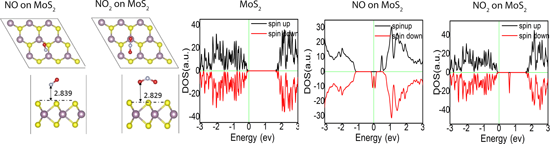
- to enable NO2/2D WS2 system display half-metallicity. In an attempt to address the selectivity towards NO gas in moist environments, we have carried out some new calculations on the adsorption of NOx (x = 1, 2) on the WS2 monolayer in the presence of a water molecule. The structures and spin


Cr(VI) remediation from aqueous environment through modified-TiO2-mediated photocatalytic reduction
Beilstein J. Nanotechnol. 2018, 9, 1448–1470, doi:10.3762/bjnano.9.137
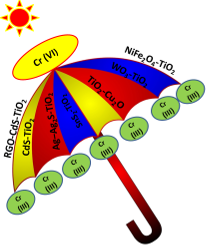
- combined with TiO2 for enhanced photocatalytic reduction of Cr(VI). A one-dimensional CdS–TiO2 core–shell (CdS@TiO2) nano-photocatalyst possessed higher reduction and selectivity of Cr(VI) due to the core–shell structure where hVB+ are trapped by the TiO2 shell [198]. Ultrathin TiO2-coated CdS core–shell


Preparation and morphology-dependent wettability of porous alumina membranes
Beilstein J. Nanotechnol. 2018, 9, 1423–1436, doi:10.3762/bjnano.9.135
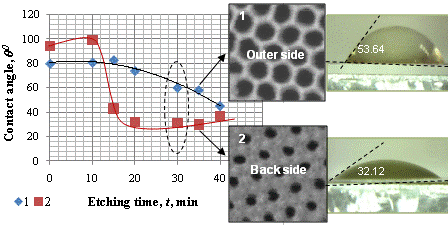
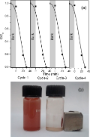
- ]. Membranes with a high selectivity and ordered structure can also be used to separate components of gas and liquid mixtures and to clean them from impurities (filtration). It is believed that in order to increase the selectivity and productivity, the membrane must have a regular structure of near





