


Search results
Search for "topography" in Full Text gives 451 result(s) in Beilstein Journal of Nanotechnology. Showing first 200.
In situ AFM visualization of Li–O2 battery discharge products during redox cycling in an atmospherically controlled sample cell
Beilstein J. Nanotechnol. 2019, 10, 930–940, doi:10.3762/bjnano.10.94
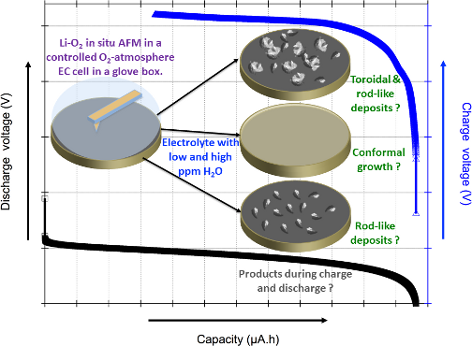
- rather than for the highest capacity. The main aim was to obtain electrochemical impedance spectroscopy (EIS), discharge/recharge voltages and capacities time-domain-correlated with AFM images of topography, all in a completely atmospherically isolated and controlled setting. In our recent study [30
- charge transfer resistance, improves the kinetics of the reaction. Topographical observations using AFM AFM was used to monitor morphological changes on the glassy carbon cathode surface. The topography images in Figure 3 and Figure 4 each show one of the nine scanned regions at two different water
- water concentrations the discharge and recharge currents were 5 µA. Figure 3 shows AFM topography images scanned on the glassy carbon surface with electrolyte containing <20 ppm of H2O. Prior to the start of the discharge reaction in Figure 3a at an open-circuit potential of 2.921 V, the surface of the


Nanoscale optical and structural characterisation of silk
Beilstein J. Nanotechnol. 2019, 10, 922–929, doi:10.3762/bjnano.10.93
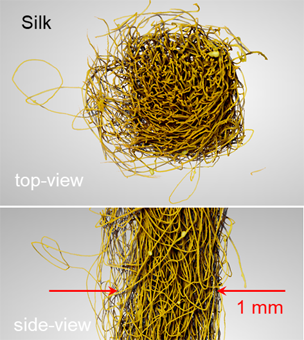
- diffractometer using a Cu Kα microfocus X-ray source with λ = 1.5418 Å (Figure 2a). IR spectral measurements The sub-diffraction scattering scanning near-field optical microscope (s-SNOM, neaspec GmbH) uses a metalized atomic force microscopy (AFM) tip. The tip maps the surface relief (topography) by its basic


Rapid, ultraviolet-induced, reversibly switchable wettability of superhydrophobic/superhydrophilic surfaces
Beilstein J. Nanotechnol. 2019, 10, 866–873, doi:10.3762/bjnano.10.87
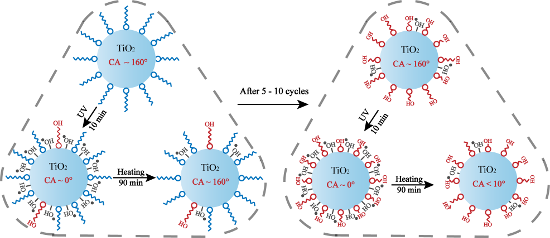
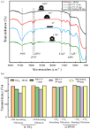
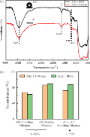
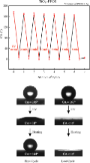
- solid surfaces governed by surface chemistry and surface topography [1][2] and has found significant applications in various fields [3][4][5][6][7][8]. Controllable wettability that can be enabled through external stimuli, such as illumination, electric fields or heating, can be applied in chemical



Review of time-resolved non-contact electrostatic force microscopy techniques with applications to ionic transport measurements
Beilstein J. Nanotechnol. 2019, 10, 617–633, doi:10.3762/bjnano.10.62
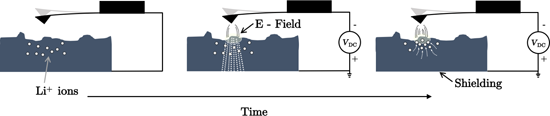
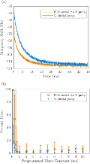
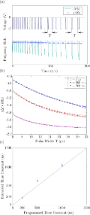
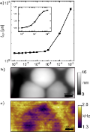
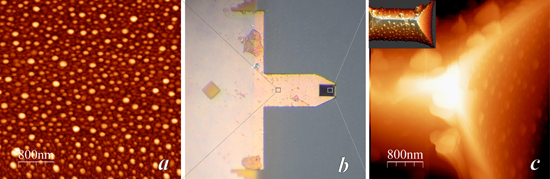
- time constants, τ, and stretching factors, β. “(a) Calibration curve for a range of characteristic times of exponential decay (τ) (inset shows a zoom-in for shorter times). (b) Topography





Ultraviolet patterns of flowers revealed in polymer replica – caused by surface architecture
Beilstein J. Nanotechnol. 2019, 10, 459–466, doi:10.3762/bjnano.10.45
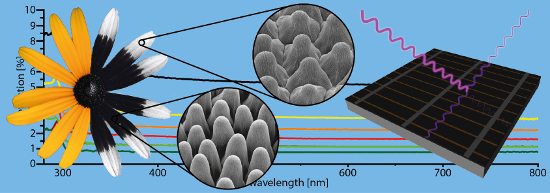
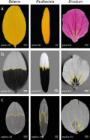
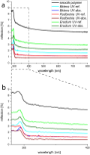
- topography on the appearance of UV-patterns, we investigated the interaction between UV-light and the surface structures of three different plant species in this study. To consider several diverse surface structures we chose three species with distinct UV-patterns and different surface structures, for
- is described in Koch et al. [39] and is a suitable technique for the transfer of the surface topography of soft and fragile plant material to a rigid material in high precision down to the nanometer scale. Results and Discussion Images of flowers under environmental conditions were taken in the VIS


Advanced scanning probe lithography using anatase-to-rutile transition to create localized TiO2 nanorods
Beilstein J. Nanotechnol. 2019, 10, 412–418, doi:10.3762/bjnano.10.40
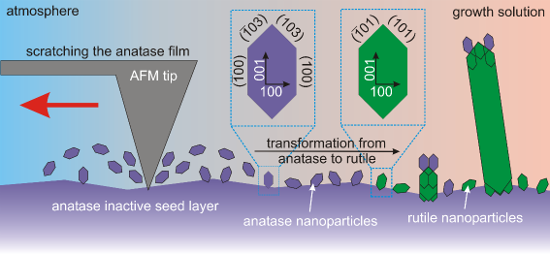
- probe lithography was performed with an Innova AFM (Bruker) in contact mode. The applied force was significantly higher than usually chosen for topography scanning. We used OTESPA-R3 (Bruker AFM probes) silicon tips with a spring constant of approximately 26 N/m. Based on the spring constant, we


Biocompatible organic–inorganic hybrid materials based on nucleobases and titanium developed by molecular layer deposition
Beilstein J. Nanotechnol. 2019, 10, 399–411, doi:10.3762/bjnano.10.39
- density of the systems were measured after 15 minutes of water treatment (Table 3), indicating some variations in index of refraction, but relatively small variations in film density between the different systems. The surface topography of films as-deposited on Si(100) and after being immersed in water
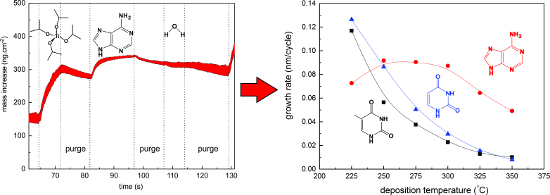
- increase during growth measured by QCM using TTIP and thymine (at 225 °C) (top graph), uracil (at 225 °C) (top graph), or adenine (250 °C) (bottom graph), and water. The shaded area represents the statistical variation during 16 cycles. Surface topography as measured by AFM for films deposited using TTIP




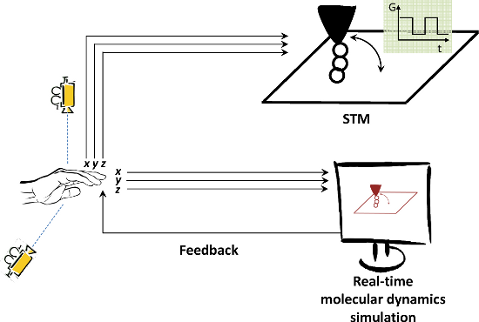
Intuitive human interface to a scanning tunnelling microscope: observation of parity oscillations for a single atomic chain
Beilstein J. Nanotechnol. 2019, 10, 337–348, doi:10.3762/bjnano.10.33
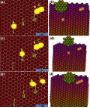
- different stages of the experiment are shown. Here, similar to before, the topography colour scale is tuned to show a smaller apparent size of the adatoms ‘A’, ‘B’ or ‘C’. Next, using the geometric technique explained earlier, the background atoms are determined and three fixed positions on the surface ‘i
- show STM images with the topography colour scale tuned to reduce the apparent size of the two adatoms to match the superimposed surface lattice pattern. The full apparent size of Au adatoms on Au(111) is around 1 nm as shown in Figure 2b. (a) shows the two possible triangular hollow adsorption sites
- positioning (energetically favourable) of the adatoms with reference to the surface lattice. (a, c, e) show the STM images with the topography colour scale tuned to show a smaller apparent size of the adatoms ‘A’, ‘B’ or ‘C’. The scale bar in the bottom-right corner is 1 nm. The other three panels (b, d, f




Scanning probe microscopy for energy-related materials
Beilstein J. Nanotechnol. 2019, 10, 132–134, doi:10.3762/bjnano.10.12

- significant role for the in-operando characterization. SPM methods offer a plethora of operation modes beyond topography imaging, which is well reflected in the articles of this thematic issue. The majority of contributions stem from research on photovoltaic materials. Here, electrical conductive atomic force
Contact splitting in dry adhesion and friction: reducing the influence of roughness
Beilstein J. Nanotechnol. 2019, 10, 1–8, doi:10.3762/bjnano.10.1
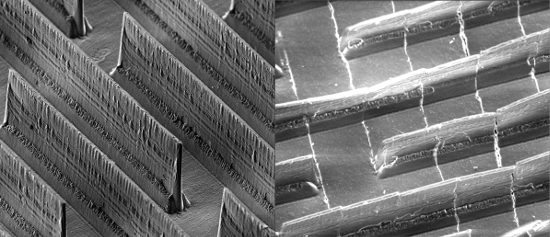
- adaptability of the split microstructure to wavy surfaces allows it to form larger contact area (Figure 3) on the surfaces with intermediate roughness, thus leading to a better attachment. In addition to its better ability to adapt to uneven surface topography, a split microstructure may also demonstrate
- statistically equal fractions of the split flap peel at angles θ − α and θ + α, respectively, with α being a small perturbation angle defined by the surface topography. In this case, solving the Kendall equation ((2) in [44]) yields where F is the peeling force, b is the film width, d is the film thickness, E
- that splitting the adhesive microstructure in parallel to the peeling force may improve the attachment ability not only due to better adaptation to surface topography, but also due to the effective decrease of the peeling angle. The friction force measured at the point of sliding inception on all


Characterization and influence of hydroxyapatite nanopowders on living cells
Beilstein J. Nanotechnol. 2018, 9, 3079–3094, doi:10.3762/bjnano.9.286
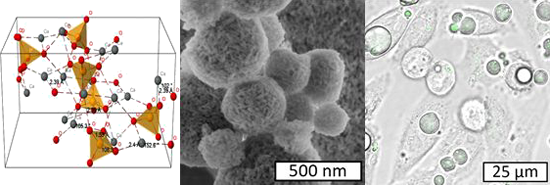
- done taking into account at least 15 different agglomerates for each sample. Atomic force microscopy Atomic force microscope (AFM) was used for topography imaging, surface evaluation at the nanoscale and evaluation of the particle shapes [35]. The sample preparation protocol was as follows: A water
- suspension of nanopowder was prepared at a concentration of 0.1 mg/mL. A droplet of the suspension was dripped onto the surface of a freshly cleaved mica disc (Ted Pella) and left in a vacuum dryer (VO 200, Memmert) for 1 h prior to imaging. Topography measurements were made in air. 1 µm × 1 µm scans were
- quantitative analysis of nanopowders [54]. AFM allowed for 3D topography reconstruction and phase-contrast acquisition yielding for deeper insight into nanoscale features of the tested materials. It is important to note that nanoparticle imaging requires scanning probes with a small tip radius, otherwise the

![[Graphic 1]](/bjnano/content/inline/2190-4286-9-286-i2.svg?max-width=637&scale=1.18182) .
.



Electrostatic force microscopy for the accurate characterization of interphases in nanocomposites
Beilstein J. Nanotechnol. 2018, 9, 2999–3012, doi:10.3762/bjnano.9.279
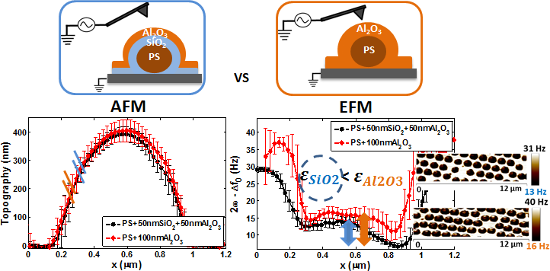
- . Based on these findings, we developed three experimental approaches in which different model samples were compared to detect and characterize the interphase in a nanodielectric model composed of particle + interphase + matrix. In all the tested model samples, the particle topography could be determined
- “real” nanocomposite systems, using mechanical scanning probe microscopy techniques [29][30][31], and EFM [26][27][32][33]. Moreover, discriminating the particles from the topography is important in the case of nanocomposites that include particles and matrix with low dielectric permittivity difference
- sample dimensions and permittivity values should be relatively small, the statistical analysis was performed using EFM measurements acquired on 12 × 3 µm2 images based on an average of 30 particles [37]. The calculated average topography and electrical frequency shift (2ω − Δf0) profiles for PS + 100 nm




Size limits of magnetic-domain engineering in continuous in-plane exchange-bias prototype films
Beilstein J. Nanotechnol. 2018, 9, 2968–2979, doi:10.3762/bjnano.9.276
- . These settings were chosen from preliminary experiments as a trade-off between lateral charge-contrast resolution and minimal signal overlap from the sample topography. Additionally, an SIS ULTRAObjective in non-contact/lift mode with a lift height of 100 nm and a pixel size of 200 nm was applied for




![[Graphic 63]](/bjnano/content/inline/2190-4286-9-276-i63.svg?max-width=637&scale=1.18182) .
. ![[Graphic 64]](/bjnano/content/inline/2190-4286-9-276-i64.svg?max-width=637&scale=1.18182) is the angle between the domain wall (DW) normal vector
is the angle between the domain wall (DW) normal vector ![[Graphic 65]](/bjnano/content/inline/2190-4286-9-276-i65.svg?max-width=637&scale=1.18182) and the local unidirectio...
and the local unidirectio...
Investigation of CVD graphene as-grown on Cu foil using simultaneous scanning tunneling/atomic force microscopy
Beilstein J. Nanotechnol. 2018, 9, 2953–2959, doi:10.3762/bjnano.9.274
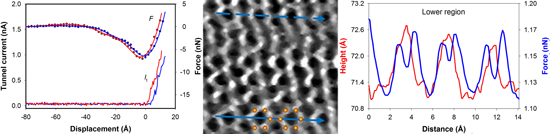
- /hollow sites. We obtained different contrast between force and STM topography images for atomic features. A honeycomb pattern showing all six carbon atoms is revealed in AFM images. In one contrast type, simultaneously acquired STM topography revealed hollow sites to be brighter. In another, a triangular
- array with maxima located in between the two carbon atoms was acquired in STM topography. Keywords: atomic force microscopy; CVD graphene; scanning tunneling microscopy; simultaneous operation; small amplitude; Introduction Graphene has been widely studied because of its potential use in future
- taken on several samples showed the presence of dominantly single-layer graphene [36]. Results and Discussion We used a custom-made tungsten tip–cantilever probe [32] the stiffness of which was estimated from thermal oscillations to be about 53 N/m. The simultaneously acquired STM topography and force


In situ characterization of nanoscale contaminations adsorbed in air using atomic force microscopy
Beilstein J. Nanotechnol. 2018, 9, 2925–2935, doi:10.3762/bjnano.9.271
- order to access material properties (“chemical information”, thus the name spectroscopy) [12]. AFM allows not only the measurement of surface topography, but also the determination of other physical characteristics; in particular electrostatic [13][14][15] and magnetic properties [16][17]. For reliable
- and the macroscopic chip to which it is attached (typical size 2 × 4 mm2), is moved by the scanning motion of the piezoelectric element. Topography and electrostatic images of cleaned and uncleaned cantilevers: accessing materials properties Topographic images as shown in Figure 1 are quite valuable
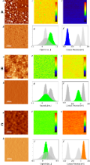
- thus of type “uncleaned-new”, which is “almost clean”, as discussed below in more detail. Figure 2 shows the topography (a), the error signal of the feedback (frequency shift, (b)), the electrostatic capacity signal (EAFM2ν, see Experimental section, (c)) as well as the contact potential (e), which are


Charged particle single nanometre manufacturing
Beilstein J. Nanotechnol. 2018, 9, 2855–2882, doi:10.3762/bjnano.9.266
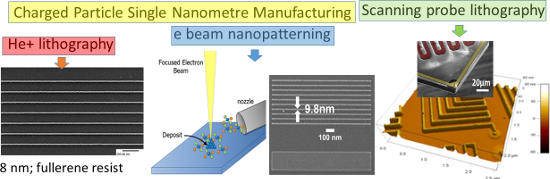
- -point. Since the oscillation amplitude depends on the force between tip and sample, its variation is a direct indicator for the topography and material properties of the sample. Tools that combine both feedback loops, i.e., current and force, are


Controlling surface morphology and sensitivity of granular and porous silver films for surface-enhanced Raman scattering, SERS
Beilstein J. Nanotechnol. 2018, 9, 2813–2831, doi:10.3762/bjnano.9.263
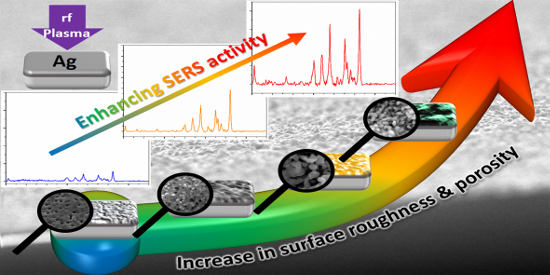
- silver films were characterized using atomic force microscopy (AFM) in contact mode on a CP-II AFM (Bruker-Veeco) with SiC cantilevers to determine the topography and surface roughness (root mean square roughness, Rq). Scanning electron microscopy (SEM) of the silver films was performed on a Philips XL





Biomimetic surface structures in steel fabricated with femtosecond laser pulses: influence of laser rescanning on morphology and wettability
Beilstein J. Nanotechnol. 2018, 9, 2802–2812, doi:10.3762/bjnano.9.262
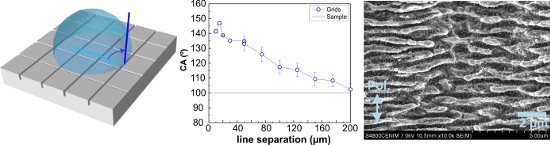
- surface topography needs to be mimicked, but often also a specific function of the structure. An alternative approach to laser direct writing of complex structures is the generation of laser-induced periodic surface structures (LIPSS), which is based on directed self-organization of the material and
- objective to reproduce not only the geometry and morphology of structures found in natural systems, but – most importantly – their specific functionality. Biomimetic applications that aim to control the wetting properties of a material surface must take into account the surface topography, since it strongly
- dependence of surface wetting on surface energy and topography makes it particularly difficult to predict the wetting scenario, knowledge of the apparent contact angle alone is often sufficient for practical applications. For the particular case of steel, it is known that the laser-processed material evolves



Low cost tips for tip-enhanced Raman spectroscopy fabricated by two-step electrochemical etching of 125 µm diameter gold wires
Beilstein J. Nanotechnol. 2018, 9, 2718–2729, doi:10.3762/bjnano.9.254
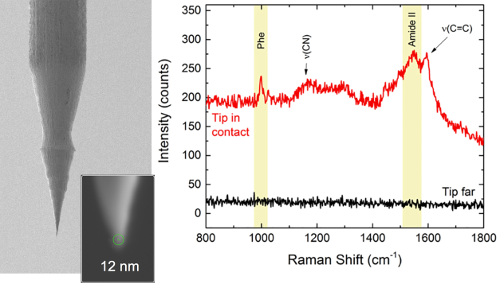
- resolution in TERS imaging Nanoscale resolution is shown in simultaneous morphological (STM) and chemical (TERS) mapping of R6G molecules (10−4 M) absorbed on Au(111). Experiments are carried out in gap-mode, with excitation at 638 nm. Figure 9a shows the STM topography acquired on a 300 × 300 nm2 area with


Disorder in H+-irradiated HOPG: effect of impinging energy and dose on Raman D-band splitting and surface topography
Beilstein J. Nanotechnol. 2018, 9, 2708–2717, doi:10.3762/bjnano.9.253
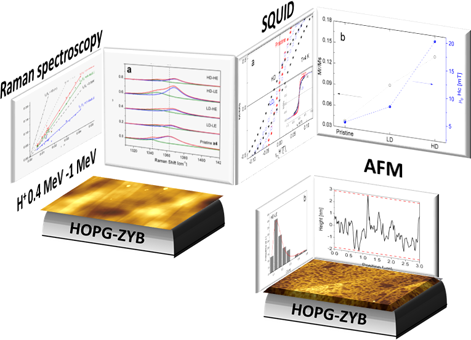
- engineering in carbon-based materials. Keywords: disorder; highly oriented pyrolytic graphite (HOPG); ion–solid interactions; Raman spectroscopy; topography; Introduction The development of novel methods to control the properties of carbon-based materials by introducing disorder is currently a subject of
- tapping mode. Standard Si cantilevers with sharp tips were used for high-resolution topography imaging and the software Gwyddion 2.36 was used for image analyses. Results and Discussion Raman characterization Figure 1 compares the Raman spectra after excitation with a laser wavelength of 514 nm
- matrix, in bubbles or blisters located amongst the graphene layers. The defective topography of the irradiated samples observed in Figure 5b,c is interpreted as a consequence of the bursting of H blisters. Taking into account the work of Waqar et al. [22], we have estimated the pressure inside one of


Characterization of the microscopic tribological properties of sandfish (Scincus scincus) scales by atomic force microscopy
Beilstein J. Nanotechnol. 2018, 9, 2618–2627, doi:10.3762/bjnano.9.243
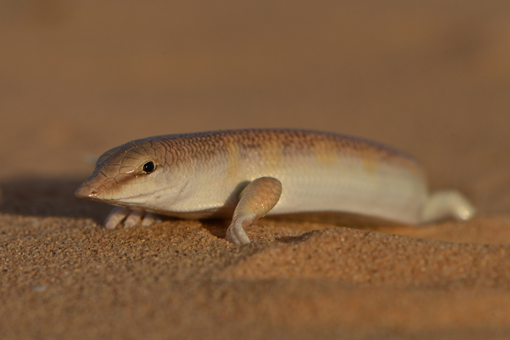
- controlled temperature (21–23 °C) and humidity (50–70%). All AFM experiments were conducted with a Dimension Icon AFM (Veeco Inc., USA). The topography of the samples was measured in tapping mode while adhesion force, friction, and wear analysis were conducted in contact mode. No extra treatment was applied
- variations in structure or chemistry may lead to drastic changes in friction or wear [20]. We, therefore, analyse the topography, adhesion, frictional coefficient, and wear resistance of sandfish scale by atomic force microscopy applying several types of probe shape and material. In order to allow for a
- meaningful comparison we determined the tribological parameters of snake scales and technical surfaces with the same probes, too. Structural properties of sandfish scales Figure 3a,b shows the topography of sandfish dorsal and ventral scales recorded by atomic force microscopy. On the dorsal scale a


Thickness-dependent photoelectrochemical properties of a semitransparent Co3O4 photocathode
Beilstein J. Nanotechnol. 2018, 9, 2432–2442, doi:10.3762/bjnano.9.228
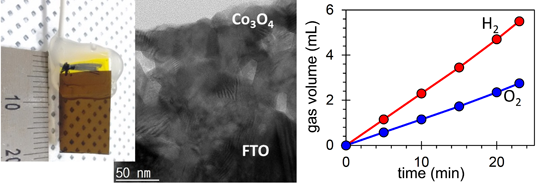
- °. FESEM images showing (c) the topography of Co film deposited at room temperature on the glass substrate, and (d) the porous topography of Co3O4 on the glass substrate after rapid thermal processing-induced oxidation in air at 550 °C for 10 min. (e) Morphology of a 70 nm thick Co3O4 film on FTO/glass, (f



High-throughput micro-nanostructuring by microdroplet inkjet printing
Beilstein J. Nanotechnol. 2018, 9, 2372–2380, doi:10.3762/bjnano.9.222
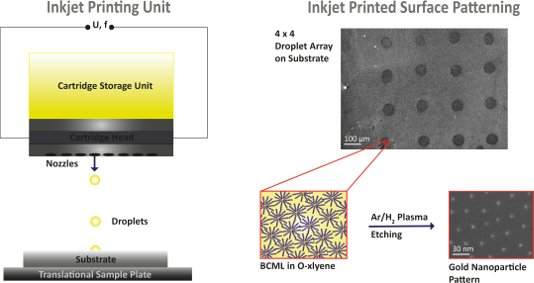
- surfaces and the generated patterns were found to depend on the material type and surface topography. Based on the presented strategy, we were able to achieve patterning times of a few seconds and produce quasi-hexagonal micro-nanopatterns of gold nanoparticles on smooth surfaces. Hence, this method is a
- steps that are only achievable with clean-room methods. For example, so-called “micro-nanostructures” have been fabricated by combining BCML with electron-beam lithography and photolithography [20][21]. A different approach was proposed based on topography-induced micro-nanostructuring, but this method
- maximum and minimum. Apparently, the micelle-containing o-xylene solution spreads out most reproducibly on silicon and less on NiTi. To explain the differences in the droplet diameters of our different materials, the surface topography of the samples was measured using atomic force microscopy (AFM). As


Nanoscale characterization of the temporary adhesive of the sea urchin Paracentrotus lividus
Beilstein J. Nanotechnol. 2018, 9, 2277–2286, doi:10.3762/bjnano.9.212
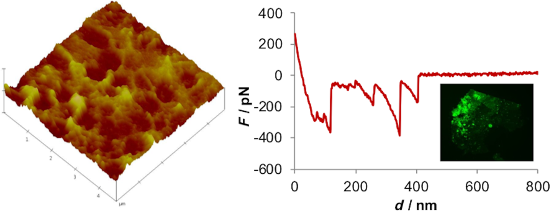
- , the first nanoscale characterization of sea urchin temporary adhesives was performed using atomic force microscopy (AFM). Results: The adhesive topography was similar under dry and native (seawater) conditions, which was comprised of a honeycomb-like meshwork of aggregated globular nanostructures. In
- only been studied in P. lividus and was found to be composed of proteins and neutral sugars [18]. Although sea urchin tube feet and adhesive secretions have been extensively studied, its topography and mechanical properties at the nanoscale have never been investigated. Therefore, the aim of the
- (two high-energy surfaces) than on teflon (a low-energy surface) [7]. In order to understand the topography, P. lividus footprints were imaged using different probing methods (peak force tapping in air and fluid) and in various environments: dry, moist and under native conditions (ASW). In all the


A scanning probe microscopy study of nanostructured TiO2/poly(3-hexylthiophene) hybrid heterojunctions for photovoltaic applications
Beilstein J. Nanotechnol. 2018, 9, 2087–2096, doi:10.3762/bjnano.9.197
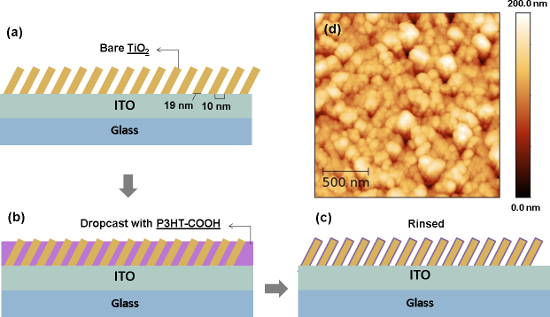
- average spacing between the columns is (10 ± 3) nm, with an average width of the columns of (19 ± 4) nm, as determined by SEM measurements [24]. The topography of the deposit is shown in the tapping-mode atomic force microscopy (TM-AFM) image of Figure 1d, where the apex of the columns appears as
- . The distribution of the Vcpd values can be fit with a Gaussian distribution centred at −931 mV with a FWHM of 97 mV (Figure 2d). A direct correlation between the topography and the Vcpd signal can be observed, with a higher height corresponding to a more negative Vcpd. It is however unlikely that the
- contrast purely originates from a crosstalk between the topography and the Vcpd, as indicated by local mismatching between both contrasts (see red lines in Figure 2a and 2b). Moreover, further measurements (see Figure 3) showed that P3HT grafting barely affects the overall morphology but smooths





