


Search results
Search for "transition metal" in Full Text gives 244 result(s) in Beilstein Journal of Nanotechnology. Showing first 200.
The interplay between spin densities and magnetic superexchange interactions: case studies of mono- and trinuclear bis(oxamato)-type complexes
Beilstein J. Nanotechnol. 2017, 8, 2245–2256, doi:10.3762/bjnano.8.224
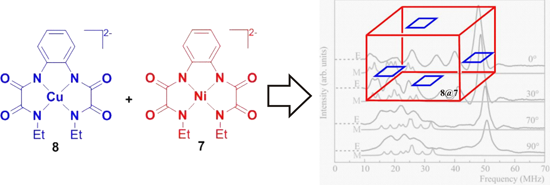
- , Faculty of Natural Sciences, TU Chemnitz, Strasse der Nationen 62, D-09111 Chemnitz, Germany 10.3762/bjnano.8.224 Abstract For future molecular spintronic applications the possibility to modify and tailor the magnetic properties of transition-metal complexes is very promising. One of such possibilities
- -metal complex fragments and transition-metal salts to type-II metalloligands to obtain discrete trinuclear and 1D polynuclear complexes (type III and IV, Scheme 1), respectively, or the synthesis of multifunctional 2D and 3D networks with potential applications in information storage, nanotechnology
- complexes and vice versa. Spin densities or the spin density distribution, respectively, of paramagnetic transition-metal complexes can be determined by making use of ESR spectroscopy. This method in its continuous wave [33] and, in particular, in the microwave-pulse versions [34][35][36][37][38][39][40][41


![[Graphic 15]](/bjnano/content/inline/2190-4286-8-224-i20.svg?max-width=637&scale=1.18182) molecular plan...
molecular plan...


Comprehensive investigation of the electronic excitation of W(CO)6 by photoabsorption and theoretical analysis in the energy region from 3.9 to 10.8 eV
Beilstein J. Nanotechnol. 2017, 8, 2208–2218, doi:10.3762/bjnano.8.220
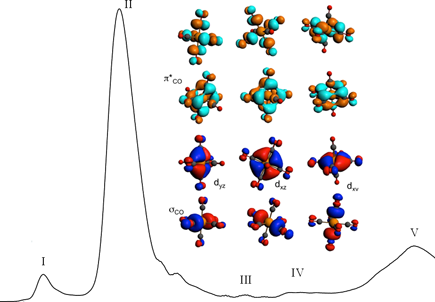
- ][20] spectroscopy experiments. Detailed knowledge of the electronic-state spectroscopy of transition-metal hexacarbonyls has attracted particular attention due to the ability of CO to form complexes with metals in low oxidation states. This is possible due to the presence of low-lying empty π
- Wnorowski et al. [26] revealed the strong dissociation character of W(CO)6, with no formation of bare W− metal anions. Negative ion states of transition-metal hexacarbonyls have been obtained by electron transmission spectroscopy (ETS) with W(CO)6 attachment energies of 1.53, 2.46 and 4.26 eV [27]. We note
- spectrum, representative of transition-metal carbonyl complexes for which unresolved spectral features remain to be solved, with a description as complete as possible of the electronic states. In the next section we provide details on the experimental and theoretical methods used in this study for W(CO)6


Evaluating the toxicity of TiO2-based nanoparticles to Chinese hamster ovary cells and Escherichia coli: a complementary experimental and computational approach
Beilstein J. Nanotechnol. 2017, 8, 2171–2180, doi:10.3762/bjnano.8.216

- reveal that the size and specific surface (as a potential source of a larger number of metal ions) are important factors for toxicity evaluation of modified TiO2-based nanoparticles. In a further perspective, more detailed investigations, including the use of a variety of transition metal-doped TiO2


Ta2N3 nanocrystals grown in Al2O3 thin layers
Beilstein J. Nanotechnol. 2017, 8, 2162–2170, doi:10.3762/bjnano.8.215
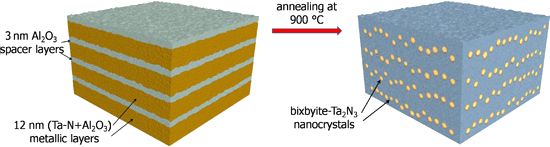
- generic procedure to realize highly tunable and designable optical properties of thin films containing transition-metal nitride nanocrystals. Keywords: nanocomposites; multilayers; refractory plasmonics; self-assembly; Ta2N3 nanoparticles; Introduction Metallic nanoparticles (NPs) can confine visible
- alternative plasmonic materials includes the transition-metal nitrides such as TiN, ZrN, TaN or HfN [11][12][13]. Their advantages are compatibility with the silicon CMOS technology and physical properties suitable for harsh environments (high melting point, chemical stability) [14]. In addition, most of
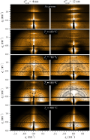
- containing transition-metal nitride nanocrystals. GISAXS patterns of as-grown and annealed MLs with the thinner (left column) and thicker (right column) metallic layers. The vertical and horizontal black lines are non-counting gaps between the segments of the 2D detector. XRR curves of as-grown and annealed


Electronic structure, transport, and collective effects in molecular layered systems
Beilstein J. Nanotechnol. 2017, 8, 2094–2105, doi:10.3762/bjnano.8.209
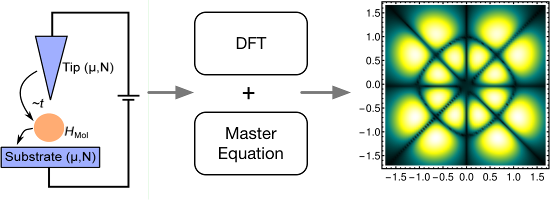
- similar fluorinated copper phthalocyanine (F16CoPc), has demonstrated the occurrence of hybridization [11]. It was proved that a local charge transfer which affects only the transition-metal centers changes the charge state of the transition metal and is directly related to a change of its magnetic moment


![[Graphic 29]](/bjnano/content/inline/2190-4286-8-209-i41.png?max-width=637&scale=1.18182) between the occupations nA and nB of the two checkerboard sublattices for a) asy...
between the occupations nA and nB of the two checkerboard sublattices for a) asy...

![[Graphic 30]](/bjnano/content/inline/2190-4286-8-209-i42.png?max-width=637&scale=1.18182) per site for a) asymmetric tunneling, Γtop/Γbottom = 0.5, and b) symmetric tunneli...
per site for a) asymmetric tunneling, Γtop/Γbottom = 0.5, and b) symmetric tunneli...
Systematic control of α-Fe2O3 crystal growth direction for improved electrochemical performance of lithium-ion battery anodes
Beilstein J. Nanotechnol. 2017, 8, 2032–2044, doi:10.3762/bjnano.8.204
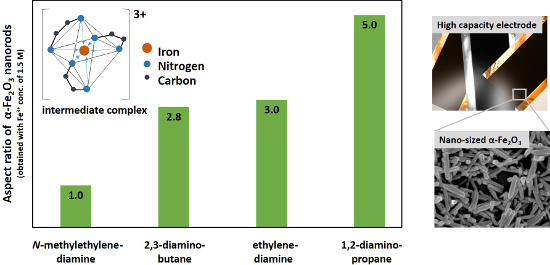
- coulombic efficiency, its flat voltage curve and the low operating voltage of 0.1 V vs Li/Li+ it is limited to a lithium storage capacity of only 372 mAh g−1, given a stoichiometry of LiC6 [8]. In 2000, the Tarascon research group brought attention to transition metal oxides as a new class of possible anode
- materials that showed capacities in the range of twice as high as graphite [9], and some of them even show values higher than 1000 mAh g−1 with the interaction with lithium ions [10]. Therefore, transition metal oxides are candidates as new, high-capacity, electrode active materials in next generation LIBs


Intercalation of Si between MoS2 layers
Beilstein J. Nanotechnol. 2017, 8, 1952–1960, doi:10.3762/bjnano.8.196
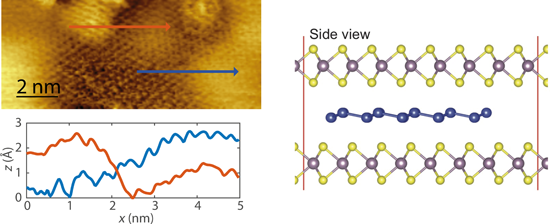
- Fermi level. Van der Waals materials with a band gap do not suffer from this limitation. Molybdenum disulfide (MoS2) is a member of the transition metal dichalcogenide (TMD) family that belongs to the class of van der Waals materials. Bulk MoS2 has a band gap of 1.29 eV, which increases to 1.90 eV for a


Spin-dependent transport and functional design in organic ferromagnetic devices
Beilstein J. Nanotechnol. 2017, 8, 1919–1931, doi:10.3762/bjnano.8.192
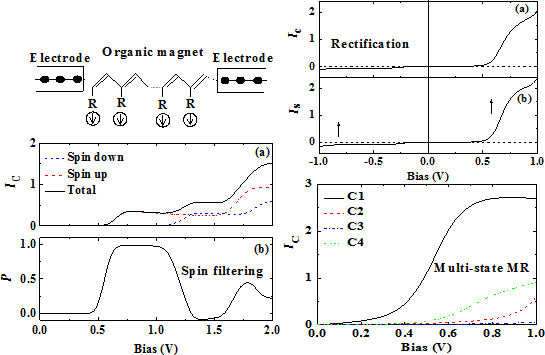
- artificially, such as by doping transition-metal ions into organic materials or using spin radicals [9][10][11][12][13]. The latter method may generate pure OFs. For example, poly((1,4-bis(2,2,6,6-tetramethyl-4-hydroxy-4-piperidyl-1-oxyl)butadiyne) (poly-BIPO) is a representative of π-conjugated pure OFs with


α-Silicene as oxidation-resistant ultra-thin coating material
Beilstein J. Nanotechnol. 2017, 8, 1808–1814, doi:10.3762/bjnano.8.182
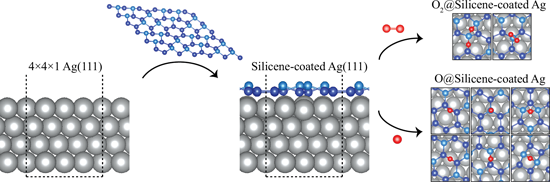
- calculations [9]. Bulk forms of transition-metal dichalcogenides (TMDs) are well-known coating materials, and the respective 2D TMDs can be used as surface protection. In addition, MoS2 is one of the most widely used lubricant coating material [10]. Theoretical and experimental studies have demonstrated that


(Metallo)porphyrins for potential materials science applications
Beilstein J. Nanotechnol. 2017, 8, 1786–1800, doi:10.3762/bjnano.8.180
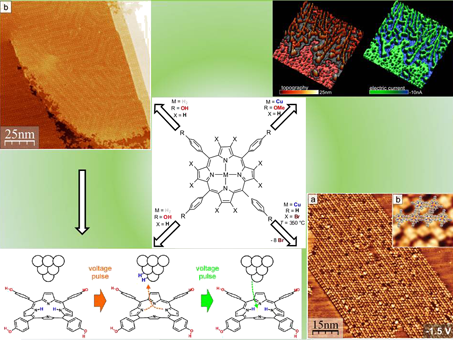
- combination of structural and (local) spectroscopic investigations is highly promising. For example, we regard the 2D nano-ribbons made of CuTPP(Br)8 molecules as a good starting point to investigate how to functionalize the porphyrins further with different (transition) metal atoms or functional groups to






Adsorption and diffusion characteristics of lithium on hydrogenated α- and β-silicene
Beilstein J. Nanotechnol. 2017, 8, 1742–1748, doi:10.3762/bjnano.8.175

- attention [1][2]. This family consists of a large variety of materials such as hexagonal boron nitride (hBN) [3][4], silicene [5][6][7], germanene [8], transition-metal dichalcogenides (TMDs) [9][10][11][12][13][14], transition-metal trichalcogenides (TMTs) [15][16], phosphorene [17] and gallium


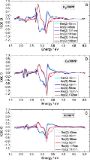
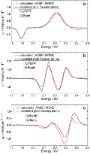
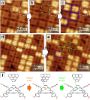
Group-13 and group-15 doping of germanane
Beilstein J. Nanotechnol. 2017, 8, 1642–1648, doi:10.3762/bjnano.8.164
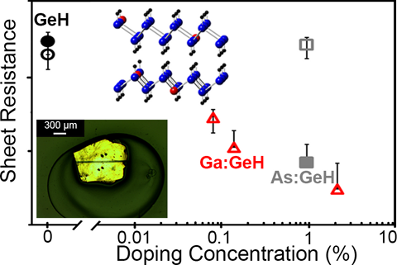
- discovery of graphene [1], the quest to discover and measure novel two dimensional and layered materials has led to the investigation of group-14 and group-15 allotropes of graphene and graphane [1][2][3][4][5][6][7][8][9][10][11][12][13][14], transition-metal dichalcogenides [15][16][17][18][19], and



Charge transfer from and to manganese phthalocyanine: bulk materials and interfaces
Beilstein J. Nanotechnol. 2017, 8, 1601–1615, doi:10.3762/bjnano.8.160
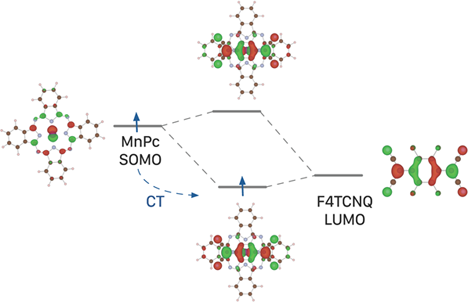
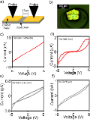
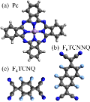
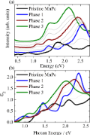
- Bergakademie Freiberg, Leipziger Str. 23, D-09596 Freiberg, Germany 10.3762/bjnano.8.160 Abstract Manganese phthalocyanine (MnPc) is a member of the family of transition-metal phthalocyanines, which combines interesting electronic behavior in the fields of organic and molecular electronics with local magnetic
- ][8]. Phthalocyanine molecules can harbor a number of metal ions, in particular transition-metal ions such as cobalt, iron or manganese. A special characteristic of transition-metal centered phthalocyanines is, that transition-metal ions often are characterized by a magnetic moment, and therefore such
- phthalocyanines also show very interesting magnetic behavior [9]. They have even been discussed in terms of molecular magnets including their discussion in future applications in the field of molecular spintronics [10][11][12]. Among these transition-metal phthalocyanines, manganese phthalocyanine (MnPc) is one


Nanostructures for sensors, electronics, energy and environment III
Beilstein J. Nanotechnol. 2017, 8, 1530–1531, doi:10.3762/bjnano.8.154

- ., silicene, phosphorene, transition metal dichalcogenides, MXenes), which now number more than 6,000. The topic of nanoparticles is the focus of this Thematic Series, the use of which spans from biosensing to gas detection and from removing pollutants from water to new generations of solar cells. The
Deposition of exchange-coupled dinickel complexes on gold substrates utilizing ambidentate mercapto-carboxylato ligands
Beilstein J. Nanotechnol. 2017, 8, 1375–1387, doi:10.3762/bjnano.8.139
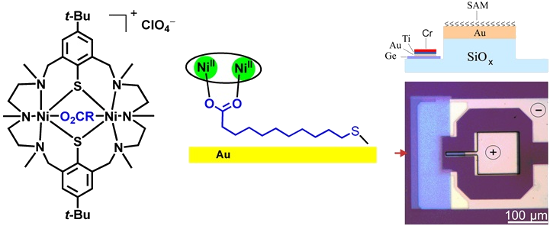
- , Germany, Leibniz-Institute of Surface Modification (IOM), Permoser Str. 15, D-04318 Leipzig, Germany 10.3762/bjnano.8.139 Abstract The chemisorption of magnetically bistable transition metal complexes on planar surfaces has recently attracted increased scientific interest due to its potential application
- surfaces; macrocyclic complexes; mercapto-alkanecarboxylic acid; Introduction The deposition of switchable transition metal complexes on Au surfaces is a topical research area [1][2][3][4] due to the many potential applications such as storage of information at the molecular level [5][6][7] and in the
- (Scheme 1), L’ an ambidentate coligand, and M is a paramagnetic transition metal ion, usually MnII, FeII, CoII, or NiII [37]. The ambidentate phosphane-carboxylato [38] and thiol-carboxylato coligands H2L2 and H1L3 (Figure 1) were found to bind selectively via their carboxylate function to form the


Two-dimensional silicon and carbon monochalcogenides with the structure of phosphorene
Beilstein J. Nanotechnol. 2017, 8, 1338–1344, doi:10.3762/bjnano.8.135
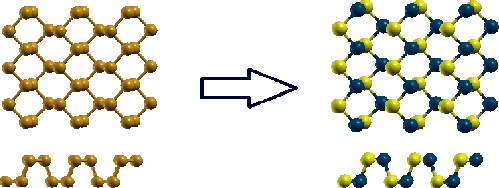
- [10][11], one of the many phases of crystalline phosphorus. Among other properties [12][13][14][15], the values of the carrier mobility and of the on–off ratio of transistors made from phosphorene are intermediate between the values of graphene and those of transition metal dichalcogenides, making


Synthesis, spectroscopic characterization and thermogravimetric analysis of two series of substituted (metallo)tetraphenylporphyrins
Beilstein J. Nanotechnol. 2017, 8, 1191–1204, doi:10.3762/bjnano.8.121
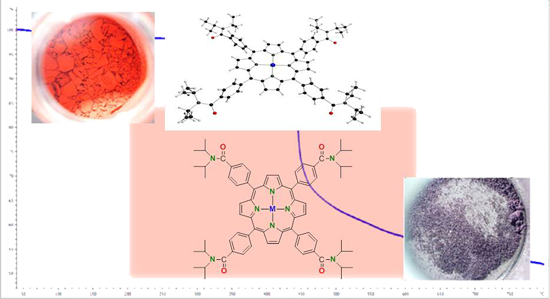
- porphyrins of the type H2TPP(OH)4 (tetra(p-hydroxyphenyl)porphyrin) [6][7] and MTPP(OMe)4/H2TPP(OMe)4 (tetra(p-methoxyphenyl)porphyrin) (M = Cu [8][9], Ni [9]), cf. Figure 1. The properties of the metalloporphyrins are governed by the (transition) metal ions and the exocyclic moieties on the individual
- Information File 1). In agreement with Buchler [19] and Budzikiewicz [22] the mass spectrometric measurements served well to identify the type of the incorporated transition metal since the ion peaks of [M]+ and/or [M + H]+ are the ones with the highest intensity. The observation of [M + Na]+ as well as [M
- NMR, IR and UV–vis spectroscopy as well as by ESI mass-spectrometry. The comparison of the obtained analytical results revealed only minor differences in vibrational and optical spectra, both with respect to the varied transition metal ions as well as the terminal organic substituent R. That provides


Atomic structure of Mg-based metallic glass investigated with neutron diffraction, reverse Monte Carlo modeling and electron microscopy
Beilstein J. Nanotechnol. 2017, 8, 1174–1182, doi:10.3762/bjnano.8.119
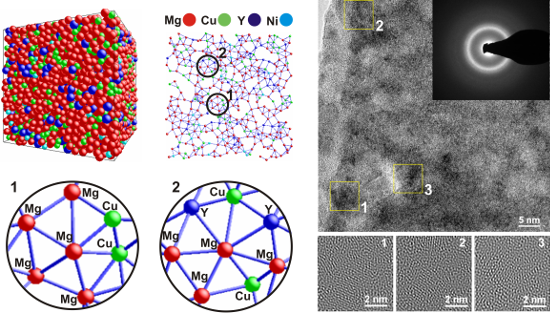
- materials with good functional properties [1][2][3]. Many chemical compositions of metallic glasses based on Mg have been extensively reported in recent years [4][5][6][7], but among all the studied glassy materials, the Mg-TM-RE (TM – transition metal: Cu, Ni, Zn, Ag; RE – rare-earth transition metal: Y




Adsorption characteristics of Er3N@C80on W(110) and Au(111) studied via scanning tunneling microscopy and spectroscopy
Beilstein J. Nanotechnol. 2017, 8, 1127–1134, doi:10.3762/bjnano.8.114
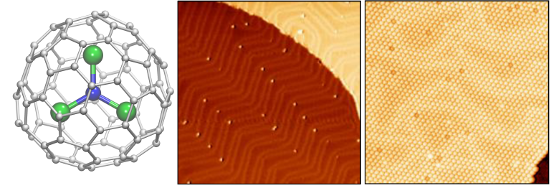
- studies and possible applications [3]. These molecules A3−nBnN@Ck (n = 0–3; A, B = rare earth metal or transition metals of the IVth subgroup; k = 68–96) are composed of a carbon cage which encapsulates a triangular cluster consisting of 3 rare-earth or transition metal atoms and a nitrogen atom at its


ZnO nanoparticles sensitized by CuInZnxS2+x quantum dots as highly efficient solar light driven photocatalysts
Beilstein J. Nanotechnol. 2017, 8, 1080–1093, doi:10.3762/bjnano.8.110
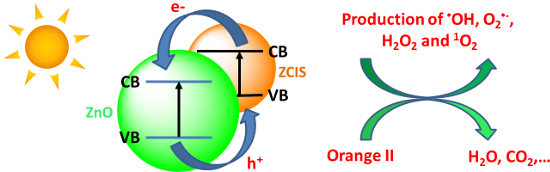
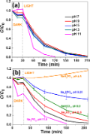
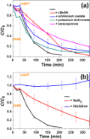
- (Supporting Information File 1, Figure S8). Noteworthy is also that chloride ions exhibit no hole scavenging activity (Cl− + h+ → Cl•) and that the electron/hole separation generated by the ZnO/ZCIS heterojunction was fully maintained. The effect of transition metal salts (Fe3+, Fe2+, Zn2+, Co2+ and Mn2
- /ZCIS catalyst and thus enhance the adsorption of the Orange II anionic dye via a bridging effect. Only Co2+ and Mn2+ significantly reduce the photocatalytic rate (k = 0.008 min−1 both in the presence of Mn2+ and Co2+). With all other transition metal chlorides, k values were higher than that determined
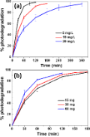
- black curve corresponds to the reference photocatalytic test conducted in water at pH 7). Influence of some transition metal chlorides used at 100 µM concentration on the photocatalytic efficiency of the ZnO/ZCIS catalyst (the black curve corresponds to the reference photocatalytic test). Recyclability




The integration of graphene into microelectronic devices
Beilstein J. Nanotechnol. 2017, 8, 1056–1064, doi:10.3762/bjnano.8.107
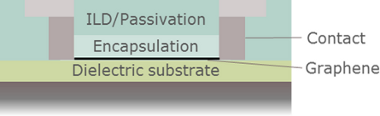
- graphene metal contacts. From today’s perspective the main issues for wafer-scale integration of graphene are well known, and the future of graphene (and other two-dimensional materials, namely transition metal dichalkogenides) in microelectronics depends on the successful solution of these problems


Structural properties and thermal stability of cobalt- and chromium-doped α-MnO2 nanorods
Beilstein J. Nanotechnol. 2017, 8, 1032–1042, doi:10.3762/bjnano.8.104
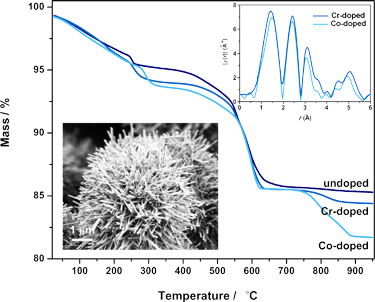
- . After cooling down to room temperature, the resulting brown-black precipitate was collected by centrifugation, then washed first with 30 mL of deionized water, then with 30 mL of methanol, and finally dried overnight at 100 °C. In the case of doping with transition metal ions (Cr3+ or Co2+), 0.12 mmol


Tuning the spin coherence time of Cu(II)−(bis)oxamato and Cu(II)−(bis)oxamidato complexes by advanced ESR pulse protocols
Beilstein J. Nanotechnol. 2017, 8, 943–955, doi:10.3762/bjnano.8.96
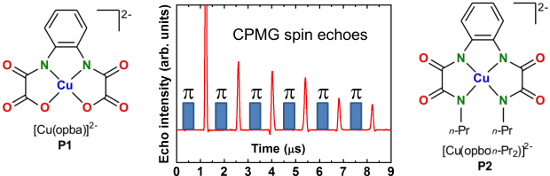
- oxamidato unit bridging two neighbored paramagnetic transition metal ions is important for the maintaining of the superexchange interaction. This transfer also gives rise to the hyperfine (HF) coupling between the Cu electron spin S = 1/2 and 14N nuclear spins I = 1 which has been studied with ESR


Energy-level alignment at interfaces between manganese phthalocyanine and C60
Beilstein J. Nanotechnol. 2017, 8, 927–932, doi:10.3762/bjnano.8.94
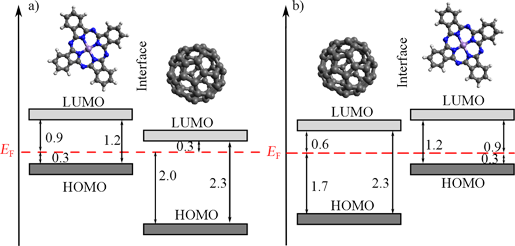
- reproduce previous experimental results and to provide a comprehensive overview over the possible energy level alignments [26]. One class of materials that has been considered as constituents of organic devices quite often is the family of transition-metal phthalocyanines [27]. Indeed, several
- and an appropriate electron acceptor is a crucial process. Often, fullerenes (C60) and their derivatives are used as acceptor materials. Amongst the transition-metal phthalocyanines MnPc is exceptional in some respects. Due to the participation of manganese 3d orbitals to the molecular electronic
- states close to the Fermi energy, MnPc differs significantly from other transition-metal phthalocyanines, as it is characterized by the smallest ionization potential, the largest electron affinity, the smallest band gap and the largest exciton-binding energy [37][38][39][40][41][42]. Furthermore, it has


Probing the magnetic superexchange couplings between terminal CuII ions in heterotrinuclear bis(oxamidato) type complexes
Beilstein J. Nanotechnol. 2017, 8, 789–800, doi:10.3762/bjnano.8.82
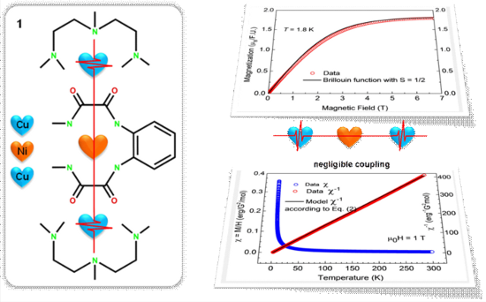
- ) type transition metal complexes as mononuclear species (Figure 1, type I) have received very special attention, as they allow the synthesis of multidimensional nD (n = 0–3) products, of which the magnetic properties were of specific interest [5]. Bis(oxamidato) type complexes (Figure 1, type II) have
- between their terminal [Cu(pmdta)]2+ fragments. Thus, we can conclude that for trinuclear type IV as well as type III complexes incorporating exclusively 3d transition metal ions, no long-range magnetic couplings across two consecutively aligned oxamidato or oxamato bridges can occur. Experimental General





