Search results
Search for "vibrations" in Full Text gives 330 result(s) in Beilstein Journal of Nanotechnology. Showing first 200.
Outstanding chain-extension effect and high UV resistance of polybutylene succinate containing amino-acid-modified layered double hydroxides
Beilstein J. Nanotechnol. 2019, 10, 684–695, doi:10.3762/bjnano.10.68
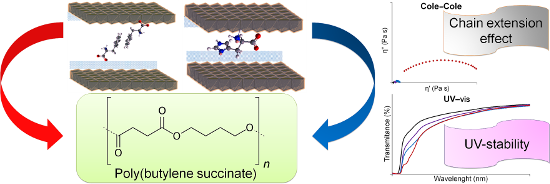
- displayed in Figure 4. The large, broad bands with maximum around 3400 cm−1 correspond to the O–H stretching vibrations of the hydroxide layers and water molecules located in the interlayered spaces or physically adsorbed on the surface of hybrids. The typical signals from amide functional groups (N–H, C=O


Topochemical engineering of composite hybrid fibers using layered double hydroxides and abietic acid
Beilstein J. Nanotechnol. 2019, 10, 589–605, doi:10.3762/bjnano.10.60
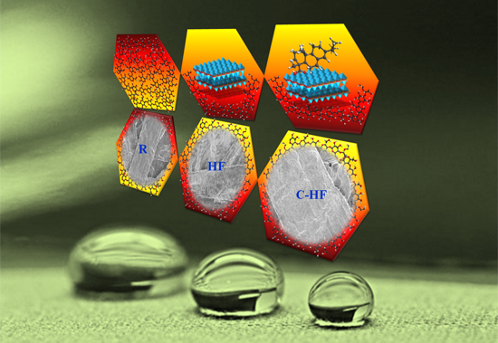
- galleries. The frequencies at 617 cm−1, 656 cm−1 and 783 cm−1 were attributed to M–O–M, M–OH, and O–M–O bond vibrations of LDH. The characteristic peaks of AA in C-HF are those at 2936 cm−1, 2650 cm−1, 1695 cm−1, 1670 cm−1 and 1277 cm−1. The vibration at 2936 cm−1 corresponds to C–H stretching absorption
- bands of –CH3, –CH2–CH and =CH. The band at 2650 cm−1 is due to intermolecular hydrogen bonding in –OH of dimeric –COOH groups. The band at 1695 cm−1 is the outcome of C=O stretching vibrations of acid groups, whereas 1670 cm−1 is due to C=C conjugated bonds and 1277 cm−1 is from C–O deformation
- vibrations of –COOH. Consequently, the presence of characteristic vibrational frequencies of functional groups confirmed the presence of cellulose, LDH and AA in the respective materials. Microscopic Studies Morphology Scanning electron microscopy (SEM) observations of the pulp fibers (REF, C-F, HF, C




Biomimetic synthesis of Ag-coated glasswing butterfly arrays as ultra-sensitive SERS substrates for efficient trace detection of pesticides
Beilstein J. Nanotechnol. 2019, 10, 578–588, doi:10.3762/bjnano.10.59
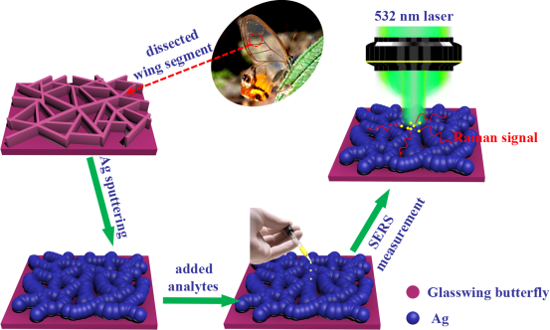
- adsorbed on 3D Ag-G.b. substrates with different Ag sputtering time. The characteristic peaks at 802, 915, 1172 and 1370 cm−1 correspond to C–H out-of-plane deformation, ring skeletal vibrations, C–H bending vibrations and C–C–C ring in-plane bending, respectively. The bands at 1532, 1585 and 1619 cm−1


Hydrophilicity and carbon chain length effects on the gas sensing properties of chemoresistive, self-assembled monolayer carbon nanotube sensors
Beilstein J. Nanotechnol. 2019, 10, 565–577, doi:10.3762/bjnano.10.58
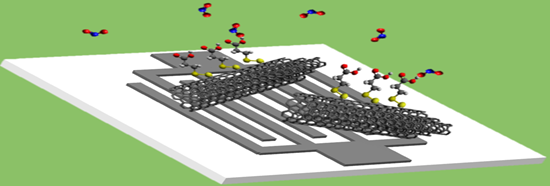
- because the vibrations of the aromatic ring carbon chain appear in the region near 1500 cm−1. Figure 3a confirms the presence of thiols in thiol-Au-MWCNT samples, however, Figure 3b shows that some of these thiols remain unattached to Au. The 2550–2600 cm−1 region was analyzed in order to find the strong


Widening of the electroactivity potential range by composite formation – capacitive properties of TiO2/BiVO4/PEDOT:PSS electrodes in contact with an aqueous electrolyte
Beilstein J. Nanotechnol. 2019, 10, 483–493, doi:10.3762/bjnano.10.49
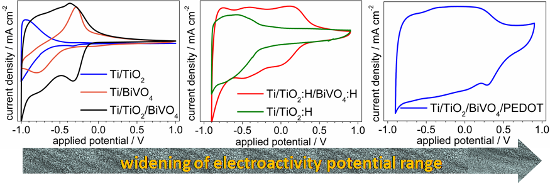
- from the lattice mode. The bands at 330 and 368 cm−1, as well as 745 and 824 cm−1, can be attributed to the bending and stretching V–O vibrations, respectively [39][40]. Thus, the electrode preparation procedure leads to the formation of anatase (TiO2) and monoclinic scheelite (BiVO4) structures
- . Typical bands of PEDOT:PSS can be found in the Raman spectrum of the electrode after polymer electrodeposition. The main band (ca. 1438 cm−1) can be assigned to (C=C)–O vibrations in thiophene rings [41]. The symmetric C=C bands of the polymer chain are seen at 1508 and 1567 cm−1. The bands at ca. 1260




Reduced graphene oxide supported C3N4 nanoflakes and quantum dots as metal-free catalysts for visible light assisted CO2 reduction
Beilstein J. Nanotechnol. 2019, 10, 448–458, doi:10.3762/bjnano.10.44
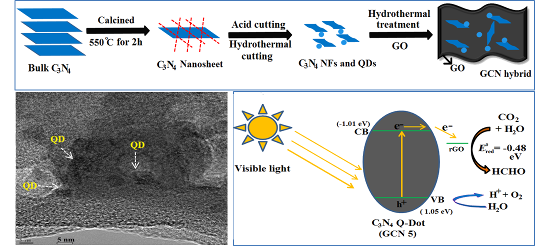
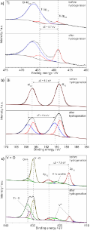
- , a sharp peak at 1380 cm−1 is observed, which can be ascribed to –C–O stretching vibrations of carboxylate groups, which are formed due to the breaking of some C–N bonds of triazine rings and their oxidation to carboxylic groups in the C3N4 NFs and QDs [19]. After the introduction of rGO to form GCN





Biocompatible organic–inorganic hybrid materials based on nucleobases and titanium developed by molecular layer deposition
Beilstein J. Nanotechnol. 2019, 10, 399–411, doi:10.3762/bjnano.10.39
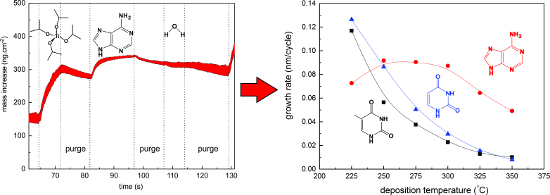
- the overtones and/or combination bands of C=O out-of-plane deformation vibration with C=O stretching vibration. These Fermi resonance vibrations for Ti-uracil are observed at 1747 and 1774 cm−1. The carbon double bond vibration is observed at 1645 and 1654 cm−1 for uracil and Ti-uracil, respectively




One-step nonhydrolytic sol–gel synthesis of mesoporous TiO2 phosphonate hybrid materials
Beilstein J. Nanotechnol. 2019, 10, 356–362, doi:10.3762/bjnano.10.35
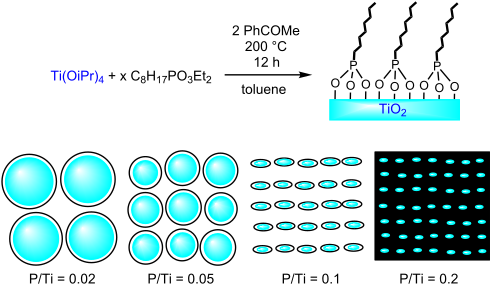
- broad vibration between 900 and 1200 cm−1 arising from vibration modes of the CPO3 tetrahedra. The intensity of this band increases with the P/Ti ratio. The absence of bands at ≈1220 cm−1 (P=O stretching vibration) and ≈950 cm−1 (P–OC stretching vibrations) [36] suggests that most of the phosphonate
- groups are in the same tridentate environment as in layered titanium phosphonates, that is, bonded to three Ti atoms in CP(OTi)3 sites, as previously reported for sol–gel TiO2–phenylphosphonate hybrid materials [15]. The vibrations in the 1400–1500 cm−1 range can be ascribed to CH3 and CH2 deformations
- of groups in residual surface moieties (e.g., Ti–OiPr, Ti–O–CMePhOiPr), and to CH3, CH2 and P–CH2 deformations in the octylphosphonate groups. The three bands between 2800 and 3000 cm−1 are ascribed to the C–H symmetric and asymmetric stretching vibrations of bonds in CH2 and CH3, mostly in the octyl


Removal of toxic heavy metals from river water samples using a porous silica surface modified with a new β-ketoenolic host
Beilstein J. Nanotechnol. 2019, 10, 262–273, doi:10.3762/bjnano.10.25
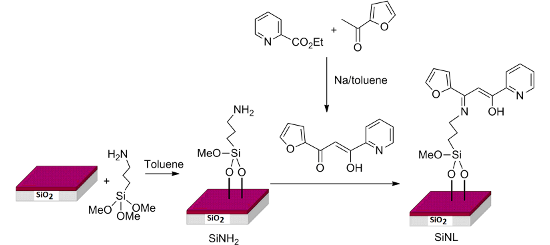
- of material surface was obtained at 3351 cm−1 and the peak observed at 1050 cm−1 corresponds to Si–O–Si band, the strong bands observed at 2943 cm−1 are attributed to the stretching vibration of aliphatic C–H bands. The new ν(C=C) and ν(C=N) vibrations detected at 1459 cm−1 and 1531 cm−1


Nanoporous water oxidation electrodes with a low loading of laser-deposited Ru/C exhibit enhanced corrosion stability
Beilstein J. Nanotechnol. 2019, 10, 157–167, doi:10.3762/bjnano.10.15
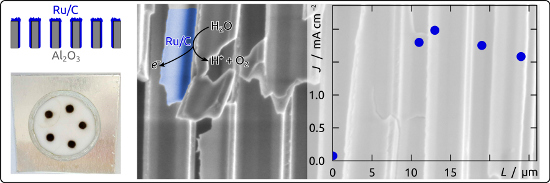
- -frequency region, the conspicuous maximum at ≈1600 cm−1 is due the stretching vibration of C=C bonds in aromatic or graphitic carbon. The peak at 1224 cm−1 corresponds to stretching vibrations of C–C and C–O single bonds (the ‘disorder’ peak usually found for graphitic material) [56][57][58][59][60][61
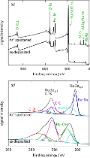
- ]. Importantly, the absence of carbonyl stretching vibrations around 1950–2190 cm−1 rules out any remnants of molecular precursor Ru3(CO)12 (Figure 7b [52][62]). X-ray photoelectron spectroscopy (XPS, Figure 8) is used to differentiate between the oxidation states of ruthenium at its surface and in its inner




New micro/mesoporous nanocomposite material from low-cost sources for the efficient removal of aromatic and pathogenic pollutants from water
Beilstein J. Nanotechnol. 2019, 10, 119–131, doi:10.3762/bjnano.10.11
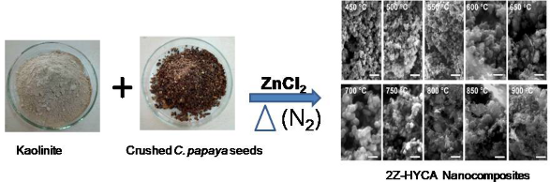
- presence of Si–O [33].The –OH bending vibration from absorbed water in raw kaolinite clay (1630 cm−1) shifts to lower wave numbers in 2Z-HYCA (between 1615 and 1599 cm−1) with increasing temperature. The band at approximately 1700 cm−1 is attributed to the C=O stretching vibrations of carbonyl groups




A novel polyhedral oligomeric silsesquioxane-modified layered double hydroxide: preparation, characterization and properties
Beilstein J. Nanotechnol. 2018, 9, 3053–3068, doi:10.3762/bjnano.9.284
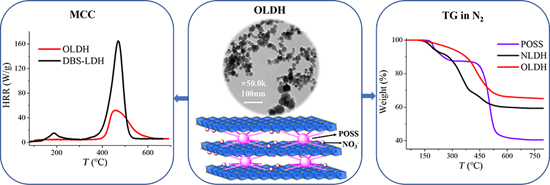
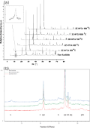
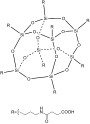
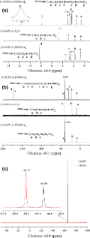
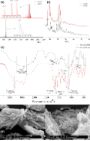
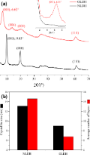
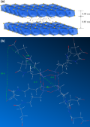
- NLDH, the strong absorption around 1381 cm−1 confirms the presence of interlayer NO3−, and the bands recorded below 800 cm−1 originate from the vibration of metal–oxygen bonds and from lattice vibrations associated with metal hydroxide sheets [15]. The introduction of OCPS anions after modification is







A new bioinspired method for pressure and flow sensing based on the underwater air-retaining surface of the backswimmer Notonecta
Beilstein J. Nanotechnol. 2018, 9, 3039–3047, doi:10.3762/bjnano.9.282
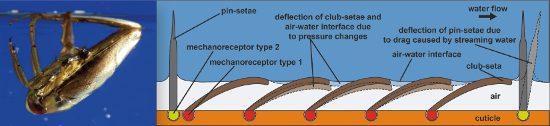
- deflection of the laser beam and thus the pressure changes. With this setup, we were able to record the conversation of two people standing in front of the experimental tank (Figure 8). To rule out the possibility that the recorded signals were caused by vibrations of the experimental tank, an experiment was
- detected by a photosensitive diode (PSD) placed at the opposite side of the aquarium. A temporary displacement of the air–water interface due to pressure changes led to beam deflection, thus the diode signal could be used to detect vibrations at the interface. b) Diode signal recorded in the experiment


Co-intercalated layered double hydroxides as thermal and photo-oxidation stabilizers for polypropylene
Beilstein J. Nanotechnol. 2018, 9, 2980–2988, doi:10.3762/bjnano.9.277
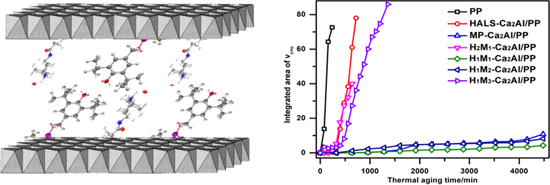
- OH groups of interlayer water molecules and brucite-like LDH layers. The band at 421 cm−1 is attributed to O–M–O lattice vibrations in LDH, which further proves the formation of a LDH platelet structure. Moreover, for HALS-Ca2Al-LDH and MP-Ca2Al-LDH, the characteristics stretching vibration bands of


Impact of the anodization time on the photocatalytic activity of TiO2 nanotubes
Beilstein J. Nanotechnol. 2018, 9, 2628–2643, doi:10.3762/bjnano.9.244
- intense peak at 142 cm−1 (Eg) assigned to anatase lattice vibrations [50]. No peaks of the rutile phase were observed in any of the samples. This is in agreement with the XRD data and other reports [51]. It is also noticeable that the intensity of all peaks increases with the anodization time without peak
- shifts. Two small peaks centered at 501 and 660 cm−1 were obtained after an instrumental artifact was canceled out by measuring a TiO2 control sample (Figure S2, Supporting Information File 1). The vibration at 660 cm−1 has been observed in titanate nanotubes and was attributed to Ti–O anatase vibrations


Effective sensor properties and sensitivity considerations of a dynamic co-resonantly coupled cantilever sensor
Beilstein J. Nanotechnol. 2018, 9, 2546–2560, doi:10.3762/bjnano.9.237
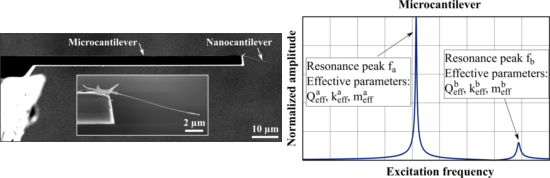
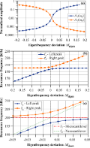
- )materials by scanning probe methods or magnetometry [5][6][7]. In contrast to static-mode operation, where the static bending of cantilever sensors is used as a measurement signal, the dynamic mode is based on exciting the beam to vibrations and monitoring its amplitude, resonance frequency and phase shift


![[Graphic 7]](/bjnano/content/inline/2190-4286-9-237-i43.svg?max-width=637&scale=1.18182) ...
...


Cytotoxicity of doxorubicin-conjugated poly[N-(2-hydroxypropyl)methacrylamide]-modified γ-Fe2O3 nanoparticles towards human tumor cells
Beilstein J. Nanotechnol. 2018, 9, 2533–2545, doi:10.3762/bjnano.9.236
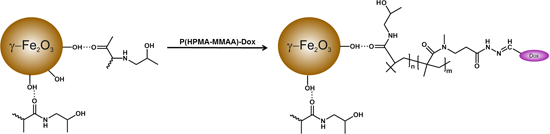
- methyl ester of sarcosine was methacryloylated. Structure and purity of MMAA was confirmed by 1H NMR (Figure 1a), gas chromatography (Figure 1b), and FTIR spectroscopy (Figure 1c). The FTIR spectrum exhibited characteristic peaks at 1745 and 1620 cm−1 ascribed to strong C=O stretching vibrations of ester
- and amide groups of MMAA, respectively. Peaks at 3083, 1649, and 889 cm−1 belonged to the CH2=, C=C stretching, and CH2= wagging vibrations of methacrylate, respectively. A strong asymmetric stretching vibration of C–O–C appeared at 1206 cm−1, while bending vibrations at 1454 and 1367 cm−1 were
- attributed to CH3 and CH2 groups of MMAA. Bands at ca. 2900 and at 1500–1350 cm−1 corresponded to stretching and bending vibrations of CH2 and CH3 groups, respectively. The first polymerization experiments involved the precipitation copolymerization of HPMA and MMAA. High molecular weight products (ca. 170


Non-agglomerated silicon–organic nanoparticles and their nanocomplexes with oligonucleotides: synthesis and properties
Beilstein J. Nanotechnol. 2018, 9, 2516–2525, doi:10.3762/bjnano.9.234
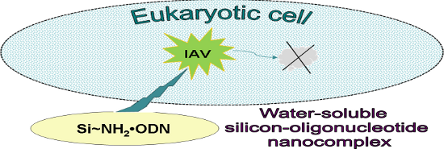
- . The IR spectrum of Si–NH2 shows the local environment of the silicon atom (Figure 2a). The presence of the absorption bands that correspond to valence and deformation vibrations of the CH2, NH2, NH3+, Si–CH2, Si–OH, (Si–O)n, C–N groups [19] confirm the proposed structure of the Si–NH2 molecule. The
- splitting of the absorption band at 1085 cm−1, which corresponds to asymmetric valence vibrations of the Si–O bond, into two bands at 1100 cm−1 and 1000 cm−1 is typical for polymer structures with Si–O–Si fragments and indicates the presence of at least dimers in the Si–NH2 nanoparticles. The bands at 3058


SERS active Ag–SiO2 nanoparticles obtained by laser ablation of silver in colloidal silica
Beilstein J. Nanotechnol. 2018, 9, 2396–2404, doi:10.3762/bjnano.9.224
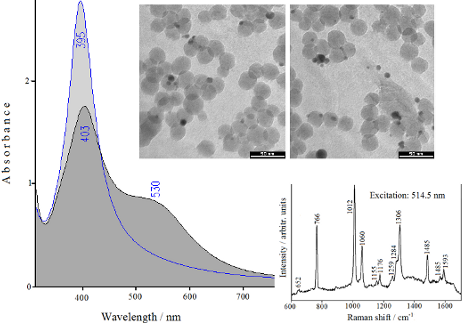
- , Figure 4 shows the normal modes of the prominent SERS bands, which correspond to totally symmetric vibrations, except that at 1176 cm−1. The observed band at 351 cm−1 is mainly due to the inter-ring C–C’ stretching mode, and those at 766, 1012 and 1060 cm−1 are ring deformations. The peaks observed at


Nanoconjugates of a calixresorcinarene derivative with methoxy poly(ethylene glycol) fragments for drug encapsulation
Beilstein J. Nanotechnol. 2018, 9, 2057–2070, doi:10.3762/bjnano.9.195
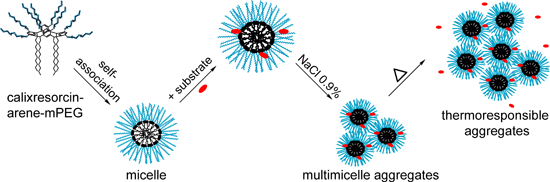
- , the strong band of stretching vibrations of the C–O–C groups of PEG at 1110 cm−1 appears, confirming the conjugation of macrocycle and PEG (Figure 1d). In the 1H NMR spectrum of 3, the ratios between the integral intensities of terminal methoxy groups (at 3.37 ppm) and methyl and (CH2)9 groups (at


Recent highlights in nanoscale and mesoscale friction
Beilstein J. Nanotechnol. 2018, 9, 1995–2014, doi:10.3762/bjnano.9.190
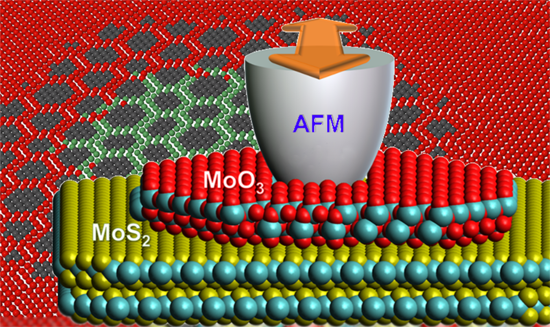
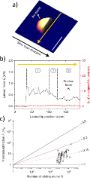
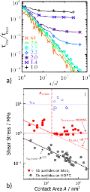
- instabilities of atomic stick–slip to thermal vibrations, are found to be intimately related to non-contact friction. Energy can get dissipated into phononic and/or electronic channels. In a number of examples, it was found that non-contact friction can be tuned over orders of magnitudes by changing the applied
- by the action of a probing tip along a track of 100 nm on a Au(111) surface (Figure 8). The method to move the molecules is based on inelastic tunneling through which the electrons induce molecular vibrations, which then lead to increased diffusion. Depending on the polarity of the applied bias


Defect formation in multiwalled carbon nanotubes under low-energy He and Ne ion irradiation
Beilstein J. Nanotechnol. 2018, 9, 1951–1963, doi:10.3762/bjnano.9.186
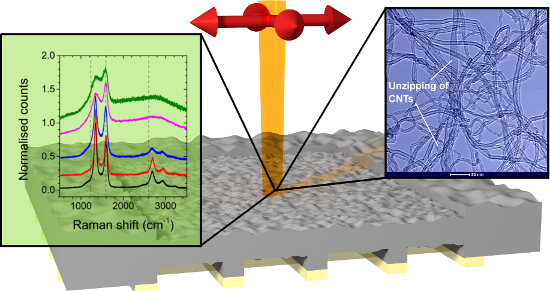
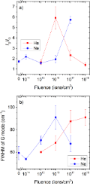
- have a D band peak around 1350 cm−1, a G band peak around 1590 cm−1 and G’ band peak in the region of 2700 cm−1. The first is related to the presence of disordered carbon, the second to the tangential vibrations of graphitic carbon and the third one to two-phonon scattering related to long-range order



Synthesis of a MnO2/Fe3O4/diatomite nanocomposite as an efficient heterogeneous Fenton-like catalyst for methylene blue degradation
Beilstein J. Nanotechnol. 2018, 9, 1940–1950, doi:10.3762/bjnano.9.185
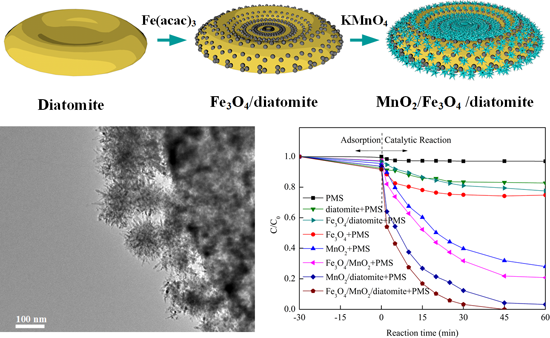
- −1 that are observed in all three samples are typically related to stretching vibrations of hydroxyl (–OH) groups on the surface of the samples [22]. The peaks at 1094, 804 and 467 cm−1 are attributed to asymmetric stretching, symmetric stretching and bending modes of Si–O–Si bonds in diatomite [23
- ][24][25]. For Fe3O4/diatomite and MnO2/Fe3O4/diatomite, the peak at 572.6 cm−1 is assigned to stretching vibrations of Fe–O–Fe, indicating the loading of Fe3O4 nanoparticles on the composite [26]. The peak at 531.7 cm−1 can be ascribed to the Mn–O vibrations of MnO2 [27]. Figure 3 shows the SEM images


The inhibition effect of water on the purification of natural gas with nanoporous graphene membranes
Beilstein J. Nanotechnol. 2018, 9, 1906–1916, doi:10.3762/bjnano.9.182
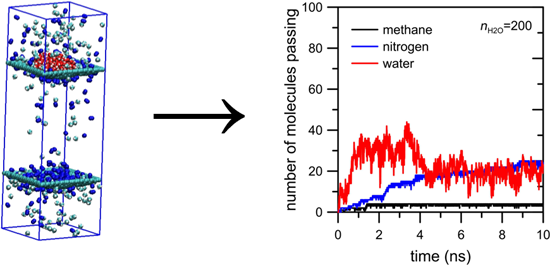
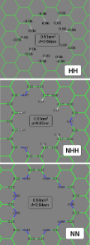
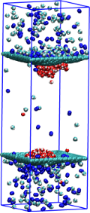
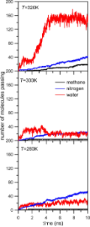
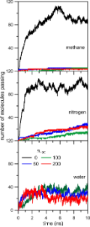
- ) is caused by the inter-oxygen vibrations. Beyond this transient period of time both curves decay monotonically. A faster decay of k(t) calculated for the NN membrane indicates that the time necessary to reach the equilibrium state is shorter. The hydrogen bonds between water and nitrogen atoms from






Quantitative comparison of wideband low-latency phase-locked loop circuit designs for high-speed frequency modulation atomic force microscopy
Beilstein J. Nanotechnol. 2018, 9, 1844–1855, doi:10.3762/bjnano.9.176
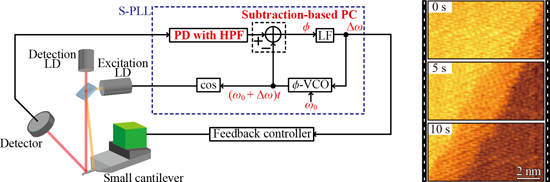
- (TDS2002B, Tektronix). The experimental data presented below in Figure 7 and Figure 8 were obtained using a standard-size cantilever (NCH, Nanoworld; f0 = 151.46 kHz, k = 41.3 N/m and Q = 9) and an ultra-short cantilever (USC, Nanoworld; f0 = 3.44 MHz, k = 59.9 N/m and Q = 7). The cantilever vibrations were
- -speed FM-AFM imaging was performed in the deposited water using an AC55 (Olympus) cantilever (f0 = 1.53 MHz, Δf = 1.6 kHz, A = 0.1 nm). The cantilever vibrations were excited and detected using the same setups that were employed for the PLL performance measurements. For the high-speed operation of the
- cantilever thermal vibrations nth. These values were calculated using the following equation [1][33]: where kB, T, k, and A denote Boltzmann's constant, the absolute temperature, the cantilever spring constant, and the cantilever vibration amplitude, respectively. Qd* represents the apparent Q-factor in the