Search results
Search for "Au" in Full Text gives 746 result(s) in Beilstein Journal of Nanotechnology. Showing first 200.
The nanomorphology of cell surfaces of adhered osteoblasts
Beilstein J. Nanotechnol. 2021, 12, 242–256, doi:10.3762/bjnano.12.20
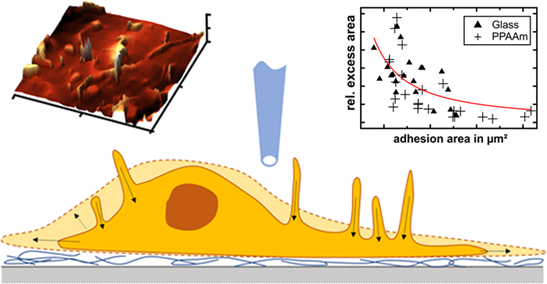
- preparation such as critical point drying and deposition of thin Au layers. This enables the observation of cell surfaces containing membrane protrusion features; however, apart from [32], no clear ruffles as observed by SICM are recognizable. When no Au coating was applied on the cells of the same
- coatings of positively charged plasma-polymerized allylamine (PPAAm) or negatively charged Au were used, see below. Viability tests (MTS) were performed on glass, sputter-deposited Au, polydimethylsiloxane (PDMS), and PPAAm coating with native titanium and cell culture plastic as reference. Cell viability
- turns out to be similar on all of these substrates. The spreading area was assessed after 1 h using PKH membrane dye. This revealed almost twice as much adhesion area for the PPAAm coating (ca. 1500 µm2) compared to other substrates (Au, Ti with 820 µm2). On PDMS the spreading after 1 h was very poor


Scanning transmission helium ion microscopy on carbon nanomembranes
Beilstein J. Nanotechnol. 2021, 12, 222–231, doi:10.3762/bjnano.12.18
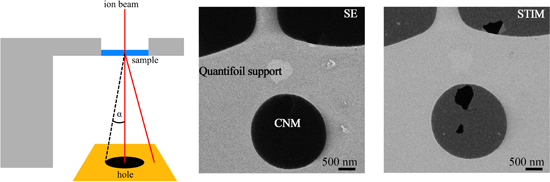
- , thin and thick CNMs were transferred onto a 300 nm Au film on a mica substrate for XPS analysis. The thickness was calculated from the attenuation of the Au 4f7/2 photoelectrons by the membrane on top. Details about the calculation can be found in the Supporting Information of the manuscript from


A review on the biological effects of nanomaterials on silkworm (Bombyx mori)
Beilstein J. Nanotechnol. 2021, 12, 190–202, doi:10.3762/bjnano.12.15
- cell development to be examined from the outside [47]. The exposure of zebrafish to Ag NPs inhibited the hatching rates and caused high embryo mortality. Bar-Ilan et al. [48] reported that colloidal Ag caused a higher mortality of zebrafish embryos when compared to colloidal Au 120 h post-fertilization
- . Asharani et al. [49] also reported the toxic effects of Ag NPs on zebrafish embryo mortality, delay in hatching, heart rate reduction in the embryo and also non-lethal effects of Au NPs on embryo development. Muller et al. [50] stated that 1.88 μM of dissolved Cu2+ inhibited the proteolytic activity of the
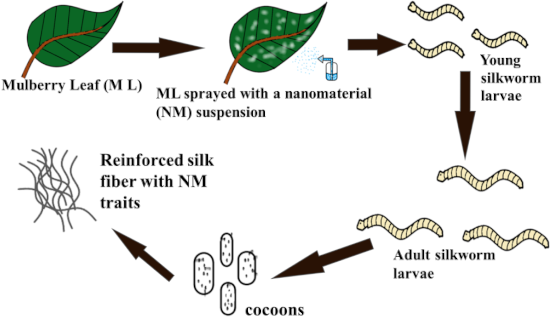
- the resulting silk fiber with a mechanical strength of 1.07 GPa and a strain of 16.8% [170]. The effects of bovine serum albumin (BSA)-stabilized gold nanoclusters (BSA-Au NCs) at different concentrations (9.38, 1.88, 0.938, and 0.188 µg) inserted via intravascular injection in the silkworm was


Mapping the local dielectric constant of a biological nanostructured system
Beilstein J. Nanotechnol. 2021, 12, 139–150, doi:10.3762/bjnano.12.11
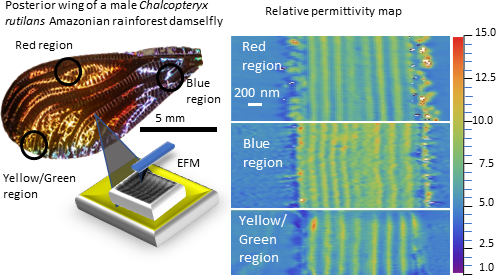
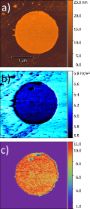
- , resulting in an orientation of the wing fragment perpendicular to the cutting plane. Sections 40 nm thick of the apex wedge were cut using a diamond knife and placed on 10 mm × 10 mm Au/Cr (60 nm/20 nm)-coated silicon wafer pieces. A conductive substrate surface is necessary for the proposed εr
- defined disks of Al2O3 films with a radius of 5 µm deposited by ALD on Au/Cr (60 nm/20 nm)-coated silicon wafer pieces. The topographic image of an Al2O3 disk measured with AFM is shown in Figure 9a. The sample thickness was (21.0 ± 0.2) nm, relative to the gold surface. In the EFM mode, the microscope
- three color regions of the hind wings of Chalcopterix rutilans: (a) red region, (b) blue region, and (c) yellow/green region. The color scale on the right side gives the values of the relative permittivity. On the left side, colored in purple, we have the Au/Cr surface. The areas that appear bluish in





Fusion of purple membranes triggered by immobilization on carbon nanomembranes
Beilstein J. Nanotechnol. 2021, 12, 93–101, doi:10.3762/bjnano.12.8
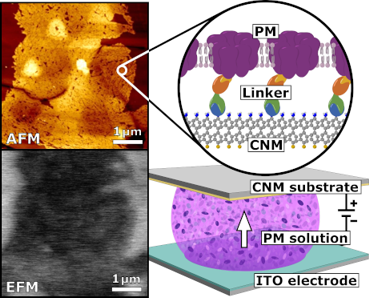
- reflection absorption spectroscopy (IRRAS). Experimental Preparation of SAMs and CNMs NBPT was purchased from Taros Chemicals (Dortmund, Germany). Thermally evaporated Au films (300 nm) on mica supports (Georg Albert physical vapor deposition coatings) were used as substrates for the SAM preparation
- . Cleaning of the Au surfaces was achieved with an UV/ozone-cleaner (FHR Anlagenbau GmbH, UVOH 150 LAB) and subsequent immersing in absolute ethanol (AnalaR NORMAPUR, VWR Chemicals). The SAMs were prepared by immersion of the cleaned Au substrate into a solution (approx. 10 mM) of 4′-nitro-1,1′-biphenyl-4


The role of gold atom concentration in the formation of Cu–Au nanoparticles from the gas phase
Beilstein J. Nanotechnol. 2021, 12, 72–81, doi:10.3762/bjnano.12.6
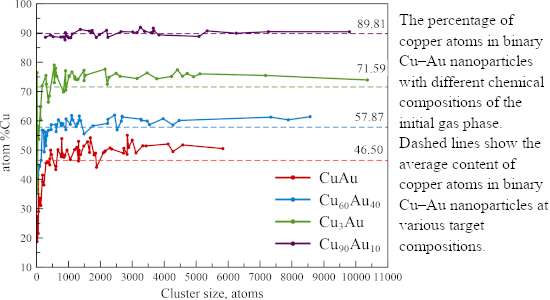
- 10.3762/bjnano.12.6 Abstract The synthesis of bimetallic nanoparticles need to be controlled in order to obtain particles of a desired size, spatial structure, and chemical composition. In the synthesis of the Cu–Au nanoparticles studied here, nanoparticles can be obtained through either chemical or
- composition; however, the size of the resulting particles varies significantly. To solve this issue, we studied the formation of Cu–Au nanoparticles with different chemical compositions from a gaseous medium using computer molecular dynamics (MD) simulation. The aim was to determine the effect of the
- initial vapor phase, basically corresponded to a given target composition. Keywords: binary nanoparticles; computer simulation; copper; gold; molecular dynamics; Introduction The nanometer-sized Cu–Au compounds are being studied quite actively [1][2][3][4][5][6][7][8] because of their potential


Bulk chemical composition contrast from attractive forces in AFM force spectroscopy
Beilstein J. Nanotechnol. 2021, 12, 58–71, doi:10.3762/bjnano.12.5
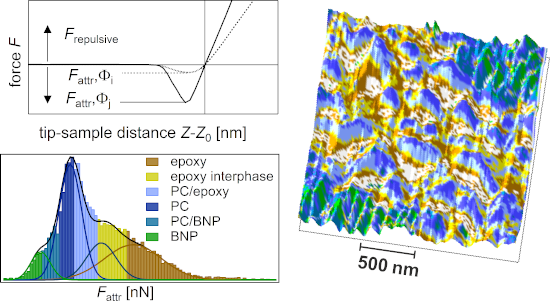
- ) covering the spectral range from 900 cm−1 to 1900 cm−1. An Au-coated silicon probe (tip D) was employed. The force curves were analyzed by SOFA [45] and the deconvolution of histograms was done by using Omnic (ThermoFisher Scientific) and fityk software [46]. The following epoxy system was used as the


Bio-imaging with the helium-ion microscope: A review
Beilstein J. Nanotechnol. 2021, 12, 1–23, doi:10.3762/bjnano.12.1

- field of view. Then, a new line is scanned followed by another electron flooding. This is particularly useful for biological specimens, which are typically insulators or poor conductors, as it enables imaging at high resolution without depositing a thin conductive layer (e.g., Au, Pt, or C) onto the
- increased. This is due to several factors such as the ability to image without first coating a sample with conductive materials (e.g., Pt, Au, or C). Such coatings have been shown to cause artefacts which can be misinterpreted as being from the material under investigation [6]. Furthermore, helium ions have


Imaging and milling resolution of light ion beams from helium ion microscopy and FIBs driven by liquid metal alloy ion sources
Beilstein J. Nanotechnol. 2020, 11, 1742–1749, doi:10.3762/bjnano.11.156
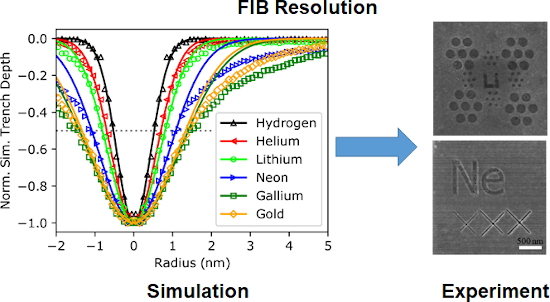
- a mass-separated FIB for Au implantation from a Au82Si18 LMAIS [14]. In this work, the performance of light ion beams from LMAISs will be compared with that of helium and neon ions delivered by the GFIS of a HIM. In Figure 1, a comparison of the performance with respect to the achievable spot size
- are listed in Table 1. Details of fabrication and operation principle are given in the corresponding references. Results and Discussion Resolution values obtained with different light ion species on a Au film are summarized in Table 2. The sputter yields Ytheo for normal incidence based on the work of
- the neglected ion beam stability, mechanical vibrations, drift, or electromagnetic fields during realistic long-term milling processes for light ions due to the small sputter yield (0.12 for 30 keV He in Au [34]). Additionally, large fluences, necessary for deep milling, often cannot be applied when


Out-of-plane surface patterning by subsurface processing of polymer substrates with focused ion beams
Beilstein J. Nanotechnol. 2020, 11, 1693–1703, doi:10.3762/bjnano.11.151
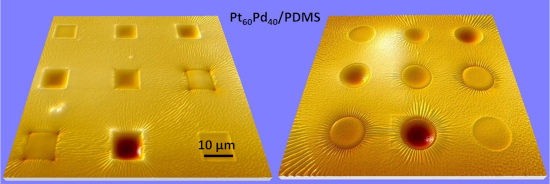
- pristine Au were used to compare the patterning of thin films with different microstructures. We show that the height of Pt60Pd40 thin films deposited onto poly(methyl methacrylate) and polycarbonate substrates can be patterned by He+ ion beams with ultrahigh precision (nanometers) while preserving in
- -plane features, at the nanoscale, of the pre-deposited films. Ion irradiation of the Au-coated samples results in delamination, bulging, and perforation of the Au film, which is attributed to the accumulation of gases from radiolysis at the film–substrate interface. The irradiation with Ne+ and Ga+ ions
- wrinkle-like micropatterns [23][24]. In this work, we have employed thin films of a Pt60Pd40 alloy and of pristine Au. The primary reason for this choice was the difference in their microstructures, specifically in the availability of structural defects capable of providing the release of gases from


The influence of an interfacial hBN layer on the fluorescence of an organic molecule
Beilstein J. Nanotechnol. 2020, 11, 1663–1684, doi:10.3762/bjnano.11.149
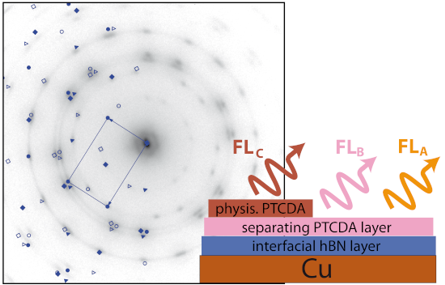
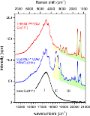
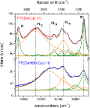
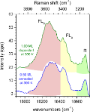
- PTCDA from Cu(111). For PTCDA on Ag(111) and Au(111) [39], it has been shown that FL can only be observed from the second and third molecular layer onward. The excitation of the first layers is completely quenched by the metal substrates as described above. In UPS experiments, a partial filling of the
- LUMO of PTCDA was found on Ag(111), but not on Au(111) [33]. Thus, the quenching on Ag(111) is directly understood by the static charge transfer seen in UPS. The quenching on Au(111), not as evident from UPS, demonstrates the sensitivity of FL spectroscopy to an overlap of wave functions of excited
- , we mention a recent study by Stallberg et al. [39], which investigated optical spectra of PTCDA on Ag(111) and Au(111). They found Raman modes of PTCDA on the Au(111) surface, but not on the Ag(111) surface. This observation was discussed in view of the different energies of the SPPs of the two






Oxidation of Au/Ag films by oxygen plasma: phase separation and generation of nanoporosity
Beilstein J. Nanotechnol. 2020, 11, 1608–1614, doi:10.3762/bjnano.11.143
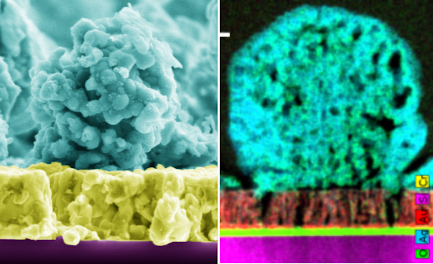
- Department of Mechanical and Industrial Engineering, Texas A & M University-Kingsville, TX 78363, USA 10.3762/bjnano.11.143 Abstract The oxidation of Au/Ag alloy thin films using radio-frequency oxygen plasma was studied in this work. It was demonstrated that there is a phase separation occurring between
- a fundamental point of view, gold/silver is a peculiar model system to study corrosion processes since gold is a noble metal. Interestingly, by using different types of Au/Ag nanoparticles, Lewis et al. showed how one can control and engineer, at the nanometer scale, the final shape and structure of
- gold/silver oxide nanostructures [20]. Starting from Au/Ag alloy nanospheres, they showed that gold/silver oxide core/shell nanospheres with a hollow interior could be obtained after oxidation using atomic oxygen. In this study we further explored the oxidation and phase separation events observed by


Walking energy harvesting and self-powered tracking system based on triboelectric nanogenerators
Beilstein J. Nanotechnol. 2020, 11, 1590–1595, doi:10.3762/bjnano.11.141
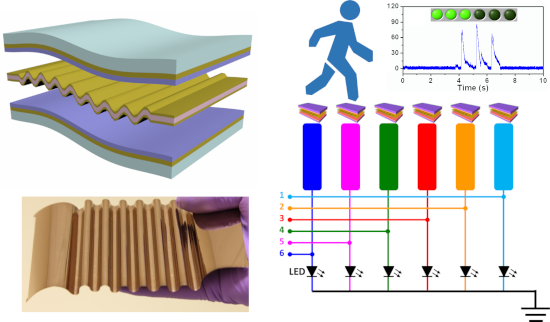
- and deionized water were used to clean 50 μm thick PTFE films, which were then dried with nitrogen. During the etching process, DC sputtering was used on the surface of the PTFE film as a mask to deposit Au particles for 45 s. Next, a gas mixture containing O2, CF4, and Ar was introduced to the




Fabrication of nano/microstructures for SERS substrates using an electrochemical method
Beilstein J. Nanotechnol. 2020, 11, 1568–1576, doi:10.3762/bjnano.11.139
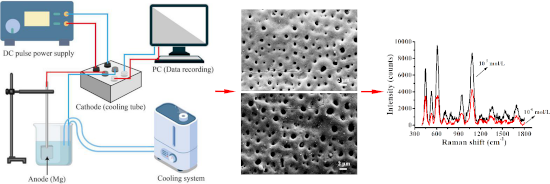
- electrochemical method, three-dimensional arrayed nanopore structures are machined onto a Mg surface. The structured Mg surface is coated with a thin gold (Au) film, which is used as a surface-enhanced Raman scattering (SERS) substrate. A rhodamine 6G (R6G) probe molecule is used as the detection agent for the
- SERS measurement. Different sizes of arrayed micro/nanostructures are fabricated by different treatment time using the electrochemical process. The topographies of these micro/nanostructures and the thickness of the Au film have an influence on the Raman intensity of the Mg substrate. Furthermore, when
- the thickness of Au film coating is held constant, the Raman intensity on the structured Mg substrates is about five times higher after a treatment time of 1 min when compared with other treatment times. The SERS enhancement factor ranges from 106 to 1.75 × 10⁷ under these experimental conditions


Optically and electrically driven nanoantennas
Beilstein J. Nanotechnol. 2020, 11, 1542–1545, doi:10.3762/bjnano.11.136

- to a sharp tip is refined to a two-step procedure with high throughput. A self-assembly approach to create a dumbbell antenna consisting of a 40 nm and an 80 nm Au nanoparticle at a scanning tip is shown in [48] and applied for single molecule sensitivity imaging. The advantage of applying TERS for
Design of V-shaped cantilevers for enhanced multifrequency AFM measurements
Beilstein J. Nanotechnol. 2020, 11, 1525–1541, doi:10.3762/bjnano.11.135
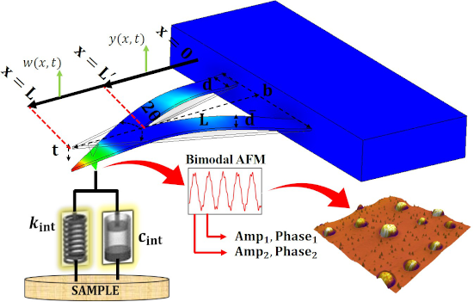
- dimensions, the optimum V-shaped cantilever that can provide the maximum phase contrast in bimodal AFM between gold (Au) and polystyrene (PS) is found. Based on this study, it is found that as the length of the cantilever increases the 2nd eigenmode phase contrast decreases. However, the base width exhibits
- an optimum rectangular cantilever. Two sets of bimodal AFM experiments are carried out on Au-PS and PS-LDPE (polystyrene and low-density polyethylene) samples to verify the simulation results. Keywords: bimodal AFM; optimization; soft matter; surface characterization; V-shaped cantilevers
- geometries while interacting with polystyrene (PS) and gold (Au) surfaces in bimodal AFM. The tip–sample force interactions are categorized into long-range van der Waals forces and short-range forces described by the Derjaguin, Muller and Toporov (DMT) model. The instantaneous tip distance d is defined as d


![[Graphic 4]](/bjnano/content/inline/2190-4286-11-135-i26.svg?max-width=637&scale=1.18182) = 15 µm, bref = 8...
= 15 µm, bref = 8...


![[Graphic 17]](/bjnano/content/inline/2190-4286-11-135-i39.svg?max-width=637&scale=1.18182) ) of V-shaped cantilevers for...
) of V-shaped cantilevers for...


Adsorption and self-assembly of porphyrins on ultrathin CoO films on Ir(100)
Beilstein J. Nanotechnol. 2020, 11, 1516–1524, doi:10.3762/bjnano.11.134
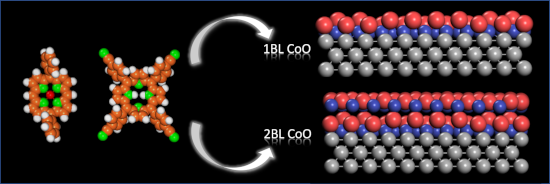
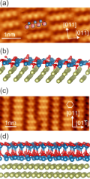
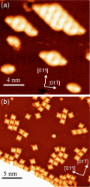
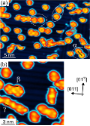
- homogeneous contrast develops in Figure 4d. Such compact assemblies were previously observed for the case of the non-metalated 2H-DPP compound on Ag(110) [24] and on Au(111) [22], but, for example, not on Cu(111) [23]. For the assembly on 1BL CoO, the distance between the phenyl rings is a little larger than




Antimicrobial metal-based nanoparticles: a review on their synthesis, types and antimicrobial action
Beilstein J. Nanotechnol. 2020, 11, 1450–1469, doi:10.3762/bjnano.11.129

- irradiation time. For example, while Tan et al. [31] obtained spherical silver nanoparticles, Zhou et al. [32] obtained plate-like triangles. Another method used is the pulsed laser ablation technique which is used to synthesize colloidal solutions of Ag [33], Au [34], MgO [35], and ZnO [36] NPs, among others
- can affect the expression of the ribosomal subunit that interacts with sulfur- and phosphorus-containing groups of proteins, even in the cell wall and plasma membrane bacteria [165][166]. Cui et al. (2012) showed that Au NPs prevented the combination of a ribosomal subunit with tRNA and collapsed the


Wafer-level integration of self-aligned high aspect ratio silicon 3D structures using the MACE method with Au, Pd, Pt, Cu, and Ir
Beilstein J. Nanotechnol. 2020, 11, 1439–1449, doi:10.3762/bjnano.11.128
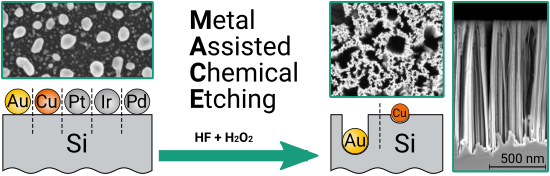
- metals (Au, Pt, Pd, Cu, and Ir) were investigated to derive a set of technologies as platform for specific applications. Especially, the shape of the 3D structures and the resulting reflectance have been investigated. The Si nanostructures fabricated using Au nanoparticles show a perfect light absorption
- layer for the wet etching of silicon. The MACE process has been extensively studied over the last decade [13][14][15][16]. In theory, the process works with a wide range of noble metals. The main focus in research has been set on the noble metals gold (Au) and silver (Ag) [2][17][18][19]. Other studies
- particles. The last category represents all particles with a diameter greater than 80 nm. Within all particle classes, we could detect a high amount of ultrasmall particles with a diameter below 10 nm. For Au, Pd, and Cu, one can also observe larger particles up to a diameter of 80 nm. Here, these larger


Analysis of catalyst surface wetting: the early stage of epitaxial germanium nanowire growth
Beilstein J. Nanotechnol. 2020, 11, 1371–1380, doi:10.3762/bjnano.11.121
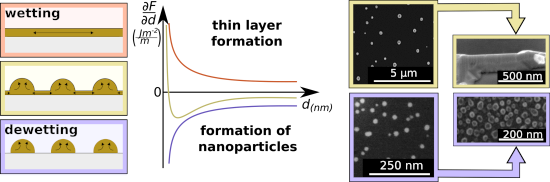
- germanium was deposited onto Au/Si substrates, germanium nanowires were grown. The in-plane nanowires started to grow at places where the gold droplets had formed previously. The inset shows gold at the top of the germanium nanowire, where continuous homoepitaxial growth was catalysed. A sample with a
- to the eye: dashed red line) and mean droplet diameter values (black dots, guide to the eye: dashed black line) as a function of the substrate temperature. The insets show histograms with the size distribution of droplet diameter values at 550 °C. For Au on SiOx the distribution is approximated by a
- Gaussian function. For Au on Si the distribution is given by a Lifshitz–Slyosov–Wagner (LSW) expression. SEM image of gold on silicon after the system reached room temperature. The inset shows a TEM image, in which small gold clusters nucleated on the silicon surface between the droplets can be seen. SEM


Impact of fluorination on interface energetics and growth of pentacene on Ag(111)
Beilstein J. Nanotechnol. 2020, 11, 1361–1370, doi:10.3762/bjnano.11.120
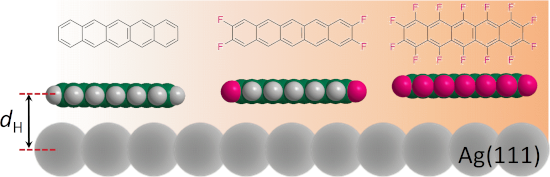
- contribution polarization [11][44]. Perfluorination does not impact the orientation of PEN and PFP in the contact layer with clean metals, where both compounds are lying flat [9][30][31][47][48][49][50][51][52]. On Au(111), the coupling strength of both monolayers with the substrate is rather similar and
- physisorptive [29][53]. On Cu(111), PFP shows a behavior close to physisorption [9], although the coupling strength might be slightly stronger than with Au(111) [54]. PEN on Cu(111), however, is strongly chemisorbed, involving a partial filling of the former lowest unoccupied molecular orbital (LUMO) by a
- fluorinated PEN, namely 2,3,9,10-tetrafluoropentacene (F4PEN) [46][60][61]. F4PEN physisorbs on Au(111) [62] and chemisorbs on Cu(111), involving interfacial charge transfer and strong molecular distortions [63]. Here, we investigated the coupling with Ag(111) as we expected this to be an interesting


Effect of localized helium ion irradiation on the performance of synthetic monolayer MoS2 field-effect transistors
Beilstein J. Nanotechnol. 2020, 11, 1329–1335, doi:10.3762/bjnano.11.117
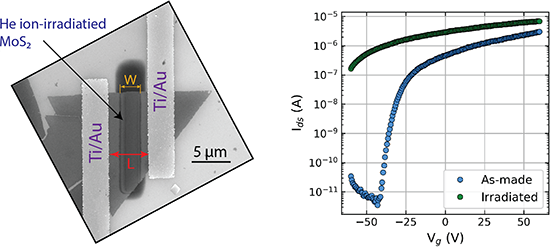
- by lift-off in acetone and metal deposition by evaporation (5 nm Ti and 35 nm Au). Electrical testing was carried out using a dual-channel source–measure unit connected to tungsten micromanipulator probes (Imina miBot) in the vacuum chamber of a customized Zeiss EVO scanning electron microscope (SEM
- atomic vacancy yield per each delivered ion as a function of target penetration depth on the 35 nm-Au/5 nm-Ti/0.7 nm-MoS2/285 nm-SiO2 stack [41]. As evident from Figure 3d, the sulfur sputtering yield at the Ti–MoS2 interface is very close to that of unencapsulated MoS2 [15], indicating notable damage to


Growth of a self-assembled monolayer decoupled from the substrate: nucleation on-command using buffer layers
Beilstein J. Nanotechnol. 2020, 11, 1291–1302, doi:10.3762/bjnano.11.113
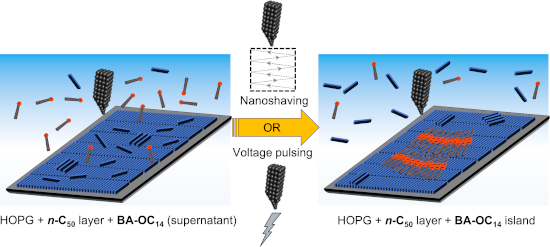
- formed at the solution–solid interface, is a more of routine occurrence than an exception. Such structurally diverse monolayers are typically formed on solid substrates such as highly oriented pyrolytic graphite (HOPG), graphene, and metals such as Cu, Ag and Au and have been characterized using scanning
- ], NaCl [40], CuN [41] and oxides [32][42] have been used. Typically, the ultrathin films of these wide band gap materials act as insulating layers while still allowing electron tunneling through them. Chemisorbed iodine layers have been used as passivating layers on metals such as Au for achieving


Role of redox-active axial ligands of metal porphyrins adsorbed at solid–liquid interfaces in a liquid-STM setup
Beilstein J. Nanotechnol. 2020, 11, 1264–1271, doi:10.3762/bjnano.11.110
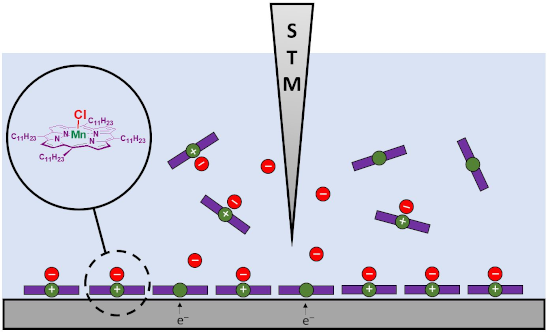
- conductive surface, large and constant additional currents relative to a set tunneling current were observed, which varied with the magnitude of the applied bias voltage. These currents occurred regardless of the type of surface (HOPG or Au(111)) or tip material (PtIr, Au or W). The additional currents were
- at room temperature. We found that while the porphyrin catalyst MnTUPCl (tetrakis-meso-undecylporphyrin manganese(III) chloride, Figure 1a) is fully inert in n-tetradecane solution, it becomes catalytically active in the epoxidation of alkenes when it is adsorbed at the interface of a Au(111
- fate of this ligand is. In the catalysis study with MnTUPCl at the Au(111) surface, two possible mechanisms were proposed [7]: (i) A surface gold atom coordinates to the manganese center of MnTUPCl in an axial ligand-like fashion, inducing a chlorine radical to dissociate, thereby reducing the Mn(III


Ultrasensitive detection of cadmium ions using a microcantilever-based piezoresistive sensor for groundwater
Beilstein J. Nanotechnol. 2020, 11, 1242–1253, doi:10.3762/bjnano.11.108
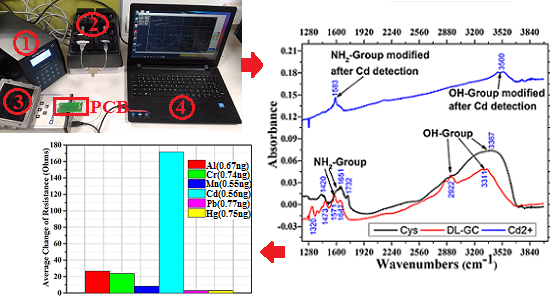
- . Results of the SAM detecting cadmium ions The proposed microfluidic platform provides real-time monitoring of Cd(II) in groundwater. We performed the experiment using the coating of cysteamine thiol with cross-linked ᴅʟ-glyceraldehyde (Cys-DL-GC). We have already discussed that the methods based on Au/Ag
- the resistance because of compressive surface stress when a large number of biomolecules bind to the microcantilever surface (Figure 4a,c,e) [47]. Figure 5 demonstrates the average change in piezoresistance of a sensor based on Au-Cys-DL-GC-coated cantilevers for different heavy metals (AlCl3, MnCl2
- selectivity for Cd(II) than for other heavy metals. The average value of change in piezoresistance of the Au-Cys-DL-GC-coated microcantilevers is approximately 130–240 Ω for Cd(II) and 5–30 Ω for the other injected heavy metals. The total value of the average change in piezoresistance for a concentration of