Search results
Search for "STEM" in Full Text gives 301 result(s) in Beilstein Journal of Nanotechnology. Showing first 200.
Fabrication and photoactivity of ionic liquid–TiO2 structures for efficient visible-light-induced photocatalytic decomposition of organic pollutants in aqueous phase
Beilstein J. Nanotechnol. 2018, 9, 580–590, doi:10.3762/bjnano.9.54
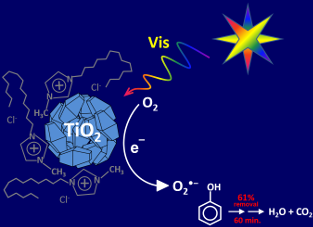
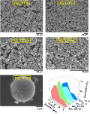
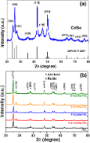
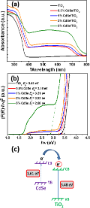
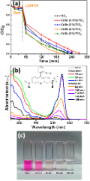
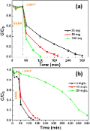
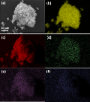
- photoelectron spectroscopy (XPS), diffuse reflectance spectroscopy (DRS), scanning transmission microscopy (STEM) and the Brunauer–Emmett–Teller (BET) surface area method, whereas the photocatalytic activity was evaluated by the degradation of phenol in aqueous solution under visible light irradiation (λ > 420
- 2 h (heating rate 2 °C/min). Various molar ratios of ILs to TBOT were selected as listed in Table 1. Sample characterization The morphology and size distribution of the TiO2 powders were observed using a Jeol SEM microscope operated at 12 kV and Cs-corrected STEM (high angle annular darkfield, HAADF




Nanoparticle delivery to metastatic breast cancer cells by nanoengineered mesenchymal stem cells
Beilstein J. Nanotechnol. 2018, 9, 321–332, doi:10.3762/bjnano.9.32
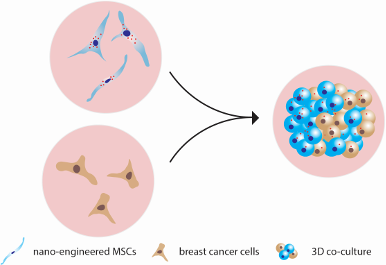
- , Vilnius University, Sauletekio Ave. 7, LT-10257 Vilnius, Lithuania, Laser Research Centre, Vilnius University, Sauletekio al. 9, corp. 3, LT-10222 Vilnius, Lithuania 10.3762/bjnano.9.32 Abstract We created a 3D cell co-culture model by combining nanoengineered mesenchymal stem cells (MSCs) with the
- ; mesenchymal stem cells; quantum dots; spheroids; 3D cell culture; Introduction The recent progress in the development of nanoscale agents opens up new perspectives for targeted drug delivery in cancer diagnostics, imaging and therapy. However, once administered into the body, nanoparticles (NPs) are rapidly
- and their immune privileged nature, mesenchymal stem cells (MSCs) can be used as a delivery vehicle for therapeutic and imaging agents, such as drug-conjugated NPs [3][4]. MSCs are adult stem cells that can be isolated from various organs, including brain, liver, kidney, lung, bone marrow, muscle



BN/Ag hybrid nanomaterials with petal-like surfaces as catalysts and antibacterial agents
Beilstein J. Nanotechnol. 2018, 9, 250–261, doi:10.3762/bjnano.9.27
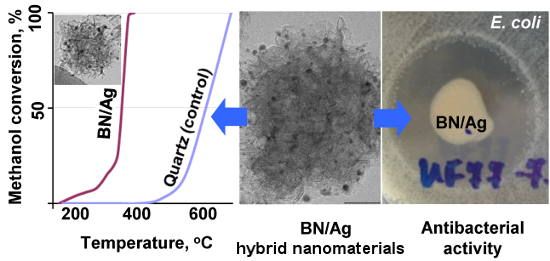
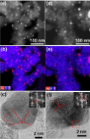
- . HADF-STEM and spatially-resolved EDX mapping (Figure 2) demonstrate that the surface of BN NPs is densely populated with Ag NPs. Thorough structural characterization of individual Ag NPs revealed their fine structure. The HRTEM images of individual Ag NPs are depicted in Figure 2c and 2f. The particles
- means of high-resolution transmission electron microscopy (HRTEM), high-angular dark field scanning TEM (HADF-STEM) imaging and energy-dispersive X-ray spectroscopy (EDX) mapping using a JEM-2100 microscope (JEOL) equipped with an energy-dispersive X-ray spectrometer (Oxford Instruments) and a STEM
- ) and UV decomposition of AgNO3 (g) together with the corresponding low-magnification TEM images (b, e, h) and the corresponding high-resolution TEM images (c, f, i). HADF-STEM (a, d) images together with the corresponding spatially-resolved EDX maps (b, e) of BN/Ag HNMs produced via CVD (a, b, c) and





Gas-assisted silver deposition with a focused electron beam
Beilstein J. Nanotechnol. 2018, 9, 224–232, doi:10.3762/bjnano.9.24
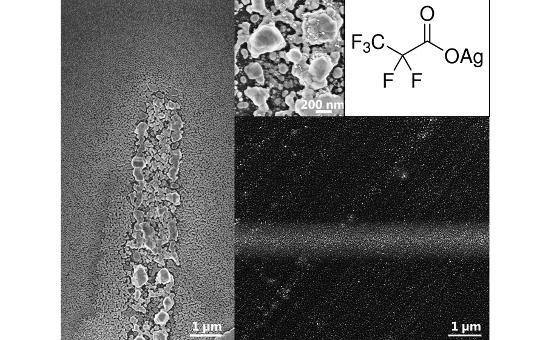
- micrograph (BF-STEM) of the central part of this line. Evidently, for obtaining a compact, fully percolated line of crystals the dose must be increased further, but thin electron-transparent lines facilitate TEM observation. From the BF-STEM imaging, the crystalline nature of the nanoparticles is made
- particles. Additionally, selective area electron diffraction (SAED) on this area clearly shows a diffraction pattern, confirming a crystalline deposit (Figure 3d) with diffraction rings matching the pattern of fcc silver as illustrated by the green rings. In the dark field (DF) STEM images in Figure 4 the
- line width of the FEB induced deposit was measured to 1 ± 0.1 µm by contrast to the eye. Figure 4b and 4c depict high magnification DF-STEM image of the top edge of the line. Particle numbers and sizes decrease towards the outer part of the line where the number of impinging electrons decreases. The


Liquid-crystalline nanoarchitectures for tissue engineering
Beilstein J. Nanotechnol. 2018, 9, 205–215, doi:10.3762/bjnano.9.22
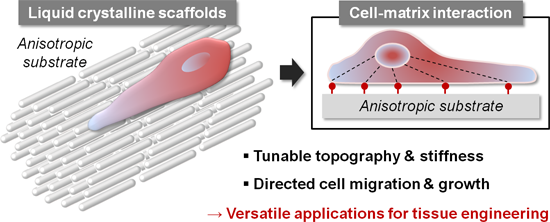
- ) [40]. Locally ordered collagen type-I gels, obtained by solvent evaporation, could induce an aligned 2D growth of human mesenchymal stem cells as well as their guided differentiation into bone tissues within two weeks in osteogenic media [86]. The concentrated (ca. 90 mg/mL) collagen type-I film
- stem cells [7][98]. Investigations by the Hegmann group have shown that bioengineered LCE scaffolds can be used to control mechanical response, growth direction, and proliferation rate of the seeded myoblasts and neuroblastomers. Porous LCE matrices in smectic-A with interdigitated cholesterol moieties
- local alignments, which resulted in directed and oriented growth of human mesenchymal stem cells and their osteogenic differentiation [105]. Additionally, biomineralization-mimicking hybrid materials, using chitin nanowhisker gel matrices in a nematic phase as templates for CaCO3 crystallization, have


Bombyx mori silk/titania/gold hybrid materials for photocatalytic water splitting: combining renewable raw materials with clean fuels
Beilstein J. Nanotechnol. 2018, 9, 187–204, doi:10.3762/bjnano.9.21
- TEM with a LaB6 cathode operated at 120 kV. High resolution transmission electron microscopy (HRTEM) was done using an aberration corrected Titan 80-300 (FEI, Eindhoven, The Netherlands) with field emission gun, operated at 300 kV. Scanning transmission electron microscopy (STEM) and chemical analysis
- with optical microscopy. Moreover, the diameter of the AuNPs in the TS_Au5.0 materials is mainly between 7–13 nm, but smaller Au particles are also present. Furthermore, bright field TEM images of TS_Au5.0 show a homogeneous AuNP distribution on the TNP. Dark field STEM images of the HM show a better
- samples. The slight differences between the AuNP distribution in TEM and STEM may be due to variation between sample areas. Both the AuNPs and the TNPs were further analyzed via HRTEM and fast Fourier transformation (FFT) analysis of the observed lattice fringes along with further EDXS experiments. Figure




CdSe nanorod/TiO2 nanoparticle heterojunctions with enhanced solar- and visible-light photocatalytic activity
Beilstein J. Nanotechnol. 2017, 8, 2741–2752, doi:10.3762/bjnano.8.273
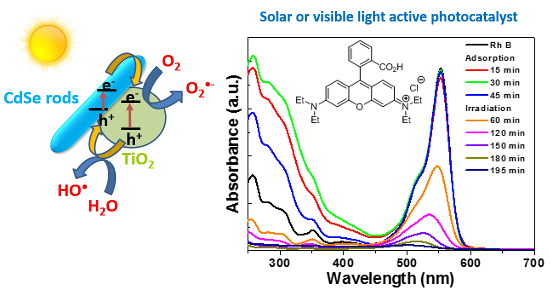
- -benzoquinone, used as hydroxyl and superoxide scavengers, were used at concentrations of 1 and 10 mM, respectively. Characterization Transmission electron microscopy (TEM) investigations were performed with a JEOL ARM 200F-Cold FEG TEM/STEM (point resolution 0.19 nm in TEM mode and 0.078 nm in STEM mode






Direct writing of gold nanostructures with an electron beam: On the way to pure nanostructures by combining optimized deposition with oxygen-plasma treatment
Beilstein J. Nanotechnol. 2017, 8, 2530–2543, doi:10.3762/bjnano.8.253
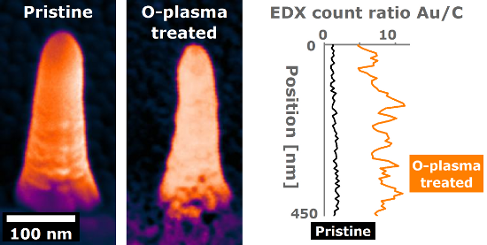
- ). Once the deposition rate was optimized and the samples were produced, high-angle annular dark field scanning transmission electron microscopy (HAADF-STEM) revealed that the crystallites in the planar deposits were considerably larger than those in NPs (compare Figure 1f to Figure 1c). Although both
- independent of the direction of EDX scanning and the relative position of the sample to the EDX detector. We note that very similar composition values and gradients were found by STEM EDX performed on long straight (uniform diameter) sections of NPs deposited on silicon nitride TEM grids in our previous study
- [65]. More accurate compositional quantification could probably be achieved by performing atom probe tomography or thickness-corrected STEM electron energy loss spectroscopy (EELS). Planar Au nanostructures The main goal here was to elucidate the effects of each experimental parameter on the

Refractive index sensing and surface-enhanced Raman spectroscopy using silver–gold layered bimetallic plasmonic crystals
Beilstein J. Nanotechnol. 2017, 8, 2492–2503, doi:10.3762/bjnano.8.249
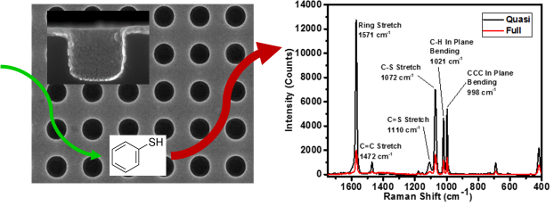
- homometallic devices, the results presented herein illustrate improvements in performance that stem from the distinctive plasmonic features and strong localized electric fields produced by the Ag and Au layers, which are optimized in terms of metal thickness and geometric features. Finite-difference time


Au nanostructure fabrication by pulsed laser deposition in open air: Influence of the deposition geometry
Beilstein J. Nanotechnol. 2017, 8, 2438–2445, doi:10.3762/bjnano.8.242
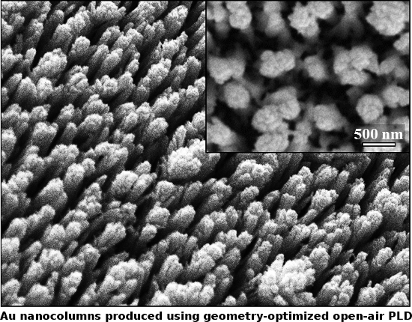
- pulses) in order to investigate the structure of the material ablated. The TEM and selected area electron diffraction (SAED) images were taken on a HR scanning transmission electron microscope (STEM) (JEOL JEM 2100) to reveal the morphology and crystallinity of the as-deposited samples. For STEM


Involvement of two uptake mechanisms of gold and iron oxide nanoparticles in a co-exposure scenario using mouse macrophages
Beilstein J. Nanotechnol. 2017, 8, 2396–2409, doi:10.3762/bjnano.8.239
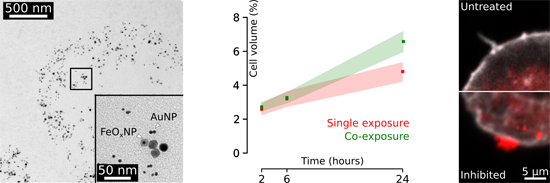
- a scanning transmission electron microscopy (STEM) detector (described in detail below). The water layer covering the cells was carefully thinned until it was sufficiently thin to allow for the detection of single NPs in a cell with the STEM detector located under the sample. In order to easier
- min, rinsing three times with PBS supplemented with 1% BSA, and storage in this buffer at 4 °C until electron microscopic investigation. Wet ESEM-STEM An electron beam with an energy of 30 kV, a spot size of 1 nm, a probe current of 600 pA, and working distances between 6.0 and 6.4 mm were used. The
- sample, an overview ESEM-STEM image was recorded showing the whole membrane window area with all cells. Consequently, overview images were recorded from individual cells or cell groups at a higher magnification. To discern NPs on the plasma membrane, the magnification was set to 25,000× or 50,000×, and



Magnetic properties of optimized cobalt nanospheres grown by focused electron beam induced deposition (FEBID) on cantilever tips
Beilstein J. Nanotechnol. 2017, 8, 2106–2115, doi:10.3762/bjnano.8.210
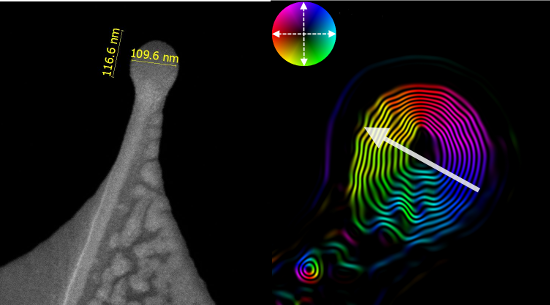
- analyze the chemical composition of the cobalt nanospheres by electron energy loss spectroscopy (EELS) in scanning transmission electron microscopy (STEM) mode and their local magnetic properties by electron holography in a transmission electron microscope (TEM), the specimens were prepared for TEM
- grown at the apex of the cantilever, following the same procedure as described above. Figure 3b,c displays the SEM micrographs of the two cobalt nanospheres studied by STEM-EELS and electron holography, once grown at the apex of cantilevers already attached to the TEM grid. The morphological and
- compositional properties of the cobalt nanospheres grown by FEBID have been confirmed by local chemical mapping of selected nanospheres of diameters 110 nm (see Figure 4b) and 90 nm (see Supporting Information File 1) performed by STEM-EELS. These quantitative maps reveal, first of all, that the deposits are


Synthesis and functionalization of NaGdF4:Yb,Er@NaGdF4 core–shell nanoparticles for possible application as multimodal contrast agents
Beilstein J. Nanotechnol. 2017, 8, 1815–1824, doi:10.3762/bjnano.8.183
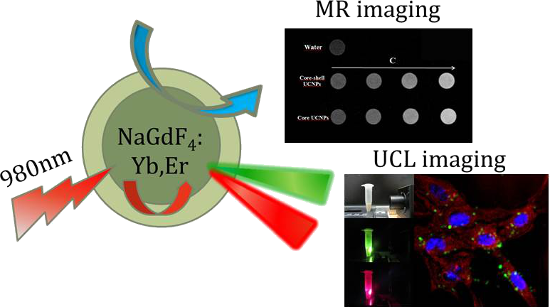
- behavior in biological systems and biocompatibility/nanotoxicity is still limited. The study of Cascales et al. showed that ultrasmall Yb:Er:NaGd(WO4)2 UCNPs could be successfully covered with Tween 80 and are internalized by human mesenchymal stem cells without triggering their metabolic activity, but


Methionine-mediated synthesis of magnetic nanoparticles and functionalization with gold quantum dots for theranostic applications
Beilstein J. Nanotechnol. 2017, 8, 1734–1741, doi:10.3762/bjnano.8.174
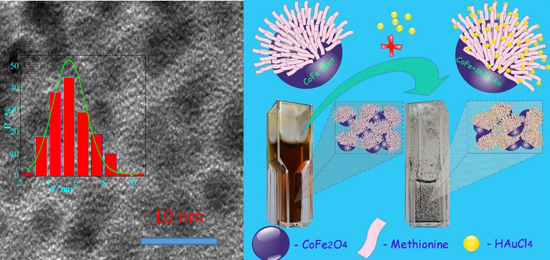
- conjugated with targeting and chemotherapy agents, such as cancer stem cell-related antibodies and the anticancer drug doxorubicin, for early detection and improved treatment. In order to verify our findings, high-resolution transmission electron microscopy (HRTEM), atomic force microscopy (AFM), FTIR


Charge transfer from and to manganese phthalocyanine: bulk materials and interfaces
Beilstein J. Nanotechnol. 2017, 8, 1601–1615, doi:10.3762/bjnano.8.160
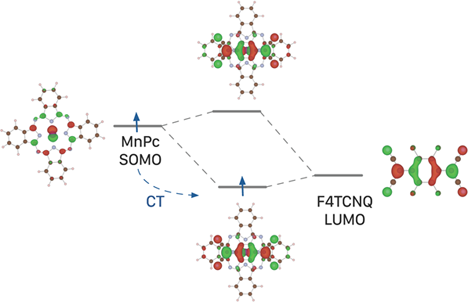
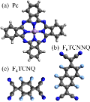
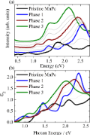
- -transfer compounds with a comparison of the electronic excitation spectra of MnPc, oxidized MnPc+ and reduced MnPc− as measured for the MnPc/F4TCNQ and K1MnPc compounds. We argue that for both compounds the low-energy excitations predominantly stem from MnPc-derived orbitals. In the case of K1MnPc this is
- electron escape depth (a few angstroms only [39]) the Mn 2p3/2 core-level data increasingly stem from regions very close to the interface with increasing F6TCNNQ top layer thickness. The data in Figure 10 demonstrate a clear change in line shape and energy position of the the Mn 2p3/2 core-level feature
- electronic 3d states of the central Co atom. The lowest lying absorption feature, which is maximal for a light polarization perpendicular to the F16CoPc molecules, can be assigned to transitions from the Co 2p into unoccupied states. The higher lying features stem from a multiplet structure related to the


Micro- and nano-surface structures based on vapor-deposited polymers
Beilstein J. Nanotechnol. 2017, 8, 1366–1374, doi:10.3762/bjnano.8.138
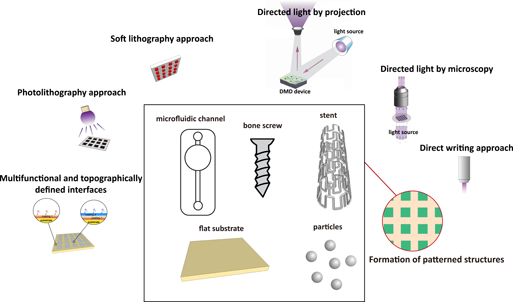
- cell pluripotency against mouse embryonic stem cells [72]. A plasma-polymerized surface with gradient amino functionality was demonstrated to generate density gradients of individual gold (Au) and silver (Ag) nanoparticles on the surfaces [73]. Poly(p-xylylene) surfaces with continuously and counter
- proliferation (FGF-2) and osteogenic differentiation (BMP-2) for adipose-derived stem cells [76]. Selective deposition The aforementioned methods rely on physical means to obtain spatially controlled surface modifications and patterned structures. A simpler approach is the selective inhibition of the vapor


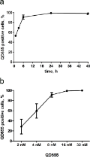
Nano-engineered skin mesenchymal stem cells: potential vehicles for tumour-targeted quantum-dot delivery
Beilstein J. Nanotechnol. 2017, 8, 1218–1230, doi:10.3762/bjnano.8.123
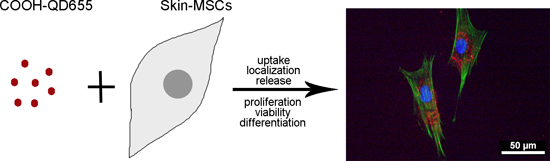
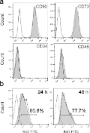
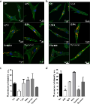
- nanoparticles in imaging and targeted therapy of tumours. Due to their tumour-homing ability, nano-engineered mesenchymal stem cells (MSCs) could be utilized as vectors to deliver diagnostic and therapeutic nanoparticles into a tumour. In the present study, uptake and functional effects of carboxyl-coated
- suggest that QD-labelled MSCs could be used for targeted drug delivery studies. Keywords: endocytosis; mesenchymal stem cells; quantum dots; stem cell differentiation; Introduction Despite remarkable advances in targeted therapies of various human malignancies, cancer is one of the leading causes of
- drug carriers [3]. Recent studies have shown that nano-engineered mesenchymal stem cells (MSCs) could be used as tumour-targeted therapeutic carriers, reflecting their tumour-homing capabilities [4][5][6]. MSCs are present in many tissues of the human body, including bone marrow, adipose tissues, skin





Atomic structure of Mg-based metallic glass investigated with neutron diffraction, reverse Monte Carlo modeling and electron microscopy
Beilstein J. Nanotechnol. 2017, 8, 1174–1182, doi:10.3762/bjnano.8.119
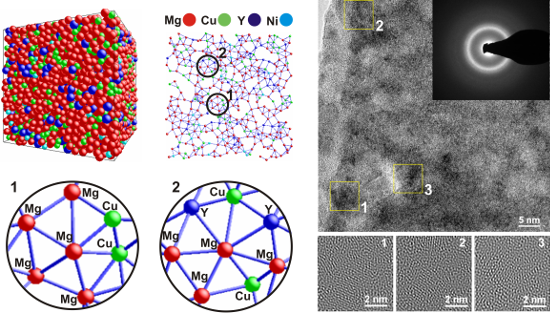
- , dark contrasts to be observed (Figure 9a). The area of the dark contrast regions calculated from the HAADF image is 4 × 6 nm. In addition, the EDS spectrum (Figure 9b) obtained in the HAADF-STEM mode confirmed the qualitative composition of the tested sample as the nanocrystalline material. Hirotsu et
- observations conducted in high-resolution mode. Further analysis of the ordered areas formed in the specimen annealed at 473 K for 1 h was provided by using STEM mode. The STEM bright field image presents some areas with a crystalline structure that indicate the formation of a primarly crystallization phase
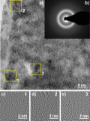
- electron diffraction (SAED) pattern and details of the selected areas 1, 2, 3 (c,d,e) of a Mg65Cu20Y10Ni5 metallic glass after annealing at 473 K for 1 h. TEM images in (a) bright field and (b) dark field mode of a Mg65Cu20Y10Ni5 metallic glass sample after annealing at 473 K for 1 h. (a) HAADF-STEM image




AgCl-doped CdSe quantum dots with near-IR photoluminescence
Beilstein J. Nanotechnol. 2017, 8, 1156–1166, doi:10.3762/bjnano.8.117
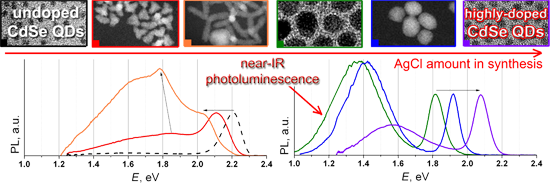
- microscopy (STEM). Figure 5–e display the position of Cd, Se, Ag and Cl atoms. The investigation was made on the day of the synthesis of NPs. The colour brightness of one selected pixel is determined by the intensity of L (Cd, Se and Ag) or K (Cl) line in EDX spectrum. The element distribution maps show that
- and 300 kV, respectively. The latter has 0.17 nm point resolution and is equipped with an EDAX EDX detector. High-angle annular dark field (HAADF) STEM studies and EDX mapping were performed using an JEM ARM200F cold FEG double aberration-corrected electron microscope operated at 80 kV and equipped
- analysis of Ag content during aging of NPs. (a,b) Results obtained by using Equation 1 for samples AgCl_1 and AgCl_4, respectively. (c,d) Evolution of XRF spectra of samples AgCl_24 and AgCl_40 over time. Element distribution maps of sample AgCl_32 on the day of the synthesis of NPs. (a) HAADF-STEM image


ZnO nanoparticles sensitized by CuInZnxS2+x quantum dots as highly efficient solar light driven photocatalysts
Beilstein J. Nanotechnol. 2017, 8, 1080–1093, doi:10.3762/bjnano.8.110
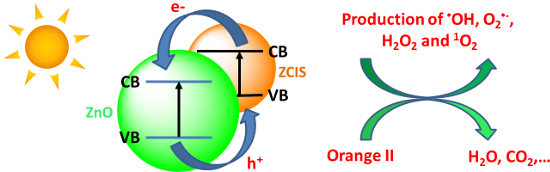
- production of 1O2 was evaluated by measuring the photoluminescence of SOSG–endoperoxide (SOSG-EP) (λex = 480 nm and λem = 525 nm) [42]. Instruments and characterization Transmission electron microscopy (TEM) investigations were performed with a JEOL ARM 200F – Cold FEG TEM/STEM (point resolution 0.19 nm in
- TEM mode and 0.078 nm in STEM mode) fitted with a GIF Quatum ER. High-resolution TEM (HR-TEM) imaging was performed with a JEOL ARM 200F – Cold FEG (point resolution 0.19 nm) fitted with a GIF Quatum ER. For each sample, one drop of a dispersed solution was deposited on holey carbon grids and imaged




Stable Au–C bonds to the substrate for fullerene-based nanostructures
Beilstein J. Nanotechnol. 2017, 8, 1073–1079, doi:10.3762/bjnano.8.109
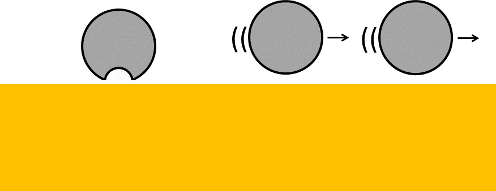
- assume that the varying apparent heights of these molecules inside the island stem from different adsorption geometries and possibly the local influence of neighboring molecules. Finally, we observe dark spots in the islands (black arrows in Figure 2b), which we can attribute to holes formed due to the


Structural properties and thermal stability of cobalt- and chromium-doped α-MnO2 nanorods
Beilstein J. Nanotechnol. 2017, 8, 1032–1042, doi:10.3762/bjnano.8.104
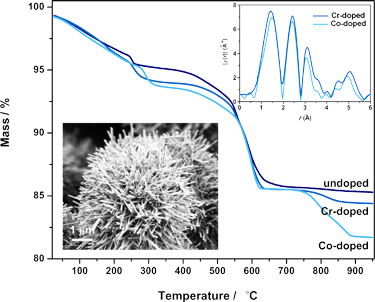
- synthesized at 170 °C is significantly lower than in the undoped samples. Analysis of an individual cobalt-doped α-MnO2 nanorod with HAADF-STEM reveals that the distribution of cobalt through the cross-section of the nanorod is uniform. The course of thermal decomposition of the doped nanorods is similar to
- transmission electron microscopy (HAADF-STEM), both shown in Figure 7. The chemical profiles of manganese and oxygen show a correlation with the nanorod shape while the cobalt profile shows more fluctuations due to the rather lower cobalt content (1.3 atom %). Nevertheless, it is clear that cobalt is present
- the material under X-ray irradiation. The IFEFFIT program package [33] was used for the XANES (X-ray absorption near edge structure) and EXAFS (extended X-ray absorption fine structure) analysis. High-angle annular dark field scanning transmission electron microscopy (HAADF-STEM) images were acquired


Energy-level alignment at interfaces between manganese phthalocyanine and C60
Beilstein J. Nanotechnol. 2017, 8, 927–932, doi:10.3762/bjnano.8.94
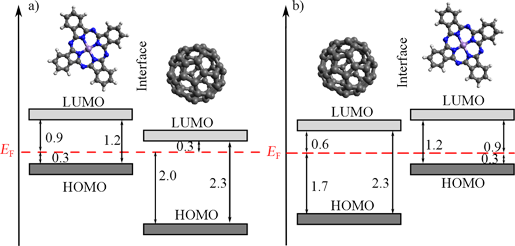
- features or energy shifts would be expected. We now turn to the discussion of the N1s core level data as obtained from the two deposition series, which are depicted in Figure 1c and Figure 1d. These data stem from MnPc only and, thus, allow insight into the behavior of one side of the interface under


3D Nanoprinting via laser-assisted electron beam induced deposition: growth kinetics, enhanced purity, and electrical resistivity
Beilstein J. Nanotechnol. 2017, 8, 801–812, doi:10.3762/bjnano.8.83
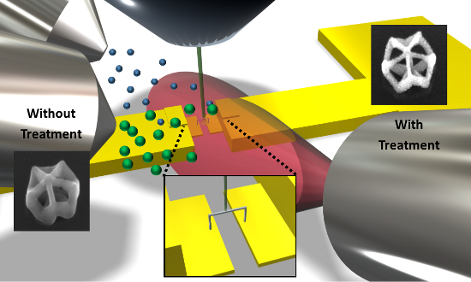
- roughly 45° relative to the FEI GIS. Figure 1 is a schematic illustrating the geometry of the gas and laser delivery systems relative to the substrate and electron beam impact point. STEM imaging and EELS analysis Scanning transmission electron microscope (STEM) imaging and electron energy loss
- (BF) STEM imaging was used to analyze the structure of the nanoscale deposits before and after laser annealing. EELS was performed in order to determine the structure of carbon through analysis of the carbon K-edge. Electrical device fabrication and measurements A two-contact electrical test structure
- ) has a higher growth rate and higher segment angle for comparable dwell times. STEM imaging and EELS STEM was used to investigate the morphology of the as-deposited and laser treated structures. In addition, the chemical nature of the carbon was characterized for different EBID configurations using


First examples of organosilica-based ionogels: synthesis and electrochemical behavior
Beilstein J. Nanotechnol. 2017, 8, 736–751, doi:10.3762/bjnano.8.77
- with zoom-ins to the central areas of the plot vs temperature. Variation of log(σ·T) versus 1000/T for all IGs. The change in the energy of activation likely does not stem from a weight loss process such as a weak dehydration because there is no apparent thermal event below 100 °C. However, data