Search results
Search for "TiO2" in Full Text gives 370 result(s) in Beilstein Journal of Nanotechnology. Showing first 200.
A scanning probe microscopy study of nanostructured TiO2/poly(3-hexylthiophene) hybrid heterojunctions for photovoltaic applications
Beilstein J. Nanotechnol. 2018, 9, 2087–2096, doi:10.3762/bjnano.9.197
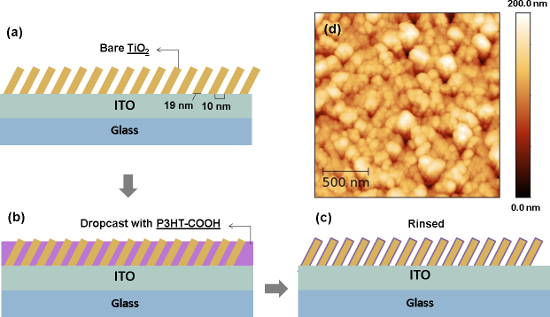
- -UGA, 17 rue des Martyrs F-38054, Grenoble, France 10.3762/bjnano.9.197 Abstract The nanoscale morphology of photoactive hybrid heterojunctions plays a key role in the performances of hybrid solar cells. In this work, the heterojunctions consist of a nanocolumnar TiO2 surface covalently grafted with a
- photovoltaic process and the correlation to the nanoscale morphology. A down-shift of the vacuum level of the TiO2 surface upon grafting was measured by Kelvin probe force microscopy (KPFM), evidencing the formation of a dipole at the TiO2/P3HT-COOH interface. Upon in situ illumination, a positive photovoltage
- theoretical and material design perspective. Keywords: hybrid heterojunctions; hybrid photovoltaic; Kelvin probe force microscopy; photoconductive-AFM; photo-KPFM; poly(3-hexylthiophene); TiO2; Introduction Over the past decades, a large range of photovoltaic (PV) technologies have been developed for the


Electromigrated electrical optical antennas for transducing electrons and photons at the nanoscale
Beilstein J. Nanotechnol. 2018, 9, 1964–1976, doi:10.3762/bjnano.9.187
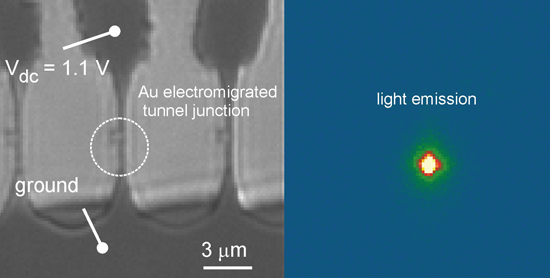
- TiO2 waveguides and slot geometry. Electrically connected optical antennas on TiO2 waveguides Because the emission spans the visible part of the spectrum, and, depending on the underlying mechanism, extends to near-infrared wavelengths, standard silicon-based platforms are not adapted to collect and
- guide photons emitted by the junctions. For the operation at visible wavelengths waveguiding structures composed of TiO2 feature interesting material properties [60][61] such as broadband transparency, high refractive index, compatibility with complementary metal-oxide semiconductors and ease of
- processing. We realize the implementation of tunneling antennas on a TiO2 waveguide through a multi-step process. First, a 85 to 110 nm thick titanium dioxide layer is deposited by physical vapor deposition on a clean glass substrate. Then, the Au backbone that will subsequently define the electrically


![[Graphic 32]](/bjnano/content/inline/2190-4286-9-187-i38.svg?max-width=637&scale=1.18182) and
and ![[Graphic 33]](/bjnano/content/inline/2190-4286-9-187-i39.svg?max-width=637&scale=1.18182) are...
are...


Know your full potential: Quantitative Kelvin probe force microscopy on nanoscale electrical devices
Beilstein J. Nanotechnol. 2018, 9, 1809–1819, doi:10.3762/bjnano.9.172
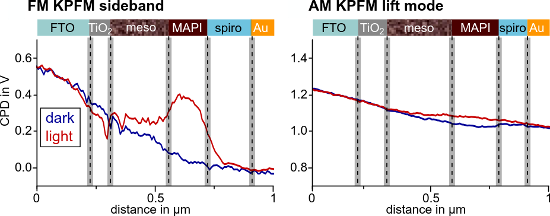
- could be observed upon illuminating the sample. While FM-KPFM resolved a +0.35 V increase of the potential within the methylammonium lead iodide (MAPI) capping layer as well as a narrow local minimum featured at the interface of the compact and the mesoscopic TiO2 layer, AM-KPFM detected only a slightly
- higher potential in the mesoscopic TiO2 and the MAPI capping layer. The illumination-induced potential difference resolved by AM-KPFM was less than 50 mV and no local features could be observed. Thus, only using AM lift mode, we likely would have missed the illumination induced changes in the potential
- , visualized by the red and blue line, respectively. The cell consisted of a fluorine-doped tin oxide (FTO) electrode, a compact TiO2 electron extraction layer and a mesoscopic TiO2 layer (meso) filled with the perovskite light-absorber methylammonium lead iodide (MAPI). The mesoscopic layer was followed by a


A visible-light-controlled platform for prolonged drug release based on Ag-doped TiO2 nanotubes with a hydrophobic layer
Beilstein J. Nanotechnol. 2018, 9, 1793–1801, doi:10.3762/bjnano.9.170
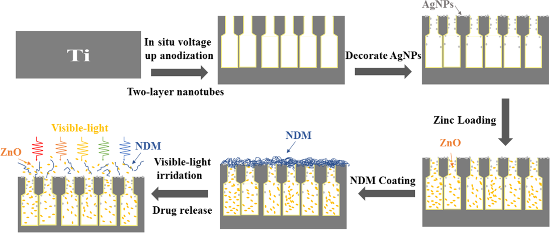
- exhibit promising application as a localized, prolonged drug delivery platform. Keywords: Ag doping; drug delivery; hydrophobic layer; prolonged drug release; TiO2 nanotubes; visible-light-controlled release; Introduction Titanium dioxide nanotubes (TNTs) are often employed as drug carriers, owing to
- light by doping AuNPs onto the nanotubes to improve the photocatalysis of the TNTs, which feasibly allows drug release under visible light. However, controlled drug release in combination with extended release delivery via a TiO2 nanotube platform has been rarely investigated. As a trace element
- . Thus, Zn exhibits significant, promising application in the biomedical field. Hence, Zn was selected as a model drug to be loaded into the TiO2 nanotubes for the drug delivery system in this work. In present work, we provide an approach for a visible-light-controlled drug release platform based on the





Controllable one-pot synthesis of uniform colloidal TiO2 particles in a mixed solvent solution for photocatalysis
Beilstein J. Nanotechnol. 2018, 9, 1715–1727, doi:10.3762/bjnano.9.163
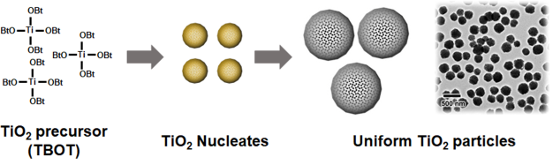
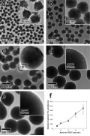
- Abstract This study reports on the controllable synthesis of uniform colloidal titanium dioxide (TiO2) particles and their photocatalytic applications toward rhodamine B (RhB) degradation. The monodispersed TiO2 particles were synthesized under mixed solvent conditions by sol–gel chemistry in a one-pot
- process. Varying the ratio of solvent composition, the concentration of surfactant and TiO2 precursor was used to control the particle diameter, degree of monodispersity and morphology. The modification of the calcination temperature affected the crystallinity and crystalline phase of the colloidal TiO2
- particles. When uniform, amorphous TiO2 particles were calcined at an optimal temperature (500 °C), the final sample exhibited beneficial characteristics such as high anatase crystallinity with a mixed phase of anatase and rutile and relatively high surface area. The photocatalytic efficiency of the uniform




Nitrogen-doped carbon nanotubes coated with zinc oxide nanoparticles as sulfur encapsulator for high-performance lithium/sulfur batteries
Beilstein J. Nanotechnol. 2018, 9, 1677–1685, doi:10.3762/bjnano.9.159
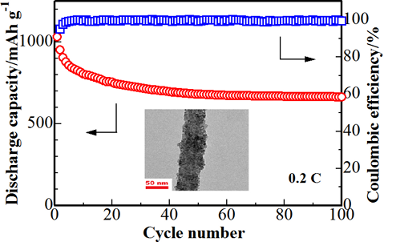
- Li/S batteries [5]. Another popular strategy to reduce polysulfides from dissolution is using metal oxides, such as TiO2 [6], ZnO [7], MnO2 [8], and SiO2 [9], as the additives or coating layer in the S-cathode. This is because metal oxides can provide strong binding sites with S and reduce the


Sulfur-, nitrogen- and platinum-doped titania thin films with high catalytic efficiency under visible-light illumination
Beilstein J. Nanotechnol. 2018, 9, 1629–1640, doi:10.3762/bjnano.9.155
- synthesis; thin films; titanium dioxide; visible-light illumination; Introduction In recent years, titanium dioxide (TiO2) has emerged as one of the most widely investigated semiconductors [1]. Due to its favorable properties (e.g., chemical and biological stability, nontoxicity and inexpensive price) it
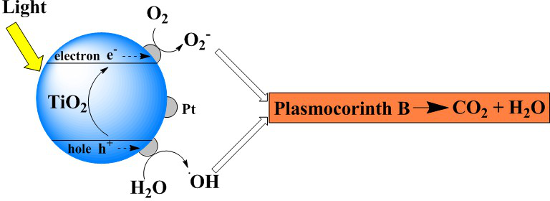
- oxidizing species, which then oxidize adsorbed pollutants, forming CO2 and H2O as final products [7]. Because of this particularly beneficial characteristic, together with its low-cost and lack of secondary emissions [8], significant research has been focused on the use of TiO2 photocatalysis in various
- environmental applications, such as water treatment [9][10][11] and air purification [12]. One of the important factors affecting the photocatalytic activity of TiO2 is its specific surface area. By increasing the specific surface area (porosity) of TiO2, the photocatalytic activity can be increased. One of the


Light extraction efficiency enhancement of flip-chip blue light-emitting diodes by anodic aluminum oxide
Beilstein J. Nanotechnol. 2018, 9, 1602–1612, doi:10.3762/bjnano.9.152
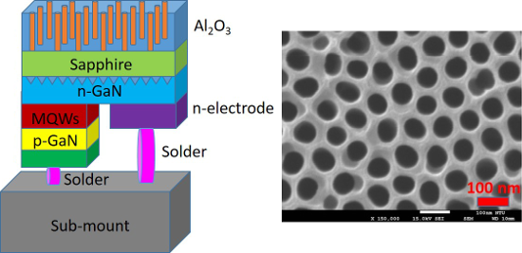
- traditional LED by producing a TiO2 microstructure array on p-GaN through dipping and rapid convective deposition and using noncrystalline TiO2 and anatase TiO2 with a diameter of 520 nm [13]. Huang et al. used Zn and Mg for ion implantation at the GZO thin layer and then adopted rapid thermal annealing to


Sheet-on-belt branched TiO2(B)/rGO powders with enhanced photocatalytic activity
Beilstein J. Nanotechnol. 2018, 9, 1550–1557, doi:10.3762/bjnano.9.146
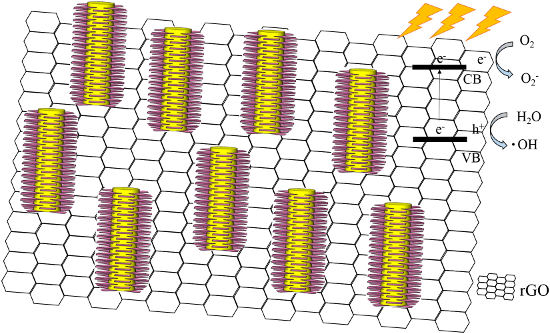
- TiO2(B) is usually adopted to construct phase junctions with anatase TiO2 for applications in photocatalysis to facilitate charge separation; its intrinsic photocatalytic activity, especially when in the form of one- or three-dimensional nanostructures, has been rarely reported. In this study, a sheet
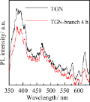
- -on-belt branched TiO2(B) powder was synthesized with the simultaneous incorporation of reduced graphene oxide (rGO). The monophase, hierarchically nanostructured TiO2(B) exhibited a reaction rate constant 1.7 times that of TiO2(B)/rGO and 2.9 times that of pristine TiO2(B) nanobelts when utilized to
- assist the photodegradation of phenol in water under UV light illumination. The enhanced photocatalytic activity can be attributed to the significantly increased surface area and enhanced charge separation. Keywords: branched nanostructure; photocatalysis; reduced graphene oxide; TiO2(B); Introduction


Cathodoluminescence as a probe of the optical properties of resonant apertures in a metallic film
Beilstein J. Nanotechnol. 2018, 9, 1491–1500, doi:10.3762/bjnano.9.140
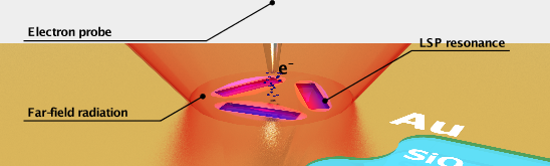
- resolution [52]. Dichroic-sensitive cathodoluminescence imaging has also been used to study the chiral nature of the gold split-ring resonators on a TiO2 substrate [53]. Most studies have focused on nanoparticles on silicon substrates that can have a significant impact on the optical resonances of plasmonic


Cr(VI) remediation from aqueous environment through modified-TiO2-mediated photocatalytic reduction
Beilstein J. Nanotechnol. 2018, 9, 1448–1470, doi:10.3762/bjnano.9.137
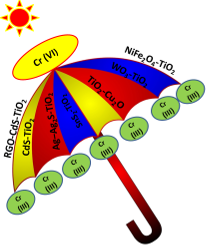
- TiO2 as a photocatalyst and the importance of its modification for photocatalytic reduction of Cr(VI) has also been addressed. In this review, the photocatalytic activity of TiO2 after modification with carbon-based advanced materials, metal oxides, metal sulfides and noble metals towards reduction of
- Cr(VI) was evaluated and compared with that of bare TiO2. The photoactivity of dye-sensitized TiO2 for reduction of Cr(VI) was also discussed. The mechanism for enhanced photocatalytic activity was highlighted and attributed to the resultant properties, namely, effective separation of photoinduced
- charge carriers, extension of the light absorption range and intensity, increase of the surface active sites, and higher photostability. Advantages and limitations for photoreduction of Cr(VI) over modified TiO2 are depicted in the Conclusion. The various challenges that restrict the technology from


Semi-automatic spray pyrolysis deposition of thin, transparent, titania films as blocking layers for dye-sensitized and perovskite solar cells
Beilstein J. Nanotechnol. 2018, 9, 1135–1145, doi:10.3762/bjnano.9.105
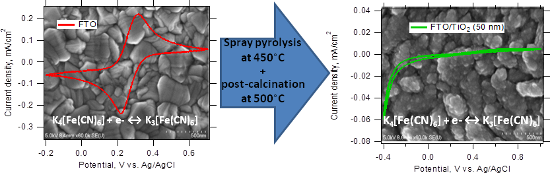
- electrons with the oxidized form of the redox mediator or with the hole-transporting medium can be avoided. In the present work, thin, transparent, blocking TiO2 films are prepared by semi-automatic spray pyrolysis of precursors consisting of titanium diisopropoxide bis(acetylacetonate) as the main
- -transfer reaction. Semi-automatic spraying resulted in the formation of transparent, homogeneous, TiO2 films, and the technique allows for easy upscaling to large electrode areas. The deposition temperature of 450 °C was necessary for the fabrication of highly photoactive TiO2 films. The blocking
- properties of the as-deposited TiO2 films (at 450 °C) were impaired by post-calcination at 500 °C, but this problem could be addressed by increasing the number of spray cycles. The modification of the precursor by adding acetylacetone resulted in the fabrication of TiO2 films exhibiting perfect blocking


Room-temperature single-photon emitters in titanium dioxide optical defects
Beilstein J. Nanotechnol. 2018, 9, 1085–1094, doi:10.3762/bjnano.9.100
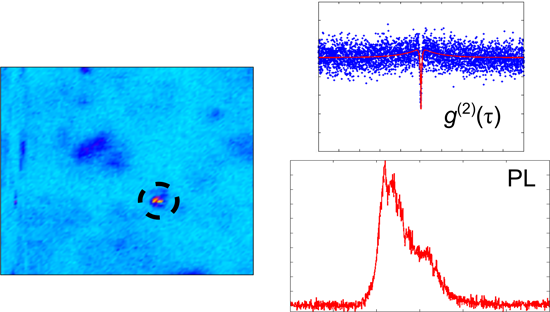
- emission. ZnO is the only metal oxide reported to host single-photon emitting defects at room temperature and was recently shown to exhibit stable fluorescence when uptaken into skin cells, making it a viable biomarker [11]. Titanium dioxide (TiO2) is a well-studied wide-bandgap semiconductor, its
- ][21]. TiO2 can be fabricated using many methods resulting in an abundance of nanostructures [22]. In nanoparticle form, TiO2 is a constituent of sunscreens [23][24]. Other applications also include elimination of environmental pollution [25][26][27][28], and energy [29] and sensing applications [30
- ][31][32]. Semiconductor defects have been touted as an promising platform for the development of a quantum computer in the solid state [33] in which the usage of TiO2 could be possible with further research into its quantum and physical properties. TiO2 crystallises into three main forms: anatase


Review on nanoparticles and nanostructured materials: history, sources, toxicity and regulations
Beilstein J. Nanotechnol. 2018, 9, 1050–1074, doi:10.3762/bjnano.9.98

- production methods for these carbon-based materials fabrication (except carbon black) [8]. (ii) Inorganic-based nanomaterials: These NMs include metal and metal oxide NPs and NSMs. These NMs can be synthesized into metals such as Au or Ag NPs, metal oxides such as TiO2 and ZnO NPs, and semiconductors such as
- creating enhanced Earth-based astronomical telescopes with adaptive optics and magnetic mirrors with the shape-shifting capability made up of ferrofluids [38][39]. TiO2 NPs are commercially used in solar cells with dye-sensitization ability [40]. In summer 2012, Logitech brought an external iPad keyboard
- ], TiO2 NPs [86] and hydroxyapatites [87] are present in commercial cosmetics, sporting goods, sunscreen and toothpaste. Thus, these synthetic NPs are a new genre of NPs that may induce adverse environmental and human health effects. Nanoparticles from diesel and engine exhaust: In cosmopolitan cities and


Comparative study of antibacterial properties of polystyrene films with TiOx and Cu nanoparticles fabricated using cluster beam technique
Beilstein J. Nanotechnol. 2018, 9, 861–869, doi:10.3762/bjnano.9.80
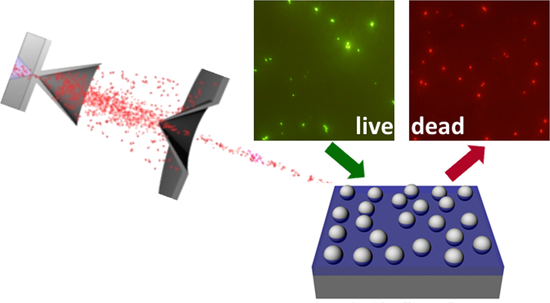
- organic cells. Because of these toxic properties the films and nanostructures of such metals or metal compounds are widely used as antibacterial and antimicrobial agents. Among them are Ag, Cu, Au, CuO, ZnO, Fe3O4, Al2O3 and TiO2, to name just a few [1][2][3]. They all exhibit bactericidal properties
- ], and they are also cheaper compared to silver. These particles mainly show bactericidal effects through mechanisms (i) and (iii). Among the metal oxides, TiO2 is the best-known and most widely used semiconductor material with a wide band gap that under UV illumination generates electron–hole pairs
- affecting in a destructive way the cell components but rendering innocuous products (mechanism ii) [5][6]. Thus, both Cu and TiO2 nanoparticles are excellent candidates for the formation of composites with antibacterial and antimicrobial properties. For more convenience in use and extended applications, NPs




Noble metal-modified titania with visible-light activity for the decomposition of microorganisms
Beilstein J. Nanotechnol. 2018, 9, 829–841, doi:10.3762/bjnano.9.77
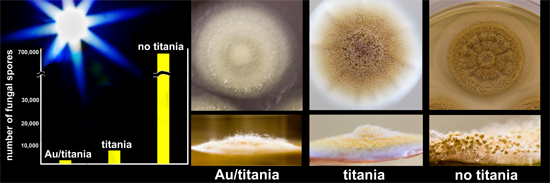
- ), Ag(I) and Ag(II)), as shown in Figure 3. All modified titania samples were coloured due to LSPR of NMNPs. Gold-modified samples were violet (light violet for larger titania and gold NPs (Au/TiO2(ST41), Au/TiO2(FP6)) and dark violet for smaller particle sizes (Au/TiO2(TIO12), Au/TiO2(ST01)), and
- reaching 15.4%, 16.4% and 23.7% of mortality after 45 min of treatment with TiO2(ST01), TiO2(ST41) and TiO2(TIO6) samples, respectively. Under irradiation with visible light, an increase in antibacterial properties was noticed reaching 23.2%, 25.8% and 27.9%, respectively. Under UV irradiation, significant
- bacterial cells in titania suspension with simultaneous measurements of evolved carbon dioxide was studied for bare and modified titania with gold or silver. Our preliminary studies on TiO2(ST41) photocatalyst showed that although inactivation of bacterial cells was similar for bare and silver-modified


Facile synthesis of a ZnO–BiOI p–n nano-heterojunction with excellent visible-light photocatalytic activity
Beilstein J. Nanotechnol. 2018, 9, 789–800, doi:10.3762/bjnano.9.72
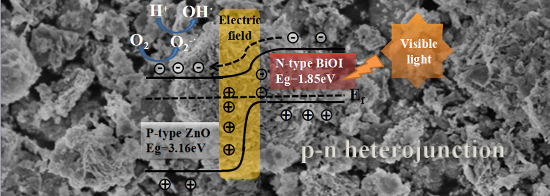
- degradation [3][4][5][6], nitrogen fixation [7][8], to solar fuel production [9]. The metal oxides, such as CdO [10], Al2O3 [11], and CuO [12][13], has attracted a lot of interest in photocatalytic applications. And among all of these metal oxides, it is titanium dioxide and zinc oxide (TiO2 and ZnO) that are
- oxide to a p-type BiOX to form a p–n heterojunction is an effective method to optimize the photocatalytic activity (summarized in Table S1, Supporting Information File 1). By now, several works have been published in this area. In 2009, Zhang et al. reported a low-temperature route to prepare TiO2/BiOI
- photocatalysts which showed higher activity than single-phase BiOI or TiO2 and 50% BiOI possessed the best performance [32]. Jiang and co-workers used a chemical bath to produce ZnO/BiOI heterostructures. By tuning the ratio of Zn/Bi, they could rationally control the morphology, constituents and optical


Surface-plasmon-enhanced ultraviolet emission of Au-decorated ZnO structures for gas sensing and photocatalytic devices
Beilstein J. Nanotechnol. 2018, 9, 771–779, doi:10.3762/bjnano.9.70
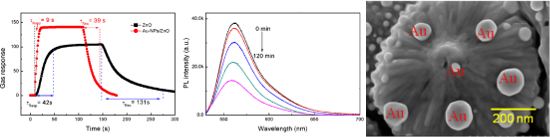
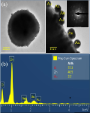
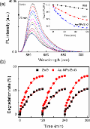
- investigated for photocatalytic activity as reported previously [8][20]. The photocatalytic activity of the Pt/ZnO hybrid nanocomposite under photodegradation of rhodamine B (RhB) was higher compared to commercial TiO2 [21]. Here, it is quite reasonable to note that the plasmonic metal NP/metal-oxide




A review of carbon-based and non-carbon-based catalyst supports for the selective catalytic reduction of nitric oxide
Beilstein J. Nanotechnol. 2018, 9, 740–761, doi:10.3762/bjnano.9.68
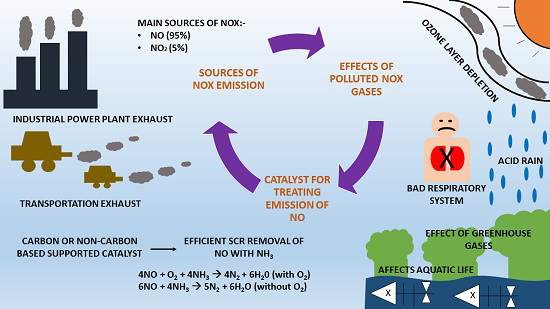
- (ZSM-5), TiO2, and Al2O3 supported materials, were identified as the most up-to-date and recently used catalysts for the removal of NO gas. The main focus of this review is the study of catalyst preparation methods, as this is highly correlated to the behaviour of NO removal. The general mechanisms
- oxygen also contributes to this occurrence. According to results from the literature, NH3 is the most practical reducing agent in the SCR of NO, as it results in high NO removal. The catalyst plays an important role in enhancing NO-SCR technology. The most widely used catalyst is V2O5–WO3/TiO2 due to its
- /TiO2 catalysts. They concluded that NO2 is vital for attaining faster reoxidation of the vanadium sites. There are two surface reactions that are usually involved in the NO removal system: the Langmuir–Hinshelwood and Eley–Rideal mechanisms [9]. It is believed that NH3 is first adsorbed by both Lewis
Synthesis and characterization of two new TiO2-containing benzothiazole-based imine composites for organic device applications
Beilstein J. Nanotechnol. 2018, 9, 721–739, doi:10.3762/bjnano.9.67
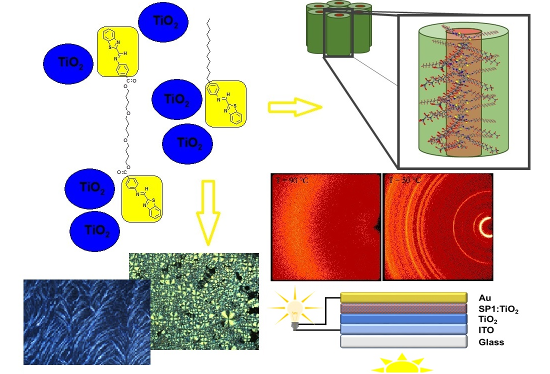
- ratio (3:0, 3:1, 3:2, 3:3) showed a lower energy gap and HOMO–LUMO energy levels compared to pure TiO2. This implies that TiO2 provides not only a larger surface area for sensitizer adsorption and good electron collection, but also causes a shift of the imine energy levels resulting from intermolecular
- interaction. Also the temperature of the phase transition was slightly affected with the increase of TiO2 concentration in imine-based composites. The changes observed in the Fourier transform middle-infrared absorption (FT-MIR) spectra confirmed the significant influence of TiO2 on structural properties of
- both investigated imines. Similar interactions of oxygen vacancies existing on the TiO2 surface with SP1 and SP2 were observed. The imine:TiO2 mixtures showed good air stability and reusability, which demonstrates its potential for organic device applications. Keywords: azomethines; composites; HOMO






Combined pulsed laser deposition and non-contact atomic force microscopy system for studies of insulator metal oxide thin films
Beilstein J. Nanotechnol. 2018, 9, 686–692, doi:10.3762/bjnano.9.63
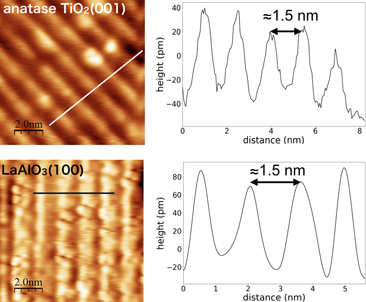
- not required. The performance of the combined system is demonstrated for the preparation and high-resolution NC-AFM imaging of atomically flat thin films of anatase TiO2(001) and LaAlO3(100). Keywords: atomic resolution; frequency modulation atomic force microscopy; insulator thin film; pulsed laser
- with NC-AFM. Finally, we demonstrate atomic resolution NC-AFM imaging of anatase TiO2(001) and LaAlO3(100). Both materials are important in the field of materials science, and it has been challenging to form and image atomically flat and clean surfaces of these two oxides thus far. Experimental Figure
- determining the sample preparation conditions of anatase TiO2(001) is shown in Figure 3 [56]. Referring to previous studies [52][53], we started the PLD with the following sample parameters: temperature Ts = 700 °C, oxygen partial pressure PO ≈ 1 × 10⁻³ Pa, laser density I = 1.0 J/cm2, and laser repetition


Perovskite-structured CaTiO3 coupled with g-C3N4 as a heterojunction photocatalyst for organic pollutant degradation
Beilstein J. Nanotechnol. 2018, 9, 671–685, doi:10.3762/bjnano.9.62
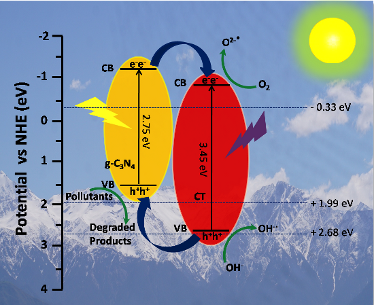
- of a wide band gap material with a low band gap material [30]. Natarajan et al. have demonstrated the enhanced degradation of isoniazid (a pharmaceutical pollutant) over the g-C3N4–TiO2 nanocomposite via a direct Z-scheme charge transfer mechanism [31]. The enhanced photocatalytic activity has been


Mechanistic insights into plasmonic photocatalysts in utilizing visible light
Beilstein J. Nanotechnol. 2018, 9, 628–648, doi:10.3762/bjnano.9.59
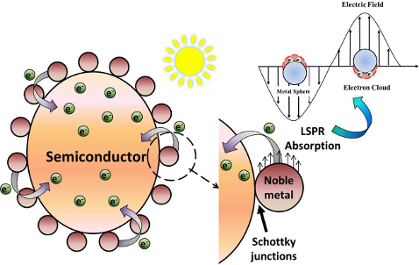
- where they successfully improved the harvesting potential of visible light for Pd NPs with a particle size in the range of ≈80 nm [25]. Similar results were also obtained by Kwak et al. where Pd NPs particles of ≈15 nm diameter were integrated onto TiO2 [26]. The plasmon-assisted physico-chemical
- are quite a number of ways to synthesize plasmonic photocatalysts. The most important step in their fabrication is the incorporation or deposition of noble metals onto the surface of a semiconductor. The most commonly studied semiconductor is TiO2, which exhibits superior photocatalysis efficiency
- . Moreover, researchers have proven the possibility of using direct sunlight as an alternative to artificial UV light for such noble metal deposition. In a study by Leong and co-workers, they successfully achieved the deposition of Ag and Pd onto the surface of TiO2 via this renewable route. They also used





Fabrication and photoactivity of ionic liquid–TiO2 structures for efficient visible-light-induced photocatalytic decomposition of organic pollutants in aqueous phase
Beilstein J. Nanotechnol. 2018, 9, 580–590, doi:10.3762/bjnano.9.54
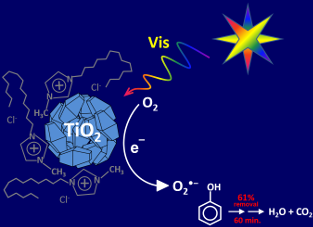
- photoactivity of TiO2, a series of TiO2 microspheres have been synthesized via a solvothermal method assisted by 1-methyl-3-octadecylimidazolium chloride ([ODMIM][Cl]) and 1-methyl-3-tetradecylimidazolium chloride ([TDMIM][Cl]). All as-prepared samples were characterized by X-ray powder diffraction (XRD), X-ray
- nm). The highest photoefficiency (four times higher than pristine TiO2) was observed for the TiO2 sample obtained in the presence of [TDMIM][Cl] for a IL to TiO2 precursor molar ratio of 1:3. It was revealed that interactions between the ions of the ionic liquid and the surface of the growing
- titanium dioxide spheres results in a red-shift of absorption edge for the IL–TiO2 semiconductors. In this regard, the direct increase of the photoactivity of IL–TiO2 in comparison to pristine TiO2 was observed. The active species trapping experiments indicated that O2•− is the main active species, created




Influence of the preparation method on the photocatalytic activity of Nd-modified TiO2
Beilstein J. Nanotechnol. 2018, 9, 447–459, doi:10.3762/bjnano.9.43
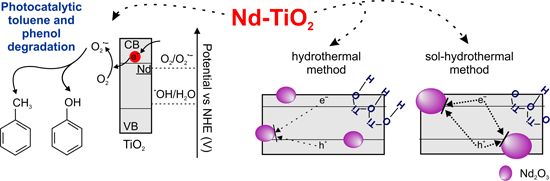
- Poznan, 60-780 Poznan, Poland Institute of Physical Chemistry, Polish Academy of Sciences,01-224 Warsaw, Poland Institute for Catalysis, Hokkaido University, Sapporo 001-0021, Japan 10.3762/bjnano.9.43 Abstract Nd-modified TiO2 photocatalysts have been obtained via hydrothermal (HT) and sol–hydrothermal
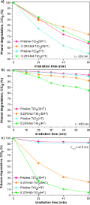
- synthesized samples was evaluated by the degradation of phenol in aqueous solution under irradiation with UV–vis (λ > 350 nm) and vis (λ > 420 nm) light, as well as by the degradation of gaseous toluene under irradiation with vis (λmax = 415 nm) light. It was found that Nd-modified TiO2 is an efficient
- photocatalytic efficiency of phenol and toluene degradation under vis irradiation in the presence of 0.25% Nd-TiO2(HT) reached 0.62 and 3.36 μmol·dm−1·min−1, respectively. Photocatalytic activity tests in the presence of Nd-TiO2 and scavenger confirm that superoxide radicals were responsible for the visible