


Search results
Search for "X-ray" in Full Text gives 1084 result(s) in Beilstein Journal of Nanotechnology. Showing first 200.
Combining physical vapor deposition structuration with dealloying for the creation of a highly efficient SERS platform
Beilstein J. Nanotechnol. 2023, 14, 83–94, doi:10.3762/bjnano.14.10
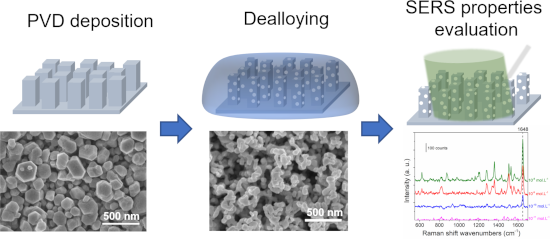
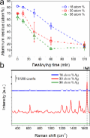
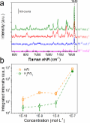
- SERS properties of the nanoporous structure. Using scanning electron microscopy (SEM) and X-ray photoelectron spectroscopy (XPS) the morphology and surface composition of each nanoporous structure were respectively evaluated and used to describe the SERS properties of the samples. Results and
- to the alloy thin film. Three different silver compositions were selected, namely 18, 30, and 36 atom %, and characterized by SEM/energy-dispersive X-ray spectroscopy (EDX). Figure 1 displays the SEM micrograph of the as-deposited thin films. The thin films exhibit a columnar morphology (see the
- a sample and on two samples made in the same conditions. To evaluate the surface composition and oxidation state, XPS was used. The XPS measurements were carried out on a PHI 5000 VersaProbe using a monochromatic Al Kα X-ray source (1486.6 eV). The high-resolution spectra were recorded with a pass




Liquid phase exfoliation of talc: effect of the medium on flake size and shape
Beilstein J. Nanotechnol. 2023, 14, 68–78, doi:10.3762/bjnano.14.8
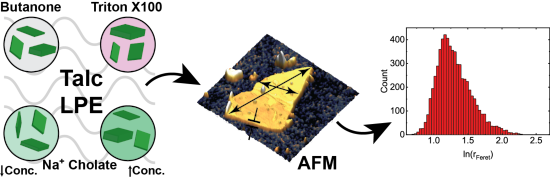
- powder was exfoliated in each liquid medium by exposure to mechanical energy provided by an ultrasonic bath (full details in the Experimental section). Talc was manually milled down to a fine powder and characterized by X-ray diffraction (XRD). Figure 1a displays the results. All peaks are assigned to
- obtaining information on thousands of flakes and using appropriate statistical descriptions to analyze the data. Experimental Materials. Talc was obtained through a donation of a sample from Minas Gerais state, Brazil. X-ray diffraction (XRD) was performed to characterize the sample composition. The rock
- measurements were performed on silicon substrates with an oxide layer, Si/SiOx. Substrates were functionalized with (3-aminopropyl)triethoxysilane (APTES) following the procedure reported by Fernandes and co-workers [24]. X-ray diffraction. XRD was performed in a Rigaku Geigerflex 2037 diffractometer with a



Gap-directed chemical lift-off lithographic nanoarchitectonics for arbitrary sub-micrometer patterning
Beilstein J. Nanotechnol. 2023, 14, 34–44, doi:10.3762/bjnano.14.4
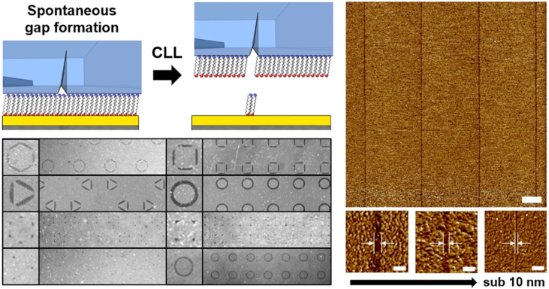
- the rectangle function in ZEN 2012 Service Pack 2 software (Carl Zeiss Microscopy, Jena, Germany). XPS spectra after each surface modification step were collected with ULVAC-PHI X-ray photoelectron spectrometer (PHI QuanteraII, Kanagawa, Japan). Selective wet chemical etching processes and metal


Two-step single-reactor synthesis of oleic acid- or undecylenic acid-stabilized magnetic nanoparticles by thermal decomposition
Beilstein J. Nanotechnol. 2023, 14, 11–22, doi:10.3762/bjnano.14.2
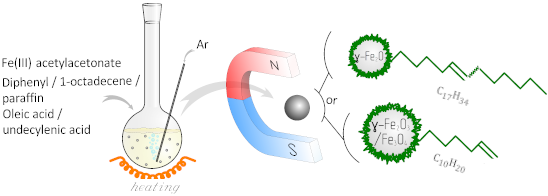
- , and composition via several techniques, such as transmission electron microscopy, dynamic light scattering, thermogravimetric analysis, Fourier-transform infrared spectroscopy/attenuated total reflectance, 57Fe Mössbauer spectroscopy, and X-ray diffraction. The effect of unsaturated oleic (OA) and
- were uniform and the single spots were not visible proved that the crystallites were very small. These results correspond well with data from X-ray diffraction (XRD), according to which the average size of the crystallites for all prepared nanoparticles was 4.5–9 nm. The average crystallite size did
- crystallites obtained by estimating the expansion of the X-ray diffraction line (DXRD calculated with Scherer, optionally Rietveld, refinement), which indicated a single magnetic domain characteristic of the TMO-I nanoparticle sample. When a stabilizer with a shorter carbon chain (i.e., UA) is used under the


Electrical and optical enhancement of ITO/Mo bilayer thin films via laser annealing
Beilstein J. Nanotechnol. 2022, 13, 1589–1595, doi:10.3762/bjnano.13.133
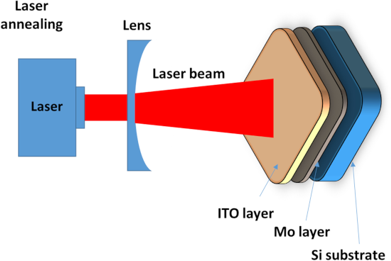
- the samples were placed behind the focal plane of the lens (low intensity and big spot). The crystalline properties of the films were determined using X-ray diffraction (PANalytical diffractometer, λ = 1.5406 Å). The XRD measurements were carried out in 2θ mode between 20° and 80°. Topology and


Photoelectrochemical water oxidation over TiO2 nanotubes modified with MoS2 and g-C3N4
Beilstein J. Nanotechnol. 2022, 13, 1541–1550, doi:10.3762/bjnano.13.127
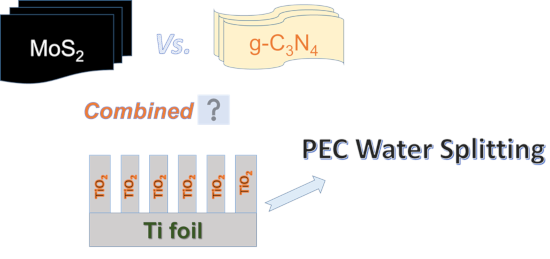
- of materials The morphology, the phase, and the vibrational characteristics of the surface functional groups of the materials were observed by field-emission scanning electron microscopy (FESEM), X-ray diffraction (XRD), and Fourier-transform infrared spectroscopy (FTIR). Diffuse reflectance


Non-stoichiometric magnetite as catalyst for the photocatalytic degradation of phenol and 2,6-dibromo-4-methylphenol – a new approach in water treatment
Beilstein J. Nanotechnol. 2022, 13, 1531–1540, doi:10.3762/bjnano.13.126
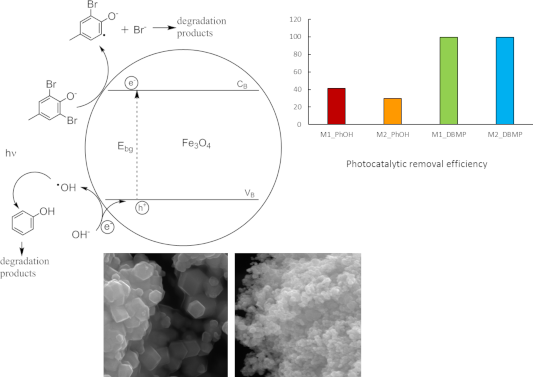
- SEM, X-ray diffraction, and ultraviolet–visible (UV–vis) analysis. The XRD and UV–vis results were published in our previous article [17]. We present this data again in this article as it is necessary for the discussion of the results. Zeta potential measurements were also presented in another
- was performed using a powder X-ray diffractometer (Figure 1a). The XRD spectra revealed that the diffraction peaks at 2θ = 30.2°, 35.3°, 43.7°, 53.9°, 57.1°, and 62.7° (Figure 1a) correspond to those of Fe3O4 (reference code COD 01-089-3854); they belong to a cubic structure system corresponding to
- the facets (220), (311), (400), (422), (511), and (440) of Fe3O4, respectively [21]. The absence of the (210) and (211) peaks confirms that the catalysts were indeed magnetite. The mean size of the catalyst crystallites (D) was calculated from the high-reflection X-ray diffraction profiles by


A TiO2@MWCNTs nanocomposite photoanode for solar-driven water splitting
Beilstein J. Nanotechnol. 2022, 13, 1520–1530, doi:10.3762/bjnano.13.125
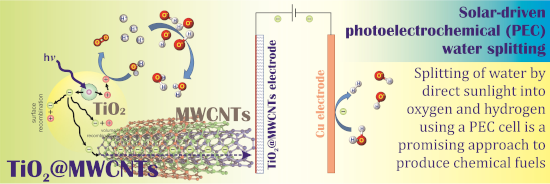
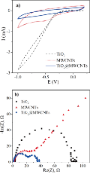
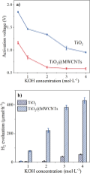
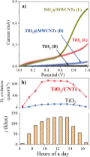
- -scanning electron microscopy, transmission electron microscopy, X-ray diffraction, and linear sweep voltammetry. The results show that the TiO2@MWCNTs nanocomposite has an optical bandgap of 2.5 eV, which is a significant improvement in visible-light absorption capability compared to TiO2 (3.14 eV). The
- nanocomposite characterizations The surface morphology of MWCNTs and the TiO2@MWCNTs nanocomposite is characterized by using field-emission scanning electron microscopy (FE-SEM, S4800) and transmission electron microscopy (TEM, JEOL-1400). The crystallization behavior of the catalysts is analyzed by X-ray



In search of cytotoxic selectivity on cancer cells with biogenically synthesized Ag/AgCl nanoparticles
Beilstein J. Nanotechnol. 2022, 13, 1505–1519, doi:10.3762/bjnano.13.124
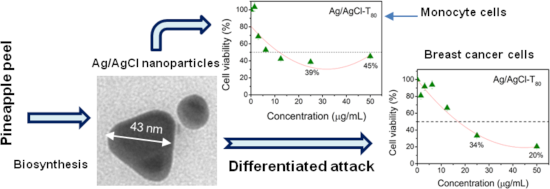
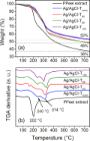
- pineapple peel extracts and their behavior on the breast cancer cell line MCF-7 is shown. Bioreactions were monitored at different temperatures. Fourier-transform infrared spectroscopy (FTIR), ultraviolet–visible spectroscopy (UV–vis), thermogravimetric analysis (TGA), X-ray diffraction (XRD), energy
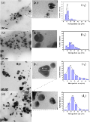
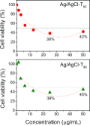
- -dispersive X-ray spectroscopy (EDX), and transmission electron microscopy (TEM) techniques were used to characterize nanoparticle development. The breast cancer cell line MCF-7 was used as a test model to study the cytotoxic behavior of Ag/AgCl nanoparticles and, as a counterpart, the nanoparticles were also
- nanoparticles. Crystalline behavior In all of the reactions, the X-ray diffraction patterns shown in Figure 2 confirm the transformation of AgNO3 into metallic Ag. The characteristic peaks of AgNO3 salt and metallic Ag are indicated by short lines and can be used as a reference for comparison with the





Hydroxyapatite–bioglass nanocomposites: Structural, mechanical, and biological aspects
Beilstein J. Nanotechnol. 2022, 13, 1490–1504, doi:10.3762/bjnano.13.123
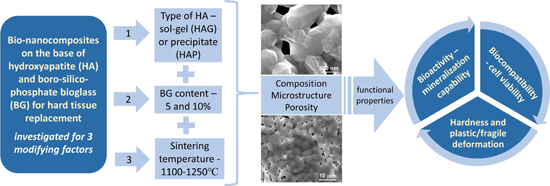
- and porosity were ±0.05 g/cm3 and ±0.05%, respectively. X-ray diffraction With the help of a Bruker D8 ADVANCE X-ray diffractometer, the evolution of the formation of hydroxyapatite and of the intermediate compounds was studied, on samples calcined at different temperatures, as well as after burning
- peak of each diffractogram with the highest intensity, the average size of the crystallite, Dhkl, was calculated using the Scherrer equation: where k is a dimensionless constant called the form factor, usually having a value of 0.9. λ is the X-ray wavelength, in this case λ = 1.54060 Å, FWHM (full
- special cleaning process for 6 min in a nitrogen plasma jet in a FISCHONE Plasma Cleaner. A FEI QUANTA INSPECT S SEM was used to observe structure and morphology of the samples after their treatment in simulated body fluid, as well as to acquire the energy-dispersive X-ray (EDX) spectra and the elemental
Structural studies and selected physical investigations of LiCoO2 obtained by combustion synthesis
Beilstein J. Nanotechnol. 2022, 13, 1473–1482, doi:10.3762/bjnano.13.121
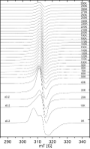
- reason may be the expected differences in the g-tensor values from nickel complexes on the surface and inside the crystallites. However, as shown in Figure 9 the mutual changes in the concentration of Ni3+(I) and Ni3+(II) complexes are too small in relation to the changes in surface area measured by X
- -ray experiments. Therefore, the assumption that the two different nickel complexes are derived from the crystallites and the surface can probably be rejected. The second reason why two complexes are visible in the EPR spectra is the assumption that two LCO phases are formed during the synthesis: a low




Rapid and sensitive detection of box turtles using an electrochemical DNA biosensor based on a gold/graphene nanocomposite
Beilstein J. Nanotechnol. 2022, 13, 1458–1472, doi:10.3762/bjnano.13.120
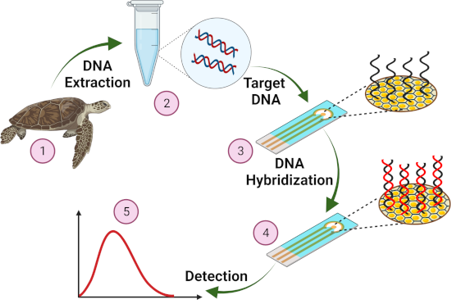
- scanning electron microscopy and structural characteristics were analysed by using energy-dispersive X-ray, UV–vis, and Fourier-transform infrared spectroscopy. The electrochemical characteristics of the modified electrodes were studied by cyclic voltammetry, differential pulse voltammetry (DPV), and
- with graphene. The spectrum of Gr in Figure 2c obtained by energy dispersive X-ray spectroscopy (EDX) clearly demonstrates the presence of a high amount of carbon with a minimum amount of oxygen, indicating the purity of Gr. Figure 2d clearly shows the presence of carbon, oxygen, and AuNPs in the
- Oxford Instrument energy dispersive X-ray spectrometer. UV–vis was performed on a Libra S80 Biochrom spectrophotometer and FTIR was performed on a Spectrum 400 PerkinElmer spectrometer (U.S.). Electrochemical studies of the electrodes The electrochemical behaviour of different modified SPCE surfaces was



LED-light-activated photocatalytic performance of metal-free carbon-modified hexagonal boron nitride towards degradation of methylene blue and phenol
Beilstein J. Nanotechnol. 2022, 13, 1380–1392, doi:10.3762/bjnano.13.114
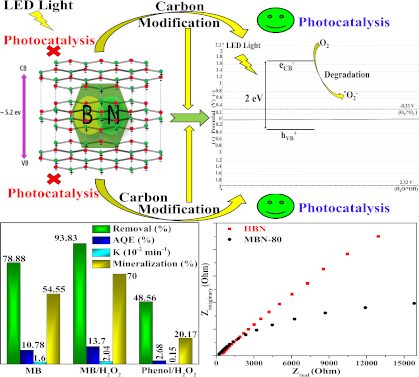
- times with DI water, and dried overnight at 60 °C. The commercially available HBN was used as a control sample. Characterization techniques A Rigaku Smart Lab high-resolution X-ray diffractometer (HR-XRD) equipped with a HyPix-3000 detector and Cu anode emitting Kα radiation was employed to obtain the
- attachment using BaSO4 as the standard. The electronic arrangement of the studied materials was revealed through a PHI 5000 versa probe III high-resolution X-ray photoelectron spectroscope (HR-XPS). The mineralization efficiency was estimated through the variation in the total organic carbon content by using



Near-infrared photoactive Ag-Zn-Ga-S-Se quantum dots for high-performance quantum dot-sensitized solar cells
Beilstein J. Nanotechnol. 2022, 13, 1337–1344, doi:10.3762/bjnano.13.110
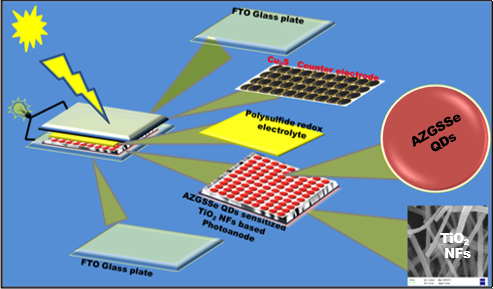
- of solar cells. In this study, we synthesized Ag-Zn-Ga-S-Se-based alloyed QDs by colloidal hot injection and characterized them. The X-ray photoelectron spectrum analysis confirms the +1, +2, +3, −2, and −2 oxidation states of, respectively, Ag, Zn, Ga, S, and Se in the QDs, and the energy-dispersive
- X-ray spectrum analysis confirms the 1:1:1:1.5:1.5 stoichiometric ratio of, respectively, Ag, Zn, Ga, S, and Se. These two results indicate the formation of I-II-III-VI3-type alloyed crystals (AgZnGaS1.5Se1.5 nanocrystals). TEM image analysis reveals the QD nature of the synthesized Ag-Zn-Ga-S-Se
- nanocrystals. The X-ray diffraction pattern confirms the hexagonal structure. Due to the near-infrared light absorption capability, the synthesized QDs were used as the sensitizer to fabricate QDSCs. The fabricated QDSCs were characterized by using electrochemical impedance spectroscopy and photovoltaic


Recent trends in Bi-based nanomaterials: challenges, fabrication, enhancement techniques, and environmental applications
Beilstein J. Nanotechnol. 2022, 13, 1316–1336, doi:10.3762/bjnano.13.109

- intermediates from the synthesis process into photocatalysts to alter the energy band structure and increase photocatalytic activity [89]. A simple two-step technique was used to develop a novel compound photocatalyst of Bi/BiOBr-Bi5+ [90]. X-ray diffraction, field-emission transmission electron microscopy, and
- X-ray photoelectron spectroscopy revealed the coexistence of self-doped Bi5+ and in situ deposited Bi(M). Compared to Bi/BiOBr or BiOBr–Bi5+, the photocatalytic activity of Bi/BiOBr-Bi5+ regarding RhB degradation under visible light was significantly increased. OVs helped in separating photoexcited




Enhanced electronic transport properties of Te roll-like nanostructures
Beilstein J. Nanotechnol. 2022, 13, 1284–1291, doi:10.3762/bjnano.13.106
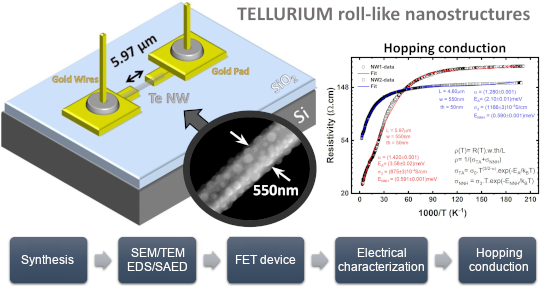
- under mild conditions. A large quantity of these polycrystalline nanostructures with a diameter between 100 and 900 nm and a wall thickness around 50 nm were synthesized and characterized by scanning electron microscopy (SEM), energy dispersive X-ray spectroscopy (EDS), transmission electron microscopy




Rapid fabrication of MgO@g-C3N4 heterojunctions for photocatalytic nitric oxide removal
Beilstein J. Nanotechnol. 2022, 13, 1141–1154, doi:10.3762/bjnano.13.96
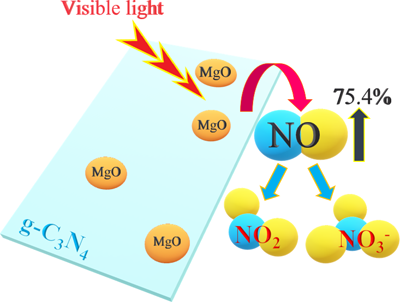
- properties of the materials. Scanning electron microscopy (SEM) and high-resolution transmission electron microscopy (HR-TEM) were used to assess the morphology of the materials. The crystal phase of the materials was determined by X-ray diffraction (XRD) with a measurement range of 10°–80°. Fourier
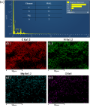
- -transform infrared spectroscopy (FTIR) was used to determine the chemical bond composition of the materials. Differential reflectance spectroscopy (DRS) determined the change in the bandgap of the materials. The elements of the materials were identified by high-resolution X-ray photoelectron spectroscopy





Green synthesis of zinc oxide nanoparticles toward highly efficient photocatalysis and antibacterial application
Beilstein J. Nanotechnol. 2022, 13, 1108–1119, doi:10.3762/bjnano.13.94
- , Vietnam 10.3762/bjnano.13.94 Abstract Zinc oxide nanoparticles (ZnO NPs) were successfully synthesized by a green method using rosin and zinc chloride as salt precursors. The phase structure, morphology, and particle size of ZnO were determined by X-ray powder diffraction, field emission scanning
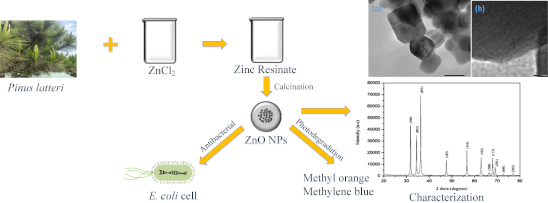
- reactions that form zinc resinate are shown in Equation 1 and Equation 2. The schematic illustration of the synthesis of ZnO nanoparticles is shown in Figure 1. Methods for determining the characterization of the synthesized material The phase of the synthesized material was determined by X-ray diffraction
- (XRD) using a Bruker D8 advanced X-ray diffractometer equipped with Cu Kα radiation (λ = 1.5418 Å). The morphology and size of the synthesized material were determined by field emission scanning electron microscopy (FESEM) on a Hitachi S-4800 at 15 kV and high-resolution transmission electron




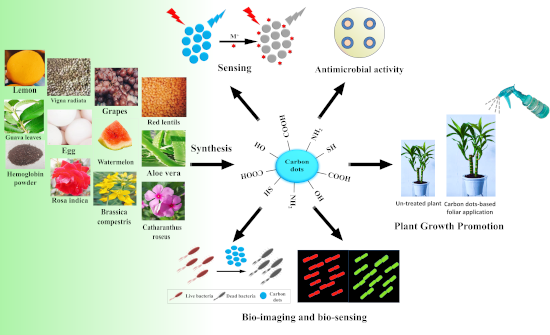
Recent advances in green carbon dots (2015–2022): synthesis, metal ion sensing, and biological applications
Beilstein J. Nanotechnol. 2022, 13, 1068–1107, doi:10.3762/bjnano.13.93




Spindle-like MIL101(Fe) decorated with Bi2O3 nanoparticles for enhanced degradation of chlortetracycline under visible-light irradiation
Beilstein J. Nanotechnol. 2022, 13, 1038–1050, doi:10.3762/bjnano.13.91
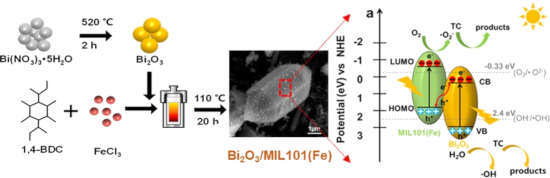
- . Characterization of the as-prepared catalyst The crystalline structure of the prepared photocatalyst was analyzed by X-ray diffraction spectrometry (Empyrean, Panalytical, Holland) with Cu Kα radiation at a scanning speed of 7 °/min. The morphology of the samples was observed by scanning electron microscopy (SEM
- , FEI-quanta 200, Japan Electronics, Japan), transmission electron microscopy (TEM, FEI-Tecnai F20, USA) and high-resolution transmission electron microscopy (HRTEM, JEOL 2100F, Japan). The element valence and chemical composition was investigated using X-ray photoelectron spectroscopy (XPS, Axis ultra
- photocatalytic activity of the Bi2O3/MIL101(Fe) composite. X-ray photoelectron spectroscopy was performed to explore the elemental compositions and the surface chemical states of BOM-20 and the results are presented in Figure 4. The XPS survey spectrum (Figure 4a) indicates the existence of Fe, Bi, O, and C in


Electrocatalytic oxygen reduction activity of AgCoCu oxides on reduced graphene oxide in alkaline media
Beilstein J. Nanotechnol. 2022, 13, 1020–1029, doi:10.3762/bjnano.13.89
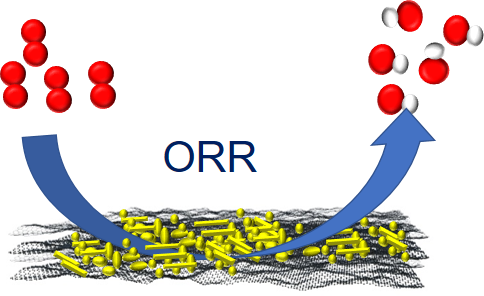
- and crystallinity of the assembled binary and ternary metallic oxide NPs, powder X-ray diffraction (PXRD) measurements were carried out. The PXRD patterns of the binary and ternary NPs on rGO showed peaks located at 2θ = 38.1°, 44.2°, 64.3°, and 77.1°, which could be indexed to the (111), (200), (220
- important binding sites, oxidation states, and the elemental composition using X-ray photoelectron spectroscopy. The survey scan of ACC-2 revealed C, O, Cu, Co, and Ag with 54.7, 29.9, 1.0, 8.1, and 6.3 atom % respectively (Figure S10a, Supporting Information File 1). The Ag 3d3/2 and Ag 3d5/2 peaks in the


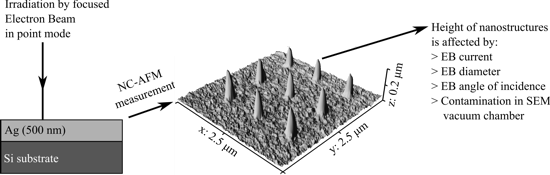
Effects of focused electron beam irradiation parameters on direct nanostructure formation on Ag surfaces
Beilstein J. Nanotechnol. 2022, 13, 1004–1010, doi:10.3762/bjnano.13.87
- material greatly affects the growth rate of the nanowires, with the Cu surface providing the fastest growth. Energy-dispersive X-ray spectroscopy (EDX) revealed the presence of both carbon and substrate materials in the nanowires. The effect of substrate material on nanowire growth rate could be attributed




Theoretical investigations of oxygen vacancy effects in nickel-doped zirconia from ab initio XANES spectroscopy at the oxygen K-edge
Beilstein J. Nanotechnol. 2022, 13, 975–985, doi:10.3762/bjnano.13.85
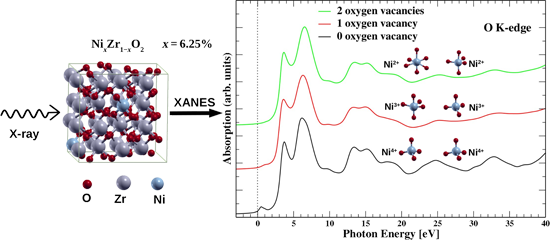
- Nanotechnologies, Institut National de Recherche en Sciences Exactes et Naturelles (IRSEN), Brazzaville, Congo 10.3762/bjnano.13.85 Abstract In this study, we present theoretical X-ray absorption near-edge structure (XANES) spectra at the K-edge of oxygen in zirconia containing Ni dopant atoms and O vacancies at
- and magnetic order in a typical diluted magnetic oxide. Such a finding may be crucial for spintronics-related applications. Keywords: defect; ligand field; nickel; oxidation state; oxides; spectroscopy; spintronics; vacancy; X-ray absorption; X-ray absorption near-edge structure (XANES); zirconia
- which is being currently employed in ultra-scaled electronics for its high dielectric constant [24][25] have received significant attention because of its practical applications. Thus, recently, exploiting first principles simulations and X-ray absorption near edge spectroscopy (XANES) in high magnetic


Solar-light-driven LaFexNi1−xO3 perovskite oxides for photocatalytic Fenton-like reaction to degrade organic pollutants
Beilstein J. Nanotechnol. 2022, 13, 882–895, doi:10.3762/bjnano.13.79
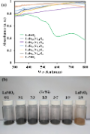
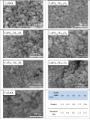
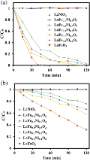
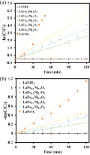
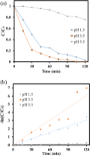
- antibiotics of PPCPs accordinly. Results and Discussion Material characterization of various photocatalysts X-ray powder diffraction (XRD) was used to reveal the structure of the materials. In the synthesis step of LaNiO3, the calcination temperature was set to 500, 600, 700, and 800 °C, respectively, and the
- oxides were prepared ultimately. Photocatalysts characterization The LaFexNi1−xO3 photocatalysts were characterized by D8 advance (Bruker, Germany) to reveal the X-ray powder diffraction (XRD) patterns. The Cu Kα target was facilitated under 40 kV to generate the X-ray with λ = 0.15406 nm. The 2θ



Ultrafast signatures of magnetic inhomogeneity in Pd1−xFex (x ≤ 0.08) epitaxial thin films
Beilstein J. Nanotechnol. 2022, 13, 836–844, doi:10.3762/bjnano.13.74
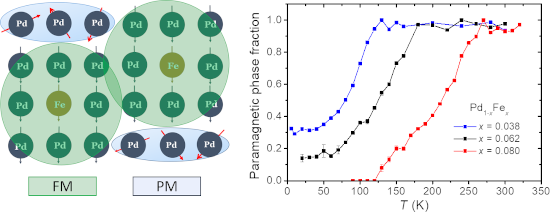
- ferromagnetic resonance techniques (the latter two, because of the large scale, yield volume-averaged signals). Resonant magnetic small-angle X-ray scattering applied to Pd1−xFex alloy films with x = 0.03–0.07 revealed static magnetic fluctuations on the lateral scale of about 100 nm attributed to the magnetic
- beam epitaxy (MBE). The films were 20 nm thick, continuous, and smooth monocrystalline layers. The MBE equipment provided uniformity of the film thickness within 3% on the 1″ lateral size. The film composition x was measured in situ using X-ray photoelectron spectroscopy (all from SPECS, Berlin) with a





