


Search results
Search for "XPS" in Full Text gives 399 result(s) in Beilstein Journal of Nanotechnology. Showing first 200.
A Ni(OH)2 nanopetals network for high-performance supercapacitors synthesized by immersing Ni nanofoam in water
Beilstein J. Nanotechnol. 2019, 10, 281–293, doi:10.3762/bjnano.10.27
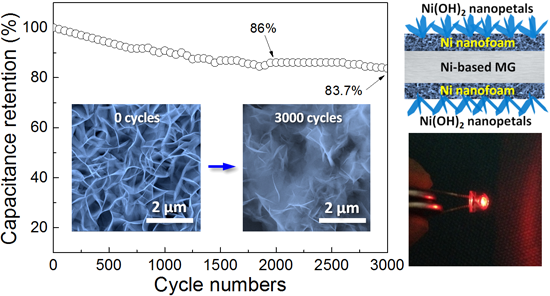
- , Bruker D8) with Cu Kα radiation. Chemical composition and valence state of the products were studied using X-ray photoelectron spectroscopy (XPS, Thermo Fisher Scientific). The surface morphology of the samples was characterized using a scanning electron microscope (SEM, Nova nanoSEM 450) equipped with
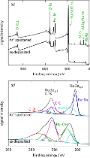
- changes in chemical state of the elements, XPS measurements are performed for the as-spun, as-dealloyed, and as-synthesized Ni(OH)2 specimens. Figure 4a shows that the XPS spectra over a wide energy region exhibit the main peaks of Zr 3d, Ti 2p, O 1s, and C 1s for the as-spun Ni-Zr-Ti alloy, while large
- -magnification TEM images; (d) HRTEM image; (e) SAED pattern of Ni(OH)2 nanopetals. XPS spectra of the elements of the as-spun ribbon, as-dealloyed ribbon and as-synthesized electrode: (a) survey spectrum, (b) Ti 2p, (c) Zr 3d, (d) Ni 2p and (e) O 1s. (a) CV curves of the Ni(OH)2/Ni-NF/MG-2, Ni(OH)2/Ni-NF/MG-5




Interaction of Te and Se interlayers with Ag or Au nanofilms in sandwich structures
Beilstein J. Nanotechnol. 2019, 10, 238–246, doi:10.3762/bjnano.10.22
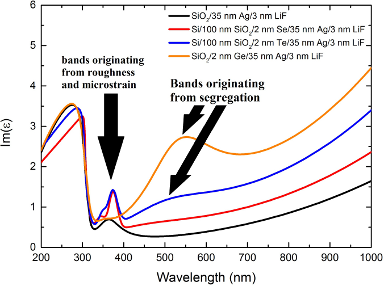
- the crystallinity, atomic concentration profile and optical parameters of ≈35 nm-thick silver and gold layers deposited on glass substrates with 2 nm-thick tellurium or selenium interlayers. Our study, based on X-ray reflectometry (XRR), X-ray diffraction (XRD), X-ray photoelectron spectroscopy (XPS
- films have a sheet resistance approximately twice higher than similar structures deposited on top of Ti or Ni sublayers. Ellipsometric and XPS measurements by Wróbel et al. [25] have shown that this increase in ohmic losses is most likely a result of Ge atoms segregating towards the surface of the
- of developed voids, which is linked with the density profile, may strongly influence the segregation characteristics. Here, we report on XRD and XRR measurements to investigate the crystallinity of Ag and Au nanolayers deposited on SiO2 substrates with 2 nm-thick Te or Se interlayers. XPS allowed us


Raman study of flash-lamp annealed aqueous Cu2ZnSnS4 nanocrystals
Beilstein J. Nanotechnol. 2019, 10, 222–227, doi:10.3762/bjnano.10.20
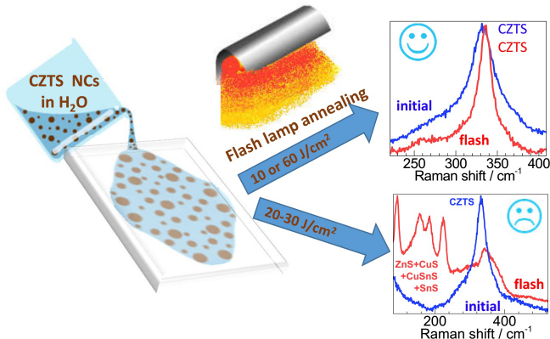
- larger content of the ligand (according to XPS, 27% O and 40% C in ink0 vs 22% O and 37% C in ink1) or/and probably some structural and compositional changes of the organic matrix initiated through the heat treatment of ink1. The elemental composition of the CZTS NC phase was proved by a survey XPS
- were prepared in aqueous solutions by the reaction of a mixture of mercaptoacetate (MA) complexes of Cu(II), Sn(II), and Zn(II) with sodium sulfide and a subsequent optional heat treatment at about 95 °C. An XPS study reported in [21] showed all the elements of CZTS to be present in the expected


Nanoporous water oxidation electrodes with a low loading of laser-deposited Ru/C exhibit enhanced corrosion stability
Beilstein J. Nanotechnol. 2019, 10, 157–167, doi:10.3762/bjnano.10.15
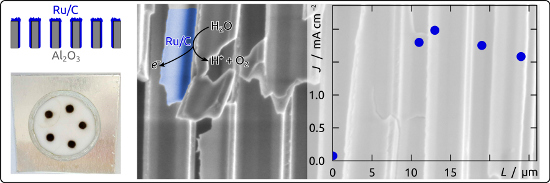
- ]. Importantly, the absence of carbonyl stretching vibrations around 1950–2190 cm−1 rules out any remnants of molecular precursor Ru3(CO)12 (Figure 7b [52][62]). X-ray photoelectron spectroscopy (XPS, Figure 8) is used to differentiate between the oxidation states of ruthenium at its surface and in its inner
- (“bulk”). The overview XPS spectrum of an as-prepared nanostructured sample features only Ru, O and C (Figure 8a) from the Ru/C layer, whereas the Al2O3 substrate is completely covered and reveals no Al signal. Deconvolution of the Ru 3d region, which is superimposed with C 1s (Figure 8b), reveals two
- ruthenium catalyst as prepared is present as oxidized Ru(IV). This observation is consistent with the XPS analyses presented above. The consecutive cycles yield a rather constant hysteresis area, which indicates a low loss of material in electrochemical conditions. This relative stability of our nanoporous




Wet chemistry route for the decoration of carbon nanotubes with iron oxide nanoparticles for gas sensing
Beilstein J. Nanotechnol. 2019, 10, 105–118, doi:10.3762/bjnano.10.10
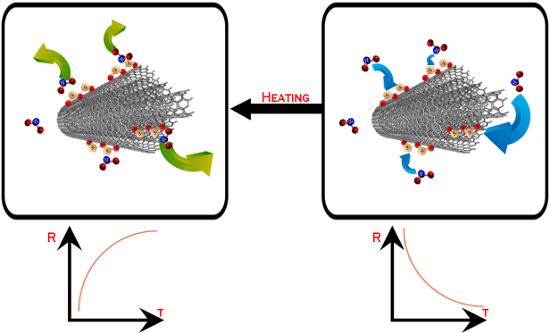
- chemical composition of the iron oxide decorated carbon nanotube samples were investigated employing transmission electron microscopy (TEM), Raman spectroscopy and X-ray photoelectron spectroscopy (XPS). The differently decorated CNT samples were used to make gas sensors for detecting nitrogen dioxide. A
- absorbed acetic acid [28]. Finally, the powder was calcined at 450 °C during either 15 or 30 minutes. In this way the effect of the calcination time on the decoration process was also evaluated. The chemical composition of the decorated CNTs were measured by X-ray photoelectron spectroscopy (XPS) using a
- order to ensure the homogeneity. The chemical composition was then evaluated by using CASA XPS software. TEM images were collected using a JEOL 1011 transmission electron microscope operating at 100 kV. The samples were dispersed in ethanol and a drop of resultant suspension was poured on carbon-coated




Amorphous NixCoyP-supported TiO2 nanotube arrays as an efficient hydrogen evolution reaction electrocatalyst in acidic solution
Beilstein J. Nanotechnol. 2019, 10, 62–70, doi:10.3762/bjnano.10.6
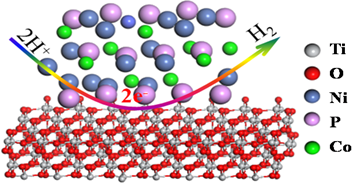
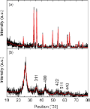
- crystallographic texture, scanning electron microscopy (SEM, JSM-5900 LV, JEOV) for micro-morphology, transmission electron microscopy (TEM, Tecnai G2 F20 S-TWIN) for microstructure, UV–vis diffuse reflectance spectroscopy (UV2100) for photoabsorption properties, X-ray photoelectron spectroscopy (XPS, Escalab
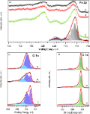
- phosphorus species by contact with air [21][33][34][35]. The binding energy of 129.6 eV is slightly lower than that of elemental P (130.0 eV), which suggests the P is partially negatively charged (Pδ−) [36]. Given the probing depth of 3 nm for XPS measurements, the NiCoP amorphous phase in NixCoyP/TNAs
- presents a molar mole ratio of 10.82: 2.21:2.82, giving x = 3.84 and y = 0.78. According to the XPS results, polyvalent interactions of Ni, Co and P heteroatoms are suggested. In this complex material, both Ni and Co carry a partially positive charge (δ+) whereas P carries a partially negative charge (δ




Zn/F-doped tin oxide nanoparticles synthesized by laser pyrolysis: structural and optical properties
Beilstein J. Nanotechnol. 2019, 10, 9–21, doi:10.3762/bjnano.10.2
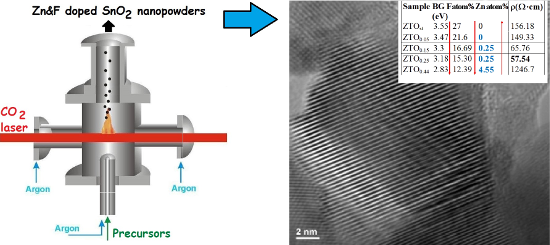
- structure. The main diffraction patterns of stannous fluoride (SnF2) were also identified and a reduction in intensity with increasing Zn percentage was evidenced. For the elemental composition estimation, energy dispersion X-ray spectroscopy (EDX) and X-ray photoelectron spectroscopy (XPS) measurements
- electrical properties of the ZTOst standard sample. Yet, the simultaneous substitutional fluorine doping of SnO2 must also be considered, as will be discussed in the paragraph when XRD and XPS analyses are presented. Considering the most intense peak (101) of the dominant phase SnO2, the crystallite size (D
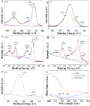
- /DZnEt2, while keeping the sensitizer flow constant. In order to estimate the elemental composition for the Zn/F-doped SnO2 powders, EDX and XPS measurements were conducted; the results are presented in Table 1. In the XPS measurements, the peaks centered around 487 eV, 494 eV, 531.43 eV, 684 eV, 1022 eV



A novel polyhedral oligomeric silsesquioxane-modified layered double hydroxide: preparation, characterization and properties
Beilstein J. Nanotechnol. 2018, 9, 3053–3068, doi:10.3762/bjnano.9.284
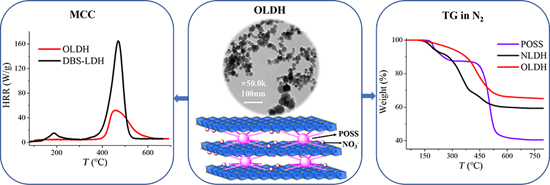
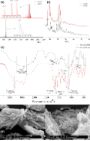
- reference sample. FTIR and XPS FTIR is very useful in confirming the structures of LDH materials at the molecular level, as it provides important information about the interlayer anions. Figure 4 shows the FTIR spectra of NLDH and OLDH. The broad band in the range of 3700–3200 cm−1 is assigned to the O–H
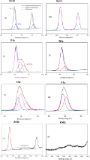
- consistent with the following XPS, XRD and elemental analysis results. The presence of the elements Mg, Al, Si, O, C and N in OLDH is further confirmed by XPS. The survey spectra illustrated in Figure 5 show the peaks of electrons emitted from the Mg 2p, Mg 2s, Al 2p, and Al 2s core levels. Compared to NLDH
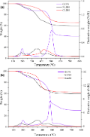
- ), leading to the enhancement of thermal stability. Furthermore, the morphology of char residues after thermal degradation in both N2 and air was investigated through SEM with the images shown in Figure 12, and the change of surface components before and after degradation were examined through XPS with plots







Ternary nanocomposites of reduced graphene oxide, polyaniline and hexaniobate: hierarchical architecture and high polaron formation
Beilstein J. Nanotechnol. 2018, 9, 2936–2946, doi:10.3762/bjnano.9.272
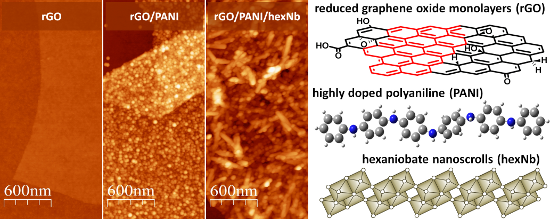
- rGO flakes coated with PANI and decorated by hexNb nanoscrolls. To analyse the reduction of graphene oxide under the present conditions, GO and rGO samples were characterised by XPS spectroscopy. High-resolution XPS spectra can also provide information on the reduction degree of GO, since C 1s core
- level photoelectrons present slightly different binding energies depending on the environment of the carbon atoms. Figure 4 shows the high-resolution XPS spectra at the C 1s core level for GO and rGO samples prepared by reactions at 25 °C for 7 days and at 80 °C for 3 h (rGO-25 and rGO-80, respectively
- ). XPS spectra of GO and rGO-25 consist mainly of two asymmetric and highly overlapping peaks (maxima at ca. 285 and ca. 287 eV). The comparison of these spectra clearly shows the increase of relative intensity of the low-binding energy peak upon reduction. This is attributed to the partial recovery of


Nanostructure-induced performance degradation of WO3·nH2O for energy conversion and storage devices
Beilstein J. Nanotechnol. 2018, 9, 2845–2854, doi:10.3762/bjnano.9.265
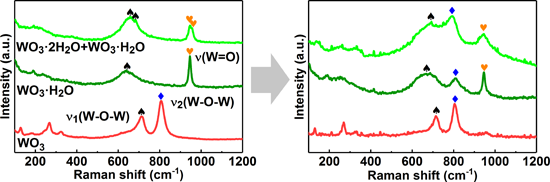
- bonding was collected by X-ray photoelectron spectrometry (XPS, K-Alpha, Thermo Scientific) and Raman spectroscopy (EZRaman-N-785, TSI. Inc.), respectively. Electrochemical characterization of the samples was performed using an Autolab PGSTAT204 (Metrohm Autolab B.V.) with a three-electrode configuration
- . Figure 5b,c depicts the high-resolution XPS core-level W4f and O1s spectra, respectively. The W 4f orbitals in Figure 5b are almost identical in the three samples and can be resolved into W 4f5/2 and W 4f7/2. The two main peaks correspond to the W4f7/2 and W4f5/2 of the tungsten atoms in a +6 oxidation
- synthesis temperature demonstrated the increasing stability of the samples as the interlayer water and coordinated water molecules disappeared successively with only a few unavoidable surface-absorbed water molecules left [49][50]. The above XPS results confirm the SEM analysis. To get further inside of the


Graphene-enhanced metal oxide gas sensors at room temperature: a review
Beilstein J. Nanotechnol. 2018, 9, 2832–2844, doi:10.3762/bjnano.9.264
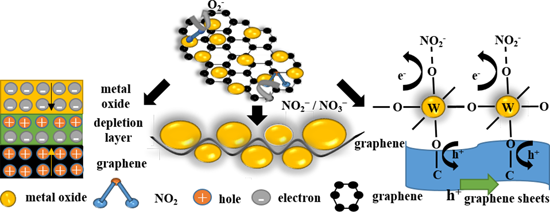
- metal oxides, is proposed. In detail, the enhanced sensing performance is accounted for by chemical bonds between graphene and metal oxides. Many XPS studies have claimed that there indeed exist chemical bonds between metal oxides and graphene. WO3, a transition-metal oxide semiconductor is widely used
- confirmed that there existed C–O–W chemical bonds between WO3 and graphene by Raman and XPS measurements. The proposed sensing mechanism is shown in Figure 5. When exposed to oxygen or NO2 molecules, the gas molecules adsorbed on WO3 nanospheres cause the energy band to bend upward via obtaining electrons
- of graphene may also enhance the response because graphene offers conductive pathways that enhanced the efficiency of charge-carrier transfer in the composites. Zhang et al. [60] fabricated a Co3O4–graphene gas sensor through a traditional hydrothermal method. The XPS results certified that Co–O–C



Controlling surface morphology and sensitivity of granular and porous silver films for surface-enhanced Raman scattering, SERS
Beilstein J. Nanotechnol. 2018, 9, 2813–2831, doi:10.3762/bjnano.9.263
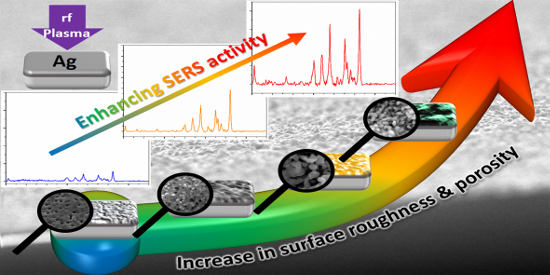
- microscopy (AFM), X-ray diffraction (XRD), transmission electron microscopy (TEM), X-ray photoelectron (XPS and Auger) and ultraviolet–visible spectroscopy (UV–vis) as well as contact angle measurements. It was found that different morphologies of the roughened Ag films could be obtained under controlled
- Rigaku Miniflex 600@40 kV 15 mA diffractometer using Cu Kα1 radiation (λ = 1.541 Å). XPS measurements were performed using a K-Alpha XPS spectrometer (ThermoFischer Scientific, East Grinstead, UK). Data acquisition and processing was done using the Thermo Avantage software. All samples were analyzed
- characterization of hydrogen and nitrogen plasma treated silver films Neither XPS analysis nor Auger spectroscopy could detect the presence of nitrogen in the nitrogen plasma treated samples (Figure 4a and Figures S9–S11 and Table S1 and Table S2, Supporting Information File 1). Even depth profiling using Auger






Accurate control of the covalent functionalization of single-walled carbon nanotubes for the electro-enzymatically controlled oxidation of biomolecules
Beilstein J. Nanotechnol. 2018, 9, 2750–2762, doi:10.3762/bjnano.9.257
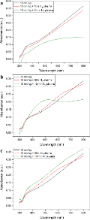
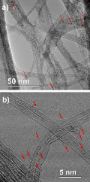
- defects introduced by tuning the irradiation time. A few milligrams of the corresponding oxidized SWCNTs were analyzed in each case before proceeding to step 2. At this stage, the samples were protected under argon gas to avoid any moisture contamination and directly analyzed by HRTEM, XPS and TGA-MS
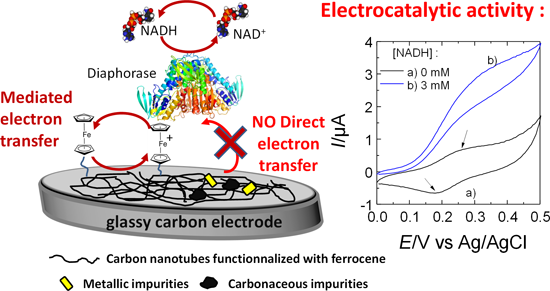
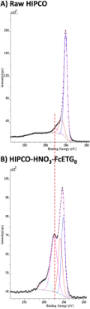
- HNO3 65% and grafted with the FcETG8 ferrocene derivative. After step 3 of the functionalization process, we used a set of complementary techniques to determine the success of the covalent functionalization of the CNT samples. XPS analyses were realized on CNT powders to see if the ferrocene groups
- components contributing to the C 1s signal, has also doubled. Oxidation step 1 has therefore increased the number of oxidized defects on CNT sidewalls and extremities, at least at the surface of the bundles, which was probed by XPS. It should be pointed out that our raw HIPCO sample has already been






Optimization of Mo/Cr bilayer back contacts for thin-film solar cells
Beilstein J. Nanotechnol. 2018, 9, 2700–2707, doi:10.3762/bjnano.9.252
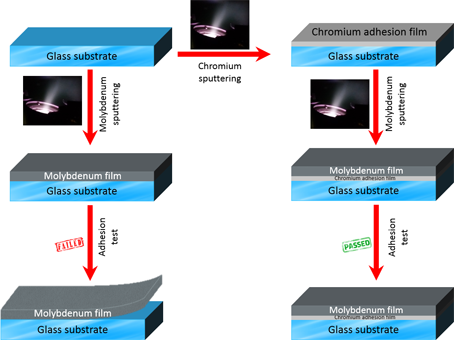
- . Patterns were collected for 1 h at a step size of 0.01° from 10 to 85° 2θ at 1.3° per minute over the 2θ axis. X-ray photoelectron spectroscopy (XPS) was performed using a Kratos Axis Supra with Al Kα X-ray radiation (hν 1486.7 eV). High-resolution scans of the O 1s, C 1s, Na 1s, Cr 2p, Na 1s and Mo 3d
- regions were acquired with 10 eV pass energy and about 0.4 eV spectral resolution to discriminate the substructure of the spectral lines. Ar+ ion cluster etching was employed for XPS depth profiling and the calibration was carried out using a typical Mo on glass sample with sputtering rate of 15.5 nm/s
- mechanism of Cr and Na to the top layer, we first heated the Mo/Cr films on SLG to 550 °C for 30 min in argon atmosphere. This is the temperature that is normally used for sulfurization and selenization of CIGS and CZTS layers. Then XPS depth profiling was performed on the annealed Mo/Cr films to search for


Impact of the anodization time on the photocatalytic activity of TiO2 nanotubes
Beilstein J. Nanotechnol. 2018, 9, 2628–2643, doi:10.3762/bjnano.9.244
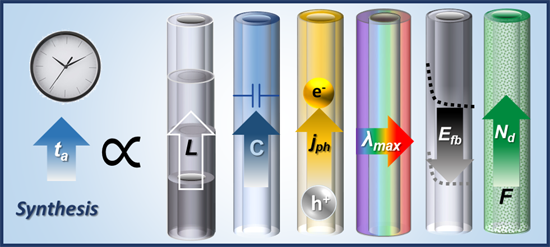
- is supported by the fact that atomic radii for O (48 pm) and F (42 pm) are similar enough to allow for the replacement of the former, effectively doping the material by creating oxygen vacancies and different energy states [29]. XPS To characterize the surface chemistry, high-resolution XPS
- growth orientation with an expanded representation of 3 × 3 × 4 cells as shown in Figure 3. Taking into account the XPS analyses, a higher concentration of F− ions could be responsible for such changes in the lattice parameters as a result of the doping effect, which might be reflected in the electrical
- nanotube length and the chemical composition is established in agreement with the results obtained by XPS and XRD. While the previous results were obtained from potentiodynamic experiments (LSV), a comparative analysis can be done by establishing a constant polarization to understand the sweep-rate


Au–Si plasmonic platforms: synthesis, structure and FDTD simulations
Beilstein J. Nanotechnol. 2018, 9, 2599–2608, doi:10.3762/bjnano.9.241
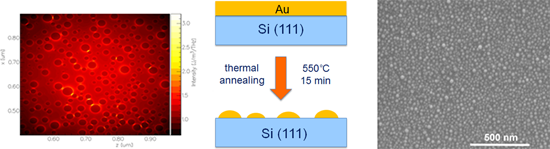
- of platforms was investigated using XRD and XPS methods. Structural investigations confirmed, that nanostructures consist of metallic Au, growing along the [111] direction. The most homogeneous seems to be the platform obtained by solidification of a 2.8 nm Au film, annealed at 550 °C for 15 min
- the obtained nanostructures and valence states of Au was measured using X-ray photoelectron spectroscopy (XPS) with an Omicron NanoTechnology spectrometer with 128-channel collector. XPS measurements were performed at room temperature under ultra-high vacuum conditions, below 1.1 × 10⁻⁸ mbar. The
- ). XPS spectra were analyzed with the Casa-XPS software using a Shirley background subtraction and Gaussian–Lorentzian curves for fitting. UV–vis spectra were recorded by a double-beam Thermo Fisher Scientific Evolution 220 spectrophotometer in reflectance mode. The spectra were recorded in a range of



SERS active Ag–SiO2 nanoparticles obtained by laser ablation of silver in colloidal silica
Beilstein J. Nanotechnol. 2018, 9, 2396–2404, doi:10.3762/bjnano.9.224
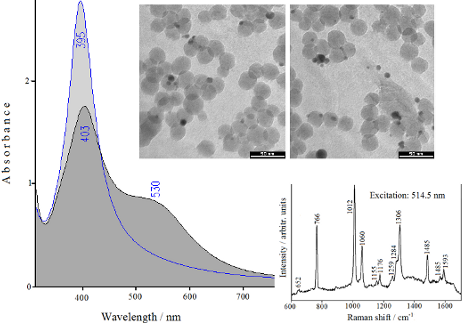
- known that the presence of chloride ions in silver colloids promotes the formation of positively charged active sites on the surface of the silver nanoparticles [55][56], as experimental proved by XPS measurements, which show a significant amount of oxidized silver on the particle surface [57]. Finally


Nanotribology
Beilstein J. Nanotechnol. 2018, 9, 2330–2331, doi:10.3762/bjnano.9.217

- techniques for materials characterization are those typical of surface science (e.g., X-ray diffraction, SEM, TEM, XPS and Raman spectroscopy), more specific to nanotribology are nanoindenters, nanotribometers, quartz force microbalance and especially atomic force microscopy (AFM), which, without a doubt
Hierarchical heterostructures of Bi2MoO6 microflowers decorated with Ag2CO3 nanoparticles for efficient visible-light-driven photocatalytic removal of toxic pollutants
Beilstein J. Nanotechnol. 2018, 9, 2297–2305, doi:10.3762/bjnano.9.214
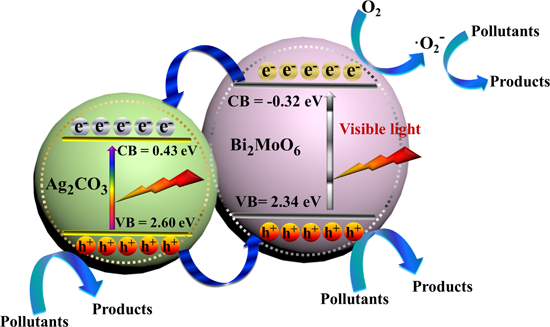
- structure was found after the photocatalytic reactions, as shown in the XRD pattern (Figure 8b). However, the XPS pattern of the used ACO/BMO-30 suggests that some Ag+ is reduced to Ag(0) after the reaction (Figure S5, Supporting Information File 1). It has been recognized that the formation of Ag/Ag2CO3




Phosphorus monolayer doping (MLD) of silicon on insulator (SOI) substrates
Beilstein J. Nanotechnol. 2018, 9, 2106–2113, doi:10.3762/bjnano.9.199
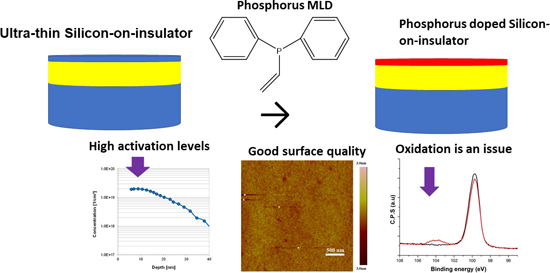
- the liquid phase enhances this re-oxidation. Therefore, precautions are taken to ensure a minimal re-oxidation, i.e., solvents are thoroughly degassed, and processing is carried out in a N2 environment using a Schlenk line. XPS analysis of samples immediately after functionalization indicated that
- under neutral conditions. Controlled-voltage etching was carried out with step widths of 2–5 nm. Secondary ion mass spectrometry data was acquired on a Phi Adept 1010 using a 0.5–1.0 keV Cs+ bombardment with negative ion detection. X-ray photoelectron spectroscopy XPS spectra were acquired on an Oxford
- Applied Research Escabase XPS system equipped with a CLASS VM 100 mm mean radius hemispherical electron energy analyser with a triple-channel detector arrangement in an analysis chamber with a base pressure of 5.0 × 10⁻¹⁰ mbar. Survey scans were acquired between 0 and 1400 eV with a step size of 0.7 eV, a




Localized photodeposition of catalysts using nanophotonic resonances in silicon photocathodes
Beilstein J. Nanotechnol. 2018, 9, 2097–2105, doi:10.3762/bjnano.9.198
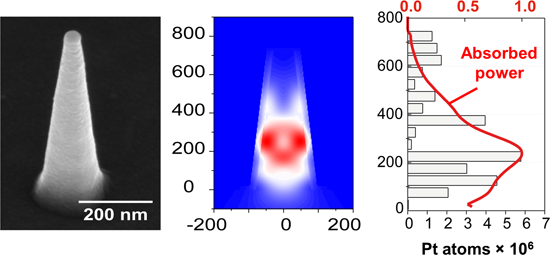
- -electron spectroscopy (XPS) on a sample with a higher amount of photo-electrodeposited platinum (ca. 2 mC). The observed platinum 4f7/2 and 4f5/2 binding energy peaks corresponded very well to those of a metallic Pt reference material (Figure 3c). Overall, these results demonstrate that light can be used
- electrolyte. X-ray photoemission spectroscopy (XPS) X-ray photoemission spectroscopy (XPS) was performed in a custom-built ultrahigh-vacuum chamber, operating at a base pressure below 5 × 10⁻⁹ mbar. A XM1200 monochromatic X-ray source (Al Kα line, Scienta Omicron) was used for X-ray excitation of the sample
- technical assistance with the XPS measurements. This work is part of the research program of the Foundation for Fundamental Research on Matter (FOM), which is financially supported by the Netherlands Organisation for Scientific Research (NWO).


Metal-free catalysis based on nitrogen-doped carbon nanomaterials: a photoelectron spectroscopy point of view
Beilstein J. Nanotechnol. 2018, 9, 2015–2031, doi:10.3762/bjnano.9.191
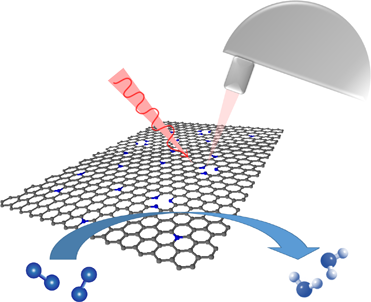
- exhibits a vacancy as neighbor. The different nitrogen configurations are easily distinguished by XPS according to the binding energy of the N 1s core level spectra. The pyridinic configuration is usually found at 398–399 eV, the pyrrolic configuration and other defective components at 399.5–400.5 eV, and
- determination is not possible by using only XPS and other techniques need to be used, e.g., infrared spectroscopy and electron microscopy. Content and configuration of nitrogen in graphene and carbon nanotubes can be tuned by thermal annealing or by the interaction with different substrates. Temperature
- role of the active sites was not addressed in detail, the electrode performance was remarkable. The N/C ratio was approximately 4 % but the energy resolution of the reported XPS data was too poor to correctly distinguish the different N species. The N 1s peak was deconvoluted into two components




Defect formation in multiwalled carbon nanotubes under low-energy He and Ne ion irradiation
Beilstein J. Nanotechnol. 2018, 9, 1951–1963, doi:10.3762/bjnano.9.186
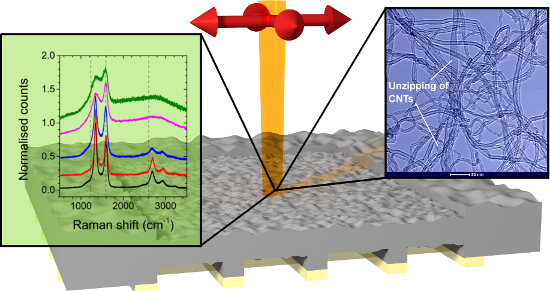
- directly related to the number of defects in CNTs [30], or X-ray photoelectron spectroscopy (XPS) which provides some information on the chemical environment of the carbon atoms [31]. In this context, it is to be noted that helium ion microscopy (HIM) has received increasing attention recently as a high



Synthesis of a MnO2/Fe3O4/diatomite nanocomposite as an efficient heterogeneous Fenton-like catalyst for methylene blue degradation
Beilstein J. Nanotechnol. 2018, 9, 1940–1950, doi:10.3762/bjnano.9.185
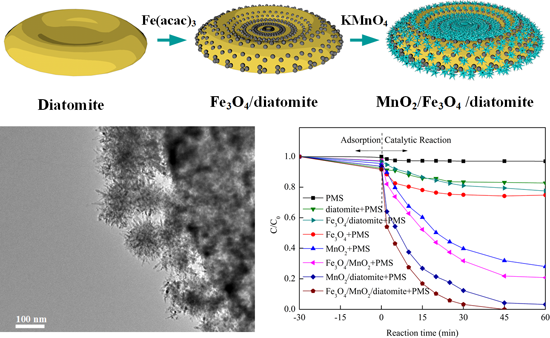
- Fourier transform infrared spectroscopy (FTIR) using a Nicolet Nexus 670 spectrometer. The morphology of samples was observed with a TESCAN MIRA3 LMU scanning electron microscope (SEM) and a JEOL JEM-1200EX transmission electron microscope (TEM). The X-ray photoelectron spectroscopy (XPS) measurements
- field (inset). The decrease of the maximum saturation magnetizations after the treatment with KMnO4 is largely ascribed to the outer MnO2 shell, the saturation magnetization of which is much lower than the Fe3O4 nanoparticles. XPS measurements were carried out to determine the surface chemical
- surface chemical composition results obtained from the XPS analysis ensure the formation of Fe3O4 and MnO2, which further confirms the observation from the previous structural and morphological characterization. Figure 7 shows the N2 adsorption–desorption isotherms and corresponding pore-size


Synthesis of rare-earth metal and rare-earth metal-fluoride nanoparticles in ionic liquids and propylene carbonate
Beilstein J. Nanotechnol. 2018, 9, 1881–1894, doi:10.3762/bjnano.9.180
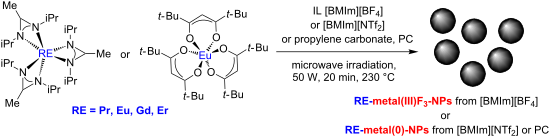
- IL [BMIm][BF4] for RE = Pr, Eu, Gd and Er. The crystalline phases and the absence of significant oxide impurities in RE-NPs and REF3-NPs were verified by powder X-ray diffraction (PXRD), selected area electron diffraction (SAED) and high-resolution X-ray photoelectron spectroscopy (XPS). The size
- not done, because matching of the F Kα1 binding energy against the Lα1 or Lβ1 binding energies for Eu, Gd and Er is not very accurate. The measured oxidation state 3+ of the rare-earth metals in the fluorides was corroborated by high-resolution X-ray photoelectron spectroscopy (HR-XPS) (Figure 4 and
- Figures S4c, S5c, S6d, Supporting Information File 1) through comparison to the reported binding energies of metal(III) fluorides/oxides, metal(0) and organic fluorine/oxygen (Table 2) [48][49]. The measured metal and fluorine XPS values are in good agreement with the values of metal(III) fluorides that





