


Search results
Search for "argon" in Full Text gives 378 result(s) in Beilstein Journal of Nanotechnology. Showing first 200.
Cyclodextrin inhibits zinc corrosion by destabilizing point defect formation in the oxide layer
Beilstein J. Nanotechnol. 2018, 9, 936–944, doi:10.3762/bjnano.9.86
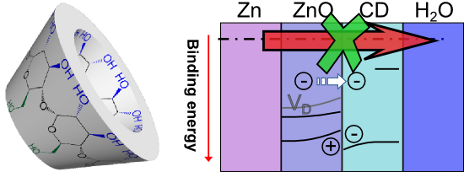
- absence of 5.3 mM β-CD, under open-circuit conditions. The electrolyte was externally purged with argon, and pumped through the cell with a rate of 2 mL·min−1 using a peristaltic pump (Ismatec IDEX Health and Science). During the measurement, the pump rate was reduced to 10.6 μL·min−1. In this work, the


Facile chemical routes to mesoporous silver substrates for SERS analysis
Beilstein J. Nanotechnol. 2018, 9, 880–889, doi:10.3762/bjnano.9.82
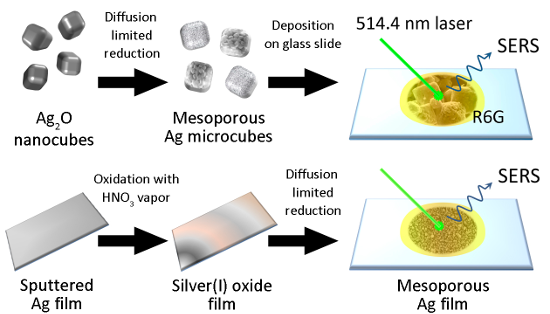
- -colored product was washed out and dried in air at ambient conditions. A mesoporous Ag film was prepared in two steps using a magnetron sputtered silver film (thickness of 150 nm) as a precursor. The primary Ag film was deposited onto a thoroughly washed glass slide in argon using a magnetron Quorum
- absorbance coordinates. All SERS spectra were collected using an InVia Reflex Raman confocal microscope (Renishaw Inc.) equipped with a 20 mW 514.4 nm argon laser and power neutral density filter (10%) with 60 s acquisition time. All spectra were collected using a confocal microscope Leica DMLM (resolution


Noble metal-modified titania with visible-light activity for the decomposition of microorganisms
Beilstein J. Nanotechnol. 2018, 9, 829–841, doi:10.3762/bjnano.9.77
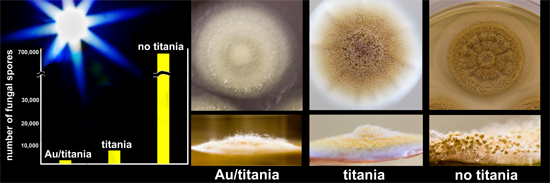
- brief, TiO2 samples were suspended in a 50 vol % aqueous solution of methanol, to which either AgNO3 aqueous solution or HAuCl4·H2O aqueous solution was added, suspensions were purged with argon for 15 min, and irradiated with a 400 W mercury lamp in a thermostatic water bath at 298 K under stirring


Heavy-metal detectors based on modified ferrite nanoparticles
Beilstein J. Nanotechnol. 2018, 9, 762–770, doi:10.3762/bjnano.9.69
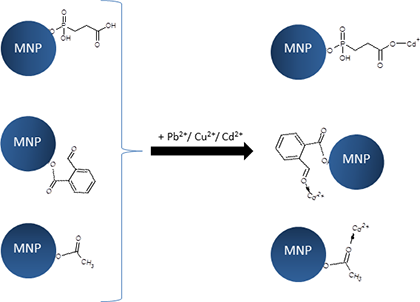
- synthesis of iron(II) and iron(III) chlorides was used [17][18][19]. As a reference, pure magnetite nanoparticles were also synthesized by the method described below. In the first step of the synthesis, into each of two three-necked flasks, 0.5% NH3 solution was placed and deoxygenated with argon for 20 min


Synthesis and characterization of two new TiO2-containing benzothiazole-based imine composites for organic device applications
Beilstein J. Nanotechnol. 2018, 9, 721–739, doi:10.3762/bjnano.9.67
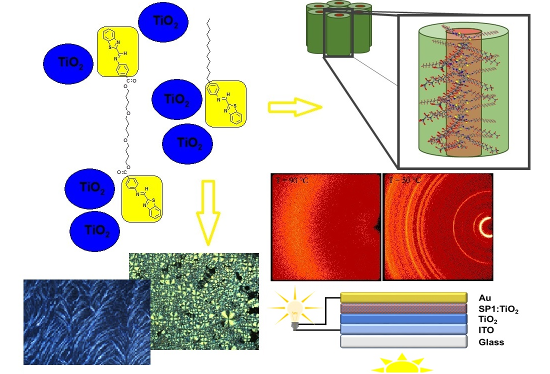
- . The reaction was conducted in argon atmosphere and the condenser was fitted with a Dean–Stark trap. After cooling, the mixture was precipitated with 100 mL of ethanol. The crude product was washed three times with methanol (1500 mL) and then twice with acetone (800 mL) to remove unreacted monomers
- the internal standard. Cyclic voltammetry experiments were conducted in a standard one-compartment cell, in CH2Cl2 (Carlo Erba, HPLC grade), under argon. 0.2 M Bu4NPF6 (Aldrich, 99%) was used as the supporting electrolyte. The compound concentration was 1.0 × 10⁻⁶ mol/dm3. Deaeration of the solution
- was achieved by argon bubbling through the solution for about 10 min before measurement. All electrochemical experiments were carried out under ambient conditions. (a) Adsorption and desorption N2 isotherms of TiO2 at liquid nitrogen temperature. (b) Pore size distribution of TiO2 using Gaussian






The effect of atmospheric doping on pressure-dependent Raman scattering in supported graphene
Beilstein J. Nanotechnol. 2018, 9, 704–710, doi:10.3762/bjnano.9.65
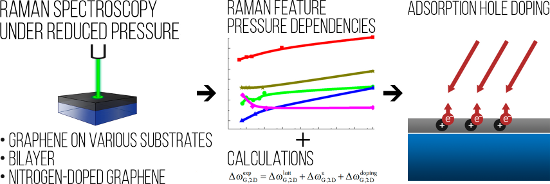
- , 99.999%, 10 × 30 cm2, 25 μm thick) was pre-annealed at 1060 °C with a hydrogen flow of 300 sccm and an argon flow of 2,000 sccm at a pressure of <10−4 Torr for 1–2 hours inside the chamber. After the growth of graphene, the Cu foil was cooled to room temperature. The cooling rate was described in detail


Electron interactions with the heteronuclear carbonyl precursor H2FeRu3(CO)13 and comparison with HFeCo3(CO)12: from fundamental gas phase and surface science studies to focused electron beam induced deposition
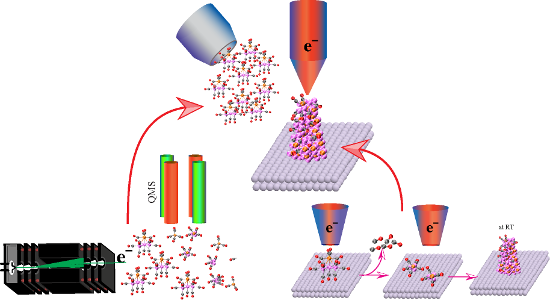
Beilstein J. Nanotechnol. 2018, 9, 555–579, doi:10.3762/bjnano.9.53


Single-step process to improve the mechanical properties of carbon nanotube yarn
Beilstein J. Nanotechnol. 2018, 9, 545–554, doi:10.3762/bjnano.9.52
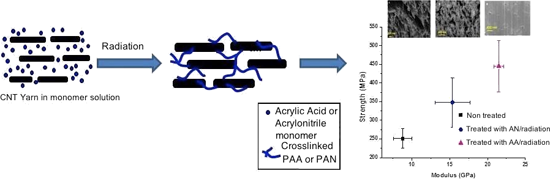
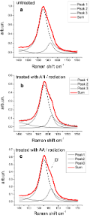
- -cooled CCD with excellent sensitivity between 200–1000 nm and using a 600 gr/mm grating. The samples were deposited onto a glass slide, and the spectra were collected using a 50× objective in a backscattering configuration. The excitation energy was 2.33 eV from the 532.1 nm line of an argon laser. For




Ultralight super-hydrophobic carbon aerogels based on cellulose nanofibers/poly(vinyl alcohol)/graphene oxide (CNFs/PVA/GO) for highly effective oil–water separation
Beilstein J. Nanotechnol. 2018, 9, 508–519, doi:10.3762/bjnano.9.49
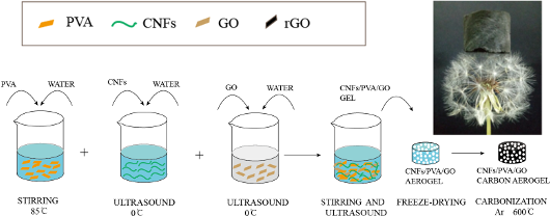
- furnace. Firstly, argon gas was introduced for 10 min to remove the air in the CNF/PVA/GO aerogel and tubular furnace. Next, the furnace was heated to 200 °C at a heating rate of 4 °C min−1 and sustained for 30 min. Then, it was heated to 600 °C at a rate of 3 °C min−1 and held at this temperature for 2 h


Electron interaction with copper(II) carboxylate compounds
Beilstein J. Nanotechnol. 2018, 9, 384–398, doi:10.3762/bjnano.9.38
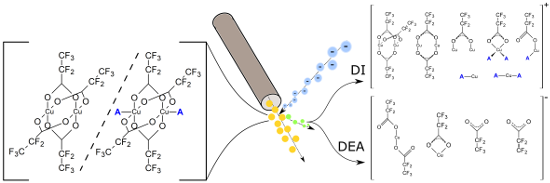
- cylindrical electrostatic analyzer. In the present measurements, electrons pass through an analyzer at the fixed predefined energy, while the potential of the analyzer is varied with respect to the target chamber. An energy calibration was carried out by measuring known argon and xenon ionization potentials


Synthesis and characterization of electrospun molybdenum dioxide–carbon nanofibers as sulfur matrix additives for rechargeable lithium–sulfur battery applications
Beilstein J. Nanotechnol. 2018, 9, 262–270, doi:10.3762/bjnano.9.28
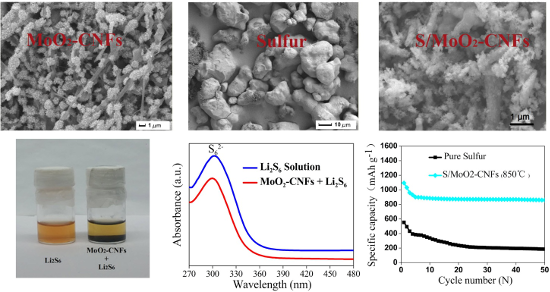
- different temperatures for 4 h under argon atmosphere. Scheme S1 in Supporting Information File 1 illustrates the procedure used for preparing MoO2–CNFs. Preparation of S/MoO2–CNF electrodes Sulfur/MoO2–CNF (S/MoO2–CNF) composites were prepared by mixing sulfur and MoO2–CNFs in a mortar at the weight ratio


Bombyx mori silk/titania/gold hybrid materials for photocatalytic water splitting: combining renewable raw materials with clean fuels
Beilstein J. Nanotechnol. 2018, 9, 187–204, doi:10.3762/bjnano.9.21
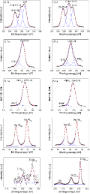
- 8 eV electrons and low-energy argon ions to prevent any localized charge build-up. The spectra were fitted with one or more Voigt profiles (binding energy uncertainty: ±0.2 eV). The analyzer transmission function, Scofield sensitivity factors [54], and effective attenuation lengths (EALs) for
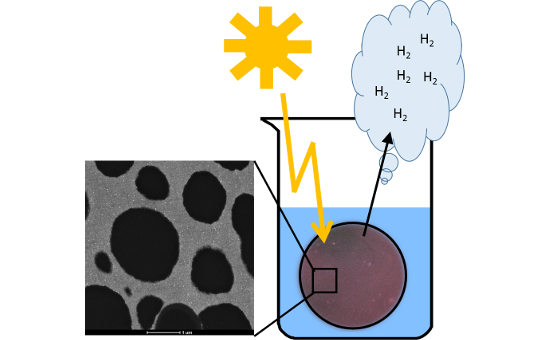
- at an intensity of about 1000 W/m2 as light source. For comparison a 300 W Xe-lamp without the AM1.5G filter was also used. In a typical experiment, the catalyst and a stirring bar were placed in the reactor. Then the setup was evacuated three times and filled with argon (Ar) to remove residual




Comparative study of post-growth annealing of Cu(hfac)2, Co2(CO)8 and Me2Au(acac) metal precursors deposited by FEBID
Beilstein J. Nanotechnol. 2018, 9, 91–101, doi:10.3762/bjnano.9.11
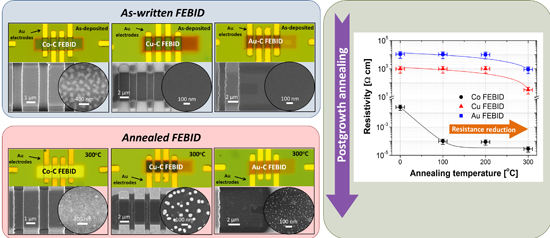
- (up to 95 atom % relative to carbon) were obtained by means of impact-enhanced desorption of residual organic ligands using a supersonic argon carrier gas jet to deliver the organometallic precursor [45]. Other works suggest the autocatalytic deposition of carbonyls, such as Fe(CO)5 [46][47] and Co2
- , respectively. The precursors have been separately filled into their reservoirs inside a glove box in argon atmosphere, before being introduced on the substrate surface by heating up to 50 °C the GIS. Each precursor was used separately on different samples and experiments in order to avoid cross contamination


Growth model and structure evolution of Ag layers deposited on Ge films
Beilstein J. Nanotechnol. 2018, 9, 66–76, doi:10.3762/bjnano.9.9
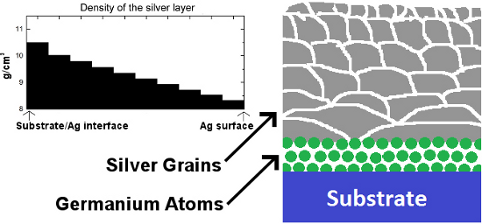
- Lesker e-beam evaporator, on fused silica substrates with RMS roughness equal to 0.3 nm. The purity of the evaporation materials was 4N for silver, 5N for germanium and 3N for LiF. Before evaporation, substrates were cleaned with an argon flow at 2 bar pressure. Ge was evaporated at an average deposition






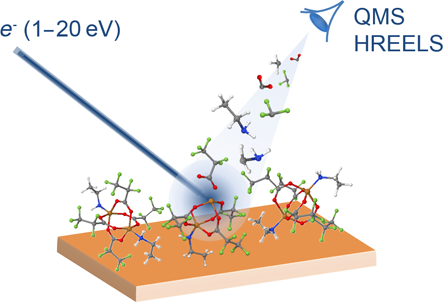
Response under low-energy electron irradiation of a thin film of a potential copper precursor for focused electron beam induced deposition (FEBID)
Beilstein J. Nanotechnol. 2018, 9, 57–65, doi:10.3762/bjnano.9.8
- acetonitrile, and ethyl isocyanate in 5 cm3 of acetonitrile (1·10−3 mol) was dropped. The obtained reaction mixture was stirred for 3 h, in air, at room temperature. Next, the solution was filtered, and the final product was isolated by solvent evaporation at reduced pressure, in argon. The obtained compounds



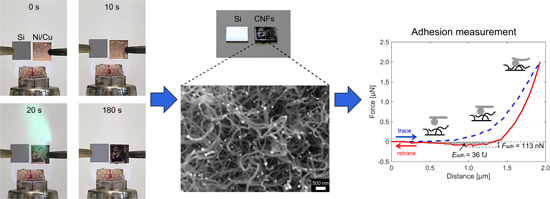
Dry adhesives from carbon nanofibers grown in an open ethanol flame
Beilstein J. Nanotechnol. 2017, 8, 2719–2728, doi:10.3762/bjnano.8.271
- eV energy and low-energy argon ions to prevent any localized charge build-up. The spectra were fitted with one or more Voigt profiles (binding energy uncertainty: ±0.1 eV). All spectra were referenced to the C 1s peak of hydrocarbons at 285.0 eV binding energy, controlled by means of the well-known


The role of ligands in coinage-metal nanoparticles for electronics
Beilstein J. Nanotechnol. 2017, 8, 2625–2639, doi:10.3762/bjnano.8.263
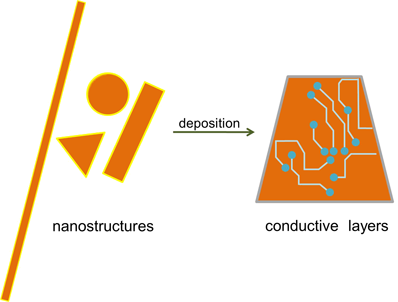
- using a nanoimprint technique and the insulating oleylamine ligand was removed by using a “soft” hydrogen/argon sintering process. The result was a transparent electrode that could be bent multiple times without losing more than one order of magnitude in conductivity [130]. Other reports describe the


Synthesis of [{AgO2CCH2OMe(PPh3)}n] and theoretical study of its use in focused electron beam induced deposition
Beilstein J. Nanotechnol. 2017, 8, 2615–2624, doi:10.3762/bjnano.8.262
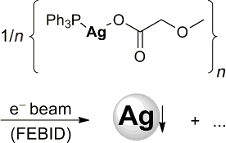
- of appearance for [AgO2CCH2OMe(PPh3)]. Methods of Investigation Experimental The synthetic methodologies were performed under an atmosphere of argon with the solvents degassed prior to use. Ethanol (99%) was distilled from sodium/diethyl phthalate, and acetonitrile (99%) by distillation from sodium
- ), thermogravimetry-coupled mass-spectrometry (TG–MS) and by differential scanning calorimetry (DSC). The corresponding TG/DTG and DSC traces of 1 (argon, temperature range 100–500 °C, heating rate 10 °C min−1) are depicted in Figure 2. The decomposition of 1 occurs in consecutive steps, which were quantified with a


Refractive index sensing and surface-enhanced Raman spectroscopy using silver–gold layered bimetallic plasmonic crystals
Beilstein J. Nanotechnol. 2017, 8, 2492–2503, doi:10.3762/bjnano.8.249
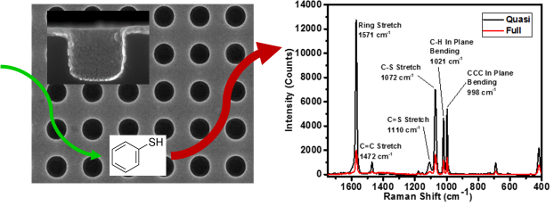
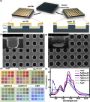
- frequencies. A ≈5 nm titanium dioxide adhesion layer was deposited using atomic layer deposition (Cambridge nanotech) on the embossed SOG nanostructure followed by deposition of a ≈50 nm metallic film (Au, Ag or both) via one of the various methods. Sputter deposition in a 5 mTorr argon atmosphere (AJA


Synthesis of metal-fluoride nanoparticles supported on thermally reduced graphite oxide
Beilstein J. Nanotechnol. 2017, 8, 2474–2483, doi:10.3762/bjnano.8.247
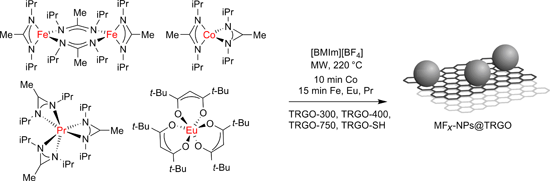
- carried out under nitrogen or argon using Schlenk techniques, since the amidinates are hygroscopic and air sensitive. 1,3-Diisopropylcarbodiimide (>99%), iron(II) chloride (>98%), cobalt(II) chloride (>99%), methyllithium, 1-chlorobutane (>99%) and 1-methylimidazole(>99%), were purchased from Sigma


Strategy to discover full-length amyloid-beta peptide ligands using high-efficiency microarray technology
Beilstein J. Nanotechnol. 2017, 8, 2446–2453, doi:10.3762/bjnano.8.243
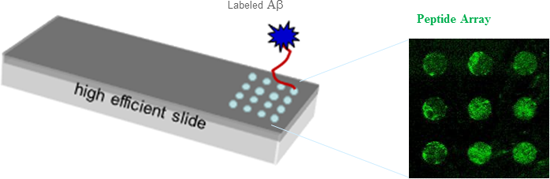
- 37 °C for 1 h. HFIP was removed by gentle streaming of argon, the peptide film was dissolved again in 1 mL HFIP, loaded on the plate and frozen at −30 °C for 5 h, then lyophilized overnight. The lyophilized samples on the plate were then dissolved in 10 mM phosphate buffer pH 7.2 to a concentration


Au nanostructure fabrication by pulsed laser deposition in open air: Influence of the deposition geometry
Beilstein J. Nanotechnol. 2017, 8, 2438–2445, doi:10.3762/bjnano.8.242
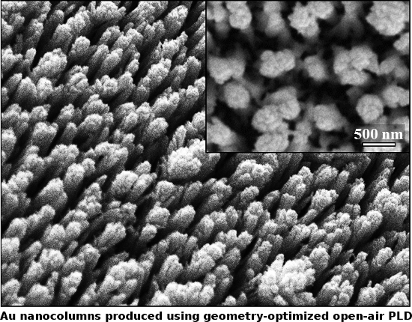
- argon. Therefore, the need for a specific environment limits the flexibility of the method, which hampers its efficient application in the industry. Recently, several research groups have succeeded in overcoming this limitation through the implementation of laser deposition in air at atmospheric


Comparing postdeposition reactions of electrons and radicals with Pt nanostructures created by focused electron beam induced deposition
Beilstein J. Nanotechnol. 2017, 8, 2410–2424, doi:10.3762/bjnano.8.240
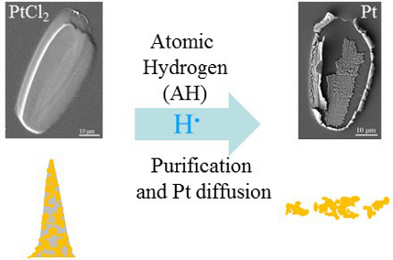
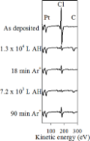
- underneath. The white outlines drawn in (f) and (g) are a guide to the eye to show the location of the deposit. AES for a deposit created from cis-Pt(CO)2Cl2 (top spectrum) and then subjected to alternating treatments with atomic hydrogen (PH2 ≈ 5 × 10⁻⁷ Torr), and argon ion sputtering (PAr ≈ 5 × 10⁻⁸ Torr




Robust procedure for creating and characterizing the atomic structure of scanning tunneling microscope tips
Beilstein J. Nanotechnol. 2017, 8, 2389–2395, doi:10.3762/bjnano.8.238
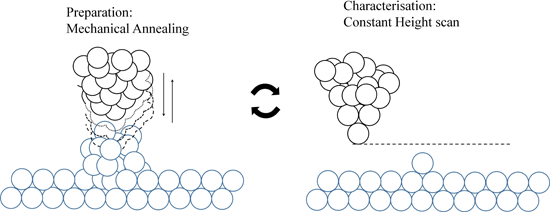
- Au surface was prepared in situ by several cycles of argon sputtering at 1 keV at 5 · 10−5 mbar for 15 min and annealing at 600 K for 1 min to ensure a clean crystalline surface. The STM tips used in the experiments were commercial Unisoku platinum–iridium (PtIr) tips having a tip radius of less than


Suppression of low-energy dissociative electron attachment in Fe(CO)5 upon clustering
Beilstein J. Nanotechnol. 2017, 8, 2200–2207, doi:10.3762/bjnano.8.219
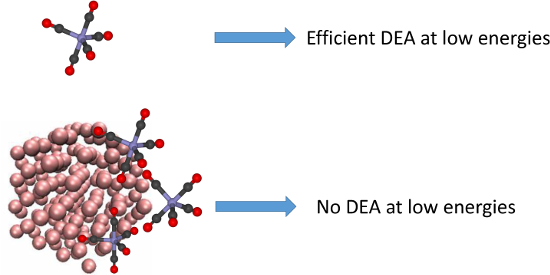
- . Once a fragment ion is created, it can be detected via mass spectrometry, regardless of whether it separated from the rest of the cluster (”desorption”) or stayed attached to the rest of the cluster (”no desorption”). Our recent experiments [14] on precursor molecules adsorbed on large argon
- aggregation stage. We probe anion production in two distinct types of clusters: (i) pure small Fe(CO)5 clusters and (ii) small Fe(CO)5 aggregates deposited on large argon nanoparticles (ArN, ≈ 200). The presence of the environment leads to a complete suppression of the DEA signal close to 0 eV. We ascribe
- energy. Two different modes of operation that produce distinctly different types of clusters were utilized. In the first one, a mixture of Fe(CO)5 with argon at a stagnation pressure of 1 bar was expanded though a conical nozzle with 55 μm diameter. The nature of the resulting clusters was probed by





