


Search results
Search for "confinement" in Full Text gives 259 result(s) in Beilstein Journal of Nanotechnology. Showing first 200.
Time-dependent growth of crystalline Au0-nanoparticles in cyanobacteria as self-reproducing bioreactors: 2. Anabaena cylindrica
Beilstein J. Nanotechnol. 2016, 7, 312–327, doi:10.3762/bjnano.7.30
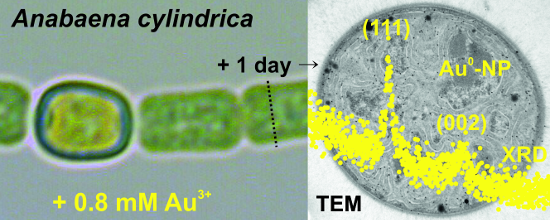
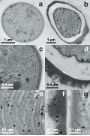
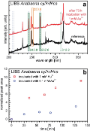
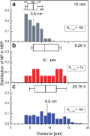
- the nanoparticle production [23][29]. This will not be necessarily true for metal nanoparticle formed at the cell-wall at the outside of the cell, but even this constitutes a more restricted location than in a solution. In inorganic systems effects of the confinement on the nanoparticle formation have



Linear and nonlinear optical properties of hybrid metallic–dielectric plasmonic nanoantennas
Beilstein J. Nanotechnol. 2016, 7, 111–120, doi:10.3762/bjnano.7.13
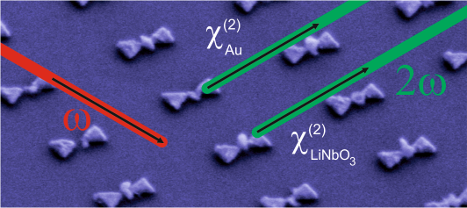
- ]. One can also transport energy on deep subwavelength length scales [5], create the plasmonic analogue of electromagnetically induced transparency (EIT) [6][7][8][9], and construct systems with tailorable near-field enhancement and confinement [10][11][12][13]. What is more, the resonant behavior of


Dependence of lattice strain relaxation, absorbance, and sheet resistance on thickness in textured ZnO@B transparent conductive oxide for thin-film solar cell applications
Beilstein J. Nanotechnol. 2016, 7, 75–80, doi:10.3762/bjnano.7.9
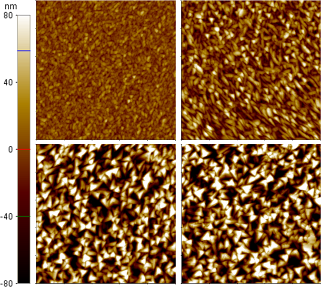
- microcrystallites has a strong green emission due to defect states in the core [11]. A blue-shifted absorption edge and photoluminescence caused by quantum confinement as well as a higher photovoltaic and sensor performance due to a larger surface area have been demonstrated in ZnO nanocrystals [14][15][16]. In



Current-induced runaway vibrations in dehydrogenated graphene nanoribbons
Beilstein J. Nanotechnol. 2016, 7, 68–74, doi:10.3762/bjnano.7.8
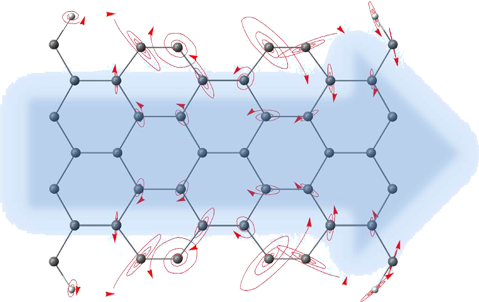
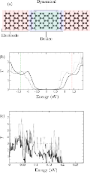
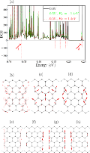
- study since its discovery in 2004 [1]. Due to the strong σ-bonding between carbon atoms, graphene has a very high thermal conductivity, and can potentially sustain much higher current intensities than other materials. Graphene nanoribbons (GNR) exhibit a bandgap opening due to quantum confinement in the
- one may imagine doping or gating to shift the Fermi level, EF, as well as changes in geometry such as varying the distance between dimers. In this study, the nanoribbon has a width of 7 dimers corresponding to a C–C edge distance of 7.5 Å. The lateral confinement introduces a direct semi-conducting
Counterion effects on nano-confined metal–drug–DNA complexes
Beilstein J. Nanotechnol. 2016, 7, 62–67, doi:10.3762/bjnano.7.7
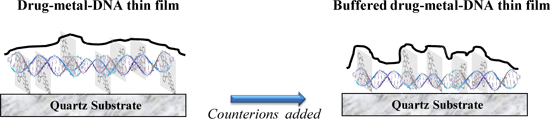
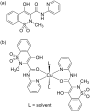
- Accelerator Research Organization, Tsukuba 305-0801, Japan 10.3762/bjnano.7.7 Abstract We have explored morphology of DNA molecules bound with Cu complexes of piroxicam (a non-steroidal anti-inflammatory drug) molecules under one-dimensional confinement of thin films and have studied the effect of
- counterions present in a buffer. X-ray reflectivity at and away from the Cu K absorption edge and atomic force microscopy studies reveal that confinement segregates the drug molecules preferentially in a top layer of the DNA film, and counterions enhance this segregation. Keywords: confinement; metal–drug
- . Thus, there are three aspects of the situation, which demand elucidation – the role of the ions, of the molecules (especially macromolecules) and of the confinement in the length scales of nanometers and micrometers – in maintaining the stability and homogeneity of the phase of the mixture [1][2][3][4


Blue and white light emission from zinc oxide nanoforests
Beilstein J. Nanotechnol. 2015, 6, 2463–2469, doi:10.3762/bjnano.6.255
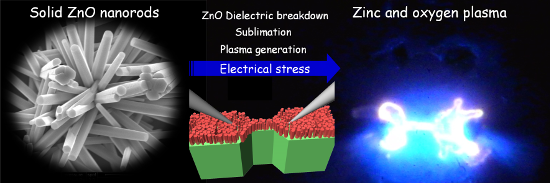
- obtained from vacuum and atmospheric pressure measurements also indicate a plasma process as the dominant mechanism for light emission. The confinement of the plasma within a micro-chamber to contain the evaporated material [29] together with integrated electrodes may lead to a sustainable plasma state


Surface-enhanced Raman scattering by colloidal CdSe nanocrystal submonolayers fabricated by the Langmuir–Blodgett technique
Beilstein J. Nanotechnol. 2015, 6, 2388–2395, doi:10.3762/bjnano.6.245
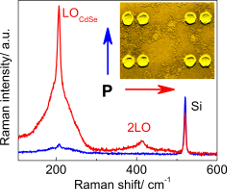
- orders of magnitude depending on the gap size) than the field located near a single metal nanocluster or a metal surface [33]. SERS enhancement benefits from the implementation of this experimental geometry. In particular, it allows the influence of the spatial confinement and the structure anisotropy on


Self-organization of gold nanoparticles on silanated surfaces
Beilstein J. Nanotechnol. 2015, 6, 2345–2353, doi:10.3762/bjnano.6.242
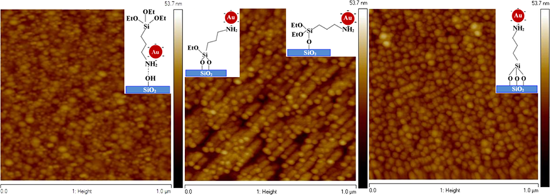
- deposition of APTES molecules [7]. Thus, NH2-terminated APTES deposition on any substrate is extremely important for further surface modification. Gold nanoparticles (AuNPs) have unique physical, chemical and electrical properties that differ from the bulk due to the quantum confinement effects in small


Influence of wide band gap oxide substrates on the photoelectrochemical properties and structural disorder of CdS nanoparticles grown by the successive ionic layer adsorption and reaction (SILAR) method
Beilstein J. Nanotechnol. 2015, 6, 2252–2262, doi:10.3762/bjnano.6.231
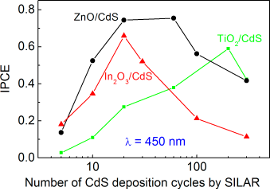
- occurrence of the quantum confinement effect, demonstrating the most rapid weakening with the increase of N in ZnO/CdS heterostructures. The structural disorder of CdS nanoparticles was characterized by the Urbach energy (EU), spectral width of the CdS longitudinal optical (LO) phonon band and the relative
- of Eg evaluated from the (Yhν)2–hν dependence for CdS nanoparticles exceed the Eg value of 2.4 eV for bulk cadmium sulfide at N ≤ 10 for ZnO/СdS, at N ≤ 20 for In2O3/СdS, and at N ≤ 60 for TiO2/СdS, indicating an electron-quantum-confinement effect. At the same time, at large N the Eg values become
- factors: phonon confinement leading to relaxation of the k = 0 selection rule for single-phonon scattering (k is a phonon wavevector) and an asymmetric low-energy LO band broadening [22]; scattering by disorder-activated zone-edge (DAZE) phonons [23]; or scattering by surface optical (SO) phonons [24]. As


The role of low-energy electrons in focused electron beam induced deposition: four case studies of representative precursors
Beilstein J. Nanotechnol. 2015, 6, 1904–1926, doi:10.3762/bjnano.6.194
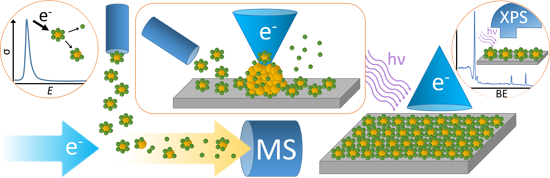
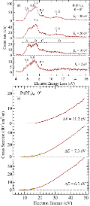
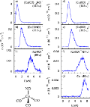
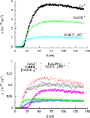
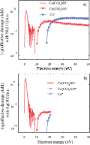
- deposit formation and the translation of such understanding to design parameters for precursor molecules tailored for FEBID is necessary. In terms of the electron-induced processes in FEBID, it is clear that the confinement of electron/molecule interactions to the focal width of the incident high-energy








Metal hydrides: an innovative and challenging conversion reaction anode for lithium-ion batteries
Beilstein J. Nanotechnol. 2015, 6, 1821–1839, doi:10.3762/bjnano.6.186
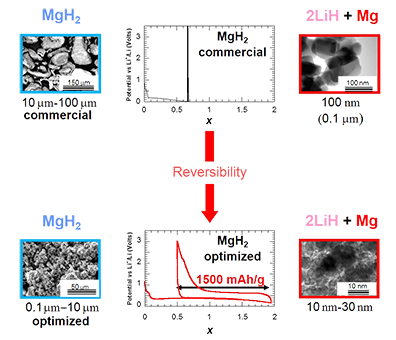
- this will require significant technological improvements to become economically viable for large scale material production. Chemical methods, such as encapsulation or confinement strategies used in the design of energy storage and conversion materials, also constitute new synthetic routes that have










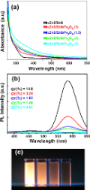
A facile method for the preparation of bifunctional Mn:ZnS/ZnS/Fe3O4 magnetic and fluorescent nanocrystals
Beilstein J. Nanotechnol. 2015, 6, 1743–1751, doi:10.3762/bjnano.6.178
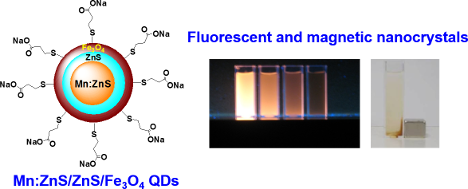
- their large surface-to-volume ratio and from confinement phenomena resulting in an atomic-like electronic structure with discrete energy levels. Thus, QDs have been widely studied for their fundamental properties and applications, mostly employed as emitters for biolabelling [3][5], light emitting
- could be related to the quantum confinement effects of nanocrystals and to the diamagnetic contribution of the ZnS core. At 2 K, all bifunctional nanoparticles exhibited hysteresis with remnance magnetization, MR, at 9 T and coercivity, HC, indicating a dominant ferromagnetic nature of the iron oxide




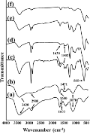
Synthesis, characterization and in vitro biocompatibility study of Au/TMC/Fe3O4 nanocomposites as a promising, nontoxic system for biomedical applications
Beilstein J. Nanotechnol. 2015, 6, 1677–1689, doi:10.3762/bjnano.6.170
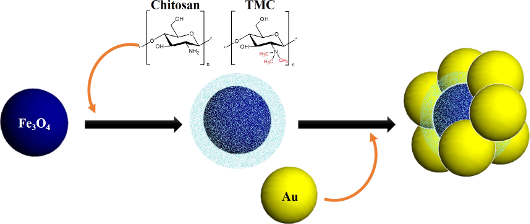
- they are considered to be a link between atomic structures and bulk material [4]. Many of the physicochemical properties of materials change as their size approaches the nanoscale, which can be explained by their high surface area to volume ratio and the quantum confinement effect [4][5]. Over the last




Molecular materials – towards quantum properties
Beilstein J. Nanotechnol. 2015, 6, 1485–1486, doi:10.3762/bjnano.6.153

- information schemes. As a result of their confinement, electrons in both natural atoms and in quantum dots, so-called artificial atoms, are characterized by the formation of discrete energy levels. Similarly, in the case of a Josephson junction, Cooper pairs are confined in the potential well of the Josephson
- coupling between molecular qubits as required by scalability for logical quantum gate operations. We have gathered in the Thematic Series contributions dealing with the magnetic properties of molecules, partially under use of lanthanide metal ions und their coordination under surface confinement. By the
The Kirkendall effect and nanoscience: hollow nanospheres and nanotubes
Beilstein J. Nanotechnol. 2015, 6, 1348–1361, doi:10.3762/bjnano.6.139
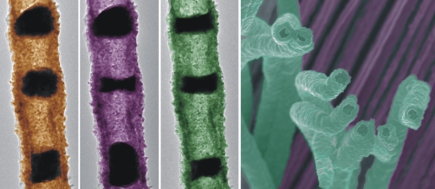
- confinement in nanowires. Although huge efforts were dedicated to the comprehension of the fundamental mechanisms involved in the Kirkendall-induced hollowing process of nanomaterials, there are still several studies which must be carried out to expand the comprehension of this phenomenon. Among these, one
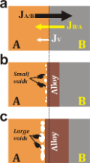
- provide additional elements for a better comprehension of the hollowing process since the vacancy confinement in 1D nanostructures differs from the case of nanospheres. Another perspective is the possibility of monitoring the oxidation-induced hollowing process using in situ TEM carried out under



Structural transitions in electron beam deposited Co–carbonyl suspended nanowires at high electrical current densities
Beilstein J. Nanotechnol. 2015, 6, 1298–1305, doi:10.3762/bjnano.6.134
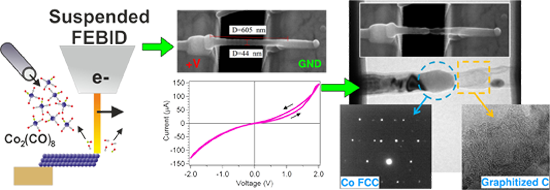
- . The equilibrium phase of bulk cobalt at RT is HCP, and at 430 °C there is a transition to the FCC phase. Co is known to stabilize FCC at RT as a consequence of either rapid quenching from annealing above the transition temperature or of the grain size confinement to submicron range [30]. The

Addition of Zn during the phosphine-based synthesis of indium phospide quantum dots: doping and surface passivation
Beilstein J. Nanotechnol. 2015, 6, 1237–1246, doi:10.3762/bjnano.6.127
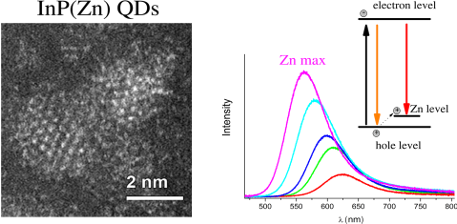
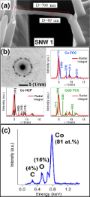
- and the distance between them is constant could be explained through the doping scheme in Figure 12. This scheme solely depends on the assumption that the Zn levels are pinned in the band gap when the size of the QDs changes. The valence band energy of bulk InP is set to zero. The quantum confinement
- effect takes place when the size of the particle is less than the exciton Bohr radius [23]. Besides, the strong confinement is fulfilled when the size of the particle is less than the Bohr radius for all types of charge carriers. According to the literature [5] the exciton Bohr diameter for bulk InP is
- about 21.6 nm, the Bohr diameter of electrons is about 19.6 nm and of holes about 2.0 nm. The mean diameter of the synthesized particles is in the range of 1.5–6.5 nm. Thus, quantum confinement effects for the most particles are extended to the electron levels but not to the hole levels. When the size


Improved optical limiting performance of laser-ablation-generated metal nanoparticles due to silica-microsphere-induced local field enhancement
Beilstein J. Nanotechnol. 2015, 6, 1199–1204, doi:10.3762/bjnano.6.122
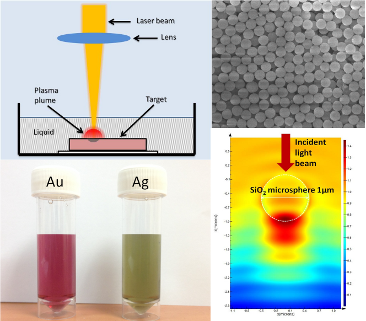
- factors. One factor is the different thickness of the target sample, which leads to the slightly different DI water layer thickness above the target sample surface. The laser ablation rate can be enhanced by the confinement of the water [18]. For the Au target, the water layer thickness was ≈1 mm, while


Charge carrier mobility and electronic properties of Al(Op)3: impact of excimer formation
Beilstein J. Nanotechnol. 2015, 6, 1107–1115, doi:10.3762/bjnano.6.112
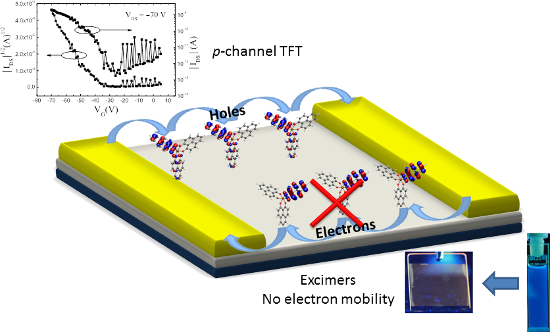
- charge recombination confinement and thereby increasing the efficiency of organic LED devices. As a result of the electron-deficient quinoline ligand, Alq3 is characterized by HOMO and LUMO energy levels of ≈−5.95 and ≈−3.0 eV, respectively [13][14]. The LUMO and HOMO energy levels are fundamental


From lithium to sodium: cell chemistry of room temperature sodium–air and sodium–sulfur batteries
Beilstein J. Nanotechnol. 2015, 6, 1016–1055, doi:10.3762/bjnano.6.105


Observing the morphology of single-layered embedded silicon nanocrystals by using temperature-stable TEM membranes
Beilstein J. Nanotechnol. 2015, 6, 964–970, doi:10.3762/bjnano.6.99

- -normal distribution. The results strongly reflect the ability to control the Si NC size by geometrical one-dimensional confinement of the SRON layers. Furthermore, the influence of the SRON stoichiometry on Si nanoparticle formation is demonstrated in Figure 4c–e. Interestingly, increasing the Si excess
- exhibits a similar effect on the Si NC size and shape as the SRON thickness increase. The transition from clustering to spinodal-like decomposition [46][47][48] is obviously a sensitive function of the SRON thickness as well as of the stoichiometry. Due to the one dimensional geometrical confinement


Structural, optical, opto-thermal and thermal properties of ZnS–PVA nanofluids synthesized through a radiolytic approach
Beilstein J. Nanotechnol. 2015, 6, 529–536, doi:10.3762/bjnano.6.55
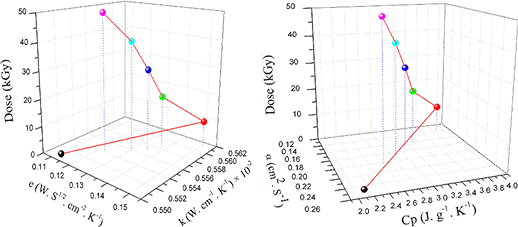
- to increasing particles size; however, these values are generally higher than the band gap energy of bulk ZnS 3.6 eV [1]. The band gap energy implies a very weak quantum confinement effect. Since the wave functions of electrons and holes are still overlapped, the movement of the excitons instigates a
- weak confinement [28]. The thermal conductivity of distilled water, PVA and ZnS nanofluids were measured and are listed in Table 2. The thermal conductivity of distilled water was measured to calibrate the set-up and agreed well with the reported value of the literature [29]. The thermal conductivity
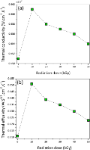
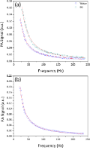
- groups in the PVA structure, respectively. The band gap of ZnS NPs varied from 3.74 to 3.68 eV from lower to higher irradiation doses, which hints to a weak quantum confinement. Thermal conductivity and effusivity of the samples exhibited an increment upon the irradiation due to the chain scission of PVA


Synergic combination of the sol–gel method with dip coating for plasmonic devices
Beilstein J. Nanotechnol. 2015, 6, 500–507, doi:10.3762/bjnano.6.52
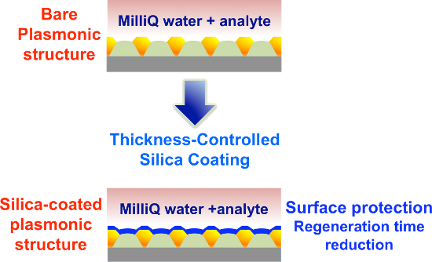
- be exploited in innovative technological applications. SPR is a phenomena arising from the interaction between the incident electromagnetic radiation and the conduction electrons present on a metal surface. Such coupling leads to an enhancement and a spatial confinement of the electromagnetic field


Raman spectroscopy as a tool to investigate the structure and electronic properties of carbon-atom wires
Beilstein J. Nanotechnol. 2015, 6, 480–491, doi:10.3762/bjnano.6.49
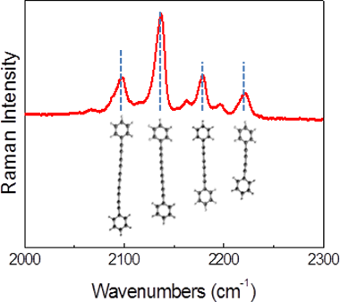
- powerful tool for the characterization of carbon materials and nanostructures due to its sensitivity to the vibration of C–C bonds. For instance, strong electron–phonon coupling and resonance effects allow for the measurement of single carbon nanostructures and together with confinement effects, provides


Conformal SiO2 coating of sub-100 nm diameter channels of polycarbonate etched ion-track channels by atomic layer deposition
Beilstein J. Nanotechnol. 2015, 6, 472–479, doi:10.3762/bjnano.6.48
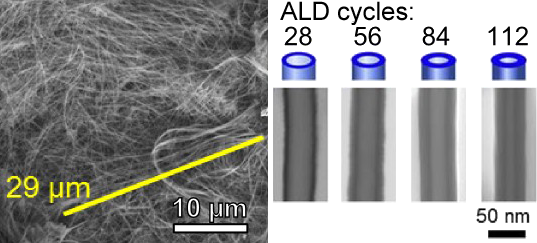
- interesting to study water and ion transport in confinement [15][16]. Coated templates are also attractive to synthesize extremely thin nanowires for the investigation of finite size and quantum size effects [17]. Atomic layer deposition is based on cycles of self-limiting chemical reactions between the gas





