


Search results
Search for "electrochemical" in Full Text gives 513 result(s) in Beilstein Journal of Nanotechnology. Showing first 200.
Processing nanoporous organic polymers in liquid amines
Beilstein J. Nanotechnol. 2019, 10, 1844–1850, doi:10.3762/bjnano.10.179
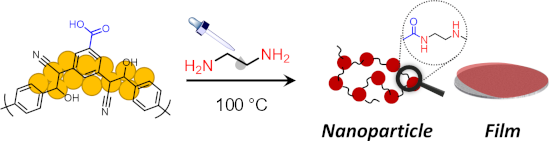
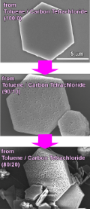
- polymerization [14], ionic complexation [15], and electrochemical polymerization [16], which require sophisticated techniques. There are only a few reports that show the processing of nanoporous polymers into the desired morphologies, for instance, the nanoporous polymers were directly processed into



TiO2/GO-coated functional separator to suppress polysulfide migration in lithium–sulfur batteries
Beilstein J. Nanotechnol. 2019, 10, 1726–1736, doi:10.3762/bjnano.10.168
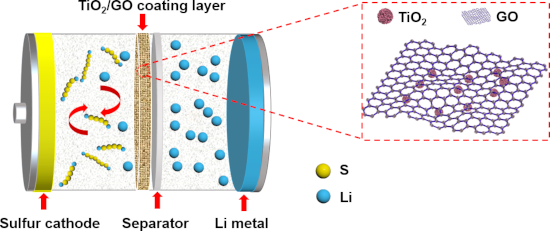
- electrochemical performance of Li/S batteries. The interlayer can capture the polysulfides due to the presence of oxygen functional groups and formation of chemical bonds. The hierarchically porous TiO2 nanoparticles are tightly wrapped in GO sheets and facilitate the polysulfide storage and chemical absorption
- ]. However, the development and widespread utilization of Li/S batteries is hindered by (i) the poor electronic/ionic conductivity of sulfur, causing a low reaction rate and electrochemical polarization, (ii) dissolution and the shuttle effect of intermediate polysulfides, resulting in the deposition of Li2S
- intermediate layer and plays an important role in enhancing the electrochemical performance of Li/S batteries. It has been demonstrated that the polysulfide shuttle can be effectively suppressed by modifying the separator or incorporating an interlayer at the cathode/separator interface [21][22]. For instance


Tuning the performance of vanadium redox flow batteries by modifying the structural defects of the carbon felt electrode
Beilstein J. Nanotechnol. 2019, 10, 1698–1706, doi:10.3762/bjnano.10.165
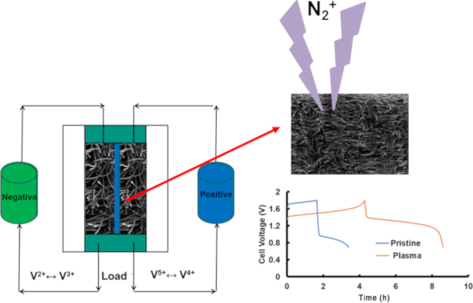
- Ditty Dixon Deepu Joseph Babu Aiswarya Bhaskar Hans-Michael Bruns Joerg J. Schneider Frieder Scheiba Helmut Ehrenberg Central Electrochemical Research Institute (CSIR-CECRI), Karaikudi, 630003, India Fachbereich Chemie, Eduard-Zintl Institut für Anorganische und Physikalische Chemie, Technische
- oxygen functional groups on the N2-plasma-treated sample was very low, the felt showed enhanced electrochemical performance for both V3+/V2+ as well as V5+/V4+ redox reactions. The result is highly significant as the pristine electrode with the same amount of oxygen functional groups showed significantly
- configuration, showed poor electrochemical performance for the positive (V5+/V4+) redox reaction. Taking into account that the negative redox reaction is the limiting reaction in VRFB, the overall enhancement in the full cell performance was purely attributed to enhancement in the V3+/V2+ redox kinetics due to


Layered double hydroxide/sepiolite hybrid nanoarchitectures for the controlled release of herbicides
Beilstein J. Nanotechnol. 2019, 10, 1679–1690, doi:10.3762/bjnano.10.163
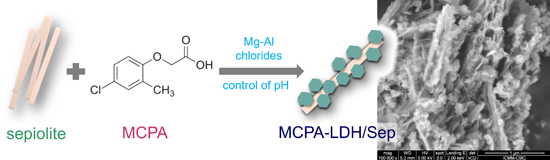
- components in diverse electrochemical devices (such as supercapacitors, sensors, and biosensors), in drug delivery and controlled-release formulations, or in non-viral gene transfection [21][22][23][24][25][26]. The fact that the stability of LDH varies with the pH value has proved advantageous in some of


Upcycling of polyurethane waste by mechanochemistry: synthesis of N-doped porous carbon materials for supercapacitor applications
Beilstein J. Nanotechnol. 2019, 10, 1618–1627, doi:10.3762/bjnano.10.157
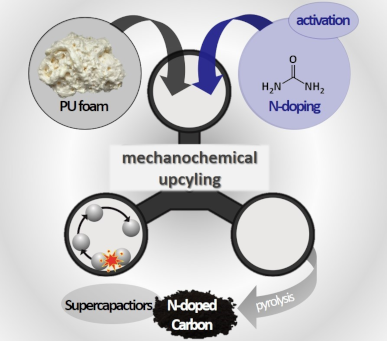
- applications in catalysis [24][25][26], gas sorption/separation [27][28][29] and electrochemical energy storage/conversion. For the latter, porous carbon materials are established as electrode materials in fuel cells [30][31][32][33], Li–S cells [34][35][36][37], and supercapacitors [38]. In addition, these
- -3, exhibiting a lower nitrogen content, absorbed the water after 20 s. Thus, the higher nitrogen content benefits the wettability of the carbon surface. Electrochemical characterization The produced carbon materials differ in terms of specific surface area, pore sizes, and nitrogen content
- . Therefore, we selected three carbon materials that represent a wide range of structure characteristics for electrochemical characterization: PUPC-800-3, PUUPC-800-1, and PUUPC-800-2. First, we determined the powder resistance of the carbon materials. Two general trends are observable. Firstly, the


Kelvin probe force microscopy work function characterization of transition metal oxide crystals under ongoing reduction and oxidation
Beilstein J. Nanotechnol. 2019, 10, 1596–1607, doi:10.3762/bjnano.10.155
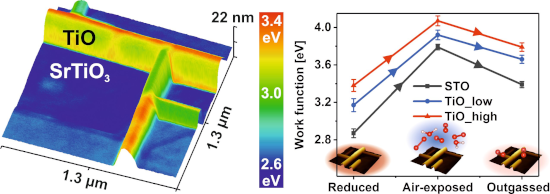
- understanding of the operation of nanostructure electrochemical sensors [48]. Thus, we have focused on the systematic approach of the influence of ambient air on the work function of TiO and SrTiO3(100). Figure 6a shows the topography and work function of representative TiO nanowire networks before and after
- catalytic activity of the TiO surface, which was previously postulated in the case of TiO/TiO2 nanoparticles [44]. Reduced titania TiO1.23 proves also to be a promising candidate for electrochemical water splitting [50]. As the catalytic activity of a crystalline rock-salt TiO phase has yet to be studied


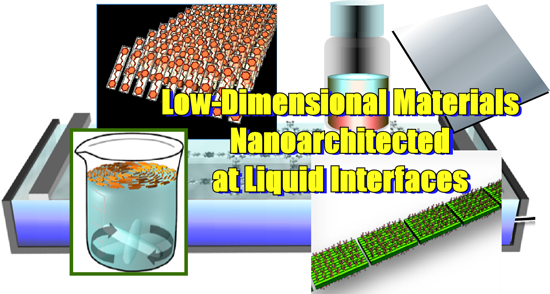
Materials nanoarchitectonics at two-dimensional liquid interfaces
Beilstein J. Nanotechnol. 2019, 10, 1559–1587, doi:10.3762/bjnano.10.153
- because of their superior electric/electrochemical properties that make them suitable for energy and electrochemical applications [56][57][58][59][60]. The works include the use of two-dimensional metal oxide nanosheets for artificial photosynthesis systems, i.e., photocatalytic water splitting and
- reported. Jayavel, Shrestha, and co-workers demonstrated the enhanced performance of electrochemical supercapacitors using composites of cobalt oxide nanoparticles and reduced graphene oxide, which are zero-dimensional and two-dimensional nanomaterials, respectively [86]. Leong and co-workers reported a
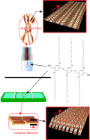
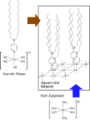
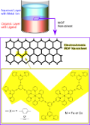
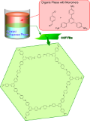
- through electrochemical processes. The interfacial formation of COFs at the liquid–liquid interfaces is more complicated because of the necessity of water-soluble COF precursors. Sahabudeen et al. have overcome this issue by using a hydrophilic dialdehyde monomer, 2,5-dihydroxyterephthalaldehyde (DHTPA













Synthesis of P- and N-doped carbon catalysts for the oxygen reduction reaction via controlled phosphoric acid treatment of folic acid
Beilstein J. Nanotechnol. 2019, 10, 1497–1510, doi:10.3762/bjnano.10.148
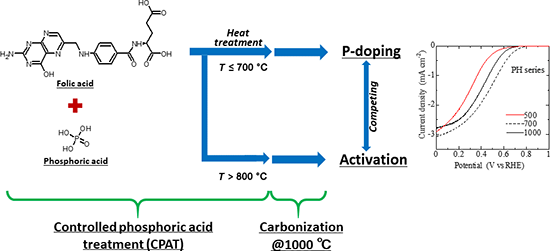
- ) (PFA). Two types of PFA-based carbon materials were prepared by using hydrochloric acid or phosphoric acid as polymerization initiators (non-doped and P-doped PFA carbon materials, respectively). Electrochemical methods The ORR activity of carbon materials was probed by rotating disk electrode





Flexible freestanding MoS2-based composite paper for energy conversion and storage
Beilstein J. Nanotechnol. 2019, 10, 1488–1496, doi:10.3762/bjnano.10.147
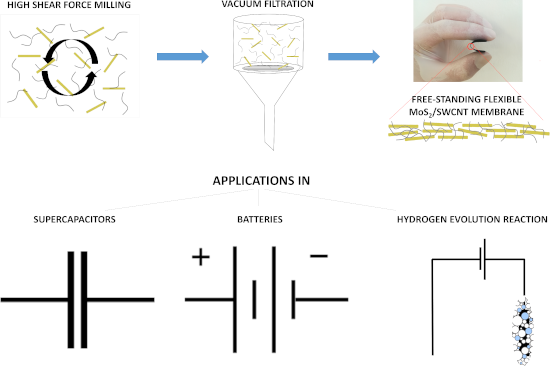
- -1) Materials Synthesis and Processing, Wilhelm-Johnen-Straße, 52425 Jülich, Germany 10.3762/bjnano.10.147 Abstract The construction of flexible electrochemical devices for energy storage and generation is of utmost importance in modern society. In this article, we report on the synthesis of
- and delivers specific capacity of 740 mA·h·g−1 at a current density of 0.1 A·g−1. After 40 cycles at this current density the material still reached a capacity retention of 91%. Our findings show that this composite material could find application in electrochemical energy storage and generation
- active material and the current collector upon bending deformation [10]. However, there are promising reports on freestanding MoS2/carbonaceous composite electrodes which have demonstrated attractive electrochemical performance [9][10][11][12][13][14][15][16][17][18][19][20][21][22][23][24][25]. Beside


Hierarchically structured 3D carbon nanotube electrodes for electrocatalytic applications
Beilstein J. Nanotechnol. 2019, 10, 1475–1487, doi:10.3762/bjnano.10.146
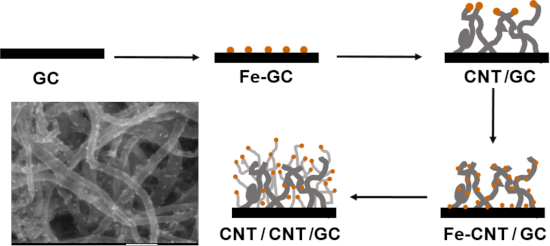
- , Figure S8). Electrochemical Investigations Cyclic voltammetry A basic electrochemical characterization of the prepared electrodes was carried out using cyclic voltammetry (CV). CVs of GC before and after oxidation in HNO3 as well as after growth of the primary CNTs and additional secondary CNTs are
- transfer resistance with respect to the primary CNTs as determined by electrochemical impedance spectroscopy. Thus, we speculate that the improvement in Pt dispersion is due to a better conductivity within the 3D network and a facilitated electron transfer, which may facilitate Pt nucleation at the CNT
- cycle of each measurements is represented in Figure 10. The current response for electrochemical activity towards MOR was quantified to the Pt mass and the Pt ECSA in Figure 10a and Figure 10b, respectively, where the Pt ESCA was calculated from the COad stripping voltammograms. Figure 10 represents the





BiOCl/TiO2/diatomite composites with enhanced visible-light photocatalytic activity for the degradation of rhodamine B
Beilstein J. Nanotechnol. 2019, 10, 1412–1422, doi:10.3762/bjnano.10.139
- a Micromeritics ASAP 2020 surface area and porosity measurement system. A Unico UV-2600 spectrophotometer was used to analyze the concentration of RhB in the photocatalytic process. The photoelectrochemical properties were analyzed using electrochemical workstations (Gamry interface 1010 and Chenhua
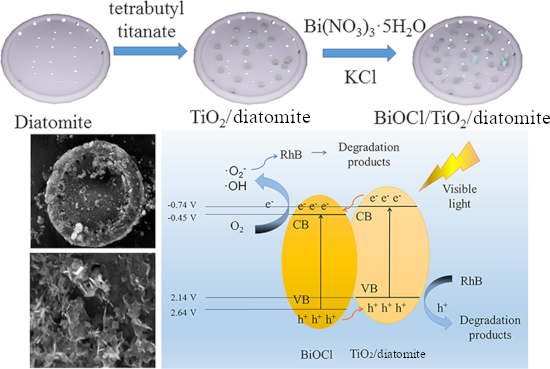
- good cyclic ability and stability. Photocatalytic mechanism analysis In order to reveal the photocatalytic mechanism, we observe the optical, photochemical and electrochemical properties to study the energy band structure and carrier migration pathway of BTD. Figure 8a presents the UV–vis diffuse
- efficiency of the samples, photoluminescence spectroscopy, photocurrent and electrochemical impedance spectroscopy were tested. The recombination rate of photogenerated carriers (electrons and holes) in photocatalysts was characterized by photoluminescence spectra. Generally, the lower the spectral intensity


Warped graphitic layers generated by oxidation of fullerene extraction residue and its oxygen reduction catalytic activity
Beilstein J. Nanotechnol. 2019, 10, 1391–1400, doi:10.3762/bjnano.10.137
- the amount of surface functional groups. The details of this technique are described elsewhere [45][46]. Electrochemical techniques Cyclic voltammetry was used to evaluate the heterogeneous electron transfer rate of the carbons in an aqueous solution consisting of 6 × 10⁻³ mol/L K3[Fe(CN)6] and 1 mol
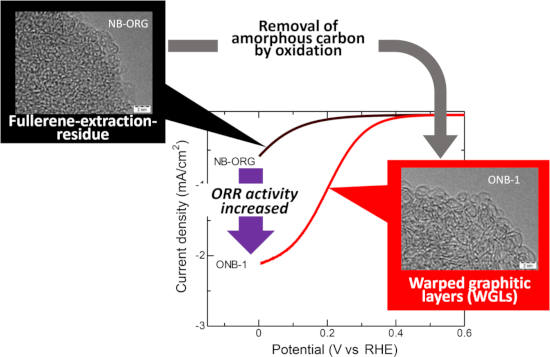
- was subtracted from a voltammogram in an O2-saturated electrolyte giving a net ORR voltammogram. The electrochemical system consisted of a rotation apparatus (RRDE-3A, BAS Japan) and a potentiostat (ALS700 series, BAS Japan). The potential sweep was started from 1 V to 0 V vs RHE, at a potential sweep



Construction of a 0D/1D composite based on Au nanoparticles/CuBi2O4 microrods for efficient visible-light-driven photocatalytic activity
Beilstein J. Nanotechnol. 2019, 10, 1360–1367, doi:10.3762/bjnano.10.134
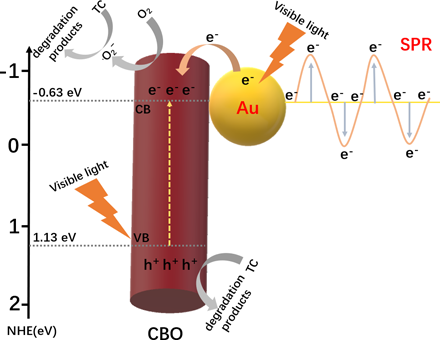
- photocatalytic activity after three cycles. This decrease of photocatalytic performance is mainly due to the mass of catalysts being inevitably lost in the recycling process [39]. Photocurrent response and electrochemical impedance spectroscopy (EIS) measurements were carried out to obtain some insights into the


Multicomponent bionanocomposites based on clay nanoarchitectures for electrochemical devices
Beilstein J. Nanotechnol. 2019, 10, 1303–1315, doi:10.3762/bjnano.10.129
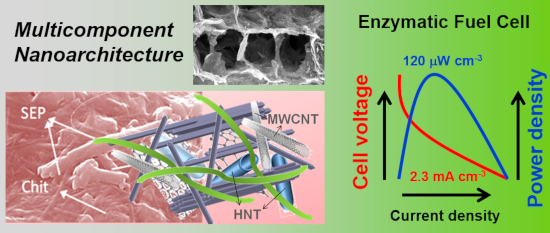
- biocomposite: HNTs act as nanocontainers for bioactive species, GNPs provide electrical conductivity (enhanced by doping with MWCNTs) and, the CHI polymer matrix introduces mechanical and membrane properties that are of key significance for the development of electrochemical devices. The resulting
- characteristics allow for a possible application of these active elements as integrated multicomponent materials for advanced electrochemical devices such as biosensors and enzymatic biofuel cells. This strategy can be regarded as an “a la carte” menu, where the selection of the nanocomponents exhibiting
- different properties will determine a functional set of predetermined utility with SEP maintaining stable colloidal dispersions of different nanoparticles and polymers in water. Keywords: bionanocomposites; carbon nanostructures; electrochemical devices; halloysite nanotubes; sepiolite; Introduction In



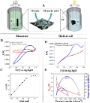
Alloyed Pt3M (M = Co, Ni) nanoparticles supported on S- and N-doped carbon nanotubes for the oxygen reduction reaction
Beilstein J. Nanotechnol. 2019, 10, 1251–1269, doi:10.3762/bjnano.10.125
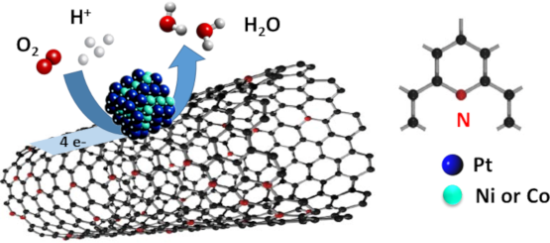
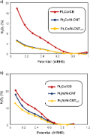
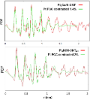
- ) alloyed nanoparticles that have a very homogeneous size distribution (in spite of the high metal loading of ≈40 wt % Pt), using an ionic liquid as a stabilizer. The electrochemical surface area, the activity for the oxygen reduction reaction and the amount of H2O2 generated during the oxygen reduction
- reaction (ORR) have been evaluated in a rotating ring disk electrode experiment. The Pt3M/N-CNT catalysts revealed excellent electrochemical properties compared to a commercial Pt3Co/Vulcan XC-72 catalyst. The nature of the carbon support plays a key role in determining the properties of the metal
- from thermochemical instability and corrosion in fuel cell applications. In the cathodic layer, the oxidizing, wet and acidic environment, the high electrochemical potential, and the high platinum loading all lead to the oxidation of the carbon surface, and occasionally to the formation of CO2 [9








Porous N- and S-doped carbon–carbon composite electrodes by soft-templating for redox flow batteries
Beilstein J. Nanotechnol. 2019, 10, 1131–1139, doi:10.3762/bjnano.10.113
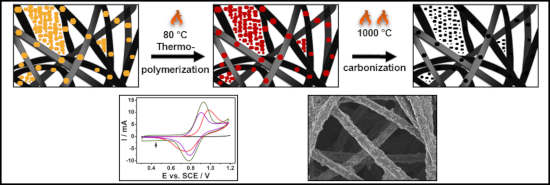
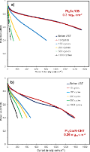
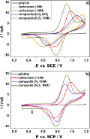
- obtained inside the macroporous carbon felt. For the investigation of electrode structure and porosity X-ray photoelectron spectroscopy (XPS), scanning electron microscopy (SEM), and nitrogen sorption (BET) were used. The electrochemical performance of the carbon felts was evaluated by cyclic voltammetry
- (CV) and electrochemical impedance spectroscopy (EIS). The N- and S-doped carbon electrodes show promising activity for the positive side reaction and could be seen as a significant advance in the design of carbon felt electrodes for use in redox flow batteries. Keywords: N- and S-doped carbon
- energy is stored in the form of vanadium containing electrolytes, which consist of V2+/3+ at the negative and V4+/5+ at the positive side. These are flowed through carbon materials, which are usually porous felts or carbon paper electrodes [4]. Carbon electrodes exhibit good stability and electrochemical



Glucose-derived carbon materials with tailored properties as electrocatalysts for the oxygen reduction reaction
Beilstein J. Nanotechnol. 2019, 10, 1089–1102, doi:10.3762/bjnano.10.109
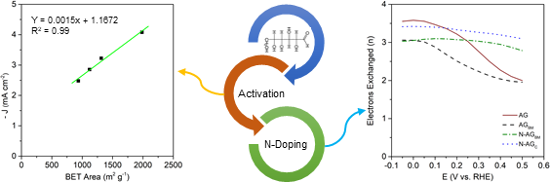
- -doped biomass-derived carbon materials were prepared by hydrothermal carbonization of glucose, and their textural and chemical properties were subsequently tailored to achieve materials with enhanced electrochemical performance towards the oxygen reduction reaction. Carbonization and physical activation
- materials [3][4] have been widely studied as electrocatalysts in ORR due to their attractive physical and electrochemical properties. Among these materials, metal-free carbon materials have received tremendous attention due to their versatility and lower price in comparison with metal-based materials [2
- basic electrolyte at 1600 rpm and the Nyquist plot obtained from electrochemical impedance spectroscopy measurements are shown in Figure 2a and 2b, respectively. To evaluate the performance of the prepared electrocatalysts, cyclic voltammetry (CV) and linear sweep voltammetry (LSV) were performed. LSV


Correlation of surface-enhanced Raman scattering (SERS) with the surface density of gold nanoparticles: evaluation of the critical number of SERS tags for a detectable signal
Beilstein J. Nanotechnol. 2019, 10, 1016–1023, doi:10.3762/bjnano.10.102
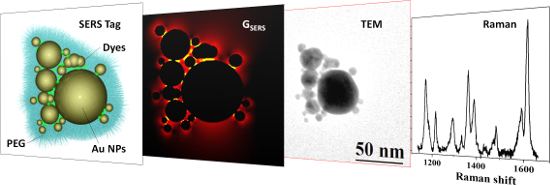
- plasmonic nanoparticles dispersed on a substrate [38], inside microcavities [39], or even while monitoring electrochemical reactions [40]. This work reports on the study of SERS tags obtained by laser ablation synthesis in liquid solution (LASiS) of gold (Au) nanoparticles, their coating with three


Concurrent nanoscale surface etching and SnO2 loading of carbon fibers for vanadium ion redox enhancement
Beilstein J. Nanotechnol. 2019, 10, 985–992, doi:10.3762/bjnano.10.99
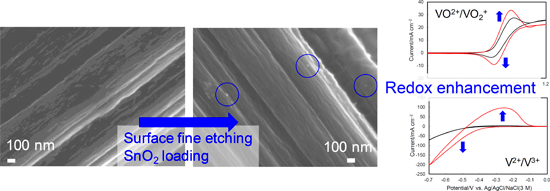
- demonstration of this surface-structure change is difficult through FESEM observation only, Raman spectroscopy and electrochemical measurements can show clear differences as described below. The degree of the surface etching depends on the temperature of the thermal oxidation (Figure 1e and Figure S2
- exposure to air after the CSnPc deposition. The graphitic surface is much less susceptible to the oxidation [27]. Thus, the oxygen surface concentration decreases from TGP-CSnPc to TGP-CSnPc-550Air also suggested the removal of the CSnPc coating. Electrochemical behavior without vanadium ions The cyclic
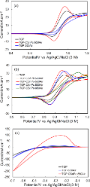
- voltammograms (CVs) obtained in an acidic electrolyte without vanadium ions are shown in Figure 4. The current in the voltammogram is composed from three components, i.e., the electrochemical double-layer charging current at the carbon–electrolyte interface, and the faradaic currents due to the redox reactions



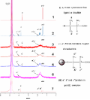
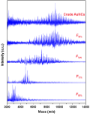
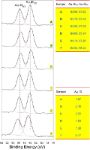
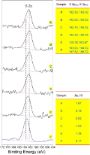
Structural and optical properties of penicillamine-protected gold nanocluster fractions separated by sequential size-selective fractionation
Beilstein J. Nanotechnol. 2019, 10, 955–966, doi:10.3762/bjnano.10.96
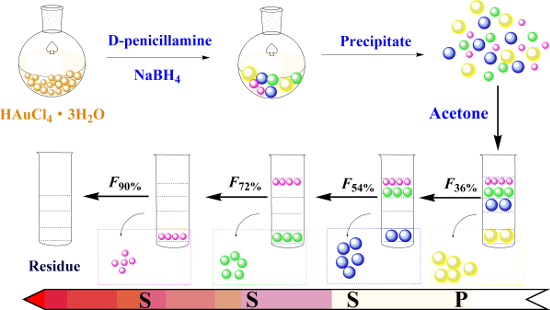
- common method that has been used to the size fraction nanomaterial dispersions such as CdS and CdSe. However, this method has been mainly carried out to separate water-insoluble nanoparticles from organic solvents. On the other hand, it is also understood that the photophysical, electrochemical and other



In situ AFM visualization of Li–O2 battery discharge products during redox cycling in an atmospherically controlled sample cell
Beilstein J. Nanotechnol. 2019, 10, 930–940, doi:10.3762/bjnano.10.94
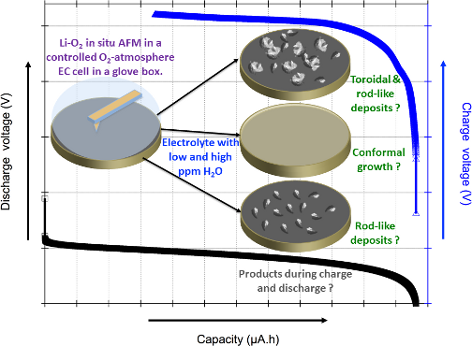
- /bjnano.10.94 Abstract The in situ observation of electrochemical reactions is challenging due to a constantly changing electrode surface under highly sensitive conditions. This study reports the development of an in situ atomic force microscopy (AFM) technique for electrochemical systems, including the
- . The AFM data collected during the discharge–recharge cycles correlated well with the simultaneously recorded electrochemical data. We were able to capture the formation of discharge products from correlated electrical and topographical channels and measure the impact of the presence of water. The cell
- design permitted acquisition of electrochemical impedance spectroscopy, contributing information about electrical double layers under the system’s controlled environment. This characterization method can be applied to a wide range of reactive surfaces undergoing transformations under carefully controlled


Synthesis of novel C-doped g-C3N4 nanosheets coupled with CdIn2S4 for enhanced photocatalytic hydrogen evolution
Beilstein J. Nanotechnol. 2019, 10, 912–921, doi:10.3762/bjnano.10.92
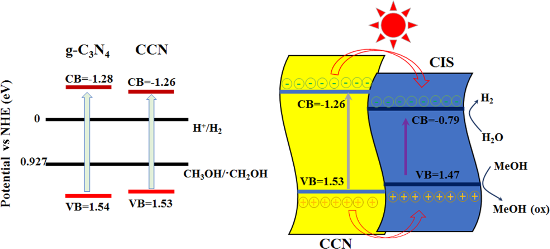
- photospectroscopy (Hitachi F-4500). Photocurrent measurements The photocurrent response of the photocatalyts were measured using a standard three-electrode electrochemical station (CHI 660D, Chenhua Instrument Co., Ltd, Shanghai, China). In this system, the Ag/AgCl electrode was chosen as the reference electrode


Novel reversibly switchable wettability of superhydrophobic–superhydrophilic surfaces induced by charge injection and heating
Beilstein J. Nanotechnol. 2019, 10, 840–847, doi:10.3762/bjnano.10.84
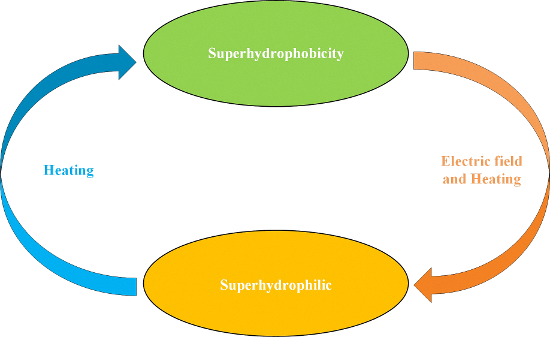
- by an electrochemical process. The surface wettability could be controlled from superhydrophobic to superhydrophilic. When the sample was dried at room temperature or heated at 100 °C, the wettability could be reversed. Compared with the electrowetting phenomenon caused by electric-field-driven solid


An efficient electrode material for high performance solid-state hybrid supercapacitors based on a Cu/CuO/porous carbon nanofiber/TiO2 hybrid composite
Beilstein J. Nanotechnol. 2019, 10, 781–793, doi:10.3762/bjnano.10.78
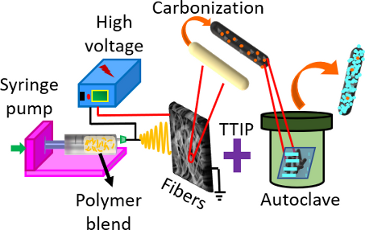
- pseudo-capacitance behavior. Electrochemical measurements were performed by cyclic voltammetry, galvanostatic charge–discharge and electrochemical impedance spectroscopy. The highest specific capacitance value of 530 F g−1 at a current density of 1.5 A g−1 was obtained for the Cu/CuO/PCNF/TiO2 composite
- density of 45.83 Wh kg−1 at a power density of 1.27 kW kg−1 was also realized. The developed electrode material provides new insight into ways to enhance the electrochemical properties of solid-state supercapacitors, based on the synergistic effect of porous carbon nanofibers, metal and metal oxide
- nanoparticles, which together open up new opportunities for energy storage and conversion applications. Keywords: composite; electrochemical performance; porous carbon nanofiber; solid-state hybrid supercapacitor; supercapacitor; TiO2 nanoparticles; Introduction To meet the rapidly growing demand for energy


Renewable energy conversion using nano- and microstructured materials
Beilstein J. Nanotechnol. 2019, 10, 771–773, doi:10.3762/bjnano.10.76

- : materials and devices” covers the photo-electrochemical growth of platinum catalysts at plasmonic hot spots [6], the laser-assisted local growth of chalcopyrite absorbers [4], the preferential reactive ion etching of silicon by morphological anisotropies [5], the oxidation of copper nanoparticles resulting



