


Search results
Search for "etching" in Full Text gives 359 result(s) in Beilstein Journal of Nanotechnology. Showing first 200.
Light extraction efficiency enhancement of flip-chip blue light-emitting diodes by anodic aluminum oxide
Beilstein J. Nanotechnol. 2018, 9, 1602–1612, doi:10.3762/bjnano.9.152
- with Ga-doped zinc oxide (GZO)/GaN as the base layer and then reducing the total reflectivity by changing the shape, thickness, and density of the microstructure through dry etching [12]. Li et al. increased the LEE of an InGaN-monolayer quantum-well LED by 1.8–1.9 times relative to that of a
- dislocations in the LED structure were blocked, thus enhancing the general luminous efficiency by approximately 23% [15]. Cates et al. adopted laser etching to produce a repeated microstructure on the emitting surface of a yttrium aluminum perovskite scintillation crystal activated by cerium (formula YAlO3:Ce
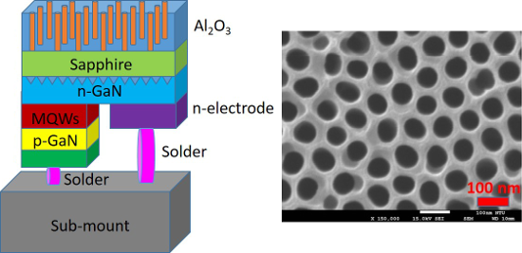
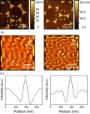
- evident in Figure 2b. Figure 2h shows pores that have been etched excessively. Excessive etching destroys the surface structure. Figure 2e shows pores that have been completely etched. These results are consistent with the SEM measurements. We measured the line-scan profile of the AFM images to determine


Interaction-tailored organization of large-area colloidal assemblies
Beilstein J. Nanotechnol. 2018, 9, 1582–1593, doi:10.3762/bjnano.9.150
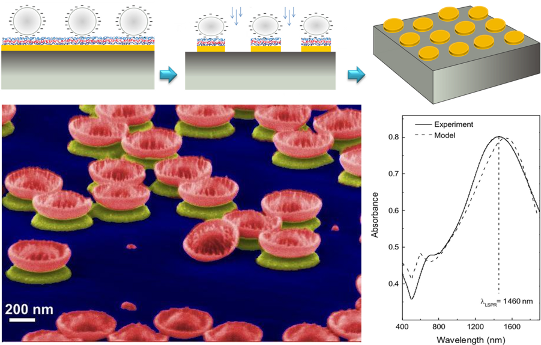
- . Successively, reactive ion etching was used to selectively remove the portion of the gold film not protected by the nanospheres. The etch rate (2.9 nm/min) was estimated measuring the thickness of the gold film for different etching times. Finally, the nanosphere residues were removed by oxygen plasma
- and nanoholes of different sizes and materials were realized. Figure 4a,b shows gold nanodisks of 500 nm still covered by the nanosphere portion remaining after the etching process, while in Figure 4c,d images of the final disks of different diameters are reported. Gold and cobalt nanoholes realized


Evaluation of replicas manufactured in a 3D-printed nanoimprint unit
Beilstein J. Nanotechnol. 2018, 9, 1573–1581, doi:10.3762/bjnano.9.149
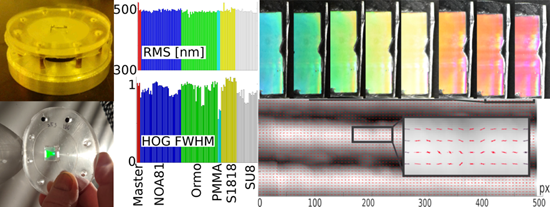
- UV-curable molds. In either case, the samples can be used as such, or undergo further processes such as chemical etching [6] or electric-field-assisted steps [7]. In recent months, we have developed a NIL system [8] using free software and public hardware designs created in a simple 3D printer. The


Correlative electrochemical strain and scanning electron microscopy for local characterization of the solid state electrolyte Li1.3Al0.3Ti1.7(PO4)3
Beilstein J. Nanotechnol. 2018, 9, 1564–1572, doi:10.3762/bjnano.9.148
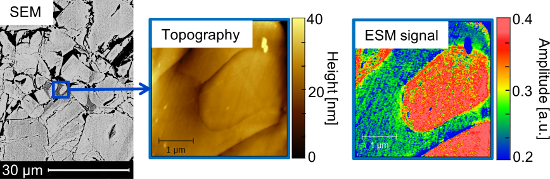
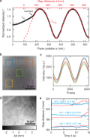
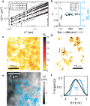
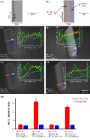
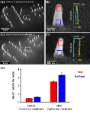
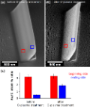
- surface features as observed by SEM, providing evidence that both methods can be applied complementary. The same pores as those observed via SEM can be found in the AFM topography image and the topography reveals some preferential etching at the grain boundaries and interfaces. Differentiation between the
- individual grains can hardly be seen in the topography image (Figure 4c), using the same color scale as in Figure 2. This means, preparation with the ion beam almost parallel to the surface introduces less preferential etching of the grain boundaries. However, the ESM amplitude signal, as shown in Figure 4d


Optical near-field mapping of plasmonic nanostructures prepared by nanosphere lithography
Beilstein J. Nanotechnol. 2018, 9, 1536–1543, doi:10.3762/bjnano.9.144
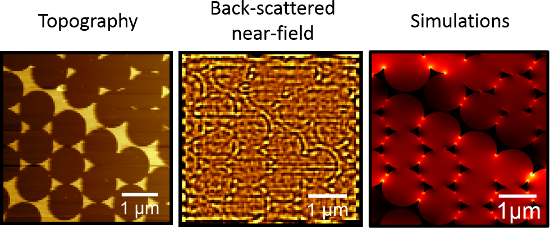
- laser onto a gold tip. A schematic of the experimental setup can be found elsewhere [37]. The elastically backscattered signal detected by a PMT was studied here. To obtain a tip with a radius down to 10 nm and low surface roughness, the gold tips were fabricated by electrochemical etching. A 100 µm




Cr(VI) remediation from aqueous environment through modified-TiO2-mediated photocatalytic reduction
Beilstein J. Nanotechnol. 2018, 9, 1448–1470, doi:10.3762/bjnano.9.137
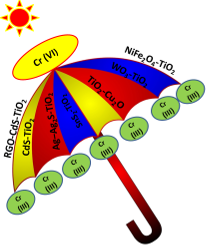
- for efficient photocatalytic Cr(VI) reduction [134]. They prepared the photocatalyst using a direct-wrapped route followed by hydrothermal etching. The high charge separation efficiency and redox ability are due to the synergetic effect of formation of a Z scheme photocatalytic process and its


Preparation and morphology-dependent wettability of porous alumina membranes
Beilstein J. Nanotechnol. 2018, 9, 1423–1436, doi:10.3762/bjnano.9.135
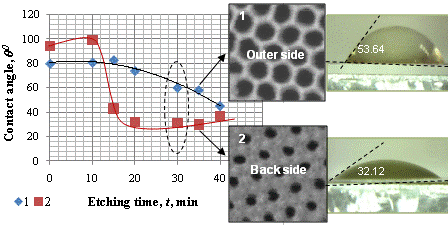
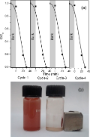
- obtained. Five samples were prepared in total. For samples 1, 2, and 3 the etching of the barrier layer was carried out by immersing the entire membrane in a 4% aqueous solution of phosphoric acid (H3PO4) at 35 ± 2 °C for 15, 20 and 35 minutes, respectively. For the as-produced samples of type I and type
- pore sizes and oxide thickness using various etching technologies of the barrier layer at the bottom of the pores (Table 1). In Figure 2 the option of barrier layer etching on both sides (bilateral etching) by immersion of all free membrane in solution (sample No. 2) is shown. In the free membrane the
- various options for barrier layer etching are closely associated with the liquid distribution in the narrow channels (pores) of the PAM. Preliminary results show that a membrane thickness of less than 30 µm is enough to carry out an usual bilateral etching by immersion of the entire membrane into solution


Nanoporous silicon nitride-based membranes of controlled pore size, shape and areal density: Fabrication as well as electrophoretic and molecular filtering characterization
Beilstein J. Nanotechnol. 2018, 9, 1390–1398, doi:10.3762/bjnano.9.131
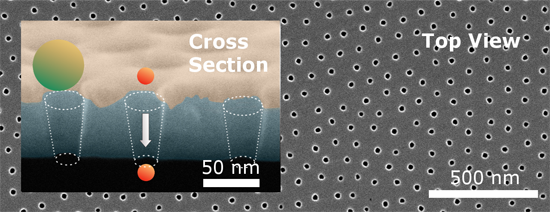
- -defined Au nanoparticles (NPs) exhibiting a high degree of hexagonal order as obtained in a first step by a proven micellar approach. These NP arrays serve as masks in a second reactive ion etching (RIE) step optimized for etching Si and some important Si compounds (silicon oxide, silicon nitride) on the
- approach came from diverse ion-track etching techniques with a limitation in porosity but several ways to form pore shapes [10][11][12]. Alternatively, thin porous nanocrystalline silicon (pnc-Si) membranes have been suggested with pores formed in a nc-silicon film sandwiched between nanometer-thick
- defined nanopores restricts them to small numbers of pores or specific arrangements, hindering high throughput [21][22]. With this aspect in mind, parallel fabrication techniques, based on self-assembly of polymeric components, become essential in combination with appropriate etching procedures. For this


Electrostatically actuated encased cantilevers
Beilstein J. Nanotechnol. 2018, 9, 1381–1389, doi:10.3762/bjnano.9.130
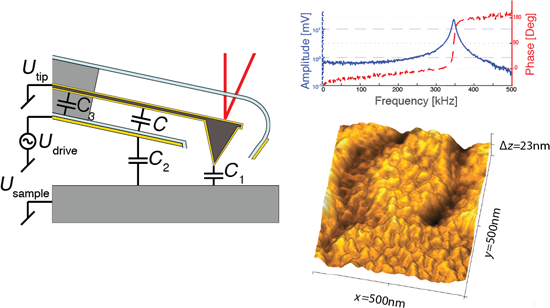
- length l of the free resonator, however, is set by the etching duration. Located inside the encasement its exact length is not easily measurable. Hence, we determine it from the resulting resonance frequency. The frequency of a tip-less beam in vacuum is well known and given by f0 = 0.162 (t/l2), where




Chemistry for electron-induced nanofabrication
Beilstein J. Nanotechnol. 2018, 9, 1317–1320, doi:10.3762/bjnano.9.124

- beams can be used to induce, on a very small area, chemical reactions of adsorbed precursor molecules that either lead to etching of the underlying surface or deposition of material. The latter additive variant of FEBIP is focused electron beam induced deposition (FEBID), a powerful direct-write
Field-controlled ultrafast magnetization dynamics in two-dimensional nanoscale ferromagnetic antidot arrays
Beilstein J. Nanotechnol. 2018, 9, 1123–1134, doi:10.3762/bjnano.9.104
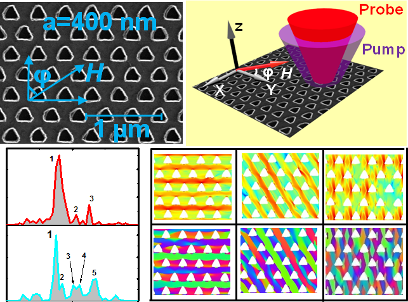
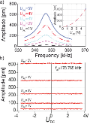
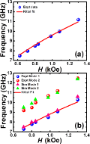
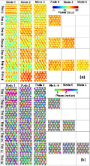
- irradiation of laser light. A PMMA/MMA bilayer resist was used for electron-beam lithography to prepare the resist pattern on the Py thin film followed by argon ion milling at a base pressure of 1 × 10⁻⁴ Torr with a beam current of 60 mA for 6 min for etching out the Py film from everywhere except the



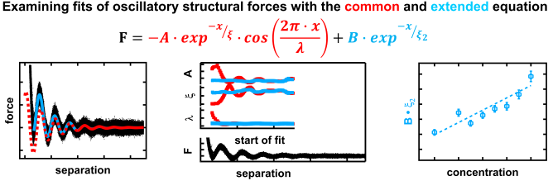
A simple extension of the commonly used fitting equation for oscillatory structural forces in case of silica nanoparticle suspensions
Beilstein J. Nanotechnol. 2018, 9, 1095–1107, doi:10.3762/bjnano.9.101
- ± 2 nm [34]. Silicon wafers (Wacker Chemie) were used as substrates. Preparation The silicon wafers were cleaned prior to each experiment by etching in a 1:1:5 solution of hydrogen peroxide (30% Th. Geyer GmbH & Co KG), ammonium hydroxide (30–33% Carl Roth GmbH & Co KG) and water at 60 °C for 10 min


Facile chemical routes to mesoporous silver substrates for SERS analysis
Beilstein J. Nanotechnol. 2018, 9, 880–889, doi:10.3762/bjnano.9.82
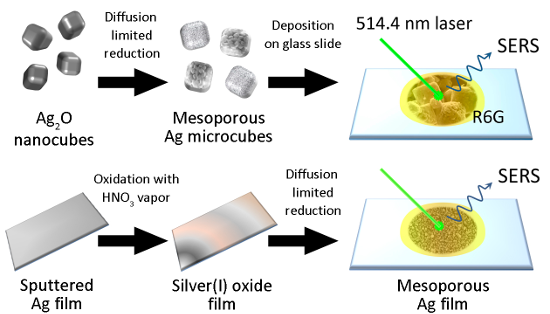
- long time in air. Mesoporous noble metals are mostly used as catalysts for high surface energy, gas sensor components, cell imaging mediators, etc. [5]. The most popular methods for mesoporous metal processing include acidic etching of bimetallic molts [6], electrochemical dealloying [7
- ], electroplating using templates [8], electrophoretic deposition of nanoparticles [9] and diverse techniques of hollow porous structure formation, for example, by aerosol pyrolysis or by smart chemical etching. The latter includes selective chemical etching of one metal component [10][11] or etching during
- galvanic replacement [12]. Among other relevant strategies, nanoparticle aggregation [13][14] or direct deposition of porous films without templates [15][16] should be mentioned. Chemical etching is a technically low demand process – an important advantage of this technique. However, it requires that the


The effect of atmospheric doping on pressure-dependent Raman scattering in supported graphene
Beilstein J. Nanotechnol. 2018, 9, 704–710, doi:10.3762/bjnano.9.65
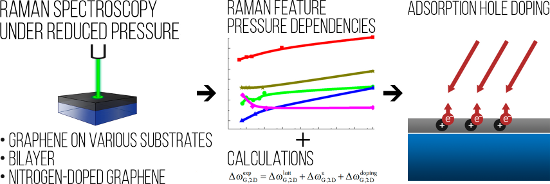
- /isopropyl alcohol mixture was used to wash graphene from etching products [31]. PMMA was removed by submerging the sample in glacial acetic acid (extra pure) [32] for 4 h. Graphene, doped with nitrogen, was prepared using a nitrogen-plasma treatment described elsewhere [33]. The Raman spectra were obtained


Perovskite-structured CaTiO3 coupled with g-C3N4 as a heterojunction photocatalyst for organic pollutant degradation
Beilstein J. Nanotechnol. 2018, 9, 671–685, doi:10.3762/bjnano.9.62
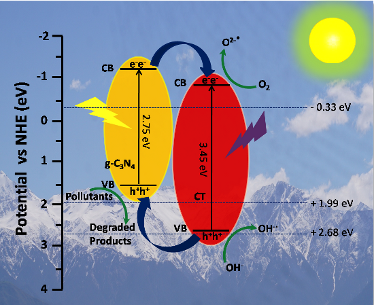
- at 550 °C with a temperature ramp of 3 °C/min for 4 h in static air and allowed to cool naturally to room temperature. The resultant yellow mass was well ground to form a fine powder. The thus-obtained powder was subjected to thermal oxidation etching in static air at 500 °C for 2 h with a ramp rate


Facile synthesis of ZnFe2O4 photocatalysts for decolourization of organic dyes under solar irradiation
Beilstein J. Nanotechnol. 2018, 9, 436–446, doi:10.3762/bjnano.9.42
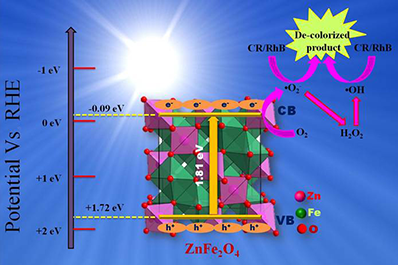
- in 120 min [19]. The photocatalytic activity of ZnFe2O4 has also been tested in the degradation of Rh B [24]. Zhao et al. have synthesized ZnFe2O4 through chemical etching followed by calcination and reported a degradation rate of 31% in 3 h [24]. Doong and co-workers have prepared ZnFe2O4 through a


Blister formation during graphite surface oxidation by Hummers’ method
Beilstein J. Nanotechnol. 2018, 9, 407–414, doi:10.3762/bjnano.9.40
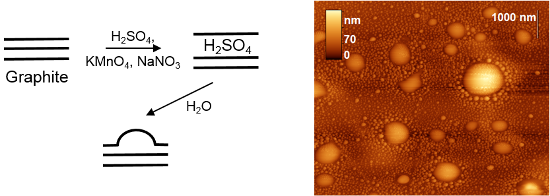
- wavy, probably due to the etching by the oxidation mixture. We found that the blister density becomes larger before the large cleavage steps (more than 10 nm). We believe that the blisters cannot expand under a rather thick graphite layer because of its high rigidity. The blisters did not form only


The nanofluidic confinement apparatus: studying confinement-dependent nanoparticle behavior and diffusion
Beilstein J. Nanotechnol. 2018, 9, 301–310, doi:10.3762/bjnano.9.30
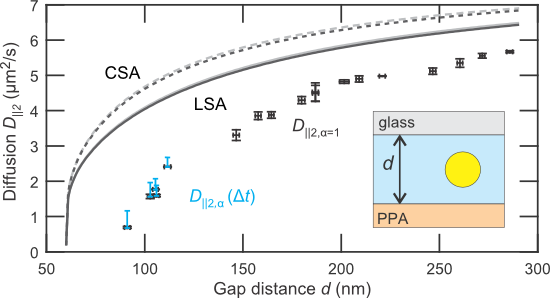
- photolithography. Third, the masking layer was removed by wet etching (TechniEtch ACI2, MicroChemicals and TechniStrip Cr01, MicroChemicals) of the unprotected areas, leaving behind a central metal-resist stack defining the position of the mesa. The area around the stack was etched for 75 s by concentrated
- hydrofluoric acid (49% HF) to define the mesa. A mesa height of 40–45 μm was measured with a profilometer (Dektak, Veeco), corresponding to an etch rate of ≈36 μm/min, similar to the rate observed by Zhu et al. [24]. Finally, the remaining masking layer was removed by etching, and the processed cover glass was



Review: Electrostatically actuated nanobeam-based nanoelectromechanical switches – materials solutions and operational conditions
Beilstein J. Nanotechnol. 2018, 9, 271–300, doi:10.3762/bjnano.9.29
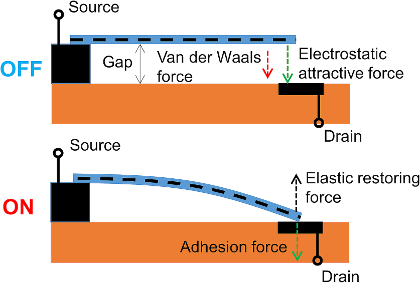
- nanomanipulation approaches. The top-down approach involves lithography, etching and coating technologies to fabricate device structures from bulk materials or thin films [7][19][23][39][47][48][49][50]. The combined approach of fabricating NEM switches requires subsequent transfer and alignment of synthesized
- was followed by etching of the SiO2 sacrificial layer for the release of Mo switching structures [19][115]. Switches with 300 nm thick and 500–700 nm wide switching elements with lengths 28–40 µm showed jump-in voltages in the range of 12–24 V for separation gaps of 100–150 nm. Cycling tests performed
- the best-achieved turn-on delay of 400 ns. When tested for durability, the Ru device withstood more than 2 × 10⁶ switching cycles at 1 kHz frequency. However, when downscaling Ru NEM switches, residual stress must be accurately controlled to avoid the buckling of beams after etching of the sacrificial


Design of photonic microcavities in hexagonal boron nitride
Beilstein J. Nanotechnol. 2018, 9, 102–108, doi:10.3762/bjnano.9.12
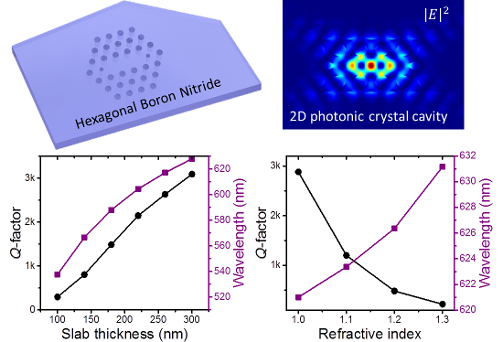
- spectral range, which overlap with the ZPLs of SPEs in hBN [24]. We further optimize the structures and model 1D nanobeam photonic crystals that exhibit a Q-factor in excess of ≈20,000. In the light of recent progress in direct-write etching of hBN [25], our results are promising for realization of high Q


Electron-driven and thermal chemistry during water-assisted purification of platinum nanomaterials generated by electron beam induced deposition
Beilstein J. Nanotechnol. 2018, 9, 77–90, doi:10.3762/bjnano.9.10
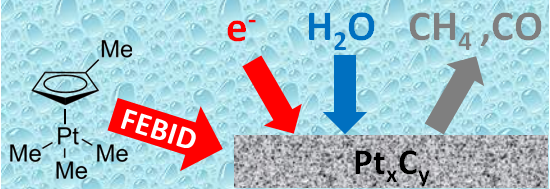
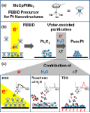
- be desorbed from the deposit as an intact unit. We propose that such reactions are relevant to the removal of carbon during deposit purification processes assisted by H2O and also to the recently reported electron-induced etching of graphene using an ice layer as resist [17]. Contributions from



The rational design of a Au(I) precursor for focused electron beam induced deposition
Beilstein J. Nanotechnol. 2017, 8, 2753–2765, doi:10.3762/bjnano.8.274
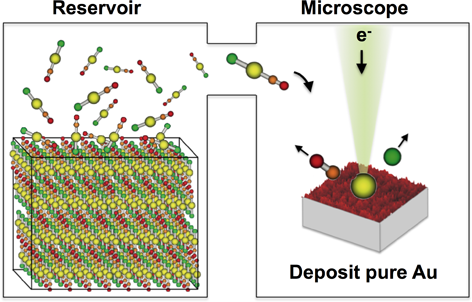
- processing (FEBIP) [1][2][3]. In the case of writing a precursor provides the ink, in the case of etching a precursor enables the removal of sample material. The precursors are usually gaseous, although they can also be liquid [4][5]. In the case of gaseous precursors, the gas is delivered to the sample


Patterning of supported gold monolayers via chemical lift-off lithography
Beilstein J. Nanotechnol. 2017, 8, 2648–2661, doi:10.3762/bjnano.8.265
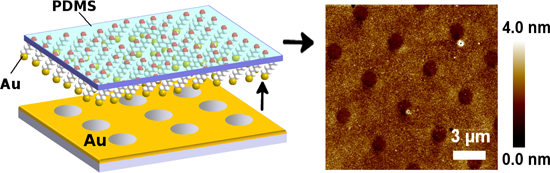
- patterned Au substrates prior to lift-off (e.g., selective wet etching), or by patterning alkanethiols on Au substrates to be reactive in selected regions but not others (controlled reactivity). In all cases, the regions containing Au–alkanethiolate layers have a sub-nanometer apparent height, which was
- first round of CLL. Here, topographically patterned PDMS stamps were used to lift-off hydroxyl-terminated self-assembled alkanethiols (Figure S1, Supporting Information File 1) [1][9]. Following this CLL step, Au in the lifted-off (exposed) regions was removed by wet etching to form Au features in the


Direct writing of gold nanostructures with an electron beam: On the way to pure nanostructures by combining optimized deposition with oxygen-plasma treatment
Beilstein J. Nanotechnol. 2017, 8, 2530–2543, doi:10.3762/bjnano.8.253
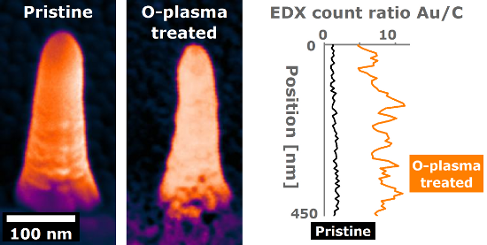
- break-up of precursor molecules. By varying the experimental parameters one can alter the deposition process and hence change the properties of deposited material, such as its shape, structure, and elemental composition. We note that no etching by the F found in the precursor was observed. Firstly, we

Strategy to discover full-length amyloid-beta peptide ligands using high-efficiency microarray technology
Beilstein J. Nanotechnol. 2017, 8, 2446–2453, doi:10.3762/bjnano.8.243
- silicon is used as the starting material. After standard cleaning, etching in diluted HF (aq), and rinsing in deionized water, single crystalline, Czochralski grown, silicon(100) slices were mounted in a conventional furnace operating at atmospheric pressure. Thermal oxidation was performed at a
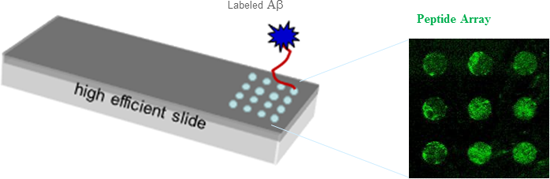
- [41][43]. The O2-plasma cleaning was performed using the plasma etching system, Sentech 591, using 60 sccm of oxygen fluxing for 2 min. The resulting epoxysilane coating provide a proper surface for the immobilization of peptides in a microarray format. Moreover, due to the low fluorescence background





