


Search results
Search for "films" in Full Text gives 1003 result(s) in Beilstein Journal of Nanotechnology. Showing first 200.
Influence of thickness and morphology of MoS2 on the performance of counter electrodes in dye-sensitized solar cells
Beilstein J. Nanotechnol. 2022, 13, 528–537, doi:10.3762/bjnano.13.44
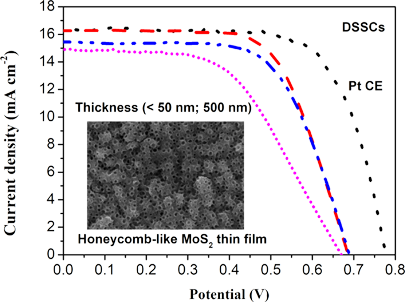
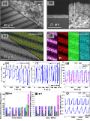
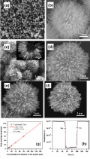
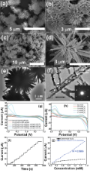
- disulfide (MoS2) was prepared on substrates coated with fluorine-doped tin oxide (FTO) to substitute the platinum counter electrode (CE) for dye-sensitized solar cells (DSSCs). Herein, we synthesized layered and honeycomb-like MoS2 thin films via the cyclic voltammetry (CV) route. Thickness and morphology
- of the MoS2 thin films were controlled via the concentration of precursor solution. The obtained results showed that MoS2 thin films formed at a low precursor concentration had a layered morphology while a honeycomb-like MoS2 thin film was formed at a high precursor concentration. Both types of MoS2
- allows for the direct deposition of MoS2 thin films from liquid precursors onto various conducting substrates with easily controlled thickness and morphology. Several reports have already been published that describe the control of structure and morphology of electrodeposited MoS2 to maximize its


Design and characterization of polymeric microneedles containing extracts of Brazilian green propolis
Beilstein J. Nanotechnol. 2022, 13, 503–516, doi:10.3762/bjnano.13.42
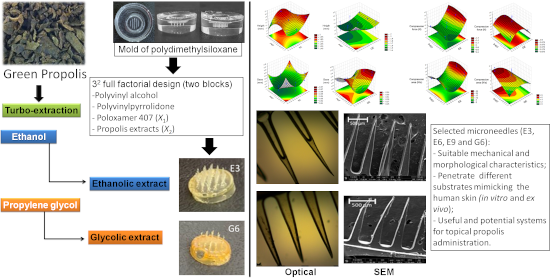
- , microneedles have been developed to cross the stratum corneum and enable the use of the transdermal route in different therapies [6]. Propolis (PRP) has already been studied in wound healing when incorporated in many vehicles, such as ointments, emulsions, hydrogels, films, or as hydroalcoholic or glycolic
- yielded more malleable structures. Previous studies have shown that films containing PVA and propylene glycol are more malleable due to the breaking of hydrogen bonds by the effect of propylene glycol [34]. The factorial design chosen allowed us to evaluate the characteristics of the formulations


Zinc oxide nanostructures for fluorescence and Raman signal enhancement: a review
Beilstein J. Nanotechnol. 2022, 13, 472–490, doi:10.3762/bjnano.13.40
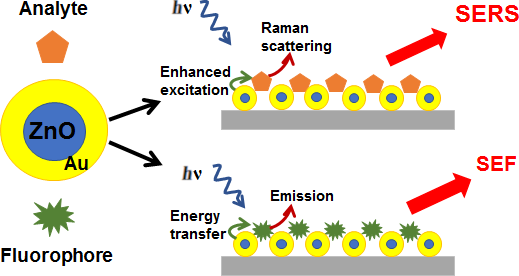
- , enhanced Raman scattering for periodic ZnO-elevated Au dimer nanostructures [12] and enhanced fluorescence emission signals from Al-doped ZnO films [13] were obtained. The development of hybrid nanocomposites based on ZnO and noble metals for fluorescence and Raman signal enhancement has recently attracted
- . Numerous studies have demonstrated the enhancement of both near band edge (NBE) and defect emissions using ZnO decorated with metallic NPs [92][93]. The study in [92] showed a PL enhancement of the Au–ZnO heterojunction system by an order of magnitude when ZnO thin films were incorporated with gold
- Au NPs. Photoluminescence spectra of ZnO films were studied after doping them with 29% Au annealed at 300 °C in air. After Au incorporation, a strong increase of both UV and visible ZnO emission bands was obtained [94]. Another study [95] obtained 1.5-fold to 2.8-fold enhancements for Au-decorated




Tunable superconducting neurons for networks based on radial basis functions
Beilstein J. Nanotechnol. 2022, 13, 444–454, doi:10.3762/bjnano.13.37
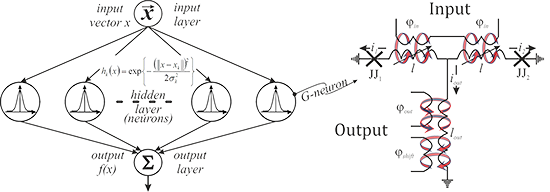
- and parametric amplifiers. But these devices use nonlinear properties of thin superconducting films at large values of carrying currents comparable to the critical current. However, for our purposes, linear inductors are required. So we consider only the case of a small current in comparison with the


A non-enzymatic electrochemical hydrogen peroxide sensor based on copper oxide nanostructures
Beilstein J. Nanotechnol. 2022, 13, 424–436, doi:10.3762/bjnano.13.35
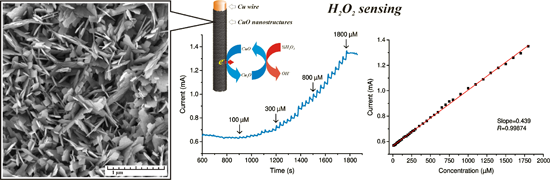
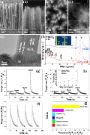
- on the surface of the main CuO layer (f). XRD pattern of CuO films. The red diffractogram corresponds to the sample obtained by thermal oxidation and the black diffractogram corresponds to the sample obtained by chemical hydrothermal oxidation. (a) CV results for a nanostructured CuO film in 0.1 M




A chemiresistive sensor array based on polyaniline nanocomposites and machine learning classification
Beilstein J. Nanotechnol. 2022, 13, 411–423, doi:10.3762/bjnano.13.34
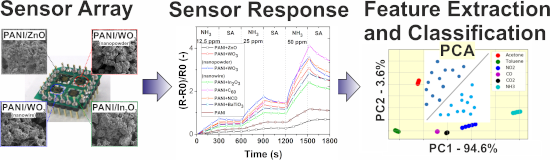
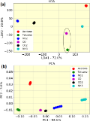
- Scikit-learn, which is one of the most popular machine learning libraries of python. Anaconda installer for Python 3.8 was used to run all the libraries and Jupyter Notebooks. This work contains parts from the thesis of J. Kroutil, "Gas sensor array with nanocomposite films", Czech Technical University




Micro- and nanotechnology in biomedical engineering for cartilage tissue regeneration in osteoarthritis
Beilstein J. Nanotechnol. 2022, 13, 363–389, doi:10.3762/bjnano.13.31
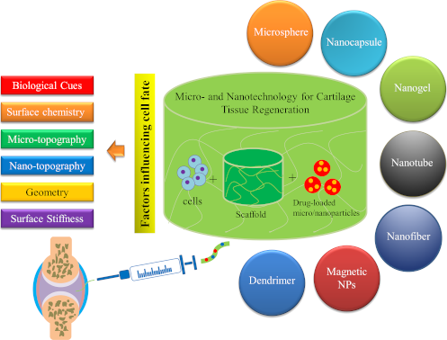
- films (nanofiber composites) coated with PLDLA nanofibers on the behavior of bovine chondrocytes [109]. The researchers observed that electrospun nanofibers supported the adhesion of cells and maintained the chondrocyte phenotype. Besides, the adhesivity and mechanics of the nanofiber-based scaffolds
- , and OH) and surface roughness to CNT, Antonioli et al. used oxygen plasma treatment and fabricated novel superhydrophilic VA–CTN films. This treatment could increase the wettability of the nanofilms to acquire appreciable cytocompatibility [134]. The chondrocytes expressed major chondrogenic markers


Selected properties of AlxZnyO thin films prepared by reactive pulsed magnetron sputtering using a two-element Zn/Al target
Beilstein J. Nanotechnol. 2022, 13, 344–354, doi:10.3762/bjnano.13.29
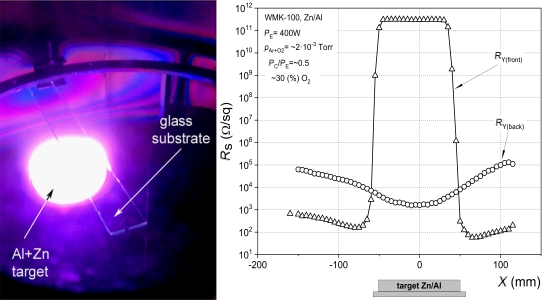
- Witold Posadowski Artur Wiatrowski Jaroslaw Domaradzki Michal Mazur Wroclaw University of Science and Technology, Faculty of Electronics, Photonics and Microsystems, Janiszewskiego 11/17, 50-372 Wrocław, Poland 10.3762/bjnano.13.29 Abstract AlxZnyO thin films were obtained by reactive pulsed
- magnetron sputtering. A two-element Zn/Al planar target was used as source material prepared in the form of a Zn disc (100 mm diameter) with Al rings pressed into its surface. The sputtering processes were carried out in a mixture of argon and oxygen. The films were deposited with a discharge power of PE
- = 400 W, which corresponded to a power density on the target surface of approximately 5 W/cm2. The films were deposited on glass strip substrates, placed symmetrically over the target, making it possible to obtain films with different composition and thickness. The film sheet resistance was measured as



Controllable two- and three-state magnetization switching in single-layer epitaxial Pd1−xFex films and an epitaxial Pd0.92Fe0.08/Ag/Pd0.96Fe0.04 heterostructure
Beilstein J. Nanotechnol. 2022, 13, 334–343, doi:10.3762/bjnano.13.28
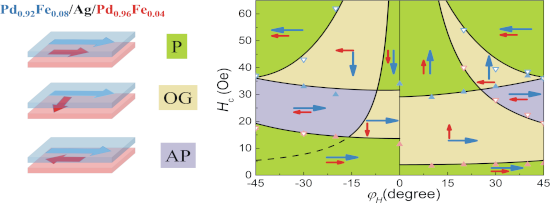
- , extending its functionality. Palladium–iron alloys Pd1−xFex with x < 0.10 are of strong practical interest for such MJJ and SSV structures [13][14][15][16][17] as a material for weak ferromagnetic links with tunable magnetic properties [18]. Epitaxial films of Pd1−xFex alloys with low iron content x are
- easy-plane ferromagnets with four-fold anisotropy in the film plane [18][19]. Our conjecture is a possibility to switch the magnetic moment of a Pd1−xFex alloy film between the steady directions (90° apart) as it had been done with epitaxial iron films [20][21][22]. To realize this idea, it is
- magnetic moment by 90° in epitaxial Pd1−xFex films has not been yet explored. In [18][19], based on magnetometry data, it was assumed that magnetization reversal occurs as a result of the coherent rotation of the magnetic moment by 180°; and in the study of the Pd0.96Fe0.04/VN/Pd0.92Fe0.08 structure [23


A broadband detector based on series YBCO grain boundary Josephson junctions
Beilstein J. Nanotechnol. 2022, 13, 325–333, doi:10.3762/bjnano.13.27
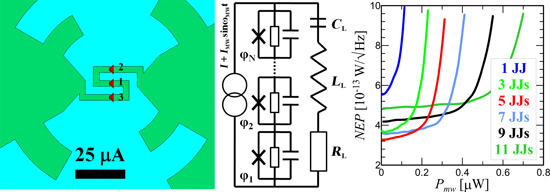
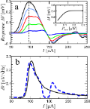
- deposition of YBaCuO films on a bicrystal substrate [25]. This problem can be mitigated by using ion irradiation [4][18][26] or step-edge junction technology [19], which will significantly increase the receiving properties and efficiency of the JJ series at high frequencies. While the integral received power



Interfacial nanoarchitectonics for ZIF-8 membranes with enhanced gas separation
Beilstein J. Nanotechnol. 2022, 13, 313–324, doi:10.3762/bjnano.13.26
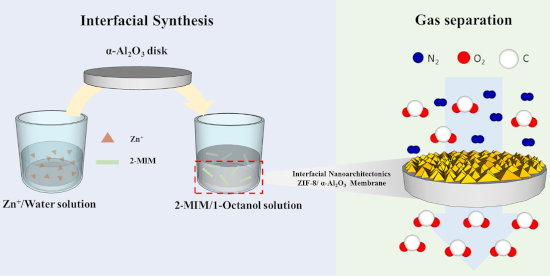
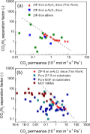
- films were synthesized via an interfacial method, while an interfacial method and a counter-diffusion method were adopted to synthesize α-Al2O3-supported ZIF-8 membranes for CO2/N2 gas separation. Materials and Methods Chemicals Zinc nitrate hexahydrate, 2-methylimidazole (2-MIM), sodium formate of
- reagent grade, methanol and 1-octanol of analysis grade were purchased from Sigma-Aldrich. Deionized water produced with a Merck Millipore system was used. The α-Al2O3 disks (30 mm in diameter and 1 mm in thickness) were purchased from Fraunhofer IKTS. Synthesis of ZIF-8 free-standing films Zinc nitrate
- -ray diffraction were measured on a Rigaku Ultima IV with Cu Kα radiation (λ = 1.5418 Å) to check the crystallinity of the synthesized ZIF-8 thin films. The morphology of the supports, the free-standing thin films, and the supported membranes was observed by FE-SEM (NovaTM NanoSEM 230). The elemental


Investigation of a memory effect in a Au/(Ti–Cu)Ox-gradient thin film/TiAlV structure
Beilstein J. Nanotechnol. 2022, 13, 265–273, doi:10.3762/bjnano.13.21
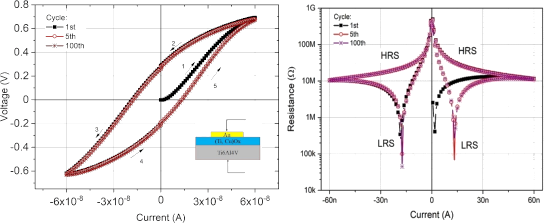
- analysis of resistive switching properties observed in a Au/(Ti–Cu)Ox/TiAlV structure with a gradient distribution of Cu and Ti along the (Ti–Cu)Ox thin film thickness. Thin films were prepared via multisource reactive magnetron co-sputtering. The programmed profile of the pulse width modulation
- resistive switching behavior. Results of optical, X-ray, and ultraviolet photoelectron spectroscopy measurements allowed us to elaborate the scheme of the bandgap alignment of the prepared thin films with respect to the Au and TiAlV electrical contacts. Detailed structure and elemental profile
- previous works [41][42] have shown that an interesting alternative to the well-known conventional structures, with a multilayer stack of thin films with different electrical conducting and nonconducting properties described above, could be a thin film the composition of which changes along its thickness



Relationship between corrosion and nanoscale friction on a metallic glass
Beilstein J. Nanotechnol. 2022, 13, 236–244, doi:10.3762/bjnano.13.18
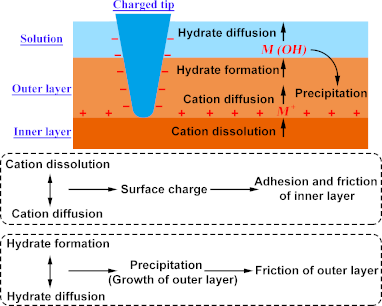
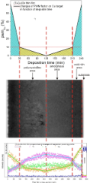
- films form on most metal surfaces and act as a barrier to the corrosive environment, thus impeding further corrosion. The corrosion properties of MGs, for example, the ability to passivate and to remain in the passive state in corrosive aqueous solutions, have been addressed in many studies using
- electrochemical methods, often combined with surface analytical techniques [13][14][15]. Wang et al. [13] reported that the passive oxide films are grown as a double layer structure on MGs with a corrosion product layer underlying an inner barrier layer in NaCl and Na2SO4 solutions. Since most metals and alloys
- are susceptible to corrosion when exposed to environmental conditions, the role of surface chemistry for friction must be investigated. At the macroscale, the existence of metal oxide surface films on MGs enhanced the wear resistance in corrosive solutions and the fluid lubricating films formed by


Piezoelectric nanogenerator for bio-mechanical strain measurement
Beilstein J. Nanotechnol. 2022, 13, 192–200, doi:10.3762/bjnano.13.14
- usually non-polar as their structural packing is anti-parallel [21]. Usually, PVDF is non-reactive towards acids and bases. It was discovered in 1969 that PVDF can produce electrical signals. Thus, it can be used in various applications of energy harvesting, in various forms such as fibers, films
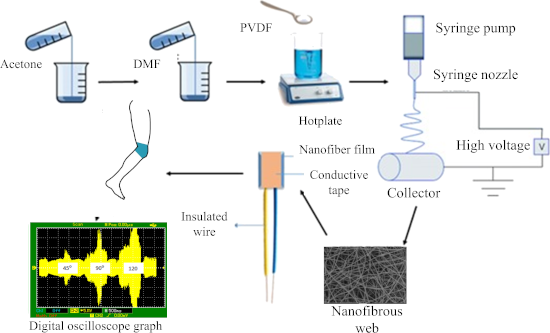
- through three different PVDF solutions (12, 14, and 16 wt %). The secondary electron images, taken at 10,000× and 40,000×, magnifications of prepared PVDF electrospun films from a 12 wt % polymer solution are shown in Figure 2A. The images show that the nanofibers have a more bead-on-string-like structure


Low-energy electron interaction and focused electron beam-induced deposition of molybdenum hexacarbonyl (Mo(CO)6)
Beilstein J. Nanotechnol. 2022, 13, 182–191, doi:10.3762/bjnano.13.13
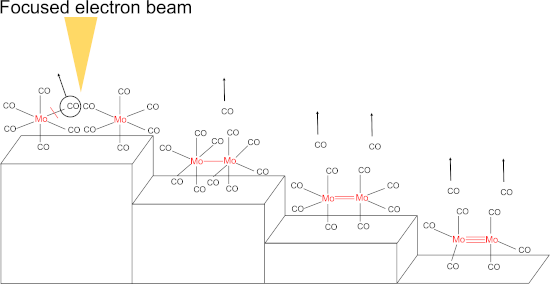
- ; dissociative ionisation; focused electron beam-induced deposition; molybdenum hexacarbonyl; Introduction Studies on Mo-based semiconductor materials for the application as thin films with wafer-scale thickness homogeneity [1] and for solar hydrogen production [2] have attracted interest in the last years. For


Tin dioxide nanomaterial-based photocatalysts for nitrogen oxide oxidation: a review
Beilstein J. Nanotechnol. 2022, 13, 96–113, doi:10.3762/bjnano.13.7
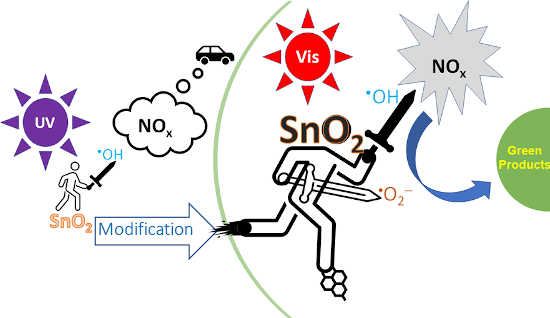
- cell of rutile SnO2, a Sn4+ ion is bonded to six oxygen ions, and every oxygen atom is coordinated by three Sn4+ ions, forming a (6, 3) coordination structure [44]. When SnO2 materials are prepared as thin films with two to eight layers the bandgap is larger than that of bulk SnO2 and decreases with
- thin film materials that can replace powder materials, (5) adhering the catalyst materials on commercial films such as polypropylene, polytetrafluorethylene, or PM2.5 films for real-life applications, such as air filters and NOx gas treatment membranes; and (6) applying the materials in biological


Sputtering onto liquids: a critical review
Beilstein J. Nanotechnol. 2022, 13, 10–53, doi:10.3762/bjnano.13.2

- research papers for almost 20 years until 1996 when two research groups reported SoL experiments. Ye et al. studied the formation of silver films on the surface of silicon oil [10] while Wagener et al. prepared silver and aluminium NPs by deposition onto silicon oil using various experimental conditions
- SoL is presented including monometallic and alloy NPs, oxide NPs, thin films, and nanocomposites and their promising optical, luminescence, and catalytic properties. Review 1 Theoretical background 1.1 Techniques available for the synthesis of NPs The mass production of NPs with controlled
- gauge, the electric power supply, and the gas inlets. Sputtering processes have been studied and developed for a long time [7][8] and have been implemented in the coating industry to deposit nanometer-scale films onto various solid substrates. Such functional coatings must have tailored physicochemical






Measurement of polarization effects in dual-phase ceria-based oxygen permeation membranes using Kelvin probe force microscopy
Beilstein J. Nanotechnol. 2021, 12, 1380–1391, doi:10.3762/bjnano.12.102
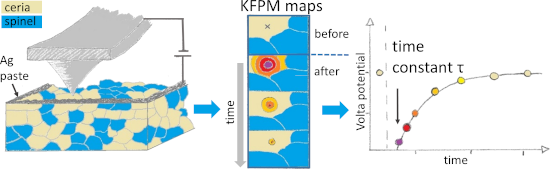
- composite. The KPFM measurements were performed at room temperature and show diffusion coefficients in the range of 3 × 10⁻¹³ cm2·s−1, which is comparable to values measured for single-phase Gd-doped ceria thin films using the same method. Keywords: ceria; diffusion coefficient; Kelvin probe force
- films using the same experimental setup [24]. As the introduced gradient in the composite material was in most cases not circular as observed for the single-phase materials, one of the biggest sources of error for the calculation of the diffusion coefficients shown in Table 1 is the determination of the
- to literature values for single-phase Ce0.9Gd0.1O1.95 thin films from [24] obtained with the same method. The diffusion length L was determined from the average radius of the area affected by polarization, which could be measured in the KPFM map. The error of the chemical diffusion coefficient is in


Chemical vapor deposition of germanium-rich CrGex nanowires
Beilstein J. Nanotechnol. 2021, 12, 1365–1371, doi:10.3762/bjnano.12.100
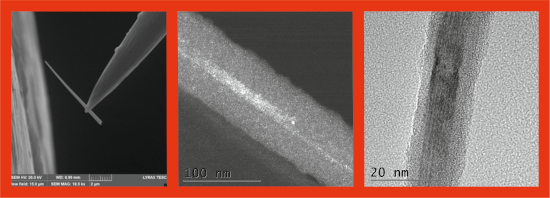
- prepared, too. Magnetic properties were measured and the growth mechanism was discussed [10]. The formation of Cr/Ge nanoparticles during the epitaxial growth of Cr/Ge films and their magnetic properties were studied to understand the ferromagnetic semiconductor behavior [11]. In this work, we made an



Plasmon-enhanced photoluminescence from TiO2 and TeO2 thin films doped by Eu3+ for optoelectronic applications
Beilstein J. Nanotechnol. 2021, 12, 1271–1278, doi:10.3762/bjnano.12.94
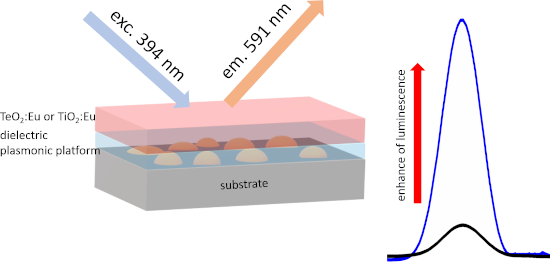
- luminescence properties of europium-doped titanium dioxide and tellurium oxide thin films enhanced by gold plasmonic nanostructures. We propose a new type of plasmon structure with an ultrathin dielectric film between plasmonic platform and luminescent material. Plasmonic platforms were manufactured through
- thermal annealing of the gold thin film. Thermal dewetting of gold film results in spherical gold nanostructures with average dimensions of 50 nm. Both, luminescent TiO2:Eu and TeO2:Eu films were deposited by RF magnetron sputtering from mosaic targets. The morphology of the gold nanostructures was
- . Potential new materials can be found through the computation of luminescent thin films and plasmonic platforms. Such a hybrid structure can be formed by thin oxide layers doped with rare-earth ions deposited on metal nanostructures [1][2][3]. Plasmonic resonance can be observed in metallic nanostructures


Enhancement of the piezoelectric coefficient in PVDF-TrFe/CoFe2O4 nanocomposites through DC magnetic poling
Beilstein J. Nanotechnol. 2021, 12, 1262–1270, doi:10.3762/bjnano.12.93
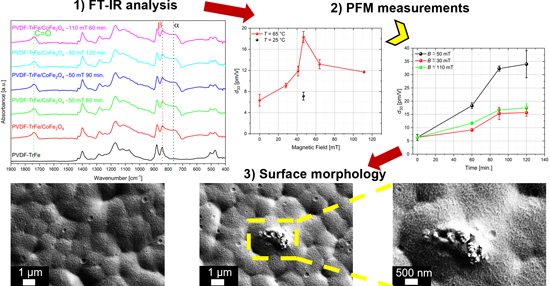
- %. After curing, the spin coated nanocomposite thin films were exposed to a DC magnetic field for 1 h at 65 °C. In Figure 3 the d33 values are reported as function of the applied DC magnetic field strength. As can be seen, the piezoelectric coefficient increases when the magnetic field is increased and
- in the fabrication of energy harvesting devices or wearable sensors for flexible electronics applications. Experimental The PVDF-TrFe/CoFe2O4 nanocomposite thin films were produced through spin coating. The CoFe2O4 nanoparticles (Sigma-Aldrich, 99%) were dispersed in N,N-dimethylformamide (DMF, Sigma
- °C and a DC magnetic field was applied through a ferromagnetic core (Figure 8). The morphology of the PVDF-TrFe/CoFe2O4 nanocomposite thin films was investigated using a field-emission scanning electron microscope (FESEM, Auriga, Carl Zeiss) operated with an accelerating voltage of 5 kV. Chemical


Electrical, electrochemical and structural studies of a chlorine-derived ionic liquid-based polymer gel electrolyte
Beilstein J. Nanotechnol. 2021, 12, 1252–1261, doi:10.3762/bjnano.12.92
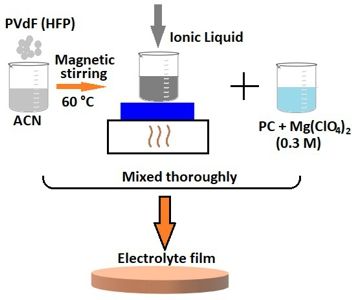
- fluoride-co-hexafluoropropylene) (PVdF-HFP) as a host polymer. The electrolyte films were synthesized by using the solution casting technique. The as-prepared films were free-standing and transparent with good dimensional stability. Optimized electrolyte films exhibit a maximum room-temperature ionic
- electrolyte film which contains 30 wt % of the ionic liquid. The optimized films have good potential to be used as electrolyte materials for energy storage applications. Keywords: ionic liquid; polymer gel electrolytes; solution casting technique; transference number; Introduction For the past two decades
- ionic liquid [BDiMIM][Cl], the host polymer PVdF-HFP, and the salt magnesium perchlorate (Mg(ClO4)2) were used to prepare polymer electrolyte films. The synthesized films were characterized by different microscopic and electrochemical techniques. Results and Discussion Structural characterization The



Morphology-driven gas sensing by fabricated fractals: A review
Beilstein J. Nanotechnol. 2021, 12, 1187–1208, doi:10.3762/bjnano.12.88
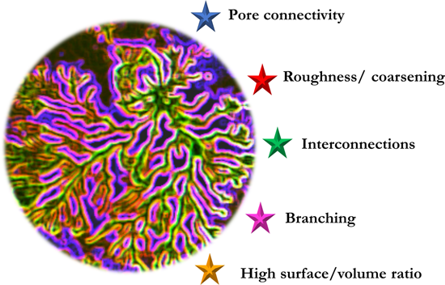
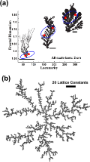
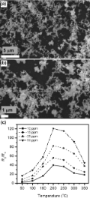
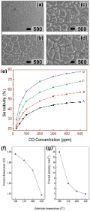
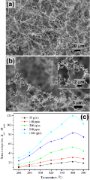
- metal oxide (SMO) sensors are most popular due to their low cost, simplicity, easy fabrication, and wide range of gas detection capabilities [9]. Thin films and nanostructures exhibit better sensing characteristics. Various researchers have reported structures with morphologies such as nanowires (NWs
- geometry. Plugotarenko et al. employed sol–gel method to prepare SiO2·SnOx·CuOy nanofilms from a tetraethoxysilane (TEOS) alcohol solution modified by metal salts and applied the samples for NO2 sensing [50]. The SiO2·SnOx·CuOy films annealed at 500 °C exhibited a sample surface consisting of crater-like
- a lower value of fractal dimension is more effective in sensing NO2 gas and lowers the optimum operating temperature. Chen et al. used pulsed laser deposition for growing different SnO2 thin films by varying the substrate temperature. The obtained films exhibited fractal features [43]. In another










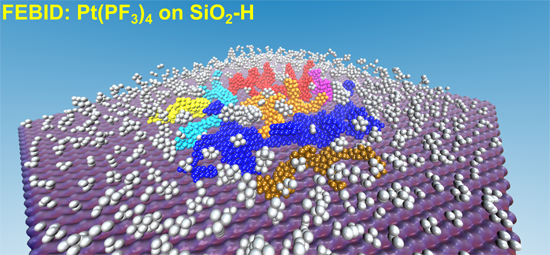
Irradiation-driven molecular dynamics simulation of the FEBID process for Pt(PF3)4
Beilstein J. Nanotechnol. 2021, 12, 1151–1172, doi:10.3762/bjnano.12.86
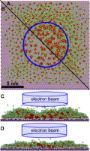
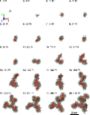
- the whole simulated surface). The latter case is relevant for surface science experiments on irradiation of thin films of adsorbed precursor molecules. The yields of SE and BSE and the corresponding spatial distributions depend on the energy of the PE beam and the material of a substrate. These








First-principles study of the structural, optoelectronic and thermophysical properties of the π-SnSe for thermoelectric applications
Beilstein J. Nanotechnol. 2021, 12, 1101–1114, doi:10.3762/bjnano.12.82
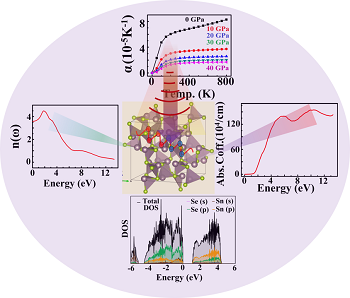
- remarkably high value of ZT ≈ 2.6 at 773 K along the b axis has been reported, which is the world record so far [1][5]. Also, for the SnSe thin films and 2D sheets, the experimental ZT values were relatively low; the maximum value can only reach 0.28 at 675 K [67][68]. One recent study shows that the Gd





