


Search results
Search for "high resolution" in Full Text gives 781 result(s) in Beilstein Journal of Nanotechnology. Showing first 200.
Imaging of SARS-CoV-2 infected Vero E6 cells by helium ion microscopy
Beilstein J. Nanotechnol. 2021, 12, 172–179, doi:10.3762/bjnano.12.13
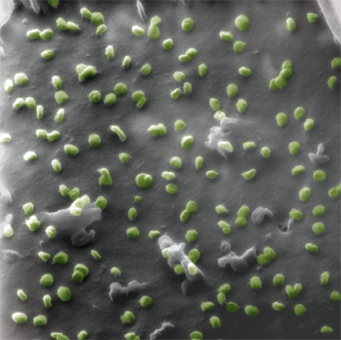
- charge compensation, which irradiates the sample with a diffuse beam of electrons. This eliminates the need for a conductive coating, and allows for a direct view on nanoscale structures [6][25]. Here, we demonstrate the benefits of high-resolution HIM by imaging SARS-CoV-2 interacting with Vero E6 cells
- observed for human coronavirus229E and quantified in HeLa cells by Wang and co-workers [38]. However, the metal coating applied by Wang et al. is clearly visible at high resolution in the SEM images as a rough layer on the cell membrane that hides the true topography [25][39]. In contrast, the HIM images


Numerical analysis of vibration modes of a qPlus sensor with a long tip
Beilstein J. Nanotechnol. 2021, 12, 82–92, doi:10.3762/bjnano.12.7
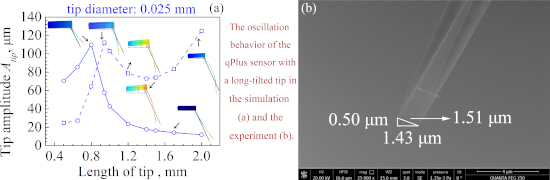
- can be detected due to the multi-directional vibration of the tip [17]. Furthermore, by using a qPlus sensor with a long tilted tip, vertical incident light can be coupled to the tip apex. This setup has the added benefit of locating the exact target location with high resolution when it is combined






The role of gold atom concentration in the formation of Cu–Au nanoparticles from the gas phase
Beilstein J. Nanotechnol. 2021, 12, 72–81, doi:10.3762/bjnano.12.6
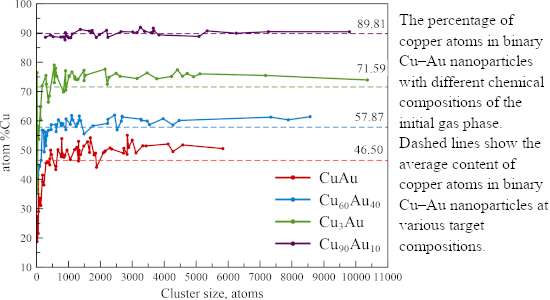
- amorphous carbon or magnesium oxide substrates by the laser evaporation of a bulk alloy with various stoichiometric compositions (Cu–Au, Cu3Au, and Au3Cu). An analysis of individual clusters carried out by using electron diffraction and high-resolution transmission electron microscopy (HRTEM) showed that Cu


Bulk chemical composition contrast from attractive forces in AFM force spectroscopy
Beilstein J. Nanotechnol. 2021, 12, 58–71, doi:10.3762/bjnano.12.5
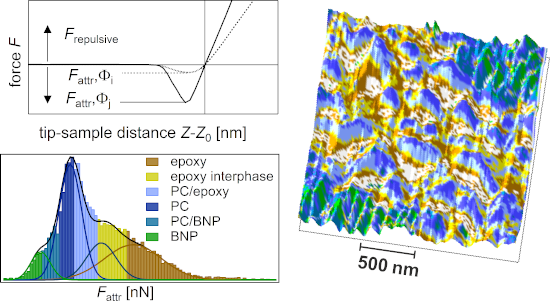
- mixture. The mechanisms which cause the nano-effects are often described and hypothesized but seldom directly shown [11][12][13][14]. High-resolution measurements of the mechanical properties of nanocomposites give insights into these mechanisms, since they are able to separately measure material phases
- and interphases. Ideally, for a complete understanding of the underlying mechanism, a full structure–property relation is desired. A counterpart for the high-resolution physical properties (“how”) is needed to describe the local structure (“what”). For that purpose, one major drawback of AFM force
- for this task, a high-resolution method of AFM force spectroscopy was used, which is called intermodulation AFM. This dynamic method is able to scan the sample with a resolution comparable to the tapping-mode images, producing the equivalent of a FDC at each pixel. A 2 × 2 µm topography scan of the


Bio-imaging with the helium-ion microscope: A review
Beilstein J. Nanotechnol. 2021, 12, 1–23, doi:10.3762/bjnano.12.1
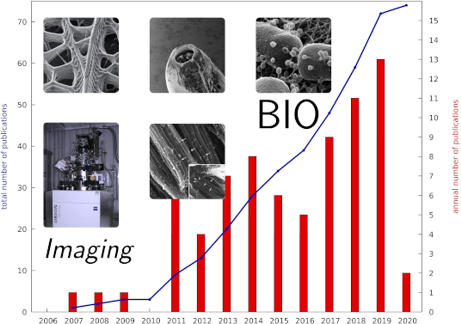
- samples, rendering HIM a promising high-resolution imaging technique for biological samples. Starting with studies focused on medical research, the last decade has seen some particularly spectacular high-resolution images in studies focused on plants, microbiology, virology, and geomicrobiology. However
- imaging of biological specimens. We also discuss some technical features of this unique type of instrument and highlight some of the new advances which will likely become more widely used in the years to come. Keywords: bio-imaging; flood gun; helium-ion microscopy; high resolution; HIM; HIM-SIMS
- ; ionofluorescense; Review Introduction Since its commercialisation in 2006 [1][2][3][4][5], the helium-ion microscope (HIM) has become a well-established tool for nanoscale imaging and nanoscale fabrication in physics and materials science. It is attractive for those applications as it combines high-resolution


Free and partially encapsulated manganese ferrite nanoparticles in multiwall carbon nanotubes
Beilstein J. Nanotechnol. 2020, 11, 1891–1904, doi:10.3762/bjnano.11.170
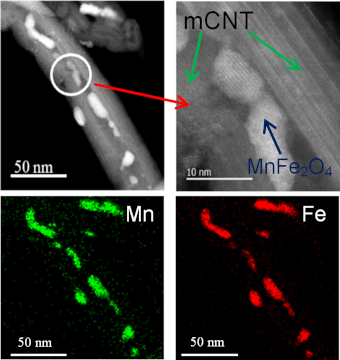
- , and Mössbauer characterization The X-ray diffraction patterns were acquired using Cu Kα radiation (λ = 1.5404 Å) at a Philips PW1820 diffractometer. The instrument was calibrated using a silicon disc. Free manganese ferrite nanoparticles were characterized using high-resolution transmission electron




Scanning transmission imaging in the helium ion microscope using a microchannel plate with a delay line detector
Beilstein J. Nanotechnol. 2020, 11, 1854–1864, doi:10.3762/bjnano.11.167
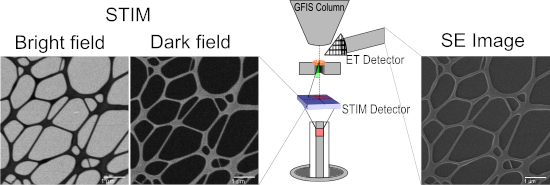
- microscopy; scanning transmission ion microscopy; Introduction The helium ion microscope (HIM) is an instrument that has already proven its value for high-resolution imaging, compositional analysis, nanofabrication, and materials modification [1][2]. It generates a focused helium (or neon) ion beam with sub


Piezotronic effect in AlGaN/AlN/GaN heterojunction nanowires used as a flexible strain sensor
Beilstein J. Nanotechnol. 2020, 11, 1847–1853, doi:10.3762/bjnano.11.166
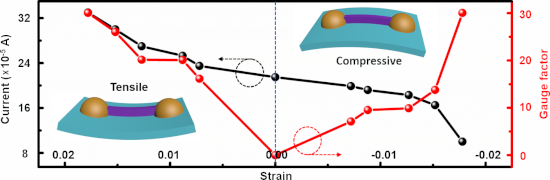
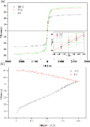
- contrast. Detailed structural parameters are shown in the Experimental section. Figure 1b shows a scanning transmission electron microscopy (STEM) image taken of the AlGaN/AlN/GaN heterojunction (left panel) and a corresponding high-resolution transmission electron microscopy (HRTEM) image of the GaN layer


Self-standing heterostructured NiCx-NiFe-NC/biochar as a highly efficient cathode for lithium–oxygen batteries
Beilstein J. Nanotechnol. 2020, 11, 1809–1821, doi:10.3762/bjnano.11.163
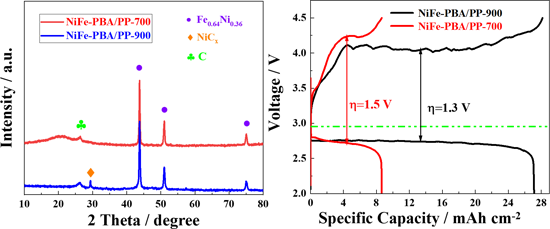
- PANalytical B.V. Empyean X-ray diffractometer with Cu Kα radiation (λ = 1.5406 Å). The surface morphology of the film catalyst was studied via scanning electron microscopy (SEM) on a Carl Zeiss Ultra Plus scanning electron microscope. Transmission electron microscopy (TEM), high-resolution TEM (HR-TEM), and
- energy-dispersive X-ray spectroscopy (EDX) were carried out on a FEI Tecnia G2 F20 high-resolution transmission electron microscope operating at 200 kV. The surface composition of the samples was analyzed by X-ray photoelectron spectroscopy (XPS) on a ESCALAB 250Xi electron energy spectrometer using Al
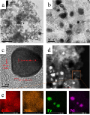
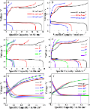
- of NiFe-PBA (inset, black curve). (a–c) HR-TEM images and (d,e) element mappings of NiFe-PBA/PP-900. High-resolution XPS spectra of NiFe-PBA/PP-T calcined at 700 (top panels) and 900 °C (bottom panels) for (a) C 1s, (b) N 1s, (c) Ni 2p, and (d) Fe 2p. (a) In situ cyclic voltammetry curves of Li–O2






Molecular dynamics modeling of the influence forming process parameters on the structure and morphology of a superconducting spin valve
Beilstein J. Nanotechnol. 2020, 11, 1776–1788, doi:10.3762/bjnano.11.160
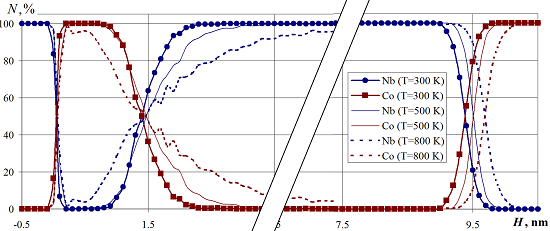
- layered nanostructure consisting of Nb, CuNi, CoOx and Co layers, prepared by magnetron sputtering. High-resolution transmission electron microscopy (HR-TEM) image of a layered Co, CoOx and CuNi nanostructure prepared by magnetron sputtering. Sketch of a Nb/Co spin-valve nanosystem. The numbers next to
- metamaterials based on them using multilevel mathematical modeling” (Section 2 of this article). This work was partially supported by the European Union H2020-project “SPINTECH” under grant agreement Nr. 810144 (high-resolution TEM images in Figure 1 and 2) and by the Russian Science Foundation Grant (RSF) Nr


Mapping of integrated PIN diodes with a 3D architecture by scanning microwave impedance microscopy and dynamic spectroscopy
Beilstein J. Nanotechnol. 2020, 11, 1764–1775, doi:10.3762/bjnano.11.159
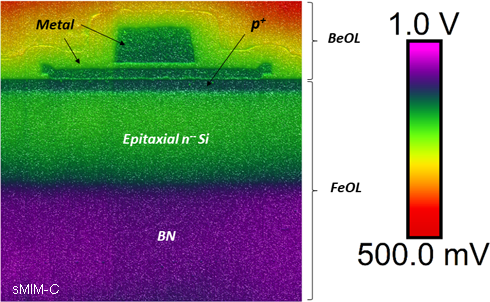
- . In addition, a high-resolution dynamic parametric study based on the acquisition of sMIM signals as a function of the applied VDC bias, at each pixel, is carried out. Experimental sMIM Measurements Based on AFM, the sMIM mode is a microwave mode in which an incident microwave signal travels through
- again the signature of the diffused doping is provided. At the same time, the sMIM-C response (Figure 6d) localizes and reveals, with a very high resolution, the filling oxide and the carrier profile around the deep trench. Even the dielectric layer thickness of 40 nm can be determined (Figure 6d) in
- applied voltage can be extracted. The availability of a C–V (sMIM-C as a function of V) spectrum in every pixel allows for the extraction of a high-resolution map of the flatband voltage and pn junction depletion zones. This illustrates the capability to reveal sample properties that are either not


Direct observation of the Si(110)-(16×2) surface reconstruction by atomic force microscopy
Beilstein J. Nanotechnol. 2020, 11, 1750–1756, doi:10.3762/bjnano.11.157
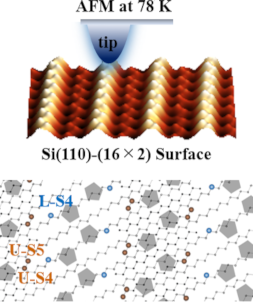
- succeeded in obtaining high-resolution images of pentagons and step edges by AFM. In this work, we present key evidence to confirm the reconstruction model in which each pentagon consists of five atoms and single atoms exist around step edges, which has not been reported using STM. Methods The experiments
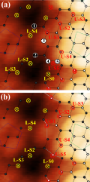
- pentagons actually consisted of five atoms. A non-pentagonal structure in the 16×2 reconstruction and the disorder region were observed with high resolution, and the defect structure of the pentagon due to the lack of a P3 atom in the structure of pentagon was observed. We also observed the atoms of U-S4, U



Out-of-plane surface patterning by subsurface processing of polymer substrates with focused ion beams
Beilstein J. Nanotechnol. 2020, 11, 1693–1703, doi:10.3762/bjnano.11.151
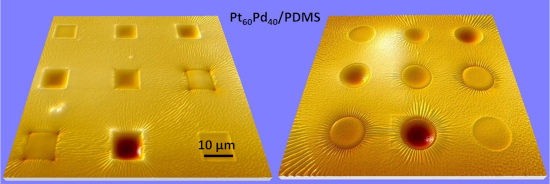
- to avoid possible interactions between the irradiated areas, such as the overlaps originating from transverse ion straggle. The samples were characterized with AFM and HIM. The measurements of the surface height were performed with a Veeco Dimension 3100 AFM instrument in the tapping mode. High
- -resolution imaging with a He+ ion-beam probe was performed using a very small beam current (below 0.1 pA) to minimize imaging artifacts from radiation damage generated by the probe beam. (a) AFM image and (b) the corresponding depth profile of a fragment of the surface depression produced in a 5 nm Pt60Pd40


The influence of an interfacial hBN layer on the fluorescence of an organic molecule
Beilstein J. Nanotechnol. 2020, 11, 1663–1684, doi:10.3762/bjnano.11.149
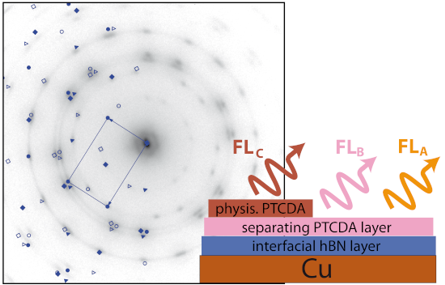
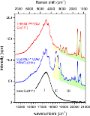
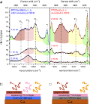
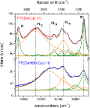
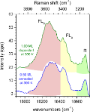
- . The special sensitivity of the RB mode to the interfacial bonding was also seen in high-resolution electron loss spectra [59]. We also compare with PTCDA multilayers. The Raman shifts of the multilayers was found at similar energies on all three substrates, that is, at 1,309.8 cm−1 for multilayers of





PTCDA adsorption on CaF2 thin films
Beilstein J. Nanotechnol. 2020, 11, 1615–1622, doi:10.3762/bjnano.11.144
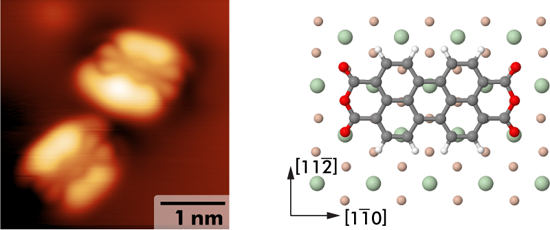
- , with PTCDA as the probe molecule. In particular, the adsorption properties of PTCDA on CaF2/CaF1/Si(111), CaF1/Si(111), as well as Si(111)-(7 × 7) surfaces are experimentally investigated by high-resolution scanning tunnelling microscopy (STM) and the adsorption geometry on a CaF2(111) slab is


Cu2O nanoparticles for the degradation of methyl parathion
Beilstein J. Nanotechnol. 2020, 11, 1546–1555, doi:10.3762/bjnano.11.137
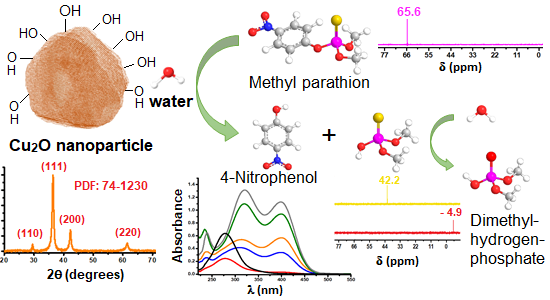
- different NPs sizes (16, 29 and 45 nm), determined with X-ray diffraction (XRD) and high-resolution transmission electron microscopy (HRTEM), were synthesized using a modified Benedict’s reagent. 1H nuclear magnetic resonance (NMR) results show that the hydrolytic degradation of MP leads to the formation of
- mm, a step width of 0.01407°, and 0.5 s time per step were used. Qualitative analysis was performed with the DiffracPlus Eva software package (Bruker AXS, Germany) using the PDF-2 database. High-resolution transmission electron microscopy (HRTEM) images were obtained in a JEOL 2010F microscope
- and a HSA of 50 eV pass energy. Results and Discussion Characterization of Cu2O NPs with powder XRD and HRTEM The structural and morphological characterization of Cu2O NPs was carried out using powder X-ray diffraction and high-resolution transmission electron microscopy. Copper(I) oxide is


Optically and electrically driven nanoantennas
Beilstein J. Nanotechnol. 2020, 11, 1542–1545, doi:10.3762/bjnano.11.136

- configurations with increasing control over their optical performance [1][2][3][4]. The strong local near-field enhancement by plasmonic nanoantennas is being harnessed for high sensitivity, high-resolution optical nanospectroscopy techniques [5], such as surface-enhanced or tip-enhanced Raman spectroscopy (SERS
Helium ion microscope – secondary ion mass spectrometry for geological materials
Beilstein J. Nanotechnol. 2020, 11, 1504–1515, doi:10.3762/bjnano.11.133
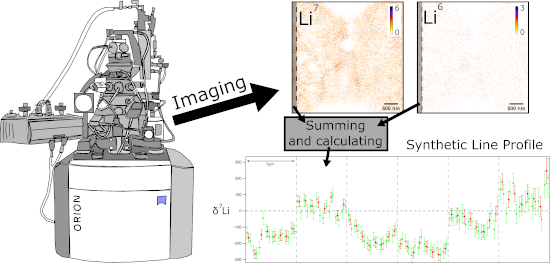
- fill a critical length-scale gap in the field of microanalysis, with resolutions second only to the atom probe, but with field of views of the order of micrometres, allowing for high resolution over a relatively large sample area. The HIM–SIMS is therefore a useful tool for a wide range of geological



Self-assembly and spectroscopic fingerprints of photoactive pyrenyl tectons on hBN/Cu(111)
Beilstein J. Nanotechnol. 2020, 11, 1470–1483, doi:10.3762/bjnano.11.130
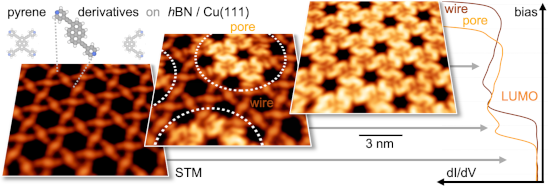
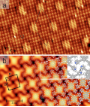
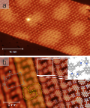
- a modulation of the molecular electronic structure imposed by the electronically corrugated hBN/Cu(111) support, as discussed in detail below [18][28][37][38]. The high-resolution STM data in Figure 2b gives a closer look at the intramolecular features. Along with the pyrene core, imaged as a large
- lattice and the substrate-induced long-range modulation of the electronic structure are resolved (compare to Figure 2a). High-resolution data (Figure 4b) allowed us to discern individual molecules with submolecular features. Each molecule was characterized by three protrusions, which corresponded to the
- summarized in Figure 6a. Figure 7 shows the high-resolution STM images of the pyrene derivatives 1 and 3 recorded at bias voltages where the MOs were accessible. In contrast to imaging at bias voltages within the HOMO–LUMO gap, where the STM images essentially reflect the molecular shape (Figure 2b, Figure


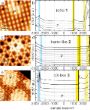


Wafer-level integration of self-aligned high aspect ratio silicon 3D structures using the MACE method with Au, Pd, Pt, Cu, and Ir
Beilstein J. Nanotechnol. 2020, 11, 1439–1449, doi:10.3762/bjnano.11.128
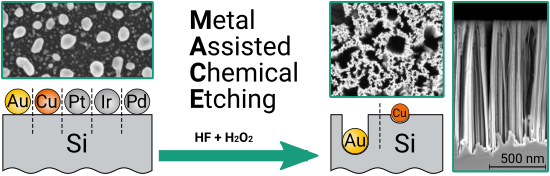
- fabrication uses cost-efficient subprocesses and omits expensive processes such as nanopatterning with high-resolution lithography. One low-cost method for the fabrication of such high aspect ratio templates and structures is metal-assisted chemical etching (MACE). This process uses a noble metal catalyst


Protruding hydrogen atoms as markers for the molecular orientation of a metallocene
Beilstein J. Nanotechnol. 2020, 11, 1432–1438, doi:10.3762/bjnano.11.127
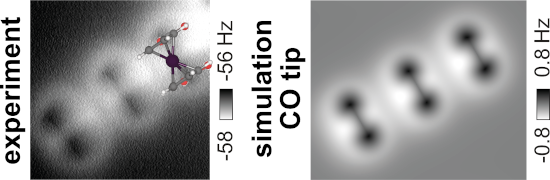
- of the ferrocene moiety, herein on CaF2(111) surfaces, by using the protruding hydrogen atoms as markers. Keywords: calcium fluoride (CaF2); ferrocene; functionalised tips; high-resolution imaging; non-contact atomic force microscopy; Introduction It is still a challenge to determine the precise
- employed for the investigation of both ordered and unordered molecular systems as well as of individual and isolated species [4][5][6]. For example, two different non-planar isomers of dibenzo[a,h]thianthrene molecules could be identified by high-resolution non-contact atomic force microscopy (NC-AFM) [7
- independent of a specific tip termination, such as CO, which is hitherto the standard tip for this imaging mode. We propose that high-resolution repulsive-mode imaging of hydrogen atoms is possible with a variety of tips if the following three preconditions are fulfilled: (1) The molecule is sufficiently
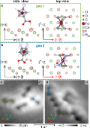


![[Graphic 10]](/bjnano/content/inline/2190-4286-11-127-i10.svg?max-width=637&scale=1.18182) row of FDCA molecules in geo 2. (a–c) Constant-height frequency-shi...
row of FDCA molecules in geo 2. (a–c) Constant-height frequency-shi...
One-step synthesis of carbon-supported electrocatalysts
Beilstein J. Nanotechnol. 2020, 11, 1419–1431, doi:10.3762/bjnano.11.126

- high-resolution micrographs at a sub-nanometer level. An electron acceleration voltage of 200 kV was used. Particle size distributions were measured by using the semi-automatic mode of the software pebbles [42], assuming a spherical particle shape. The electrochemical measurements were performed in a




Impact of fluorination on interface energetics and growth of pentacene on Ag(111)
Beilstein J. Nanotechnol. 2020, 11, 1361–1370, doi:10.3762/bjnano.11.120
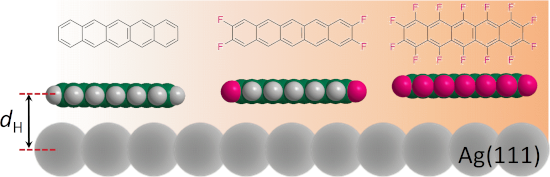
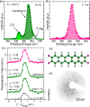
- interfaces. Results The determination of the vertical adsorption heights of F4PEN in (sub)monolayers on Ag(111) relied on high-resolution core level spectra, which are shown in Figure 1 (additional XPS spectra are shown in Supporting Information File 1, Figure S1). Following the assignment of the F4PEN core
- close to monolayer coverage. The high-resolution XPS (HR-XPS) and normal-incidence XSW (NIXSW) experiments were performed at beamline I09 at Diamond Light Source (DLS, UK) using both the soft (110–1100 eV) and hard (2.1–18 keV) X-ray beams [104][105]. Sample preparation and measurements were performed


Growth of a self-assembled monolayer decoupled from the substrate: nucleation on-command using buffer layers
Beilstein J. Nanotechnol. 2020, 11, 1291–1302, doi:10.3762/bjnano.11.113
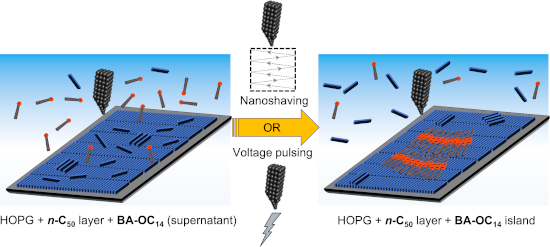
- concentration dependence of self-assembly was examined within the concentration range of 7.7 × 10⁻⁴ M to 4.0 × 10⁻⁵ M. For concentrations below 4.0 × 10⁻⁵ M, no self-assembly was observed. Figure 2 shows large-scale and high-resolution STM images of the different polymorphs of BA-OC14 observed at the 1
- -phenyloctane–HOPG interface together with the proposed molecular models. Polymorph A (Figure 2a,d) is formed exclusively within the concentration range of 7.7 × 10⁻⁴ M to 1.9 × 10⁻⁴ M. This network has been reported by us earlier [45]. The high-resolution image provided in Figure 2d shows that the lamellar
- surface coverage (≈60%), another network with a significantly different unit cell (Figure 2b,e and Table 1) was observed. This network, referred hereon as polymorph B, lacks the peculiar bright-dark contrast observed in the STM images of polymorph A. Figure 2e,h shows a high-resolution STM image of


An atomic force microscope integrated with a helium ion microscope for correlative nanoscale characterization
Beilstein J. Nanotechnol. 2020, 11, 1272–1279, doi:10.3762/bjnano.11.111
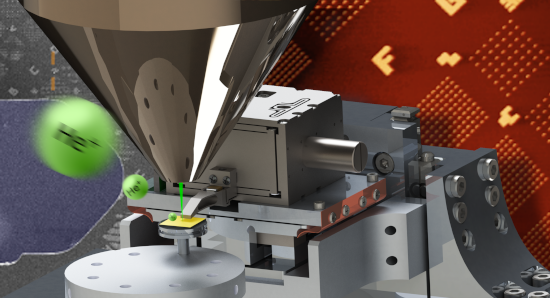
- gallium-ion FIBs. The resulting combined AFM–HIM instrument would, therefore, profit from the sub-nanometer lateral resolution of the HIM and the atomic resolution in the vertical axis of the AFM, proving particularly powerful for high-resolution correlative characterization of non-conductive samples
- . With the integrated electron flood gun (FG) of the HIM providing charge neutralization, uncoated polymers and biological samples can be imaged with high resolution while the AFM would bring complementary information such as laterally resolved mechanical properties. These multiparametric measurements
- have previously been difficult to obtain as sample preparation of such samples for SEM or TEM are often incompatible with the needs of high-resolution AFM measurements. AFM is also useful in assisting helium ion beam lithography. Many resists, including poly(methyl methacrylate) (PMMA), have higher





