


Search results
Search for "image" in Full Text gives 1504 result(s) in Beilstein Journal of Nanotechnology. Showing first 200.
Fluorescent bioinspired albumin/polydopamine nanoparticles and their interactions with Escherichia coli cells
Beilstein J. Nanotechnol. 2023, 14, 1208–1224, doi:10.3762/bjnano.14.100
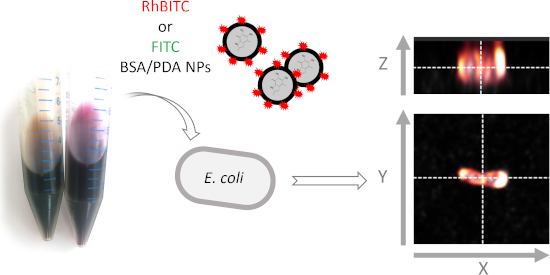
- (inspired from [14]). (e) Possible locations of organic nanoparticles in bacterial cells. Figure 1c was adapted with permission from [13]. Copyright 2018 American Chemical Society. This content is not subject to CC BY 4.0. (a) Photographic image of a dopamine solution. Main reactions leading to an auto



Determination of the radii of coated and uncoated silicon AFM sharp tips using a height calibration standard grating and a nonlinear regression function
Beilstein J. Nanotechnol. 2023, 14, 1200–1207, doi:10.3762/bjnano.14.99
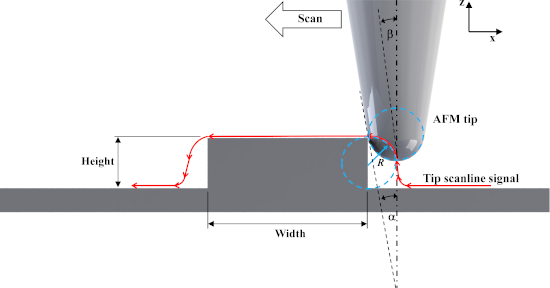
- force curves with contact mechanics models and extracting the adhesion and friction forces [5][6]. If we do not know the exact value of the tip radius, the sample image with the observation of scanning frequency and the calculation results are not accurate. This indicates that the measurement results


A combined gas-phase dissociative ionization, dissociative electron attachment and deposition study on the potential FEBID precursor [Au(CH3)2Cl]2
Beilstein J. Nanotechnol. 2023, 14, 1178–1199, doi:10.3762/bjnano.14.98
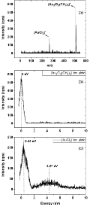
- ). Figure 1a depicts an SEM image of the FEBID deposit created with an electron exposure of 7.80 C/cm2. The position of the corresponding AES analysis is marked in Figure 1a by a green-colored star. The AES spectra acquired on the bare substrate and the deposit are shown in Figure 1b. On the pristine SiO2
- selected area of the SEM image shown in Figure 1a is depicted in Figure 1c, where nanoparticles in the deposition are noticeable, although the picture is somewhat blurry. To better visualize the observed nanoparticles, a background subtraction was performed with the image enhancement program ImageJ [35
- ]. The image after the background subtraction is shown in Figure 1d, where the particles can be more clearly distinguished. After background subtraction, some of the deposited nanoparticles appear facetted; however, the majority are spherical. HAADF-STEM on FEBID (SiO2 (500 nm)/Si(111)) As a next step



Spatial variations of conductivity of self-assembled monolayers of dodecanethiol on Au/mica and Au/Si substrates
Beilstein J. Nanotechnol. 2023, 14, 1169–1177, doi:10.3762/bjnano.14.97
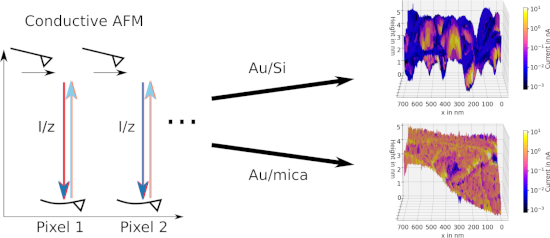
- . In this mode of CAFM operation, a force–distance curve is measured at every pixel of the image. The tip is approached until a certain bend of the cantilever is reached, corresponding to the force setpoint Fsetpoint. Plotting the z position at which the force setpoint is reached provides the
- Figure 2b show the topography and the current map, respectively, for a Au/mica substrate. The 300 × 300 nm2 topography map shows that the Au/mica substrate has large flat areas on which the height does not change significantly. The overall change in height throughout the image is approximately 4 nm, and
- the most significant changes in height occur at the boundaries between different flat areas. The corresponding current map (Figure 2b) shows a nearly homogeneous distribution of the current throughout the whole image, where the current takes on well-measurable values distributed around 200 pA. Only


Elasticity, an often-overseen parameter in the development of nanoscale drug delivery systems
Beilstein J. Nanotechnol. 2023, 14, 1149–1156, doi:10.3762/bjnano.14.95
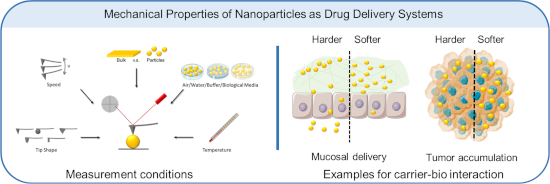
- convinced that elasticity as a formulation parameter can help to promote more nanoparticulate drug delivery systems to be translated to the clinics. (A) Height image of gelatin nanoparticles on a silica surface imaged in Milli-Q® water at 37 °C in the quantitative imaging mode. (B) A force–distance curve


A multi-resistance wide-range calibration sample for conductive probe atomic force microscopy measurements
Beilstein J. Nanotechnol. 2023, 14, 1141–1148, doi:10.3762/bjnano.14.94
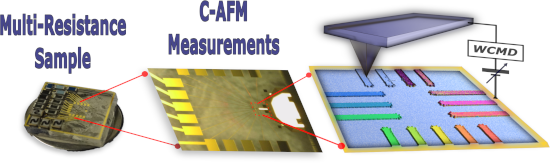
- deviation. In addition, we noticed that all I–V straights did not pass through zero, which introduced a shift in the measured currents leading to an increase in the resistance values by a constant amount of (+8 ± 1)%, which agrees very well with the deviations observed from the image values (taken at a bias


Density functional theory study of Au-fcc/Ge and Au-hcp/Ge interfaces
Beilstein J. Nanotechnol. 2023, 14, 1093–1105, doi:10.3762/bjnano.14.90
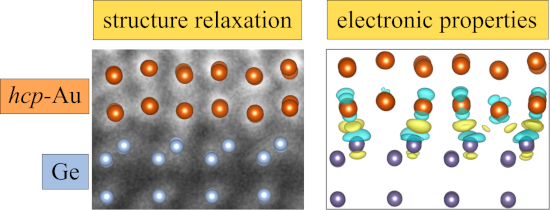
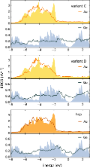
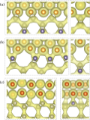
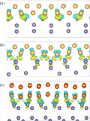
- microscopy image [23] one can identify the Au-hcp plane parallel to Ge substrate as (010). We discuss the optimized structures and defects that could stabilize the interface. Finally, we demonstrate the electronic properties of Au/Ge junctions and the formation of Ge–Au bonds at the interface. The Appendices
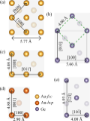
- perpendicular direction (with no experimental image to guide us), we chose to join seven germanium blocks and five gold slabs as shown in Figure 1c, obtaining a mismatch of about 3%. Variant C is constructed in such a way that rows of gold atoms are located between the germanium rows (see Figure 6c), and we
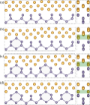
- , respectively. The Ge atoms replacing some Au pairs gradually improve the interface energy, and the result obtained for the last modification is very close to the interface energy of variant C. Figure 8 shows the experimental image of the investigated interface together with one of our optimized structures





Dual-heterodyne Kelvin probe force microscopy
Beilstein J. Nanotechnol. 2023, 14, 1068–1084, doi:10.3762/bjnano.14.88
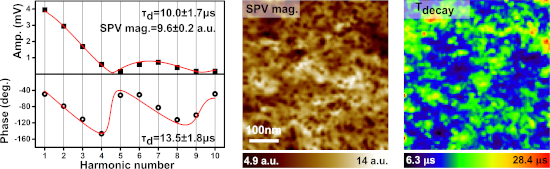
- ) illumination. An SPV image can eventually be recalculated as the difference between both sets of data [1]. The inherent drawback of this dual-pass method is that the source images used for the SPV calculation may feature misalignments, which is especially unavoidable at room temperature (RT) due to thermal
- with the application of a light pulse (i.e., a curve is recorded at each point of the surface along a 2D grid). Again, a differential SPV image can be reconstructed from the matrix of spectroscopic curves [5]. However, this approach is not free from artefacts, in particular the cantilever photothermal
- amplitude image (appearing as dark spots in Figure 3b and Supporting Information File 1, Figure S6b) correspond to areas of the sample where the SPV is "less positive". Thus, from an electrostatic point of view, the most reasonable hypothesis is that these contrasts (and the correlated topographic




Spatial mapping of photovoltage and light-induced displacement of on-chip coupled piezo/photodiodes by Kelvin probe force microscopy under modulated illumination
Beilstein J. Nanotechnol. 2023, 14, 1059–1067, doi:10.3762/bjnano.14.87
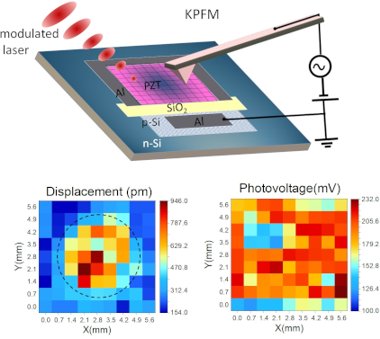
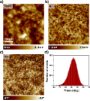
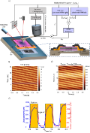
- of a specific point at the center of the membrane was recorded over time for the utilized voltage and frequency. We selected 10 line profiles from the modulated topography image, took the average over the selected lines similarly to the previous case, and fitted these with a sinusoidal function. The


Recognition mechanisms of hemoglobin particles by monocytes – CD163 may just be one
Beilstein J. Nanotechnol. 2023, 14, 1028–1040, doi:10.3762/bjnano.14.85
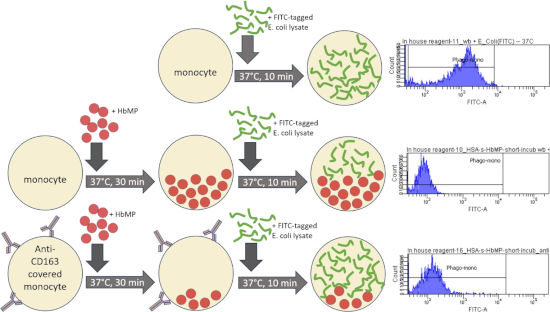
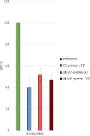
- ; N = 3. Different uptake of untagged E. coli (39.8 ± 11.4%) vs HbMP (30′: 51.9 ± 6.0%; 120′: 47.1 ± 5.1%) by monocytes; N = 3. Phagocytosis of PMMA-FluoroGreen-COOH-MP diameter between 0.4 and 2.1 µm by monocytes and granulocytes. N = 3. The confocal laser scanning microscopy image showing the uptake




A visible-light photodetector based on heterojunctions between CuO nanoparticles and ZnO nanorods
Beilstein J. Nanotechnol. 2023, 14, 1018–1027, doi:10.3762/bjnano.14.84
- photodetectors (PDs) to “Industry 4.0”, which may include image sensors, biomedical imaging, manufacturing process control, environmental sensing, and optical sensors [8]. Various materials for photodetectors have been developed. Photodetectors can be classified into two main categories, namely PDs that work at
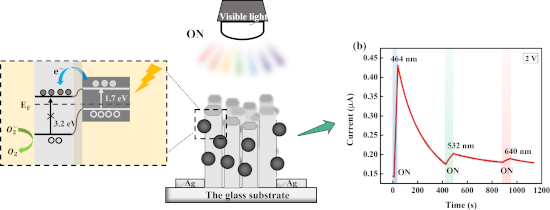
- -emission scanning electron microscopy (FESEM) image of ZnO NRs exhibits nanorods with hexagonal cross section, well aligned with the glass substrate (Figure 1a). Figure 1b indicates that many spherical nanoparticles are formed on the ZnO NRs after spraying the CuO NP solution with a concentration of 0.05 M


Exploring internal structures and properties of terpolymer fibers via real-space characterizations
Beilstein J. Nanotechnol. 2023, 14, 1004–1017, doi:10.3762/bjnano.14.83
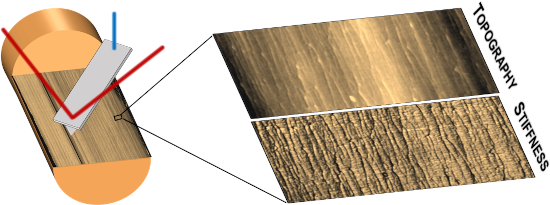
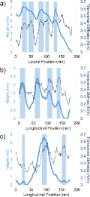
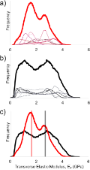
- at 1.1 GPa. In contrast to the modulus maps in Technora®, the distinctions between the local ET measurements within fibrils and their interfaces are very clear in Kevlar®. Image thresholding of K29 modulus maps indicates that the most compliant regions are near interfaces, which can also be readily






Nanoarchitectonics of photothermal materials to enhance the sensitivity of lateral flow assays
Beilstein J. Nanotechnol. 2023, 14, 988–1003, doi:10.3762/bjnano.14.82
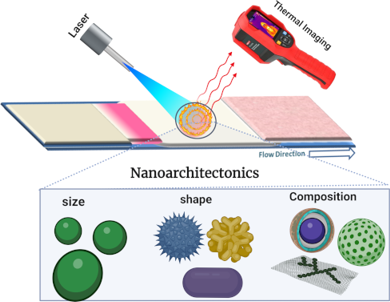
- of the Creative Commons Attribution-NonCommercial-NoDerivatives 4.0 International License, https://creativecommons.org/licenses/by-nc-nd/4.0/). This content is not subject to CC BY 4.0.) Shape-dependent photothermal properties. TEM image of gold nanostructures (A). (Figure 6A was adapted from [61
- Elsevier. This content is not subject to CC BY 4.0.) Scanning transmission electron image of Au nanostar (B). Limb length dependent photothermal activity of Au nanostar (C). (Figure 6B and C was adapted from [63] (© 2019 J. Depciuch et al., published by MDPI, distributed under the terms of the Creative
- .) Summary of lateral flow assay applications based on the photothermal principle. Acknowledgements The Graphical Abstract has been self-made. The lateral flow strip in the image was drawn using Microsoft® PowerPoint® 2016. The remaining portion of the Graphical Abstract was created with https


Isolation of cubic Si3P4 in the form of nanocrystals
Beilstein J. Nanotechnol. 2023, 14, 971–979, doi:10.3762/bjnano.14.80
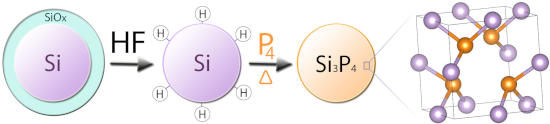
- Si3P4 decomposition, sample SP670 as well as the freshly prepared sample SP550 were selected for the TEM studies. A typical TEM bright-field image is shown in Figure 6a. The particles show a profound tendency to agglomerate, not unlike the parent oxidized Si NPs [38]. The agglomeration obstructs size
- determination; thus, the linear dimensions of the particles could only be estimated to be in the range of 10–50 nm. The particles are polycrystalline and highly defective as evident from the high-resolution image (Figure 7a). The size of the crystalline domains does not exceed 10 nm in its longest dimension
- . (a) Bright-field TEM image and (b) electron diffraction of the sample SP550. TEM studies of the sample SP550. (a) High-resolution TEM image; (b) HAADF-STEM image; EDX elemental maps for (c) Si Kα, (d) P Kα, and (e) O Kα. The scale bar in images (b–e) is 30 nm. Synthesis conditions and results of X


Upscaling the urea method synthesis of CoAl layered double hydroxides
Beilstein J. Nanotechnol. 2023, 14, 927–938, doi:10.3762/bjnano.14.76
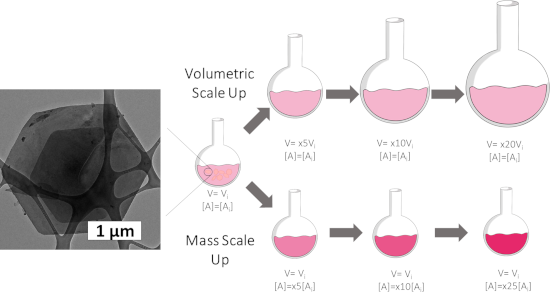
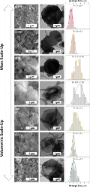
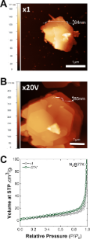
- Gwyddion software was used for flattening and image correction. Transmission electron microscopy (TEM) Transmission electron microscopy was carried out using a JEOL JEM-1010 at 100 kV accelerating voltage and a Tecnai F20 operated at 200 kV. Images were acquired in bright-field mode with an objective


Antibody-conjugated nanoparticles for target-specific drug delivery of chemotherapeutics
Beilstein J. Nanotechnol. 2023, 14, 912–926, doi:10.3762/bjnano.14.75
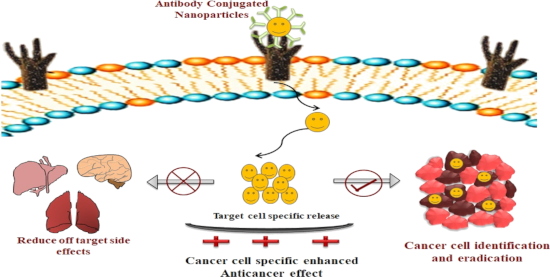
- potential and can be effectively used as imaging/therapeutic agents (Table 1). In some cases, ACNPs provide opportunities for image-guided therapy with overall theranostic applications. The NP-mediated targeted delivery ultimately provides advanced diagnostic and therapeutic options for early diagnosis and



Green SPIONs as a novel highly selective treatment for leishmaniasis: an in vitro study against Leishmania amazonensis intracellular amastigotes
Beilstein J. Nanotechnol. 2023, 14, 893–903, doi:10.3762/bjnano.14.73
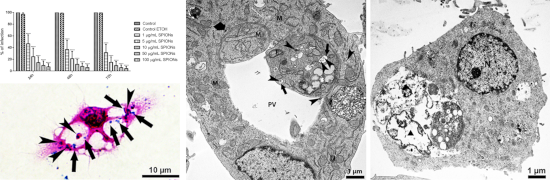
- nanoparticles inside the cells. Panel A shows infected macrophages with some amastigotes (arrowheads) inside the parasitophorous vacuoles (thin arrows). Panel B shows the same macrophage; however, the image was obtained by detecting backscattered electrons, revealing several electron-lucent aggregates (arrows
- associated with endoplasmic reticulum profiles and lipid bodies. (B) High-magnification image with SPION aggregates (arrowheads) inside membrane-bound compartments (arrows). (C) SPIONs (arrowheads) are associated with thin filaments inside the flagellar pocket and in the cytosol closely associated with the
- flagellar pocket membrane. (D) In the macrophages infected with intracellular amastigotes, the SPIONs appear inside the parasitophorous vacuole and in the macrophage and parasite cytosol (arrowheads). In this image, it is also possible to observe the SPIONs surrounded by a membrane (arrows) and an aggregate


Two-dimensional molecular networks at the solid/liquid interface and the role of alkyl chains in their building blocks
Beilstein J. Nanotechnol. 2023, 14, 872–892, doi:10.3762/bjnano.14.72
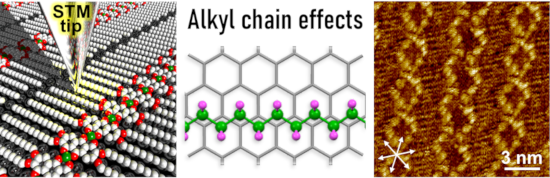
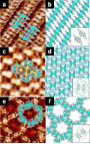
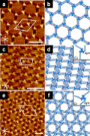
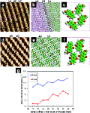
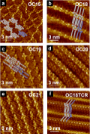
- ) enable the capture of both molecular arrangements and the HOPG lattice images. As shown in Figure 2b and Figure 2c, the alkyl chains of a bipyridine derivative follow one of the HOPG lattice directions, as indicated by the white arrows. Image corrections using the HOPG lattice (periodicity of 0.246 nm
- a blend ratio of OCn:CCn = 1:3. This phenomenon could be explained by the relatively weak adsorption interactions of the semi-fluoroalkyl chains onto the HOPG surface compared to those of normal alkyl chains. Owing to the dark contrast in the STM image, the existence and location of homogeneous
- adsorbed n-dodecane was optimized. Similar DFT calculations are reported in [47]. The blue arrows indicate the lattice directions of C96H24. (b) Chemical structure of a bipyridine derivative (Bpy), and (c) STM image of the Bpy monolayer at the HOPG/1-phenyloctane interface. Both molecular (upper) and HOPG









N-Heterocyclic carbene-based gold etchants
Beilstein J. Nanotechnol. 2023, 14, 865–871, doi:10.3762/bjnano.14.71
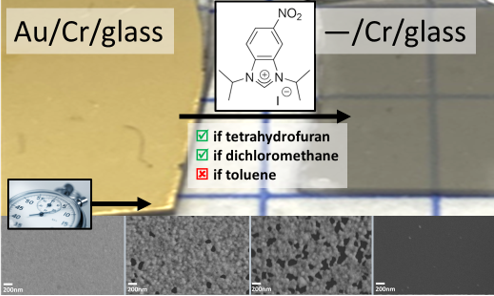
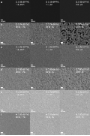
- scanning electron microscope instrument and image settings across samples, and indeed the comparison between process conditions is centered on this prevailing result. The degree of gold loss varied with solvent, reagent concentration, and exposure time. In Figure 3 we show the effect of solutions of 1 in



Industrial perspectives for personalized microneedles
Beilstein J. Nanotechnol. 2023, 14, 857–864, doi:10.3762/bjnano.14.70
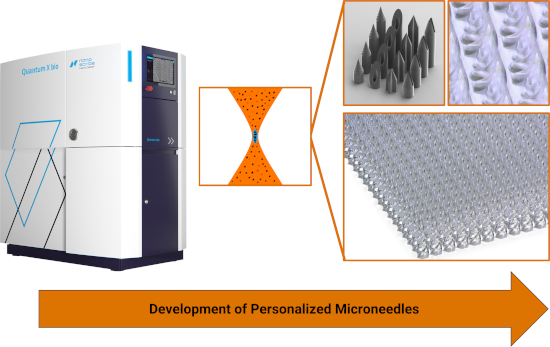
- with varying heights were printed via two-photon polymerization on a “Quantum X shape” lithography system, and the 10 × 10 microneedle array was printed in 130 min. The scale bar is 1 mm in both images. (A) Scanning electron microscopy image of microcones. (B) Optical microscopy image of transparent
- microcones. Various solid and hollow microneedle designs printed via two-photon polymerization on a “Quantum X shape” lithography system. (A) Scanning electron microscopy image of a 4 × 4 array consisting of both solid and hollow microneedles. The designs were inspired by Mizuno et al. [32] and Cordeiro et
- al. [29]. The scale bar is 500 μm. (B) Optical microscopy image of a large 2 cm × 2 cm array with 1746 individual microneedles. The microneedles are 1200 μm tall, 250 μm wide at the base, and spaced 500 μm apart. The large microneedle array was printed in 18 h. The scale bar is 1 mm. Simple twisted


Biomimetics on the micro- and nanoscale – The 25th anniversary of the lotus effect
Beilstein J. Nanotechnol. 2023, 14, 850–856, doi:10.3762/bjnano.14.69

- Mail, Kerstin Koch, Thomas Speck, William M. Megill and Stanislav N. Gorb Eggenstein-Leopoldshafen, Kleve, Freiburg, and Kiel, July 2023 Biological archetype and eponym of the lotus effect: The sacred lotus (Nelumbo nucifera). a) Photo of a lotus plant. b) Scanning electron microscopy (SEM) image of


A wearable nanoscale heart sound sensor based on P(VDF-TrFE)/ZnO/GR and its application in cardiac disease detection
Beilstein J. Nanotechnol. 2023, 14, 819–833, doi:10.3762/bjnano.14.67
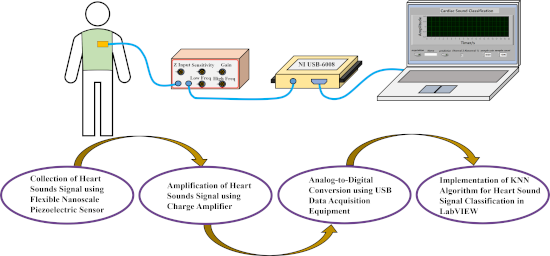
- sensor packaging. Actual sensor. Acoustic-electric conversion performance test platform. Block diagram of the heart sound acquisition and classification system. XRD patterns of the three composite piezoelectric nanofilms. (a) FTIR spectrum and (b) variation curve of β-phase content. (a) SEM image of the
- P(VDF-TrFE) film, (b) enlarged part of (a), (c) SEM image of the P(VDF-TrFE)/ZnO film, (d) enlarged part of (c), (e) SEM image of the P(VDF-TrFE)/ZnO/GR film, and (f) enlarged part of (e). (a–c) Voltage distribution and (d–f) stress distribution in the piezoelectric film at sound pressures of (a, d


Nanostructured lipid carriers containing benznidazole: physicochemical, biopharmaceutical and cellular in vitro studies
Beilstein J. Nanotechnol. 2023, 14, 804–818, doi:10.3762/bjnano.14.66
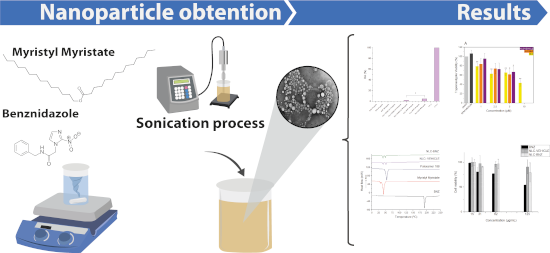
- different types of nanoparticles and BNZ, including SLN and NLC [21]. The NLC-BNZ formulation was analyzed using transmission electron microscopy (TEM) to confirm the presence of nanoparticles showing a spherical morphology and a narrow distribution of sizes (Figure 1). Image analysis through ImageJ [22
- increasing in the third month up to 155 nm. The Z-average parameter was chosen to report the nanoparticles size. The size values were consistent with the TEM image analysis. The zeta potential (ζ) was measured by Doppler anemometry and operated as a report of the formulation surface characteristics. The
- tests. Statistical significance was set at p < 0.05. TEM image of NLC-BNZ. DSC thermograms of BNZ, myristyl myristate, poloxamer 188, NLC VEHICLE, and NLC-BNZ. Thermogravimetric (A) and derivative thermogravimetric (B) curves of BNZ, myristyl myristate, poloxamer 188, NLC-VEHICLE, and NLC-BNZ. ATR-FTIR


Silver-based SERS substrates fabricated using a 3D printed microfluidic device
Beilstein J. Nanotechnol. 2023, 14, 793–803, doi:10.3762/bjnano.14.65
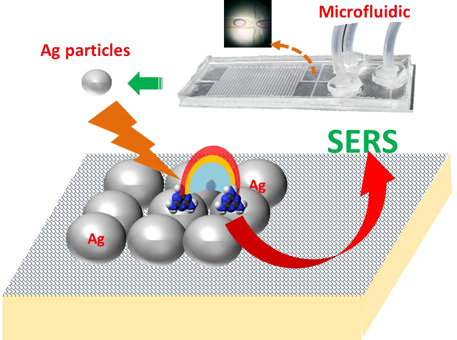
- with an increase in the concentration of reactants. Structural characterization of the SERS substrate In Supporting Information File 1, Figure S10a shows the SEM image of the SAM of Ag NPs on the surface of methanol, while Figure S10b displays the image of the PS substrate after covering with the Ag
- NPs. The SEM image of PS@Ag reveals the presence of nanoscale gaps between the Ag NPs, which act as hot spots with a high electric field intensity when exposed to laser irradiation (Figure S10c). To confirm the distribution of chemical elements on the SERS substrate, energy-dispersive X-ray



Control of morphology and crystallinity of CNTs in flame synthesis with one-dimensional reaction zone
Beilstein J. Nanotechnol. 2023, 14, 741–750, doi:10.3762/bjnano.14.61
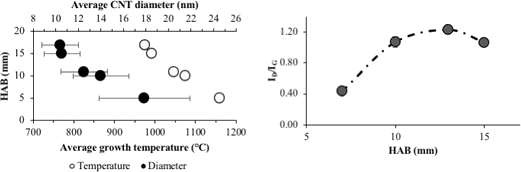
- wire. The CNT diameters, which often correlate to the particle size, show a similar trend, as discussed in the next section. CNT characterization The diameter of the synthesized CNTs has been measured using the image post-processing software DigimizerTM with 200–300 data points per sample to produce





