Search results
Search for "irradiation" in Full Text gives 590 result(s) in Beilstein Journal of Nanotechnology. Showing first 200.
Nanocasting synthesis of BiFeO3 nanoparticles with enhanced visible-light photocatalytic activity
Beilstein J. Nanotechnol. 2020, 11, 1822–1833, doi:10.3762/bjnano.11.164
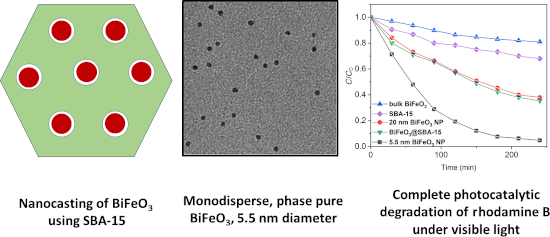
- wet impregnation process and a calcination procedure with intermediate plateaus, monodisperse 5.5 nm BiFeO3 nanoparticles were successfully obtained. Furthermore, the nanoparticles were applied in photodegradation reactions of rhodamine B in aqueous solution under visible-light irradiation. Notably
- , the cast BiFeO3 nanoparticles demonstrated very high efficiencies and stability under visible-light irradiation, much higher than those of BiFeO3 nanoparticles synthesized by other synthetic methods. The possible mechanism in the photodegradation process has been deeply discussed on the basis of
- applications has been limited due to their relatively large bandgaps along with their susceptibility to the fast recombination of photogenerated electron–hole pairs, leading to inefficient photocatalytic activity under visible-light or solar irradiation [14][15][16][17][18]. Thus, the development of




Electron beam-induced deposition of platinum from Pt(CO)2Cl2 and Pt(CO)2Br2
Beilstein J. Nanotechnol. 2020, 11, 1789–1800, doi:10.3762/bjnano.11.161
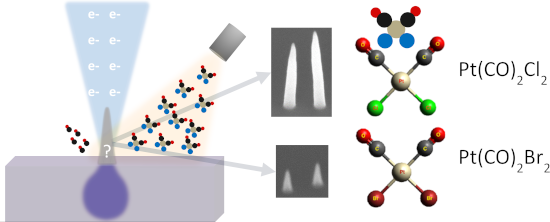
- complexes were compared to the widely used commercially available precursor MeCpPtMe3. The design of Pt(CO)2X2 takes advantage of the known tendency for CO and halogens to dissociate from metal centres upon electron irradiation [14][15][16]. Other organometallic compounds that include a halide and CO
- ligands, such as (η3-C3H5)Ru(CO)3Br, showed the loss of CO upon electron irradiation [17][18], as have CO-containing precursors without halides such as W(CO)6 [19] and Co(CO)3NO [20]. In addition, the use of four-coordinate Pt(II) centres minimizes the number of metal–ligand bonds that need to be broken
- presence of water in the SEM. In HV, the deposits are almost halogen free but contain a lot of carbon, whereas in UHV the deposits are almost carbon-free but suffer from a large halogen content. The water present in HV could play a role in two different ways. First, upon electron irradiation, the water is


Imaging and milling resolution of light ion beams from helium ion microscopy and FIBs driven by liquid metal alloy ion sources
Beilstein J. Nanotechnol. 2020, 11, 1742–1749, doi:10.3762/bjnano.11.156
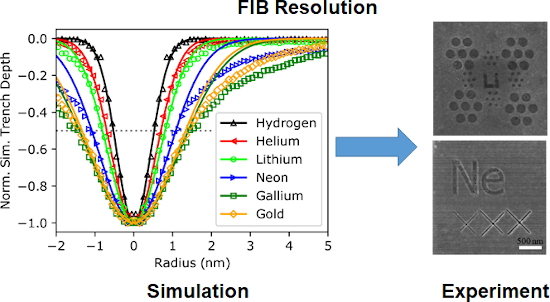
- agreement with the ΔE ~ m1/3 dependence for single-charged monomers [2]. In the noble gas irradiation experiments described here, a GFIS in a helium ion microscope ORION NanoFab (Carl Zeiss) [5][28] was used. For irradiation with light metal ions, a LMAIS installed in a FIB/SEM VELION system (Raith) [2][18
- temperatures are a little higher. Irradiation parameters for several available ions, calculated sputter yields Ytheo [34] of Au, imaging resolution (80/20 criterion), the smallest achieved milling trench width and typical ion beam currents as well as their stability logged over several hours. Literature values


Seebeck coefficient of silicon nanowire forests doped by thermal diffusion
Beilstein J. Nanotechnol. 2020, 11, 1707–1713, doi:10.3762/bjnano.11.153
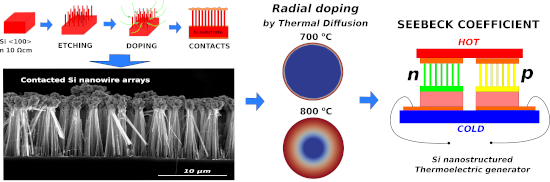
- electrical power needed to heat TH through Joule heating is the thermal power = V × I that crosses the sample in the absence of heat losses. The system is in vacuum and the irradiation loss is limited by a thermal shield maintained at TH. Hence, the thermal resistance ℜ can be evaluated as ℜ = (TH − TC


Out-of-plane surface patterning by subsurface processing of polymer substrates with focused ion beams
Beilstein J. Nanotechnol. 2020, 11, 1693–1703, doi:10.3762/bjnano.11.151
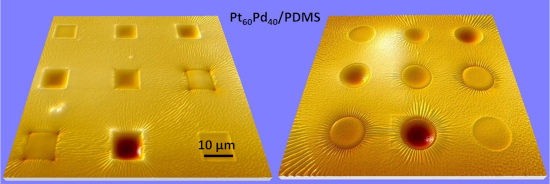
- of the polymer. Effects of subsurface and surface processes on the surface morphology have been studied for three polymer materials: poly(methyl methacrylate), polycarbonate, and polydimethylsiloxane, by using focused ion beam irradiation with He+, Ne+, and Ga+. Thin films of a Pt60Pd40 alloy and of
- -plane features, at the nanoscale, of the pre-deposited films. Ion irradiation of the Au-coated samples results in delamination, bulging, and perforation of the Au film, which is attributed to the accumulation of gases from radiolysis at the film–substrate interface. The irradiation with Ne+ and Ga+ ions
- irradiation-induced mechanical strain in the patterning process are elaborated and discussed. Keywords: direct patterning; focused helium ion beam; out-of-plane nanopatterning; polymers; thin films; Introduction Micro- and nanofabrication with focused ion beams (FIBs) is currently a subject of strong


Fabrication of nano/microstructures for SERS substrates using an electrochemical method
Beilstein J. Nanotechnol. 2020, 11, 1568–1576, doi:10.3762/bjnano.11.139
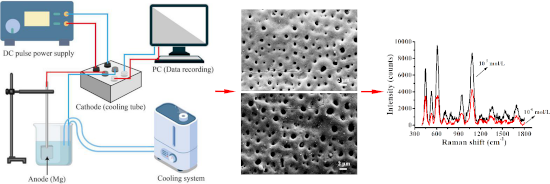
- . [47] employed femtosecond laser irradiation to fabricate nanorod arrayed structures decorated with Au nanoparticles. The study showed that the Raman intensity tended to decrease as the Au film thickness increased. Based on the above results, we selected Au films of 10 nm thickness for further


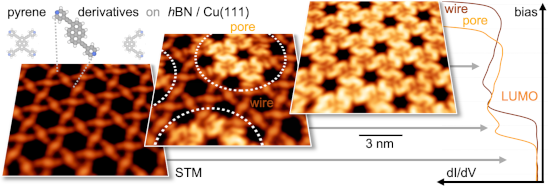
Self-assembly and spectroscopic fingerprints of photoactive pyrenyl tectons on hBN/Cu(111)
Beilstein J. Nanotechnol. 2020, 11, 1470–1483, doi:10.3762/bjnano.11.130
- ) and tetrasubstituted (b, red line) pyrenyl derivatives in toluene (c = 1.0 × 10⁻⁶ M) at rt. Insets: photographs of toluene solutions in daylight and upon irradiation with a hand-held UV lamp (λex = 365 nm). c) and d) Calculated transitions (blue and purple lines), transition dipole moments (μeg), and




Antimicrobial metal-based nanoparticles: a review on their synthesis, types and antimicrobial action
Beilstein J. Nanotechnol. 2020, 11, 1450–1469, doi:10.3762/bjnano.11.129
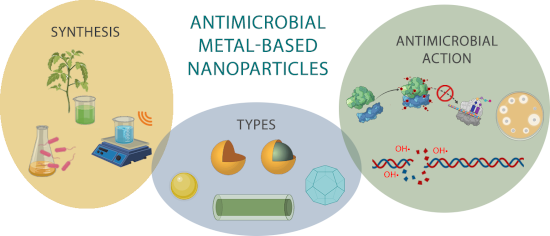
- and polyhedral-shaped nanoparticles, for example, without compromising their size [30]. Another interesting technique used is the very slow ultraviolet irradiation photoreduction process in which the morphology of the nanoparticles can be controlled based on the cation concentration and the
- irradiation time. For example, while Tan et al. [31] obtained spherical silver nanoparticles, Zhou et al. [32] obtained plate-like triangles. Another method used is the pulsed laser ablation technique which is used to synthesize colloidal solutions of Ag [33], Au [34], MgO [35], and ZnO [36] NPs, among others
- from light irradiation to excite and mobilize an electron from the valence band to the conduction band, leaving a highly reactive gap (H+). This zone becomes a ROS source as it interacts with H2O or OH− that surrounds the nanoparticles [152]. In addition to molecules such as ascorbic acid, carotene


Effect of localized helium ion irradiation on the performance of synthetic monolayer MoS2 field-effect transistors
Beilstein J. Nanotechnol. 2020, 11, 1329–1335, doi:10.3762/bjnano.11.117
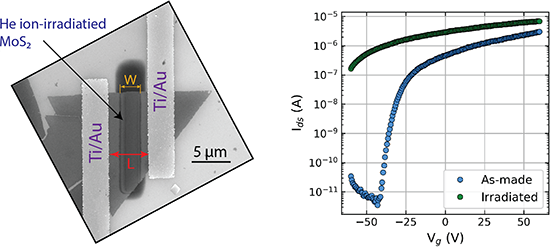
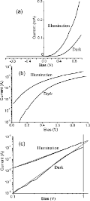
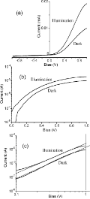
- Technology, Universität der Bundeswehr München, Werner-Heisenberg-Weg 39, 85577 Neubiberg, Germany 10.3762/bjnano.11.117 Abstract Helium ion irradiation is a known method of tuning the electrical conductivity and charge carrier mobility of novel two-dimensional semiconductors. Here, we report a systematic
- study of the electrical performance of chemically synthesized monolayer molybdenum disulfide (MoS2) field-effect transistors irradiated with a focused helium ion beam as a function of increasing areal irradiation coverage. We determine an optimal coverage range of approx. 10%, which allows for the
- is particularly crucial for device applications in radiation-rich environments (e.g., space satellite technologies), since defects can be introduced by ionizing particle irradiation while the devices are in continuous operation. Recently, noble gas ion beam irradiation has opened the field to the


An atomic force microscope integrated with a helium ion microscope for correlative nanoscale characterization
Beilstein J. Nanotechnol. 2020, 11, 1272–1279, doi:10.3762/bjnano.11.111

- sensitivities to helium ion irradiation than to electron irradiation in terms of charge per area [14]. Patterning resolution down to 4 nm has been demonstrated on HSQ resist [15], surpassing electron beam lithography, which greatly suffers from the proximity effect. In a combined AFM–HIM setup, the AFM could be


Magnetic-field-assisted synthesis of anisotropic iron oxide particles: Effect of pH
Beilstein J. Nanotechnol. 2020, 11, 1230–1241, doi:10.3762/bjnano.11.107
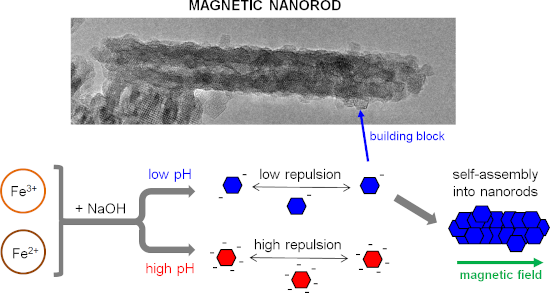
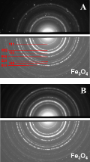
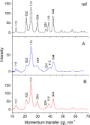
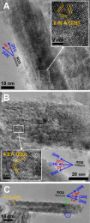
- to excite the Raman scattering. The irradiation power density on the sample was continuously decreased (using neutral density filters and beam defocusing) until no further changes were observed in the obtained spectra. A power of ≈0.2 mW on the sample and a laser spot diameter of ≈30 μm were





Photothermally active nanoparticles as a promising tool for eliminating bacteria and biofilms
Beilstein J. Nanotechnol. 2020, 11, 1134–1146, doi:10.3762/bjnano.11.98
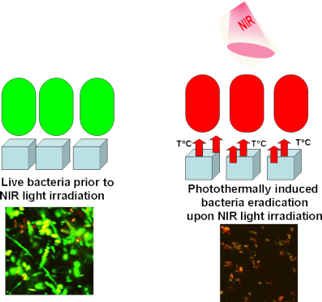
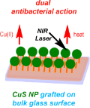
- ) region, are receiving great attention as they are can, upon irradiation, increase the local temperature in the surrounding medium and consequently thermally inactivate different types of bacteria [2][33]. This approach can provide an alternative and direct in situ sterilization as opposed to the
- nanoparticles are due to the resonant oscillation of the surface electrons, called surface plasmons (e.g., plasmonic gold and silver nanoparticles) [38], or they are due to the energy of the band transitions (e.g., Cu2+ d–d transition in CuS nanoparticles) [39]. Under visible–NIR light irradiation, these
- nanoparticles produce thermal relaxation, leading to a local increase in the temperature. The overall photothermal effect depends on the irradiation intensity and wavelength, nanoparticle concentration, and the nanoparticle photothermal conversion efficiency [33][38]. It also depends on the type of the


Applications of superparamagnetic iron oxide nanoparticles in drug and therapeutic delivery, and biotechnological advancements
Beilstein J. Nanotechnol. 2020, 11, 1092–1109, doi:10.3762/bjnano.11.94


A few-layer graphene/chlorin e6 hybrid nanomaterial and its application in photodynamic therapy against Candida albicans
Beilstein J. Nanotechnol. 2020, 11, 1054–1061, doi:10.3762/bjnano.11.90
- nanomaterial can be activated by a synergistic mechanism of energy transfer of the absorbed light from Ce6 to FLG. The novel FLG-Ce6 hybrid nanomaterial in combination with the red LED light irradiation can be used in the development of a wide range of antinosocomial devices and coatings. Keywords: chlorin e6
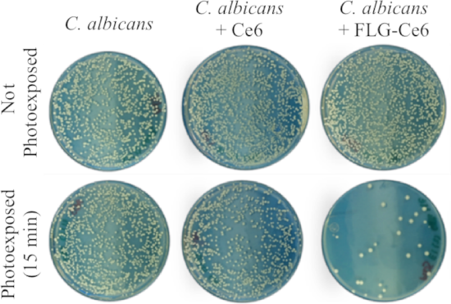
- -Ce6 and pristine Ce6 samples were exposed to SOSG and photoactivated during 5, 10, and 15 min of visible light irradiation at 632 nm at an incident power of 150 mW. When analyzed using fluorescence spectroscopy, it was observed that ROS production is up to 5-fold higher in FLG-Ce6 than in pristine Ce6
- exposure. However, when C. albicans is exposed to Ce6 and then photoactivated by 15 min of irradiation with the LEDs, their viability is reduced up to 10%. Astonishingly, when C. albicans is exposed to FLG-Ce6 and is photoactivated for 15 min, its viability is reduced by more than 95%. This reduction in


Highly sensitive detection of estradiol by a SERS sensor based on TiO2 covered with gold nanoparticles
Beilstein J. Nanotechnol. 2020, 11, 1026–1035, doi:10.3762/bjnano.11.87
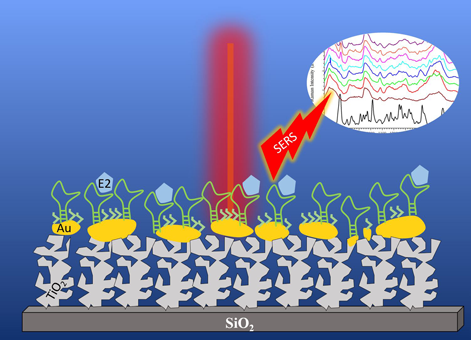
- as SERS substrate for the detection of rhodamine 6G and other organic molecules. They obtained stable and reproducible results with a detection limit down to 10 µM, while also showing high recyclability through cleaning via UV irradiation. However, a main drawback of these methodologies is the use of



Microwave-induced electric discharges on metal particles for the synthesis of inorganic nanomaterials under solvent-free conditions
Beilstein J. Nanotechnol. 2020, 11, 1019–1025, doi:10.3762/bjnano.11.86
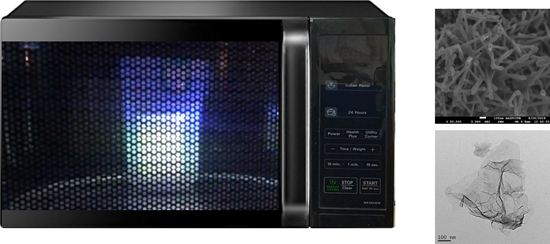
- Vijay Tripathi Harit Kumar Anubhav Agarwal Leela S. Panchakarla Department of Chemistry, Indian Institute of Technology Bombay, Powai, Mumbai 400076, India 10.3762/bjnano.11.86 Abstract Microwave irradiation of metals generates electric discharges (arcs). These arcs are used to generate
- microwave irradiation both in solution and in the solid state rapidly increases the reaction temperature and helps to improve reaction kinetics significantly. This reduces drastically the reaction time [9][10]. Non-thermal effects may also influence the reaction kinetics, which is still a subject of
- exposed to microwaves due to the formation of high electric field gradients at sharp edges on the metal surfaces [12]. The generation of arcs might be the reason why microwave irradiation has not been used to generate different nanomaterials from metal particles. However, some studies show that the


Band tail state related photoluminescence and photoresponse of ZnMgO solid solution nanostructured films
Beilstein J. Nanotechnol. 2020, 11, 899–910, doi:10.3762/bjnano.11.75
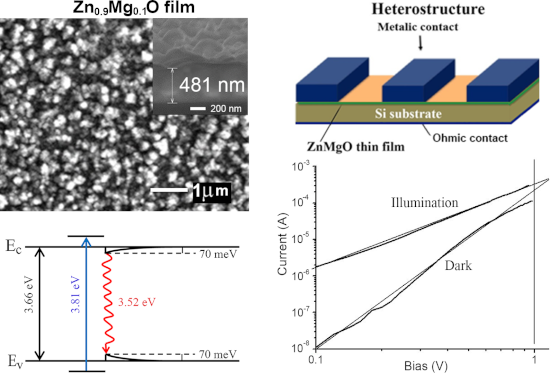
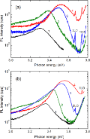
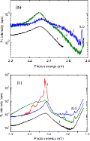
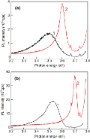
- ][32]. A comparison of MSM photodetectors based on ZnMgO films prepared by spin coating and spray pyrolysis performed recently revealed that the sensitivity of the structures prepared by spin coating is higher as compared to those obtained by spray pyrolysis, while the photoresponse to UV irradiation
- demonstrated photosensitivity under UV light irradiation, where the photosensitivity was much higher in samples prepared by spin coating as compared to those prepared by aerosol spray pyrolysis. Additionally, the resistivity of films deposited by spin coating was found to be much higher. Apart from that, a
- long duration relaxation of photoconductivity was shown to be characteristic for films prepared by spin coating, while a fast response to irradiation was observed in samples prepared by aerosol spray pyrolysis. Similar to the issues about the influence of the technology on the morphology of films

Key for crossing the BBB with nanoparticles: the rational design
Beilstein J. Nanotechnol. 2020, 11, 866–883, doi:10.3762/bjnano.11.72
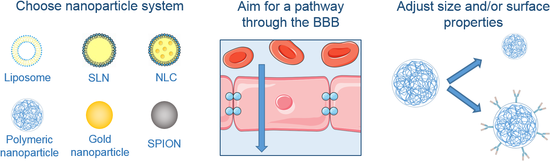
- in non-neurogenic regions. Disruption of the BBB by NIR light irradiation of AuNRs increased the AuNRs ability to accumulate in the SVZ, making this formulation interesting for targeting neural stem cells. Superparamagnetic iron oxide nanoparticles: Superparamagnetic iron oxide nanoparticles (SPIONs


Hexagonal boron nitride: a review of the emerging material platform for single-photon sources and the spin–photon interface
Beilstein J. Nanotechnol. 2020, 11, 740–769, doi:10.3762/bjnano.11.61
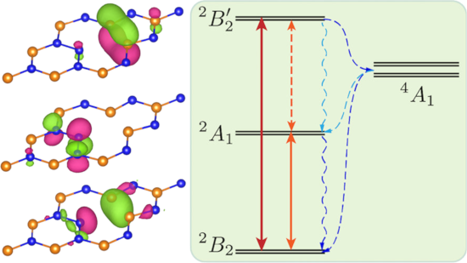
- ) characterization and generation using ions, electrons or other irradiation methods, the observation of ensemble paramagnetic properties and their optically detected magnetic resonance by applying a high magnetic field until the isolation of single defects and eventually their optical spin coherent control. Weber
- . The luminescent mechanism in h-BN is not yet fully clear. There is a large variability in the shape and position of PL spectra, which is interpreted based on impurities and sample preparation conditions [91][92]. Museur et al. [92] report on the effect of surface oxidation under UV-laser irradiation
- intrinsic defects related to electron irradiation. After these experiments, the hybrid density functional was used to simulate common as-grown vacancy and antisite defect properties demonstrating that they require high formation energies. Thus it is unlikely they could form from the typical growth




Effect of Ag loading position on the photocatalytic performance of TiO2 nanocolumn arrays
Beilstein J. Nanotechnol. 2020, 11, 717–728, doi:10.3762/bjnano.11.59
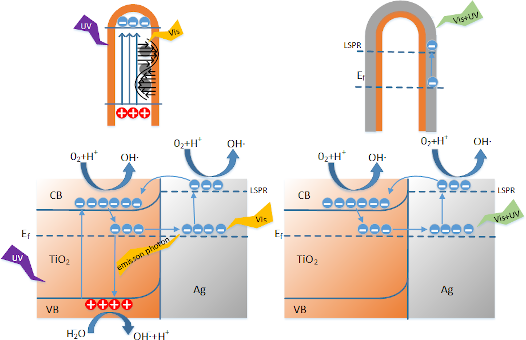
- , and Kα is the apparent first-order rate constant. Figure 7a shows that the AFT1 sample catalyzes the degradation of MB at different times. After 60 min of irradiation, the absorption intensity of MB at 663 nm substantially disappears, indicating that almost all the MB molecules are catalytically


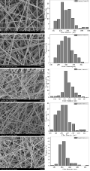
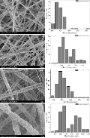
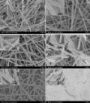
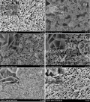
Preparation, characterization and photocatalytic performance of heterostructured CuO–ZnO-loaded composite nanofiber membranes
Beilstein J. Nanotechnol. 2020, 11, 631–650, doi:10.3762/bjnano.11.50
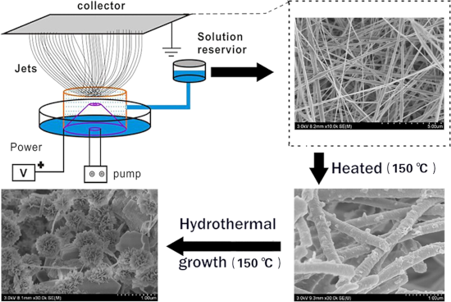
- narrow direct bandgap of 1.2–1.79 eV [14]. Because of that, CuO is usually used in combination with large-bandgap semiconductors, such as ZnO and TiO2, in order to improve their photocatalytic activity under solar light irradiation [15]. It was reported that the p–n heterojunction between ZnO and CuO has
- degradation processes under ultraviolet (UV) irradiation were investigated using the prepared CNFMs degrading a methyl orange solution with an initial concentration of 10 mg/L. The prepared CNFMs (0.05 g) were added to 30 mL of the methyl orange solution, and then the solution was placed in a dark environment
- for 2 h to achieve an adsorption–desorption equilibrium. Next, photocatalytic degradation of methyl orange was carried out under UV irradiation (λ = 254 nm). The UV lamp had a light intensity of 1.1 mW/cm, which was measured by a radiometer. The degradation rate of methyl orange was determined by









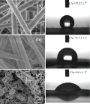


Soybean-derived blue photoluminescent carbon dots
Beilstein J. Nanotechnol. 2020, 11, 606–619, doi:10.3762/bjnano.11.48
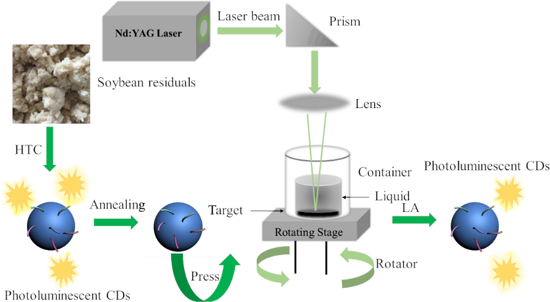
- synthesizing CDs, including oxidation and reduction [13][14][15], laser ablation [16], microwave irradiation [9], pyrolysis [17], and hydrothermal treatment [18]. Some of these methods are tedious and time consuming and use strong acids and/or surface treatment to improve their water solubility and
- nm made from glucose with glutathione in a temperature range of 15 to 90 °C by Wang et al. [18]. Figure 3a–c shows the PL spectra of the soybean-derived CDs. The HTC-CDs exhibited strong emission under the irradiation of UV and visible light in the wavelength range of 250 nm to 480 nm (Figure 3a
- due to the Raman scattering of the water [35]. The annealed-CDs show no PL under irradiation with UV–vis light. Note that the sharp peaks in Figure 3b represent the Raman scattering of water (solvent) only, indicating that there is no photoluminescence emission from the annealed-CDs under excitation


Adsorptive removal of bulky dye molecules from water with mesoporous polyaniline-derived carbon
Beilstein J. Nanotechnol. 2020, 11, 597–605, doi:10.3762/bjnano.11.47
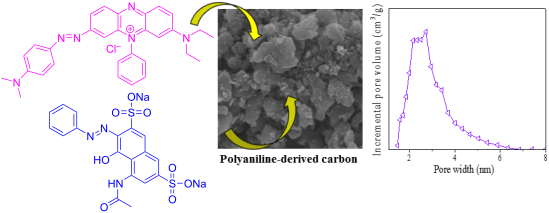
- regarded to be very effective and attractive because of its operation under mild conditions and no need of oxidant, active catalyst, and irradiation [8][9]. Therefore, adsorption with carbon nanotubes, activated carbon (AC), biomass, and metallic–organic frameworks (MOFs) has been actively studied for the


Luminescent gold nanoclusters for bioimaging applications
Beilstein J. Nanotechnol. 2020, 11, 533–546, doi:10.3762/bjnano.11.42
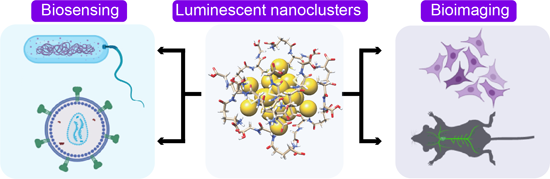
- compared to that of free doxorubicin, presumably due to slow release from the nanocarriers. Alternatively, a significant killing efficiency of HeLa cells was achieved using just 0.46 μg/mL of free doxorubicin in combination with 200 μg/mL of PML-MF and laser irradiation for 10 min, further showing the
- endocytosis of NCs. The generation of ROS upon X-ray irradiation in the presence of [Au8(C21H27O2)8] significantly suppressed the tumorigenicity in vivo after one radiotherapy treatment in mouse models. Because of their well-defined surface functionalities and small size, the dispersion behavior of NCs is


Multilayer capsules made of weak polyelectrolytes: a review on the preparation, functionalization and applications in drug delivery
Beilstein J. Nanotechnol. 2020, 11, 508–532, doi:10.3762/bjnano.11.41
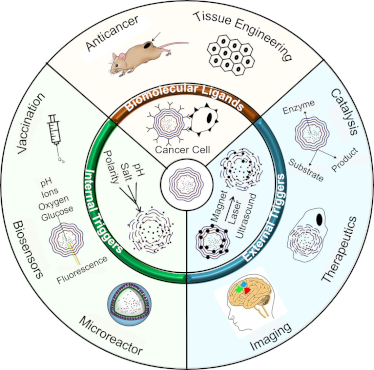
- within the PAH/DS capsule. The rupture and deformation of the capsules occurred via the formation of pores on the surface after laser irradiation at 530 nm (Figure 5c). The encapsulation of silver, gold and iron oxide NPs has been the most common in most of the studies [80][82][83][84]. The incorporation
- of NPs within the capsules, the laser power and exposure time decide the sensitivity of the capsule towards laser light induced release. For example, the presence of aggregated NPs led to the generation of more heat and thus required relatively less intense laser irradiation [84]. While the moderate
- CNTs ruptured upon laser light irradiation [115]. The introduction of graphene oxide (GO) nanosheets with PDDA as multilayers caused the migration and rearrangement of chains compared to PDDA/PAA multilayers [116]. The PDDA/GO multilayers showed improved resistance to damage and maintained a defect