


Search results
Search for "magnetic" in Full Text gives 898 result(s) in Beilstein Journal of Nanotechnology. Showing first 200.
Facile preparation of Au- and BODIPY-grafted lipid nanoparticles for synergized photothermal therapy
Beilstein J. Nanotechnol. 2022, 13, 1432–1444, doi:10.3762/bjnano.13.118
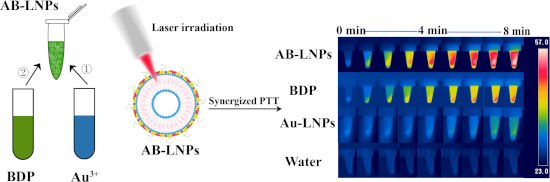
- etherate (BF3·OEt2) and 2,4-dimethylpyrrole were freshly purified by distillation under reduced pressure. Synthesis and characterization of BDP All chemical reagents were obtained from commercial suppliers and used without further purification. 1H nuclear magnetic resonance (NMR) and 13C NMR spectra were


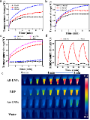

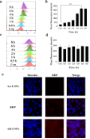

Density of states in the presence of spin-dependent scattering in SF bilayers: a numerical and analytical approach
Beilstein J. Nanotechnol. 2022, 13, 1418–1431, doi:10.3762/bjnano.13.117
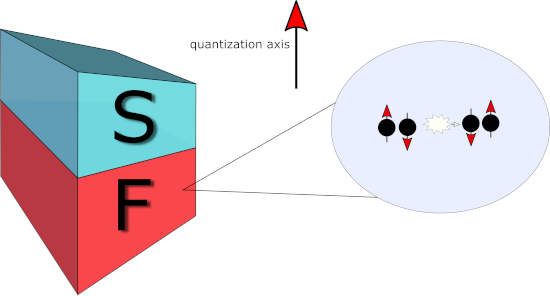
- 10.3762/bjnano.13.117 Abstract We present a quantitative study of the density of states (DOS) in SF bilayers (where S is a bulk superconductor and F is a ferromagnetic metal) in the diffusive limit. We solve the quasiclassical Usadel equations in the structure considering the presence of magnetic and spin
- behavior of DOS dependencies on magnetic and spin–orbit scattering times is discussed. Keywords: density of states; Josephson junctions; proximity effect; superconductivity; superconductor/ferromagnet hybrid nanostructures; Introduction It is well-known that superconductivity can be induced in a non
- ]. In this work, we consider a diffusive SF bilayer, assuming a relatively low interface transparency and the presence of magnetic and spin–orbit scattering. For this purpose, the Kupriyanov–Lukichev (KL) boundary conditions at the superconductor/ferromagnet interface are perfectly suitable [83]. We


Double-layer symmetric gratings with bound states in the continuum for dual-band high-Q optical sensing
Beilstein J. Nanotechnol. 2022, 13, 1408–1417, doi:10.3762/bjnano.13.116
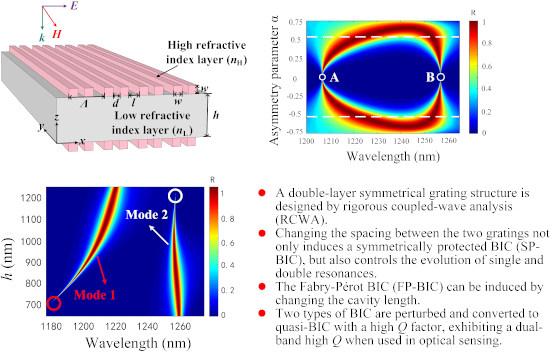
- completely disappear and the ideal BIC is obtained. Furthermore, the magnetic field distributions of the two modes under resonance are calculated as shown in Figure 3b and Figure 3c. The localized field energy of both modes decreases as α increases, and the magnetic field distributions of both modes
- dominated by the electric toroidal dipole rather than the SP-BIC dominated by the magnetic dipole [46]. As a result, instead of having to break the symmetry of the structure, as in the case of SP-BIC, a simple change in the grating spacing can transform the BIC into a QBIC, leading to high-Q resonance. The
- is analytically calculated from the perspective of the complex eigenfrequencies, which is defined as follows [54]: where C and U represent the integration domain for the cavity and the unit cell, respectively. Hnorm represents the magnetic field intensity distributions of the complex eigenfrequencies


Orally administered docetaxel-loaded chitosan-decorated cationic PLGA nanoparticles for intestinal tumors: formulation, comprehensive in vitro characterization, and release kinetics
Beilstein J. Nanotechnol. 2022, 13, 1393–1407, doi:10.3762/bjnano.13.115
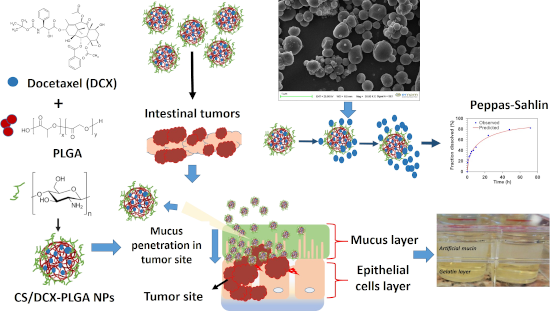
- of 0.2% [77]. The organic phase was added to the aqueous phase on a magnetic stirrer at 550 rpm. The resulting o/w emulsion was sonicated on an ice bath with an ultrasonic probe at 25% power for 1 min (four times at 10 s intervals), and PLGA nanoparticles were obtained. The nanoparticles were stirred
- continuously for 24 h with a magnetic stirrer and the organic phase was evaporated. Then the PLGA nanoparticles were precipitated by centrifugation at 10000 rpm for 45 min and washed four times with distilled water. DCX-PLGA NPs pellets were suspended in 2 mL of solution containing 5% (w/w) mannitol, frozen at
- then applied over the gelatin layer. Initially, a 10 percent (w/v) gelatin dispersion was made by heating 50 mL of ultrapure water on a magnetic stirrer to 60 °C, and then 1 mL of the dispersion was added to each well of the 24-well cell plates. The gelatin layer in the experimental model was cooled to


Supramolecular assembly of pentamidine and polymeric cyclodextrin bimetallic core–shell nanoarchitectures
Beilstein J. Nanotechnol. 2022, 13, 1361–1369, doi:10.3762/bjnano.13.112
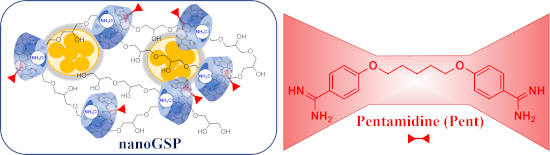
- were added three times at room temperature, every hour, to a solution of nanoG (6.75 mL) to obtain nanoGS determined by a light orange staining of the solution. After each addition of silver ions, the mixture was kept under magnetic stirring at room temperature (20–25 °C) for 1 h. The reduction of


Recent trends in Bi-based nanomaterials: challenges, fabrication, enhancement techniques, and environmental applications
Beilstein J. Nanotechnol. 2022, 13, 1316–1336, doi:10.3762/bjnano.13.109
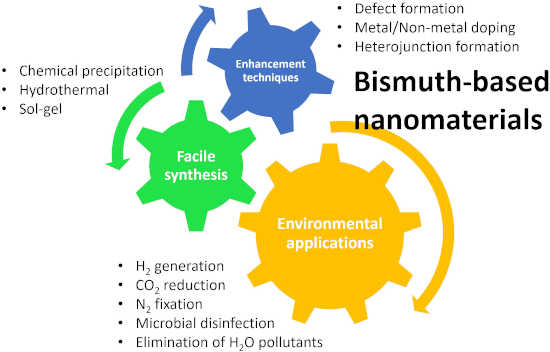
- thanks to the significant charge carrier dispersion provided by hybrid orbitals involving the Bi 6s orbital, as seen in Figure 2. Photoinduced electron–hole separation and charge carrier transfer in Bi-based materials are facilitated by a unique layered structure that creates an IEF. A magnetic field is




Studies of probe tip materials by atomic force microscopy: a review
Beilstein J. Nanotechnol. 2022, 13, 1256–1267, doi:10.3762/bjnano.13.104
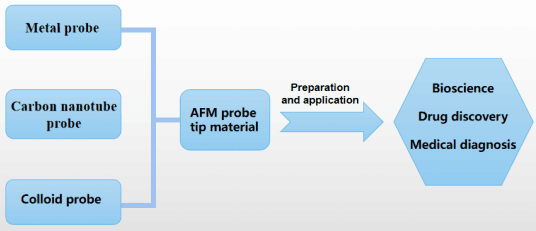
- mechanical properties of the cantilever beam directly affect the performance, measurement resolution, and image quality of the AFM instrument. AFM probe tips [9][10] are generally fabricated with coatings, carbon nanotubes, magnetic nanoparticles, or even protein functionalization. A combination of probe
- robustness and durability of nanowire scanning probes are also crucial. Due to their unique properties in electrical, magnetic, and optical research fields [31][32][33], metal nanowires have been prepared by various methods and applied in various fields by domestic and foreign scholars in recent years. Tay
- coupling another specific H1N1 oligonucleotide fragment using magnetic microspheres as solid-phase support; both were bound to the target DNA (exact match DNA) to form a colorless nucleic acid probe. The two are combined with the target DNA (exact match DNA) to form a colorless capture probe-target DNA
A super-oscillatory step-zoom metalens for visible light
Beilstein J. Nanotechnol. 2022, 13, 1220–1227, doi:10.3762/bjnano.13.101
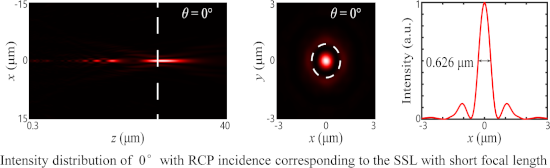
- -oscillatory lenses, through fine modulation of the amplitude and phase of the optical field, have been used in super-resolution imaging [9][10][11], heat-assisted magnetic recording [12], and optical metrology [13]. In order to form the specific super-oscillatory optical field, common super-oscillatory lenses


Design of surface nanostructures for chirality sensing based on quartz crystal microbalance
Beilstein J. Nanotechnol. 2022, 13, 1201–1219, doi:10.3762/bjnano.13.100
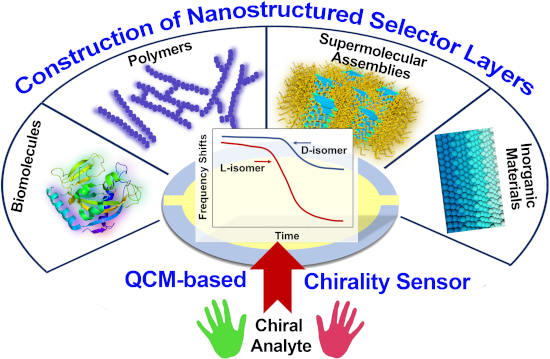
- industry, detection and separation of enantiomers are essential for their safe usage. With appropriate detectors and transduction signals, various analysis instruments and techniques have been used for chirality detection or chiral separation. They include circular dichroism (CD) [9], nuclear magnetic
- outstanding sensing properties, with real-time, sensitive and selective chiral detection, high durability, and easy recovery. To understand the chiral recognition between calixarenes and analytes, Zoya I. Kazantseva et al. combined QCM and proton magnetic resonance spectroscopy (1H NMR) techniques to study
- strengthened. This work presented the great potential of bare metal surfaces as an effective platform for chirality detection. Metals are not only more stable than organic materials in various usage conditions, but also have excellent optical, electrical, and magnetic properties. They may facilitate the design


Nonlinear features of the superconductor–ferromagnet–superconductor φ0 Josephson junction in the ferromagnetic resonance region
Beilstein J. Nanotechnol. 2022, 13, 1155–1166, doi:10.3762/bjnano.13.97
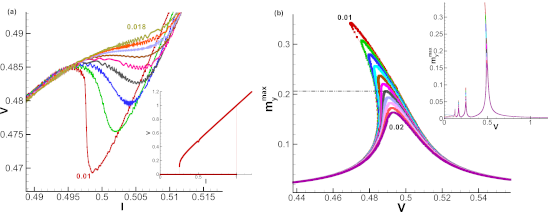
- , 141980, Russia Moscow Institute of Physics and Technology, Dolgoprudny, 141700, Moscow Region, Russia Physics Department, Menofiya University, Faculty of Science, 32511, Shebin Elkom, Egypt 10.3762/bjnano.13.97 Abstract We demonstrate the manifestations of nonlinear features in magnetic dynamics and I–V
- characteristics of a φ0 Josephson junction in the ferromagnetic resonance region. We show that at small values of the system parameters damping, spin–orbit interaction, and Josephson-to-magnetic energy ratio, the magnetic dynamics is reduced to the dynamics of a scalar Duffing oscillator driven by the Josephson
- difference with the magnetic moment of a ferromagnet in a φ0 junction leads to a number of unique features important for superconducting spintronics and modern information technology [1][2][3][4][5]. It allows one to control the magnetization precession by the superconducting current and affects the current


![[Graphic 14]](/bjnano/content/inline/2190-4286-13-97-i38.svg?max-width=637&scale=1.18182) at differ...
at differ...


![[Graphic 18]](/bjnano/content/inline/2190-4286-13-97-i42.svg?max-width=637&scale=1.18182) (V) on α in the damping parameter interval [0.001–0.12]....
(V) on α in the damping parameter interval [0.001–0.12]....

A cantilever-based, ultrahigh-vacuum, low-temperature scanning probe instrument for multidimensional scanning force microscopy
Beilstein J. Nanotechnol. 2022, 13, 1120–1140, doi:10.3762/bjnano.13.95
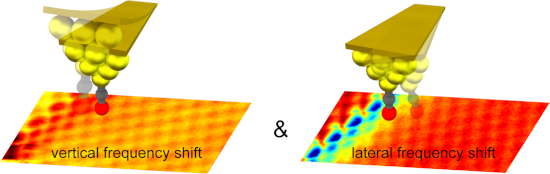
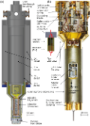
- , the resonance frequency-to-stiffness ratio of thin cantilevers proved to be beneficial for the measurement of ultrasmall forces [28] or, in combination with high cantilever quality factors, the detection of small magnetic fields [29]. For the latter, new tip–sample distance control operation modes
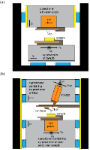
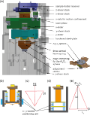
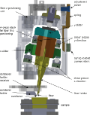
- acquisition of overview images at larger tip–sample distances. Our instrument is thus well-suited to find specific locations in devices, map weak magnetic or electrostatic forces, and also permits the acquisition of smaller scan range atomic resolution images at specific locations. This manuscript is
- in the microscope, customized magnetic feedthrough manipulators with hex-key end-pieces are used. Cryostat and preparation chamber are both pumped with 300 L/s ion pumps, which also include titanium sublimation sources. The load-lock chamber is pumped with a 67 L/s turbo pump. The bath cryostat





Green synthesis of zinc oxide nanoparticles toward highly efficient photocatalysis and antibacterial application
Beilstein J. Nanotechnol. 2022, 13, 1108–1119, doi:10.3762/bjnano.13.94
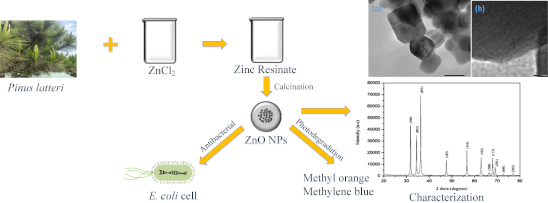
- performed using NaOH to create sodium resinate, and zinc resinate was subsequently synthesized from sodium resinate. Rosin (4 g) was dissolved in 24 mL of 0.5 N NaOH at 90 °C under magnetic stirring for 90 min. Then, 40 mL of ZnCl2 (10%) was added to the mixture which was stirred for 60 min to form zinc
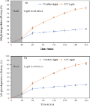
- UV light using green-synthesized ZnO nanoparticles from rosin and zinc chloride salt was investigated using a batch photocatalytic reactor. Firstly, 0.1 g of ZnO NPs was added to 50 mL of MO or MB solution with an initial concentration of 10 mg/L. The solution was then submitted to magnetic stirring




Effects of focused electron beam irradiation parameters on direct nanostructure formation on Ag surfaces
Beilstein J. Nanotechnol. 2022, 13, 1004–1010, doi:10.3762/bjnano.13.87
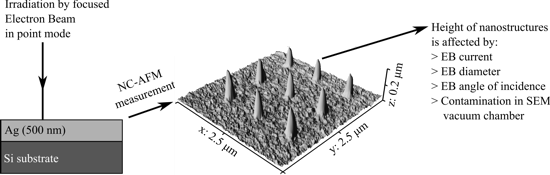
- on the growth rate of the nanodots was observed. Metals with lower melting points (implying lower interatomic bond energy) produced higher nanodots at similar irradiation parameters. Conversely, metals with higher volume magnetic susceptibility produced much wider nanodots with a higher volume. A
- nanostructures could be controlled and modified in a beneficial way. This, however, would require further research on the various properties (electric, magnetic, optical, and mechanical) of nanostructures obtained through irradiation by a focused EB on metal surfaces. Conclusion In this work we explored how




Theoretical investigations of oxygen vacancy effects in nickel-doped zirconia from ab initio XANES spectroscopy at the oxygen K-edge
Beilstein J. Nanotechnol. 2022, 13, 975–985, doi:10.3762/bjnano.13.85
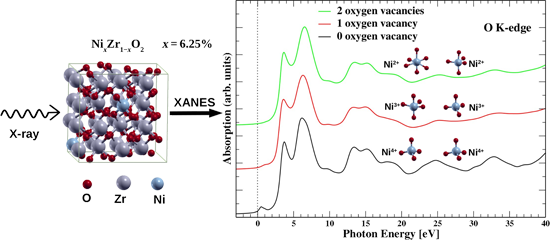
- and magnetic order in a typical diluted magnetic oxide. Such a finding may be crucial for spintronics-related applications. Keywords: defect; ligand field; nickel; oxidation state; oxides; spectroscopy; spintronics; vacancy; X-ray absorption; X-ray absorption near-edge structure (XANES); zirconia
- ; Introduction The search for room-temperature magnetic semiconductors has been the driving force behind the increasing interest of material scientists and solid-state physicists in magnetic oxides [1]. This is due to their potential applications as building block of spintronic devices. Magnetic oxides are
- semiconducting or insulating materials doped randomly or uniformly with magnetic impurities in the oxide matrix. A typical example are thin films of uniformly Fe-doped ZrO2 where dopant concentrations, x, from the diluted regime (i.e., x = 1–5 atom % [2]) to very high concentrations (up to x ≈ 25 atom %) have


Comparing the performance of single and multifrequency Kelvin probe force microscopy techniques in air and water
Beilstein J. Nanotechnol. 2022, 13, 922–943, doi:10.3762/bjnano.13.82
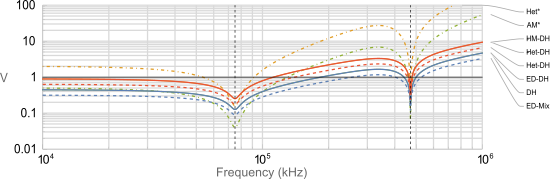
- techniques to yield multidimensional data sets and aid in isolation of the influence of electrostatic potential, for example, PeakForce infrared-KPFM (PFIR-KPFM) [66], nanomechanical mapping + KPFM [67][68], magnetic force microscopy (MFM) + KPFM [69], piezoresponse force microscopy (PFM) + KPFM [70], and G
Efficiency of electron cooling in cold-electron bolometers with traps
Beilstein J. Nanotechnol. 2022, 13, 896–901, doi:10.3762/bjnano.13.80
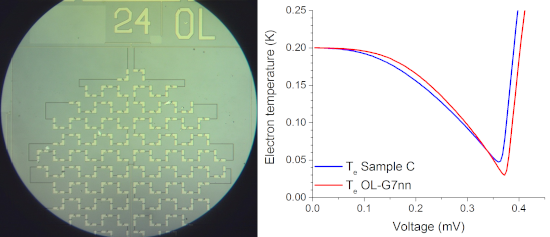
- , τm is the magnetic scattering parameter that is found from the fit. W = W0ξ0/d is the effective tunneling parameter for planar tunnel junctions used in our CEB, W0 = R(ξ0)/RN is the tunneling parameter, RN is the normal resistance of the junction, and R(ξ0) is the resistance of Al/Fe absorber with


Ultrafast signatures of magnetic inhomogeneity in Pd1−xFex (x ≤ 0.08) epitaxial thin films
Beilstein J. Nanotechnol. 2022, 13, 836–844, doi:10.3762/bjnano.13.74
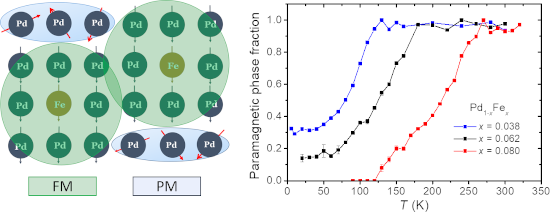
- ferromagnetic state causes a qualitative change of both the reflectivity and the magneto-optical Kerr effect transients. A nanoscale magnetic inhomogeneity of the ferromagnet/paramagnet type inherent in the palladium-rich Pd1−xFex alloys reveals itself through the occurrence of a relatively slow, 10–25 ps
- , photoinduced demagnetization component following a subpicosecond one; the former vanishes at low temperatures only in the x = 0.080 sample. We argue that the 10 ps timescale demagnetization originates most probably from the diffusive transport of d electrons under the condition of nanoscale magnetic
- inhomogeneities. The low-temperature fraction of the residual paramagnetic phase can be deduced from the magnitude of the slow reflectivity relaxation component. It is estimated as ≈30% for x = 0.038 and ≈15% for x = 0.062 films. The minimal iron content ensuring the magnetic homogeneity of the ferromagnetic


Ideal Kerker scattering by homogeneous spheres: the role of gain or loss
Beilstein J. Nanotechnol. 2022, 13, 828–835, doi:10.3762/bjnano.13.73
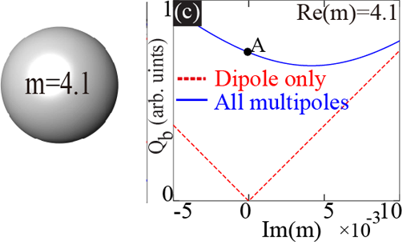
- exactly zero backward scattering. It was previously shown that, for non-magnetic homogeneous spheres with incident plane waves, either gain or loss prohibit ideal Kerker scattering, provided that only electric and magnetic multipoles of a specific order are present and contributions from other multipoles
- scattering; Mie particle; Introduction The original Kerker scattering of zero backward scattering was first proposed for homogeneous magnetic spheres with equal electric permittivity and magnetic permeability ε = μ [1]. This proposal had not attracted much attention for a long time, mainly due to the
- scarcity of magnetic materials, especially at the high-frequency spectral regimes. In the past decade, thanks to the explosive developments of metamaterials and metasurfaces, the underlying core concept of optically induced magnetism in non-magnetic structures has invigorated and completely transformed


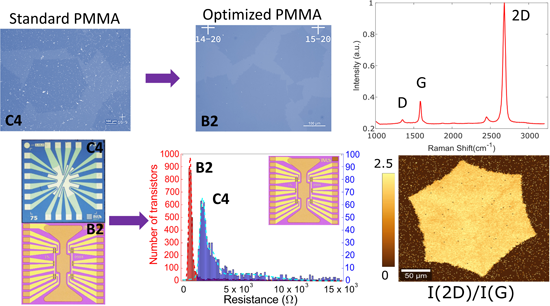
Optimizing PMMA solutions to suppress contamination in the transfer of CVD graphene for batch production
Beilstein J. Nanotechnol. 2022, 13, 796–806, doi:10.3762/bjnano.13.70
- -Magnetic Interference Shielding", with the reference POCI-01-0247-FEDER-045939, co-funded by COMPETE 2020 – Operational Programme for Competitiveness and Internationalization and the Portuguese Foundation for Science and Technology (FCT), under the Portugal 2020 Partnership Agreement, through the European




Recent advances in nanoarchitectures of monocrystalline coordination polymers through confined assembly
Beilstein J. Nanotechnol. 2022, 13, 763–777, doi:10.3762/bjnano.13.67
- ][38]. The networks can also help to take other components into the single crystals. Nanoparticles, such as quantum dots or iron oxide, which attach to the networks, can be encapsulated within the networks inside the single crystals, rendering the single crystals fluorescent or magnetic [39][40][41
- -irradiation, mechanical deformation, or electrical and magnetic forces could influence the interactions and the formation kinetics of the interest structures. From the point view of materials, it would be interesting to use confined growth and assembly to assemble the coordination polymers that could satisfy


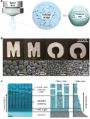


Direct measurement of surface photovoltage by AC bias Kelvin probe force microscopy
Beilstein J. Nanotechnol. 2022, 13, 712–720, doi:10.3762/bjnano.13.63
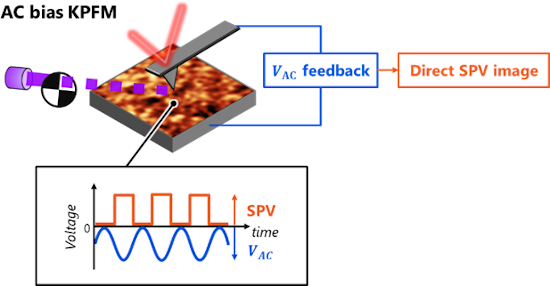
- changes in surface potential induced by modulated external disturbances such as electric fields, magnetic fields [70][71], and stress fields [72][73]. Appendix Sensitivity of AC-KPFM in the FM mode The sensitivity of AC-KPFM in the FM mode is comparable to the sensitivity of FM-KPFM. The frequency noise


Experimental and theoretical study of field-dependent spin splitting at ferromagnetic insulator–superconductor interfaces
Beilstein J. Nanotechnol. 2022, 13, 682–688, doi:10.3762/bjnano.13.60
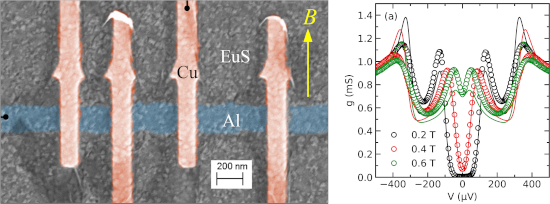
- Institute of Technology (KIT), D-76021 Karlsruhe, Germany Institute for Quantum Materials and Technologies, Karlsruhe Institute of Technology (KIT), D-76021 Karlsruhe, Germany 10.3762/bjnano.13.60 Abstract We present a combined experimental and theoretical work that investigates the magnetic proximity
- superconductivity [7][8], the triplet proximity effect [9][10][11], and implementations of superconducting switches and spin valves based on either the singlet or triplet proximity effect [12][13][14][15][16][17][18]. Furthermore, the spin-dependent density of states due to the proximity of a magnetic insulator is
- time [24][25][26]. Magnetic insulators have been used successfully, for example, in magnetic Josephson junctions [27], superconducting spin switches [13], and for studying the triplet proximity effect [28]. Ferromagnetic insulators are a good probe of the spin-dependent proximity effect in bilayer



Tunable high-quality-factor absorption in a graphene monolayer based on quasi-bound states in the continuum
Beilstein J. Nanotechnol. 2022, 13, 675–681, doi:10.3762/bjnano.13.59
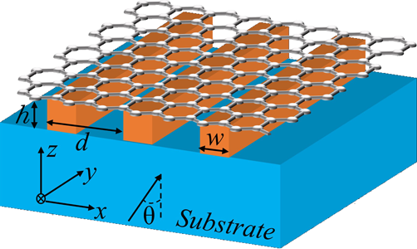
- . TM polarized (the magnetic field is along the direction of the y-axis) monochromatic plane waves are incident from the substrate at an angle θ. In our simulation, we set d = 3.3 μm, w = 2.31 μm, h = 3.5 μm, nh = 3.48, ns = 1.45, and θ = 0.1°. The surface conductivity of graphene has intraband and


A superconducting adiabatic neuron in a quantum regime
Beilstein J. Nanotechnol. 2022, 13, 653–665, doi:10.3762/bjnano.13.57
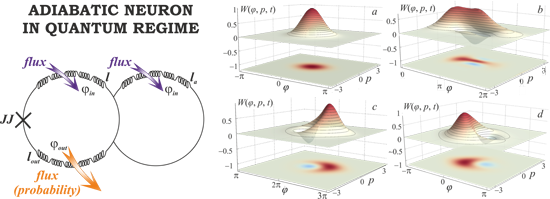
- work, we account for this by considering the neuron cell operation in a quantum regime. We investigate the dynamics of this cell in search of conditions that provide the required sigmoid activation function (conversion of the input magnetic flux into the average output current), suitable for the
- the dynamics of the neuron. The range of the operating parameters for the proposed neuron circuit under the action of unipolar magnetic flux pulses is found. Finally, the influence of the dissipation on the features of the dynamic processes and characteristics of the cell is revealed. Methods Neuron
- in [46] when considering the classical mode of this system. Inductances are normalized to (2πIc/Φ0), where Ic is the critical current of the Josephson junction and Φ0 is the magnetic flux quantum. The inertial properties of the system are due to the junction capacitance, which, along with the


Comparative molecular dynamics simulations of thermal conductivities of aqueous and hydrocarbon nanofluids
Beilstein J. Nanotechnol. 2022, 13, 620–628, doi:10.3762/bjnano.13.54
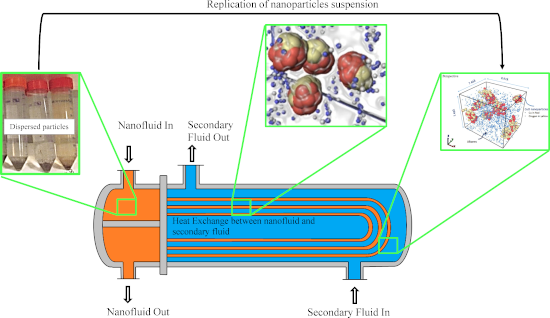
- -dimensional free convective hybrid nanofluid (Fe3O4 + MWCNT/H2O) stream over a resilient cylinder under the influence of a light magnetic field. The heat transportation problem was resolved by combining two methods (FEM and FVM) and an understanding that the temperature near the wall escalated due to an





