


Search results
Search for "mechanism" in Full Text gives 1270 result(s) in Beilstein Journal of Nanotechnology. Showing first 200.
Radiofrequency enhances drug release from responsive nanoflowers for hepatocellular carcinoma therapy
Beilstein J. Nanotechnol. 2024, 15, 569–579, doi:10.3762/bjnano.15.49
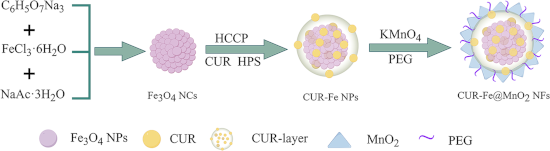
- model has the highest degree of fitting with the release of NFs in different simulated environments within 72 h, which indicates conformity with the Fick diffusion mechanism. Meanwhile, we found that RF heating does not affect the release kinetics model. Ritger–Peppas is a semiempirical model, and n is
- an indicator of the drug release mechanism, where n ≤ 0.45 represents the Fick diffusion. The n values calculated in this study are all less than 0.45, indicating that the CUR release from NFs is in accordance with the Fick diffusion. Similarly, the Higuchi model has the highest degree of fitting


Cholesterol nanoarchaeosomes for alendronate targeted delivery as an anti-endothelial dysfunction agent
Beilstein J. Nanotechnol. 2024, 15, 517–534, doi:10.3762/bjnano.15.46
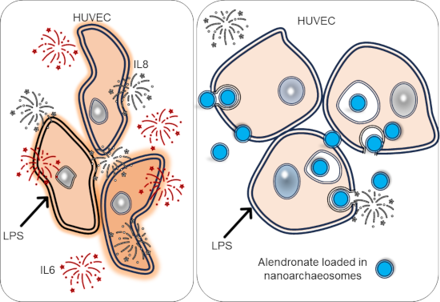
- due to the lower ALN internalization, resulting from the lower ALN/lipid ratio and lower endocytosis of the formulation. In either case, the mechanism of reduction of IL-6/IL-8 of ALN-loaded nanoarchaeosomes would differ from that mediated by the corticosteroid receptor since the corticosteroid
- dexamethasone did not affect HUVECs. The nanovesicles are internalized by endocytosis, a mechanism independent of their concentration and dose. Nanoarchaeosomes from H. tebenquichense are massively endocytosed, total or partly via SRA1, the receptor responsible for massive, high-rate internalization of





Photocatalytic degradation of methylene blue under visible light by cobalt ferrite nanoparticles/graphene quantum dots
Beilstein J. Nanotechnol. 2024, 15, 475–489, doi:10.3762/bjnano.15.43
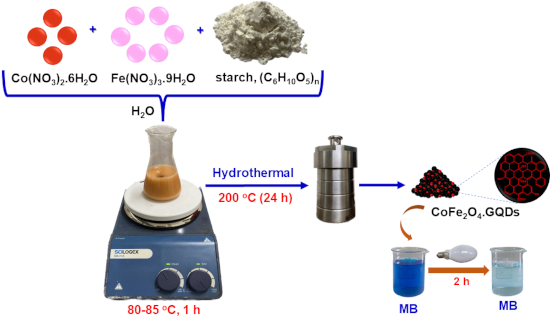
- /GQDs nanoparticles. Magnetic properties, morphology, structure, and fluorescence of the nanocomposites were studied, and the photocatalytic degradation of methylene blue as a dye model and the mechanism of methylene degradation were also addressed. Experimental Materials Cobalt(II) nitrate hexahydrate
- provides the value of k1. The values of k1, along with others from the literature, are presented in Table 3. However, because the reactions were conducted under different conditions, the comparison is arbitrary. To clarify the mechanism of MB photocatalytic degradation, 10 mM isopropyl (IPA), potassium
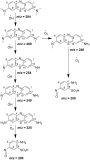
- photocorrosion and exhibits excellent reusability for the degradation process. The mechanism of MB degradation over the CF/GQDs catalyst is illustrated in Scheme 2. Under visible light irradiation, photogenerated holes (h+) are created in the valence bands via the transfer of photogenerated electrons (e−) from




Heat-induced morphological changes in silver nanowires deposited on a patterned silicon substrate
Beilstein J. Nanotechnol. 2024, 15, 435–446, doi:10.3762/bjnano.15.39
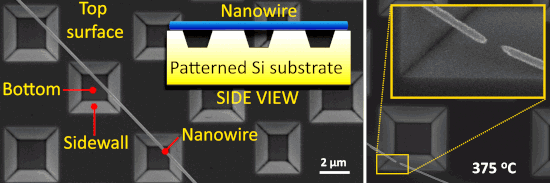
- leading to heat-induced fragmentation of Ag NWs as the mechanism of stress release, and could potentially involve recrystallization into single crystals. To test this hypothesis, we repeated experiments on TEM grids with subsequent observation of the crystal structure via TEM. It was found that the
- a driving force for the redistribution of Ag atoms and splitting of the adhered part of a NW into shorter fragments as a mechanism for stress mitigation. For the suspended parts, the thermal expansion should result in deformation. To estimate the extent and distribution of the heat-induced
- occur in the real system as a mechanism of stress mitigation. The model is completely elastic, and the simulated processes are fully reversible. Therefore, the results of FEM simulations should only be treated as a simplified qualitative illustration of the thermomechanical processes that may occur in


Classification and application of metal-based nanoantioxidants in medicine and healthcare
Beilstein J. Nanotechnol. 2024, 15, 396–415, doi:10.3762/bjnano.15.36
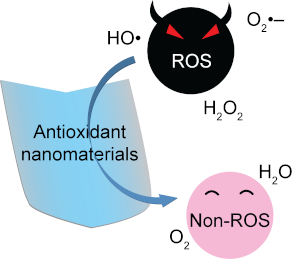
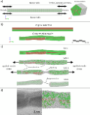
- metal-based nanoantioxidants of each type are described focusing on the mechanism of action, antioxidant activities, and individual properties. Second, the application of metal-based nanoantioxidants in medicine and healthcare is carefully discussed in order to demonstrate the potential of
- antioxidant appearing in low-density lipoprotein and human blood plasma contributing to the decrease of oxidative stress. Its mechanism of action relies on the ability to transfer the phenolic H atom to a peroxyl radical (ROO•) much more rapidly than the propagation reactions [50][51][52][53]. Despite the
- stability during long-term storage [54][55][56]. Relying on the mechanism of chain-breaking antioxidants, nanomaterials can be synthesized to directly react with ROS after the oxidative reaction begins. Chain-breaking antioxidant nanomaterials are materials or chemical substances having a size between 0–100


Insect attachment on waxy plant surfaces: the effect of pad contamination by different waxes
Beilstein J. Nanotechnol. 2024, 15, 385–395, doi:10.3762/bjnano.15.35
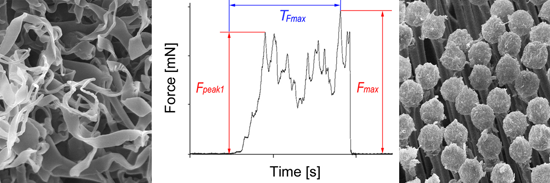
- previously reported findings in many plant and insect species [4][5][6]. The contaminating ability of plant waxes has been previously shown for many plants [8][28][29][30][31][32][33][34]. Our study clearly revealed the effect of pad contamination by plant wax material as an important mechanism of insect




On the mechanism of piezoresistance in nanocrystalline graphite
Beilstein J. Nanotechnol. 2024, 15, 376–384, doi:10.3762/bjnano.15.34
- applied strain on NCG placed on polyethylene terephthalate (PET) substrates provide intriguing insights into the underlying mechanism. Raman measurements, in conjunction with strain applied to NCG grown on flexible glass, indicate that the strain is concentrated at the grain boundaries for smaller strain
- properties, a mechanism for piezoresistance in NCG is proposed. The work included here is a part of the PhD thesis completed by the first author S. Kumar [23]. Results and Discussion The two-point bending fixture, which was constructed to impart external strain and simultaneously perform sheet resistance
- observed the plateau-like region as reported here, where the gauge factor is similar to the gauge factor at very low strain [24][33]. A plateau-like region has neither been observed in nanocrystalline graphite [33], amorphous carbon films [34], nor in metallic films [35]. The mechanism that leads to an


Investigating ripple pattern formation and damage profiles in Si and Ge induced by 100 keV Ar+ ion beam: a comparative study
Beilstein J. Nanotechnol. 2024, 15, 367–375, doi:10.3762/bjnano.15.33
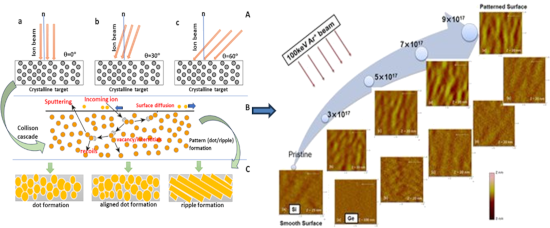
- to induce that type of energy deposition in the Ge lattice. This way, the defects can be produced and the substrate can be amorphized. The roughness and growth exponents have been deduced from the RMS surface roughness and power spectral density data to understand the mechanism of ripple formation on
- slope is obtained as 0.23 ± 0.07 and 0.19 ± 0.09 for Si and Ge, respectively. The roughness parameter α and the growth parameter β give information about the mechanism responsible for creating these surface structures due to the interplay between roughness induced by sputtering and smoothening due to


Exploring the relationships between physiochemical properties of nanoparticles and cell damage to combat cancer growth using simple periodic table-based descriptors
Beilstein J. Nanotechnol. 2024, 15, 297–309, doi:10.3762/bjnano.15.27
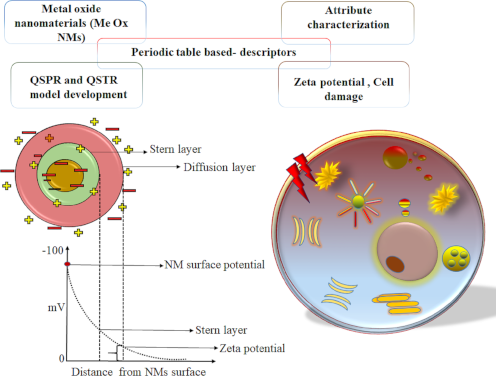
- . To date, few studies have reported on the mechanism of apoptosis of cancerous cells after metal oxide treatment, which still remains unclear. Traditional approaches are very costly, time-consuming, involve a lot of resources and lead to ethical implications; also, they are inadequate in addressing
- interpretability [21][22][23][24][25]. This type of descriptors can indicate relevant features and mend the mechanism interpretation. Some properties (size, zeta potential, molecular weight, mass percentage of metal elements, and cation charge) are investigated to have a better understanding of the structure of
- intensity of oxidative stress. This happens because longer exposure times enhance the toxicity mechanism of NPs. In contrast, short-term exposure does not affect significantly the cells. NPs can induce oxidative stress by impairing antioxidant defenses in humans when they are chronically exposed to NPs


Ultrasensitive and ultrastretchable metal crack strain sensor based on helical polydimethylsiloxane
Beilstein J. Nanotechnol. 2024, 15, 270–278, doi:10.3762/bjnano.15.25
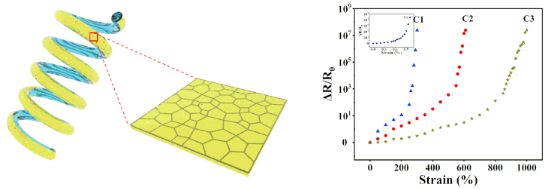
- formation under stretching. The sensors with helix indices C1, C2, and C3 exhibited distinct turning points at 250%, 550%, and 850% strain, respectively. The dominance of strain in the sensing mechanism can be attributed to the tunneling effect [37]. As the Au film is stretched, it gradually separates


Vinorelbine-loaded multifunctional magnetic nanoparticles as anticancer drug delivery systems: synthesis, characterization, and in vitro release study
Beilstein J. Nanotechnol. 2024, 15, 256–269, doi:10.3762/bjnano.15.24
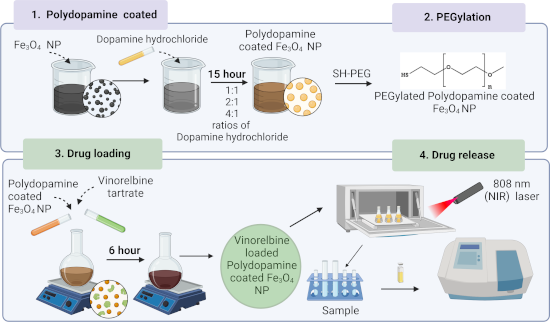
- tumor microenvironment triggers the controlled release of VNB. When combined with laser-induced photothermal therapy, this results in effective tumor elimination without recurrence. This mechanism holds immense promise for precise and targeted drug delivery. Moreover, VNB/PDA/Fe3O4 NPs exhibit


Design, fabrication, and characterization of kinetic-inductive force sensors for scanning probe applications
Beilstein J. Nanotechnol. 2024, 15, 242–255, doi:10.3762/bjnano.15.23
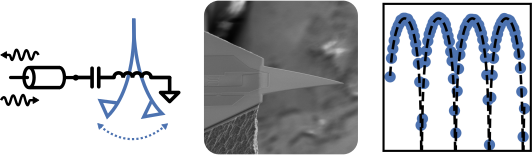
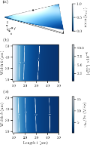
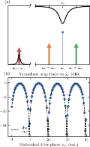
- verify that kinetic inductive mechano-electric coupling (KIMEC) is a useful, albeit not entirely understood, physical effect. Further investigation of alternative designs will help to shed light on the underlying physical mechanism behind KIMEC. We hope that this study motivates future work in this



Multiscale modelling of biomolecular corona formation on metallic surfaces
Beilstein J. Nanotechnol. 2024, 15, 215–229, doi:10.3762/bjnano.15.21
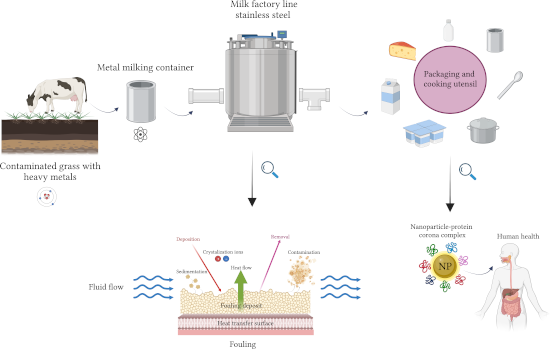
- engage in a complex interplay of dynamic physicochemical interactions, kinetics, and thermodynamic exchanges that can lead to undesirable outcomes [1][8][9][10]. In a more general context, the importance in understanding the mechanism of bionano interactions arises from the increasing awareness and




Ion beam processing of DNA origami nanostructures
Beilstein J. Nanotechnol. 2024, 15, 207–214, doi:10.3762/bjnano.15.20
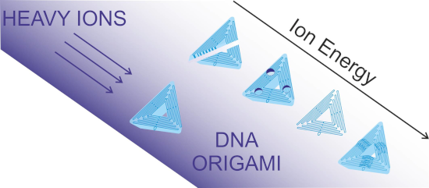
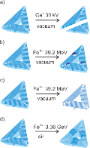
- the generation of plasma from air affecting the nanostructures and DNA–substrate interactions. Despite the underlying mechanism, which is worth of further exploration, this behavior should be emphasized in the present content. Random irradiation of the origami-deposited nanostructures results in a
- install in large infrastructures. Nonetheless, it is possible that the most probable mechanism of the height variation could be the radical attack from the environment when the irradiation is done in air. A similar behavior was observed also upon chemical modification of the nanostructures [38]. DNA


Exploring disorder correlations in superconducting systems: spectroscopic insights and matrix element effects
Beilstein J. Nanotechnol. 2024, 15, 199–206, doi:10.3762/bjnano.15.19
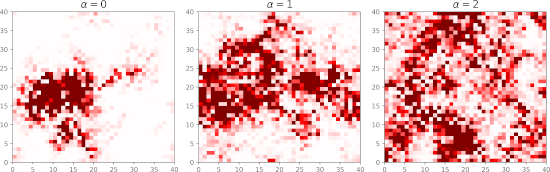
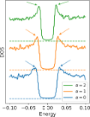
- this mechanism, which controls superconductivity in strongly disordered materials, is modified when the disorder becomes correlated. Model Superconductivity characteristics of a disordered superconductor are investigated using an attractive Hubbard lattice Hamiltonian with point interaction, introduced


Graphene removal by water-assisted focused electron-beam-induced etching – unveiling the dose and dwell time impact on the etch profile and topographical changes in SiO2 substrates
Beilstein J. Nanotechnol. 2024, 15, 190–198, doi:10.3762/bjnano.15.18
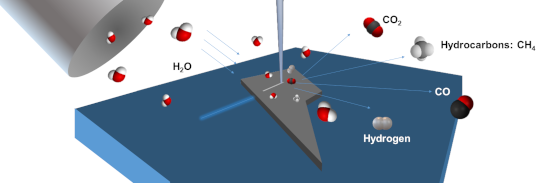
- changes upon stationary exposure were investigated in the work of Stevens Kalceff et al. [24], where the authors observed an increase/decrease in volume of crystalline and amorphous SiO2, respectively. However, the explicit mechanism responsible for the process that considers possible reactions paths with
- already been studied by several groups [32][33][34][35]. However, the direct mechanism has not yet been fully elucidated up to now [36]. In the studies of etching of thermally grown SiO2, reported in 1995 by Bakker and Hess [32], the authors claim that chemical reactions between Si atoms and OH− groups
- lead to the formation of the volatile Si(OH)4 compound. A similar mechanism is proposed by Rosamila et al. [33] for O2-promoted water etching of Si surface, established on the observation that the etching rate is proportional to the concentration of OH− groups. Those hydroxyl groups are also electron


Development and characterization of potential larvicidal nanoemulsions against Aedes aegypti
Beilstein J. Nanotechnol. 2024, 15, 104–114, doi:10.3762/bjnano.15.10
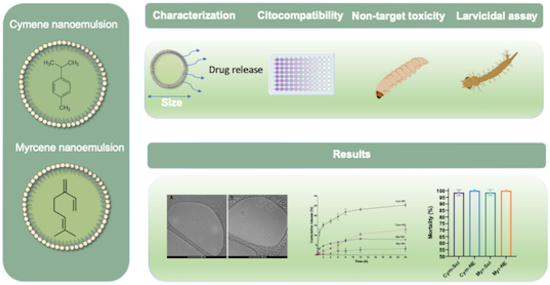
- maturation, a very important mechanism when it comes to the instability of NEs. It is related to the difference between the droplet sizes in the formulation, with the smaller droplets having greater chemical potential and, thus, diffusing to the larger ones [26]. Formulations with HLB values of 14 and 15
- a transport exponent value (n) of 0.3, indicating a release mechanism primarily driven by Fickian diffusion [44]. The free terpenes exhibited a value of 0.6, suggesting an anomalous transport mechanism for drug release. This mechanism involves a combination of diffusion and dissolution processes for


Berberine-loaded polylactic acid nanofiber scaffold as a drug delivery system: The relationship between chemical characteristics, drug-release behavior, and antibacterial efficiency
Beilstein J. Nanotechnol. 2024, 15, 71–82, doi:10.3762/bjnano.15.7
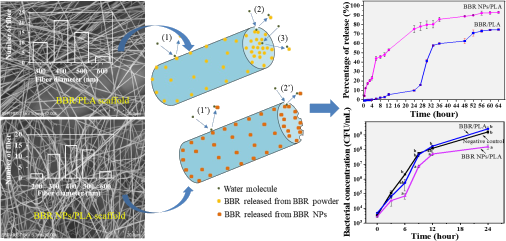
- good antibacterial activity for wound dressing [28][30]. In order to study the mechanism of BBR release from BBR/PLA and BBR NPs/PLA nanofiber scaffolds, the release data were fitted to several kinetic models, including zero-order, first-order, Higuchi, and Ritger–Peppas models. The regression
- compared to that of other models. In addition, the release exponent (n) of the equation was 0.1703, indicating that the BBR release from the BBR/PLA nanofiber scaffold followed the Fickian diffusion. In this mechanism, the release of BBR was governed by a diffusion process, where the diffusion rate was
- higher than the polymer relaxation [43]. Based on the R2 values shown in Table 1, the release data of the BBR NPs/PLA nanofiber scaffold was simultaneously well described by the Higuchi and Ritger–Peppas models, suggesting that BBR NPs release was mainly controlled by a diffusion mechanism. However, the


Influence of conductive carbon and MnCo2O4 on morphological and electrical properties of hydrogels for electrochemical energy conversion
Beilstein J. Nanotechnol. 2024, 15, 57–70, doi:10.3762/bjnano.15.6
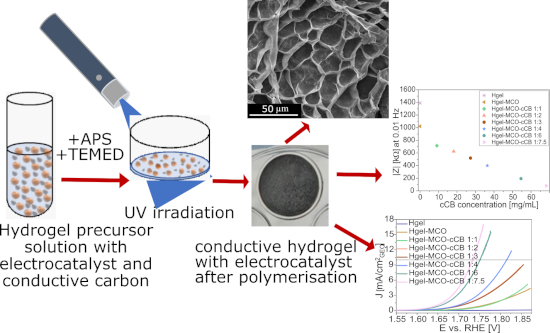
- mechanism (two or three electron transfer processes), with a strong influence of two electron transfers. Comparing the value of the Tafel slope of the hydrogel composite containing MCO and cCB particles with the Tafel slope of pure hydrogel (141 mV·dec−1), it is visible that the addition of the catalyst
- (Figure 5a). This is related to the increase of the electrode double-layer capacitance with the increase in the amount of cCB (Figure 5b). This confirms the comparable rate and mechanism of the OER reaction of the Hgel-MCO-cCB electrode. Comparing our Tafel slope with the values obtained for the PPy


Josephson dynamics and Shapiro steps at high transmissions: current bias regime
Beilstein J. Nanotechnol. 2024, 15, 51–56, doi:10.3762/bjnano.15.5
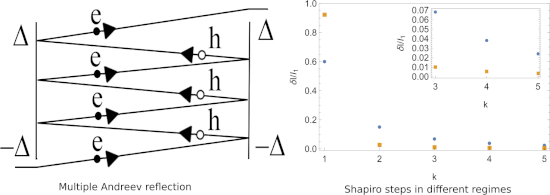
- T → 0 can flow across the junction. The situation becomes entirely different provided one goes beyond the tunneling limit and considers highly transparent superconducting weak links in which case the charge transfer is essentially controlled by the mechanism of multiple Andreev reflection [2]. This
- mechanism causes intrinsic dissipation at subgap energies. Recently, we demonstrated [3] that such intrinsic dissipation has a dominating sub-Ohmic component in the subgap regime. This observation implies, for example, substantial modifications of the I–V curve at bias currents I just slightly exceeding the


Curcumin-loaded nanostructured systems for treatment of leishmaniasis: a review
Beilstein J. Nanotechnol. 2024, 15, 37–50, doi:10.3762/bjnano.15.4
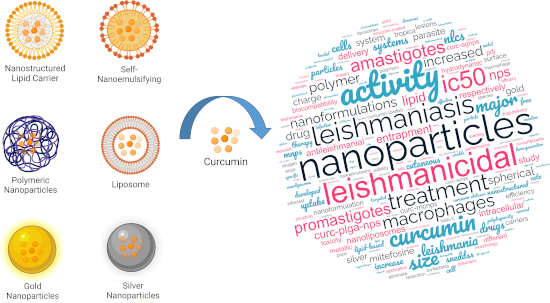
- Leishmania spp. Although its mechanism of action has not yet been fully elucidated, its leishmanicidal potential may be associated with its antioxidant and anti-inflammatory properties. However, it has limitations that compromise its clinical use. Conversely, nanotechnology has been used as a tool for


Nanotechnological approaches in the treatment of schistosomiasis: an overview
Beilstein J. Nanotechnol. 2024, 15, 13–25, doi:10.3762/bjnano.15.2
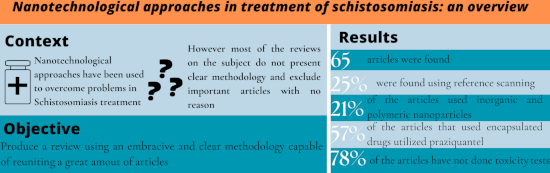
- mechanism by which the nanoemulsion could reduce the worm burden is its antimicrobial activity, connecting changes in microbiota with the response to parasites. However, the mechanism of action of carvacrol remains unknown [67]. Repositioned drugs Works utilizing compounds repositioned from other diseases


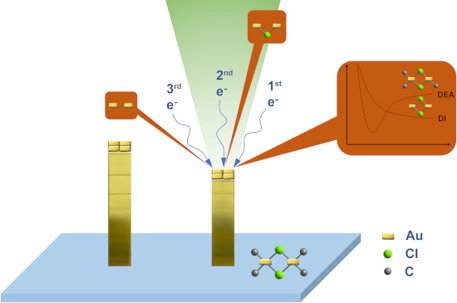
A combined gas-phase dissociative ionization, dissociative electron attachment and deposition study on the potential FEBID precursor [Au(CH3)2Cl]2
Beilstein J. Nanotechnol. 2023, 14, 1178–1199, doi:10.3762/bjnano.14.98



Curcumin-loaded albumin submicron particles with potential as a cancer therapy: an in vitro study
Beilstein J. Nanotechnol. 2023, 14, 1127–1140, doi:10.3762/bjnano.14.93
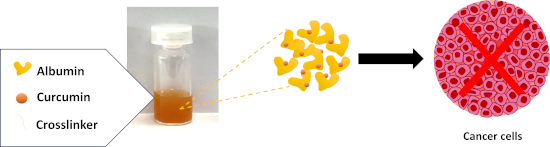
- regulating the expression through a miRNA-mediated mechanism [4]. Furthermore, recent studies have shown that CUR induces apoptosis in human hepatocellular carcinoma cells (Huh-7) by activating p38, leading to FasL-associated apoptosis [5]. However, the clinical application of CUR is restricted by



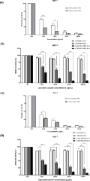
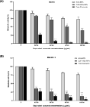

Sulfur nanocomposites with insecticidal effect for the control of Bactericera cockerelli
Beilstein J. Nanotechnol. 2023, 14, 1106–1115, doi:10.3762/bjnano.14.91
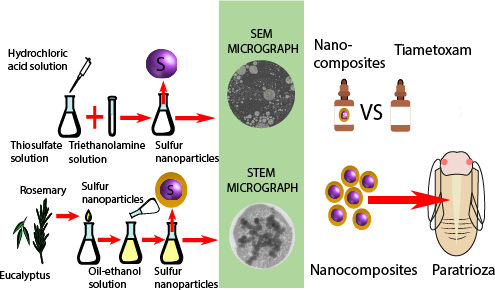
- to improve the insecticidal efficacy because the higher surface area and specificity provide stronger contact of the active substance with the insects [45]. The working mechanism of the nanocomposites may be the effective penetration through pores and microfibrils of the insects’ cuticle [45] and the





