Search results
Search for "nanocrystals" in Full Text gives 289 result(s) in Beilstein Journal of Nanotechnology. Showing first 200.
Cubic chemically ordered FeRh and FeCo nanomagnets prepared by mass-selected low-energy cluster-beam deposition: a comparative study
Beilstein J. Nanotechnol. 2016, 7, 1850–1860, doi:10.3762/bjnano.7.177
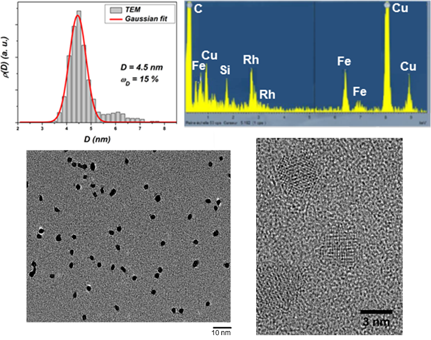
- obtained the experimental persistence of high ferromagnetic magnetization down to 3 K for size-selected chemically ordered B2-like FeRh nanocrystals up to 5 nm in diameter. In particular, magnetic measurements on annealed 3.3 nm FeRh samples, have demonstrated ferromagnetic alignment of Fe and Rh at low


Antitumor magnetic hyperthermia induced by RGD-functionalized Fe3O4 nanoparticles, in an experimental model of colorectal liver metastases
Beilstein J. Nanotechnol. 2016, 7, 1532–1542, doi:10.3762/bjnano.7.147
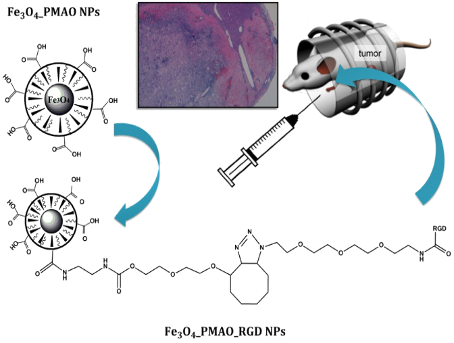
- solvent dispersed, iron oxide nanocrystals must be transferred into aqueous phase and make them active in bioconjugation reactions with biomolecules [35]. In order to obtain the required aqueous stability, amphiphilic polymers like poly(maleic anhydride-alt-1-octadecene (PMAO) are able to form oil-in
- -water micelles, encapsulating iron oxide nanocrystals inside them. The monomeric units of maleic anhydride are easily hydrolyzed to form carboxylic groups, becoming hydrosoluble. Besides, the conjugation of carboxylates to a linker containing both an amino and a triple bond group generates an
- The particle surface was modified with poly(maleic anhydride-alt-1-octadecene (PMAO) [54][55]. The phase transfer was made by mixing 20 mg Fe3O4 nanocrystals and 400 mg PMAO in 200 mL chloroform and sonicated at room temperature (1 h). After removing the chloroform, the nanoparticles were resuspended


Localized surface plasmons in structures with linear Au nanoantennas on a SiO2/Si surface
Beilstein J. Nanotechnol. 2016, 7, 1519–1526, doi:10.3762/bjnano.7.145
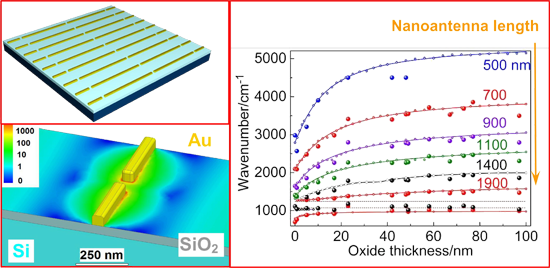
- spectral region are considered as promising nanostructures for the detection of small amounts of both organic (down to attomoles) and inorganic substances, including semiconductor nanocrystals [18][23][24][25][26][27]. In this approach serving as the basis for surface-enhanced IR spectroscopy, the IR


Nanostructured germanium deposited on heated substrates with enhanced photoelectric properties
Beilstein J. Nanotechnol. 2016, 7, 1492–1500, doi:10.3762/bjnano.7.142
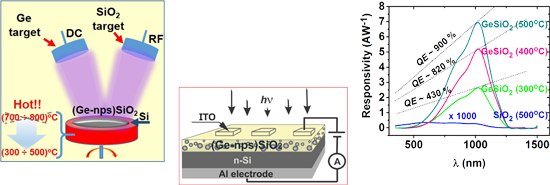
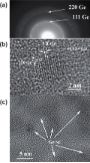
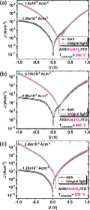
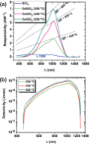
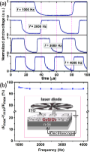
- 10.3762/bjnano.7.142 Abstract Obtaining high-quality materials, based on nanocrystals, at low temperatures is one of the current challenges for opening new paths in improving and developing functional devices in nanoscale electronics and optoelectronics. Here we report a detailed investigation of the




Deformation-driven catalysis of nanocrystallization in amorphous Al alloys
Beilstein J. Nanotechnol. 2016, 7, 1428–1433, doi:10.3762/bjnano.7.134
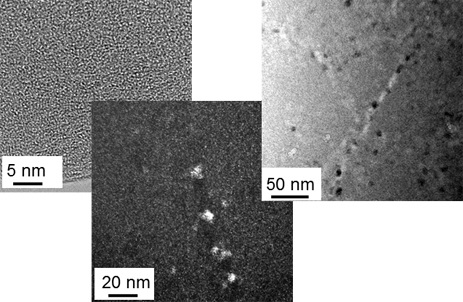
- , Madison, Wisconsin, 53706, USA Institut für Materialphysik, Universität Münster, Wilhelm-Klemm Str. 10, 48149 Münster, Germany 10.3762/bjnano.7.134 Abstract Nanocrystals develop in amorphous alloys usually during annealing treatments with growth- or nucleation-controlled mechanisms. An alternative
- processing route is intense deformation and nanocrystals have been shown to develop in shear bands during the deformation process. Some controversy surrounded the idea of adiabatic heating in shear bands during their genesis, but specific experiments have revealed that the formation of nanocrystals in shear
- bands and even promotes nanocrystal formation in those regions upon annealing. Melt-spun amorphous Al88Y7Fe5 alloy was intensely cold rolled. Microcalorimeter measurements at 60 °C indicated a slight but observable growth of nanocrystals in shear bands over the annealing time of 10 days. When the cold


Microwave synthesis of high-quality and uniform 4 nm ZnFe2O4 nanocrystals for application in energy storage and nanomagnetics
Beilstein J. Nanotechnol. 2016, 7, 1350–1360, doi:10.3762/bjnano.7.126
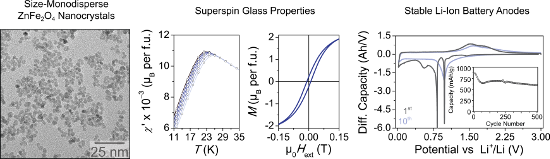
- Technology, Hermann-von-Helmholtz Platz 1, 76344 Eggenstein-Leopoldshafen, Germany Institute for Photon Science and Synchrotron Radiation, Karlsruhe Institute of Technology, Hermann-von-Helmholtz-Platz 1, 76344 Eggenstein-Leopoldshafen, Germany 10.3762/bjnano.7.126 Abstract Magnetic nanocrystals with a
- microscopy and direct-current magnetometry confirm the size uniformity of the nanocrystals, while frequency-dependent alternating-current magnetic susceptibility measurements indicate the presence of a superspin glass state with a freezing temperature of about 22 K. Furthermore, as demonstrated by
- galvanostatic charge–discharge tests and ex situ X-ray absorption near edge structure spectroscopy, the as-prepared zinc ferrite nanocrystals can be used as a high-capacity anode material for Li-ion batteries, showing little capacity fade – after activation – over hundreds of cycles. Overall, in addition to the


Tunable longitudinal modes in extended silver nanoparticle assemblies
Beilstein J. Nanotechnol. 2016, 7, 1219–1228, doi:10.3762/bjnano.7.113
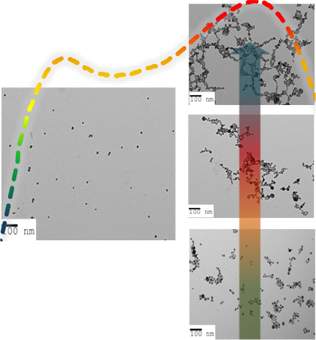
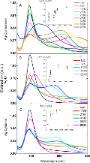
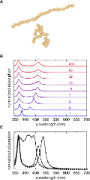
- certain facets of the silver nanocrystals. The differential binding affinity of ligands on different crystal faces makes both the nature of the ligand and the amount present critical in deciding the final crystal shape. Zhang et al. presented a mechanism of the 1D anisotropic growth of five-fold-twinned


Fast diffusion of silver in TiO2 nanotube arrays
Beilstein J. Nanotechnol. 2016, 7, 1129–1140, doi:10.3762/bjnano.7.105
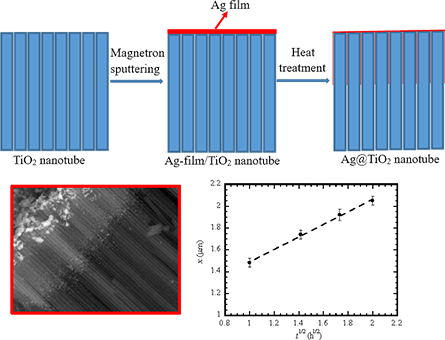
- diffusion of Ag atoms on the outmost surface of the TiO2 nanotubes in the temperature range of 300 to 500 °C is 157 kJ/mol, which is less than that for the lattice diffusion of Ag and larger than that for the grain boundary diffusion. The diffusion of Ag atoms leads to the formation of Ag nanocrystals on
- the outmost surface of TiO2 nanotubes. Probably there are hardly any Ag nanocrystals formed inside the TiO2 nanotubes through the migration of Ag. Keywords: activation energy; fast diffusion; magnetron sputtering; silver; TiO2 nanotube; Introduction Titanium dioxide (TiO2) has gained great attention
- for Ag, which correspond to the (101) plane of anatase TiO2 and {111} planes of face-centered cubic (fcc) structure of Ag [33], respectively. The Ag nanoparticles are Ag nanocrystals. There is no oxidation of Ag nanocrystals in contrast to the general statement that Ag nanoparticles are very reactive


Multiwalled carbon nanotube hybrids as MRI contrast agents
Beilstein J. Nanotechnol. 2016, 7, 1086–1103, doi:10.3762/bjnano.7.102
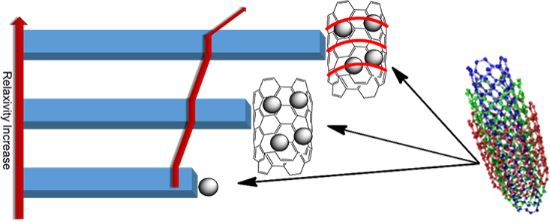
- with europium, gadolinium and lanthanum fluoride co-precipitation (EuGdLa/SiO2/PAH/MWCNT#Chen) [25]. The authors claimed that fluoride nanocrystals (5–10 nm) coated the MWCNT effectively due to high electrostatic attraction from the polyelectrolyte. The silica layer was introduced to prevent

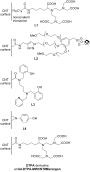


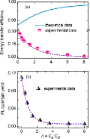
The influence of phthalocyanine aggregation in complexes with CdSe/ZnS quantum dots on the photophysical properties of the complexes
Beilstein J. Nanotechnol. 2016, 7, 1018–1027, doi:10.3762/bjnano.7.94
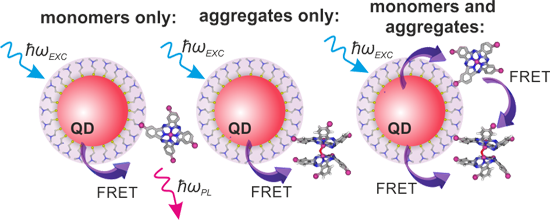
- ; Förster resonance energy transfer; photosensitizer; semiconductor nanocrystals; tetrapyrroles; Introduction Semiconductor quantum dots (QDs) and their complexes with organic molecules have been a subject of extensive research during the last couple of decades. In particular, complexes of QDs and



Development of highly faceted reduced graphene oxide-coated copper oxide and copper nanoparticles on a copper foil surface
Beilstein J. Nanotechnol. 2016, 7, 1010–1017, doi:10.3762/bjnano.7.93
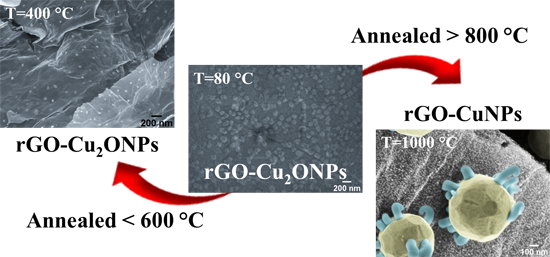
- studies on the abovementioned Cu-based nanoparticles. Interestingly, they develop a highly faceted morphology and are actually coated with rGO sheets. The rGO-coated Cu-based nanoparticles developed at temperatures in the range of 200–1000 °C starting from bare Cu2O nanocrystals that formed at 80 °C


A terahertz-vibration to terahertz-radiation converter based on gold nanoobjects: a feasibility study
Beilstein J. Nanotechnol. 2016, 7, 983–989, doi:10.3762/bjnano.7.90
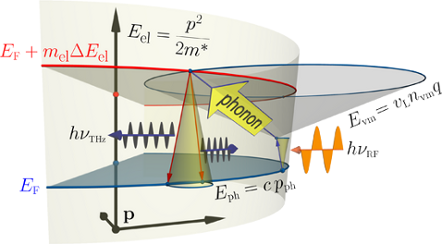
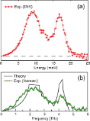
- text for details. Vibrational density of states of gold as extracted from (a) inelastic neutron scattering on thick foils [2], (b) plasmon resonance Raman scattering on nanocrystals [3] (green dots) and reconstructed from force constants fitted to inelastic neutron scattering data from massive single



Assembling semiconducting molecules by covalent attachment to a lamellar crystalline polymer substrate
Beilstein J. Nanotechnol. 2016, 7, 784–798, doi:10.3762/bjnano.7.70
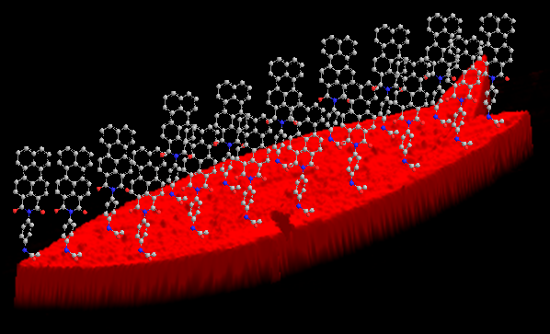
- nanocrystals and large single crystals. By assembling nanocrystals on a Langmuir trough, large areas could be covered by monolayers consisting of randomly arranged nanocrystals. Alternatively, we used a method based on local supersaturation to grow large area single crystals of the precisely side-branched
- changed from patchy to compact. Keywords: monolayer; nanocrystals; precision polyethylene; semiconducting molecules; single crystals; Introduction Organic chemistry constantly provides new, high-performance semiconducting molecules for organic electronic applications [1]. However, efforts to develop
- problem, we pursued an enhanced variant of the aforementioned approach: We attempted to create ordered monolayers of nanocrystals made of a precisely side-branched polymer. Those ordered monolayers of nanocrystals should have surfaces similar to the surface of single crystals, but can be prepared on much


Hemolysin coregulated protein 1 as a molecular gluing unit for the assembly of nanoparticle hybrid structures
Beilstein J. Nanotechnol. 2016, 7, 351–363, doi:10.3762/bjnano.7.32
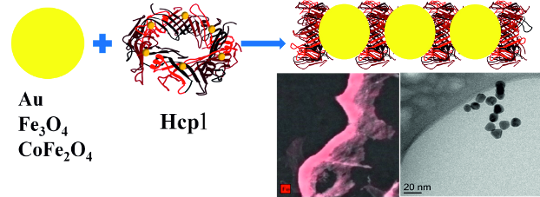
- Hcp1_cys3 fiber-like structure after lyophilization. C) and D) TEM images show a network of magnetite NPs, which are arranged in linear chains. A) Overview HRTEM image of magnetite NPs in the Fe3O4 Hcp1_cys3 fiber. B) HRTEM image from (A) overlaid with the orientation map of magnetite nanocrystals derived




Surface coating affects behavior of metallic nanoparticles in a biological environment
Beilstein J. Nanotechnol. 2016, 7, 246–262, doi:10.3762/bjnano.7.23
- ; protein interaction; silver; surface coating; Introduction Functional nanomaterials, including nanoparticles, nanocrystals, and nanoclusters, are promising tools for new medicinal applications, particularly for clinical use in disease diagnosis and treatment [1][2]. However, only a few nanomaterials are
- nanodiscs, triangular nanoplates or nanospheres. In recent years, solution-phase methods developed rapidly toward a reproducible preparation of metallic NPs with controlled shape [66]. A typical synthesis of nanocrystals can be divided into three levels: nucleation, evolution of nuclei into seed, and growth
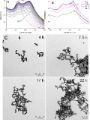
- of seed into nanocrystals. The mechanism behind such a synthesis is extremely complicated, but the type of coating agent proved to be crucial for the final shape of a nanocrystal [66]. The micrographs presented in Figure 8 suggest that our initially small AgNPs appeared as seeds in WhBl or BlPl




Linear and nonlinear optical properties of hybrid metallic–dielectric plasmonic nanoantennas
Beilstein J. Nanotechnol. 2016, 7, 111–120, doi:10.3762/bjnano.7.13
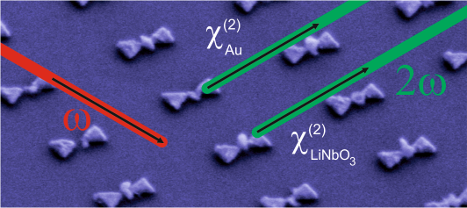
- , in first-order approximation it will not exhibit a second harmonic response for a normal incident electric field. The LiNbO3 nanocrystals, however, intrinsically break the inversion symmetry due to their crystal structure. The key idea in combining these two systems is thus to boost only the second
- harmonic response from the nanocrystals while the antenna array itself remains “dark” (meaning it does not cause any second harmonic light). Figure 2a illustrates the basic steps in producing these samples. Gold nanoantennas as well as gold alignment marks are fabricated via standard electron beam
- resist that expose the gap regions of the antennas. After development and oxygen plasma cleaning, the samples are immersed in the LiNbO3 solution, which consists of the nanocrystals diluted in water. The sample is repeatedly dipped into the solution and afterwards blown dry using nitrogen. The crystals


Dependence of lattice strain relaxation, absorbance, and sheet resistance on thickness in textured ZnO@B transparent conductive oxide for thin-film solar cell applications
Beilstein J. Nanotechnol. 2016, 7, 75–80, doi:10.3762/bjnano.7.9
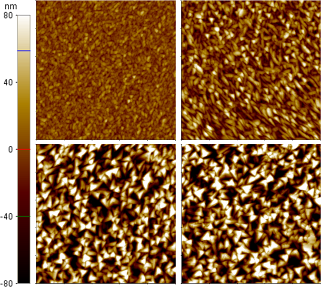
- microcrystallites has a strong green emission due to defect states in the core [11]. A blue-shifted absorption edge and photoluminescence caused by quantum confinement as well as a higher photovoltaic and sensor performance due to a larger surface area have been demonstrated in ZnO nanocrystals [14][15][16]. In



Two step formation of metal aggregates by surface X-ray radiolysis under Langmuir monolayers: 2D followed by 3D growth
Beilstein J. Nanotechnol. 2015, 6, 2406–2411, doi:10.3762/bjnano.6.247
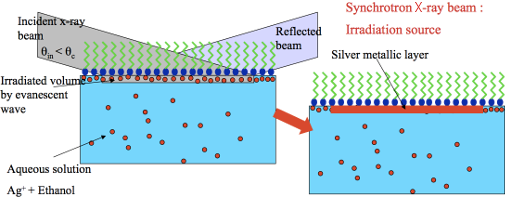
- , results in a second growth regime of silver nanocrystals. Here the formation of the oriented thin layer is followed by the appearance of a 3D powder of silver clusters. Keywords: GIXD; Langmuir monolayers; silver clusters; TXRF; X-ray radiolysis; Introduction Formation of metal nanoclusters and


Surface-enhanced Raman scattering by colloidal CdSe nanocrystal submonolayers fabricated by the Langmuir–Blodgett technique
Beilstein J. Nanotechnol. 2015, 6, 2388–2395, doi:10.3762/bjnano.6.245
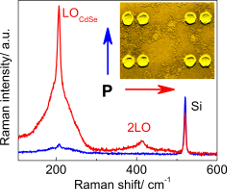
- 10.3762/bjnano.6.245 Abstract We present the results of an investigation of surface-enhanced Raman scattering (SERS) by optical phonons in colloidal CdSe nanocrystals (NCs) homogeneously deposited on both arrays of Au nanoclusters and Au dimers using the Langmuir–Blodgett technique. The coverage of the
- deposited NCs was less than one monolayer, as determined by transmission and scanning electron microscopy. SERS by optical phonons in CdSe nanocrystals showed a significant enhancement that depends resonantly on the Au nanocluster and dimer size, and thus on the localized surface plasmon resonance (LSPR
- ) energy. The deposition of CdSe nanocrystals on the Au dimer nanocluster arrays enabled us to study the polarization dependence of SERS. The maximal SERS signal was observed for light polarization parallel to the dimer axis. The polarization ratio of the SERS signal parallel and perpendicular to the dimer


Green and energy-efficient methods for the production of metallic nanoparticles
Beilstein J. Nanotechnol. 2015, 6, 2354–2376, doi:10.3762/bjnano.6.243
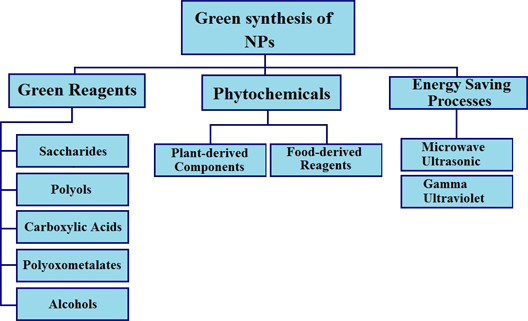
- , surface-enhanced Raman scattering (SERS) detection and catalysis of chemical reactions. Furthermore, biocompatible and functionalized NPs have applications in diagnosis and treatment of cancer. For these two purposes, fluorescent and magnetic nanocrystals for detection of tumors and also nanosystems for


Surfactant-controlled composition and crystal structure of manganese(II) sulfide nanocrystals prepared by solvothermal synthesis
Beilstein J. Nanotechnol. 2015, 6, 2319–2329, doi:10.3762/bjnano.6.238
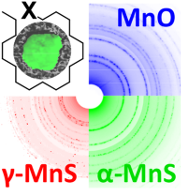
- Ricerche, via C. Golgi 19, 20133 Milano, Italy 10.3762/bjnano.6.238 Abstract We investigated how the outcome of the solvothermal synthesis of manganese(II) sulfide (MnS) nanocrystals (NCs) is affected by the type and amount of long chain surfactant present in the reaction mixture. Prompted by a previous
- the NC polymorphism. We found that MnS polymorphism can be controlled by appropriate selection of the surfactant. γ-MnS nanocrystals formed when a 1:2 mixture of long chain carboxylic acid and amine was used, irrespective of the presence of carboxylic acid as a free surfactant or ligand in the metal
- precursor. When we used a single surfactant (carboxylic acid, alcohol, thiol, amine), α-MnS nanocrystals were obtained. The peculiar role of the amine seems to be related to its basicity. The nanocrystals were characterized by TEM and electron diffraction; ATR-FTIR spectroscopy provided information about


Silica-coated upconversion lanthanide nanoparticles: The effect of crystal design on morphology, structure and optical properties
Beilstein J. Nanotechnol. 2015, 6, 2290–2299, doi:10.3762/bjnano.6.235
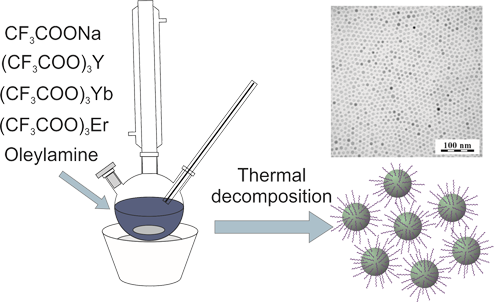
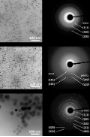
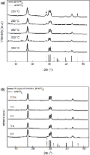
- diffraction (XRD) to determine morphology, size, polydispersity, crystal structure and elemental composition of the nanocrystals. TEM microscopy revealed that the morphology of the nanoparticles could be fine-tuned by modifying of the synthetic conditions. A cubic-to-hexagonal phase transition of the NaYF4
- energy dispersive spectroscopy (EDX) were used to determine the morphology, crystal structure and elemental composition of the nanocrystals, respectively. All TEM micrographs, diffractograms and spectra were taken at an accelerating voltage of 120 kV. Particle size distribution was analyzed with the
- number-average diameter (TEM) and the hydrodynamic diameter (DLS) is due to the fact that hydrophobic particles tend to aggregate and cannot be resolved as individual particles by DLS. Morphology and crystalline structure of the dry OM–NaYF4:Yb3+/Er3+ nanocrystals were determined by TEM/BF, TEM/ED and






A single-source precursor route to anisotropic halogen-doped zinc oxide particles as a promising candidate for new transparent conducting oxide materials
Beilstein J. Nanotechnol. 2015, 6, 2161–2172, doi:10.3762/bjnano.6.222
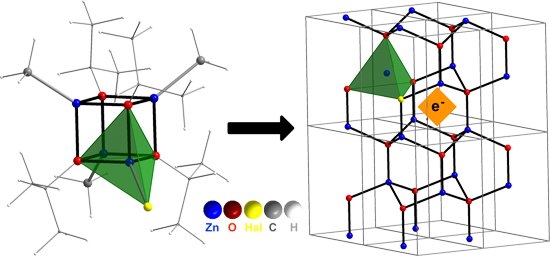
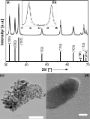
- have an anisotropic, elongated shape. In contrast, the particles of the pure ZnO material are not elongated (see Figure S5, Supporting Information File 1). High-resolution (HR) TEM measurements show the high crystallinity of the single Cl@ZnO nanocrystals (see also Figure S4, Supporting Information



Mapping bound plasmon propagation on a nanoscale stripe waveguide using quantum dots: influence of spacer layer thickness
Beilstein J. Nanotechnol. 2015, 6, 2046–2051, doi:10.3762/bjnano.6.208
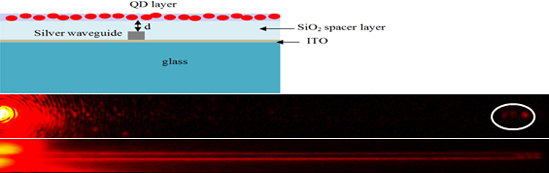
- an emission wavelength of 655 nm were obtained from invitrogen (Cat. No: Q21321MP). These carboxyl QDs are made from CdSe nanocrystals shelled with a ZnS layer. The core–shell material is further coated with a polymer layer to allow for better dispersion of the QDs in aqueous solution. These QDs have




Paramagnetism of cobalt-doped ZnO nanoparticles obtained by microwave solvothermal synthesis
Beilstein J. Nanotechnol. 2015, 6, 1957–1969, doi:10.3762/bjnano.6.200
- , interesting perspectives in many application areas [1][2][3]. The most challenging issue nowadays is how to produce such advanced nanocrystals with well-defined and reproducible electronic, optoelectronic and magnetic properties at low cost. In the present work we investigate zinc oxide (ZnO), which is an