


Search results
Search for "photocatalytic" in Full Text gives 213 result(s) in Beilstein Journal of Nanotechnology. Showing first 200.
Rapid degradation of zinc oxide nanoparticles by phosphate ions
Beilstein J. Nanotechnol. 2014, 5, 2007–2015, doi:10.3762/bjnano.5.209
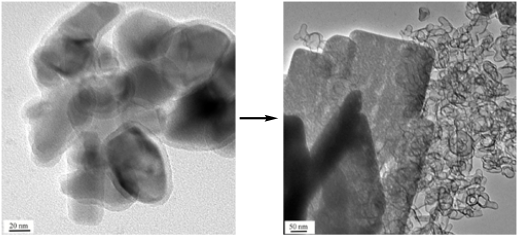
- recently [23]. Special attention to the effects of phosphate around neutral pH has been payed only very recently [24]. The photocatalytic activity of ZnO nanoparticles can be significantly reduced by coating with SiO2 [25]. This is important when ZnO-NP are applied as UV blockers. We therefore also
- phosphate buffers. Photocatalytic activity of ZnO-NP, e.g., in oxidation reactions, is an unwanted feature when they are to be applied as UV blockers. Among the suggested coatings, which should block this activity, silica is mostly used in commercial preparations [25]. In principle, coatings should also
- zinc phosphate, which does not lead to precipitation and equilibrium shifts. In the light of these results it seems essential to ensure a tight coating by a chemically resistant material before applying ZnO-NP for, e.g., medical or cosmetic purposes. Silica coating can suppress photocatalytic activity


Synthesis of hydrophobic photoluminescent carbon nanodots by using L-tyrosine and citric acid through a thermal oxidation route
Beilstein J. Nanotechnol. 2014, 5, 1513–1522, doi:10.3762/bjnano.5.164
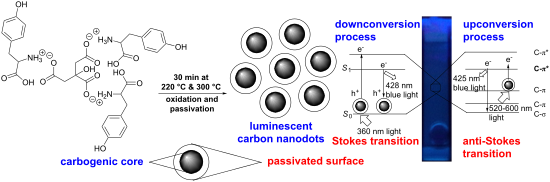
- -sensor [11][12], and photocatalytic applications [13][14]. CNDs that possess a conjugated conducting network of predominantly sp2-hybridized carbon atoms with only a little amount of sp3-hybridized carbon atoms, along with a distribution of some atoms such as oxygen and nitrogen are sometimes referred to
- ], photocatalytic applications [28][29]. Very few reports about hydrophobic CNDs are known [30][31]. Hydrophobic fluorescent probes (e.g., Nile red) were found to be useful for labeling hydrophobic environments in bacteria [32], but the problem associated with organic dyes is photobleaching. CNDs are promising






Enhanced photocatalytic hydrogen evolution by combining water soluble graphene with cobalt salts
Beilstein J. Nanotechnol. 2014, 5, 1167–1174, doi:10.3762/bjnano.5.128
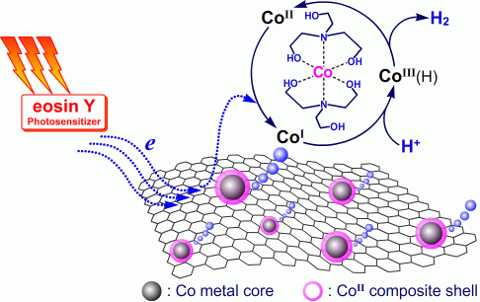
- , Beijing 100190, P. R. China 10.3762/bjnano.5.128 Abstract There is tremendous effort put in the pursuit for cheap and efficient catalysts for photocatalytic hydrogen evolution systems. Herein, we report an active catalyst that uses the earth-abundant element cobalt and water-dispersible sulfonated
- graphene. The photocatalytic hydrogen evolution activity of the catalyst was tested by using triethanolamine (TEOA) as electron donor and eosin Y (EY) as the photosensitizer under LED irradiation at 525 nm. Hydrogen was produced constantly even after 20 h, and the turnover number (TON) reached 148 (H2/Co
- ) in 4 h with respect to the initial concentration of the added cobalt salts was shown to be 5.6 times larger than that without graphene. Keywords: cobalt salts; earth-abundant catalyst; photocatalysis; photocatalytic hydrogen evolution; water-dispersible sulfonated-graphene; Introduction


Organic and inorganic–organic thin film structures by molecular layer deposition: A review
Beilstein J. Nanotechnol. 2014, 5, 1104–1136, doi:10.3762/bjnano.5.123




Characterization and photocatalytic study of tantalum oxide nanoparticles prepared by the hydrolysis of tantalum oxo-ethoxide Ta8(μ3-O)2(μ-O)8(μ-OEt)6(OEt)14
Beilstein J. Nanotechnol. 2014, 5, 1082–1090, doi:10.3762/bjnano.5.121
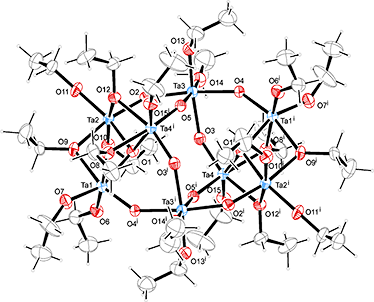
- characterized by various techniques such as TGA-DTA-DSC, UV–vis DRS, XRD, SEM, TEM, particle size analyzer (DLS) and the Brunauer–Emmett–Teller (BET) method. The band gap of the particles was calculated by using the Tauc plot. The photocatalytic activity of Ta2O5 nanoparticles was tested by the degradation of
- to its distinct properties such as large ion diffusion coefficient and high electrochromic reversibility, high dielectric constant, high refractive index, high chemical stability, large band gap [13][14][15] and photocatalytic activity for overall water decomposition and organic pollutant degradation
- (1) was isolated. When 1 was subjected to further hydrolysis it yielded nanoparticles of tantalum oxide after calcination at 750 °C for four hours. The photocatalytic activity of Ta2O5 nanoparticles was studied over the degradation of organic dye rhodamine B (RhB). Results and Discussion Tantalum


Photocatalysis
Beilstein J. Nanotechnol. 2014, 5, 1071–1072, doi:10.3762/bjnano.5.119

- , two review articles present an excellent overview of the significance of nanostructures in visible light photocatalysis in a timely manner. Many materials aspects of photocatalysts influence the photocatalytic performance, such as the electronic, structural, and morphological features of the
- degradation. In recent years, the interest in photocatalytic organic conversion has risen, which is reflected by a report on photo-epoxidation. And last but not least, one of the studies of this Thematic Series aims for a fundamental understanding of the photophysical process by optical modeling. I am
DFT study of binding and electron transfer from colorless aromatic pollutants to a TiO2 nanocluster: Application to photocatalytic degradation under visible light irradiation
Beilstein J. Nanotechnol. 2014, 5, 1016–1030, doi:10.3762/bjnano.5.115
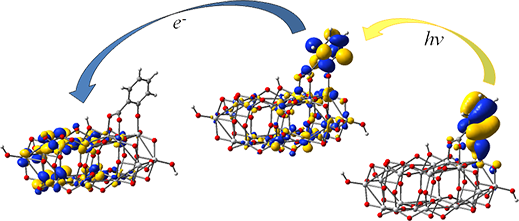
- order to explain experimental results regarding the photocatalytic degradation of these pollutants under visible light irradiation. Based on our modeling, we are able to clarify why transparent pollutants can degrade under visible light in the presence of a catalyst that absorbs only in the UV, to
- ; density functional theory; photocatalytic degradation; titanium dioxide; visible light irradiation; Introduction Titania, TiO2, has been widely used as photocatalyst for environmental applications [1][2][3][4][5][6], particularly for waste water purification. Due to its large band gap TiO2 absorbs only
- UV radiation, a fact that limits the efficiency and keeps the costs of the photocatalytic degradation of environmental pollutants high. To be used under visible light irradiation, in the range of wavelengths where the solar spectrum has its maximum, the electronic band structure of the photocatalyst




Functionalized nanostructures for enhanced photocatalytic performance under solar light
Beilstein J. Nanotechnol. 2014, 5, 994–1004, doi:10.3762/bjnano.5.113
- Liejin Guo Dengwei Jing Maochang Liu Yubin Chen Shaohua Shen Jinwen Shi Kai Zhang International Research Center for Renewable Energy & State Key Laboratory of Multiphase Flow in Power Engineering, Xi’an Jiaotong University Xi’an 710049, China 10.3762/bjnano.5.113 Abstract Photocatalytic hydrogen
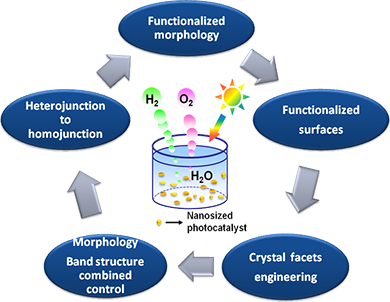
- production from water has been considered to be one of the most promising solar-to-hydrogen conversion technologies. In the last decade, various functionalized nanostructures were designed to address the primary requirements for an efficient photocatalytic generation of hydrogen by using solar energy
- nanoscale, i.e., materials with the same compositions but different phases with certain band alignment. We conclude this review with perspectives on nanostructure design that might direct future research of this technology. Keywords: functionalized nanostructures; hydrogen; photocatalysis; photocatalytic


Growth and characterization of CNT–TiO2 heterostructures
Beilstein J. Nanotechnol. 2014, 5, 946–955, doi:10.3762/bjnano.5.108
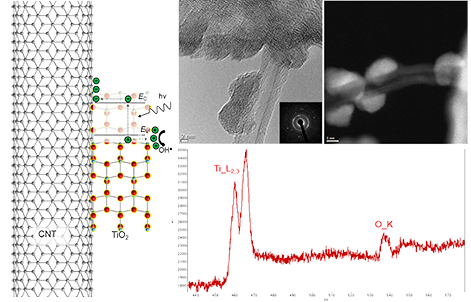
- , combining TiO2 nanocrystals and carbon nanotubes (CNTs) offers enhanced photosensitivity and improved photocatalytic efficiency, which is key to achieving sustainable energy and preventing environmental pollution. Hence, it has aroused a tremendous research interest. This report surveys recent research on
- discovery that with the addition of CNTs, the light absorption of TiO2 can be extended to the visible-light region [8][9][10][11][12][13][14]. This can significantly increase the photocatalytic efficiency. In literature several photocatalysis enhancement mechanisms based on TiO2–CNT have been proposed, as
- photocatalytic performance than the chemical bond between CNTs and TiO2, since the arc-discharge-synthesized CNTs show a dramatically higher photocatalytic dye degradation rate than the CVD-synthesized CNTs, which is attributed to the smaller number of defects in the multi-wall (MW) tubes of the former. In


Enhancement of photocatalytic H2 evolution of eosin Y-sensitized reduced graphene oxide through a simple photoreaction
Beilstein J. Nanotechnol. 2014, 5, 801–811, doi:10.3762/bjnano.5.92
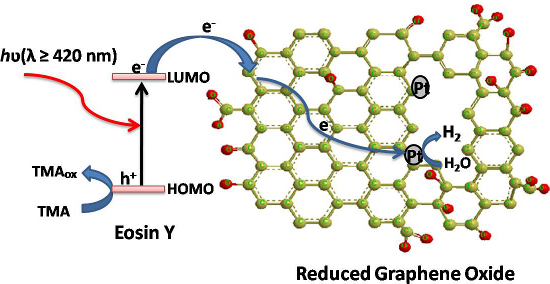
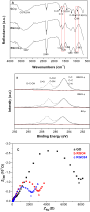
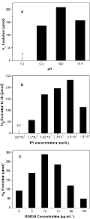
- hydroxy groups are gradually removed from GO, resulting in an increase of sp2 π-conjugated domains and defect carbons with holes for the formed RGO. The RGO conductivity increases due to the restoration of sp2 π-conjugated domains. The photocatalytic activity of EY-RGO/Pt for hydrogen evolution was
- increasing irradiation time. The adsorption quantity of EY on the surface of RGO enhances, too. The two factors ultimately result in an enhancement of the photocatalytic hydrogen evolution over EY-RGO/Pt with increasing irradiation time. A possible mechanism is discussed. Keywords: eosin Y sensitization
- ; graphene oxide; H2 evolution; photocatalysis; photoreduction; sp2 conjugated domains; Introduction Hydrogen is an efficient and green energy carrier. Photocatalytic water splitting into hydrogen by means of solar energy and semiconductor photocatalysts is a environmentally friendly way to produce storable





Antimicrobial properties of CuO nanorods and multi-armed nanoparticles against B. anthracis vegetative cells and endospores
Beilstein J. Nanotechnol. 2014, 5, 789–800, doi:10.3762/bjnano.5.91
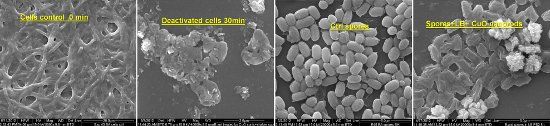
- nanostructures comparable to established antibiotics as well as their photocatalytic potential. However, we have not come across any report on bactericidal potential of CuO nanoparticles against B. anthracis cells and spores. The earlier findings inspired us to evaluate antibacterial activity of noncorrosive CuO
- the possibility that this viable fraction represents thick walled spores. Moreover, the data show the advantage of using nanometer-scaled CuO over the photocatalytic deactivation of B. anthracis cells by nanometer-scaled TiO2. Deactivation of comparatively fewer B. anthracis cells (1900 CFU/mL) by


Biomolecule-assisted synthesis of carbon nitride and sulfur-doped carbon nitride heterojunction nanosheets: An efficient heterojunction photocatalyst for photoelectrochemical applications
Beilstein J. Nanotechnol. 2014, 5, 770–777, doi:10.3762/bjnano.5.89
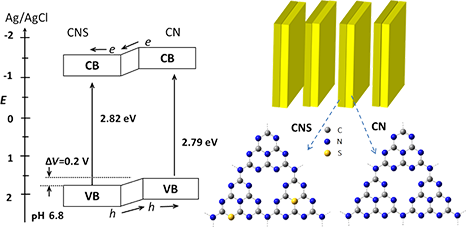
- and by doping with foreign atoms [5][6][7][8]. However, the photocatalytic performance of CN is still limited because of the fast charge recombination [6][8][9][10]. How to efficiently separate photogenerated charge carriers in CN becomes a critical factor in further improving the photocatalytic
- [11]. Numerous CN-based heterojunctions have been constructed by coupling CN with various types of photocatalysts, e.g., oxides and chalcogenides, which have shown improved photocatalytic performances [12][13][14][15][16][17][18]. However, the formation of interfacial defects at the CN/photocatalyst
- increased thickness of nanosheets. Figure 4d presents the pore size distribution of CN, CNS and the CN/CNS heterostructure. It is clear that sulfur doping significantly increases the pore volume of micro- (smaller than 10 nm) and meso- (larger than 100 nm) pores, which could favor the photocatalytic


Visible light photooxidative performance of a high-nuclearity molecular bismuth vanadium oxide cluster
Beilstein J. Nanotechnol. 2014, 5, 711–716, doi:10.3762/bjnano.5.83

- reported. Photocatalytic activity studies show faster reaction kinetics under anaerobic conditions, suggesting an oxygen-dependent quenching of the photoexcited cluster species. Further mechanistic analysis shows that the reaction proceeds via the intermediate formation of hydroxyl radicals which act as
- oxidant. Trapping experiments using ethanol as a hydroxyl radical scavenger show significantly decreased photocatalytic substrate oxidation in the presence of EtOH. Photocatalytic performance analyses using monochromatic visible light irradiation show that the quantum efficiency Φ for indigo
- , olefins and others [1][2][3][14]. However, as POMs often only absorb light in the UV range, little is known about the visible-light photocatalytic activity of POMs [5][15]. One means of addressing this challenge is to tune the cluster structure and reactivity by incorporation of a reactive metal site into


Nanostructure sensitization of transition metal oxides for visible-light photocatalysis
Beilstein J. Nanotechnol. 2014, 5, 696–710, doi:10.3762/bjnano.5.82
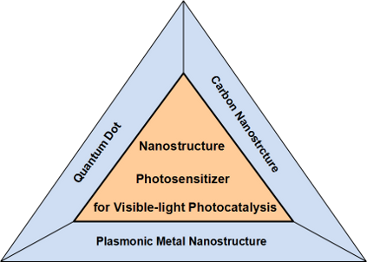
- visible-light photocatalytic reaction processes in environmental remediation and solar fuel generation fields, are also introduced. A brief outlook on the nanostructure photosensitization is also given. Keywords: carbon nanostructures; nanostructure sensitization; plasmonic metal nanostructures; quantum
- for the conversion of solar energy into chemical fuel, electricity, the decomposition of organic pollutants etc. All of these photocatalytic reactions occur on the surface of semiconductors. Basically, the photocatalytic process can be mainly divided into three pathways [1][2][3], as shown in Figure 1
- like hydroxyl radicals by directly reacting with surface hydroxyl groups or oxidizing adsorbed molecules (D → D+). The basic mechanisms of the photocatalytic process include these reduction and oxidation reactions as well as some secondary reactions, which forms the driving force of a number of




A visible-light-driven composite photocatalyst of TiO2 nanotube arrays and graphene quantum dots
Beilstein J. Nanotechnol. 2014, 5, 689–695, doi:10.3762/bjnano.5.81
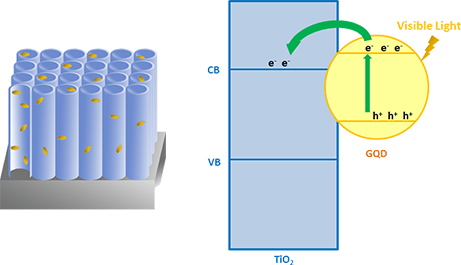
- ), scanning electron microscopy (SEM), transmission electron microscopy (TEM), X-ray diffraction (XRD), thermogravimetric analysis (TGA) and UV–vis absorption spectroscopy. The product exhibited high photocatalytic performance in the photodegradation of methylene blue and enhanced photocurrent under visible
- attention due to its large specific area, high intrinsic electron mobility and good electrical conductivity [3]. As an excellent electron acceptor, graphene has been combined with semiconductor photocatalysts such as TiO2 [25], ZnO [26] and CdS [27] to enhance their photocatalytic activities. However
- TNAs with GQDs not only extended the optical absorption spectrum of TNAs over the visible range, but also enhanced the photocatalytic and photoelectrochemical performances of TNAs under visible light. Results and Discussion Figure 1a shows a TEM image of GQDs with diameters of about 10 nm. The AFM


Effects of the preparation method on the structure and the visible-light photocatalytic activity of Ag2CrO4
Beilstein J. Nanotechnol. 2014, 5, 658–666, doi:10.3762/bjnano.5.77
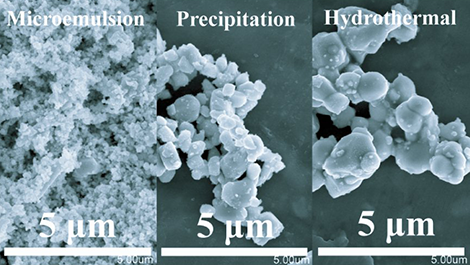
- 10.3762/bjnano.5.77 Abstract Silver chromate (Ag2CrO4) photocatalysts are prepared by microemulsion, precipitation, and hydrothermal methods, in order to investigate the effect of preparation methods on the structure and the visible-light photocatalytic activity. It is found that the photocatalytic
- activity of the prepared Ag2CrO4was highly dependent on the preparation methods. The sample prepared by microemulsion method exhibits the highest photocatalytic efficiency on the degradation of methylene blue (MB) under visible-light irradiation. The enhanced photocatalytic activity could be ascribed to
- ; photocatalytic activity; silver chromate; visible-light-driven; Introduction Semiconductor photocatalysis has been considered as a potential solution to the worldwide energy shortage and for counteracting environmental degradation [1][2][3][4][5]. Numerous efforts have been made to develop efficient and stable


Enhanced photocatalytic activity of Ag–ZnO hybrid plasmonic nanostructures prepared by a facile wet chemical method
Beilstein J. Nanotechnol. 2014, 5, 639–650, doi:10.3762/bjnano.5.75
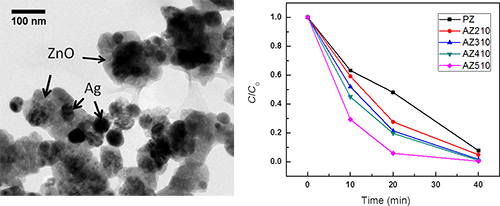
- the synthesis of Ag–ZnO hybrid plasmonic nanostructures with enhanced photocatalytic activity by a facile wet-chemical method. The structural, optical, plasmonic and photocatalytic properties of the Ag–ZnO hybrid nanostructures were studied by X-ray diffraction (XRD), field emission scanning electron
- microscopy (FESEM), transmission electron microscopy (TEM), photoluminescence (PL) and UV–visible absorption spectroscopy. The effects of citrate concentration and Ag nanoparticle loading on the photocatalytic activity of Ag–ZnO hybrid nanostructures towards sun-light driven degradation of methylene blue (MB
- photocatalytic degradation efficiency, which has been found to increase with the extent of Ag nanoparticle loading. Keywords: Ag–ZnO; hybrid plasmonic nanostructures; photocatalysis; Introduction The removal of hazardous materials such as dyes and organic compounds from waste water has attracted ever


High activity of Ag-doped Cd0.1Zn0.9S photocatalyst prepared by the hydrothermal method for hydrogen production under visible-light irradiation
Beilstein J. Nanotechnol. 2014, 5, 587–595, doi:10.3762/bjnano.5.69
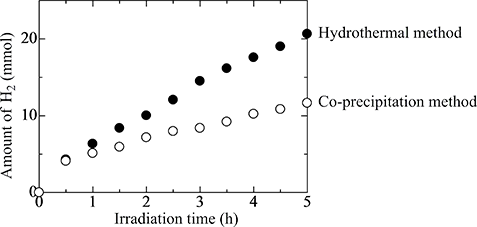
- -University Studies, Universiti Malaysia Sarawak, 94300 Kota Samarahan, Sarawak, Malaysia 10.3762/bjnano.5.69 Abstract Background: The hydrothermal method was used as a new approach to prepare a series of Ag-doped Cd0.1Zn0.9S photocatalysts. The effect of Ag doping on the properties and photocatalytic
- activity of Cd0.1Zn0.9S was studied for the hydrogen production from water reduction under visible light irradiation. Results: Compared to the series prepared by the co-precipitation method, samples prepared by the hydrothermal method performed with a better photocatalytic activity. The sample with the
- . In addition to the larger absorption in the visible-light region, the increase in photocatalytic activity of samples with Ag doping may also come from the Ag species facilitating electron–hole separation. Conclusion: This study demonstrated that Ag doping is a promising way to enhance the activity of


Artificial sunlight and ultraviolet light induced photo-epoxidation of propylene over V-Ti/MCM-41 photocatalyst
Beilstein J. Nanotechnol. 2014, 5, 566–576, doi:10.3762/bjnano.5.67
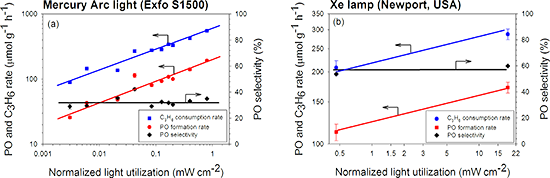
- , National Chiao Tung University, Hsin Chu 300, Taiwan 10.3762/bjnano.5.67 Abstract The light irradiation parameters, including the wavelength spectrum and intensity of light source, can significantly influence a photocatalytic reaction. This study examines the propylene photo-epoxidation over V-Ti/MCM-41
- photocatalytic reaction occurs only when the illumination with light enables the generation of highly reactive species such as hydroxyl radicals (OH•) and oxy radicals (O•) [1]. The light intensity in photocatalysis has attracted considerable attention. The positive effect of increasing the light intensity on
- photocatalytic reactions is a common phenomenon, which has been observed in, e.g., the photo-degradation of gaseous formaldehyde [2], dye [3][4][5] and polychlorinated dibenzo-p-dioxins [6], and the disinfection of Escherichia coli [7][8][9]. How the light energy can be effectively utilized in a heterogeneous




Mesoporous cerium oxide nanospheres for the visible-light driven photocatalytic degradation of dyes
Beilstein J. Nanotechnol. 2014, 5, 517–523, doi:10.3762/bjnano.5.60
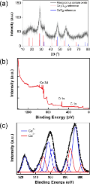
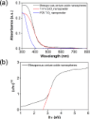
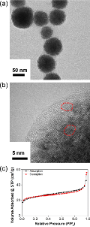
- reported for the purpose of the photocatalytic degradation of organic dyes and future applications in sustainable energy research. The earth-abundant, relatively affordable, mixed valence cerium oxide sample, which consists of predominantly Ce7O12, has been characterized by powder X-ray diffraction, X-ray
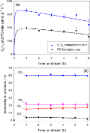
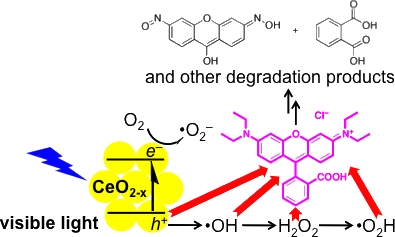
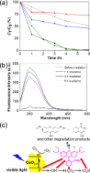
- photoelectron and UV–vis spectroscopy, and transmission electron microscopy. Together with N2 sorption experiments, the data confirms that the new cerium oxide material is mesoporous and absorbs visible light. The photocatalytic degradation of rhodamin B is investigated with a series of radical scavengers
- , suggesting that the mechanism of photocatalytic activity under visible-light irradiation involves predominantly hydroxyl radicals as the active species. Keywords: cerium oxide; dye degradation; mesoporous; photocatalysis; visible light; Introduction The degradation of organic pollutants by affordable and

Applicability and costs of nanofiltration in combination with photocatalysis for the treatment of dye house effluents
Beilstein J. Nanotechnol. 2014, 5, 476–484, doi:10.3762/bjnano.5.55
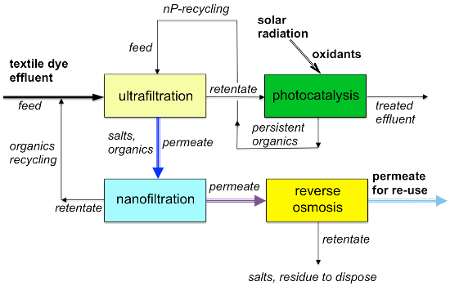
- high resistance to biological degradation. Dyes are made to be stable to light, oxidizing agents, and aerobic digestion to fulfil the quality demands of textile products. Fundamental principles and applications of photocatalytic degradation of dyes in homogeneous or heterogeneous systems can be found
- in the literature. For example there is an extensive overview given from Mills and Le Hunte [2], a review by Chong et al. [3] about recent developments in photocatalytic water treatment technology, and a short description of fundamentals is given by Rauf and Salman Ashraf 2009 [4]. Results
- and resistance to chemical breakdown, which promote its application in photocatalytic water treatment [7][9][12][13]. Photocatalysts can be used in the form of suspended fine particles or immobilized on various supports. Obviously, photoreactors with a suspended catalysts (or slurry type) are


Dye-sensitized Pt@TiO2 core–shell nanostructures for the efficient photocatalytic generation of hydrogen
Beilstein J. Nanotechnol. 2014, 5, 360–364, doi:10.3762/bjnano.5.41
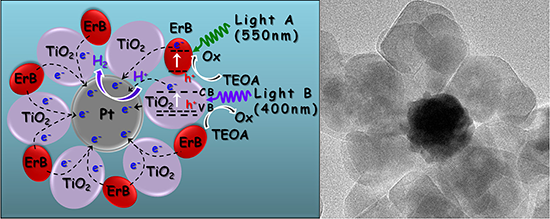
- hydrothermal method. The dye-sensitization of these Pt@TiO2 core–shell structures allows for a high photocatalytic activity for the generation of hydrogen from proton reduction under visible-light irradiation. When the dyes and TiO2 were co-excited through the combination of two irradiation beams with
- recombination rate of photogenerated electrons and holes often leads to low quantum yields and a poor photocatalytic activity [6]. Tremendous efforts have been made to improve the photocatalytic performance of TiO2. One typical strategy is prolonging the lifetime of the electron–hole pair through deposition of
- Grätzel in 1991 [12], various types of dyes have been explored, and some of them allow for the reduction of protons into hydrogen gas through visible-light-driven photocatalytic processes [13][14][15][16][17]. Herein, we use erythrosin B (ErB) sensitized Pt@TiO2 core–shell nanoparticles for the highly


Quantum size effects in TiO2 thin films grown by atomic layer deposition
Beilstein J. Nanotechnol. 2014, 5, 77–82, doi:10.3762/bjnano.5.7
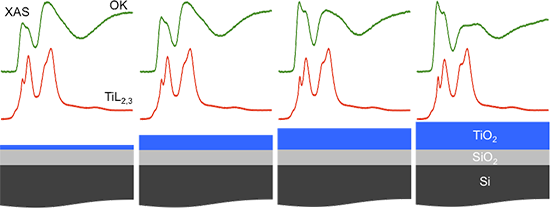
- size effects; titanium dioxide (TiO2); water splitting; X-ray absorption spectroscopy (XAS); Introduction Titanium dioxide (TiO2) is an important material for the photoelectrolysis of water [1] and for many other photocatalytic reactions [2]. Its effective conversion of solar light, although limited
- conduction band states, increases the delocalization of O 2p states, and improves the charge carrier transport. We recently used our TiO2 films grown by ALD on Fe2O3 in order to increase the photoactivated hydrophilic and photocatalytic behavior of Fe oxides. There, it was observed that TiO2 thin films and


Study of mesoporous CdS-quantum-dot-sensitized TiO2 films by using X-ray photoelectron spectroscopy and AFM
Beilstein J. Nanotechnol. 2014, 5, 68–76, doi:10.3762/bjnano.5.6
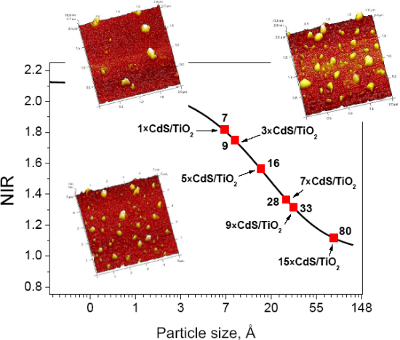
- photosensitized solar cells with high quantum yields [1][2][3][4] and the photocatalytic degradation of pollutants [5][6]. CdS, currently used as an efficient visible-light sensitizer, is a semiconductor that possesses a small band gap (2.4 eV) and suitable potential energies. The electron transfer between QDs
- studies reported the strong dependence of the photovoltaic conversion yield and photocatalytic efficiency on the particle size TiO2 sensitized with QDs-CdS [3][8]. Varying the size of the CdS particles allows for a tuning of the band gap energy of the QDs-CdS in order to reach the required value to



Preparation of NiS/ZnIn2S4 as a superior photocatalyst for hydrogen evolution under visible light irradiation
Beilstein J. Nanotechnol. 2013, 4, 949–955, doi:10.3762/bjnano.4.107
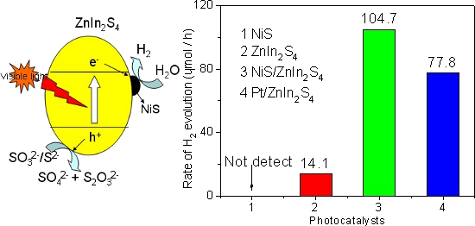
- successfully prepared via a facile two-step hydrothermal process. The as-prepared samples were characterized by X-ray diffraction (XRD), X-ray photoelectron spectroscopy (XPS), transmission electron microscopy (TEM) and high-resolution transmission electron microscopy (HRTEM). Their photocatalytic performance
- for hydrogen evolution under visible light irradiation was also investigated. It was found that the photocatalytic hydrogen evolution activity over hexagonal ZnIn2S4 can be significantly increased by loading NiS as a co-catalyst. The formation of a good junction between ZnIn2S4 and NiS via the two
- step hydrothermal processes is beneficial for the directional migration of the photo-excited electrons from ZnIn2S4 to NiS. The highest photocatalytic hydrogen evolution rate (104.7 μmol/h), which is even higher than that over Pt/ZnIn2S4 nanocomposite (77.8 μmol/h), was observed over an optimum NiS





