


Search results
Search for "roughness" in Full Text gives 481 result(s) in Beilstein Journal of Nanotechnology. Showing first 200.
Ternary nanocomposites of reduced graphene oxide, polyaniline and hexaniobate: hierarchical architecture and high polaron formation
Beilstein J. Nanotechnol. 2018, 9, 2936–2946, doi:10.3762/bjnano.9.272
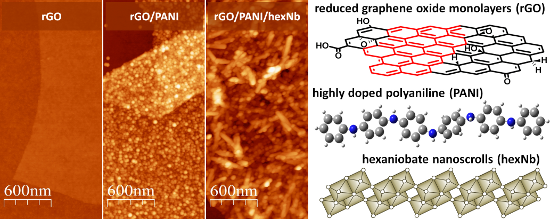
- shown in Figure 2. AFM images of the rGO-25 sample show particles of well-defined edges and size ranging from 5 to 25 μm. The height profile (Figure 2, right column) shows thickness of ca. 1.0 nm and a surface roughness (RMS) of 0.24 nm for the rGO flake. These results clearly indicate the presence of
- hand, this nanocomposite presents several creases and folds and, more interestingly, shows higher flake thickness and higher surface roughness (ca. 10 and ca. 4.0 nm, respectively). These results clearly indicate that the deposition of PANI on rGO flakes induces an increase of the surface heterogeneity
- . Analogously, the AFM images of rGO/PANI/hexNb also indicate the presence of large flakes in the nanocomposite and, as shown by the 5 μm scan-size image (and corresponding height profile), the flake thickness and surface roughness are ca. 19 and ca. 7.2 nm, respectively. These results clearly indicate that the


In situ characterization of nanoscale contaminations adsorbed in air using atomic force microscopy
Beilstein J. Nanotechnol. 2018, 9, 2925–2935, doi:10.3762/bjnano.9.271
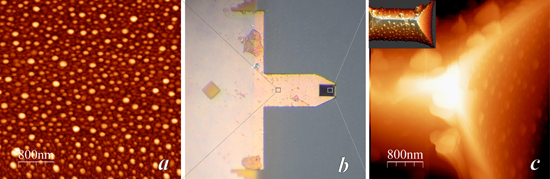
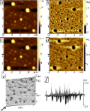
- , about 1 nm mean roughness, see for example [47]). A few higher structures (3–4 nm height) can be recognized in the topographic images. Interestingly only one of these higher structures gives a contrast in the contact-potential image (Figure 2Ce, −90 mV as compared to +70 mV for the substrate), otherwise


Site-controlled formation of single Si nanocrystals in a buried SiO2 matrix using ion beam mixing
Beilstein J. Nanotechnol. 2018, 9, 2883–2892, doi:10.3762/bjnano.9.267
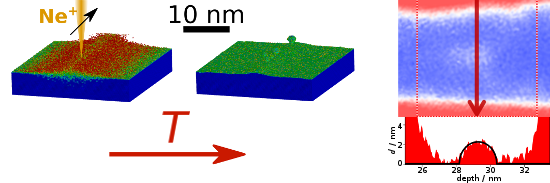
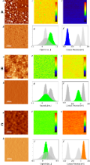
- fluence is too small (see Figure 3a), insufficient mixing occurs and consequently only poorly defined NCs are formed. A too high fluence, on the other hand, will result in Si NC formation, but the interface roughness increases (see Figure 3b). The phase separation process during post-irradiation thermal
- beam mixing conditions (170 Si+ nm−2 at 60 keV) a too small TB (1323 K, 30 s) results in incomplete (see Figure 3c) or no NC formation while a too high TB (1323 K, 240 s) will result in the decomposition of the earlier formed NCs and an increased interface roughness (see Figure 3d). Complete


Charged particle single nanometre manufacturing
Beilstein J. Nanotechnol. 2018, 9, 2855–2882, doi:10.3762/bjnano.9.266
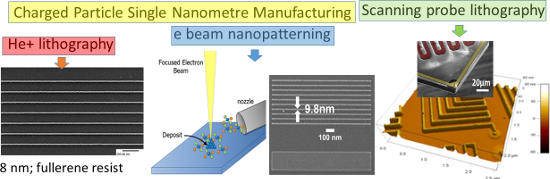
- the precursor. At such high resolution, the line edge roughness (LER) is an important parameter. While it is reported as being considerably smaller than the line width, it would be of interest to study it further to determine the origin of LER and its dependence on experimental parameters and


Controlling surface morphology and sensitivity of granular and porous silver films for surface-enhanced Raman scattering, SERS
Beilstein J. Nanotechnol. 2018, 9, 2813–2831, doi:10.3762/bjnano.9.263
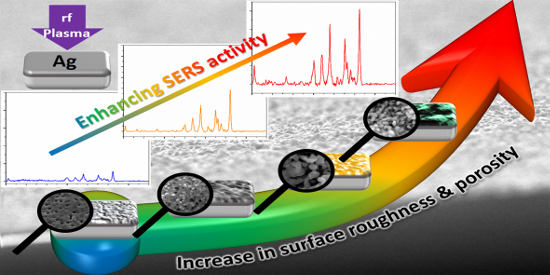
- plasmas on the surface morphology of thin silver films. It was found that different surface structures and different degrees of surface roughness could be obtained by a systematic variation of the plasma type and condition as well as plasma power and treatment time. The differently roughened silver
- investigation of the effect of different rf plasmas on sputtered silver surfaces to determine the potential of plasma treatment in a controlled increase of the surface roughness of silver as well as the formation of hot spots on the silver surface for the use in SERS. To the best of our knowledge this is the
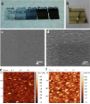
- silver films were characterized using atomic force microscopy (AFM) in contact mode on a CP-II AFM (Bruker-Veeco) with SiC cantilevers to determine the topography and surface roughness (root mean square roughness, Rq). Scanning electron microscopy (SEM) of the silver films was performed on a Philips XL





Biomimetic surface structures in steel fabricated with femtosecond laser pulses: influence of laser rescanning on morphology and wettability
Beilstein J. Nanotechnol. 2018, 9, 2802–2812, doi:10.3762/bjnano.9.262
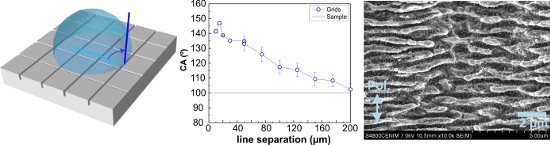
- the laser beam many times over the same sample area, i.e., laser rescanning. From a physical point of view, one fundamental difference between a single scan and multiple rescans is that the incident laser pulse during the second and subsequent scans “sees” not only a higher surface roughness, but in
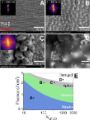
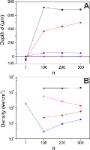
- . Interestingly, the morphology of these very deep fields is rather smooth, which holds promise for low roughness material processing applications. Moreover, we have analyzed the SEM images shown in Figure 2 in terms of number density of structure units using the outlining of a structural unit given in the same
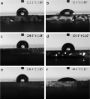
- rough surfaces, an important question is whether the liquid on top completely fills up the roughness grooves (homogeneous wetting regime) or leaves air inclusions entrapped inside the grooves (homogeneous wetting regime), which strongly affects the apparent contact angle [44][45]. For these two regimes



Low cost tips for tip-enhanced Raman spectroscopy fabricated by two-step electrochemical etching of 125 µm diameter gold wires
Beilstein J. Nanotechnol. 2018, 9, 2718–2729, doi:10.3762/bjnano.9.254
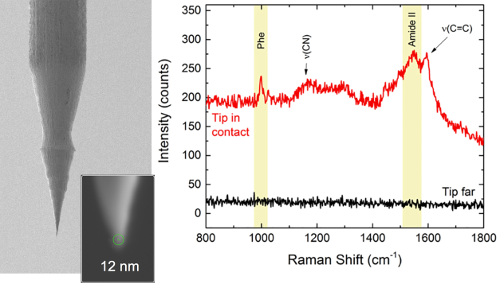
- addition, all the above-cited methods require very expensive lab equipment and skilled operators. Electrochemical etching, although suffering from surface roughness issues (mainly for silver), reproducibility issues and lack of tip dimension control, is a technique that is easy to implement, accessible to
- diameter of 125 µm (blue line, upper taper) and of 77 µm (orange line, lower taper). (a) SEM image of an etched tip (t1 = 20 s, V1 = 5 VDC, t2 = 75 s, V2 = 2.1 VDC) and details on its apex (b), showing the roughness of the gold surface. Sharp protrusions (r ≈ 15 nm) can occur at the apex of such blunt tips


Disorder in H+-irradiated HOPG: effect of impinging energy and dose on Raman D-band splitting and surface topography
Beilstein J. Nanotechnol. 2018, 9, 2708–2717, doi:10.3762/bjnano.9.253
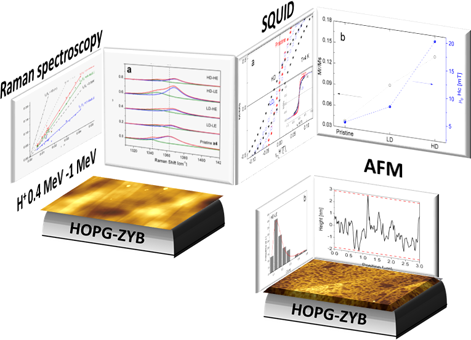
- techniques is advantageous in order to gain a better insight into the origin of defects. Atomic force microscopy (AFM) can help to reveal an increase in the graphene/graphite surface roughness, which has been correlated with the disorder generated by increasing hydrogen irradiation doses [21][22][23


Optimization of Mo/Cr bilayer back contacts for thin-film solar cells
Beilstein J. Nanotechnol. 2018, 9, 2700–2707, doi:10.3762/bjnano.9.252
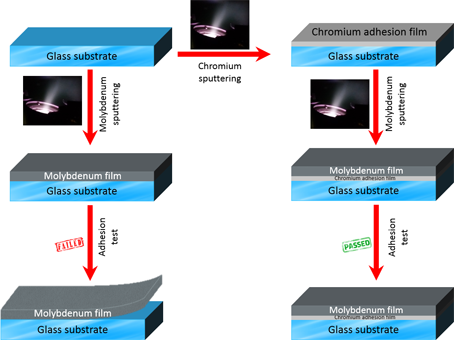
- different deposition powers and working pressures. Good adhesion to the SLG substrate has been achieved by means of an ultra-thin Cr layer under the Mo layer. By optimizing the deposition conditions we achieved low surface roughness, high optical reflectance and low sheet resistivity while we could decrease
- conditions and was set to obtain Mo layers with 600 nm thickness. Film characterization The film thickness measurements were conducted using a Bruker Dektak stylus profiler. Morphology studies and surface roughness measurements were carried out using a JEOL 7001F scanning electron microscope (SEM) and a
- morphology are also confirmed by AFM images (see Supporting Information File 1). AFM roughness analysis (Figure 4) reveals an increase of the surface roughness with the sputtering power. Surface roughness is also directly proportional to the working pressure. The average roughness increases from 1.61 to 3.06


Characterization of the microscopic tribological properties of sandfish (Scincus scincus) scales by atomic force microscopy
Beilstein J. Nanotechnol. 2018, 9, 2618–2627, doi:10.3762/bjnano.9.243
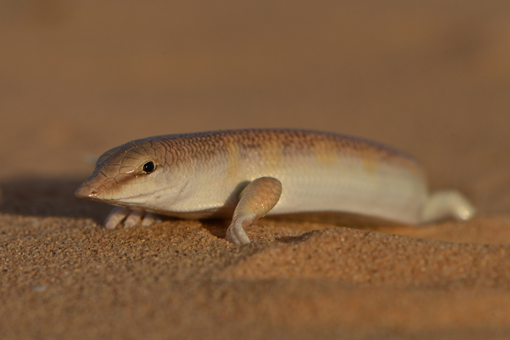
- for 5 min and with a 1 µm diamond suspension for 8 min (DP-suspension M products purchased from Struers, Willich, Germany). This procedure resulted in scratch-free surfaces and a surface roughness of Ra < 0.01 µm, determined by optical profilometry (Sensofar Plµ neox, Barcelona, Spain). The water


Au–Si plasmonic platforms: synthesis, structure and FDTD simulations
Beilstein J. Nanotechnol. 2018, 9, 2599–2608, doi:10.3762/bjnano.9.241
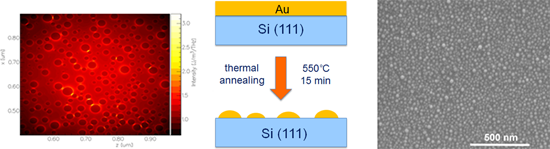
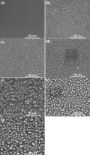
- image of the as-prepared film is shown in Figure 2a. The surface of the as-deposited film is not smooth. Some roughness can be noticed, which increases during annealing. It can be seen in Figure 2b that annealing already at 150 °C caused the appearance of voids in the film, which can be a consequence of



Friction reduction through biologically inspired scale-like laser surface textures
Beilstein J. Nanotechnol. 2018, 9, 2561–2572, doi:10.3762/bjnano.9.238
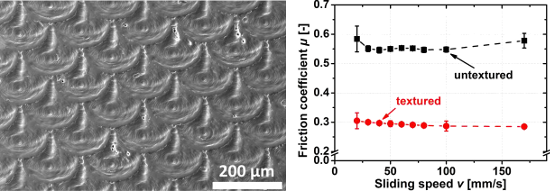
- friction forces encountered for sliding speeds between 40 and 70 mm/s. For even slower sliding, a more classical mixed lubrication contact is formed, as it is also encountered for samples textured with dimples [15]. The surface roughness of the steel discs after the experiments was Ra ≈ 200 nm. The discs
- detrimental effect by introducing a scale-like surface morphology for smaller sliding speeds was observed. Surface profilometry on the discs after the experiments revealed surface roughness values of Ra ≈ 250 nm, demonstrating that the discs became slightly rougher. Occasional signs of adhesive wear events
- friction coefficient for the steel-on-ceramic contact are significantly larger compared to the steel and polymer counter bodies presented above. This might be due to the significantly larger surface roughness of the aluminium oxide discs compared to the PEEK and 100Cr6 ones. Unfortunately, it is


High-temperature magnetism and microstructure of a semiconducting ferromagnetic (GaSb)1−x(MnSb)x alloy
Beilstein J. Nanotechnol. 2018, 9, 2457–2465, doi:10.3762/bjnano.9.230
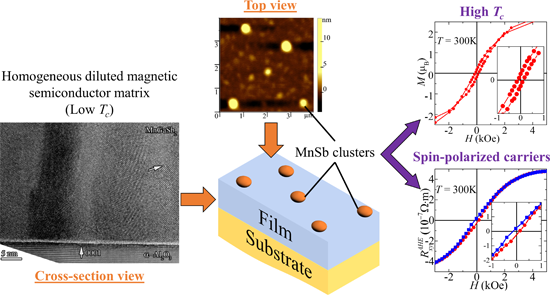
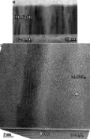
- 150 nm and the surface roughness does not exceed 6 nm. This is in a good agreement with the data presented in Table 1, which were estimated from the duration of the deposition process. The image analysis confirms a homogeneous composition throughout the film thickness without any substantial contrast



Evidence of friction reduction in laterally graded materials
Beilstein J. Nanotechnol. 2018, 9, 2443–2456, doi:10.3762/bjnano.9.229
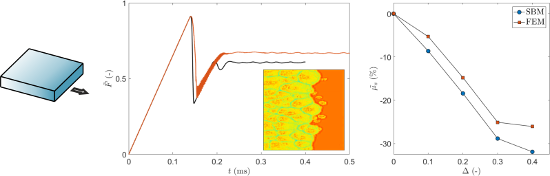
- simulation from a Gaussian statistical distribution (to account for surface roughness) with mean values denoted with µs(m) and µk(m), respectively. The standard deviation on the local coefficients of friction are denoted with σµs and σµk, respectively. If the block i is at rest, the static friction force Ffr
- or using different processes in order to have a varying roughness and thus varying local friction coefficients. Secondly, a surface with a gradient in the frictional properties can be obtained by appropriately fabricating and arranging microscopic structures of variable geometries or sizes, giving
- nature, or in the local frictional properties, e.g., by controlling the roughness or the microstructure, for the design of advanced sliding interfaces. A reduction in the static friction up to almost 30%, with respect to the corresponding non-graded material, can thus be achieved. Schematic of the


![[Graphic 5]](/bjnano/content/inline/2190-4286-9-229-i10.svg?max-width=637&scale=1.18182) as function of time for the non-graded material: SBM solution for dif...
as function of time for the non-graded material: SBM solution for dif...


Thickness-dependent photoelectrochemical properties of a semitransparent Co3O4 photocathode
Beilstein J. Nanotechnol. 2018, 9, 2432–2442, doi:10.3762/bjnano.9.228
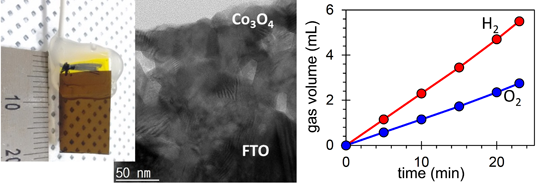
- focused ion beam system (FIB, FEI, Quanta 3D FEG). The elemental compositions in the cross sections of the Co3O4 layers in the working electrode were determined as line profiles by an energy dispersive spectroscopy (EDS) attachment to the FETEM. Thickness and average surface roughness of the deposited




Adhesive contact of rough brushes
Beilstein J. Nanotechnol. 2018, 9, 2405–2412, doi:10.3762/bjnano.9.225
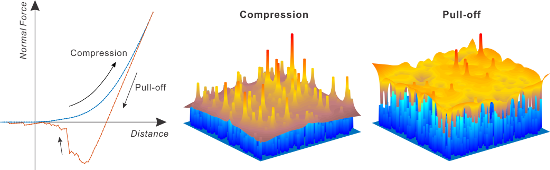
- , the pull-off force becomes dependent on the previously applied compression force and disappears completely at some critical roughness. For roughness with a subcritical value, the pressure dependence of the pull-off force qualitatively follows the known theory of Fuller and Tabor with moderate
- modification due to finite size effect of the brush. Keywords: adhesion; brushes; contact splitting; pressure sensitive adhesion; roughness; Introduction The study of adhesive contacts has been largely enhanced by studies of the extremely effective adhesion pads of geckos [1]. For example, the adhesion can
- heights (simulating the relative roughness of surfaces in contact). We will show that the adhesion of statistical brushes can be described by a small number of simple analytical dependencies based both on Kendall’s theory of flat-ended stamps [20] and the Fuller and Tabor theory of adhesive contacts [15


High-throughput micro-nanostructuring by microdroplet inkjet printing
Beilstein J. Nanotechnol. 2018, 9, 2372–2380, doi:10.3762/bjnano.9.222
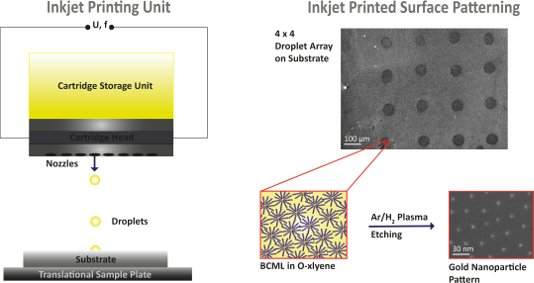
- , which has been reported both for Si, SiO2 and NiTi [29][30]. However, as the plasma treatment takes place after the inkjet printing process, a change in roughness will not influence the droplet size, but might influence further functionalization steps. The droplet boundary description was set in the
- situated on the grain boundaries. Droplet size is a function of surface roughness Figure 4 presents the diameter distribution of micelle solution droplets for each sample. The droplets on poly-Si have a comparable size with a tight variation range of only about 5 µm. The distribution is symmetric, whereby
- shown in Figure 5A, poly-Si has the lowest roughness of 48 pm, followed by a-Si 400 (850 pm), and a-Si 200 (1.25 nm). The NiTi samples have a much higher roughness (freestanding NiTi foil: 2.35 nm), i.e., 6.5 times the roughness of the a-Si 200 sample. Obviously, rougher surfaces lead to smaller


Performance analysis of rigorous coupled-wave analysis and its integration in a coupled modeling approach for optical simulation of complete heterojunction silicon solar cells
Beilstein J. Nanotechnol. 2018, 9, 2315–2329, doi:10.3762/bjnano.9.216
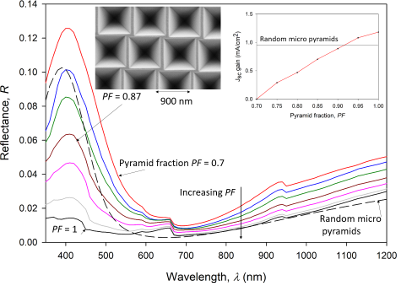
- random roughness are still well represented [3]. Spatial 2D discrete Fourier transform of staircase distributions is applied to all (N) sublayers, obtaining a discrete power spectrum of distribution for each sublayer. These Fourier components are then combined with wavevectors in a matrix describing


Influence of the thickness of an antiferromagnetic IrMn layer on the static and dynamic magnetization of weakly coupled CoFeB/IrMn/CoFeB trilayers
Beilstein J. Nanotechnol. 2018, 9, 2198–2208, doi:10.3762/bjnano.9.206
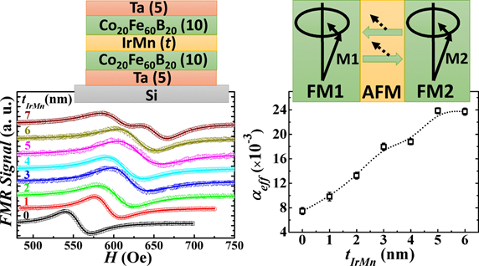
- steps from 0 to 7 nm. The IrMn spacer layer was deposited at a lower growth rate (i.e., 0.17 Å/s compared to 1.3 Å/s for CoFeB) for better uniformity and lower interfacial roughness. In another sample series, the tIrMn was kept constant at 2 nm while the thickness of the top and bottom FM layers tCoFeB
- was varied (5, 10, 15, 20 and 25 nm). No cooling of the samples in an external magnetic field through the Néel temperature (TN) was performed. For accurately estimating the thicknesses of individual layers and interfacial roughness, X-ray reflectivity (XRR) measurements were performed using a
- IrMn layer depends on the thickness of the IrMn layer. It is evident that the IrMn interfacial roughness is slightly higher for tIrMn ≥ 5 nm. Below 5 nm, the interface is quite smooth with roughness values of about 0.5 nm. This increase in interfacial roughness might be arising due to the increase in


Filling nanopipettes with apertures smaller than 50 nm: dynamic microdistillation
Beilstein J. Nanotechnol. 2018, 9, 2181–2187, doi:10.3762/bjnano.9.204
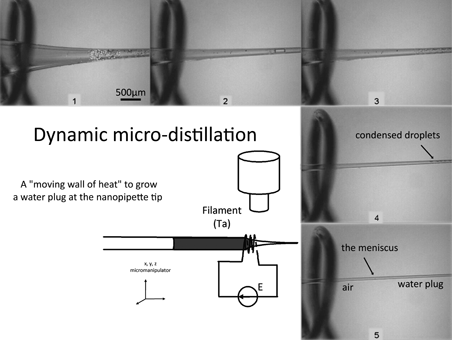
- probably also the surface roughness. Moreover, the very small aperture range, our particular focus, was not explored in this work. When high back-pressure is applied to the filling fluid, we showed in a previous article that the fluid meniscus follows an air-flow Poiseuille law [14] enabling the size of


Phosphorus monolayer doping (MLD) of silicon on insulator (SOI) substrates
Beilstein J. Nanotechnol. 2018, 9, 2106–2113, doi:10.3762/bjnano.9.199
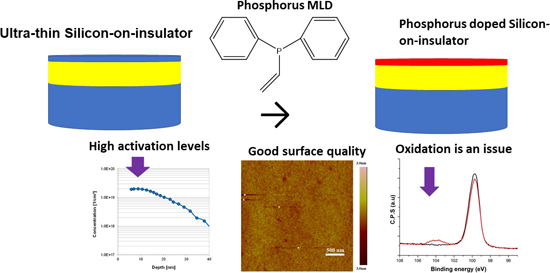
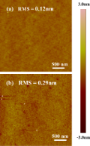
- . Starting wafers were of good quality showing roughness values (RMS) below 0.2 nm (Figure 3). After MLD processing, the roughness values slightly increase to approximately 0.3 nm but this may be due to small oxide fragments on the surface, which remain from the cap removal process. Otherwise the surface




A scanning probe microscopy study of nanostructured TiO2/poly(3-hexylthiophene) hybrid heterojunctions for photovoltaic applications
Beilstein J. Nanotechnol. 2018, 9, 2087–2096, doi:10.3762/bjnano.9.197
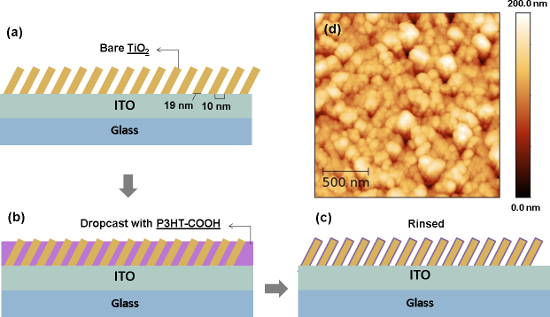
- nominal thickness of the P3HT-COOH deposit (13 nm) is similar to the roughness of the columnar assembly. No correlation is observed between the columnar topography and the corresponding surface potential image (Figure 5b), which shows variations within [260; 500] mV. By comparison with the data of Figure


The structural and chemical basis of temporary adhesion in the sea star Asterina gibbosa
Beilstein J. Nanotechnol. 2018, 9, 2071–2086, doi:10.3762/bjnano.9.196
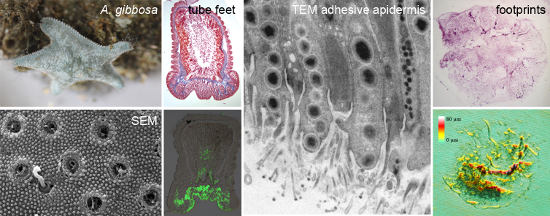
- microscopy was used to visualize the 3D structure of whole footprints. The roughness average within footprints was around 3 µm, compared to 0.9 µm outside of the footprints, where also small amounts of material were detected (Figure 5A). However, the thickness considerably varied within footprints and areas
- Metrology A/S) was used to determine the roughness parameters from the confocal images. Atomic force microscopy (AFM) Footprints were collected on clean microscope glass slides, rinsed with MilliQ water and air dried. The footprints were then imaged in air and under ambient conditions with a Dimension Icon


Recent highlights in nanoscale and mesoscale friction
Beilstein J. Nanotechnol. 2018, 9, 1995–2014, doi:10.3762/bjnano.9.190
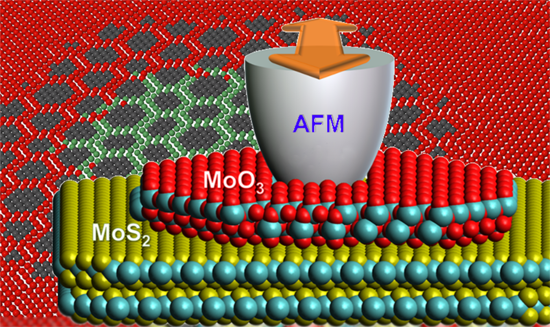
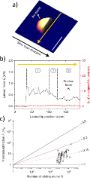
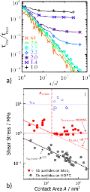
- the relative lateral motion of bodies in contact, and the related dissipation phenomena are being investigated extensively due to their importance in applications, from everyday life to advanced technology. At the macroscopic scale, friction between sliding bodies depends on their surface roughness


Biomimetic and biodegradable cellulose acetate scaffolds loaded with dexamethasone for bone implants
Beilstein J. Nanotechnol. 2018, 9, 1986–1994, doi:10.3762/bjnano.9.189
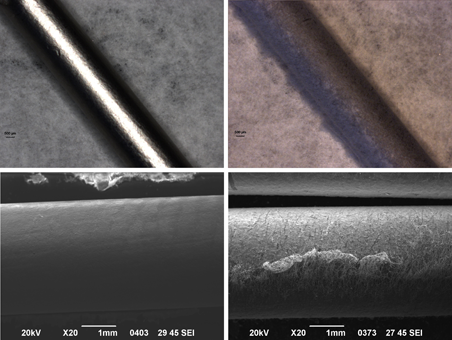
- scaffolds recognized their microenvironment and proliferated. The cells also began to spread, indicating that the scaffolds are cytocompatible. Moreover, on the dexamethasone-loaded scaffolds, the cell population was larger than on the drug-free CA scaffolds. This could be attributed to the higher roughness





