


Search results
Search for "scanning electron microscopy (SEM)" in Full Text gives 544 result(s) in Beilstein Journal of Nanotechnology. Showing first 200.
A 3D-polyphenylalanine network inside porous alumina: Synthesis and characterization of an inorganic–organic composite membrane
Beilstein J. Nanotechnol. 2020, 11, 938–951, doi:10.3762/bjnano.11.78
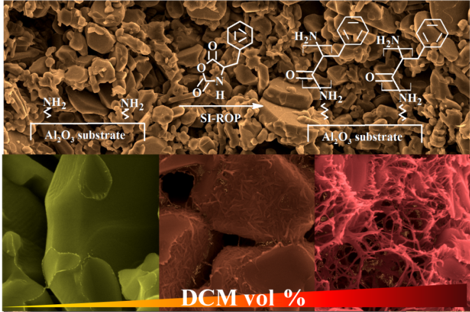
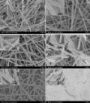
- hydrolyzed monomers or an alternative polymerization mechanism [40][41]. The characterization of these composite materials was performed by NIR-spectroscopy (NIR), water contact angle measurements (CA), scanning electron microscopy (SEM) and thermogravimetric (TG) measurements. Mid- and near-infrared
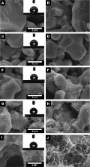
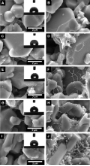
- electron microscopy (SEM), near-infrared spectroscopy (NIR) and contact angle measurements (CA) reveals a change in morphology of the grafted polymer films, which is due to the rearrangement of the secondary structure of the polypeptides. No significant loss of the surface-grafted polypeptides was
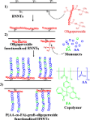
- -dimensional fibrillar network with intrinsic porosity was formed in DCM, whereas in THF, a dense and smooth polypeptide film was observed. A post-treatment with a mixture of chloroform and dichloroacetic acid leads to rearrangement of the morphology of the grafted polymer films. The analysis by scanning




Nickel nanoparticles supported on a covalent triazine framework as electrocatalyst for oxygen evolution reaction and oxygen reduction reactions
Beilstein J. Nanotechnol. 2020, 11, 770–781, doi:10.3762/bjnano.11.62
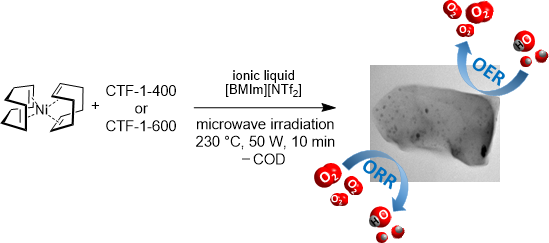
- for CTF-1-600 (see Table S2, Supporting Information File 1, for details). Elemental analyses, thermogravimetric analyses (TGA) and scanning electron microscopy (SEM) characterization data of the materials can be found in Table S1 and Figures S3–S5 in Supporting Information File 1. Synthesis and
- suppressed conductivity detection. Karl-Fischer titration (KFT) was carried out with an ECH/ANALYTIK JENA AQUA 40:00 Karl Fischer titrator. A Carbolite Gero tube furnace has been used for the CTF synthesis. Scanning electron microscopy (SEM) images were recorded with a Jeol JSM-65 10 LV QSEM advanced


A novel dry-blending method to reduce the coefficient of thermal expansion of polymer templates for OTFT electrodes
Beilstein J. Nanotechnol. 2020, 11, 671–677, doi:10.3762/bjnano.11.53
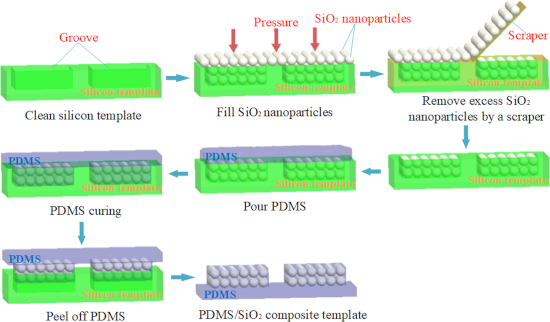
- the silicon template. Characterization The surface morphology of the PDMS/SiO2 composite template and the OTFT electrodes was investigated via scanning electron microscopy (SEM, JSM-6390a, Japan). The thermal expansion of the PDMS/SiO2 composite template was examined using a thermomechanical analyzer


Preparation, characterization and photocatalytic performance of heterostructured CuO–ZnO-loaded composite nanofiber membranes
Beilstein J. Nanotechnol. 2020, 11, 631–650, doi:10.3762/bjnano.11.50
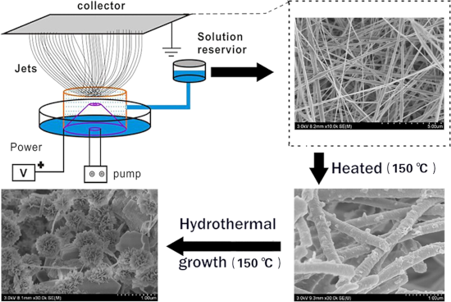
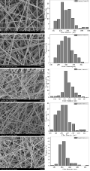
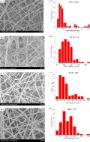
- investigated using scanning electron microscopy (SEM, Hitachi S-4800, Japan). The matrix morphology and fiber diameter distribution were determined using the Image J software (National Institute of Mental Health, Bethesda, Maryland, USA). The diameter of 100 randomly selected fibers in each sample were chosen











Comparison of fresh and aged lithium iron phosphate cathodes using a tailored electrochemical strain microscopy technique
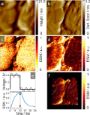
Beilstein J. Nanotechnol. 2020, 11, 583–596, doi:10.3762/bjnano.11.46
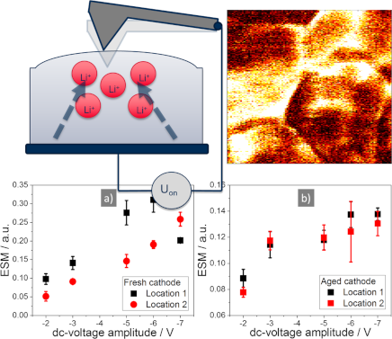
- category of destructive and post-mortem methods, scanning electron microscopy (SEM) is widely applied, due to the deep insights into the material that it can provide, e.g., insights related to structural changes and generated surface layers. In combination with X-ray techniques like energy dispersive



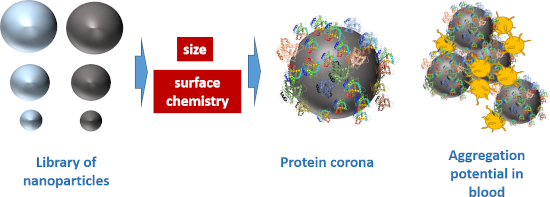
Identification of physicochemical properties that modulate nanoparticle aggregation in blood
Beilstein J. Nanotechnol. 2020, 11, 550–567, doi:10.3762/bjnano.11.44
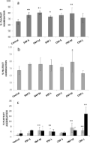
- particles re-suspended in ethanol once, centrifuged, and re-suspended in ultrapure water. The procedure was repeated three times. The purified NPs were suspended in ultrapure water and stored at 4 °C until use. Scanning electron microscopy (SEM) The NPs morphology was characterised using scanning electron
- microscopy (SEM), using a Zeiss Evo 50XVP (Assing) instrument. CNPs and SNPs suspensions were diluted up to 0.05 mg/mL in ultrapure water. A volume of 20 μL of the diluted suspensions was mounted on aluminium stubs using double-sided adhesive carbon tape and silicon wafers. The samples were dried overnight




Multilayer capsules made of weak polyelectrolytes: a review on the preparation, functionalization and applications in drug delivery
Beilstein J. Nanotechnol. 2020, 11, 508–532, doi:10.3762/bjnano.11.41
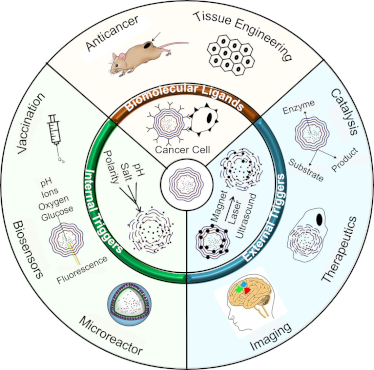
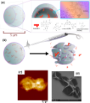
- applied to a variety of PEs. Multilayer capsules formed on such a variety of cores can reveal specific characteristics and are mostly studied using microscopy techniques such as scanning electron microscopy (SEM) and transmission electron microscopy (TEM) to observe their morphological changes. Moreover



Evolution of Ag nanostructures created from thin films: UV–vis absorption and its theoretical predictions
Beilstein J. Nanotechnol. 2020, 11, 494–507, doi:10.3762/bjnano.11.40
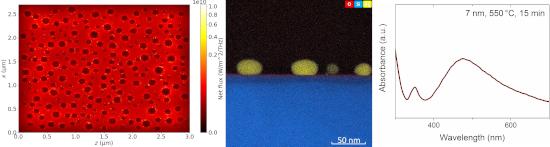
- Narutowicza 11/12, 80-233 Gdansk, Poland 10.3762/bjnano.11.40 Abstract Ag-based plasmonic nanostructures were manufactured by thermal annealing of thin metallic films. Structure and morphology were studied using scanning electron microscopy (SEM), transmission electron microscopy (TEM), high-resolution




Interfacial charge transfer processes in 2D and 3D semiconducting hybrid perovskites: azobenzene as photoswitchable ligand
Beilstein J. Nanotechnol. 2020, 11, 466–479, doi:10.3762/bjnano.11.38
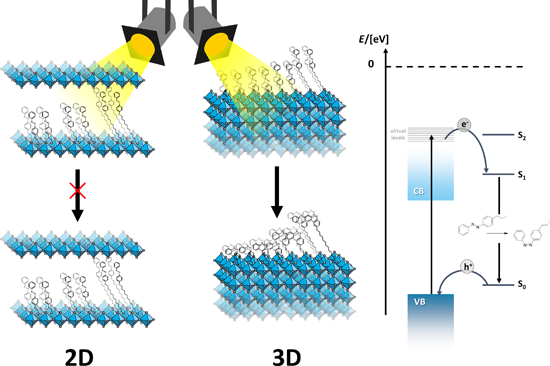
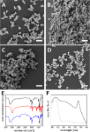
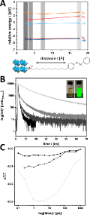
- headgroup provides not enough space for the molecule to fit into the structure. The materials were examined by using a combination of methods to study their structure and electronic properties. In Figure 2D the powder X-ray diffraction (PXRD) patterns and the associated scanning electron microscopy (SEM
- silicon substrates were obtained using an X-ray diffractometer (Bruker D8 Discover). Small-angle X-ray scattering (SAXS) patterns were obtained using a Bruker Nanostar. Scanning electron microscopy (SEM) images of drop-cast particles on silicon substrates were obtained using a Zeiss Auriga Crossbeam and a




Electrochemically derived functionalized graphene for bulk production of hydrogen peroxide
Beilstein J. Nanotechnol. 2020, 11, 432–442, doi:10.3762/bjnano.11.34
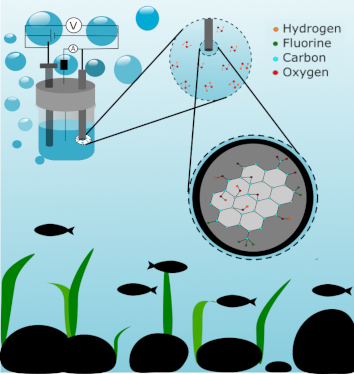
- Supporting Information File 1) and scanning electron microscopy (SEM) images indicate the formation of randomly oriented exfoliated graphene nanosheets [43]. However, the TEM images show that the thickness of the graphene increases from G-M1 to G-M4, where the G-M4 is found to block the electron beam despite


High dynamic resistance elements based on a Josephson junction array
Beilstein J. Nanotechnol. 2020, 11, 417–420, doi:10.3762/bjnano.11.32
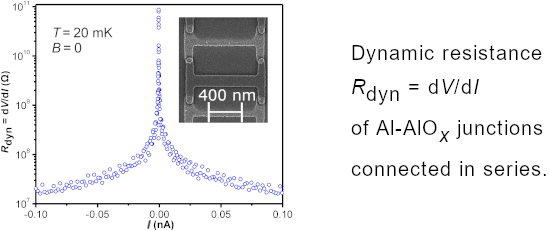
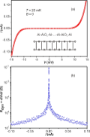
- situ to form tunnel barriers. Each sample consisted of 25 pairs of JJs connected in parallel where the area of each superconductor–insulator–superconductor (SIS) contact was about 100 × 100 nm (Figure 1). The samples were analyzed by scanning electron microscopy (SEM) (Figure 1) and atomic force

An advanced structural characterization of templated meso-macroporous carbon monoliths by small- and wide-angle scattering techniques
Beilstein J. Nanotechnol. 2020, 11, 310–322, doi:10.3762/bjnano.11.23
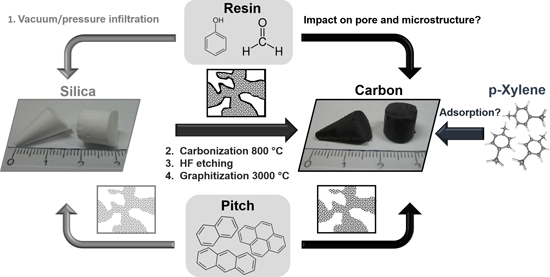
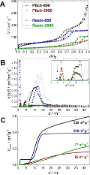
- . The bimodal meso-macropore structure of these four carbon materials as well as of the meso-macroporous SiO2 monolith template was investigated by scanning electron microscopy (SEM), mercury intrusion porosimetry (MIP) and physisorption. Figure 1 shows SEM images of the monolithic silica (grey) as well




Understanding nanoparticle flow with a new in vitro experimental and computational approach using hydrogel channels
Beilstein J. Nanotechnol. 2020, 11, 296–309, doi:10.3762/bjnano.11.22
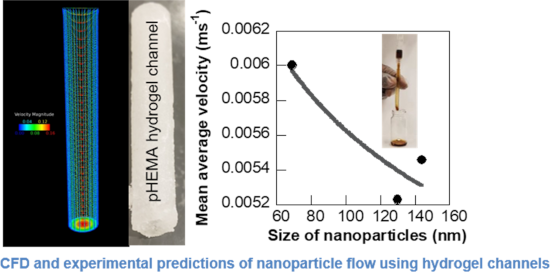
- ). The swelling behavior was highly influenced by the pH value of the solution. The selected gel formulation synthesized with 1.3 mL DI water showed an increased mass of 25% at pH 2, 30% at pH 13, and a maximum of 60% at pH 11. Figure 3 shows the scanning electron microscopy (SEM) images of the different


High-performance asymmetric supercapacitor made of NiMoO4 nanorods@Co3O4 on a cellulose-based carbon aerogel
Beilstein J. Nanotechnol. 2020, 11, 240–251, doi:10.3762/bjnano.11.18
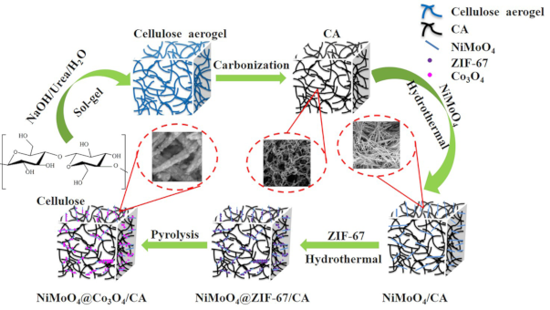
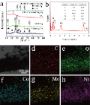
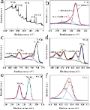
- NiMoO4@Co3O4/CA composite was obtained. The morphology of CA, NiMoO4/CA, NiMoO4@ZIF-67/CA and NiMoO4@Co3O4/CA was investigated by scanning electron microscopy (SEM) and transmission electron microscopy (TEM). As shown in Figure S1 in Supporting Information File 1, after the pyrolysis process, the volume




Influence of the epitaxial composition on N-face GaN KOH etch kinetics determined by ICP-OES
Beilstein J. Nanotechnol. 2020, 11, 41–50, doi:10.3762/bjnano.11.4
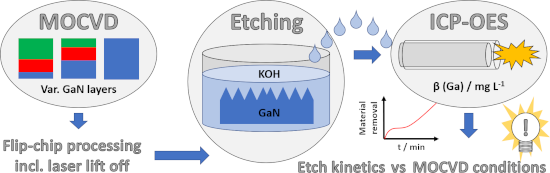
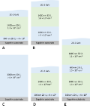
- ICP-OES analysis. Methods PLM images were recorded directly after epitaxy on an Olympus BX51 microscope combined with an Olympus U-RFL-T UV light source. For excitation, 408 nm wavelength light was used. X-ray diffraction (XRD) was measured on a Bruker/Jordan Valley QC Velox. Scanning electron
- microscopy (SEM) images were recorded on a Zeiss Gemini Leo 1530 microscope with an acceleration voltage of 2 keV and SE2 detection. For ICP-OES determination of the etch rate, a Thermo Fisher iCAP 6500 device was used. Plasma conditions were 1150 W power, 1.5 L min−1 support gas stream, 0.5 L min−1 spray


Synthesis of amorphous and graphitized porous nitrogen-doped carbon spheres as oxygen reduction reaction catalysts
Beilstein J. Nanotechnol. 2020, 11, 1–15, doi:10.3762/bjnano.11.1
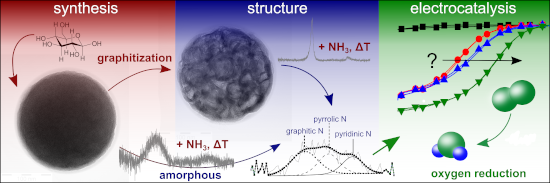
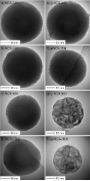
- 150 °C). The as-synthesized carbon particles show a well-defined spherical shape with diameters of 330 ± 50 nm and a smooth surface (see also the scanning electron microscopy (SEM) image in Figure 2a). Fe2O3 particles, as graphitization catalyst, are loaded successfully on pre-carbonized carbon
- Scanning electron microscopy (SEM) images were recorded with a field-emission scanning electron microscope (FE-SEM, Zeiss Ultra Plus) at 10 to 12 keV beam energy. For imaging, the samples were deposited on a conducting carbon film. Energy-dispersive X-ray spectroscopy (EDX) measurements were performed on




Label-free highly sensitive probe detection with novel hierarchical SERS substrates fabricated by nanoindentation and chemical reaction methods
Beilstein J. Nanotechnol. 2019, 10, 2483–2496, doi:10.3762/bjnano.10.239
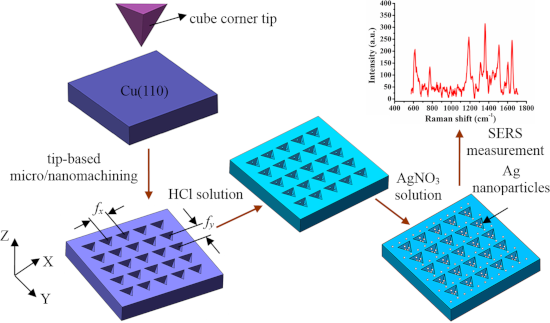
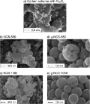
- electron microscopy (SEM) images of the arrayed triangular cavities fabricated by different feeds before and after five minutes of corrosion time in AgNO3 solution are shown in Figure 1. Figure 1a shows SEM images of arrayed triangular cavities before corrosion of HCl and AgNO3. The triangular cavities
- include not only complex micro/nanostructures, but also Ag nanoparticles are generated on the Cu(110) surface. This method can be successfully applied to discriminate pesticide residues or viruses at very small quantities. Results and Discussion Morphological characterization for various feeds Scanning


pH-Controlled fluorescence switching in water-dispersed polymer brushes grafted to modified boron nitride nanotubes for cellular imaging
Beilstein J. Nanotechnol. 2019, 10, 2428–2439, doi:10.3762/bjnano.10.233
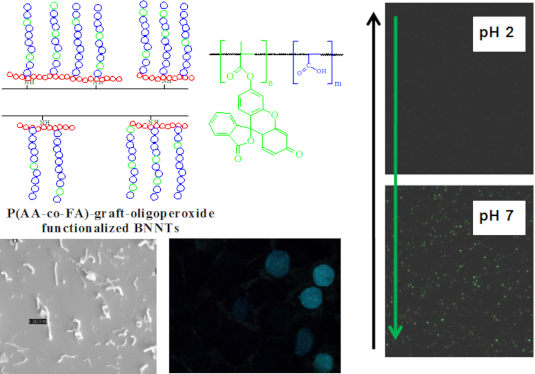
- thermogravimetric analysis (TGA), Fourier transform infrared spectroscopy (FTIR), dynamic light scattering (DLS), ultraviolet–visible spectrophotometry (UV–vis), laser scanning confocal microscopy (LSCM) and scanning electron microscopy (SEM). The DLS results demonstrated that P(AA-co-FA)-functionalized BNNTs
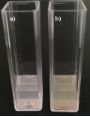
- sonication, low speed (1000g, 5 min, 25 °C) centrifugation was carried out and the supernatant (see below Figure 1) was used for analysis. Scanning electron microscopy (SEM) The BNNTs were placed on a carbon disc and coated with a 5 nm thick gold layer using a Baltec SDC 005 sputter coater. SEM images were


Air oxidation of sulfur mustard gas simulants using a pyrene-based metal–organic framework photocatalyst
Beilstein J. Nanotechnol. 2019, 10, 2422–2427, doi:10.3762/bjnano.10.232
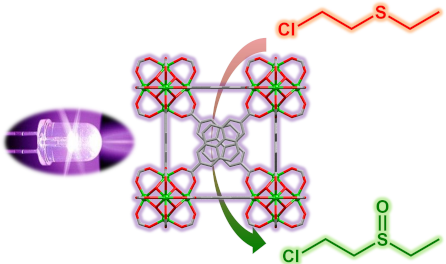
- scanning electron microscopy (SEM) images showing that bulk NU-400 material consists of octahedral crystals ranging in sizes from 1 to 5 microns (Figure S3, Supporting Information File 1). The microporous nature of NU-400 was established by N2 sorption measurements at 77 K, which revealed a Brunauer–Emmet




Semitransparent Sb2S3 thin film solar cells by ultrasonic spray pyrolysis for use in solar windows
Beilstein J. Nanotechnol. 2019, 10, 2396–2409, doi:10.3762/bjnano.10.230
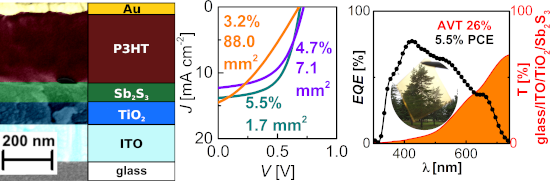
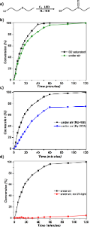
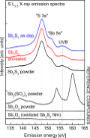
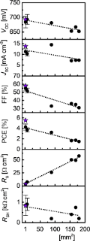
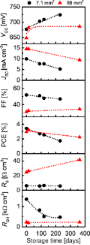
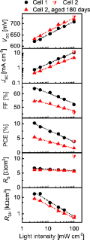
- the I–V measurements. Surface views, by scanning electron microscopy (SEM) of 70 nm (a) and 100 nm (b) thick annealed Sb2S3 layers on a glass/ITO/TiO2 substrate. Photograph (c) of a 5 × 5 cm semitransparent (AVT 26%) stack of glass/ITO/TiO2/100 nm annealed Sb2S3, photographed by J. S. Eensalu. X-ray



Atomic force acoustic microscopy reveals the influence of substrate stiffness and topography on cell behavior
Beilstein J. Nanotechnol. 2019, 10, 2329–2337, doi:10.3762/bjnano.10.223
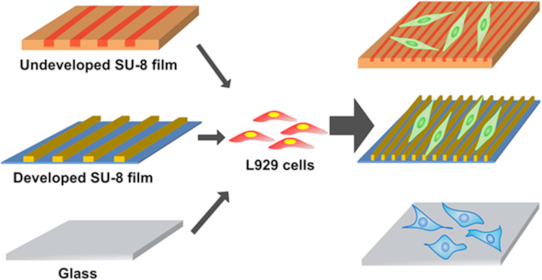
- ], confocal microscopy, scanning electron microscopy (SEM) [12] and atomic force microscopy (AFM) [16][17] have been employed to investigate cell–substrate interactions. Fluorescence and confocal microscopy are traditional techniques to investigate the intra- and intercellular processes in biological studies


Design of a nanostructured mucoadhesive system containing curcumin for buccal application: from physicochemical to biological aspects
Beilstein J. Nanotechnol. 2019, 10, 2304–2328, doi:10.3762/bjnano.10.222
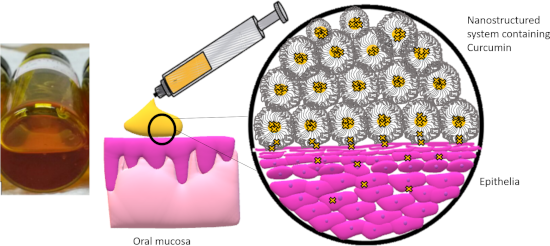
- CUR was in an internal location. Morphological analysis by scanning electron microscopy The morphological characteristics of the preparations with and without CUR were evaluated by scanning electron microscopy (SEM) (Figure 4). Micrographs of formulations containing P407 and C974P revealed polymeric


Four self-made free surface electrospinning devices for high-throughput preparation of high-quality nanofibers
Beilstein J. Nanotechnol. 2019, 10, 2261–2274, doi:10.3762/bjnano.10.218
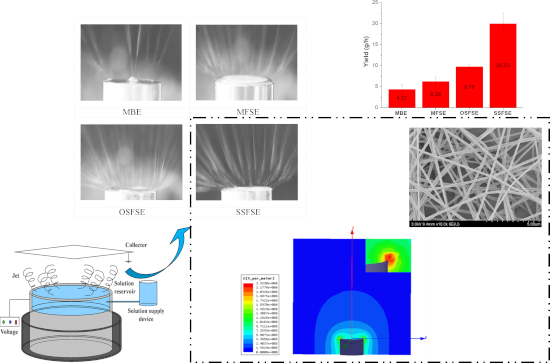
- % PAN and 1 wt % SDBS was 2372 µs/cm, the working distance was 180 mm and the applied voltage was 40 kV. Characterization The morphology of the PAN nanofibers was characterized by scanning electron microscopy (SEM) (Hitachi S4800, Hitachi, Tokyo, Japan). The matrix morphology and the diameter of the






Nontoxic pyrite iron sulfide nanocrystals as second electron acceptor in PTB7:PC71BM-based organic photovoltaic cells
Beilstein J. Nanotechnol. 2019, 10, 2238–2250, doi:10.3762/bjnano.10.216
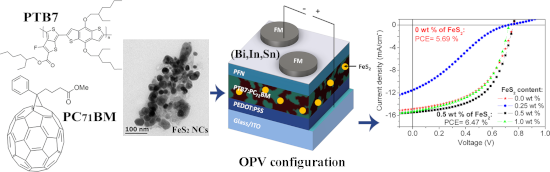
- tunneling current (It) and the applied potential (U) are A = 50 nm × 50 nm, It = 500 pA and U = 450 mV. The scanning electron microscopy (SEM) image of agglomerated FeS2 NCs is shown in Figure 3b. The results verify that the sizes of the NCs lie within the nanoscale regime (about 15 to 25 nm). The energy


Targeted therapeutic effect against the breast cancer cell line MCF-7 with a CuFe2O4/silica/cisplatin nanocomposite formulation
Beilstein J. Nanotechnol. 2019, 10, 2217–2228, doi:10.3762/bjnano.10.214
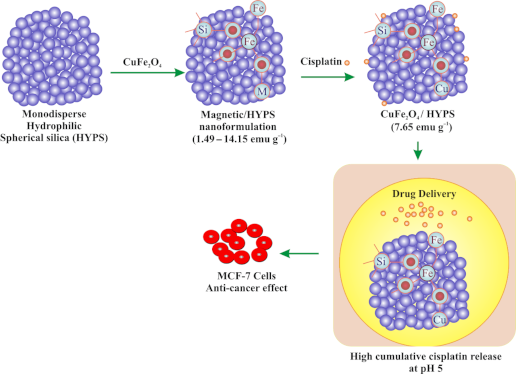
- ), scanning electron microscopy (SEM) equipped with energy dispersive X-ray (EDX) spectroscopy and transmission electron microscopy (TEM) techniques. The study showed the high cisplatin release capability and targeted anticancer efficiency demonstrated in vitro in the breast cancer cell line MCF-7. Materials





