


Search results
Search for "strain" in Full Text gives 403 result(s) in Beilstein Journal of Nanotechnology. Showing first 200.
Review of time-resolved non-contact electrostatic force microscopy techniques with applications to ionic transport measurements
Beilstein J. Nanotechnol. 2019, 10, 617–633, doi:10.3762/bjnano.10.62
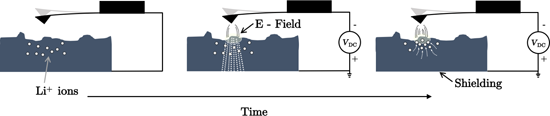
- -domain EFM to measure ionic transport [7][12], time-resolved electrochemical strain microscopy (ESM) to measure ionic transport [8][13], various time-resolved Kelvin probe force microscopy (KPFM) techniques that utilize either optical pump-probe or advanced signal processing to measure time-resolved





Coexisting spin and Rabi oscillations at intermediate time regimes in electron transport through a photon cavity
Beilstein J. Nanotechnol. 2019, 10, 606–616, doi:10.3762/bjnano.10.61
- completely sure, but as the time scale for the system needed to attain the steady state shows, we are using a very weak coupling. We have weakened the coupling further, within what is reasonable, as the time scale then becomes even longer, resulting in strain in the numerical accuracy. However, we still see


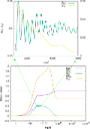
![[Graphic 40]](/bjnano/content/inline/2190-4286-10-61-i49.svg?max-width=637&scale=1.418184) and photon
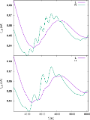
and photon ![[Graphic 41]](/bjnano/content/inline/2190-4286-10-61-i50.svg?max-width=637&scale=1.418184) content in the open central system as a function of time. In additio...
content in the open central system as a function of time. In additio...
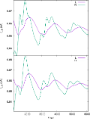
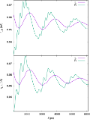
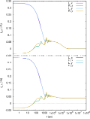

![[Graphic 60]](/bjnano/content/inline/2190-4286-10-61-i69.svg?max-width=637&scale=1.418184)
![[Graphic 61]](/bjnano/content/inline/2190-4286-10-61-i70.svg?max-width=637&scale=1.418184)
![[Graphic 62]](/bjnano/content/inline/2190-4286-10-61-i71.svg?max-width=637&scale=1.418184) and
and ![[Graphic 63]](/bjnano/content/inline/2190-4286-10-61-i72.svg?max-width=637&scale=1.418184) i...
i...
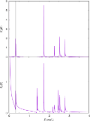
![[Graphic 76]](/bjnano/content/inline/2190-4286-10-61-i85.svg?max-width=637&scale=1.418184) in the steady state. The cavity pho...
in the steady state. The cavity pho...
Direct observation of the CVD growth of monolayer MoS2 using in situ optical spectroscopy
Beilstein J. Nanotechnol. 2019, 10, 557–564, doi:10.3762/bjnano.10.57
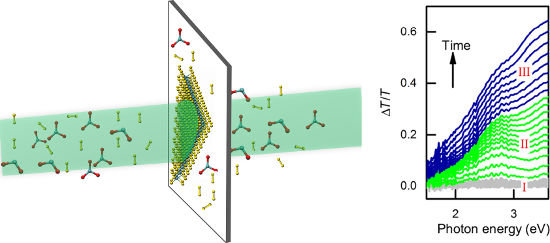
- molecule adsorption [22][23] as well as strain field [24]. These facts make optical spectroscopy a sensitive probe to monitor the surface kinetics involved during the growth of 2D TMDCs. Furthermore, the optical methods used in the visible range can be applied under various environments including vacuum


Mechanical and thermodynamic properties of Aβ42, Aβ40, and α-synuclein fibrils: a coarse-grained method to complement experimental studies
Beilstein J. Nanotechnol. 2019, 10, 500–513, doi:10.3762/bjnano.10.51
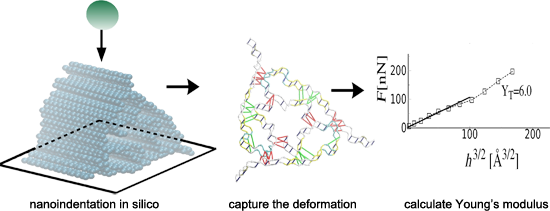
- coefficient n in the indentation curves measuring the force as a function of hn. We found n = 3/2 in the linear regime, which corresponds to the Hertzian theory [12]. Tensile deformation The experimental calculation of the stress–strain data at the nanoscale can be done by using optical tweezers (OT) [50
- tensile deformation, the fibril stretches from a reference length (L0) to L, and the strain is given by . The stress is defined by the total force acting on the springs ktop divided by the cross-sectional area, A, of the sample. This area is calculated as follows [53]: For a given set of Cartesian points
- , it determines the smallest convex polygon containing all the given points. Then, we monitor the elementary area of this polygon during the simulation [54]. From the stress–strain plot one can derive the corresponding tensile Young’s modulus, YL. Shear deformation The experimental techniques employed


Wearable, stable, highly sensitive hydrogel–graphene strain sensors
Beilstein J. Nanotechnol. 2019, 10, 475–480, doi:10.3762/bjnano.10.47
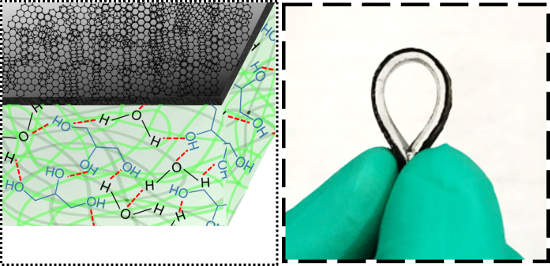
- 21500, P. R. China Research institute of Xi'an Jiaotong University, Hangzhou, Zhejiang, 311215, P. R. China 10.3762/bjnano.10.47 Abstract A stable and highly sensitive graphene/hydrogel strain sensor is designed by introducing glycerol as a co-solvent in the formation of a hydrogel substrate and then
- casting a graphene solution onto the hydrogel in a simple, two-step method. This hydrogel-based strain sensor can effectively retain water in the polymer network due to the formation of strong hydrogen bonding between glycerol and water. The addition of glycerol not only enhances the stability of the
- sensor to be used in both stretching and bending modes. As a demonstration, the as-prepared strain sensor was applied to sense the movement of finger knuckles. Given the outstanding performance of this wearable sensor, together with the proposed scalable fabrication method, this stable and sensitive


Gold nanoparticles embedded in a polymer as a 3D-printable dichroic nanocomposite material
Beilstein J. Nanotechnol. 2019, 10, 442–447, doi:10.3762/bjnano.10.43
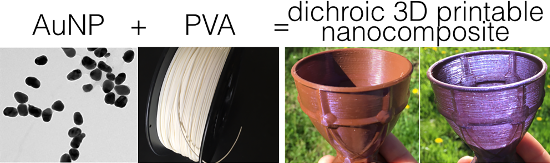
- operating at 120 kV. The mean aspect ratio of the AuNPs was calculated by measuring approximately 800 particles from 24 micrographs. A TE instruments DMA Q800 instrument was used for the mechanical analysis of the plastics using the stress/strain program with a force ramp rate of 1 N/min at isothermal (25
- °C) temperature. Four samples of the pure PVA and four samples of the AuNP–PVA materials were tested, where each sample was also flipped upside down and the stress/strain was recorded again. The average of the measurements was used in Figure 2c with the standard deviation shown as the error bar



Relation between thickness, crystallite size and magnetoresistance of nanostructured La1−xSrxMnyO3±δ films for magnetic field sensors
Beilstein J. Nanotechnol. 2019, 10, 256–261, doi:10.3762/bjnano.10.24
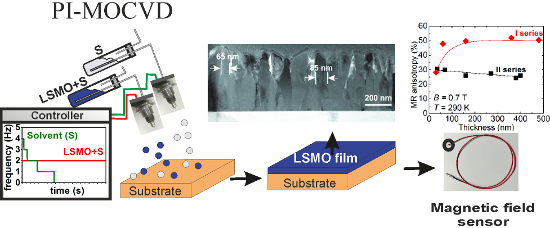
- ) phenomenon [1]. The complex physics of manganite materials provides an opportunity to tune their electric and magnetic properties over a wide range by variation of chemical composition [2][3][4][5], film thickness [6][7] and nanostructure [8][9], as well as induced lattice strain [10][11][12]. The manganite
- of the film thickness for both deposition series (Figure 2e and inset). This effect is attributed to the reduction of the cell volume and appearance of strain in the films with the decrease of the film thickness, as was also observed by H. Baaziz and co-authors for La0.9Sr0.1MnO3 nanoparticles [21


Interaction of Te and Se interlayers with Ag or Au nanofilms in sandwich structures
Beilstein J. Nanotechnol. 2019, 10, 238–246, doi:10.3762/bjnano.10.22
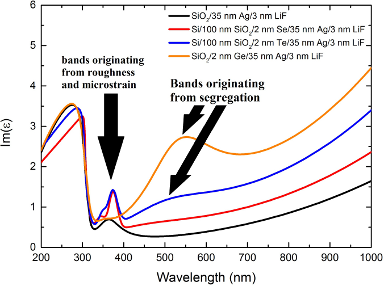
- ) and ellipsometric measurements, showed that using either of these interlayers introduces strain in nanocrystals of both plasmonic films. This, in turn, influences the migration of Se and Te into the metal layers. Selenium atoms migrate both in the silver and gold nanolayers, while tellurium atoms


New micro/mesoporous nanocomposite material from low-cost sources for the efficient removal of aromatic and pathogenic pollutants from water
Beilstein J. Nanotechnol. 2019, 10, 119–131, doi:10.3762/bjnano.10.11
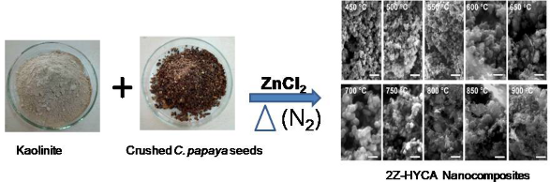
- problem is expected to persist in the coming decades if not quickly addressed [6]. For example, the Escherichia coli (E. coli) O157:H7 strain causes diarrhea, hemorrhagic colitis, and hemolytic uremic syndrome [7] with serious consequences for the infected individuals. Unfortunately, many pathogens have




Pull-off and friction forces of micropatterned elastomers on soft substrates: the effects of pattern length scale and stiffness
Beilstein J. Nanotechnol. 2019, 10, 79–94, doi:10.3762/bjnano.10.8
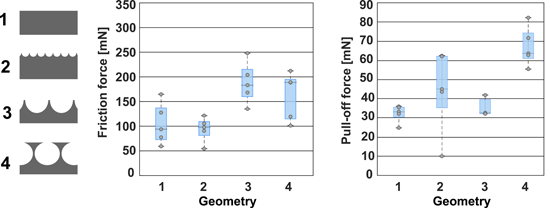
- of deformation mechanisms of the substrate in the pull-off and sliding of our adhesives could be further investigated by varying the pull-off or sliding speed, since the strain rates of both substrate and adhesives are time dependent. Conclusion We used a facile, out-of-the-cleanroom method to
- was measured with a TA Instruments AG-2R rheometer. A parallel-plate geometry with a diameter of 25 mm was used. Storage and loss moduli were determined at a strain of 0.05%, for a frequency range from 1·10−1 to 1·102 rad/s, as can be seen in Supporting Information File 1 (Figure S1 and Figure S2). We





Bidirectional biomimetic flow sensing with antiparallel and curved artificial hair sensors
Beilstein J. Nanotechnol. 2019, 10, 32–46, doi:10.3762/bjnano.10.4
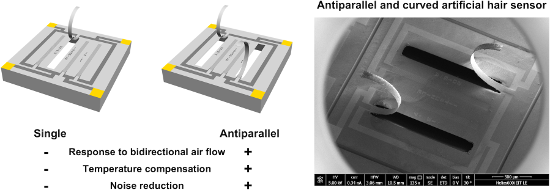
- × 500 μm × 10 μm) which bent as air flow hit the plate. While the plate received the drag force of the air flow, the cantilevers measured the drag force using platinum strain gauges. One variable resistor (strain gauge) on each of the two cantilevers and two fixed resistances on the sensor substrate
- × 100 μm × 0.7 μm) that demonstrated bidirectional sensitivity to nitrogen flow. Equipped with a 80 μm long nickel–chrome (80/20) piezoresistor (strain gauge), the artificial hair sensor was sensitive to nitrogen flow along both cantilever directions. However, the strain gauge resistance revealed an
- asymmetrical response behaviour. While the piezoresistance varied by around 0.44% in the forward flow direction (cantilever flattened), a curled-up cantilever varied only by 0.07% in the backward direction. Extending the cantilever and strain gauge length, Qualtieri et al. [45] characterized artificial hair


Characterization and influence of hydroxyapatite nanopowders on living cells
Beilstein J. Nanotechnol. 2018, 9, 3079–3094, doi:10.3762/bjnano.9.286
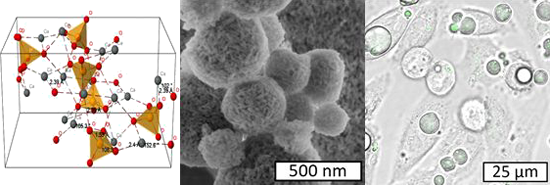
- both identified foreign phases and unidentified reflexes in the range of 10 to 60° (2θ). Crystallinity (Xc) refers to the degree of structural order in a solid. It is a concept that integrates diffraction domain size, crystal strain and crystal defects. The crystallinity percentage of the samples was

![[Graphic 1]](/bjnano/content/inline/2190-4286-9-286-i2.svg?max-width=637&scale=1.18182) .
.



Hydrogen-induced plasticity in nanoporous palladium
Beilstein J. Nanotechnol. 2018, 9, 3013–3024, doi:10.3762/bjnano.9.280
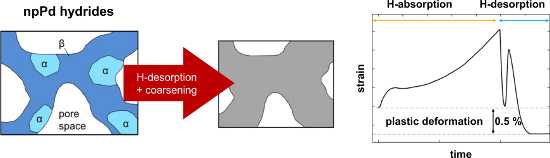
- , Austria 10.3762/bjnano.9.280 Abstract The mechanical strain response of nanoporous palladium (npPd) upon electrochemical hydrogenation using an in situ dilatometric technique is investigated. NpPd with an average ligament diameter of approximately 20 nm is produced via electrochemical dealloying. A
- in combination with the internal-stress plasticity mechanism leads to a peculiar strain response upon hydrogen sorption and desorption. Critical potentials for the formation of PdHα and PdHβ in npPd are determined. The theoretical concepts to assess the plastic strain response of nanoporous samples
- studies up to this point. This work focuses on the strain response of npPd upon hydrogenation and aims to shed light on the active deformation mechanisms. Results Electrochemical characterisation A typical strain response of npPd was measured using an in situ dilatometer setup during a cyclic voltammogram


Variation of the photoluminescence spectrum of InAs/GaAs heterostructures grown by ion-beam deposition
Beilstein J. Nanotechnol. 2018, 9, 2794–2801, doi:10.3762/bjnano.9.261
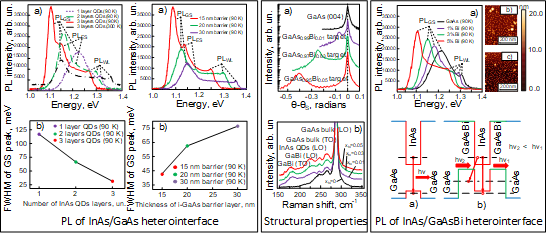
- : the top with a GaAs strain-reducing layer; the bottom with a strained buffer layer (wetting layer) [15][16][17][18][19]. Thus, the simplified energy band diagram of the active region of an InAs/GaAs heterostructure is an InAs quantum dot built into a GaAs matrix in the form of a quantum well. It
- phonons of bulk-like GaAs (268 cm−1) and GaBi (182 cm−1) are also observed. This indicates a change in the selection rule under Raman scattering in the InAs/GaAs system caused by lattice strain during the incorporation of Bi into the GaAs matrix. In the spectra we can clearly see the longitudinal modes of
- shift of the GaAs-like and GaBi-like peaks to smaller wavenumbers. Due to decrease of lattice mismatch and, thus, less strain in the InAs/GaAs1−xBix heterointerface compared to InAs/GaAs, there is a Raman shift of the peaks of InAs/GaAs1−xBix heterostructures relative to the spectrum of the InAs/GaAs


Comparative biological effects of spherical noble metal nanoparticles (Rh, Pd, Ag, Pt, Au) with 4–8 nm diameter
Beilstein J. Nanotechnol. 2018, 9, 2763–2774, doi:10.3762/bjnano.9.258
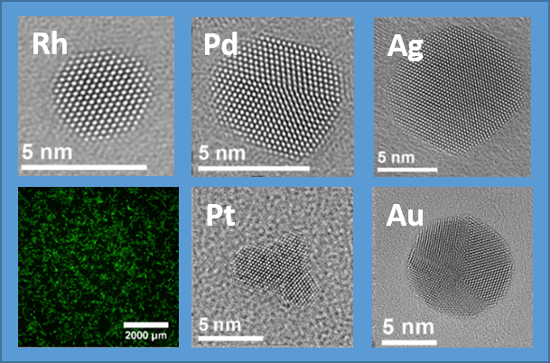
- properties of nanomaterials originate from the large surface-to-volume ratio and the local configuration of atoms [69]. The morphology of nanoparticles is defined by the contributions of the cohesive energy, the surface energy, the twinning energy, and the strain energy [88]. Based on the Wulff construction


Silicene, germanene and other group IV 2D materials
Beilstein J. Nanotechnol. 2018, 9, 2665–2667, doi:10.3762/bjnano.9.248

- might include: the substrate material external electric or magnetic fields tensile or compressive strain functionalization by atomic or molecular species This means that the apparent disadvantage of these materials to develop a (low) buckling is in fact an advantage since it facilitates control of the

Characterization of the microscopic tribological properties of sandfish (Scincus scincus) scales by atomic force microscopy
Beilstein J. Nanotechnol. 2018, 9, 2618–2627, doi:10.3762/bjnano.9.243

- diameter of 1 mm provided by Saphirwerk AG (Bruegg, Switzerland). The normal load for all experiments was 0.1 N and the sliding speed was 0.5 mm/s. The number of reciprocating cycles was ten. Friction force was measured with a strain gauge-based system and recorded with a custom-programmed LabView


Non-agglomerated silicon–organic nanoparticles and their nanocomplexes with oligonucleotides: synthesis and properties
Beilstein J. Nanotechnol. 2018, 9, 2516–2525, doi:10.3762/bjnano.9.234
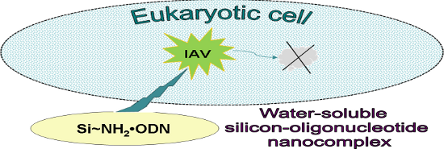
- -glutamine (Sigma-Aldrich, USA); RPMI-1640 medium; antibiotics (BioloT, Russia); fetal calf serum (Gibco, USA). Сhicken erythrocytes, MDCK cells, and influenza A virus strain A/chicken/Kurgan/05/2005 (H5N1) were from FBRI Vector, Russia. Trypsin (1 mg/mL) and penicillin-streptomycin (100 U/mL) were stored at


Evidence of friction reduction in laterally graded materials
Beilstein J. Nanotechnol. 2018, 9, 2443–2456, doi:10.3762/bjnano.9.229
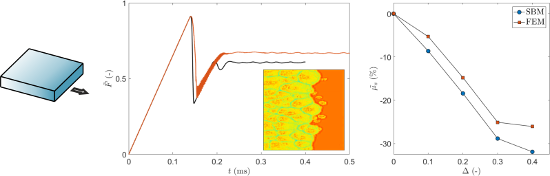
- by monitoring the total strain energy of the system, to choose a sufficiently fine discretization. We assign a velocity-dependent coefficient of friction to the contact surfaces, evolving as: where µs,i and µk,i are the static and dynamic local friction coefficients, respectively, ν is the sliding
- for the case Δ = 0. However, while in the previous case, the reason for the modification of the global friction coefficient can be found in a smaller static friction threshold, in this case, a given lateral strain produces a corresponding tangential force that is greater on the side of the material


![[Graphic 5]](/bjnano/content/inline/2190-4286-9-229-i10.svg?max-width=637&scale=1.18182) as function of time for the non-graded material: SBM solution for dif...
as function of time for the non-graded material: SBM solution for dif...


Surface energy of nanoparticles – influence of particle size and structure
Beilstein J. Nanotechnol. 2018, 9, 2265–2276, doi:10.3762/bjnano.9.211
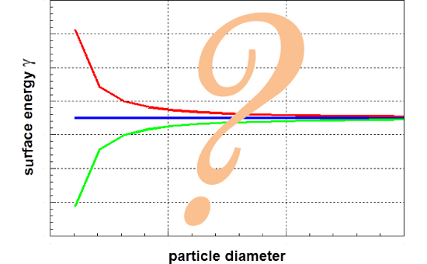
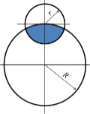
- solid (e.g., for a sphere with the radius R, p = 2σ/R) the elastic strain energy is stored in the particle. The surface energy may be defined as the as excess energy, i.e., the difference in the energy between a particle and the same number of atoms in an infinitely extended solid [4]. This definition
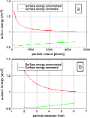
- , these results are only valid for γ ≥ 0. To demonstrate the insignificant role of the specific surface strain energy on the surface energy, the insert in Figure 5 displays the particle size dependence of this quantity. Although its contribution increases drastically with decreasing particle size, its
- using Equation 5. Graph of Equation 6. Also in this case, a lower limit for the particle diameter exists (α = β = 1). Surface energy for gold nanoparticles as function of the particle diameter according to Gang et al. [26]. The insert shows the specific strain energy related to the particle surface





Lead-free hybrid perovskites for photovoltaics
Beilstein J. Nanotechnol. 2018, 9, 2209–2235, doi:10.3762/bjnano.9.207
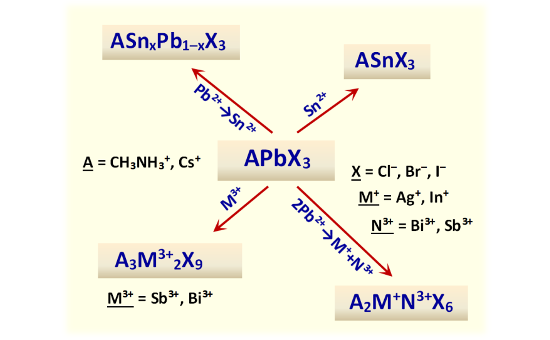
- for the synthesis of stoichiometric CsGeI3 materials as well as on the development of post-synthesis HI treatment of iodide-deficient CsGeI3 absorber layers. Theoretical studies also showed a high susceptibility of the electron properties of MAGeI3 perovskite to the strain. Application of a


Filling nanopipettes with apertures smaller than 50 nm: dynamic microdistillation
Beilstein J. Nanotechnol. 2018, 9, 2181–2187, doi:10.3762/bjnano.9.204
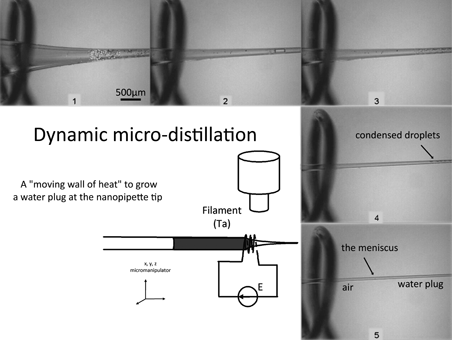
- strain long molecules stretching during translocation. However, such nanopipettes can be difficult to fill. Here we describe a dynamic microdistillation technique that successfully fills all nanopipettes, whatever their shape or tip radius. Even elongated or bent nanopipettes with a small-angle tip are


Fabrication of photothermally active poly(vinyl alcohol) films with gold nanostars for antibacterial applications
Beilstein J. Nanotechnol. 2018, 9, 2040–2048, doi:10.3762/bjnano.9.193
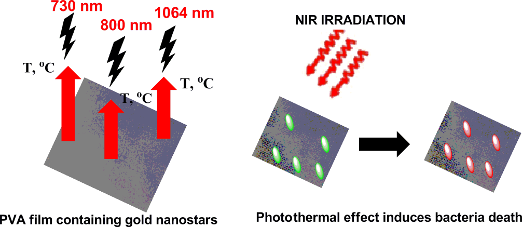
- -bearing carboxylic groups.The representative stress–strain curves of the fabricated films are shown in Figure 3. The detailed information about the set-up and data analysis is provided in the Experimental section. The mechanical parameters obtained by the stress–strain curves are reported in Table 1. The
- stress–strain curves of the three types of films followed the same trend, however being characterized by different elastic modulus, maximum stress and maximum strain values. In particular, PVA films without GNSs showed the lowest stiffness value in comparison with both types of PVA-GNS films (p < 0.05
- ). At the same time films prepared with GNSs coated with SH-PEG−COOH were characterized by the highest value of maximum stress when compared to films prepared with GNSs coated with SH-PEG–OCH3 and with bare PVA films (p < 0.05). All the compositions showed instead similar values of the maximum strain


Defect formation in multiwalled carbon nanotubes under low-energy He and Ne ion irradiation
Beilstein J. Nanotechnol. 2018, 9, 1951–1963, doi:10.3762/bjnano.9.186
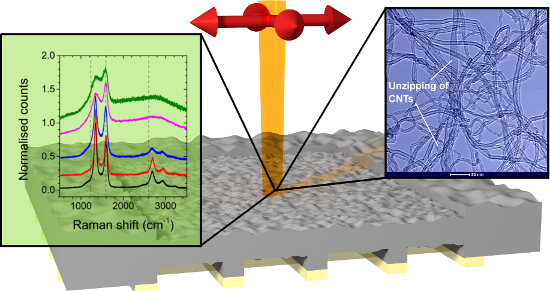
- in the sample. Depending on the sample a fourth peak due to intercalated graphite compounds and increasing disorder produced by functionalization and strain can appear in the region of 1617–1625 cm−1 [1]. Further information on defects can be obtained by the intensity of optical absorbance which is



Nonlinear effect of carrier drift on the performance of an n-type ZnO nanowire nanogenerator by coupling piezoelectric effect and semiconduction
Beilstein J. Nanotechnol. 2018, 9, 1917–1925, doi:10.3762/bjnano.9.183
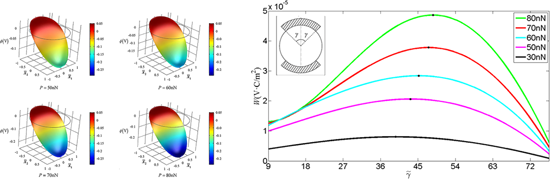
- induced by the shear strain S5 in the x1–x3 plane and E2 is induced by the shear strain S4 in the x2–x3 plane. When P acts along the x2-direction, σ5(τ13) is very small, and so is S5. Thus, both σ5 and S5 produce negligible influence on electric field, carrier concentration and electric potential. S4 is


![[Graphic 46]](/bjnano/content/inline/2190-4286-9-183-i59.svg?max-width=637&scale=1.18182) and (b) boundary electric displacement Dr at Ω for different end f...
and (b) boundary electric displacement Dr at Ω for different end f...





