


Search results
Search for "stress" in Full Text gives 570 result(s) in Beilstein Journal of Nanotechnology. Showing first 200.
Determination of elastic moduli of elastic–plastic microspherical materials using nanoindentation simulation without mechanical polishing
Beilstein J. Nanotechnol. 2021, 12, 213–221, doi:10.3762/bjnano.12.17
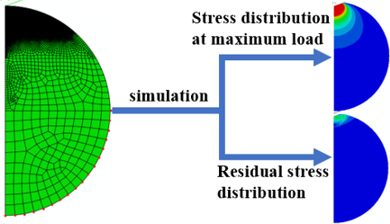
- computational study regarding the instrumented nanoindentation of elastic–plastic microspherical materials. The ratio between elastic modulus of the microsphere and the initial yield stress of the microsphere was systematically varied from 10 to 1000 to cover the mechanical properties of most materials
- here. Yan established a set of non-dimensional relations for conical indentation on a homogeneous, isotropic semi-infinite flat substrate, including the quantity E/σy [15]. σy is the initial yield stress of a linear elastic, perfectly plastic material. σy/E is the initial yield strain. Phadikar showed
- elastic modulus and yield stress of a microsphere, E/σy, was systematically varied between 10 and 1000 to cover the mechanical properties of the materials most commonly encountered in engineering. For example, an elastic–plastic material with E/σy = 70 and E/σy = 300 is fairly typical for a polymer and


TiOx/Pt3Ti(111) surface-directed formation of electronically responsive supramolecular assemblies of tungsten oxide clusters
Beilstein J. Nanotechnol. 2021, 12, 203–212, doi:10.3762/bjnano.12.16
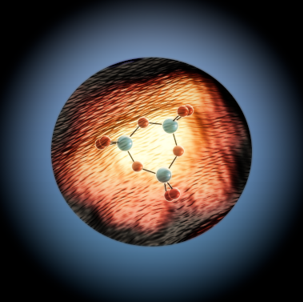
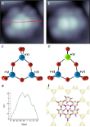
- different surface coverages. While the rectangular z’-TiOx phase is a typical island structure, whose number and size increase with the oxygen dosage, the hexagonal w’-TiOx phase always covers the entire surface. In the latter case, the surface stress would be too high to engage the usually favored
- combination of these two species forms the characteristic stripe pattern of the z’-TiOx phase. Inside the trenches between the stripes, several holes in the film can be found, which are probably caused by the stress release during the film growth. These defects permit a direct contact with the underlying



A review on the biological effects of nanomaterials on silkworm (Bombyx mori)
Beilstein J. Nanotechnol. 2021, 12, 190–202, doi:10.3762/bjnano.12.15
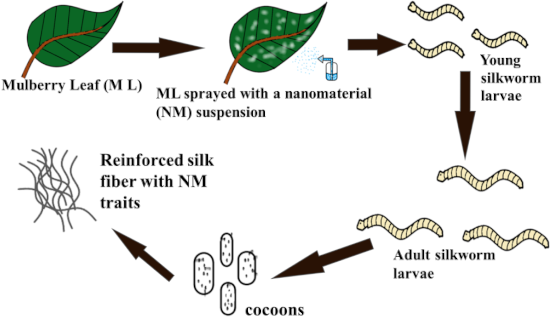
- to generate more reactive oxygen species (ROS) and to induce oxidative stress could be a reason for their antibacterial activity against R. solanacearum in tobacco plants [23]. Aside from MgO NPs, other nanomaterials, including titanium dioxide (TiO2 NPs), zinc oxide (ZnO NPs), copper oxide (CuO NPs
- oxidative stress response, which makes the p-translucent silkworm a good model to study Parkinson’s disease [92][93]. Mammalian model organisms are mostly used to study the efficacy of new drugs for human-related diseases and also in the screening of antimicrobial drugs [94]. Recent reports indicate
- concentrations of Ag NPs [122]. Reactive oxygen species (ROS), which are involved in cell signaling and homeostasis [123], are considered a characteristic side-effect of oxygen metabolism. High levels of ROS in living organisms induce oxidative stress, which results in damage to the DNA, proteins, and lipids


Effect of different silica coatings on the toxicity of upconversion nanoparticles on RAW 264.7 macrophage cells
Beilstein J. Nanotechnol. 2021, 12, 35–48, doi:10.3762/bjnano.12.3
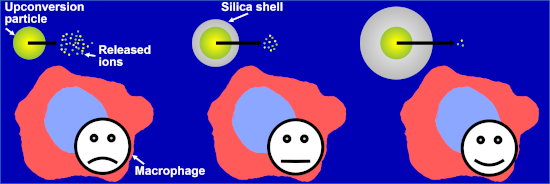
- oxidative stress and cause apoptosis. In addition, intracellular redox homeostasis and gene expression can be modulated [26]. Lanthanide ions are usually not reported as highly toxic. However, they can interact with proteins, enzymes, and other biomolecules [27][28] and might also cause oxidative damage or


Free and partially encapsulated manganese ferrite nanoparticles in multiwall carbon nanotubes
Beilstein J. Nanotechnol. 2020, 11, 1891–1904, doi:10.3762/bjnano.11.170
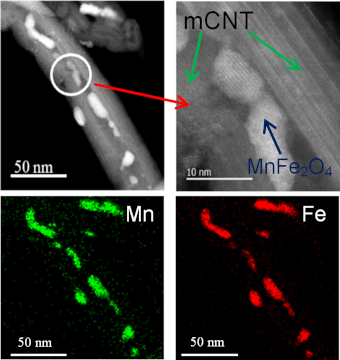
- manganese ferrite nanoparticles inside the tubes is observed as a shift in the X-ray diffraction peaks and as an increase in stress, hyperfine field, and coercivity when compared to free manganese ferrite nanoparticles. On the other hand, a strong charge transfer from the multiwall carbon nanotubes is
- ferrite nanoparticles in comparison to free manganese ferrite nanoparticles, which leads to an enhancement of the metallic properties. Keywords: carbon nanotubes; charge transfer; manganese ferrite; metallic nanoparticles; partial encapsulation; stress; surface; Introduction Since the discovery of




Kondo effects in small-bandgap carbon nanotube quantum dots
Beilstein J. Nanotechnol. 2020, 11, 1873–1890, doi:10.3762/bjnano.11.169
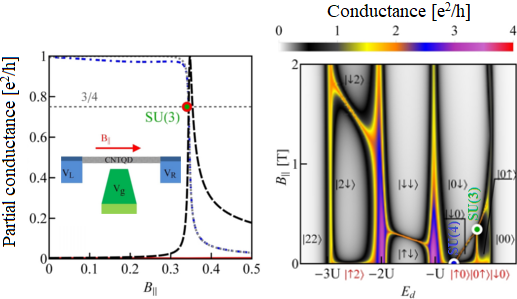
- exhibiting non-zero spin magnetic moment. Kondo SU(3) resonances have non-zero orbital and spin moments, and in the Kondo SU(4) state both moments are quenched. By changing the value of the bandgap energy by stress, one can move high-symmetry points between different Coulomb valleys. The SU(4) point occurs

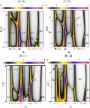
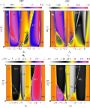


![[Graphic 37]](/bjnano/content/inline/2190-4286-11-169-i52.svg?max-width=637&scale=1.18182) as a functio...
as a functio...


Towards 3D self-assembled rolled multiwall carbon nanotube structures by spontaneous peel off
Beilstein J. Nanotechnol. 2020, 11, 1865–1872, doi:10.3762/bjnano.11.168
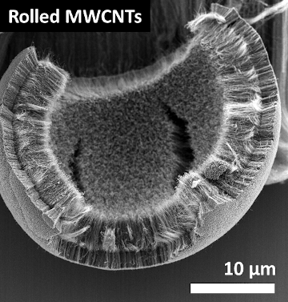
- is observed, by the naked eye, that layers peel off from the MWCNT forests after synthesis. This is observed without the need to apply any mechanical stress. However, when this phenomenon occurs, it is not possible to identify an area without MWCNTs. In other words, despite the peeling off the



Piezotronic effect in AlGaN/AlN/GaN heterojunction nanowires used as a flexible strain sensor
Beilstein J. Nanotechnol. 2020, 11, 1847–1853, doi:10.3762/bjnano.11.166
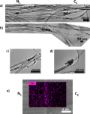
- synthesize AlGaN/AlN/GaN heterojunction NWs with controllable size. A single NW is transferred to a flexible poly(ethylene terephthalate) substrate and fixed by indium tin oxide electrodes to form an ohmic contact for the strain sensor. An external mechanical stress is introduced to study the performance of
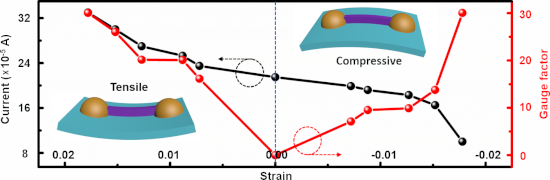
- the fabricated piezotronic strain sensor. The gauge factor is as high as 30 under compressive or tensile stress, which indicates a high sensitivity of the strain sensor. Periodic strain tests show the high stability and repeatability of the sensor. The working mechanism of the strain sensor is
- % tensile strain, which shows its high sensitivity. Furthermore, the current increases with an increase in the tensile strain and decreases with an increase in the compressive strain along the c-axis. The current returns to its original value after release of the mechanical stress. At the same time, the


Nanomechanics of few-layer materials: do individual layers slide upon folding?
Beilstein J. Nanotechnol. 2020, 11, 1801–1808, doi:10.3762/bjnano.11.162
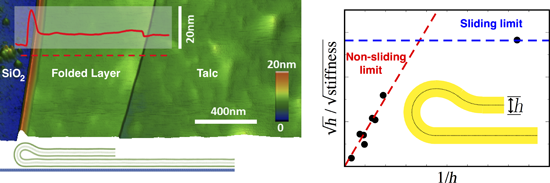
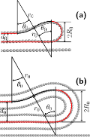
- thickness range. In contrast, tip-enhanced Raman spectroscopy measurements on edges in folded graphene flakes, 14 layers thick, show no significant strain. This indicates that layers in graphene flakes, up to 5 nm thick, can still slip to relieve stress, showing the richness of the effect in 2D systems. The
- layered materials as it determines the interlayer slip, which is the dominant mechanism to relieve stress at van der Waals interfaces, leading to phenomena such as the change from plate-like to membrane-like shapes in graphene, hBN, and MoS2 bubbles [12] or the circumferential faceting of multi-walled
- measurements on edges in folded graphene flakes that were 5 nm, or 14 layers, thick shows no significant strain indicating that layers in graphene flakes up to 5 nm thickness can still slip to relieve stress. Even though it is applied here to homolayers, the present methodology could also bring invaluable

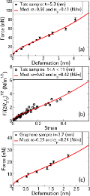
![[Graphic 5]](/bjnano/content/inline/2190-4286-11-162-i8.svg?max-width=637&scale=1.18182) =
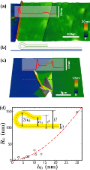
= ![[Graphic 6]](/bjnano/content/inline/2190-4286-11-162-i9.svg?max-width=637&scale=1.18182) as a function of 1/h for the nine measured talc samples. h is a directly measured ...
as a function of 1/h for the nine measured talc samples. h is a directly measured ...
Out-of-plane surface patterning by subsurface processing of polymer substrates with focused ion beams
Beilstein J. Nanotechnol. 2020, 11, 1693–1703, doi:10.3762/bjnano.11.151
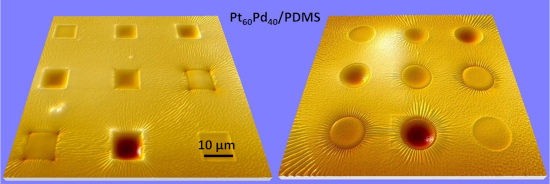
- surface elevations or depressions at the corners of the irradiated squares in Figure 7b. Considering continuum mechanics, these features are places where mechanical stress can concentrate, resulting in the enhancement of local deformations. In numerous previous studies, the occurrence of ripples (also
- the entire fluence range. The only ripple patterns we observed were those generated by the stress field outside the irradiated regions, where there is no skin or any other structural or compositional material modification. One of the likely reasons for the absence of rippling inside of the irradiated
- areas in our PDMS samples is that the density of the total energy lost by He+ ions in the samples is not large enough to build up a sufficiently high stress to trigger rippling. This result is also interesting with regard to potential applications, because it opens up for a possibility of changing the


Piezoelectric sensor based on graphene-doped PVDF nanofibers for sign language translation
Beilstein J. Nanotechnol. 2020, 11, 1655–1662, doi:10.3762/bjnano.11.148
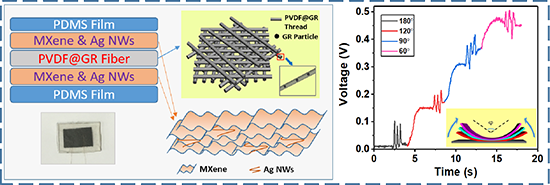
- bending-induced piezoelectric model was constructed, and the calculated stress and potential distribution were obtained through finite element analysis, as shown in Figure 1c and Figure 1d. Figure 1c shows the stress distribution under bending. It can be clearly found that the stress is mainly
- ) Schematic diagram of an efficient sign language translation system using self-powered PESs. (c) Calculated stress in the PES during bending. (d) Potential distribution in the PES under bending. (a) Preparation of the self-powered GR-doped PVDF PES. (b) SEM images of PVDF fibers with different GR doping
- concentrations. (c) FTIR spectra of the PVDF fibers. (d) XRD patterns of the PVDF fibers. (e) Stress–strain curves of the PVDF fibers. (a) Schematic diagram of the PES under external pressure. (b) Output voltage as a function of the applied pressure for different doping concentrations. (c) Waveforms


Selective detection of complex gas mixtures using point contacts: concept, method and tools
Beilstein J. Nanotechnol. 2020, 11, 1631–1643, doi:10.3762/bjnano.11.146
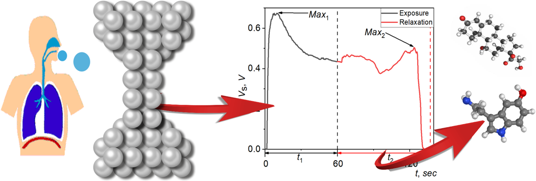
- energy conservation in the organism, and affects the synthesis of cellular enzymes. Cortisol generates the defense reactions of the organism against external threats and stressful situations [52]; therefore, it is called the “stress hormone”. In the case of heavy stress, cortisol changes the muscle
- their quantity through a chain of mediators (transmitters), the last of which is recognized by the surfaces of the atomic structures of the gas-sensitive array (i.e., the Yanson point contacts). As a result, we can quantitatively estimate, with a probability of 95%, the stress level in the body. Wide


![[Graphic 4]](/bjnano/content/inline/2190-4286-11-146-i8.svg?max-width=637&scale=1.18182) in th...
in th...

![[Graphic 7]](/bjnano/content/inline/2190-4286-11-146-i11.svg?max-width=637&scale=1.18182) in the...
in the...
Oxidation of Au/Ag films by oxygen plasma: phase separation and generation of nanoporosity
Beilstein J. Nanotechnol. 2020, 11, 1608–1614, doi:10.3762/bjnano.11.143
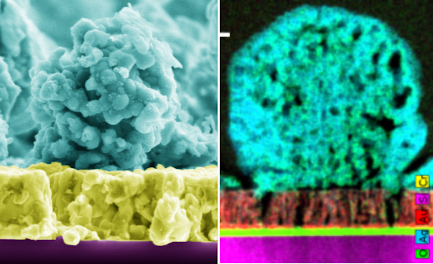
- residual stress. The repeated oxidation and cracking events result in the transformation of the metallic silver into nanoporous silver oxide when it reaches the surface of the film. In parallel to the oxidation reaction, silver keeps diffusing from the alloy film toward the surface, feeding the metallic


Walking energy harvesting and self-powered tracking system based on triboelectric nanogenerators
Beilstein J. Nanotechnol. 2020, 11, 1590–1595, doi:10.3762/bjnano.11.141
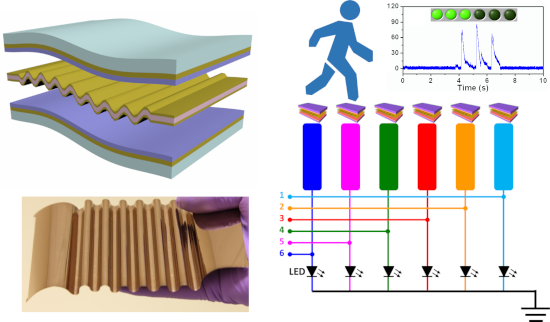
- loading resistance; inset: long-term stability. The ability of the u-TENG to harvesting energy from human walking. The electric output profile of a man (a), a woman (b), and a child (c). (d) The output voltage of u-TENG under different stress values. (e) The dependence of the output voltage on the impact


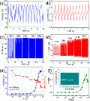


Antimicrobial metal-based nanoparticles: a review on their synthesis, types and antimicrobial action
Beilstein J. Nanotechnol. 2020, 11, 1450–1469, doi:10.3762/bjnano.11.129
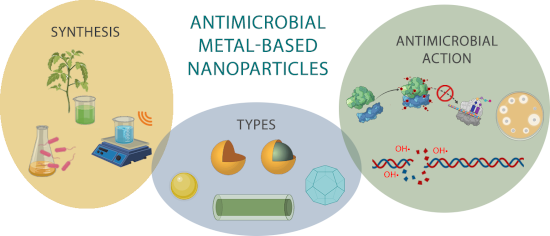
- induction of oxidative stress, the release of metal ions and the non-oxidative damage. Synthesis of antimicrobial nanoparticles Over the last years, techniques for synthesizing antimicrobial nanoparticles have advanced significantly due to their use in both biomedical and industrial applications. The
- ][132]. When the size of titanium dioxide is reduced to the nanoscale (TiO2 NPs), its photocatalytic property is greatly improved, generating more reactive oxygen species (ROS). ROS damages bacterial cells, DNA chains, and other cellular structures through oxidative stress. Therefore, the use of TiO2
- simpler way without major equipment requirements. Mechanisms of antimicrobial action The exact antibacterial mechanisms of NPs are being exhaustively investigated and some processes have been elucidated, including oxidative stress induction, metal ion release, and non-oxidative damage, which affect


One-step synthesis of carbon-supported electrocatalysts
Beilstein J. Nanotechnol. 2020, 11, 1419–1431, doi:10.3762/bjnano.11.126

- Supporting Information File 1, Figures S7–10. After 2000 accelerated stress test (AST) cycles, the most durable Pt/CNW layers still retain 50–70% of their maximum ECSA, while the commercial catalyst only has 30% left. Even after 5000 cycles, 20–30% of the maximum ECSA of the Pt/CNW layers are retained, at
- the future, a broader electrochemical study of our Pt/CNW catalysts is required to further uncover the relations between particle embedding, ECSA, utilization, and ORR activity. From the results of the ECSA, ORR, and accelerated stress test measurements, we find CV1 and CV2 to be the most promising
- adsorption charge of 210 mC/cm²(Pt). An accelerated stress test (AST) consists of 10,000 triangular potentiodynamic cycles between 0.4–1 V vs NHE with a scan rate of 1 V/s. ORR mass activities were measured at 1600 rpm in oxygen-saturated 0.1M HClO4 at 25 °C and determined at 0.9 V vs NHE. When using GCEs as




On the frequency dependence of viscoelastic material characterization with intermittent-contact dynamic atomic force microscopy: avoiding mischaracterization across large frequency ranges
Beilstein J. Nanotechnol. 2020, 11, 1409–1418, doi:10.3762/bjnano.11.125
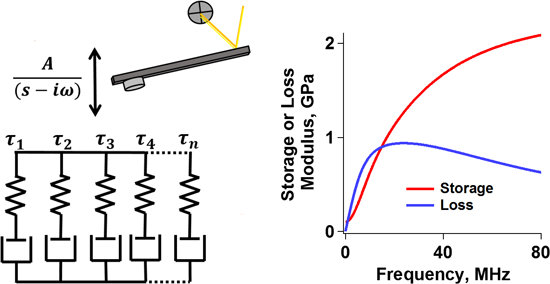
- ), is the retardance of the material, relating stress and strain, and R is the indenter radius. The indentation and load are available from the force–distance curve, and an expression for can be easily derived for the Generalized Voigt or Maxwell models (Figure 1), whereby the constants of springs and
- ][35]. Mechanical model diagrams representing the relationship between stress and strain in the complex plane for a linear viscoelastic material with multiple characteristic times [33]. (a) Generalized Voigt or Kelvin model, (b) Generalized Maxwell or Wiechert model, both describing arrheodictic
- transformed strain is generally regarded as the excitation and the transformed stress as the response; in (b) the opposite generally occurs. (a) Storage moduli and (b) and loss moduli as function of frequency for two hypothetical materials, the Generalized Maxwell model parameters of which are provided in


Structural and electronic properties of SnO2 doped with non-metal elements
Beilstein J. Nanotechnol. 2020, 11, 1321–1328, doi:10.3762/bjnano.11.116
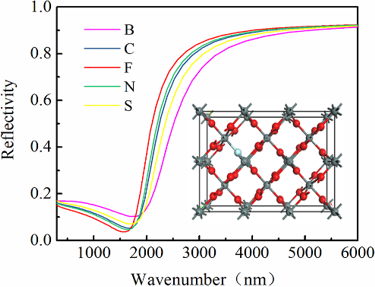
- 10−5 eV/atom, the internal stress between atoms was less than 0.05 GPa, and the atom displacement was less than 0.0001 nm. Results and Discussion Structural optimization Table 1 shows the results of geometric optimization of the crystal structure of SnO2 doped with non-metal elements. After replacing



Cryogenic low-noise amplifiers for measurements with superconducting detectors
Beilstein J. Nanotechnol. 2020, 11, 1316–1320, doi:10.3762/bjnano.11.115
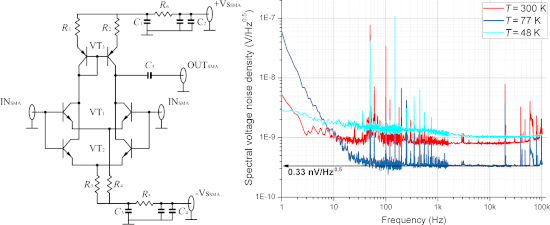
- and the capacitors have a C0G-type of dielectric. All the components were mounted on the designed layout of the printed circuit board (PCB) from FR4 material. We did not solder the electrodes of the capacitors directly to the PCB in order to reduce the mechanical stress during the cooldown cycles


Magnetohydrodynamic stagnation point on a Casson nanofluid flow over a radially stretching sheet
Beilstein J. Nanotechnol. 2020, 11, 1303–1315, doi:10.3762/bjnano.11.114
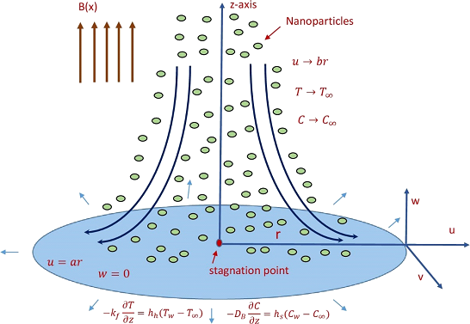
- colloidal mixture of nanoparticles and a base fluid. Evidence has shown that metallic particles transfer more heat energy as compared to nonmetallic particles. A Casson fluid is a non-Newtonian fluid in nature and therefore, behaves similarly to an elastic solid. When the stress rate is zero, the Casson
- fluid can be considered as a shear-thinning liquid, with infinite viscosity. On the other hand, when the stress rate approaches an infinite value the viscosity of the Casson fluid drops to zero [6]. Jam, tomato ketchup, honey, and concentrated fruit syrups are some quotidian examples of Casson fluids


Growth of a self-assembled monolayer decoupled from the substrate: nucleation on-command using buffer layers
Beilstein J. Nanotechnol. 2020, 11, 1291–1302, doi:10.3762/bjnano.11.113
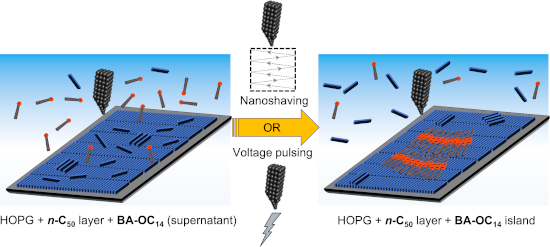
- –HOPG interface, we moved on to the self-assembly experiments with the buffer layer. Although the buffer layer experiments described below were carried out using sequential deposition of solutions of n-C50 and BA-OC14 (in that sequence), we stress that the outcome of the experiments remained the same


Ultrasensitive detection of cadmium ions using a microcantilever-based piezoresistive sensor for groundwater
Beilstein J. Nanotechnol. 2020, 11, 1242–1253, doi:10.3762/bjnano.11.108
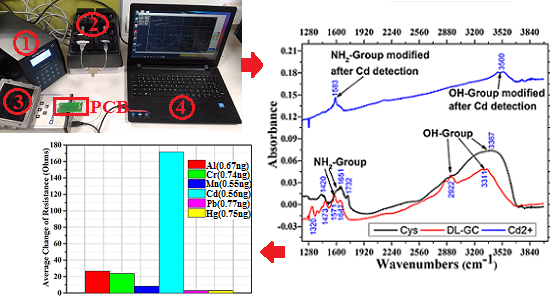
- . Here, SAMs of cysteamine–glyceraldehyde were created on top of microcantilever-based sensors with integrated piezoresistive readout to get the change in resistance due to changes in surface stress. Until now, many people have used lab-based optical setups to measure the change in surface stress of the
- cantilever sensors. Moreover, the proposed piezoresistive device has capabilities to directly capture the surface stress make this a better option for HMI applications. Microfluidic Platform with Piezosensor In the proposed method, the benefits of three different technologies are combined, namely thin film
- . Results and Discussion The performance of the fabricated device in the selective detection of Cd(II) in a microfluidic environment is evaluated using the OmniCant setup shown in Figure 1d. The non-stress calibrated resistance values of the piezoresistive sensor using SAMs of cysteamine cross-linked with




Revealing the local crystallinity of single silicon core–shell nanowires using tip-enhanced Raman spectroscopy
Beilstein J. Nanotechnol. 2020, 11, 1147–1156, doi:10.3762/bjnano.11.99
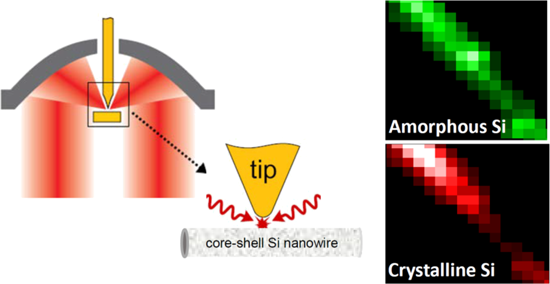
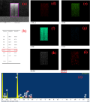
- popular method to investigate structural properties of silicon samples [16][17]. Mizoguchi et al. [18] and Hopkins et al. [19] utilized it to show the influence of stress on the crystal lattice orientation angles and to determine the degree of surface roughness. Kolb et al. measured the lattice


Photothermally active nanoparticles as a promising tool for eliminating bacteria and biofilms
Beilstein J. Nanotechnol. 2020, 11, 1134–1146, doi:10.3762/bjnano.11.98
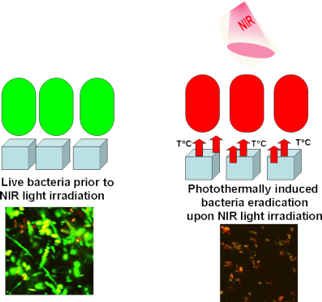
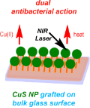
- membrane stress, which is enhanced by the photothermal effect upon sunlight irradiation [102]. Antibacterial continuous flow poly(dimethylsiloxane)-based microreactors with microchannels were fabricated using catechol-grafted poly(N-vinylpyrrolidone) and NIR-active Cs0.33WO3 nanoparticles [103]. Upon NIR


Applications of superparamagnetic iron oxide nanoparticles in drug and therapeutic delivery, and biotechnological advancements
Beilstein J. Nanotechnol. 2020, 11, 1092–1109, doi:10.3762/bjnano.11.94
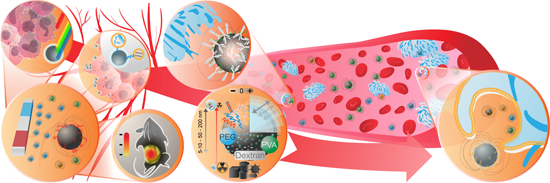
- are considered the most effective, but unfortunately pure iron is toxic because it leads to high oxidative stress. To avoid this problem there is a lot of ongoing work regarding the design of core–shell particles with pure iron cores [63][64]. Octopod SPIONs (30 nm) were also shown to be better than
- later by iron oxidative stress [81]. Dextran-coated SPIONs were found to accumulate in large amounts in tumor sites in mice, in contrast to PEG-coated SPIONs, which did not accumulate, even in the presence of an external magnet at the tumor site. The PEG-coated SPIONs exhibited a longer blood
- biological fluids at physiological pH values and which remain stable with low toxicity in vitro [38][46][98][99][100][101][102][103]. Still, Hong and collaborators [104] stress the fact that we should pay more attention to the charge effects of SPIONs because not all types of cytotoxicity can be easily and





