


Search results
Search for "threshold" in Full Text gives 432 result(s) in Beilstein Journal of Nanotechnology. Showing first 200.
New micro/mesoporous nanocomposite material from low-cost sources for the efficient removal of aromatic and pathogenic pollutants from water
Beilstein J. Nanotechnol. 2019, 10, 119–131, doi:10.3762/bjnano.10.11
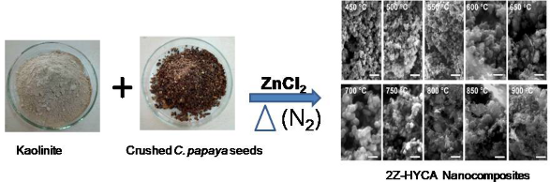
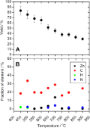
- synthesis temperature. Overall, nitrogen sorption analysis indicates that the porosity does not directly correlate with the synthesis conditions as soon as the threshold temperature of 500 °C is passed. As stated above, a high surface area is a key requirement for a material to work in water treatment. The




Threshold voltage decrease in a thermotropic nematic liquid crystal doped with graphene oxide flakes
Beilstein J. Nanotechnol. 2019, 10, 71–78, doi:10.3762/bjnano.10.7
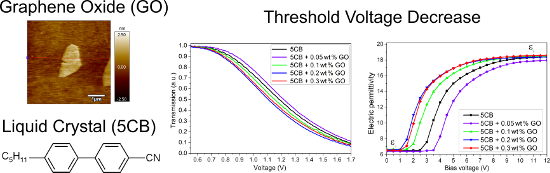
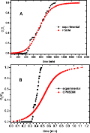
- /bjnano.10.7 Abstract We report a threshold voltage decrease in a nematic liquid crystal compound, 4-cyano-4′-pentylbiphenyl (5CB), doped with graphene oxide (GO) flakes at a concentration of 0.05–0.3 wt %. The threshold voltage decrease was observed at the same concentration in electro-optic and
- presence of the electric field was discussed. Keywords: graphene oxide; liquid crystal; nematic phase; switching; threshold voltage; Introduction Liquid crystals (LCs) are classified as a type of soft matter which are characterized by anisotropic molecules and a liquid-like fluidity behavior. Of all LC
- Frédericksz effect, the deformation of a homogeneous layer of a NLC is caused by the electric field E, which is initially perpendicular to the director. Such structural transition appears at a certain magnitude called the threshold voltage, Uth. When the applied voltage, U, is lower than the threshold U < Uth



Characterization and influence of hydroxyapatite nanopowders on living cells
Beilstein J. Nanotechnol. 2018, 9, 3079–3094, doi:10.3762/bjnano.9.286
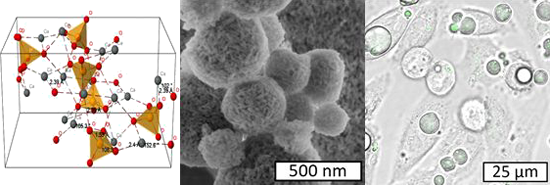
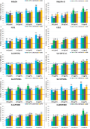
- also shown relatively low cell viability results, but did not exceed the established toxicity threshold within the test concentration range. HApSA exhibits a toxic effect in the tested range only after having been doped with silicon. Only small differences between the GoHAP hydroxyapatites can be seen
- every figure, a blue line shows the level of control (100% of the living cells after 24 h) and the red line shows the toxicity threshold (50% of the living cells after 24 h). CLSM image of CHO cells and visible GoHAP90s (50 µg/mL) aggregates and agglomerates. A cell is visible a) during ) and b) after

![[Graphic 1]](/bjnano/content/inline/2190-4286-9-286-i2.svg?max-width=637&scale=1.18182) .
.



Femtosecond laser-assisted fabrication of chalcopyrite micro-concentrator photovoltaics
Beilstein J. Nanotechnol. 2018, 9, 3025–3038, doi:10.3762/bjnano.9.281
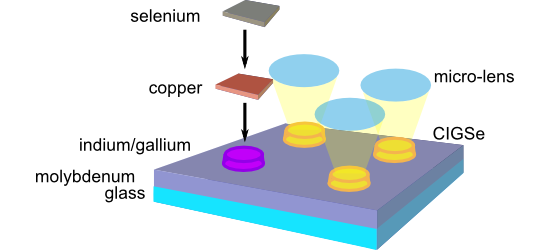
- [22]. In a first set of experiments, LIFT of pure copper with varying layer thickness (10–100 nm) was investigated. The donor layers were irradiated by single pulses with fluences in the range of 0.8–7.8 J/cm2. The threshold for the LIFT decreases with decreasing copper layer thickness. In the case of


Hydrogen-induced plasticity in nanoporous palladium
Beilstein J. Nanotechnol. 2018, 9, 3013–3024, doi:10.3762/bjnano.9.280
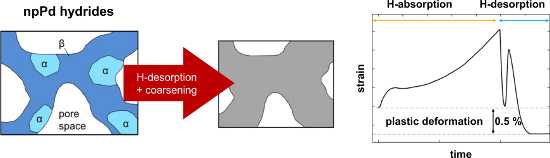
- depletion of PdHα at a value below −0.99 V is consistent with values reported for palladium thin films [31][32]. The threshold values for the palladium hydride β-phase formation (−0.96 V) and the potential of α-phase depletion (−0.99 V) can be used for a phase distinction in current-controlled experiments
- formation threshold in the fifth loading cycle, which is marked as “onset of PdHβ” in Figure 5. The potential of PdHα depletion was crossed during the 11th loading cycle, which is also indicated in Figure 5. Both strain features present in potentiostatic experiments during desorption, namely the strain
- initiate deformation, this could explain the discrepancies between the mechanical performance of the two variants of npPd. In addition the contribution of dislocation plasticity is avoided when the phase transition proceeds fully coherently. Crossing the threshold potential of PdHβ-phase formation (−0.96 V


Site-controlled formation of single Si nanocrystals in a buried SiO2 matrix using ion beam mixing
Beilstein J. Nanotechnol. 2018, 9, 2883–2892, doi:10.3762/bjnano.9.267
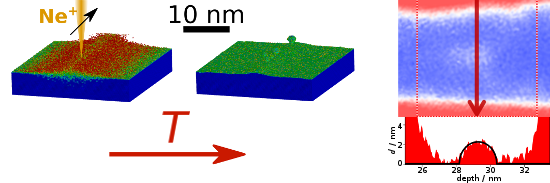
- assumed to contribute whose start energy exceeds a displacement threshold of 8 eV. A more detailed discussion is given in Möller et al. [36]. The thermally activated phase separation process was simulated with a kinetic Monte Carlo (kMC) code [27]. Substrate preparation All substrates used in this study


Charged particle single nanometre manufacturing
Beilstein J. Nanotechnol. 2018, 9, 2855–2882, doi:10.3762/bjnano.9.266
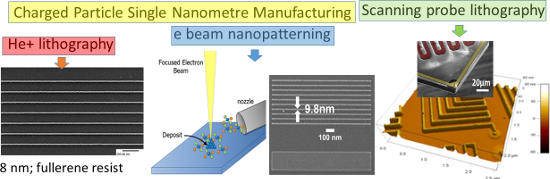
- being the exposure dose required to clear out the resist from the centre of the doughnut due to the proximity effect, Qp being the threshold dose required for full clearance of the resist, R1 being the inner radius of the doughnut, α being the standard deviation of the forward-scattered deposited energy


Biomimetic surface structures in steel fabricated with femtosecond laser pulses: influence of laser rescanning on morphology and wettability
Beilstein J. Nanotechnol. 2018, 9, 2802–2812, doi:10.3762/bjnano.9.262
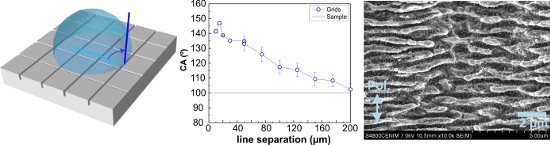
- below the single pulse ablation threshold, which we have determined experimentally as Fabl = 164 mJ/cm2 (following the method proposed by Liu in [38]). This indicates that the ablation is mediated by incubation and/or heat accumulation at the high repetition rate used [39][40] (a more detailed



Variation of the photoluminescence spectrum of InAs/GaAs heterostructures grown by ion-beam deposition
Beilstein J. Nanotechnol. 2018, 9, 2794–2801, doi:10.3762/bjnano.9.261
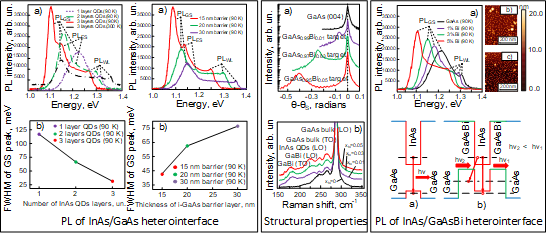
- ][25]. But the IBD method differs from MBE. Therefore, it remains relevant to research the vertical stacking of QDs grown by using IBD. In the beginning, ST#1 samples were studied. The statistical analysis by the threshold tool in the Image Analysis 2.1.2 program showed that the density of QDs in the


Comparative biological effects of spherical noble metal nanoparticles (Rh, Pd, Ag, Pt, Au) with 4–8 nm diameter
Beilstein J. Nanotechnol. 2018, 9, 2763–2774, doi:10.3762/bjnano.9.258
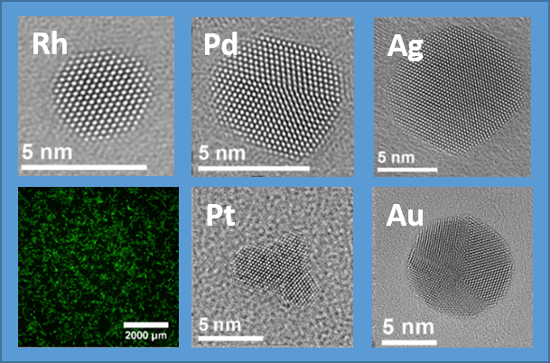
- (Olympus MVX10, Olympus, Hamburg, Germany). The quantification of cell viability was performed by phase analysis (CellSens Dimensions, Olympus, Hamburg, Germany) of calcein-positive fluorescence signals calculating the fluorescent area. For calculating the phase analysis data, a threshold was set which


Oriented zinc oxide nanorods: A novel saturable absorber for lasers in the near-infrared
Beilstein J. Nanotechnol. 2018, 9, 2730–2740, doi:10.3762/bjnano.9.255
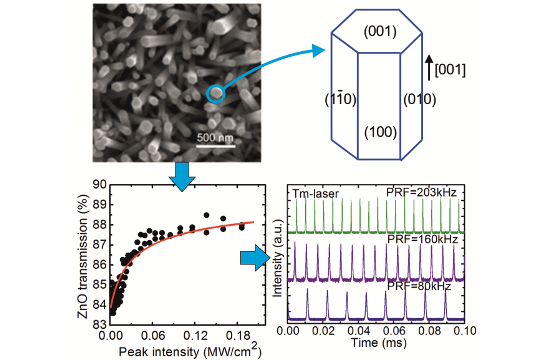
- output power of 221 mW at 1.942 µm with a slope efficiency η of 10% (with respect to the absorbed pump power Pabs), see Figure 5a,b. The laser threshold was at Pabs = 1.05 W. In the CW regime, the laser operated with higher efficiency, η of 56% and lower laser threshold of 0.70 W, so that the conversion
- average output power of 139 mW at 1.034 µm with η = 9%, as shown in Figure 6a,b. The laser threshold was at Pabs = 1.90 W. In the CW regime, the laser operated with higher η of 66% and ηconv was 14%. In the CW regime, a multi-peak emission at 1.035–1.040 µm was observed. These results correspond to the



Size-selected Fe3O4–Au hybrid nanoparticles for improved magnetism-based theranostics
Beilstein J. Nanotechnol. 2018, 9, 2684–2699, doi:10.3762/bjnano.9.251
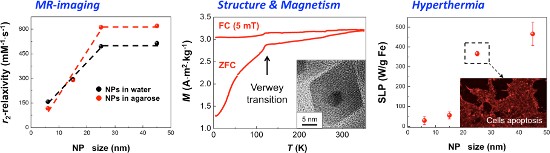
- the late stage of apoptosis. The two sets of experiments, direct AMF treatments and precultivation for 6 h, both show clear apoptosis/necrosis of 4T1 cells induced by the hyperthermia treatment. The more efficient precultivation might help to decrease the concentration threshold for MPH in future


Characterization of the microscopic tribological properties of sandfish (Scincus scincus) scales by atomic force microscopy
Beilstein J. Nanotechnol. 2018, 9, 2618–2627, doi:10.3762/bjnano.9.243
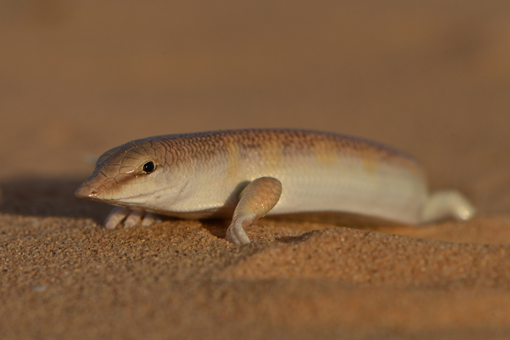
- topography images obtained after the scratching experiments. Figure 7b summarizes the scratching depth as a function of normal load. All samples get finally scratched when normal load reaches a certain threshold but this value is different for every material. After reaching this threshold, the scratching
- depth increases nearly linearly with normal load. Figure 7c condenses the scratching depth versus scratching distance. The scratching depth increases constantly for the sandfish scale, Teflon, and PMMA. For aluminium the chosen threshold (19.6 µN) was too small to obtain any wear, so the scratching


Enhancement of X-ray emission from nanocolloidal gold suspensions under double-pulse excitation
Beilstein J. Nanotechnol. 2018, 9, 2609–2617, doi:10.3762/bjnano.9.242
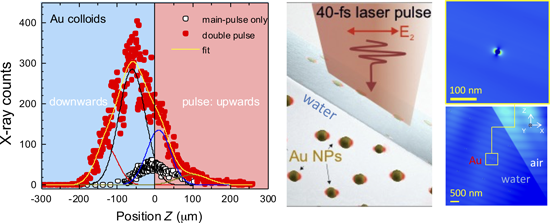
- threshold of X-ray generation, which is obtained only under double-pulse irradiation. The delay of the main pulse relative to the pre-pulse, Δt, was controlled within three time zones: 0–5 ns (I), 5–10 ns (II) and 10–15 ns (III), which were set into the optical path of the pre-pulse. The optical delay for
- permittivity of material, ν is the electron–ion collision rate, ω is the optical cyclic frequency at the wavelength of excitation, ne,a,cr are the electron, atom and critical densities, respectively. The imaginary part of the permittivity is given by: The threshold fluence for water to reach the ENZ state can
- be calculated from the consideration that all absorbed energy density is converted to thermal energy of electrons. It can be calculated from the ablation threshold expression of a dielectric [37]: where ls = c/(κω) is the skin depth related to the imaginary part of the refractive index , c is the


Exploring the photoleakage current and photoinduced negative bias instability in amorphous InGaZnO thin-film transistors with various active layer thicknesses
Beilstein J. Nanotechnol. 2018, 9, 2573–2580, doi:10.3762/bjnano.9.239
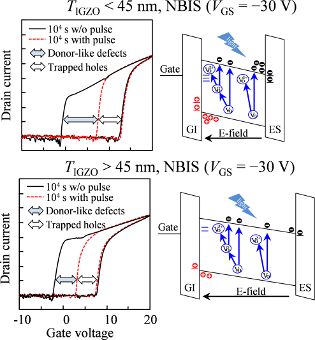
- works have highlighted that the electrical properties of the device (for both the initial and after stress conditions) such as threshold voltage, on/off ratio, and field effect mobility, can be effectively adjusted by controlling the active layer thickness [19][20][21][22][23]. Up to now, the impact of
- thicknesses were prepared by magnetron sputtering. The initial electrical properties and the photoleakage current of a-IGZO TFTs with various active layer thicknesses were investigated. The subthreshold value slightly increased while the threshold voltage (Vth) and mobility (μ) decreased with increasing TIGZO
- active layer thicknesses (TIGZO) measured at VDS = 20.1 V are shown in Figure 1b. Table 1 summarizes the electrical properties, such as field effect mobility in the saturation region (μsat), threshold voltage Vth (VGS at IDS of 1 nA), hysteresis of the transfer curves (the difference of VGS at IDS of 1


Cytotoxicity of doxorubicin-conjugated poly[N-(2-hydroxypropyl)methacrylamide]-modified γ-Fe2O3 nanoparticles towards human tumor cells
Beilstein J. Nanotechnol. 2018, 9, 2533–2545, doi:10.3762/bjnano.9.236
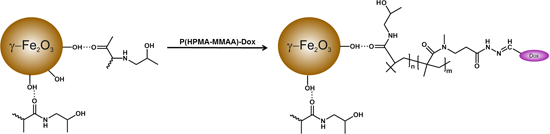
- molecular weight of PHPMA can be kept below the renal threshold (Mw < 50 kDa), which allows for rapid renal clearance and avoids accumulation in the body. Indeed, the molecular weight of P(HPMA-MMAA) according to HPLC SEC chromatography was moderate (Mn = 33 kDa) with polydispersity index = 1.36. Formation


Evidence of friction reduction in laterally graded materials
Beilstein J. Nanotechnol. 2018, 9, 2443–2456, doi:10.3762/bjnano.9.229
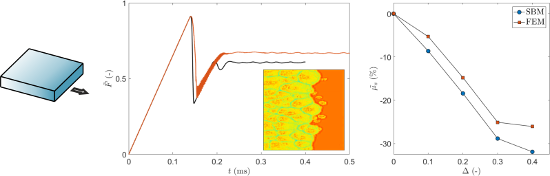
- (i) opposes the total driving force, so that Ffr(i) = −Fmot(i) , up to the threshold value Ffr(i) = µs(i) Fn(i). When this threshold is exceeded, a constant dynamic friction force with modulus Ffr(i) = µk(i) Fn(i) opposes the motion. Thus, Newton’s equation of motion for the block i can be written as
- velocity, and νc is the critical velocity for the transition [38]. This expression ensures that the value of the dynamic coefficient of friction is reached only when the sliding velocity is sufficiently high (i.e., ν >> νc). The static friction threshold is retrieved for ν = 0, so that the friction force
- shear stress is reached (i.e., the static friction threshold). The first detachment of the sliding surface produces a detachment avalanche propagating towards the region with higher static friction threshold, as shown in Figure 5 (see also Supporting Information File 1). Analogous effects on the


![[Graphic 5]](/bjnano/content/inline/2190-4286-9-229-i10.svg?max-width=637&scale=1.18182) as function of time for the non-graded material: SBM solution for dif...
as function of time for the non-graded material: SBM solution for dif...


ZnO-nanostructure-based electrochemical sensor: Effect of nanostructure morphology on the sensing of heavy metal ions
Beilstein J. Nanotechnol. 2018, 9, 2421–2431, doi:10.3762/bjnano.9.227
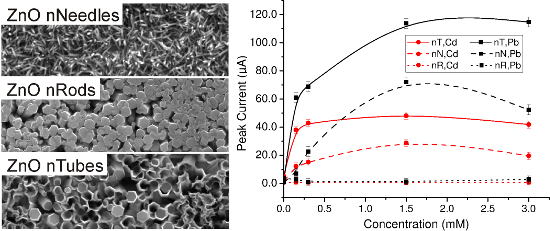
- was repeated with cadmium, where the same concentration of aqueous Cd(NO3)2 solution was used as a source of Cd2+ ions. The aqueous solutions of analytes were freshly prepared prior to measurement. In order to determine the sensor sensitivity threshold and quantify the change in ion concentration, a
- to 2 mM). The reduction peak current for the highest concentration can be explained by mass crystallization in the solution, in parallel with the sorption process. It is the threshold above which crystallites of lead oxides become visible on the ZnO nanostructured surface by SEM. In order to visually
- maximum concentration was chosen 10 and 100 times lower than CV sensitivity threshold of 1.5–3 mM. As shown in Figure 8, the DPV method is actually more sensitive than the CV method: using the same electrodes, it is possible to detect concentrations that are 100 times smaller than the CV sensitivity


Performance analysis of rigorous coupled-wave analysis and its integration in a coupled modeling approach for optical simulation of complete heterojunction silicon solar cells
Beilstein J. Nanotechnol. 2018, 9, 2315–2329, doi:10.3762/bjnano.9.216
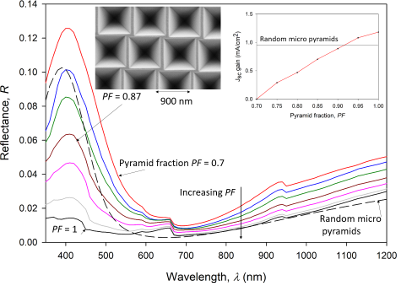
- (most accurate) simulation. For 30 or more sublayers, the simulated |ΔJSC| drops below the chosen threshold line of 0.1 mA/cm2 for 0° light incidence, while 50 sublayers are required for 45° incidence. This threshold corresponds to 0.27% of the total JSC reflectance loss (36.87 mA/cm2) of the structure
- light drops below the threshold of 0.1 mA/cm2 with three modes (ten modes were used as the reference), while in case of non-normal incident light, at least six modes are required to meet this threshold. When comparing the |ΔJSC| plots corresponding to the variation in the number of sublayers (Figure 5e
- ) and number of modes (Figure 5f), we generally observe a smaller effect for the changing number of modes (note the different scales). 50 sublayers and six modes were found to be sufficient for both normal incident light as well as at 45° incidence, considering the chosen 0.1 mA/cm2 threshold. These


Intrinsic ultrasmall nanoscale silicon turns n-/p-type with SiO2/Si3N4-coating
Beilstein J. Nanotechnol. 2018, 9, 2255–2264, doi:10.3762/bjnano.9.210
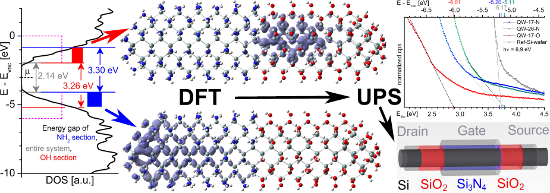
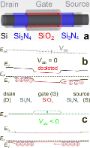
- region. The “doping” due to the presence of the SiO2 coating is taken into consideration as a volume, active dopant concentration (see Supporting Information File 1); the presence of the Si3N4 layer underneath the gate is accounted for by an appropriate shift of the threshold voltage of the transistor





Metal-free catalysis based on nitrogen-doped carbon nanomaterials: a photoelectron spectroscopy point of view
Beilstein J. Nanotechnol. 2018, 9, 2015–2031, doi:10.3762/bjnano.9.191
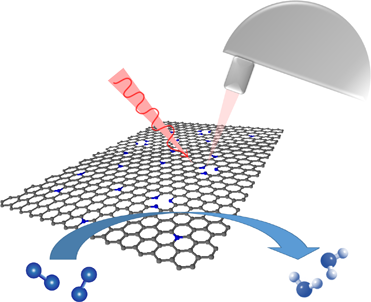
- : for energies close to the threshold for carbon substitution, functionalization takes place, while at higher energies the main electronic signatures of graphene are compromised indicating the destruction of the hexagonal lattice due to the metallic atoms backscattering from the substrate [55][88]. In
- contrast, for suspended graphene, using similar ion kinetic energies, the type of defects was mainly affected while maintaining a clean and non-destructive functionalization [37][55][89]. Theoretical reports showed also that if the ion energy is set slightly below the threshold needed to create single
- atom %. Above this threshold cross-linking between the layers starts to occur and an sp3-coordination of carbon begins to occur [95]. At intermediate concentrations, the system is stabilized by nitrogen saturation of edges and vacancies, implicating an increasing content of pyridinic N compared to




Recent highlights in nanoscale and mesoscale friction
Beilstein J. Nanotechnol. 2018, 9, 1995–2014, doi:10.3762/bjnano.9.190
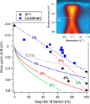
- substrates (Figure 4) play a crucial role in tribology. Experiments [164] agree with theory and numerical simulations [165][166][167][168] in showing the radical change of the static-friction threshold from the highly pinned regime of the lattice-matched colloidal layer to a practically superlubric
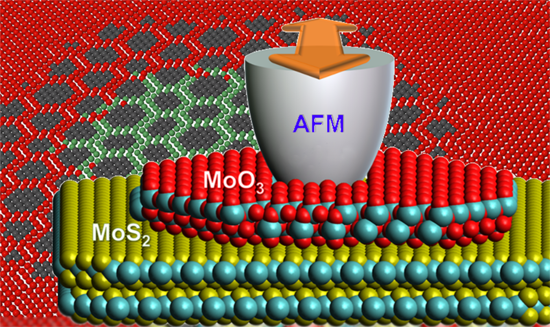
- locally disturbing the charge density waves [188] (Figure 7). At a certain threshold, the CDW shows a phase slip, which then leads to dissipation. Another example where non-contact friction can be influenced by external parameters are the measurements of superconductors across the critical temperature


Self-assembled quasi-hexagonal arrays of gold nanoparticles with small gaps for surface-enhanced Raman spectroscopy
Beilstein J. Nanotechnol. 2018, 9, 1977–1985, doi:10.3762/bjnano.9.188
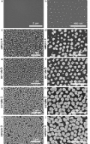
- . The SEM images for each sample were evaluated using a python script that applies a threshold in order to generate binary images. Blob detection is used to find the particles in the binary images and to evaluate the pixel count for each individual particle. From this pixel count, the area coverage and
- Raman laser. To approximately correct for the different amounts of molecules on the different samples one can use the filling factor (area coverage) of the samples: A threshold was applied to the SEM images, and the white pixels representing the presence of gold were counted. The filling factor was then



Defect formation in multiwalled carbon nanotubes under low-energy He and Ne ion irradiation
Beilstein J. Nanotechnol. 2018, 9, 1951–1963, doi:10.3762/bjnano.9.186
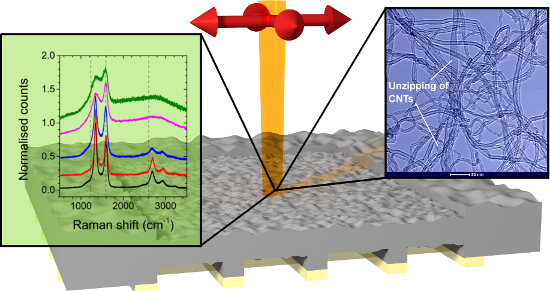
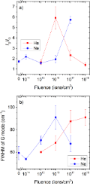
- noble gas ion species, but Olejniczak et al. used only much lower fluences in their work for MeV irradiation and stayed most likely below the threshold for severe damage formation [53]. Niwase et al. carried out 25 keV He+ irradiation of graphite up to fluences of 1018 ions/cm2 and observed also a



A differential Hall effect measurement method with sub-nanometre resolution for active dopant concentration profiling in ultrathin doped Si1−xGex and Si layers
Beilstein J. Nanotechnol. 2018, 9, 1926–1939, doi:10.3762/bjnano.9.184
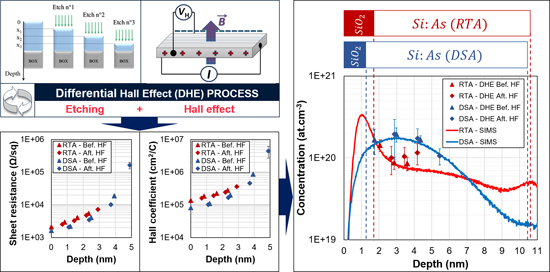
- /cm2, the observed structure is identical to that found in the as-implanted sample with the SiGe layer being almost fully crystalline (and having a surface roughness of about 1 nm). This suggests that the laser energy density used in these cases is always lower than the threshold value necessary to
- melt the surface. In contrast, following a LTA at 0.79 J·cm−2 the SiGe top layer is completely amorphous, clearly indicating that in this case the whole SiGe layer was molten, leaving no seed for a perfect recrystallization. The threshold energy for surface melt is therefore located between 0.76 and
- sheet resistance values observed for high laser energies was due to the formation of a poly-Si layer as a consequence of the full melt of the entire top-Si layer during LTA. For LTA energies below the melting threshold of 0.74 J·cm−2, some dopant activation occurs. However, the Hall effect measurements





